The London Departure Day: St Pancras, Bloomsbury and a Last Museum Before the Train

Updated
Verdict: the best London departure day from St Pancras is a luggage-secure, rail-buffered Bloomsbury morning with one focused museum, usually the British Museum, before a calm return to the station. This works in real London conditions because St Pancras, King’s Cross, the British Library, Russell Square and Great Russell Street sit close enough to make one cultural window feel intentional rather than improvised, provided the St Pancras luggage-and-buffer window is protected from the start. The clearest exception is simple: when checkout is late, luggage is unresolved, or the rail departure is earlier than your appetite for risk, skip the museum and make the day a short walk and lunch instead.
The thesis for this particular London morning is narrow: your last hours should be designed from the station outward, not from a list of things you still wish you had seen. Bloomsbury helps because it gives you London texture without a cross-city reset: Georgian squares, university edges, bookshop streets, the British Library forecourt, the British Museum’s Great Court and an easy return toward Euston Road. The non-obvious hinge is not the museum entrance; it is the final transfer back across the Euston Road and into the correct St Pancras access point without asking tired travelers to drag themselves through a station concourse they have not already mentally mapped.
This article solves only that planning question: how to turn a London departure day into one focused cultural window before the train. It is not an airport-transfer guide, and it is not a generic last-day list. For the opposite rhythm, where the question is what to do before a hotel room is ready, see ODT’s London airport-to-hotel arrival guide. Departure behaves differently. On arrival, you are protecting recovery. On departure, you are protecting certainty.
The real decision is the buffer, not the museum
The museum should be chosen only after you know where the bags will sit, how much checkout flexibility you have, and how calmly your group can return to St Pancras. Many travelers begin with the wrong question: “Can we fit in one more museum?” The better question is: “Can we see one thing well and still reach the platform without turning the end of London into a clock-checking exercise?”
The St Pancras luggage-and-buffer window is the whole plan. If luggage can be left at your hotel until a final pickup, you have one kind of morning. If luggage needs to move to St Pancras first, you have another. If a driver will collect you from the hotel and hold bags while you tour, the shape changes again. None of those versions is automatically better. The right version is the one that removes the moment when someone suddenly realizes that the bags, the museum exit, the lunch reservation and the station are all in different directions.
The first counterintuitive correction is that Mayfair, Covent Garden or South Kensington are often overvalued as final-morning bases, even when the hotel is beautiful. They are excellent for full London days, evenings and shopping routes, but they can complicate a St Pancras departure because the final movement becomes a cross-town return. A polished hotel lobby in Mayfair does not make a late taxi along Euston Road feel calmer. A celebrated museum in South Kensington does not help if your group leaves its galleries already watching the clock. On departure day, proximity is not a downgrade; it is the condition that lets the culture land.
That is why Bloomsbury wins more often than it looks like it should. It is not the most theatrical version of London, and it does not deliver river views or palace ceremony. Its advantage is steadier: it allows the day to shrink to a human scale. From the St Pancras and King’s Cross edge, you can walk through or around the British Library, reach Russell Square, cross toward Montague Place or Great Russell Street, and still keep the station in the back of your mind without letting it dominate every sentence.
For travelers who already know they want the British Museum, a private route can be designed as a tight final chapter rather than a survey of everything the collection contains. ODT’s British Museum private tour is the relevant reference point here, not because departure day needs an exhaustive museum experience, but because it needs the opposite: selection, context and the confidence to leave at the right moment.
Departure-day decision matrix: St Pancras, Bloomsbury or a cross-town flourish?
This matrix is the practical filter: choose the smallest zone that still gives the day meaning. A wider final morning is not more sophisticated if it creates a late return, a tense lunch or a second luggage handoff.
Best base: St Pancras and the British Library edge. Choose this when luggage must be handled at or near the station, when the train is the dominant constraint, when older parents or young children are traveling, or when you want a farewell that feels calm rather than ambitious. The cultural payoff is quieter: station architecture, the British Library piazza, a short walk, coffee or lunch, and perhaps one contained exhibition if it fits cleanly. This is also the safest base when the group is already saturated after several London days.
Best cultural window: Bloomsbury and the British Museum. Choose this when you have a real buffer after luggage is settled and your group can handle a museum visit without needing to “finish” the museum. The British Museum works because it is close enough to St Pancras to be plausible and rich enough to reward a short, guided route. The risk is scale: without a firm route, the building can swallow the morning.
Best softer alternative: Russell Square, Bedford Square and a shorter specialist stop. Choose this when the group wants culture without the physical and mental weight of a major museum. Bloomsbury’s squares, academic streets, bookish corners and smaller institutions create a London farewell that is easier on the body. It suits travelers who dislike leaving a major museum after only a few rooms.
Best only with a strong buffer: a cross-town final flourish. Choose this when the luggage is fully solved, the rail departure is comfortably later, and the chosen stop genuinely matters more than calm. This might be a food-led lunch, a final art stop elsewhere, or a last shop. It should never be added just because there is a famous name still unchecked.
First cut: anything south or west that requires a late return to St Pancras. Westminster, South Kensington, the river and the West End can all be excellent in the right sequence, but they are poor final-morning choices when the station return is fragile. The cut-first rule is firm: remove the cross-town add-on before you shorten the station buffer.
The matrix matters because London punishes false proximity. On a map, many central places look close. In the body, they are not the same. A taxi reset, a crowded Tube interchange, a slow gallery exit, a wet pavement walk along a busy road, or one traveler needing a restroom at the wrong moment can turn “nearby” into “tight.” The city does not have to be difficult for the final hour to feel strained; it only has to require one more decision than the group has energy for.
The mood consequence is just as important. A final museum chosen well gives the trip a closing sentence: “We saw one last thing and left London with it still clear in our heads.” A final museum chosen badly flattens the morning into a sequence of bags, corridors, tickets, taxis and reminders to hurry. That is why the best departure-day plan is measured by how the group feels at St Pancras, not by how much ground they covered before getting there.
Which hotel checkout scenarios work?
The best checkout scenario is the one that leaves bags invisible for the entire cultural window and returns the group to St Pancras with no second negotiation. In practice, four versions tend to work, and each changes the museum choice.
Scenario one: you are staying in or near King’s Cross, St Pancras, Bloomsbury or Fitzrovia. This is the cleanest version. Bags can often remain at the hotel, the group can tour on foot or by short transfer, and the return to St Pancras is simple enough that the day does not have to be over-engineered. Hotels near Russell Square, Cartwright Gardens, Tavistock Place, Marchmont Street, Judd Street and the northern edge of Bloomsbury are especially useful because they sit between the station and the cultural district rather than requiring a hard backtrack.
This scenario suits the British Museum best when the group is comfortable with a purposeful walk and has no mobility concerns that make pavements, crossings or museum standing time an issue. The ideal pattern is hotel checkout, luggage left securely, a focused museum route, lunch nearby or near the station, then return to collect bags and continue to St Pancras. It feels calm because the day’s geography makes sense. You are not asking the group to trust a last-minute transfer from the other side of town.
Scenario two: you are checking out from Mayfair, St James’s, Covent Garden or the West End. This can still work, but only if you resist the urge to use the hotel neighborhood as the last sightseeing zone and then return late to St Pancras. A Mayfair hotel may be elegant, a Covent Garden morning may be tempting, and the West End may feel central, but the departure logic is different. The safest move is to transfer bags toward St Pancras or have them handled before the cultural window begins. Otherwise the morning ends with a taxi-dependent return across central London, which is exactly what departure day should avoid.
For comfort-first travelers, the key question is not whether the transfer is possible. It usually is. The question is whether the final hour will still feel like part of the trip or like an operational problem. If the hotel is west and the train is from St Pancras, Bloomsbury earns its place because it pulls the day toward the station before culture begins, not after it ends.
Scenario three: the hotel offers a late checkout that overlaps with the train day. Late checkout sounds helpful, but it can mislead. It helps if it lets older parents rest, gives children a bathroom break, or allows one traveler to avoid the museum entirely. It hurts if it persuades the group to stay in the wrong part of London until too late and then rush the rail transfer. A late checkout in South Kensington, for example, may be less useful for a St Pancras train than a normal checkout with earlier bag movement to the station area.
Late checkout works best when paired with restraint. It can support a short local walk, a comfortable lunch and an unhurried departure. It should not be treated as a license to add one more major attraction, one more shop and one more cross-town taxi before the train.
Scenario four: a chauffeur or guide can manage bags and pacing. This can raise comfort substantially when the day has enough breathing room. It is especially useful for families, celebration travelers, older parents, small groups with multiple rooms, or travelers carrying formalwear, shopping purchases or fragile items. The value is not only door-to-door movement; it is the ability to hold the shape of the morning, adjust the stop length, and prevent the final museum from becoming a self-guided drift.
There is a hard limit, however. A guide cannot fix a departure day with no luggage buffer. Premium spend does not help when the plan has already eliminated the margin that makes guidance useful. Paying more can improve interpretation, privacy, pickup coordination and the feel of the transfer; it cannot turn a too-tight station return into a wise plan.
How to choose the final museum before the train
The right final museum is the one your group can leave with satisfaction before they are mentally finished with London. That sounds subtle, but it changes the choice. Departure day is not the time to chase the largest building, the longest highlights list or the hardest-to-reach specialist site. It is the time to choose a place where a short route can feel complete.
The British Museum is usually the strongest answer for this title because it sits in Bloomsbury, gives a powerful last cultural chapter, and can be edited into a meaningful route. The museum’s official visitor page is the right place to confirm current practical details before you go: British Museum visit information (https://www.britishmuseum.org/visit). For ODT’s broader view on choosing among major London museums, the deeper planning companion is a curated London museum day. On departure day, though, the British Museum only works if you do not treat it as a museum day. It is a final window.
The best British Museum departure route is thematic, not encyclopedic. A guide might build it around empire and collecting, ancient belief, Greek and Egyptian anchors, or objects that connect to places the family has already visited on the trip. The exact route depends on interests, but the operating principle remains the same: fewer rooms, better context, and a clean exit. The group should not emerge from the Great Court with a vague sense that they saw “a lot.” They should leave with two or three ideas still intact.
A smaller Bloomsbury stop may be better when the group has already had a heavy museum trip. London can overload even highly cultured travelers because the city’s best institutions ask for standing, looking up, navigating crowds, and making constant micro-decisions. After several days, the body often registers the museum before the mind admits fatigue: sore feet on hard floors, a slower pace through security, more time in the shop than intended, and a stronger desire to sit than to study. On those mornings, a lighter specialist stop, a square walk, or the British Library edge can be the more elegant choice.
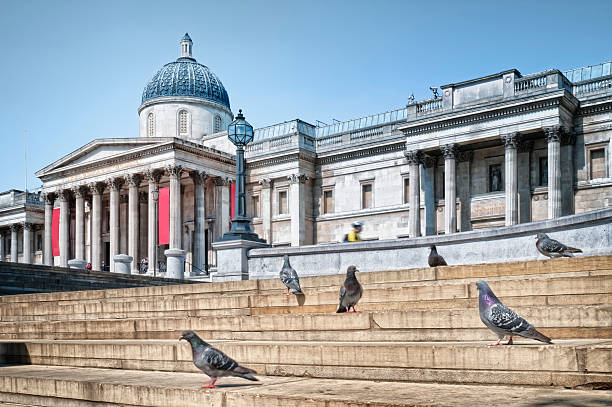
One mistake is choosing a museum because it is famous rather than because it exits well. The National Gallery is magnificent, but from St Pancras it belongs to a different final-day geometry: Trafalgar Square, the West End, then a return north. It can work with a chauffeur and a generous buffer, but it is not the base-case answer for a St Pancras departure. The Wallace Collection, the Courtauld, the V&A and the Churchill War Rooms each solve different London days; they do not automatically solve this one. If the final route starts to require a transport explanation, you are probably leaving the narrow problem this article is meant to solve.
For travelers who dislike major museums, do not force the British Museum just because it is close. The best departure-day plan is a short walk and lunch rather than a museum when the group is culturally full, carrying low patience, managing children who have already reached their limit, or facing a rail departure that makes the buffer feel thin. A graceful final hour beats a famous final room when the train is fixed.
When should you keep your London departure day near St Pancras?
Keep the plan near St Pancras when the cost of one late movement is higher than the benefit of one more sight. This is the section to be strict with yourself, because London makes many plans look reasonable until the final hour arrives.
Stay near the station if the rail journey matters psychologically: an international train, a long onward route, a special family trip, a connection you do not want to explain twice, or a group with different risk tolerances. Also stay near St Pancras when the luggage plan is unresolved in the morning. If someone is still asking whether bags should remain at the hotel, move with the driver, be stored near the station or come to lunch, the answer is not to add a bigger museum. The answer is to simplify the geography.
Stay near St Pancras with older parents when the difference between a good day and a hard day is the number of transitions. In London, the draining part is rarely just the walking distance. It is standing while decisions are made, stepping around commuters, navigating busy crossings, finding the right entrance, changing levels inside stations, waiting for a car in a place where stopping is awkward, and keeping the group together through a concourse. A short Bloomsbury plan reduces those hidden costs.
Stay near St Pancras with children when the family has already done the Tower, Westminster, Harry Potter, the theatre, or several long days. A last museum can be wonderful if it is framed as a story and kept short. It becomes fragile when parents are also monitoring snacks, bathrooms, luggage, coats, devices and the departure time. The family-friendly move is not always to add entertainment. Sometimes it is to make the day more legible: station, walk, one object-led story, lunch, train.
Stay near St Pancras when the weather is poor enough that every crossing and wait feels longer. London rain is not usually dramatic, but it changes the body’s experience of the final morning. Wet pavements, umbrellas, steamed-up taxis, damp coats in museum cloakroom areas and slower station movement all make a narrow plan feel sensible. Bloomsbury works because it gives shelter options and short resets without turning the day into a transit puzzle.
The condition that flips the answer is a genuinely later departure with luggage already solved. If bags are handled, the group is energetic, and the final lunch or museum elsewhere has personal meaning, a wider plan can be justified. Even then, treat the St Pancras return as the governing appointment. The train is not another stop in the itinerary. It is the line the entire morning answers to.
A calm St Pancras to Bloomsbury sequence
The smoothest sequence is station-aware from the first movement. It does not begin with a museum entrance time; it begins with the luggage decision and the final return path.
- First, settle bags before culture begins. Either leave luggage at a nearby hotel, place it with the arranged vehicle, or move it to a station-area solution that you have confirmed in advance. Do not carry bags into Bloomsbury hoping the rest of the plan will absorb them.
- Second, orient the group around St Pancras rather than treating it as a last-minute destination. Notice the difference between the station frontage, the King’s Cross side, Midland Road, Pancras Road and the Euston Road crossings. This reduces the chance of the final return feeling unfamiliar.
- Third, use the British Library and Russell Square edge as the soft opening. A short walk past the British Library forecourt, down toward Russell Square or along Judd Street and Marchmont Street, gives the morning texture before the museum intensity begins.
- Fourth, keep the British Museum route focused. Enter with a route, not an appetite for wandering. Decide before arrival whether the visit is object-led, period-led, family-led or collection-history-led. Departure day rewards editorial discipline.
- Fifth, place lunch where it reduces the final decision load. Bloomsbury lunch works when you want to stay near the museum. A St Pancras lunch works when you want certainty. A destination lunch elsewhere works only with a generous buffer.
- Sixth, return to the station before the group feels forced to rush. The final walk or transfer should feel like part of the plan, not the moment the plan collapses into logistics.
This sequence avoids the common mistake of letting the museum sit in the middle of an otherwise unresolved day. It also prevents the dead-zone feeling that can happen when travelers check out early, arrive at the station too soon, and then spend hours in semi-waiting mode. The goal is not to fill time. It is to give the time a shape.
For celebration travelers, this sequence can be made more personal without becoming larger. A guide might connect the British Museum route to a honeymoon in Greece, a family’s Egypt fascination, a teenager’s classics course, a collector’s interest in provenance, or a multi-city trip that continues by train into Europe. The customization should deepen the chosen window, not expand the map. That is the difference between a tailored departure morning and a padded one.
For comfort-first visitors, the most useful upgrade may be invisible. It may be the guide who knows when to stop, the driver who is not being called in a panic, the lunch held near the return path, or the decision not to add a second gallery after the first one has done its work. These are not glamorous details, but they are the details that determine whether the group boards the train alert, calm and still fond of London.
Where lunch belongs on a St Pancras departure day
Lunch belongs where it reduces the final risk, unless the meal itself is the reason to widen the plan. This is especially important for food-and-wine travelers, because London makes it easy to confuse a remarkable lunch with a wise departure-day lunch.
The safest lunch is near St Pancras or in Bloomsbury after the museum. It gives the morning a natural finish: culture, conversation, bags, station. It also helps travelers who need a bathroom, a seated pause, a calmer place to check documents, or a moment to reset before the rail journey. A good Bloomsbury lunch is not a consolation prize. It is often the reason the museum route can remain short without feeling abrupt.
A station-area lunch is best when certainty matters more than atmosphere. Some discerning travelers resist eating near a station because they associate it with compromise. At St Pancras, the better way to think about it is control. A meal near the rail anchor can prevent the anxious final taxi, the half-finished dessert, the group split between cloakroom and pavement, and the awkward moment when one traveler is still enjoying lunch while another is calculating the walk back.
A destination lunch can work, but it must be granted its own logic. If you are considering a special table, look at the menu and booking practicalities before the day is built around it. For example, Ikoyi menu & reservations (https://www.ikoyilondon.com/) can be useful for travelers considering a serious food-led London meal, while See the current three‑course lunch menu (https://www.theritzlondon.com/restaurant-three-course-lunch-menu) helps travelers judge whether a more formal lunch belongs in the wider trip. Those links are not an argument to force either meal into a St Pancras departure morning. They are reminders that menu-led choices deserve real space, not a compressed slot after a museum.
Our editorial judgment is that a destination lunch is usually the wrong default before a St Pancras train unless the departure is comfortably later and luggage is already solved. Food-and-wine travelers are often better served by making lunch the centerpiece and cutting the museum, or by keeping the museum short and eating near the station. The overvalued version is trying to do both at full strength: major museum, cross-town restaurant, bags, train. That plan may look refined on paper, but it tends to make the final hour feel shorter and sharper than it needs to.
There is also a mood consequence. A calm lunch close to the return path gives the trip a finished feeling. It lets the group talk about the museum, decide what they loved about London, and shift mentally toward the next city. A rushed destination lunch can do the opposite: the food may be excellent, but the memory attaches to the hurry. On departure day, the best meal is not always the highest-status meal. It is the meal that leaves the group ready to move.
Where a private guide earns the day, and where extra spend does not
A private guide earns a St Pancras departure day by turning a narrow window into a finished experience. The value is not a longer itinerary. It is better selection, cleaner pacing, fewer last-minute choices and a route that respects bags, pickup and rail timing from the beginning.
This is where Orange Donut Tours can be especially useful: the final museum window can be designed around checkout, luggage, pickup location, walking tolerance, family dynamics and the train buffer rather than around a generic highlights list. A half-day format is often the most natural container, especially when the visit needs to feel rich but not heavy. The relevant planning page is ODT’s half-day and full-day private London tours, while fully bespoke versions can be shaped through tailor-made private touring in London. If the departure morning needs to connect guide, driver, bags and rail timing, Inquire now.
Where does the guide change the experience? Inside the British Museum, a guide prevents the “just one more room” drift. In Bloomsbury, a guide can make the neighborhood feel like London rather than filler between hotel and train. Along the station return, a guide can pace the exit so the group is not solving directions while tired. With families, the guide can translate a vast collection into a few vivid stories. With couples or celebration travelers, the route can end on a chosen note rather than a general one.
Where does a chauffeur help? A chauffeur helps when the hotel is outside Bloomsbury, when mobility is limited, when bags are awkward, when rain changes the walking experience, or when the group wants the psychological ease of knowing the final transfer is already held. A chauffeur can also make a Mayfair or West End hotel viable by moving the party toward St Pancras before the cultural window starts.
Where does extra spend not earn its cost? It does not earn its cost when the plan is too ambitious, when the group is already tired, when luggage remains unresolved, or when the rail buffer has been sacrificed to fit a more impressive attraction. Paying for a guide and driver to support a modest, well-timed Bloomsbury morning is often smarter than paying for them to prop up a fragile cross-town itinerary. The former feels curated. The latter feels overbuilt.
The cut-first move is simple: remove the second sight before you compress the first one. If the British Museum is the chosen final chapter, do not add the National Gallery, a West End shopping errand and a formal lunch unless the day has genuinely expanded to support them. If the formal lunch is the chosen final chapter, do not force the British Museum beforehand. One decisive window is better than two diminished ones.
What London does to the body on departure morning
London makes departure fatigue show up in transitions rather than in distance alone. A traveler can walk a mile happily on the first day and find a half-mile heavy on the last morning because the body is carrying more than luggage: several days of standing, late dinners, theatre returns, museum floors, escalators, stairs, weather changes and the low-grade alertness of moving through a big capital.
St Pancras intensifies this because stations create their own physical load. Travelers slow down at entrances, scan signs, adjust bags, look for platforms, check tickets, watch for companions and stop suddenly when unsure. Even without a problem, the body becomes more guarded. That is why the final approach matters. A familiar return from Bloomsbury feels different from a late taxi drop-off into an unfamiliar edge of the station complex.
Bloomsbury helps because it gives you a walking-scale London with frequent pauses. Russell Square offers a reset. Bedford Square adds architectural coherence without a ticketed commitment. Marchmont Street and Lamb’s Conduit Street can support a gentle local feel if the group wants a lighter route. The British Library side gives a station-adjacent cultural anchor without pulling the group deep into another district. These are not filler locations; they are pressure valves.
The British Museum can either help or hurt the body. It helps when the route is short, seated pauses are used well, and the exit is planned before fatigue takes over. It hurts when the group tries to absorb gallery after gallery because “we are already here.” Museum fatigue on departure day is not only intellectual. It is feet, neck, light, crowd movement, security, stairs, cloakroom choices and the small ache of knowing a train is waiting later.
This is why a last museum before the train should feel edited. A dense London collection is more powerful when the group has permission to leave while still curious. The body remembers that generosity. It also remembers when the final morning asked for too much.
What the right final morning does to the trip mood
The right final morning makes London feel complete without making it feel closed. It gives travelers one last piece of the city to carry forward, while leaving enough calm for the onward journey to begin well.
There is a difference between ending in motion and ending in pursuit. Ending in motion means the day moves clearly from hotel to Bloomsbury to museum to lunch to station. Everyone understands the arc. Ending in pursuit means the group is still chasing the thing they missed, the table they wanted, the shop they forgot, or the room they did not reach. Pursuit can be exciting mid-trip. On departure day, it often thins the mood.
Bloomsbury has the right emotional register for this kind of ending. It is not a grand finale in the way Westminster or the Thames can be. It is more reflective: literary streets, academic buildings, garden squares, the layered histories of collecting and scholarship, and the railway just beyond the district edge. That makes it a strong last chapter for travelers continuing by train because the city does not suddenly disappear; it narrows to a walkable piece and then releases you.
The mood also depends on whether the plan gives each traveler a role. A couple may want one excellent object story and a quiet lunch. A family may need the museum framed as a short quest rather than a duty. Older parents may value the dignity of not being hurried. Food-and-wine travelers may want the meal to carry the farewell more than the galleries. Small groups may need a guide to prevent four different last-day priorities from pulling the morning apart.
The best St Pancras departure day is not the one that proves you used every hour. It is the one that makes the train feel like the natural next scene. The group should not arrive at the platform with London trailing behind them in unfinished tasks. They should arrive with the sense that the last morning was chosen, edited and completed.
FAQ
What is the best museum before a train from St Pancras?
The British Museum is usually the best museum before a train from St Pancras because it is close enough to the station for a focused Bloomsbury window and rich enough to reward a short guided visit. It is not the best choice if luggage is unresolved, the group is museum-tired, or the rail buffer is thin.
Can I visit the British Museum on London departure day?
Yes, you can visit the British Museum on London departure day if bags are settled first and you treat the visit as a focused route rather than a full museum day. Choose a few rooms or themes, plan the exit before you enter, and keep lunch or the station return close enough to avoid a rushed final hour.
Should I stay near St Pancras or go back to my hotel area before the train?
Stay near St Pancras when your hotel is far west, south or across a route that depends on a late taxi. Going back to the hotel area works only when the luggage plan is simple and the return to the station has a generous buffer. On most comfort-first departure days, moving the morning toward Bloomsbury is calmer.
Is Bloomsbury a good area for a last London morning?
Bloomsbury is a strong area for a last London morning because it gives you culture, squares, bookish streets and the British Museum without pulling you far from St Pancras. It works especially well when the goal is one final London window rather than a broad sightseeing loop.
When is lunch better than a museum on departure day?
Lunch is better than a museum when checkout is late, luggage is not fully solved, travelers are tired, children have little patience left, or the train timing makes every extra stop feel pressured. A short walk and a calm lunch can be more satisfying than a famous museum visited in a rush.
Does a private guide help on a London departure day?
A private guide helps when the day has enough buffer for guidance to matter. The guide can edit the museum route, pace the Bloomsbury walk, adjust for the group’s energy and coordinate the morning around bags and pickup. A guide does not solve a plan that has no luggage margin or station buffer.
Should I use a chauffeur for a St Pancras departure morning?
A chauffeur is useful when the hotel is not near Bloomsbury, when mobility is a concern, when bags are awkward, or when rain and station logistics would make the final transfer stressful. A chauffeur is less valuable if the plan is already compact, the hotel is near St Pancras, and the group is happy walking.
How much should I plan before the train from St Pancras?
Plan one meaningful window before the train from St Pancras, not a chain of final errands. The best version is luggage first, one museum or walk, lunch in the same zone, and a calm return to the station. If a second attraction threatens the buffer, cut it.
If you’re interested in any private tours of London, please reach out to us.















 So if you are looking for the absolute best in London & surroundings with authentic local fully-licensed native guides whose English you can actually understand and with an exclusive and amazingly fun itinerary













