The London Collection Day: British Museum, National Gallery and One Specialist Stop in the Right Order

Updated
The best order for a serious London collection day is usually British Museum first, National Gallery second, and one specialist stop only if it sharpens the theme. That works because the morning in Bloomsbury asks for object thinking, while Trafalgar Square later rewards slower picture study once the route has already moved south. The clearest exception is an art-first traveler: if paintings, provenance, connoisseurship, or a collector’s eye matter more than world history, make the National Gallery the anchor and reduce the British Museum to a highly edited companion.
London makes this decision more consequential than it looks on a map. Bloomsbury to Trafalgar Square is not a grand-distance problem; it is a reset problem, with the handoff from the British Museum’s Great Russell Street side toward Charing Cross Road or St Martin-in-the-Fields adding museum floors, security thresholds, taxi kerbs, Tube decisions, lunch timing, and the attention shift from vitrines to canvases before the third stop is even chosen. The thesis of this guide is simple: a London collection day succeeds when the third stop narrows the story, not when it proves stamina.
The practical verdict for Orange Donut Tours guests is this: choose the British Museum as the base when you want antiquity, empire, trade, archaeology, belief, and material culture to set the day’s intellectual spine; choose the National Gallery as the base when you want sustained painting study and fewer conceptual leaps; choose Churchill War Rooms, Sir John Soane’s Museum, the Courtauld Gallery, or no third stop depending on what the first two visits have already done to the group’s energy and curiosity. The nearest alternative is not “another famous museum.” It is a smaller, stricter ending.
For travelers who already know they want a privately guided British Museum visit, the dedicated route is here: British Museum Private Tours. This article is narrower. It answers the sequencing question: how do you place the British Museum, the National Gallery, and one specialist stop so the day feels collected rather than crowded?
What is the best order for the British Museum, National Gallery and one specialist stop?
The best order is British Museum in the morning, lunch or a deliberate pause between Bloomsbury and Trafalgar Square, National Gallery in the early afternoon, and a specialist stop only if the group still has a clear theme. That order gives the British Museum the freshest attention, gives the National Gallery enough calm for picture study, and keeps the third stop from becoming an achievement badge.
The sequencing matrix
- British Museum first, National Gallery second, Sir John Soane’s Museum third: best for collectors, architects, antiquity lovers, design-minded travelers, and guests who enjoy seeing how objects become a private visual universe. The route keeps the third stop in the same intellectual family: collecting, display, and the London house-museum tradition.
- British Museum first, National Gallery second, Churchill War Rooms third: best when the day’s thread is power, statecraft, conflict, and the twentieth-century afterlife of empire. It works best for adults and older teenagers, not for travelers who are already drained by dense historical narrative.
- National Gallery first, British Museum second, no third stop: best for travelers who want a painting-led day and would rather leave with ten works clearly remembered than thirty objects half-processed. This is the cleanest exception to the default order.
- British Museum plus National Gallery only: best for families, older parents, jet-lagged guests, and travelers with dinner, theatre, or a celebration evening. Two museums are stronger than three when the third stop would only add a transfer and blur the best moments of the first two.
The first correction is counterintuitive for many high-end London stays: do not make Mayfair or St James’s the emotional base of this day just because those areas feel elegant. They are excellent for dinner, hotels, galleries, and auction-house adjacent wandering, but they do not solve the morning problem. The British Museum sits north in Bloomsbury, and starting from a “prettier” central-West End frame can turn the first serious visit into a cross-town prelude before the objects have had a chance to land.
Another correction is about paid convenience. Skip-the-line help does not solve collection fatigue if the day has no theme. Extra spend can improve guide quality, private pacing, transport decisions, timed handoffs, and the confidence to cut rooms, but it cannot make an unfocused museum chain feel coherent. The value is not in squeezing more interiors into one day; it is in having the right person decide which rooms are worth the group’s best attention.
When to choose the British Museum first
Choose the British Museum first when the day needs breadth, archaeology, objects, ancient worlds, or a conversation that moves across civilizations before it narrows into pictures. The British Museum is the more demanding morning institution because its strongest experience is not one corridor or one masterpiece; it is the disciplined movement between object families, materials, places, and historical claims.
The official British Museum collection (https://www.britishmuseum.org/collection) page is useful not because guests should browse it like a checklist, but because it shows the scale of the temptation. Collection density is the central problem. A private guide’s job is to prevent the collection from turning into a survey course. For most culture-first visitors, the strongest British Museum morning is not “Egypt, Greece, Assyria, China, and everything famous.” It is a tighter arc: writing and authority, trade and tribute, sacred images and state power, or the way portable objects outlive the places that made them.
Morning is especially valuable here because the British Museum asks the body to stand, pivot, look down into cases, look up at reliefs, and keep changing scale. That physical rhythm is different from a painting gallery. It can feel easy for the first hour and strangely tiring by the third because the eye never settles into one kind of looking. A good plan spends the freshest attention on the rooms where interpretation matters most, then leaves before the group starts choosing objects by proximity rather than interest.
Bloomsbury also rewards a morning start because it gives the rest of the day a clean southward line. The local hinge is Great Russell Street: after the first visit, the day should either pause nearby for lunch or move decisively toward Trafalgar Square. Wandering half-heartedly around Oxford Street, Covent Garden, or Seven Dials between museums often feels pleasant in theory and diffuse in practice. It adds pavement, shop-window distraction, and decision fatigue at precisely the moment when the group needs a reset before the National Gallery.
British Museum first is the best base for families with academically curious children, multigenerational groups with uneven attention spans, and travelers who want London’s imperial, archaeological, and collecting history treated honestly rather than decoratively. It is also the better first move for guests who have a dinner or theatre plan later. If the morning has already handled the densest object world, the afternoon can be shaped more gently around paintings and a selective third stop, rather than forcing the British Museum into the late-day slot when everyone is already negotiating tired feet.
The wrong version of British Museum first is trying to “finish” it. The museum cannot be finished in a way that is meaningful to a traveler’s day. The cut-first rule is clear: cut breadth before cutting interpretation. It is better to understand five objects as arguments than to walk through fifteen rooms as décor. That is why an expertly guided route matters more than an expanded checklist.
When the National Gallery should be the anchor
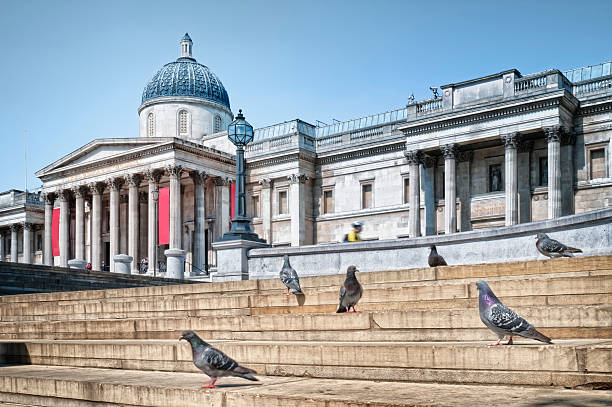
The National Gallery should be the anchor when painting is the purpose of the day, not the second act. If the traveler is a collector, artist, designer, patron, or repeat London visitor who wants to study composition, patronage, technique, and connoisseurship, the National Gallery deserves the freshest attention and the British Museum should become the edited contrast.
The official National Gallery collection (https://www.nationalgallery.org.uk/paintings/explore-the-collection) is painting-specific in a way that changes the day’s pace. You are not changing from sculpture to tablets to ceramics to coins; you are learning how to read images across schools, centuries, surfaces, and rooms. That narrower medium can be more restful for some travelers and more demanding for others. It rewards guests who like looking longer, comparing slowly, and letting one painting alter the next.
National Gallery first also makes sense when the rest of the itinerary is centered around St James’s, Mayfair, Piccadilly, or a later art-and-antiques afternoon. Trafalgar Square is the natural starting point for that London: close to Charing Cross, St Martin-in-the-Fields, the edge of the West End, and the walk toward Pall Mall. If the day’s emotional target is old master painting, collecting, and the London art market, starting in Bloomsbury can feel like an interesting detour rather than a necessary foundation.
This is where a nearby Orange Donut Tours guide may be the better companion piece: St James’s, Mayfair and the National Gallery for collectors. That article is about a collector-facing art-and-antiques day. This one is about sequencing the two major collections without making the third stop lazy.
The practical consequence of making the National Gallery the anchor is that you should not then force a full British Museum afternoon. Paintings absorb attention differently. After two or three hours of close looking, a late transfer to Bloomsbury can become a dutiful march through famous objects. The better version is to select one British Museum thread that speaks back to the paintings: antiquity as source material, collecting as power, portraiture and authority, trade objects and patronage, or sacred image traditions across cultures.
For travelers who know the National Gallery is the point, the dedicated private visit is here: National Gallery Private Tours. In sequencing terms, the anchor decision is less about which institution is more important and more about which kind of looking should receive the group’s best energy. Paintings lose quality when rushed. Objects lose context when over-collected. The right order protects the kind of attention each collection deserves.
The honest counterpoint is that National Gallery first is not ideal for everyone. Guests who are first-time London visitors and want a sense of ancient and global history may feel that a painting-first morning delays the broader city story. Families with younger children may also find that the British Museum gives more varied visual entry points early in the day. If the group includes both serious art lovers and reluctant museum visitors, a British Museum morning followed by a shorter National Gallery selection is often less brittle than a picture-study morning followed by a dense object afternoon.
Which specialist stop earns the third slot?
The specialist stop earns the third slot only when it makes the first two museums more legible. It should not broaden the day into “more London culture.” It should tighten the day around one final question: how collections are made, how power is displayed, how taste is formed, or how history becomes a room you can stand inside.
Sir John Soane’s Museum: the best third stop for collectors and architecture-minded travelers
Sir John Soane’s Museum is the strongest third stop when the day has been about objects, collecting, architecture, and the private imagination of display. It is not a grand-museum add-on. It is a concentrated house-museum experience in Lincoln’s Inn Fields, close enough to Bloomsbury to make intellectual sense and compact enough to feel like a coda rather than a third institutional marathon.
The official Sir John Soane’s Museum (https://www.soane.org/) describes the former home of one of England’s great architects and the collection he built around antiquities, furniture, sculpture, models, and paintings. For this article’s route logic, the key is not simply what is inside; it is the change of scale. After the British Museum’s public, encyclopedic scale and the National Gallery’s formal painting rooms, Soane’s house turns collecting into an intimate, almost theatrical act. The traveler sees not just objects, but a mind arranging objects.
This is the third stop that works particularly well for couples, collectors, design travelers, and families with older teenagers who like rooms that feel discovered rather than processed. It also suits guests who dislike the feeling of ending a day underground or in a heavy historical narrative. The move from Trafalgar Square toward Lincoln’s Inn Fields is not always the smoothest taxi line at the wrong traffic moment, but it keeps the day conceptually tight: public collections, painted traditions, private display.
The caveat is capacity and comfort. Soane’s is compact, and compact museums can be less forgiving for guests who need more seating, easier circulation, or a highly controlled pace. If the group is tired, the house can feel rich rather than restful. In that case, two museums plus a good meal is the stronger choice.
Churchill War Rooms: the best third stop when the day is about power and statecraft
Churchill War Rooms is the right third stop when the day’s theme is not art history but power under pressure. It works after the British Museum and National Gallery if the guide has framed the day around authority, empire, conflict, national identity, and the objects or images through which states narrate themselves.
The official Churchill War Rooms (https://www.iwm.org.uk/visits/churchill-war-rooms) page places the visit within the Imperial War Museums family and the wartime rooms beneath Westminster. For travelers, the location matters as much as the topic. From Trafalgar Square, the move toward Whitehall is logical: you pass from painted history into the government corridor, with Parliament Square and Westminster nearby. The city itself starts doing some of the interpretation before the visit begins.
Churchill War Rooms is not, however, the automatic third stop for every serious London museum day. It is narratively dense, emotionally heavier, and more enclosed than the National Gallery. It can be excellent for adults, military-history travelers, politically curious families, and executive groups, but it can flatten the day for guests who wanted a collection-focused arc rather than a wartime immersion. The mistake is adding it because it is famous. Fame is not a sequence.
For a day that is truly centered on Churchill, Whitehall, and Westminster, the dedicated option is stronger than squeezing it into a collection day: Churchill War Rooms Private Tours. As a third slot after the British Museum and National Gallery, it should be used only when the story has been moving toward statecraft all along.
The Courtauld Gallery: the best third stop when paintings should stay in control
The Courtauld Gallery earns the third slot when the National Gallery has become the emotional center of the day and the group wants a more focused painting continuation rather than a total change of subject. Its advantage is not that it adds another museum name. Its advantage is that it can keep the eye in picture-study mode while changing scale and atmosphere.
The official Courtauld Gallery (https://courtauld.ac.uk/gallery/) page is worth checking before planning because exhibitions and access patterns can affect how the visit feels, but the evergreen planning logic is stable: this is a better third stop for art-first travelers than for guests who began the day seeking archaeology, empire, and world history. If the British Museum was the intellectual base, the Courtauld may feel like the day is drifting toward paintings twice. If the National Gallery was the anchor, it can feel like a refined extension.
The route also matters. From Trafalgar Square, the Strand and Somerset House axis can be cleaner than returning north to Bloomsbury or pushing west into Mayfair. But it still adds another indoor threshold. Travelers should choose it when they want fewer topics, not more. The Courtauld is strongest as a continuation of looking, not as a rescue for a day that has lost its theme.
No third stop: the most disciplined answer for many private days
No third stop is the most disciplined answer when the first two museums have already done enough. This is not a downgrade. For many discerning travelers, the polished version of the day is a British Museum morning, a carefully placed lunch, a National Gallery afternoon, and then a return to the hotel before dinner, a theatre evening, or a private celebration.
The third stop should be cut first when anyone in the group has mobility concerns, when a child’s attention is being preserved for the evening, when the trip includes multiple museum days, or when the day has already produced memorable conversation. London has a way of making “just one more stop” feel harmless at planning stage and heavy at 4:30 p.m. A final stop that nobody can remember is not a cultural gain.
This is also the point at which the article differs most from a standard museum comparison. The question is not whether Churchill War Rooms, Soane’s, or the Courtauld is “better.” The question is whether the day needs a third interpretive room. When the answer is no, the premium move is restraint.
The Bloomsbury to Trafalgar Square handoff matters more than the map suggests
Bloomsbury to Trafalgar Square is the route hinge that determines whether the third stop feels elegant or excessive. The two places are close enough that overplanners underestimate the transition, but distinct enough that the day can lose focus if the middle is treated casually.
The British Museum’s Bloomsbury setting is inward and academic: Great Russell Street, Museum Street, Russell Square, and the edge of Holborn create a morning mood of libraries, institutions, and older London streets. Trafalgar Square is public, ceremonial, louder, and more exposed, with the National Gallery facing the square and the West End pressing in behind it. Moving between them is not just transport. It changes the group’s relationship to the city.
On a private day, the handoff should have a purpose. A taxi can be useful when the group includes older parents, a family, or guests dressed for a later dinner, but a car is not always the most elegant answer if traffic is snagged around Tottenham Court Road, Shaftesbury Avenue, or Charing Cross Road. The Tube can be efficient for some travelers, but it adds stairs, platforms, and a public rhythm that may not suit a celebratory or comfort-first day. Walking the whole way can be pleasant for energetic guests, yet it spends attention on pavement at the exact point when the group needs to digest the first museum.
This is what London does to the body on a collection day: it tires guests through hard floors, short transfers, standing interpretation, coat and bag decisions, street crossings, and the repeated switch from indoor concentration to urban navigation. The distance itself is not the only issue. The issue is cumulative friction. A day that looks compact on a hotel itinerary can feel much larger when the group has stood in front of cases all morning, crossed into Trafalgar Square noise after lunch, and then tried to restart attention in front of paintings.
The city also changes the mood of the trip. A well-sequenced collection day makes London feel intelligent and layered; an overstuffed one makes even strong museums feel like obligations. The right handoff keeps the evening from inheriting the afternoon’s clutter. If guests are going to the theatre in the West End, dining in Mayfair, or returning to a Covent Garden hotel, the late-day plan should reduce decisions, not ask everyone to solve one more transfer.
The most reliable handoff is a planned pause rather than a heroic transfer. It can be lunch near Bloomsbury before moving south, a brief hotel reset if the hotel geography supports it, or a guided move that uses the route to connect collecting history with the West End’s public face. The worst handoff is drifting: leaving the British Museum, debating lunch on the pavement, wandering toward Covent Garden, and arriving at the National Gallery with the group already mentally dispersed.
How a guide changes depth rather than quantity
A guide improves this day by narrowing the object list, controlling the interpretive arc, and knowing when to stop. The wrong assumption is that a private guide should unlock more rooms. The better assumption is that a private guide should protect the day from the museum’s abundance.
At the British Museum, guiding should turn the collection into a sequence of questions. Why does one object become a national symbol while another stays specialist? How does an empire collect, classify, and display? What changes when a sacred object, a diplomatic gift, a burial object, or a trade good is placed inside a public museum? These questions give the group a reason to move between rooms. Without that reason, the British Museum becomes a famous-object hunt, and famous-object hunts tire people faster than they expect.
At the National Gallery, guiding should slow the pace rather than extend it. The best private National Gallery route is not the most comprehensive one. It is a sequence of looking: composition, light, patronage, surface, gesture, and the difference between seeing a painting as an image and reading it as a made object. The guide’s value is especially visible when a traveler is deciding whether to stay with a painting for five more minutes or move before the room’s density has dulled the eye.
The third stop is where guide quality becomes even more important. A weaker plan adds Churchill War Rooms, Soane’s, or the Courtauld because the name sounds impressive. A stronger plan asks what the first two visits have created. If the group has been discussing power and state narrative, Churchill War Rooms can complete the arc. If the group has been drawn to collecting, architecture, fragments, and display, Soane’s can make the day feel unusually coherent. If painting has taken over, the Courtauld may be the better continuation. If the group has already reached saturation, the guide should cut the third stop without apology.
This is the natural conversion moment for a private, tailor-made London day. Orange Donut Tours is most valuable here not as a way to “do” more museums, but as a way to build the day around the right objects, the right rooms, and the right stopping point. The service value is intellectual as much as logistical: better pacing, cleaner route decisions, and fewer moments where guests are asked to spend attention on something that no longer serves the day.
For travelers comparing this more precise sequence with a broader museum-day decision, the adjacent planning guide is here: how to choose between the British Museum, National Gallery and Churchill War Rooms. This article assumes you are already leaning toward a serious collection day and need the order to hold.
Premium choices that actually improve the day
Premium choices improve this itinerary when they reduce decision load, protect attention, and make the sequence feel intentional. They do not improve it when they simply add a more expensive way to be tired.
The first worthwhile premium choice is a carefully briefed guide. A guide should know whether the guests are collectors, classicists, first-time London visitors, food-and-wine travelers saving energy for dinner, grandparents traveling with grandchildren, or a couple celebrating a milestone. Those details change the room list. A collector may want the British Museum framed through display and provenance; a family may need fewer vitrines and more vivid object stories; an art lover may want the National Gallery to carry the day and the British Museum reduced to a precise contrast.
The second worthwhile choice is transport that fits the exact handoff, not a generic chauffeured day. A car can be excellent for the Bloomsbury to Trafalgar Square transition when it prevents a group from losing focus or comfort. It can also be unnecessary if the route, timing, and hotel location make a short guided transfer cleaner. The point is not to hire a car because the day is premium. The point is to choose the transfer that keeps the next museum from beginning with irritation.
The third worthwhile choice is lunch discipline. A long, heavy lunch between the British Museum and National Gallery can make the afternoon feel slow before it begins. A rushed lunch can make the National Gallery feel like another appointment. The right pause depends on the group: a light, seated lunch near Bloomsbury; a measured move toward Trafalgar Square; or a later dining plan that lets the museum day end before appetite and fatigue collide.
The spend that does not earn its cost is any upgrade that encourages the itinerary to sprawl. A private guide, private vehicle, or priority arrangement is useful only when it helps choose and sequence. It is not useful if it becomes permission to add every famous interior between Bloomsbury, Trafalgar Square, Whitehall, and Mayfair. If the day has no governing question, premium logistics can make the failure smoother but not better.
A polished sample route for a serious London collection day
The most balanced route starts with the British Museum, uses the middle of the day to reset, gives the National Gallery a coherent afternoon, and treats the specialist stop as conditional. This sample is not a rigid timetable; it is the shape that usually preserves attention.
- Morning in Bloomsbury: Begin at the British Museum with a strict object arc. Keep the route to a limited number of rooms and make the theme explicit from the first stop. Do not “warm up” by wandering. The first hour is the most valuable hour of the day.
- Late morning cut: Leave before the collection begins to blur. The moment guests start choosing objects because they are nearby, the visit has already passed its best ending point.
- Midday handoff: Pause near Bloomsbury or move deliberately toward Trafalgar Square. Avoid turning Covent Garden or Oxford Street into accidental filler unless the walk has a defined purpose.
- Early afternoon at the National Gallery: Study fewer paintings with better attention. The goal is not to “cover” the gallery; it is to let picture-study change the tempo of the day.
- Third-slot decision: Choose Soane’s for collecting and architecture, Churchill War Rooms for power and wartime statecraft, the Courtauld for a painting-led continuation, or no third stop when the evening matters.
- Late-day exit: End in a direction that suits the rest of the trip: West End theatre, Mayfair dinner, a Trafalgar Square pickup, or a hotel return. Do not end by sending tired guests into an avoidable cross-city decision.
This is where a tailor-made plan becomes more than a nicer version of a public museum day. A private route can decide, in real time, whether the third stop still belongs. It can slow down when a painting catches the group, cut a room when a child is fading, or shift the ending toward Whitehall or Lincoln’s Inn Fields only when the day’s story has earned that move. For a custom version of this sequence, Inquire now.
The final decision: start broad, end narrow
The strongest London collection day starts broad and ends narrow. For most travelers planning British Museum plus National Gallery, that means beginning with the British Museum’s object depth, moving from Bloomsbury to Trafalgar Square with a deliberate pause, then letting the National Gallery slow the afternoon into picture study. The third stop belongs only when it makes that day more precise.
Choose Sir John Soane’s Museum when the day is about collecting, architecture, antiquity, and private display. Choose Churchill War Rooms when the day is about power, war, statecraft, and Westminster’s government corridor. Choose the Courtauld when paintings have become the central pleasure and the group wants a smaller continuation. Choose no third stop when dinner, theatre, family energy, older parents, or simple saturation matter more than adding another name.
That last choice is often the most sophisticated one. London’s collections are too rich to reward completism. The better day is the one that leaves travelers with a clear sequence in memory: objects in Bloomsbury, paintings in Trafalgar Square, and one final specialist lens only if it makes the first two sharper.
FAQ
Should you visit the British Museum or National Gallery first?
Visit the British Museum first if the day is about ancient worlds, objects, archaeology, collecting, and global history. Visit the National Gallery first if paintings are the main reason for the day and you want your freshest attention for picture study.
Can you do the British Museum and National Gallery in one day?
Yes, you can do both in one day if each visit is edited. The mistake is trying to cover both collections broadly. A better plan gives the British Museum a focused morning, the National Gallery a focused afternoon, and cuts anything that does not support the chosen theme.
Is Churchill War Rooms a good third stop after the British Museum and National Gallery?
Churchill War Rooms is a good third stop only when the day’s theme includes power, conflict, national identity, or wartime statecraft. It is not the automatic add-on for every museum day, because it changes the emotional weight and can make the itinerary feel heavy if the group is already tired.
Is Sir John Soane’s Museum better than Churchill War Rooms for a collection day?
Sir John Soane’s Museum is usually better for a collection day centered on objects, architecture, collecting, and display. Churchill War Rooms is better for a day centered on political history, Westminster, and the twentieth century. The better choice depends on the theme, not on general prestige.
When are two museums stronger than three in London?
Two museums are stronger than three when the travelers have a theatre night, a celebration dinner, children, older parents, jet lag, or a strong interest in deeper interpretation. The third stop should be cut when it would add transfer friction without making the day’s story clearer.
Does a private guide help with museum fatigue?
A private guide helps with museum fatigue by reducing the route, choosing the right rooms, pacing interpretation, and cutting the day before attention collapses. A guide does not help if the plan is simply to add more museum names without a governing theme.
What is the best specialist stop for art lovers after the National Gallery?
The Courtauld Gallery is often the best specialist continuation for art lovers when paintings remain the focus. Sir John Soane’s Museum is better when the group wants collecting and architectural atmosphere, while Churchill War Rooms is better when the day is shifting toward political history.
What should you skip on a London museum day?
Skip any third stop that does not sharpen the first two museums. Also skip accidental filler between Bloomsbury and Trafalgar Square, especially unplanned shopping streets or long pavement detours that spend energy before the National Gallery.
If you’re interested in any private tours of London, please reach out to us.















 So if you are looking for the absolute best in London & surroundings with authentic local fully-licensed native guides whose English you can actually understand and with an exclusive and amazingly fun itinerary













