St James’s, Mayfair and the National Gallery: A Private London Art-and-Antiques Day for Luxury Collectors

Updated
A private St James’s, Mayfair and National Gallery day is worth replacing another museum-heavy London day when your real question is how to look, compare and collect with better judgment. It works in actual London conditions because the route can move from Trafalgar Square into the St James’s-to-Mayfair gallery hinge, then west toward Cork Street, Old Bond Street and Berkeley Square without turning the day into a cross-city relay. The clearest exception is simple: this is not the right day for travelers who only want Bond Street retail shopping or one blockbuster museum.
The thesis is this: London’s collector day is strongest when the National Gallery sharpens the eye first, St James’s supplies older-market and auction-house context, and Mayfair gives you enough contemporary, design and post-war range to make taste decisions without flattening the afternoon. That is very different from a luxury shopping day and very different from a museum marathon. The point is not to “see everything.” The point is to stop treating unrelated dealers, galleries and paintings as separate errands.
Verdict: make this your private London art route when taste matters more than coverage
The best use of this day is a guided collector route that starts with one tightly edited National Gallery session, then moves through St James’s and Mayfair with room for private browsing. For art lovers, returning travelers and luxury collectors, it can be more useful than adding a second major museum because it connects museum looking with the city’s commercial art geography. The public collection gives reference points; the gallery districts test what those references mean when you are considering an object, a work on paper, a photograph, a design piece or a painting you may actually live with.
That is where a private guide earns the day. In the National Gallery, guidance prevents the familiar London museum problem: too many rooms, too much admiration, and no usable thread. The Gallery’s own collection overview describes more than 2,400 paintings and works of art, covering major Western European traditions from late medieval and Renaissance Italy through French Impressionism, which is exactly why an unguided visit can become visually generous but strategically vague. National Gallery collection overview (https://www.nationalgallery.org.uk/paintings/collection-overview) A focused private route can use a handful of works to calibrate period, patronage, scale, surface, conservation, taste and attribution before the afternoon moves into the market.
The correction many luxury travelers miss is that Bond Street is overvalued for this specific day. Bond Street matters as a border and sometimes as a useful add-on, but it should not control the route unless the main brief is retail fashion, watches or jewelry. For that narrower shopping question, Orange Donut Tours already treats Bond Street as a different planning problem in the Bond Street shopping day guide. A collector route should treat Bond Street as the edge of Mayfair’s art geography, not the headline.
The other honest limit is that this is not a substitute for acquisition advice, valuation advice or guaranteed private access. Dealers, auction-house viewings and gallery exhibitions shift, and a serious buying conversation may require a specialist appointment rather than a tour stop. The value of the route is judgment, sequence and context: knowing where to spend guided attention, where to step back, and when to end the day before everything begins to look equally desirable.
The collector-route matrix: what St James’s, Mayfair and the National Gallery each do best
St James’s, Mayfair and the National Gallery are not three versions of the same art day; they answer three different collector questions. The simplest way to plan the day is to assign each area a job before you start. That keeps the route from becoming a list of tempting addresses and helps couples, families and small groups agree on what they are actually comparing.
National Gallery: use it to calibrate the eye before the market
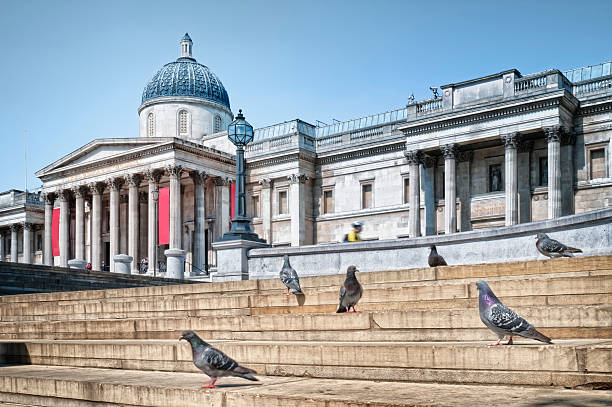
The National Gallery is the best opening base when you want museum-level context before private browsing. It is not there to supply a greatest-hits race. It is there to remind you how scale, light, finish, subject, patronage and condition change the way a work behaves in a room. A guide can move from a Renaissance altarpiece to a Dutch interior, from a Venetian surface to a French landscape, or from a British picture to an Impressionist touch, not because the route needs academic breadth but because the collector needs a vocabulary before seeing commercial work later in the day.
This is also the strongest reason to book a dedicated National Gallery private tour as part of the route rather than dropping into the museum alone. A private guide can select works that match the afternoon’s collecting interests: Old Master drawings, portraiture, frames, material history, landscape, color, provenance, decorative taste or the difference between museum importance and domestic appeal. The result is a shorter museum visit that gives more practical use than a longer self-guided one.
St James’s: use it for provenance, older-market discipline and auction-house context
St James’s is where the day begins to feel like London rather than a museum plan with shopping attached. The useful collector geography is close-grained: King Street, Duke Street St James’s, Jermyn Street, Piccadilly and Pall Mall sit near enough to Trafalgar Square that you can move west without losing the thread. Christie’s London location at 8 King Street gives the district an auction-house anchor, but its current viewing calendar and visit suitability should always be checked before treating it as a stop. Christie’s London location (https://www.christies.com/en/locations/london)
The travel consequence is important. St James’s is not a neighborhood to rush with a shopping-bag mentality. It rewards fewer stops, better questions and a guide who can explain why older paintings, works on paper, decorative arts and antiques require different looking habits from fashion retail. The right guide also knows when the group should not enter a space. Some dealers are better approached by appointment, some exhibitions may not match your brief, and some rooms deserve quiet viewing rather than a running commentary.
Mayfair: use it for range, contemporary comparison and the final decision window
Mayfair is the strongest afternoon base because the neighborhood can hold contemporary galleries, post-war specialists, design conversations, photography, jewelry-adjacent taste and auction-house visibility in a compact but mentally demanding field. Cork Street, Old Bond Street, New Bond Street, Savile Row edges and Berkeley Square can feel close on a map, yet the day becomes draining if you treat every open doorway as equal. Sotheby’s London presence on New Bond Street and Phillips at Berkeley Square are useful official anchors, but again, exhibitions, viewings and public access vary by date. Sotheby’s London (https://www.sothebys.com/en/about/locations/london) Phillips Berkeley Square (https://www.phillips.com/berkeleysquare)
This is where guided pacing becomes more valuable than additional volume. A good route does not add Mayfair because it is famous; it adds Mayfair because the afternoon can test preferences that began in the museum. Do you respond to finish or idea? To patina or surface? To artists with institutional recognition or to objects whose appeal is more private? Mayfair lets those questions become concrete, but only if the route preserves enough energy for discernment.
Bond Street: use it only if the collecting brief actually needs it
Bond Street belongs in the plan only when the group wants a controlled retail bridge, a watch or jewelry conversation, or a convenient hotel-direction corridor. It should not be allowed to steal time from St James’s or Mayfair gallery work simply because it is familiar. The collector version of this day is won in thresholds, quiet rooms and careful comparisons, not in proving that you passed every luxury storefront between Piccadilly and Oxford Street.
How to sequence galleries, auction houses and one major collection without decision fatigue
The right sequence is National Gallery first, St James’s second, Mayfair last, with the most serious browsing held for the later part of the day. This order sounds obvious until travelers begin adding extra museums, lunch detours, Bond Street retail, and a late dinner reservation that forces the guide to hurry. The route works because each stage changes the kind of attention required. Museum context is best before the eye is tired. St James’s is best while the group still has patience for detail. Mayfair is best when preferences have already narrowed.
- Begin with a narrow National Gallery lens. The first mistake is trying to “do” the National Gallery before collecting. Instead, use the museum like a tasting flight for the eye. Forty-five minutes can be enough for some travelers; others may want a longer private session. The decision should come from your collecting brief, not from the size of the building.
- Move west into St James’s before the lunch break takes over. From Trafalgar Square, the route can pass toward Pall Mall, King Street and Duke Street St James’s without a major transport reset. That short transition is the non-obvious strength of the day: the St James’s-to-Mayfair gallery hinge keeps collector flow intact.
- Use lunch as a filter, not an interruption. A long lunch can be wonderful on a separate day, but here it should not erase the morning’s looking. The better lunch is close, civilized and not so elaborate that Mayfair becomes an afterthought. Food-and-wine travelers can build a dining layer around the day, but the collecting logic should remain the spine.
- Cross Piccadilly into Mayfair after the group has preferences. Entering Mayfair too early can make the day feel like a browse through prestige. Entering after the museum and St James’s gives the guide a better basis for saying, “This gallery is worth your attention; this one is not your brief today.”
- Finish near a Mayfair hotel, Green Park, Berkeley Square or your dinner direction. Ending in Mayfair avoids the late-day mistake of returning to Trafalgar Square just because the day began there. That final location matters if the group has a dinner reservation, theatre plans, older parents, or a celebration evening that should not begin with a taxi scramble.
The cut-first rule is firm: when the day starts to overfill, remove the second museum before removing the gallery-to-market sequence. A second museum can be magnificent, but it usually changes the day back into passive viewing. If the trip already includes the British Museum, Churchill War Rooms, the Tower or Westminster, a collector day is where London can feel personal again. Travelers comparing museum choices can use the curated London museum day guide for that broader decision, then keep this route focused.
Where a private guide should lead, and where private browsing is better
A private guide should lead the transitions, the museum edit and the context; the traveler should have protected quiet time in the rooms where personal taste is being tested. The mistake is assuming that because a route is private, every minute should be filled with expert narration. Collecting requires silence as well as explanation. A good London art-and-antiques day alternates between guided interpretation and deliberate space.
Guidance is most valuable at the National Gallery because the collection can become overwhelming without a frame. It is also valuable while moving through St James’s and Mayfair, where one street can hold very different types of galleries and the visual signals are not always obvious to visitors. A guide can explain why a dealer’s window is not a full invitation, why an auction preview is different from a retail visit, why older works require slower condition-looking, and why contemporary galleries often need less explanation before the first pass.
Private browsing is better when the traveler is seriously deciding whether a work, object or category has personal resonance. That is the moment to let a couple speak without performance, to let a collector return to one wall, or to let a family member admit that the piece everyone else admires leaves them cold. This is especially true in Mayfair, where a room can become socially self-conscious if the group is over-guided. The guide’s role is then to step back, manage timing and re-enter with questions that help the group articulate why something did or did not work.
Paying for a private route does not help much if the traveler only wants unstructured browsing in one gallery or department store. That sentence matters because premium spend should not be treated as a virtue by default. Extra planning does change the day when it reduces wasted transfers, matches the group to the right rooms, protects browsing time, and turns a scatter of dealers and auction houses into a coherent collector route. It does not earn its cost when the traveler wants to wander without context, compare handbags, or spend three hours alone in one favorite shop.
This is why the best conversion point is not a sales pitch; it is a planning handoff. A private London guide can join the museum, St James’s and Mayfair into one readable route, while still leaving room for dealer appointments, independent browsing and a calm return to the hotel. For an art-led version built around your interests, start with a tailor-made London private tour or the more shopping-adjacent London shopping private tour. Inquire now
What London does to the body on this route
This day is physically easier than a cross-city sightseeing itinerary, but it is not effortless. London’s collector districts make the body work through repetition rather than distance: hard museum floors, short pavement hops, coat-and-bag thresholds, stairs in older buildings, gallery doorbells, Piccadilly crossings, and the small fatigue of reorienting every time a quiet room becomes a busy street. A map can make Trafalgar Square, St James’s and Mayfair look almost too easy; the body experiences the day as a series of surfaces and social transitions.
The smartest mobility choice is often mixed. Walking is useful from the National Gallery toward St James’s because it preserves the story and avoids an unnecessary taxi reset. A car can become useful later if the group needs to jump to a specific Mayfair appointment, return to a hotel, or protect older travelers from a late-afternoon pavement slog. The Tube is efficient for many London days, but this particular route sits in a zone where Charing Cross, Green Park and Piccadilly Circus are more useful as orientation points than as mandatory transfers. For a collector group, the point is not to prove transit efficiency; it is to keep the eye fresh enough to make taste decisions.
Families and multigenerational groups should be especially careful with the number of thresholds. Children and teens may not object to the National Gallery, and older parents may handle the walking distance well, yet both groups can tire of repeated silent-room behavior. A private route helps by changing the scale before resistance builds: one museum passage, one St James’s cluster, one Mayfair arc, then a clear end. Without that control, the day can become socially polite but physically flat, with everyone agreeing to “one more gallery” while nobody is really looking anymore.
What London does to the mood of an art-and-antiques day
The mood advantage of this route is that it makes London feel smaller, calmer and more personally chosen than a second large museum day. The National Gallery gives the morning seriousness, St James’s slows the pace, and Mayfair gives the afternoon enough elegance and variety to feel like a collector’s London rather than a visitor’s checklist. The day can end with a sense of having refined taste, not merely accumulated sights.
That mood is easy to damage. Too many auction-house stops can make the day feel transactional. Too many contemporary galleries can make the group feel under-briefed. Too much Bond Street retail can make the collector brief dissolve into ordinary shopping. A guide’s job is partly emotional: to know when the group needs more context, when it needs silence, when it needs lunch, and when it needs the dignity of stopping while the day still feels sharp.
The Mayfair hotel return after the final gallery stop is one of the most practical luxury decisions in the whole plan. If you are based in Mayfair, St James’s or nearby Piccadilly, the final hour should be designed so the group can return to the room, review notes, change for dinner, or simply sit down before the evening. If the day finishes with everyone trying to cross London at the wrong hour, the route’s elegance disappears. If it finishes near Berkeley Square, Green Park or the hotel door, the afternoon feels shorter than it was.
For celebration travelers and food-and-wine travelers, the dinner pairing should follow the route rather than distort it. A serious dinner after this day can be excellent, but only if the gallery pace leaves enough appetite and conversation. If Ikoyi is part of the evening conversation, use the official Ikoyi menu & reservations (https://www.ikoyilondon.com/) page for current menu and booking details, then work backward from the dinner time. Do not let a late or rigid reservation force the afternoon into a sprint through Mayfair; the collector route should arrive at dinner with something worth discussing.
What to cut first when the collector day gets too ambitious
The first thing to cut is anything that turns the route back into generic luxury London. The art-and-antiques day has a narrow job: connect a major collection, the St James’s market feel and Mayfair gallery range into one coherent route. When extra stops enter the plan, judge them by whether they improve that job or merely add prestige.
- Cut the second major museum first. The British Museum, Tate Britain, the V&A and the Wallace Collection can all be excellent on the right itinerary, but adding one here usually changes the day into a museum endurance test. Keep this route to one major collection unless the entire day is redesigned.
- Cut Bond Street retail unless it serves a specific brief. Watches, jewelry or one fashion appointment can fit if they are truly part of the traveler’s collecting style. Browsing storefronts because they are nearby is the fastest way to dilute the afternoon.
- Cut any auction house that is not currently useful. Auction houses are not always appropriate stops. Their value depends on the calendar, the viewing, the department and the group’s interests. A name on the route is not the same as a meaningful visit.
- Cut far-flung design detours. A separate design, interiors or craft day can be planned beautifully, but this route loses its strength if it starts chasing objects across London. Let St James’s and Mayfair carry the day.
- Cut the stop that nobody in the group can explain. If the only reason for a stop is that it sounds impressive, remove it. Collector days are strongest when each room changes the way the group looks at the next one.
This is also where premium restraint matters. A chauffeur, specialist guide or tailored appointment can improve comfort and suitability when the route has multiple thresholds, older travelers, a celebration evening, or a serious collecting brief. The same upgrades cannot rescue an overstuffed plan. In this part of London, the most luxurious choice is often not the most expensive addition; it is the decision to leave one more hour unscheduled so a real object or painting can hold attention.
Who should choose this day, and who should choose something else
This private art-and-antiques route is best for travelers who already know London’s headline sights or who want one day that feels more personally edited than Westminster, the Tower and a museum. It particularly suits returning travelers, collectors, design-aware couples, parents with older teens, small celebration groups, and food-and-wine travelers who want the evening to grow out of the day rather than sit beside it as a separate luxury event.
Returning travelers who want London to feel new again
Returning travelers often struggle because the obvious sights are no longer urgent, but a loose shopping day can feel too casual. This route solves that by giving the day a serious spine without forcing a full academic museum program. The National Gallery supplies the anchor, St James’s supplies the London specificity, and Mayfair supplies the range that makes the afternoon feel current.
Couples considering one serious object or category
Couples who collect, furnish homes, or enjoy art fairs often need a day that leaves room for disagreement. One person may respond to Old Masters, another to contemporary work, another to design or photography. A guide can keep the route from becoming a negotiation by sequencing the day so each preference gets tested in the right environment. The best outcome may not be a purchase; it may be a clearer shared language.
Families with older teens or multigenerational travelers
This can work well for families if the route is edited, not if it is treated as a silent-room marathon. Older teens often respond better when the day includes the difference between museum value and market value, or when a guide lets them compare what they would actually choose for a room. Older parents benefit from a route that avoids unnecessary Tube resets and ends near the hotel. The family version should include fewer stops and stronger contrast between them.
Celebration travelers adding a dinner or hotel evening
For birthdays, anniversaries or private group celebrations, this day works because it gives the evening a better conversation. The route should end in Mayfair or nearby, not in a random part of London that forces the group to rush. If the celebration is really about dinner, keep the art route shorter. If the celebration is about collecting, let dinner be the relaxed continuation.
Travelers who should choose a different London day
Choose something else if the group wants only Bond Street retail shopping, a single blockbuster museum, a broad first-time London overview, or a day with guaranteed buying appointments. For broad private sightseeing, start with Private Tours in London and build a different route. For this article’s decision, the point is narrower: a collector day that joins museum context with St James’s and Mayfair without losing the ability to look carefully.
A sample private collector route from Trafalgar Square to Mayfair
The strongest sample route begins at the National Gallery, moves west through St James’s, pauses before decision fatigue, crosses the gallery hinge into Mayfair, then ends where the evening can begin calmly. Treat this as a planning model, not a promise of specific access. The exact stops should change according to exhibitions, appointments, collecting interests, weather, hotel base and the group’s walking tolerance.
Stage one: National Gallery calibration
Begin with a focused private visit at the National Gallery. The guide should not try to cover every school or century. For a collector route, a few carefully chosen works are enough to discuss scale, medium, surface, subject, attribution, patronage, restoration and how a painting changes when seen from different distances. The museum is the grammar lesson for the day; the market districts are where the grammar gets tested.
Stage two: St James’s auction and dealer context
Move west toward King Street, Duke Street St James’s and the Piccadilly edge. This stage should be selective. A current auction viewing may be useful, or it may not match the group’s interests. A dealer visit may be meaningful, or it may require prior arrangement. The guide’s job is to prevent the group from equating famous names with the right stops. St James’s is best when it feels deliberate.
Stage three: lunch or a short reset that does not steal the afternoon
Build in a lunch or reset close enough that the route does not fracture. The group should leave lunch with a sharper sense of what to compare in Mayfair, not with a new list of unrelated errands. This is also the moment to drop a stop if the morning produced a strong interest. A collector day should adapt when a serious preference emerges.
Stage four: Mayfair gallery arc
Cross into Mayfair through the St James’s-to-Mayfair gallery hinge and choose a compact arc rather than a wide sweep. Cork Street, Old Bond Street, New Bond Street, Savile Row edges and Berkeley Square can all be part of the conversation, but they should not all become mandatory. The best Mayfair hour often includes fewer rooms than travelers expect because the comparisons become more demanding.
Stage five: final review near the hotel or dinner direction
End with a short review rather than one last rushed gallery. This is where the guide can help the group identify what changed: a period that became more interesting, a medium that lost appeal, a dealer category worth revisiting, or a work that should be discussed privately later. If the hotel is in Mayfair, this final step can happen almost at the door. If the evening is elsewhere, a car can turn the end into a smooth handoff instead of a late-day scramble.
The sample route beats another museum-heavy day because it changes the kind of decision the traveler is making. A museum day asks, “What should we see?” A collector route asks, “How do we look, compare and choose?” That is a more valuable question for travelers who already know they care about art and objects.
Freshness checks before you build the route
The practical details that matter most are the least glamorous: current exhibitions, auction viewing dates, dealer availability, group size suitability and the hotel-to-evening finish. These should be checked close to travel, especially if the route includes auction houses or specific dealers. A private guide can design the shape of the day in advance, but the exact room list should stay flexible until the current landscape is clear.
Use official sources for operational checks and keep the editorial decision separate from the logistics. The National Gallery source supports the museum anchor; Christie’s, Sotheby’s and Phillips official pages support the auction-house geography; individual galleries and dealers should be confirmed directly when a specific visit matters. Avoid building a luxury day from stale listings. In this part of London, a beautiful route is not the same thing as a currently suitable route.
The final planning judgment is straightforward. Choose this day when you want museum context, St James’s discipline and Mayfair range in one private collector route. Skip it when you want unstructured retail, one long museum, or a day that guarantees buying outcomes. The value is not in saying yes to every prestigious address; it is in making London’s art geography legible enough that your eye is better at the end of the day than it was at the beginning.
FAQ
Is St James’s and Mayfair better than another London museum day for collectors?
Yes, if the traveler wants to connect museum context with the commercial art world. The National Gallery gives the eye a serious reference point, while St James’s and Mayfair let the group compare how older works, contemporary galleries, auction previews and design conversations feel in real collector settings.
Should a private art-and-antiques day start at the National Gallery?
Usually, yes. Starting at the National Gallery gives the guide a shared visual vocabulary before the group enters St James’s and Mayfair. It is especially useful when the travelers have different levels of art knowledge or when the afternoon includes a mix of older and contemporary work.
Can auction houses be included in a private St James’s and Mayfair route?
They can be included when the current viewing calendar and group interests make them appropriate. Auction houses are not always open or relevant for a casual stop, so they should be treated as flexible route elements rather than guaranteed inclusions.
Is this a shopping tour or an art tour?
It is an art-and-antiques collector route with some shopping-adjacent judgment. The focus is not ordinary retail browsing; it is using a private guide to connect the National Gallery, St James’s and Mayfair so that galleries, dealers and auction-house context make sense together.
Is Bond Street worth including?
Bond Street is worth including only if watches, jewelry, fashion or a specific retail appointment belongs to the brief. For a true collector day, Bond Street is more useful as a Mayfair boundary than as the main event.
How long should this route take?
Plan it as a half-day to full-day route depending on how much private browsing, lunch time and Mayfair depth the group wants. A shorter version should keep the National Gallery edit and one gallery district; a fuller version can include St James’s, Mayfair and a more deliberate final review.
Where should the day end?
The best ending is usually in Mayfair, near the hotel, Green Park, Berkeley Square or the dinner direction. Ending there reduces late-day transfer strain and gives the group time to review notes, change for dinner or continue privately without feeling rushed.
Do we need a guide inside every gallery?
No. A guide is most useful for the museum edit, route logic and context between stops. Inside a gallery where a traveler is seriously considering taste, private browsing time can be more valuable than continuous commentary.
If you’re interested in any private tours of London, please reach out to us.















 So if you are looking for the absolute best in London & surroundings with authentic local fully-licensed native guides whose English you can actually understand and with an exclusive and amazingly fun itinerary