South Kensington, Notting Hill or Kew? A London West-Side Day Before a Mayfair Evening

Updated
Choose South Kensington if you want the most reliable west-side day before a Mayfair evening return; keep Notting Hill as a short color stop unless the whole group wants shopping streets and photographs more than cultural depth; choose Kew only when you can give it a real half-day. This verdict works because London’s west side is not one neat ribbon: the South Kensington museum cluster can either concentrate the day beautifully or trap you in too many interiors before dinner, Notting Hill looks close but often spreads energy across Portobello Road, Westbourne Grove and Ladbroke Grove, and Kew changes the day from city wandering into a garden excursion. The clearest exception is a mild, garden-led day when Kew is the point and Mayfair is only the landing place afterward. The thesis is simple: before a serious Mayfair dinner, the best west-side plan is not the prettiest neighborhood on paper, but the one that leaves enough attention, feet and transfer margin for the evening.
That is why a private plan should usually pick one west-side anchor rather than stitching together all three. A chauffeured route can make the west feel smoother, especially for a family, older parents or a celebration group, but it cannot turn Kew into a casual add-on after a full museum morning. If your day already includes the V&A, the Natural History Museum or a proper guided hour in the Science Museum, adding Kew afterward usually spends the late afternoon in movement rather than in enjoyment. For a broader look at museum-neighborhood tradeoffs around South Kensington, see Chelsea or South Kensington for a London Family Base?.
The west-side choice before Mayfair, in one practical matrix
South Kensington wins when: the day needs cultural weight, rain resilience, family flexibility, and a clean return to Mayfair without turning the afternoon into a long-distance experiment.
Notting Hill works when: you want a lighter visual interlude, a short boutique-and-street-color stop, or a late-morning contrast after one focused museum, not a full intellectual day.
Kew earns the day when: gardens, glasshouses and air are the point, and you can give the route a dedicated half-day without pretending it is still a central-London wander.
The wrong fit: Kew after two major South Kensington museums, then a formal dinner in Mayfair. The body pays twice: first in museum standing time, then in the return window.
The comparison criteria are not abstract. The decision should be made by cultural payoff, walking load, weather exposure, transfer certainty, child or older-parent tolerance, and how dressed-up the evening needs to feel. A couple with Ikoyi menu & reservations (https://www.ikoyilondon.com/) on the calendar has a different afternoon threshold from a family planning an early Mayfair dinner after the Natural History Museum. A small group staying near Hyde Park Corner can tolerate a different return than a group coming back from Kew with children, bags, wet coats and a fixed table time.
The cut-first rule is also clear: cut the second anchor before you shorten the first one into meaninglessness. South Kensington plus Notting Hill can work if Notting Hill is deliberately light. South Kensington plus Kew rarely works well when the museums have been treated seriously. Notting Hill plus Kew can work for a garden-and-neighborhood day, but then South Kensington should not be forced in as a cultural garnish.
Why South Kensington is the cultural choice before a Mayfair evening
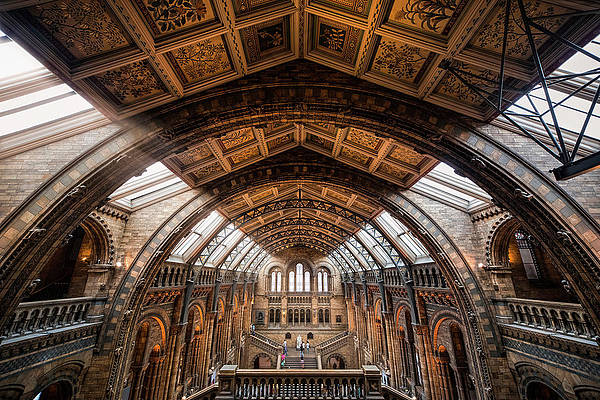
South Kensington is the strongest default because it turns London’s west-side abundance into a controlled day rather than a scavenger hunt. The V&A (https://www.vam.ac.uk/), the Natural History Museum and the Science Museum sit close enough that a guide can adjust the emphasis without changing the geography. That density is the strength, but also the trap: if each museum is treated as a “while we are here” stop, the day becomes a sequence of entrances, cloakrooms, galleries and tired exits. The better plan chooses one main museum, one secondary thread and one soft landing before the Mayfair evening return.
The non-obvious routing advantage is Exhibition Road. It looks like a simple pedestrian axis, but it matters because it lets a group move between major cultural stops without repeatedly reloading into traffic. On a damp day, that small geographic compression changes the mood. A family can divide attention between dinosaurs, design and hands-on science without crossing half the city. A couple can do decorative arts, fashion history or photography without losing the afternoon to a taxi queue. Older parents can take one meaningful museum arc and then move toward Kensington Gardens or a calm refresh rather than being dragged into another district.
South Kensington also offers the cleanest correction to a common luxury-travel mistake: paying for a better vehicle does not make an overfilled museum day feel elegant. The upgrade that matters here is not constant driving; it is sharper editing. A guide who knows when to leave a gallery, when to avoid another grand staircase, and when children have stopped absorbing context is often more valuable than another transfer. For chauffeured logistics across London more broadly, Luxury Chauffeured London Private Tour is most useful when the car supports a chosen route rather than rescuing an overloaded one.
For families, South Kensington is especially forgiving because it lets different ages succeed in the same geography. Younger children can anchor the day around the Natural History Museum or a shorter Science Museum experience. Teenagers may respond better to the V&A’s fashion, design, photography or performance collections. Adults can get serious cultural content without making children endure a full “grown-up museum day.” The age-band split matters: under-eights usually need tactile pacing and a shorter first interior; tweens can handle a stronger narrative if there is a food or park break; teenagers need the route to feel chosen, not imposed.
The do-not-stack judgment is firm: do not combine the Natural History Museum, the V&A and the Science Museum as three full visits before a Mayfair dinner. Even when admission logistics are manageable, the body experiences them as hard floors, gallery standing, sensory load and repeated decision fatigue. The city does not need to punish you with hills to exhaust you; London can do it through long museum rooms, crowded thresholds, Underground stairs, rain gear and the mental blur that comes from too many famous interiors in one day.
When Notting Hill should stay light, not become the anchor
Notting Hill should remain a short color stop when the evening in Mayfair matters more than the afternoon’s retail wandering. It is at its best as a controlled contrast: pastel terraces, Portobello Road texture, a few shops, a coffee pause, perhaps a walk through quieter residential streets if the group is still fresh. It is weaker as the day’s main anchor for travelers who expect a guided cultural arc, weather protection or a predictable late-afternoon return.
Notting Hill should not be the anchor when the group has already used its best attention in South Kensington, when children need a reset more than another pretty street, or when the Mayfair evening return is tied to a serious reservation. In those cases, keep it to a short color stop or cut it entirely.
The counterintuitive correction is that Notting Hill is often overvalued before a serious dinner because it photographs well. Pretty streets do not automatically make a good pre-dinner plan. Portobello Road can pull a group north and west in small increments; Westbourne Grove can tempt slow shopping; the charming bits are not always where the vehicle can easily appear when everyone finally wants to leave. The result is not disaster, but it can flatten the day: the group sees attractive streets, spends more energy than expected, and returns to Mayfair feeling as if the afternoon had no clear center.
Use Notting Hill after South Kensington only if the museum portion has been deliberately kept to one strong arc. A good sequence is museum first, lunch or a pause, then a light Notting Hill pass that ends before fatigue starts steering the day. A weaker sequence is late-morning museum drift, a rushed transfer, a hungry Portobello wander, and then a scramble back to change for dinner. The first feels edited; the second feels like the itinerary is being driven by map proximity rather than traveler energy.
Couples should be especially careful here. Notting Hill can preserve the day’s mood when it is used for air, color and a slower walk after one interior. It can kill the mood when it becomes a low-stakes shopping negotiation before a high-stakes dinner. One person wants the market; another wants to return to the hotel; everyone keeps saying “just one more street.” By the time the group is back in Mayfair, the evening has already spent some of its charge.
Families should treat Notting Hill as a short visual reward, not a substitute for a reset window. Strollers can be awkward in crowded market stretches, and children who have already stood through a museum rarely become more patient because the houses are photogenic. For mixed ages, the better version is short, specific and bounded: a few streets, one snack, then a planned return. When in doubt, cut Notting Hill before you cut the hotel pause.
When Kew needs a dedicated half-day
Kew needs a dedicated half-day because it changes the day from west London neighborhood planning to a true garden excursion. This is not a value judgment against Kew; it is the reason Kew is worth doing properly. The Royal Botanic Gardens are a different scale from a museum cluster or a Notting Hill stroll, and the return window to Mayfair must be treated as part of the experience rather than an afterthought. Before committing, check the official Kew Gardens site (https://www.kew.org/kew-gardens) for current visitor information rather than building the day around assumptions.
The Kew return window is the decisive planning fact. Once you go to Kew, you have chosen air, paths, plant collections, glasshouses and distance. That can be a beautiful choice, especially in spring, early summer, autumn color or a winter day when a garden-and-glasshouse rhythm feels more restorative than another gallery. But it asks for space. You need time to arrive, orient, walk, pause, and leave without watching the clock from the first path.
This is where premium spend has a hard limit. A chauffeur cannot make Kew feel close after an already full museum day. The vehicle may improve comfort, privacy and the return, but it cannot remove the fact that the garden has breadth, the visit has walking load, and the Mayfair evening return still has to happen. Paying more helps when Kew is the chosen anchor; it does not earn its cost when the route is already overloaded and the car is being asked to compress reality.
Kew suits travelers who want a softer day before Mayfair, not travelers who want to maximize west-side trophies. It works well for couples who would rather have one expansive outdoor experience than a checklist, for families whose children need air more than another gallery, and for comfort-first visitors who are willing to trade centrality for calm. It is less suitable for a first London day when Westminster, the Tower, the British Museum and South Kensington are all still competing for attention. For a broader garden comparison, Kew, Hampton Court or a London Garden Afternoon? covers when green space deserves more room in a city stay.
Do not pair Kew casually with a full South Kensington morning. A light South Kensington touch can precede Kew if it is truly light: one focused object trail, one child-friendly science hour, or one design-led pass. But if the morning becomes a serious museum visit, Kew should move to another day or be replaced by Kensington Gardens, Hyde Park or a shorter west-side pause. The regret risk is not that Kew disappoints; it is that you arrive too late, walk too little of it, and still have to return across town for dinner.
How the Mayfair evening return changes the plan
The Mayfair evening return should be designed before the afternoon is finalized. This is the part many travelers treat as a closing transfer, but in London it is often the hinge between an elegant day and a stretched one. Mayfair looks central and convenient, yet a fixed dinner, tasting menu, theatre plan or celebration evening changes how much uncertainty the afternoon can carry.
If dinner is in Mayfair, St James’s or near the hotel, South Kensington gives you the most controlled return. You can leave the museum district with enough time to freshen up, cross Hyde Park’s edge if the weather invites it, or return directly by car. The route does not ask the group to keep expanding west. Notting Hill asks for more discipline because the day can drift north-west street by street. Kew asks for the most respect because the return is not a casual neighborhood hop.
The Mayfair evening return also changes dress logic. A museum morning can be done in comfortable shoes and still leave time to change. A Notting Hill wander can work if it is dry and bounded. Kew is different: gardens mean paths, weather exposure and a more outdoorsy physical rhythm. For a fine-dining evening, that may be exactly why a hotel pause becomes non-negotiable. The plan should not assume guests will glide from garden paths into a Mayfair dining room without wanting a reset.
Food-and-wine travelers should be especially strict. A tasting menu rewards attention. It does not pair well with the kind of day where everyone arrives having spent their appetite, patience and conversation on transfers. If Mayfair dinner is the emotional center, the afternoon should be lighter than the morning. For a related dinner-geography angle, How to Plan a Curated London Food-and-Wine Day is useful when the meal, not the museum, sets the route.
What London does to the trip mood is subtle but real. The right west-side choice makes the evening feel like a continuation: culture, air, pause, return, dinner. The wrong choice makes the evening feel like a rescue mission from the day. Nobody remembers one more quick stop fondly when it caused the group to arrive late, underdressed or talked out before the first course.
Three west-side day shapes that actually work
The strongest west-side plans choose a dominant shape, then refuse the extra add-on that would blur it. These are not generic itineraries; they are decision templates for the exact problem of South Kensington, Notting Hill or Kew before Mayfair.
South Kensington as the anchor, Notting Hill as a small contrast
This is the best choice for first-time visitors, families and culturally curious couples who want London substance before Mayfair. Start with one South Kensington museum as the main event. At the V&A, that might mean design, fashion, ceramics or British galleries rather than “seeing the museum.” At the Natural History Museum, it might mean a family-led route that keeps awe high and fatigue low. At the Science Museum, it may be a shorter, child-responsive visit that keeps adults from feeling the day has become entirely child-led.
After the museum, build in lunch or a pause before deciding whether Notting Hill still belongs. If the group is lively, use Notting Hill as a short west-side color stop. If children are fraying, older parents are slowing, or dinner is important, return toward Mayfair instead. This is not a downgrade. It is the discipline that keeps a good day from becoming greedy.
Notting Hill as the mood piece, with South Kensington trimmed
This works for travelers who have already done London’s major museums or who want a lighter day before a dressed-up evening. Keep South Kensington to one focused interior or skip it entirely. Let Notting Hill provide the street texture, but do not pretend it has the same cultural density as South Kensington. Its value is mood, color and a sense of residential London, not a full guided thesis.
The key is to end the Notting Hill portion before the group begins negotiating every turn. Choose the rough arc in advance, then leave cleanly. This is where a private guide can help without turning a walk into a lecture: the value is in route judgment, pacing and knowing when the neighborhood has given enough.
Kew as the anchor, Mayfair as the return target
This is the right plan when the group actively wants gardens. Start with Kew as the main event, not as the reward after museums. Allow enough space for walking, weather and slower attention. Then return to Mayfair with a real buffer before dinner. This version can feel deeply civilized because the day has one clear identity: air, green space, glasshouse time, and a polished evening.
The cut is South Kensington. Unless the museum element is very brief and strategically placed, leave it for another day. Kew plus Mayfair is already a complete rhythm. Kew plus South Kensington plus Mayfair is usually a planning ego trip.
Where a private guide or chauffeur changes the day
A private plan changes the west-side day when it edits, sequences and absorbs the small logistics that otherwise scatter the group. It is not about making every moment more elaborate. It is about choosing one anchor, setting a realistic return, and protecting the energy needed for the Mayfair evening return.
In South Kensington, the guide’s value is interpretive and editorial. The museums are too large for casual completeness. A guide can choose the galleries that fit the travelers: design for adults, dinosaurs for younger children, engineering for curious teens, fashion or performance for style-minded visitors. The chauffeur’s value is lower within the museum cluster itself, because walking between nearby institutions may be more efficient than reloading into traffic. The car becomes useful for the return, for older parents, for wet weather, or when luggage and wardrobe changes are involved.
In Notting Hill, the guide’s value is route discipline. Without a plan, the neighborhood can become a charming drift that costs more time than expected. With a plan, it becomes a bright, finite interlude. A chauffeur helps at the edges, particularly when the group needs a clean pickup after shopping or when a celebration evening requires an unruffled return. But the upgrade should support the exit, not encourage more sprawl.
In Kew, the chauffeur’s value is comfort and simplicity, especially for a small group or multigenerational party. The guide’s value is in making the garden feel coherent rather than just large. But neither upgrade changes the core rule: Kew needs time. The better private plan does not squeeze Kew into the leftover afternoon; it gives Kew the half-day and then builds the evening around the return.
If you want Orange Donut Tours to build this around your actual dinner time, hotel location, family ages and appetite for museums versus gardens, Inquire now. The most successful version is rarely “all three if possible”; it is one west-side anchor, one optional contrast, and a Mayfair return that feels intentional rather than hopeful.
Season, weather and family realities that should flip the answer
Season and weather can flip the west-side choice because London’s comfort cost changes quickly. In rain, South Kensington gains value because the museum cluster keeps the day productive without forcing long exposed walks. In a mild garden season, Kew becomes more compelling if the group is willing to let it own the day. In high summer, Notting Hill can feel more pleasant early or late, but a market-heavy wander in the middle of the day may still drain children before dinner.
For seasonal planning, the key is not to chase the “best” month in the abstract. It is to match the day’s physical rhythm to the evening. A winter museum day before Mayfair can be excellent if the return is early enough for a warm reset. A spring Kew day can be memorable if you resist the museum add-on. A warm Saturday Notting Hill visit can be lively, but lively is not always what a comfort-first traveler wants before a formal table. For broader weather-and-season judgment, see Summer, Autumn, Winter, Spring Private Tours.
Families should use a stricter cut order than couples. First cut Kew if the morning is already a serious museum morning. Next cut Notting Hill if children need a hotel pause. Last, trim the museum route itself to the few galleries or exhibits that will land with the ages in front of you. Do not make children prove their sophistication by standing through three adult-paced interiors. For family-specific London pacing, Kids & Families Private Tour is the more relevant next step than a generic sightseeing loop.
Older parents need a similar honesty. South Kensington looks easy on the map, but museum floors, cloakroom moments, café queues and repeated standing can accumulate. Notting Hill adds uneven attention and more street wandering. Kew adds garden distance. A polished plan should not hide those costs; it should choose the one that pays back most generously for the travelers in the group.
For couples, preserve mood by refusing the late-afternoon scramble. South Kensington works when it gives you a meaningful cultural morning and a composed return. Notting Hill works when it stays light. Kew works when it becomes the day’s slow exhale. The mood-killing mistake is not choosing the “wrong” place; it is choosing two right places and giving neither the time it needs.
The cleanest editorial verdict
The cleanest verdict is South Kensington first, Notting Hill light, Kew separate. South Kensington is the default winner before Mayfair because it gives the most cultural value with the least routing uncertainty. Notting Hill is the runner-up when the day needs color rather than depth. Kew is not the wrong choice; it is the wrong fit when treated as an add-on after a full museum morning.
This is also the most commercially sensible way to plan a private day. A guide and chauffeur can create a smoother west-side experience, but only after the choice has been narrowed. The expensive mistake is asking premium logistics to save an itinerary that has refused to make a decision. The elegant version is more restrained: one anchor, one possible contrast, a return that respects the dinner, and no apology for leaving something excellent for another day.
The Mayfair evening return is the final test. If the transfer back feels calm, the day was probably designed well. If it feels like the day is still arguing with the evening, the plan chose too much. Before a serious dinner, the best west-side day is not the fullest. It is the one that lets London’s culture, streets or gardens arrive in the right proportion.
FAQ
Should I choose South Kensington, Notting Hill or Kew before a Mayfair dinner?
Choose South Kensington for the most reliable cultural day before Mayfair, Notting Hill for a short and lighter street-color stop, and Kew only when you can give the gardens a dedicated half-day with a proper return buffer.
Can I visit South Kensington and Notting Hill in the same day before Mayfair?
Yes, but South Kensington should be the anchor and Notting Hill should stay short. A focused museum visit followed by a bounded Notting Hill walk can work; multiple museums plus a long Portobello Road wander usually leaves too little energy for the evening.
When should Notting Hill remain a short color stop rather than the anchor?
Notting Hill should remain a short color stop when the group has already done a meaningful South Kensington museum visit, when children or older parents need a hotel pause, or when the Mayfair evening return matters more than shopping and photographs.
Is Kew too far before a Mayfair evening?
Kew is not too far if it is the main daytime plan, but it is too much as a casual add-on after a full South Kensington museum morning. Treat Kew as a half-day garden excursion and build the Mayfair return around it.
Which choice is best for families with children?
South Kensington is usually best for families because the museum cluster lets different ages succeed without changing districts. Notting Hill should be kept short, and Kew should be chosen only if the family genuinely wants garden time more than museum depth.
Which choice is best for couples before a special dinner?
Couples should choose South Kensington for culture, Notting Hill for a light atmospheric walk, or Kew for a slower garden-led day. The best romantic choice is the one that avoids a late-afternoon scramble before the Mayfair evening return.
Does a chauffeur make Kew easy after a museum morning?
No. A chauffeur can make the transfer more comfortable, but it cannot make Kew feel close after an already full museum day. Extra spend helps when Kew is the chosen anchor; it does not fix an overloaded route.
What should I cut first if the day is getting too full?
Cut the second anchor first. If South Kensington is the main cultural choice, cut Kew and keep Notting Hill short or skip it. If Kew is the anchor, cut South Kensington. If dinner is important, protect the hotel or Mayfair return buffer.
Should I book the Mayfair dinner before planning the west-side day?
Yes. A fixed Mayfair dinner time changes the afternoon’s tolerance for distance, weather exposure and delays. Once the dinner is set, the west-side plan should be built backward from the return window.
If you’re interested in any private tours of London, please reach out to us.















 So if you are looking for the absolute best in London & surroundings with authentic local fully-licensed native guides whose English you can actually understand and with an exclusive and amazingly fun itinerary













