London Between Westminster, the City and Dinner: A Better First-Day Sequence for Serious Sightseers

Updated
Start in Westminster, treat St Paul’s as the eastern anchor, and let the City become a selective late-afternoon layer rather than a second full sightseeing zone before dinner. That sequence works in real London conditions because the Westminster-to-City transition has one clean hinge: move from Parliament Square toward St Paul’s by river, Tube, or Fleet Street, then stop adding interiors once dinner geography begins pulling the day west or south. The exception is narrow but real: if your hotel, dinner, or main curiosity is already around Bank, Liverpool Street, or Shoreditch, the City can carry the late day; otherwise it should become a separate morning.
The thesis is simple but very London-specific: a first day succeeds when it moves east by story, not by appetite. Westminster supplies ceremony and national memory, St Paul’s supplies the architectural turn into the old mercantile city, and dinner decides whether the financial lanes beyond the cathedral belong now or later. The non-obvious route cue is Blackfriars. On a map, Westminster and the City look like a straight eastward sweep; in practice, the choice between staying north via the Strand and Fleet Street, dropping to the river, or using the District and Circle lines through Westminster, Embankment, Temple, Blackfriars and Mansion House determines whether the day feels coherent or overextended.
Because Westminster Abbey and St Paul’s are both working churches as well as visitor sites, confirm the date before building an interior-heavy day. The official Westminster Abbey visitor information (https://www.westminster-abbey.org/visit-us/plan-your-visit/) and St Paul’s planning your visit (https://www.stpauls.co.uk/planning-your-visit) pages are the right places to check current visiting details, closures, and practical notes before you turn a draft sequence into a booked day.
The verdict: Westminster first, St Paul’s as the limit, dinner as the brake
The best first-day order for serious first-time sightseers is Westminster in the morning, St Paul’s in the afternoon, then either a restrained City edge or a westward dinner return. Westminster should open the day because it asks the most context from a visitor: monarchy, Parliament, church, wartime government, state ceremony, and the texture of Whitehall sit almost on top of one another. If you see it after a long City afternoon, it becomes a set of famous façades; if you begin there, the rest of the day has a frame.
St Paul’s is the better eastern anchor than the Tower of London for this specific first-day sequence. That is not a judgment against the Tower; it is a judgment about the number of interiors a first day can hold before meaning collapses. Westminster Abbey and St Paul’s both reward a guided interior visit. Add the Tower on top, and the day stops being a sequence and becomes a contest of endurance. The Tower deserves its own focused slot, especially if the Crown Jewels, the walls, the river edge, and the medieval fortress story matter to you.
The City should be treated as texture unless your evening geography makes it central. A short pass through Ludgate Hill, Fleet Street, Temple Bar, Royal Exchange, or Leadenhall can give the day a powerful final turn. A late attempt to do multiple City interiors, the Tower, and dinner across town will make even excellent guiding feel rushed. This is the first cut-first rule: when the day is getting crowded, remove the Tower and the deeper City before you weaken Westminster and St Paul’s.
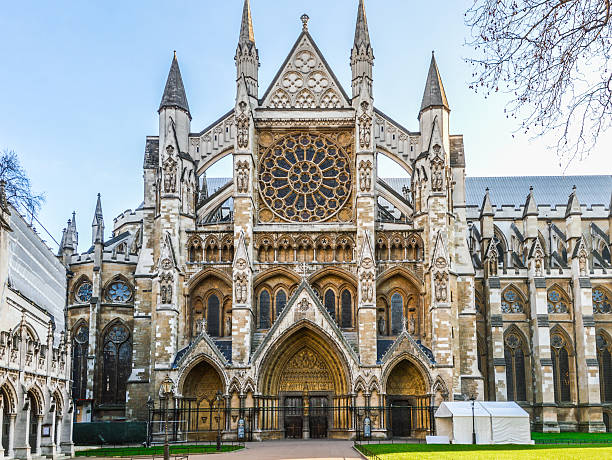
For travelers who want the Westminster anchor handled with proper context, a focused Westminster Abbey private tour is usually more useful than trying to “do Westminster” by exterior photos alone. The value is not only access to facts; it is the ability to separate what matters now from what can wait until a later royal, wartime, or parliamentary day.
The first-day matrix: how far east should you go after Westminster?
The cleanest comparison is not Westminster versus the City; it is how much City to add before dinner starts to control the route. Use the matrix below as a practical filter, not a rigid itinerary.
- Westminster, St Paul’s and Mayfair or West End dinner: Best when this is your first full day, your hotel is west or central, and the evening matters. You get two serious interiors or one interior plus a guided exterior arc, then finish with enough composure for dinner.
- Westminster, St Paul’s and a selective City walk: Best when your group has strong appetite for architecture, finance, fire, law, or church history, and dinner is not forcing a long westward return. The City appears as a story layer rather than a monument sprint.
- Westminster, the Tower and deeper City interiors: Best only when you are staying east, dining east, or willing to make the day explicitly Tower-forward by cutting one of the other interiors. For a standard first day, it should usually move to day two.
The counterintuitive correction is that Mayfair, despite being an excellent hotel and dinner base, can be an awkward sightseeing magnet on this route. If you keep returning to Mayfair between Westminster and the City because the car, hotel, or lunch booking feels convenient, you turn a clean eastward narrative into a set of radial errands. Mayfair works beautifully as the evening landing pad; it is overvalued as a midday reset point when the real route is already pointing toward St Paul’s.
The second correction is that the City is not one thing. St Paul’s Churchyard, Ludgate Hill, the Inns of Court edge around Fleet Street, Bank, the Royal Exchange, Leadenhall Market, and the Tower sit in different emotional registers. A visitor who says “we also want the City” may mean Wren and the Great Fire, medieval lanes, finance, legal London, skyline contrast, or the Tower. A good first-day plan chooses one of those meanings. It does not pretend they all fit between Evensong, a taxi queue, and a tasting menu.
Which anchor should open the day: Westminster, not the City
Westminster should open the day because it gives first-time London visitors the strongest orientation before the city starts fragmenting into districts. Begin near Westminster Abbey and Parliament Square, then let Whitehall, St James’s Park, Downing Street’s guarded edge, or the Churchill War Rooms context become supporting material rather than a second agenda. This order lets a guide connect state, church, monarchy, war, protest, and ceremony while the group is still fresh enough to absorb the density.
Starting in the City can be superb on a second day. It is not the best default on day one unless your hotel is east or your group has an unusually deep City focus. The City is layered, compact, and often quieter in tone than visitors expect; it asks for attention to street pattern, parish churches, post-fire rebuilding, guild history, banking architecture, and modern skyline interruptions. Those are rewarding details, but they work better after the big national framework has been established. Without Westminster first, the City can feel like a clever specialist chapter before the book has opened.
There is also a practical rhythm. Westminster’s core sights are close together but mentally heavy. The Abbey alone can absorb serious attention, and the paved spaces around Parliament Square and Whitehall involve standing, waiting, crossing, security edges, and exposed weather. If you postpone Westminster until after St Paul’s and the City, the group often arrives with weaker legs and a lower tolerance for context. The result is the exact opposite of what discerning travelers want: the famous place gets less attention than the supporting district.
For families and multigenerational groups, Westminster first also reduces negotiation. Children, older parents, and first-time visitors can identify the symbols quickly, which gives the day early payoff. Couples and food-and-wine travelers benefit for a different reason: the afternoon can then taper toward dinner instead of trying to rescue the day with more names. The opening anchor should create confidence, not pressure.
A reasonable exception is a Sunday or ceremonial day when Westminster access is restricted or the district is unusually constrained. In that case, start with St Paul’s or a river-framed orientation and keep Westminster for a day when the interior visit can breathe. The point is not to force Westminster at any cost; it is to give the heaviest interpretive anchor the part of the day when it has the best chance of landing.
The Westminster-to-City transition is the day’s hinge
The Westminster-to-City transition should feel like a deliberate change of register, not a transfer gap. This is where many ambitious London days become bloated. A taxi from Westminster to St Paul’s can be comfortable, but it can also turn the middle of the day into anonymous traffic around Parliament Square, the Strand, Aldwych, and Fleet Street. The Tube can be efficient, especially from Westminster toward Blackfriars or Mansion House, but it gives up surface context. A river move adds air and orientation, but it only makes sense if the pier geography and timing do not force extra walking at both ends.
The most elegant choice depends on what you want the transition to do. If the group is intellectually fresh, a guided surface route through the Strand, Temple Bar, Fleet Street, and Ludgate Hill can make London’s west-to-east story visible: royal and political Westminster gives way to legal London, print culture, the old City boundary, and then Wren’s dome. If the group is physically tired, the smarter choice may be a short transfer that saves legs for St Paul’s. If the weather is kind and the river is part of the day’s pleasure, a Thames move can reset the eye before the cathedral.
London does something specific to the body on this sequence. It is not a mountain city, but first-day fatigue accumulates through stone floors, station stairs, curb crossings, security pauses, river wind, and the repeated act of putting coats, bags, earpieces, tickets, and attention back in order. The walk from Parliament Square to the Abbey is short; the concentration it asks is not. St Paul’s can involve dome ambition, crypt time, side chapels, and exterior orientation. The City adds hard pavements and narrow turns. By late afternoon, the difference between one more meaningful street and one more forced interior is not subtle.
This is where a guide’s judgment matters more than a vehicle’s upholstery. A guide who trims the Temple detour or stops the City at St Paul’s may make the remaining day feel richer, not smaller. A car can save steps at the right moment, especially for guests with limited mobility, but too many short hops can break the city into disconnected pieces. For a deeper look at when the Thames or road actually improves the route, see the river-or-road transfer guide.
The mood consequence is just as important as the walking load. A first day that glides from Westminster toward St Paul’s feels purposeful; a day that lunges east, doubles back west, and then negotiates dinner traffic feels longer than it is. Serious sightseers often think the goal is to see more. In London, the better first-day goal is to keep the line of the day intelligible enough that dinner still feels like part of the trip rather than recovery from it.
When St Paul’s is enough, and when the City belongs
St Paul’s is enough when the day has already carried Westminster properly and dinner is west, central, or time-sensitive. Treat the cathedral as the turning point: arrive with energy, give it enough interpretive attention, orient outside on St Paul’s Churchyard or Ludgate Hill, then choose whether the final hour should be a City edge, a river view, or a controlled return. If the answer is unclear, stop at St Paul’s. The day will feel more complete than if you dilute the last hour with a rushed Bank-and-Tower scramble.
The late-afternoon cutoff is the important threshold. If you have not reached St Paul’s with appetite and daylight by mid-to-late afternoon, the City should become a separate morning rather than a rushed add-on. That is the plain editorial answer. Do not try to “just see” Bank, Leadenhall, Monument, the Tower, and the river if St Paul’s has already become the late-day anchor. You will collect names but lose the ability to place them.
The City belongs on the same day when it has a clear job. It works if your dinner is near Bank, the City, Shoreditch, or the eastern edge of the West End; if your group has a real interest in the Great Fire, Wren, finance, or medieval street patterns; or if St Paul’s is the only interior after Westminster and the rest of the afternoon is exterior-led. In those cases, a short City walk can sharpen the day. The right route might move from St Paul’s to Paternoster Square, past the old City boundary, toward the Royal Exchange and Bank, then finish with one carefully chosen texture stop rather than a checklist.
The City should move to day two when the Tower is non-negotiable, when you want more than one City interior, when your dinner is in Mayfair, Chelsea, South Kensington, or the West End with a theatre curtain, or when the group includes older parents, younger children, or travelers still adjusting after a long-haul arrival. The City is close enough to tempt you and dense enough to punish a vague add-on. Saving it for a morning is not a defeat; it is often the difference between understanding London’s old commercial core and merely walking through it while checking the time.
For travelers who know St Paul’s is central to the day, a dedicated St Paul’s Cathedral private tour earns its place better than a thin exterior glance followed by too many City fragments. The cathedral is not just another stop between Westminster and dinner; it is the pivot that tells you whether to continue east or turn the day toward the evening.
Dinner geography: Mayfair, West End, the City and Ikoyi change the route differently
Dinner geography should decide the final third of the day before you add another monument. A Mayfair dinner asks for a cleaner westward return after St Paul’s, not a heroic push to the Tower. The West End asks for theatre-night logic: fewer late transfers, a route that does not leave you stranded east at the moment when taxis, crowds, rain, or a curtain time matter. A City dinner makes a selective City walk sensible. A Strand or Aldwych dinner, including a restaurant at 180 Strand such as Ikoyi, usually argues against going all the way to the Tower and back.
Mayfair works best when St Paul’s is the eastern limit. After the cathedral, you can return west through a planned transfer, a short river or bridge moment, or a Fleet Street and Strand thread if time and legs allow. What you should not do is add Bank, Leadenhall, the Tower, and then expect a relaxed Mayfair arrival. The distance is not the only issue; the problem is the psychological reversal. You have told the day to keep moving east, then asked the evening to feel polished back west.
The West End is more forgiving geographically but stricter emotionally. If dinner is in Covent Garden, Soho, or near the theatre district, the final hour should move through the Strand, Temple, Aldwych, or Covent Garden rather than deeper into the City. This keeps the day legible and makes the evening feel like a continuation. It also leaves room for the small practical things that matter on a premium trip: returning a jacket to the hotel, changing shoes, collecting a family member who skipped the afternoon, or reaching a theatre without a tense final transfer.
The City dinner version is different. If you are dining near Bank, Liverpool Street, Shoreditch, or a private club in the City, then St Paul’s can open a satisfying late-day walk east. This is when Royal Exchange, Leadenhall Market, Lombard Street, or the contrast between Wren churches and glass towers can belong. The key is to keep the City exterior-led unless you have deliberately cut another interior earlier in the day. Dinner in the east buys you geography, not unlimited attention.
For Ikoyi, the route logic is sharper than many visitors realize. Before you book around it, check Ikoyi menu & reservations (https://www.ikoyilondon.com/) directly, then build the day around the fact that 180 Strand is a Strand/Aldwych address, not a deep-City finish. That means St Paul’s, Fleet Street, Temple, and the Strand can form a strong final arc; the Tower usually does not belong beforehand unless the whole day has been redesigned around fewer interiors. The restaurant’s location makes the middle route more elegant than the extreme eastward push.
For a separate restaurant-led day, use the London fine-dining guide as a planning companion rather than trying to force every serious meal into a sightseeing day. The best dinner after Westminster and St Paul’s is not always the most ambitious dinner in the city. It is the one whose geography lets the day end with clarity.
The chauffeur correction: comfort improves movement, not meaning
A chauffeur can improve this day when the route has a clear shape and the car is used selectively. It helps with hotel pickups, weather pivots, older parents, formal dinner clothing, and the awkward moment when a group must move from the Westminster core toward St Paul’s without draining legs. It can also help after dinner, when the value of a smooth return rises sharply. But it does not turn an overpacked day into a meaningful one.
A chauffeur cannot make too many interior visits feel meaningful if the day is already overpacked. This is where premium spend does not help or does not earn its cost. If you are trying to put Westminster Abbey, Churchill War Rooms, St Paul’s, the Tower, the Crown Jewels, a City walk, and a serious dinner into one first day, a better car will only move you between rushed experiences. The real upgrade is editorial: cut one monument, protect the best two, and make the transition between them feel intentional.
Where paying more does help is in reducing avoidable friction. A private guide can read the group’s energy and decide whether Fleet Street is worth walking, whether to hold St Paul’s as the final interior, whether to shorten the City edge, and whether the dinner location changes the exit. A chauffeur can then support that decision with precise pickups and calmer returns. The combination is valuable when the day is already disciplined. It is wasteful when it is used to defend a plan that should have been cut.
This matters especially for celebrations and family trips. A birthday dinner, anniversary meal, or multigenerational evening should not inherit the exhaustion of a sightseeing spreadsheet. A good London first day does not ask guests to arrive at dinner proud of what they survived. It lets them arrive with a sense that the city has opened, and that the evening still belongs to them.
Three sequences that hold together before dinner
The best sequence is the one that cuts early enough for the evening you actually booked. These three versions keep the same Westminster-first logic but change the eastern reach according to dinner geography and traveler stamina.
- The composed first-day sequence: Westminster Abbey or a Westminster exterior-and-context morning, a measured Whitehall or St James’s link, lunch without a long detour, St Paul’s as the afternoon interior, then a Mayfair or West End dinner. This is the strongest default for couples, first-time culture travelers, and families who want substance without arriving at dinner depleted.
- The City-edge sequence: Westminster in the morning, St Paul’s in the afternoon, then a short guided thread through Ludgate Hill, Fleet Street, Temple Bar, Royal Exchange, or Leadenhall depending on the dinner address. This suits travelers who enjoy urban layers and do not need the Tower on the same day.
- The eastward exception sequence: Westminster is kept lighter, St Paul’s is focused, and the late day moves toward Bank, Leadenhall, or the Tower only because dinner and hotel geography support it. This version is not “more complete”; it is a different day with a different center of gravity.
The composed first-day sequence is the one Orange Donut Tours would use as the base for many discerning first visits because it protects the day’s shape. It gives Westminster enough authority, lets St Paul’s create the architectural and historical pivot, and leaves dinner with emotional room. It is especially strong if your hotel is in Mayfair, St James’s, Marylebone, Covent Garden, or the West End. It also works for travelers who care about food and wine because it does not treat dinner as an afterthought.
The City-edge sequence is the best upgrade when the group is fresh and curious. It can be wonderful with an expert guide because the City’s value is often invisible without interpretation. A visitor can walk past a Wren church, a livery hall, a Roman street trace, or a post-war rebuilding line and not know why it matters. The guide’s role is to select one thread and keep it alive, not to perform a complete City lecture before the reservation.
The eastward exception is the one to handle with discipline. If you decide the Tower belongs, then something else must lose weight. That may mean Westminster becomes exterior-led, St Paul’s is shortened, or dinner moves east. The Tower of London is not a casual late-afternoon garnish. If it is a priority, give it the dignity of its own plan, such as a separate Tower of London private tour on another morning.
How a private guide makes the day richer by making it less full
The private-tour advantage on this route is not that a guide helps you add one more famous name; it is that a guide knows when the next famous name will make the day worse. Between Westminster and dinner, the decisive planning move is often removing one monument. Cut the Tower, shorten the City edge, or choose St Paul’s over a second museum-style interior, and the remaining day becomes more coherent. That is the natural point where private planning earns its cost.
A strong guide also changes how the city is understood. Westminster can be framed through ceremony and power instead of scattered anecdotes. The Westminster-to-City transition can be treated as a story of law, print, commerce, fire, church, and rebuilding rather than a transfer. St Paul’s can be interpreted as the turning point between royal-political London and mercantile London. Dinner can then be placed intelligently: not just where the table is best, but where the day can end without undoing itself.
For small groups, the private format also solves unequal stamina. One guest may want the dome, another may prefer the crypt, a teenager may need the City to feel concrete rather than abstract, and grandparents may need fewer station stairs. A rigid public itinerary will usually average those needs into a compromise. A private guide can preserve the thesis of the day while adjusting the texture: more river, less Tube; more exterior storytelling, fewer interiors; one coffee pause at the right moment rather than a late rescue stop.
If you want this Westminster-to-St Paul’s-to-dinner sequence shaped around your hotel, dinner address, mobility needs, and appetite for the City, explore private tours in London or Inquire now. The useful planning question is not “how much can we fit?” It is “which cut makes the rest of the day feel more London, not merely more full?”
FAQ
Should Westminster or St Paul’s come first on a first day in London?
Westminster should usually come first because it gives the strongest orientation to monarchy, Parliament, church, and national memory while the group is fresh. St Paul’s works better as the afternoon pivot toward the City and dinner.
Can I visit Westminster Abbey, St Paul’s and the Tower of London in one day?
You can physically attempt it, but it is not the better first-day sequence for serious sightseers. Westminster Abbey, St Paul’s and the Tower each deserve attention, and combining all three often makes the day feel rushed before dinner.
When should the City of London be saved for another day?
Save the City for another day if you reach St Paul’s only in mid-to-late afternoon, if dinner is in Mayfair or the West End, if the Tower is important, or if your group includes travelers who will struggle with another dense walking layer.
Is Mayfair a good dinner base after Westminster and St Paul’s?
Mayfair is a good dinner base if St Paul’s is the eastern limit and the return is planned. It becomes awkward if you try to add the deeper City or the Tower first, because the evening then requires a long westward reversal.
Is the West End easier than Mayfair for this route?
The West End can be easier if the final route comes back through the Strand, Temple, Aldwych or Covent Garden. It is less forgiving if you are also managing a theatre time, because the late-day transfer needs more discipline.
Where does Ikoyi fit after a Westminster and St Paul’s day?
Ikoyi fits best after a St Paul’s, Fleet Street, Temple and Strand arc because it is at 180 Strand rather than deep in the City. Check Ikoyi menu & reservations directly before anchoring the day around the dinner.
Does a chauffeur make Westminster, the City and dinner easier?
A chauffeur can make transfers, weather pivots and dinner returns easier, especially for comfort-first travelers. It cannot make an overpacked sequence meaningful; the better upgrade is cutting one major stop and using the car selectively.
What is the best first-day sequence for first-time London visitors with a serious dinner?
The best sequence is Westminster in the morning, St Paul’s in the afternoon, then either a short City edge or a controlled return toward Mayfair, the West End or the Strand. Dinner geography should decide how far east you push.
If you’re interested in any private tours of London, please reach out to us.















 So if you are looking for the absolute best in London & surroundings with authentic local fully-licensed native guides whose English you can actually understand and with an exclusive and amazingly fun itinerary













