Dover Cruise Port to Heathrow With a London Stop: Border Buffers, Luggage and a Failure-Ready Route

Updated
The failure usually begins before London appears
A private cruise party sees an evening Heathrow departure and imagines a generous day: leave the ship in Dover, spend a few hours in London, then continue to the airport. The plan can look comfortable on a calendar because three different clocks have been collapsed into one. The ship’s scheduled arrival is treated as the time the group will be seated in a vehicle. A road estimate is treated as a promise. The London visit is measured only by the time spent at a landmark, not by unloading, walking to the meeting point, finding the vehicle again and crossing the city. Heathrow is treated as a single curb rather than several departure terminals with airline-specific cutoffs.
Now change only a few conditions. The ship is alongside, but passenger release takes longer than expected. One suitcase is slow to appear. The booked vehicle has enough seats but not enough enclosed luggage volume. The driver must revise the approach because the M20 operating pattern has changed. A central London drop works, yet the onward pickup requires a different street. By the time the party finishes its walk, the city visit has consumed not just its own allotted time but the reserve that was supposed to absorb the drive to Heathrow.
The dangerous moment is not necessarily a dramatic breakdown. It is the quiet decision to keep the London stop after the safe margin has already disappeared. A responsible plan therefore does not begin with a list of sights. It begins with the flight deadline, works backward to the latest defensible departure from central London, and then decides whether Dover release time leaves a genuine stop rather than a hopeful gap.
This guide is written for a private cruise party connecting to an evening Heathrow flight. It separates fixed constraints from flexible choices, shows how luggage custody changes the route, and builds explicit abandonment points. The purpose is not to predict an exact journey time. It is to make the plan recoverable when the day no longer resembles the original schedule.
Read the journey as one chain of custody and deadlines
Dover Cruise Terminal lies on the Kent coast, southeast of London. Heathrow lies west of central London. A city stop is therefore not a small detour inserted between two adjacent points. It creates a linked movement from ship to terminal exit, terminal exit to London, London curb to the chosen visit, visit back to the vehicle, and central London to the correct Heathrow departure terminal. Each handoff can reduce the time available to every later stage.
The route also contains two kinds of time. Controllable time includes the length of the London walk, whether the group enters an attraction, how many stops are attempted, how quickly everyone returns to the pickup point and whether a meal is fixed or flexible. Uncontrollable or weakly controllable time includes ship release, customs intervention, luggage delivery, road incidents, traffic management, terminal approach and airline processing. The city visit should be funded from controllable time; it should not borrow from the reserve assigned to the second category.
That distinction matters because a two-hour London visit is not a two-hour entry in the schedule. It may require a drop-off window, a short walk from the vehicle, time for the driver to reach a lawful waiting or parking position, a firm reassembly point, a loading count and an onward route through streets that may not allow the vehicle to remain where it first stopped. A nominal two hours can demand a substantially larger block.
The most useful mental model is a single countdown. Every minute after the party’s planned Dover departure is spending the same finite asset: the margin before Heathrow’s recommended arrival time and the airline’s final operational cutoffs. London is feasible only while that margin still covers the complete stop, not merely the attractive portion of it.
Fix the Heathrow deadline before discussing the city
The flight time printed on the booking is not the planning target. The first airport target is the time the party intends to be at the correct departure terminal with every passenger and every bag. Heathrow’s official guidance, verified for this brief on 16 August 2026, recommends arriving three hours before an international flight and two hours before a domestic or European flight. Heathrow also directs passengers to confirm baggage size, weight and prohibited-item rules with the airline. The current guidance should be rechecked on the official Heathrow checking-in page before travel.
That recommendation is a baseline, not permission to arrive at the final minute. A private group may need additional time for a wheelchair or other mobility equipment, children, several checked bags, tax paperwork, a special-assistance meeting point, or separate bookings within the same party. The group’s responsible terminal-arrival target can therefore be earlier than the general airport recommendation. That is an editorial planning choice based on the party’s circumstances, not a claim that Heathrow requires the extra margin.
Airline cutoffs sit inside this broader arrival plan and can be unforgiving. For example, the British Airways Terminal 5 information verified for this brief states that check-in closes 60 minutes before long-haul departures and 45 minutes before short-haul departures, and that passengers must enter security at least 35 minutes before departure. Those are not substitute targets for a cruise transfer; they are late-stage boundaries showing why a plan should not aim at the edge. Recheck the applicable details on the British Airways Heathrow Terminal 5 page or the operating carrier’s own page.
Write down five items before any London stop is designed: flight number, scheduled departure, operating airline, departure terminal and the group’s chosen terminal-arrival target. “Heathrow at about five” is not an operational instruction. “All six passengers and eleven bags at Terminal 5 departures by 17:00, with the airline booking references held by two people” is.
Terminal identification is especially important because Heathrow is not one interchangeable drop. Terminals 2, 3, 4 and 5 have distinct approaches, and a terminal change can alter the final road leg and unloading plan. The vehicle brief should name the terminal, not merely the airport, and the organizer should recheck it the evening before and again on the morning of travel.
Dover arrival time is not vehicle departure time
A cruise itinerary may publish an arrival time, but the useful planning variable is when the complete party can leave the terminal with its luggage. Between those moments may sit ship clearance, the cruise line’s disembarkation sequence, walking through the terminal, locating bags, resolving a missing item, customs rules and the physical meeting with the driver. None should be assumed to take a fixed number of minutes without cruise-line or port-specific confirmation.
HMRC’s published notice, verified for this brief on 16 August 2026, states that Border Force may carry out physical controls aboard ships and that passengers arriving in Great Britain from an international cruise are subject to the applicable traveller customs rules and allowances. “May” is the important word: the possibility belongs in the buffer even though a specific intervention cannot be predicted for an individual sailing. The relevant official text is the HMRC notice on duty-free ships’ stores and arriving travellers.
For planning, use three separate port assumptions rather than one optimistic time. The first is the cruise line’s earliest plausible release for the party’s disembarkation arrangement. The second is a working departure time that includes bag collection and group assembly. The third is an adverse-but-credible threshold after which the London stop is automatically reduced or removed. These times should come from the sailing’s instructions and the organizer’s chosen risk tolerance, not from a generic claim that every Dover disembarkation behaves the same way.
Self-disembarkation can sometimes reduce dependence on the ship’s luggage sequence, but it also requires every traveler to manage every item through the terminal. It is not automatically the better choice for a party with large cases, young children, older parents, reduced mobility or several cabin bags. The operational question is not “Which option sounds faster?” It is “Which option can this group execute without losing cohesion or creating a bag-handling incident?”
The driver meeting time should also be defined as a window with a contact procedure. The port’s official cruise FAQ, verified for this brief on 16 August 2026, says passengers may be dropped at the terminal, but that there are no waiting areas within the port and no facility to store luggage before or after a cruise. That makes premature arrival and vague waiting instructions poor substitutes for coordination. Recheck the current wording on the Port of Dover cruise frequently asked questions.
Luggage is not an accessory to the route; it determines the vehicle
Seat count is the wrong first question for a post-cruise transfer. Cruise parties often travel with a mix of large hard-sided cases, cabin rollers, garment bags, backpacks, mobility equipment and personal items that cannot safely be compressed into a nominal passenger capacity. A vehicle described as suitable for six passengers may not be suitable for six cruise passengers and their luggage. Capacity must be confirmed against the actual inventory.
Before booking, count pieces by type rather than writing “normal luggage.” Record the number of large cases, medium cases, cabin bags, garment bags, folded wheelchairs, walkers, child seats and any unusually rigid item. Include whether any bag must remain upright, whether a mobility aid can be folded and whether the party expects to add shopping in London. The operator should confirm both seating and enclosed luggage accommodation in writing.
Vehicle choice then becomes a risk decision. A larger people carrier may keep the party and all bags together, simplify the bag count and preserve one communication channel. Two vehicles may provide the necessary volume but create new failure modes: vehicles can be separated by traffic, one subgroup may arrive at the wrong pickup point, and the organizer may lose a single view of the airport margin. A smaller executive car plus a luggage vehicle can work only when custody, arrival order and responsibility are explicit. There is no universally superior configuration; the correct one is the configuration with enough physical capacity and a clear handoff plan.
Make one person responsible for the luggage manifest and another for passenger headcount. At Dover, count bags as they enter the vehicle. Before leaving London, count again before doors close. At Heathrow, count on the curb before the vehicle departs. This may sound procedural, but a transfer with a city stop creates more moments when a case can be left in a terminal corner, a hotel-style lobby, a second vehicle or a loading bay.
The custody question during the London visit must be answered before travel: where will the vehicle be, who remains responsible for the bags, and can the same vehicle legally wait or park nearby? Do not assume that a driver can stand at the attraction entrance or circle indefinitely. Central London loading restrictions, parking availability and road conditions can force a different pickup point. A strong plan specifies the lawful custody arrangement without promising curbside access that may not exist.
Essential medication, travel documents, valuables, chargers and one change of clothing should remain in personal hand luggage rather than being buried in the rear of a packed vehicle. That is not because checked luggage is expected to fail; it is because the route contains several handoffs and the group may need critical items before Heathrow bag drop.
Build the schedule backward, with arithmetic that can survive a delay
The backward calculation can be written in plain language. Start with the chosen Heathrow terminal-arrival target. Subtract a conservative London-to-terminal driving allowance based on live planning information, then subtract a separate incident or route-change reserve and the time needed to unload and complete the bag count. The result is the latest responsible wheels-rolling time from London. From that, subtract the complete city-stop block, including unloading, walking to the start, the visit itself, regrouping and reloading. The result is the latest responsible arrival in London. Finally, subtract the Dover-to-London road allowance and its reserve. That produces the latest responsible departure from the port.
A worked example makes the method visible, but it must not be mistaken for a timetable. Imagine a 20:30 long-haul departure. Heathrow’s three-hour recommendation makes 17:30 the general arrival point. The party chooses 17:00 as its own target because it has several checked bags and wants an extra 30 minutes. For the purposes of the example, the planner uses a live London-to-Heathrow estimate of 75 minutes, adds a 30-minute recovery reserve, and allows 15 minutes for the correct terminal approach, unloading and the final bag count. The latest planned departure from the London pickup point is therefore 15:00.
The group wants a single 90-minute walk with no timed interior entry. It also assigns 20 minutes to leave the vehicle, reach the starting point, return, regroup and load. The vehicle must therefore reach the London drop by 13:10. Suppose the planning estimate from Dover to that drop is two hours and 15 minutes, and the party adds 45 minutes for road variability and the transition out of the port. The latest planned Dover departure becomes 10:10.
Every road figure in that example is an assumption chosen for demonstration. It is not a guaranteed Dover, London or Heathrow journey time. On the actual date, the organizer must replace those figures with route-specific live information and retain a separate reserve rather than merely inflating the sightseeing block. What matters is that the calculation exposes the consequence of delay: if the complete party is not moving from Dover by 10:10, something must change.
The first response should not be to steal from the airport target. Reduce the London visit from 90 minutes to a pre-agreed minimum, remove an interior entry, or switch to a shorter stop that uses the same drop and pickup area. Once the minimum city block has been consumed, the stop is cancelled. This is the no-stop threshold, and it should be agreed while everyone is calm rather than debated in the vehicle.
The same backward method also underpins a Heathrow-to-Eurostar connection with luggage handoffs and a missed-connection plan. The transport modes differ, but the discipline is identical: protect the fixed departure first, then allocate any city time that remains.
Choose a London stop by geometry, not by wish list
A credible stop uses one compact area, one drop strategy, one pickup strategy and one version that can be shortened without destroying the experience. It should sit reasonably on the day’s east-to-west movement and avoid unnecessary crossings of central London. The right choice depends on the live approach from Kent, the final Heathrow terminal, the group’s mobility and the amount of time that remains after the port, road and airport reserves have been protected.
An eastern landmark stop
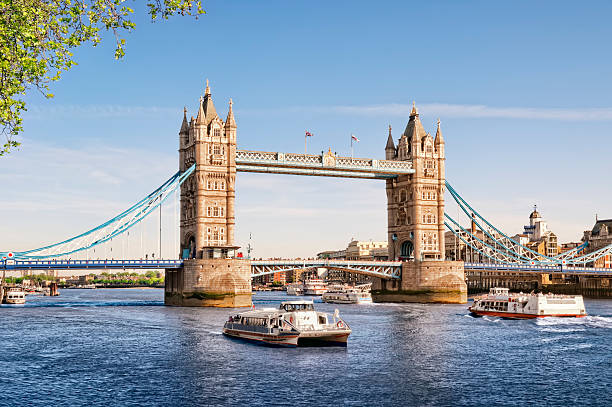
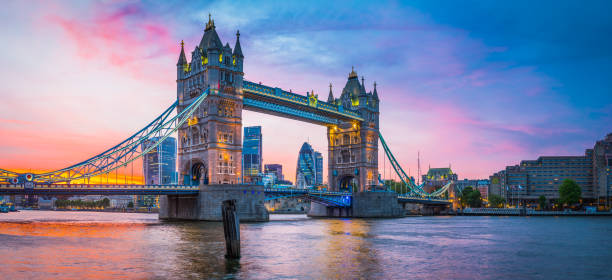
The Tower of London, Tower Bridge viewpoints, the City edge or a short Thames-side walk can make geographic sense because they offer a recognizable London arrival before the party continues west. Their strength is concentration: a view-led circuit can be meaningful without entering a large attraction. Their weakness is that curb access, bridge conditions and pickup positioning can turn a short visit into a longer vehicle operation. An interior Tower visit is a different proposition from seeing the riverside setting and should not be inserted casually into a transfer day.
A Westminster and St James’s stop
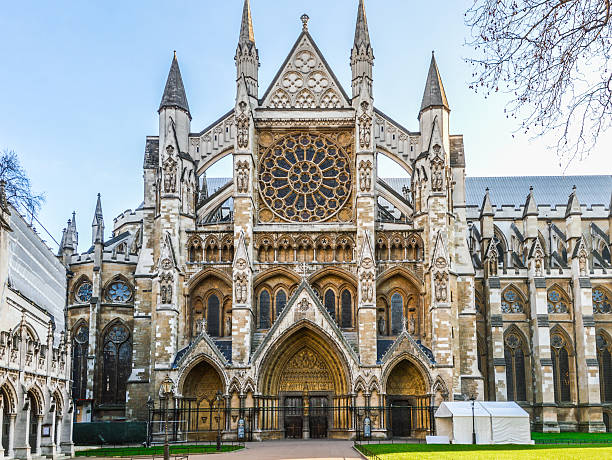
Westminster, Whitehall and St James’s provide an efficient visual summary of political and ceremonial London once the party is on foot. They also place the group farther west for the eventual Heathrow run. The cost is reaching them through central London in the first place. If the road approach has already absorbed the reserve, pushing deeper west for the sake of a more famous backdrop can be less responsible than using an eastern stop or going directly to the airport.
A South Bank or riverside stop
A short South Bank walk can offer broad views and easy visual orientation, but the vehicle plan must account for which side of the Thames the party starts and finishes on. A walk that crosses the river may be elegant for pedestrians yet awkward for a driver who must reach a lawful pickup on the opposite bank. The route should be designed around the reunion point, not only the view sequence.
A fixed-entry attraction
A museum, palace or ticketed interior adds opening hours, security, entry timing, cloakroom rules and the possibility that the visit cannot be shortened gracefully. It can work only when the port departure is early, the margin is unusually strong and the group accepts that the booking may be abandoned. For most same-day cruise-to-flight transfers, a compact outdoor or lightly structured stop is easier to recover.
For a broader comparison of final-day choices, the guide to London before an evening Heathrow flight examines how destination type changes the departure risk. A Dover transfer is more constrained because the day begins outside London and includes a port handoff, but the same principle applies: the last activity must fit the airport deadline rather than compete with it.
Define the no-stop threshold in advance
The no-stop threshold is the moment after which the vehicle proceeds directly to Heathrow. It is not a mood, and it should not depend on whether the group has already paid for a guide, meal or entry. Those costs are sunk once the safe flight margin has gone. The threshold is calculated from the latest responsible London arrival, the minimum viable stop block and the protected onward reserve.
Use three operating states. In the first state, the party leaves Dover early enough to retain the full city block, the road reserves and the terminal-arrival target. In the second, the full stop no longer fits but a predesigned shorter version still does. In the third, even the short version would consume the recovery reserve. The third state means direct to Heathrow.
The shorter version must be designed before travel. It might be a 45-minute view-led walk using one drop and the same pickup point rather than a 90-minute circuit. It might remove a meal and replace it with food carried for the vehicle, subject to the operator’s rules and passenger comfort. It might retain one landmark and drop the second. It should never be an improvised dash that leaves the group farther from the vehicle or dependent on a timed entry.
Set the decision at more than one stage. The first gate is before the trip, when the cruise line, flight and road environment are reviewed. The second is the actual wheels-rolling time at Dover. The third is the live situation on approaching London. A party can leave the port on time and still abandon the stop if a road incident changes the central approach. Equally, it can enter London with a healthy margin and then shorten the visit if reboarding takes longer than planned.
The protected reserve must remain visibly separate on the schedule. Calling it “spare sightseeing time” invites it to be spent. Calling it “Heathrow recovery reserve” makes its purpose harder to misunderstand.
When one vehicle and live coordination materially change the outcome
A dedicated vehicle is useful here not because the transfer needs ceremonial service, but because the route depends on continuity. The same party, bag inventory, flight information and decision threshold can remain within one operating brief from Dover terminal to the London stop and on to Heathrow. The organizer has one contact point, the driver knows the no-stop rule, and the pickup can be adjusted without forcing every traveler to reinterpret the plan.
The value becomes greater when several deadlines move at once. A delayed release may require a shorter London stop. A road alert may favor a different approach or eliminate the original drop. A terminal change may alter the final leg. A vehicle with live route coordination can respond to those changes while preserving luggage custody and group cohesion. A series of unrelated bookings can still work, but each additional handoff creates another place where the revised plan may not be understood.
The service brief should be specific enough to test the operator’s readiness. Ask for confirmation of exact luggage capacity, the Dover meeting procedure, the name or role of the day-of contact, the planned method for lawful vehicle waiting during the city stop, the response if the sailing releases late, and the process for changing the London pickup. A polished vehicle description is less important than clear answers to those operational questions.
For context on when a car-and-driver format changes actual movement rather than merely ambience, see the analysis of chauffeured London routing, drop-offs and sightseeing distances. For a transfer tailored around a cruise arrival and flight deadline, Inquire now.
A party that wants the city stop interpreted rather than simply observed may pair transport with a guide for the London segment. That creates a second professional handoff, so the guide’s meeting point, start trigger and cancellation threshold should be written into the same brief. A private London cruise-layover option is most relevant when the route, luggage and visit are designed as one movement rather than purchased as disconnected parts.
Road risk has three different geographies
The first road environment is Kent and the M20 corridor. National Highways uses its Operation Brock page for live alerts, including M20 closure or contraflow states and diversion instructions. The verified source notes that listed configurations can affect eastbound port traffic and westbound London-bound traffic differently. A headline about port traffic should therefore not be interpreted without checking the direction and current arrangement. Review the official National Highways Operation Brock updates close to travel.
The second environment is the approach to and movement through London. Here, the risk is not just a single congested road. It is the interaction between the chosen side of the Thames, the available river crossing, the drop street, lawful waiting, the guide meeting point and the onward route. A stop that looks close on a map may require the vehicle to make a lengthy reposition while the party walks. The planner should judge the complete vehicle movement, not the pedestrian distance between landmarks.
The third environment is the western run to Heathrow and the terminal approach. The route may use different roads depending on the London pickup, traffic and terminal. A live navigation estimate is useful, but it should be treated as a current observation rather than a guarantee. The reserve exists because the estimate can change after departure.
These geographies should not be blended into one broad “traffic buffer.” A Kent incident can delay the arrival in London. A central crossing problem can make the planned stop inaccessible even when the motorway was clear. A terminal approach delay can consume the final minutes after an otherwise successful day. Separate allowances make it easier to identify which part of the plan must be removed when conditions worsen.
The route coordinator should recheck conditions before the vehicle leaves Dover and again before committing to the central London approach. Once the party is on foot, the driver or coordinator should continue monitoring the Heathrow leg. That is the point at which a planned 90-minute visit may need to end at 70 minutes even though everyone arrived in London on schedule.
The London stop needs an exit plan as detailed as its arrival
Many itineraries specify where the group will be dropped and describe what it will see, but say little about reboarding. On a transfer day, the pickup is the more consequential event. A precise exit plan names the street or landmark, identifies the side of the road where possible, provides a fallback meeting point, and gives a call or message time before the vehicle arrives.
Every traveler should know that the stated end time is the time to be at the vehicle, not the time to leave the final viewpoint. For a party of six, ten minutes can disappear while one person uses a restroom, another returns to a shop and two people wait on opposite sides of a square. The guide or group leader should announce a final turning point early enough to reach the pickup together.
Use one reunion rule. Either everyone returns with the guide, or everyone meets at a single unmistakable location. Do not create separate “fast walkers” and “slow walkers” unless there are two accountable leaders and the vehicle can lawfully accommodate staggered loading. Group cohesion is particularly important because passports and booking details may be held by different people.
If the driver must reposition, the group should receive the new pickup before the final ten minutes of the visit. A last-second location change can be difficult for visitors unfamiliar with London’s one-way streets, bridge names and similar station entrances. The fallback location should be chosen for recognizability, not merely proximity.
The stop ends when all passengers and all bags are confirmed in the vehicle. Only then should the organizer compare the live Heathrow arrival estimate with the protected target. A successful London visit is not complete until the group is moving west with its margin intact.
Heathrow handoff: make the final curb operationally exact
The vehicle instruction should include the full operating airline and terminal, not only the flight number. Codeshares can create confusion when the marketing airline differs from the carrier operating the aircraft. The party should verify the terminal from the airline or Heathrow close to departure and communicate any change to the driver immediately.
Before reaching the airport, distribute passports and boarding documents to their owners, confirm that essential hand luggage is accessible, and identify which passenger needs help first. If the vehicle is densely loaded, the order of unloading matters. Bags for travelers who must reach a special-assistance point should not be buried behind every other case.
At the curb, one person counts passengers and another counts baggage. The driver should not be released until the count is complete. If the group is split across more than one flight or terminal, the transfer should be treated as multiple airport handoffs with separate deadlines. A single vehicle that drops one subgroup and then circles to another terminal may place the later subgroup at greater risk; the plan must account for the sequence rather than assuming all Heathrow drops are simultaneous.
A published flight delay does not automatically make a later airport arrival safe. Check-in, baggage acceptance, security and gate rules may remain tied to the operating process, and the airline may revise the departure again. Unless the airline explicitly confirms a new requirement, retain the original arrival plan.
Arriving earlier than hoped is not a failed day. It is the successful use of a fallback. The party can eat, reorganize hand luggage and move through the terminal without converting every queue into an emergency. The cost of a missed flight is usually far greater than the value of extending a city stop by another half hour.
Failure modes and the response each one requires
The ship releases later than the working assumption
Trigger the pre-agreed shorter stop or direct route at the actual Dover departure threshold. Do not ask the driver to “make up the time.” A faster promise cannot remove customs, road or terminal risk. The group organizer should communicate the decision once and prevent the party from reopening it at every landmark.
A bag is missing or delayed in the terminal
First protect travel documents, medication and the passengers’ ability to fly. Follow the cruise line’s baggage process and establish who is authorized to handle the report. If resolving the bag consumes the London margin, the city stop goes. Do not leave a traveler behind casually or divide the party without confirming passports, phones, booking details and a realistic airport route for both subgroups.
The booked vehicle cannot take the luggage
This is best prevented by a written inventory. If it occurs, the recovery choices are a replacement larger vehicle, an additional vehicle with explicit custody responsibility, or direct travel with a revised configuration. The London stop should be suspended until every bag has a confirmed route to Heathrow. Loading cases unsafely into passenger space is not a legitimate schedule-saving device.
An Operation Brock alert or other Kent road issue changes the route
Use the official directional information and live routing, then recalculate the latest London arrival. The correct response may be a different city approach, a shorter stop or no stop. Do not assume that a problem described as port-related has the same effect in both directions, and do not preserve the original sightseeing order when the road geometry has changed.
The central London pickup becomes impractical
Move to the agreed fallback point or end the visit earlier. The guide should keep the party together while the driver communicates the revised location. If the new pickup requires a river crossing or a long walk, compare that time with the remaining airport reserve before committing. A beautiful final viewpoint is not useful if it leaves the group on the wrong side of the vehicle plan.
The flight terminal changes
Confirm the change through the operating airline or Heathrow, update the driver, and recalculate the terminal approach. The city stop should not be extended merely because the new terminal appears closer on a map; operational access and the airline’s cutoffs still govern.
The party itself is moving more slowly than expected
Fatigue after a cruise, reduced mobility, children, warm weather or simple indecision can lengthen every transition. Shorten the walking circuit before the group becomes fragmented. The route should be able to finish from several points, with the guide steering toward the pickup rather than insisting on a final landmark.
Fallbacks should preserve the flight, not imitate the lost itinerary
The primary fallback is direct travel from Dover to Heathrow. It is operationally clean because it removes the central London drop, parking, walking, regrouping and second loading cycle. It does not remove road uncertainty, so the party should still retain the airport target and monitor the route.
A second fallback is a shorter London orientation that does not involve entry to an attraction. This is appropriate only when the complete short version, including pickup, still fits inside the calculated margin. It should use a single compact area and be designed to end early without penalty.
A third fallback is an airport-first day. The group proceeds to Heathrow and accepts additional terminal time. This can feel emotionally disappointing after imagining London, but it is often the most rational response to a late release or adverse road conditions. It also preserves options for food, rest and reorganizing luggage after the cruise.
Public transport or an on-demand vehicle may be an emergency recovery path if the booked vehicle fails, but it should not be treated as an equivalent transfer without analysis. The party would still need to move from the cruise terminal to the next transport point, handle every bag, navigate onward connections and preserve the airport deadline. For a large group, the coordination cost may be more significant than the nominal travel time.
Splitting the group is a last-resort tactic, not an easy way to preserve sightseeing. It may be appropriate when some travelers have a later flight or when one person must resolve a baggage issue, but only after documenting who holds which passports, bags, phones and booking references. Each subgroup needs its own route, terminal target and accountable leader.
No fallback should force a London stop after the no-stop threshold. The point of planning alternatives is to remove pressure from the decision, not to create a more complicated way to defend the original idea.
What to verify, and when
The operating facts cited in this guide were verified in the supplied research on 16 August 2026. Port procedures, road-management states and airline rules are inherently changeable even when the planning method is evergreen. Recheck after any substantive page update or source correction, and operationally before the actual journey.
About a week before travel
- Confirm the ship’s terminal, scheduled arrival, disembarkation options and any cruise-line instructions that affect luggage collection.
- Confirm flight number, operating airline, scheduled departure and Heathrow terminal.
- Send the operator the final passenger and luggage inventory, including mobility equipment and child-seat needs.
- Define the full London stop, shortened stop and no-stop threshold in writing.
- Confirm where the vehicle will be during the London visit and how a pickup change will be communicated.
Within 72 hours
- Review the Port of Dover passenger guidance and the cruise line’s latest arrival communication.
- Review National Highways information for Operation Brock and other route issues, paying attention to direction.
- Recheck Heathrow and airline check-in, baggage and terminal information.
- Check whether the chosen London stop has any opening-hour, security or access dependency that would make it hard to shorten.
- Distribute the one-page operating brief to the organizer, operator and guide.
On the morning of disembarkation
- Confirm the driver contact and meeting procedure before leaving the ship.
- Confirm the live flight and terminal without assuming that a delay permits later arrival.
- Check the Kent route and the planned London approach.
- Place passports, medication and essential items in accessible hand luggage.
- Remind the group that the London stop is conditional and identify who makes the final go or no-go decision.
At the point of movement
- Record the actual time when all passengers and bags are inside the vehicle at Dover.
- Compare that time with the written thresholds before committing to London.
- Recalculate before entering central London and again before the group leaves the vehicle.
- End the stop early if the live Heathrow estimate begins to consume the protected reserve.
The organizer’s one-page operating brief
A private group should not rely on a long message thread while standing in a cruise terminal. Condense the plan to one page that can be read quickly by the organizer, driver and guide. The brief should begin with the immovable information: passenger names, mobile numbers, flight, operating airline, departure terminal and Heathrow arrival target.
Next, list the physical inventory: number of passengers, large cases, cabin bags, special items, mobility aids and child seats. Name the person responsible for the passenger count and the person responsible for the bag count. If two vehicles are used, assign passengers and bags to each rather than deciding at the curb.
Then state the movement plan. Include the Dover meeting method, the full London drop and pickup, the shortened-stop version, the no-stop departure threshold, and the direct-to-Heathrow fallback. Use clock times tied to the actual flight, but label road allowances as planning assumptions subject to live revision.
Finally, include the decision authority. One person should be empowered to cancel or shorten the London stop after consulting the driver or coordinator. A group vote is slow and encourages optimism. The decision should follow the threshold already accepted by the party.
Travelers building a wider tailor-made stay can use Orange Donut Tours’ private London planning as the parent context, but this transfer should remain a distinct operational document. It is a transport-and-deadline problem first and a sightseeing opportunity second.
Final handoff: the five lines that make the plan usable
Before the cruise begins, the organizer should be able to hand the operator a brief containing five unambiguous lines. First: the party is not considered ready until every traveler and every listed bag is in the vehicle. Second: the Heathrow target names the exact terminal and sits earlier than the airline’s hard cutoffs. Third: the London stop has a complete duration that includes unloading, regrouping and reloading. Fourth: a clock-based threshold converts the full stop to the short stop and then to direct travel. Fifth: one person has authority to make that decision.
On the day, compare reality with those lines at Dover, on the London approach and before the city pickup. Keep the recovery reserve intact. Recheck the port, road and airline sources when the operating environment changes. Count the bags at every handoff. Do not let a prepaid visit, an appealing view or a delayed flight display persuade the group to spend time that belongs to Heathrow.
A London stop between Dover and an evening departure can be excellent when the ship releases on time, the luggage fits, the road environment remains workable and the city visit is compact. It becomes irresponsible when the plan depends on perfect transitions or asks the driver to recover time already lost. The practical success is not measured by how many landmarks fit between ship and aircraft. It is measured by whether the party reaches the correct terminal together, with every bag, after using London only for the time the day could genuinely afford.
If you’re interested in any private tours of London, please reach out to us.






















 So if you are looking for the absolute best in London & surroundings with authentic local fully-licensed native guides whose English you can actually understand and with an exclusive and amazingly fun itinerary













