How London Affineurs Read British Farmhouse Cheese: Milk Seasons, Rinds and Specialist Selection

Updated
A wheel of British farmhouse cheese reaches a London counter wearing evidence. The cloth may be stained by months of breathing and turning. A natural rind may be dusty, mottled, wrinkled or tacky. The paste just beneath it may be firmer than the centre, and the aroma at a newly cut face may change over several minutes. None of those signs proves provenance by itself. Read together with the maker, milk, make date and maturation record, however, they tell a specialist what happened before the cheese arrived in the city and what still needs to happen before it should be sold.
This is the useful way to think about a London affineur. The work is not simply to keep cheese until it is older, nor to arrange impressive names behind glass. It is to translate rural production into an urban buying decision: which batch is expressive now, which wheel needs more time, which rind is developing as intended, which variation reflects season rather than damage, and which cheese will survive the buyer’s plans after it leaves the shop. For a culinary collector, that judgment is more valuable than a long list of addresses. London matters because it concentrates cheeses from very different British landscapes, then gives a knowledgeable buyer the chance to compare their milk seasons, rind systems and maturation choices in one day.
Provenance begins before the rind, but it does not end at the farm
The first distinction is between the person who makes a cheese and the specialist who selects or matures it. A cheesemaker controls the herd or milk supply, cultures, rennet, curd handling, salting, moulding and early care. An affineur receives a cheese whose basic architecture has already been set, then manages the environment and decides when the result is ready. In Britain, one business may combine retailing, selection and maturation, while some cheeses remain almost entirely under the maker’s care. The word affineur is therefore most useful as a description of responsibility rather than a ceremonial title.
That responsibility includes selection. Two wheels made to the same recipe on the same farm can diverge because milk composition, drainage, acidity, rind flora and handling are never perfectly identical. A good London specialist does not erase that variation. The specialist sorts it: a more open-textured wheel may be directed toward an earlier sale; a tighter, slower wheel may be held; a rind that is too dry may need a different environment; and a batch with an especially clear seasonal profile may be presented as such. The decisive question is not “How old is it?” but “What has this particular cheese become?”
Verified context: protected names can make part of the provenance chain unusually explicit. The official West Country Farmhouse Cheddar specification limits production to Dorset, Somerset, Devon and Cornwall and sets out requirements that include assessment of the milk, hand cheddaring, cloth bandaging and controlled maturation. The cloth forms a breathable hard rind rather than an airtight skin. This is a legal production framework, not a guarantee that every batch will be equally pleasurable on every date. An affineur still has to judge the individual cheese inside that framework.
“Farmhouse” is likewise not a universal British quality grade. In some contexts it signals that milk is transformed on the farm where it is produced; in others the term is used more loosely. A serious tasting therefore moves past the front label. Ask who made the cheese, where the milk came from, whether the milk was bought in or farm-produced, when the cheese was made, who matured it, and what changed after it left the farm. Those questions turn provenance from atmosphere into a traceable sequence.
Milk is the first seasonal ingredient
Milk is not a neutral white input. Its fat, protein, minerals, microbial population and aromatic precursors vary with species, breed, feed, weather, stage of lactation, milking practice and animal health. The maker can standardise or compensate for some variation, but farmhouse cheese often retains enough of it to matter. This is why a specialist starts with the milk record before describing the flavour.
Species establishes a broad compositional range. Sheep’s milk is generally rich in solids and can support a dense, concentrated paste. Goat’s milk often behaves differently in acid development and texture, particularly in young lactic cheeses. Cow’s milk covers an enormous spectrum because breed, herd management and make style can pull it in very different directions. None of these categories is a flavour verdict. “Sheep’s milk” does not automatically mean sweet, “goat’s milk” does not automatically mean sharp, and “raw cow’s milk” does not automatically mean complex. The words identify variables; the cheese must still supply the evidence.
Breed is similarly informative but not deterministic. A traditional or regionally adapted breed may produce milk with a characteristic balance of fat and protein, yet feed, yield, lactation stage and cheesemaking choices can overwhelm a simplistic breed story. The useful question at the counter is not “Which breed tastes best?” It is “Why does the maker consider this herd important to this cheese?” A specialist should be able to connect the answer to texture, seasonal behaviour, farming system or consistency rather than merely reciting a rare-breed name.
Feed and pasture add another layer. Species-rich grazing can contribute a changing mixture of grasses, herbs and flowers, while conserved winter forage creates a different nutritional and microbial context. The effect is neither instantaneous nor identical from farm to farm. Rainfall can dilute or alter pasture; a dry spell may reduce yield; and a move from early lactation to later lactation can concentrate solids even when the animals remain outdoors. Milk season is therefore a bundle of conditions, not a four-part marketing calendar.
A precise example: Neal’s Yard Dairy’s Brefu Bach notes identify a seasonal raw sheep’s-milk cheese from Bethesda and describe local grass-fed Lleyn ewes on species-rich pasture. The page also notes that the cheese becomes denser and develops more herbal, savoury flavours toward late summer. That is the kind of claim a collector can test: the maker, milk, location, grazing context and seasonal sensory change are linked. It does not imply that every late-summer wheel is superior. It gives the taster a defensible hypothesis.
For buying, the make month can be more revealing than the age statement. Two cheeses both sold at nine months may have begun with very different milk. A spring-made wheel may show the moisture and freshness of a flush of new grass; a late-summer cheese may be denser or more concentrated; a winter make may reflect stored forage and indoor management. These are tendencies, not rules. The point of asking is to understand why two batches differ, not to force every cheese into a seasonal stereotype.
Season changes the affineur’s job
Seasonality continues after the milk vat. A cheese made from wetter milk may drain differently. Ambient conditions at the farm can influence acidification and surface flora. The first weeks of rind development may occur in a warmer or cooler environment even when the maturation room is controlled. Once the cheese reaches London, the affineur inherits those earlier decisions and must respond to them rather than applying one fixed timetable.
This is why “twelve months” is an incomplete description of maturity. Time gives enzymes and microbes an opportunity to break down proteins and fats, moisture to migrate, and flavour to accumulate, but the rate depends on the cheese. A small washed rind can move from chalky to flowing in days. A large clothbound cheddar may develop over many months and still show significant variation between the core and the area near the rind. A blue cheese may require enough oxygen through piercing channels to develop its internal veining, yet still need careful moisture control to avoid a harsh or collapsing paste.
A London specialist reading a seasonal cheese is therefore making at least three comparisons at once: this wheel against its intended style, this batch against other batches from the same maker, and this moment against the cheese’s likely future. The first comparison detects whether the cheese is recognisable. The second identifies seasonal or production variation. The third determines whether to sell, hold or redirect it. A tasting appointment becomes much more instructive when the cheesemonger can explain which of those comparisons is driving the recommendation.
Season also affects availability. A genuinely seasonal sheep’s- or goat’s-milk cheese may not exist year-round, and a matured cheese can appear at the counter months after the milk season that shaped it. This lag matters when planning a visit. “Spring cheese” might mean cheese made in spring, cheese sold in spring, or a style associated with fresh spring milk. A collector should ask which meaning is intended. For a parallel look at how London specialists translate a rural calendar into an urban purchase, see London’s game-season provenance guide.
The make determines what maturation can reveal
Affinage cannot rescue every production decision, and it cannot manufacture a flavour that the curd was never capable of developing. The make sets the range of possible outcomes. Milk treatment, starter culture, rennet, curd size, stirring, heating, whey drainage, salting and pressure all shape the moisture, acidity and structure that the affineur later manages.
Raw and pasteurised milk are often treated as opposing badges, but a specialist reading is more exact. Raw milk can carry a broader native microbial population and preserve some heat-sensitive characteristics, yet its quality depends on excellent milk hygiene and controlled cheesemaking. Pasteurisation changes the microbial starting point and may require selected cultures to rebuild a desired fermentation, but it does not prevent nuance. A poorly made raw-milk cheese does not become important through ideology; a finely made pasteurised cheese does not become trivial through process alone. The relevant question is how the milk treatment serves the intended style and what the maker does afterward.
Curd size and moisture are central. Smaller curds tend to release more whey, creating a drier framework suited to longer maturation. Larger or gently handled curds retain more moisture, supporting a softer paste and faster breakdown. Heating and stirring reinforce that effect. Salting regulates flavour, moisture movement and microbial activity. Pressing closes or shapes the paste, while techniques such as cheddaring create a distinctive layered curd structure before milling and salting. The protected West Country specification matters because it records that production logic; the affineur’s later work is legible only when the make is understood.
Starter culture and rennet also deserve attention, although they should not become a technical recital. Cultures acidify the milk and contribute enzymes that continue working during maturation. Rennet coagulates the milk, and its type can influence the story a maker wishes to tell as well as the cheese’s suitability for different diners. A collector does not need to memorise strain names. It is enough to ask whether the maker relies on a stable house culture, commercial starters, natural whey cultures or another system, and whether that choice is connected to consistency, regional practice or a particular flavour trajectory.
The most revealing producer comparison keeps the style relatively constant. Compare two clothbound cheddars from different farms, or two batches of the same cheese made in different months. By contrast, comparing a bloomy sheep’s cheese with an aged blue may be enjoyable but teaches little about why one producer’s milk or make differs from another’s. London’s breadth can encourage over-collection. The affineur’s discipline is to narrow the field until the comparison answers a question.
A rind is a working surface
The rind is where the cheese meets air, cloth, moisture, salt, microbes and human intervention. It is not merely packaging. It regulates water loss, admits or limits oxygen, hosts bacteria and moulds, and marks the history of brushing, washing, turning, rubbing or wrapping. Because the rind is active, its appearance should be read as part of a system rather than judged against a cosmetic ideal.
Natural rinds
A natural rind develops from the cheese’s own drying surface and resident flora, often with brushing or turning to guide it. It may be mottled and irregular. The useful signs are coherence and relation to the paste: is the rind securely formed, is the zone beneath it healthy, and does the aroma move from earth, cellar or mushroom toward the interior without becoming acrid? A little surface variation can be normal. Deep cracking, excessive desiccation, unwanted stickiness or an ammoniated smell may suggest that the cheese has moved away from its intended condition, but those signs must be interpreted by style.
Clothbound rinds
Clothbound cheese breathes through its wrapping. In traditional cheddar, the cloth supports a firm rind while allowing slow moisture exchange. The result is not just a rustic appearance. Gradual water loss helps create the compact, sometimes friable texture associated with long maturation, and the rind can contribute savoury, earthy complexity near the edge. A specialist cuts through enough of the wheel to compare the outer paste with the core. If only the centre is tasted, an important part of the maturation record is missed.
Cloth should not be confused with a sealed wax or plastic coat. An impermeable coating limits moisture loss and surface ecology in a different way. Neither approach is inherently better; they produce different outcomes and solve different production problems. For a provenance-led tasting, the important point is whether the rind system matches the claimed style and whether the flavour near the rind shows controlled development rather than simple dryness.
Bloomy rinds
Bloomy cheeses develop a pale mould coat that ripens the paste from the outside inward. The rind’s enzymes break down the cheese beneath it, often producing a soft or flowing layer around a firmer centre. A cross-section is more informative than age alone. A chalky core may be deliberate in a young cheese or a sign that it needs time; a completely liquid edge with a strong ammonia note may indicate that the surface has outrun the centre. The affineur manages this gradient through temperature, humidity, turning and release date.
Washed rinds
Washed rinds are treated with brine or another liquid to encourage salt-tolerant surface bacteria and suppress competing moulds. Their colour can move toward cream, gold, orange or red, and their aroma may be far stronger than the paste tastes. The specialist judges whether the rind is supple and integrated, whether the wash has developed evenly, and whether the cheese retains balance beneath the aromatic surface. A pungent smell is not proof of ripeness, and a restrained smell is not proof of immaturity.
Blue development
Blue cheese asks the taster to read both rind and interior. Veins form where oxygen reaches the blue mould, often through channels created by piercing. Distribution matters: sparse veining, dense pockets and broad marbling can taste very different even within one wheel. The paste should be considered around the veins as well as away from them. Salt, moisture and breakdown can concentrate locally, so one cube cannot represent an entire wheel. A specialist’s selection skill includes choosing where to cut and whether the piece offered captures the batch fairly.
The central discipline across all rind styles is to avoid treating visual irregularity as automatic authenticity. A beautiful rustic rind can conceal a dull paste; a tidy surface can cover a very expressive cheese. Provenance tells the buyer what should have happened. Sensory examination tests whether it did.
Humidity, temperature and time are levers, not a recipe
Affinage is often described through three variables: temperature, humidity and time. Airflow, turning, washing, wrapping, shelf material and room microbiology belong beside them. Each variable changes the rate at which moisture leaves, rind organisms grow, enzymes act and the paste softens. The difficulty is that the variables interact. Raising humidity may protect a small cheese from drying, but it can also encourage excessive surface growth. Lowering temperature slows activity, yet may leave a cheese firm and aromatically muted. More time can deepen flavour or carry the cheese past balance.
An affineur therefore works by response. The cheese is inspected, touched, smelled, sometimes tapped, turned or sampled. Wheels may be separated because one batch is moving faster. Rinds may be brushed to control mould, washed to direct flora, rewrapped to manage moisture, or moved between rooms. The work is repetitive in practice but not mechanical in judgment. A schedule supplies a baseline; the cheese supplies the correction.
Humidity is especially easy to misunderstand. “High humidity” sounds luxurious, yet the goal is not maximum moisture in the air. It is the range that allows a particular rind to remain active without becoming unstable. A clothbound cheddar needs enough humidity to avoid cracking and excessive loss, but also enough airflow and time to form a dry, coherent surface. A bloomy cheese needs moisture for its surface flora, but too much can produce a sticky rind or uneven growth. A washed rind needs a living surface without uncontrolled wetness. The correct number is style-, room- and batch-specific.
Time should be read in the same way. An eighteen-month cheese is not automatically more profound than a twelve-month version. Longer maturation brings cost through storage, weight loss, care and risk, which can raise price, but sensory gain is not linear. Some cheeses become drier without becoming more articulate. Others need an extended period for their structure to relax and their savoury finish to emerge. The affineur’s contribution is the release decision: not age as prestige, but age as fitness for the intended experience.
London adds a consequential second geography to this process. Cheese made in Somerset, Suffolk, Lancashire, Wales or Nottinghamshire can continue maturing in the capital under conditions controlled by a specialist who also understands urban demand. That does not make London the origin. It makes the city part of the chain of custody. The rural and urban roles should be credited separately.
Borough and St James’s offer different ways to learn
London’s most useful cheese day is not a race between counters. Borough Market and St James’s support different kinds of inquiry, and the choice should follow the question being asked.
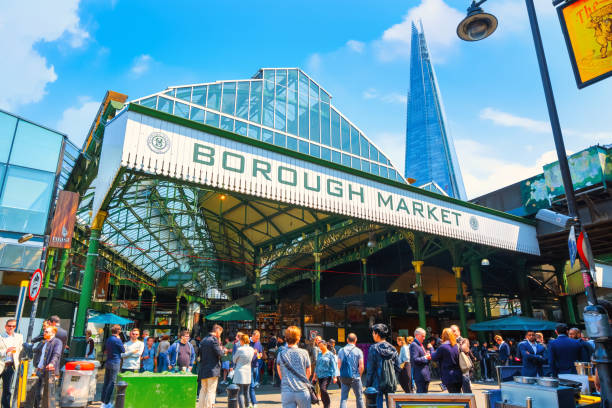
Verified context: Borough Market’s listing for Neal’s Yard Dairy places the shop at 8 Park Street and states that many British and Irish cheeses are matured beneath railway arches in Bermondsey. The official page also publishes current trading hours, which should be checked close to the visit because operational details can change. The important distinction is geographical: the public market counter and the maturation environment are related, but they are not the same kind of access. A shopper should not assume that a retail visit includes entry to the arches or a technical tour.
Borough is valuable because the market context keeps food supply visible. A cheese discussion can be connected to bread, produce, meat, drink and the wider question of how London receives regional food. It is also a place where a spontaneous browse can be rewarding. For a detailed comparative tasting, however, the market’s energy can compete with concentration. Route judgment: use Borough for breadth, producer orientation and a first reading of rind styles; reserve a pre-arranged, quieter format for close batch comparison when possible.
Verified context: Paxton & Whitfield’s shop information lists its St James’s branch at 93 Jermyn Street and invites visitors to speak with expert cheesemongers and taste current seasonal selections. It also lists practical services such as click and collect and home delivery. St James’s places cheese within a historic merchant district, close to other specialist food, wine, tailoring and collecting traditions. The surrounding geography supports a more appointment-led day, but the quality of the conversation still depends on staffing, stock and advance coordination.
Route judgment: choose St James’s when the aim is a controlled merchant conversation, a focused gift or a purchase that must connect smoothly with a Mayfair or West End schedule. Choose Borough when the aim is to understand the relationship between regional food and London’s market culture. For collectors who want both, one deep stop and one shorter corroborating stop is usually more useful than two large tastings. The second counter should test or extend a question raised at the first, not restart the subject from zero.
This is where a broader itinerary can help or harm. Cheese benefits from an alert palate and enough time to ask follow-up questions; it does not benefit from being inserted between several heavy tastings. The framework in a curated London food-and-wine day is useful for deciding whether Borough or the western districts should anchor the route. For a related example of how storage and merchant handling change an ostensibly simple purchase, the rare-tea guide provides a productive comparison.
A serious tasting should answer one question
A specialist tasting is easiest to remember when it has a defined proposition. “Show us the best British cheese” is too broad and pushes the cheesemonger toward a performance of variety. Better questions include: How does milk season change one producer’s cheese? What does clothbound maturation contribute beyond age? How do raw- and pasteurised-milk versions of a related style differ? What changes when a cheese is matured at the farm rather than selected and finished by a London specialist? Which cheeses will remain in good condition during onward travel?
The Academy of Cheese tasting guide offers a useful order of attention. It begins with identity details such as maker, milk, pasteurisation and rennet; proceeds through rind, texture, colour and aroma; then considers simple and complex flavours, persistence and ripeness. It also recommends moving from milder cheeses toward stronger ones. That sequence matters because it keeps a forceful washed rind or blue from flattening the subtler milk and acidity of an earlier cheese.
A London appointment can turn that framework into a compact comparative method:
- State the question. Ask for four to six cheeses that illuminate one theme rather than a dozen unrelated samples.
- Record identity before tasting. Note maker, region, milk species, raw or pasteurised status, make season, age, rind type and maturation location when known.
- Inspect the whole piece. Look at rind, paste near the rind, centre, openings, moisture and any gradient across the cut.
- Smell in stages. Compare the rind, the cut face and the aroma after the piece has warmed briefly.
- Taste texture before naming flavour. Observe resistance, crumble, elasticity, creaminess, granularity and breakdown.
- Follow the finish. Persistence, bitterness, sweetness, acidity, salt and savoury depth often separate an impressive first impact from a coherent cheese.
- Retaste the first comparison. Returning to an earlier cheese exposes palate fatigue and makes differences more reliable.
Sequence by actual intensity, not by a fixed hierarchy of milk species. A young lactic goat’s cheese may come first, followed by a restrained bloomy rind, a supple territorial cheese, a clothbound cheddar, a blue, and finally a pungent washed rind. Yet a very mature bloomy cheese may be more forceful than a mild blue, and an aged sheep’s cheese may need to move later. The cheesemonger should taste the day’s pieces and adjust.
Named cheeses become useful when they represent different production logics rather than status. Brefu Bach can introduce seasonal sheep’s milk. Montgomery’s Cheddar or another traditional clothbound West Country farmhouse cheddar can demonstrate the relationship between hand cheddaring, breathable rind and long maturation. Kirkham’s Lancashire can open a discussion about regional texture and curd handling. Baron Bigod can show outside-in bloomy-rind ripening, while Stichelton can introduce raw-milk blue development. Availability and condition should determine the final set; the names are prompts, not a mandatory shopping list.
Keep accompaniments restrained during the analytical portion. Plain bread or a neutral cracker and water help reset texture and salt. Fruit, chutney, honey and alcohol can be enjoyable later, but they introduce sweetness, acidity and aroma that make small differences harder to read. When wine is part of the appointment, taste the cheese alone first, then evaluate the pairing as a second question. Otherwise a successful pairing can disguise a weak cheese, and a difficult pairing can unfairly diminish a good one.
Temperature matters, but there is no single universal waiting time. A cold cheese can seem firmer and less aromatic; an over-warmed soft cheese can lose structure. Ask the specialist when the pieces were cut and how long each style should sit before tasting. For purchases, remove only the portion intended for service and follow the merchant’s guidance rather than repeatedly warming and recooling the whole piece.
Price does not prove provenance
Expensive cheese may deserve its price. Small milk volumes, slow handwork, long maturation, weight loss, rejected wheels, skilled labour, specialist transport and retail care all cost money. Scarcity can also be real. Yet price cannot tell the buyer whether the animals grazed the claimed pasture, whether the make date suits the desired seasonal profile, whether the rind was managed well, or whether the piece is at a good stage today.
The better buying question is “Why this batch, now?” A strong answer may refer to milk season, a particular make, the balance between centre and rind, the way the cheese has opened during maturation, or its fitness for the buyer’s timing. A weak answer relies only on age, awards, rarity or intensity. Those signals can be relevant, but they do not replace the specialist’s present-tense judgment.
For a provenance-led purchase, ask:
- Who made the cheese, and where did the milk originate?
- Was the milk produced on the same farm, and is the herd or breed material to the style?
- When was this batch made, and does its season affect texture or flavour?
- Was the milk raw, thermised or pasteurised, and why was that treatment chosen?
- What rind system does it use, and what care did the rind receive?
- Who matured the cheese after it left the farm, and in what kind of environment?
- Why is this piece being released now rather than earlier or later?
- How should it be stored, served and transported for the buyer’s actual schedule?
Purpose should shape the answer. A cheese for dinner that evening can be selected close to peak and cut for immediate service. A gift carried for a day needs stable wrapping, clear labels and a style that tolerates movement. A purchase for an international flight needs customs and import checks before money is spent. A collector intending to compare the cheese again at home may prefer two smaller, well-labelled pieces rather than one dramatic wedge. Buying less can produce more information.
The same principle applies to age. Requesting the oldest available cheese can narrow the conversation to prestige. Requesting two maturity points from one producer, when available, reveals development. Likewise, comparing two makers within one regional style often teaches more than buying the rarest item in the case. The specialist’s value lies in constructing those comparisons, not merely unlocking expensive stock.
Appointments change what can be learned
A public cheese counter is designed to sell food while serving many customers. A technical tasting asks for sustained attention, advance selection, clean cuts, note-taking space and a sequence that protects the palate. The difference is operational, not ceremonial. A serious appointment should be requested rather than assumed, especially for a group, a specific producer comparison or a discussion that depends on staff with maturation knowledge.
Clarify what “appointment” means. It might be reserved time with a senior cheesemonger, a preselected tasting, a private room, a store visit before a busy period, or simply confirmation that the right specialist will be present. None of those formats should be inferred from a general invitation to taste. Ask directly what is available, what it costs, how long it lasts, whether purchases are expected, and whether the requested cheeses can be held. Seasonal and batch-led stock means substitutions are normal; specify the question that the substitute must still answer.
A useful pre-brief includes the date, group size, level of technical interest, dietary restrictions, comfort with raw-milk cheese, desired producers or regions, whether alcohol is wanted, purchase intentions, onward destination and access to refrigeration. It should also state whether the group wants explanation, sensory comparison or acquisition advice. Those are different tasks. A collector may be happy with four cheeses and detailed batch notes; a celebratory group may prefer a more social tasting with fewer technical interruptions.
For a two-district day, geography imposes discipline. Borough Market sits by London Bridge, south of the Thames; Jermyn Street is in St James’s, west of Trafalgar Square. The journey between them is manageable but not negligible when cheese must remain cool and a tasting must begin on time. Route judgment: schedule the more analytical appointment first, allow a genuine palate break, and make the second stop shorter and confirmatory. Do not carry delicate purchases through several unrelated visits. Collect near the end, arrange delivery, or ask the merchant to hold the order.
A large lunch between tastings can erase the distinctions the day was designed to reveal. A light interval is usually more useful, with the principal meal later. When the cheese day is tied to a significant evening booking, use London fine-dining planning as a timing reference rather than turning the tasting into an oversized prelude. The question is not how much food can fit into one day; it is how much attention each appointment requires.
Storage and onward transport are part of selection
The purchase is not complete when the cheese is wrapped. A specialist should select for the conditions that follow: the length of the journey, access to refrigeration, the temperature outside, luggage handling, destination rules and the date of service. A soft, ripe cheese bought for immediate eating is a different object from a firm clothbound cheese intended to travel.
Keep the merchant’s wrapping and labels unless advised otherwise. Cheese paper and specialist wraps are chosen to balance protection with breathability; tight household plastic can trap moisture and odour, while an unwrapped cut face dries. Washed rinds and blues may need separation from milder cheeses because aromas and surface moisture can transfer. A rigid outer box protects soft pieces from compression. An insulated bag may be appropriate for a longer city transfer, but the seller should advise how to use it and whether cold packs risk direct freezing.
Hotel refrigeration requires attention. Small in-room units can be inconsistent, and some are designed for drinks rather than safe food storage. Ask whether reliable refrigeration is available, keep cheese away from a freezing plate, and do not leave it in a warm room while sightseeing. Where storage is uncertain, buy later, choose a more stable style or use delivery. Paxton & Whitfield’s official shop page lists click and collect and home delivery, which can be more intelligent than carrying a carefully selected cheese across London.
Onward travel introduces two separate questions: condition and legality. The cheese may physically survive a flight yet be restricted at the destination. Rules can differ by country, milk treatment, packaging and whether the product is for personal use. Airlines and security procedures also vary. Verify current official import requirements before purchase, retain the commercial label, and ask the merchant whether export packing or destination-specific advice is available. A shop’s willingness to sell a cheese is not evidence that customs will admit it.
Within Britain, the practical order is still important: purchase close to departure, keep the parcel cool, avoid crushing it under luggage, and refrigerate promptly. For service, take out only what will be eaten and ask for a style-specific tempering recommendation. Very soft cheese, fresh lactic cheese and active washed rinds generally demand more careful timing than firm, lower-moisture cheeses, although condition always overrides category.
A collector who plans to revisit the tasting at home should request written identification. Maker, cheese name, batch or make date when available, purchase date, maturation age, milk treatment and recommended service window are more valuable than an ornate box. They allow the later tasting to remain connected to the London conversation.
London’s original advantage is comparison under one roof, not a claim to origin
The city’s contribution is curatorial. British farmhouse cheese is rooted in farms, dairies, breeds, landscapes and regional techniques far beyond London. The capital adds concentration: it brings multiple regions into contact, provides specialist maturation and gives buyers access to people who can compare batches across producers. That urban role is substantial precisely because it does not pretend to replace the farm.
This leads to a useful local insight. A London counter can act as a second archive of the cheese year. The farm records when and how a cheese was made; the affineur records how that cheese behaved away from the farm. Which wheels dried faster? Which seasonal batch needed longer? Which rind responded well to a particular room? Which pieces were rejected? Retail display shows only the successful endpoint, but specialist interpretation can reveal the decisions behind it. For a collector, that is the information worth seeking.
The best day therefore has a narrow spine. Begin with milk and make. Use the rind to test how the cheese has lived. Ask what the maturation environment changed. Taste in an order that preserves subtlety. Buy according to the journey that follows. London’s breadth becomes meaningful only when these steps stay connected.
When coordinated private touring becomes useful
A casual buyer does not need a private arrangement to enjoy excellent cheese in London. Walk-in retail is appropriate for a small purchase, a spontaneous tasting or a conversation that can flex around the counter. Coordination becomes materially useful when the objective is more demanding: comparing named producers, securing the right specialist, pacing two districts, protecting a technical tasting from crowd pressure, arranging collection or delivery, and keeping the day coherent around other appointments.
A knowledgeable private guide should not replace the cheesemonger. The guide’s role is to frame the provenance question, brief the merchant, connect farm and city geography, maintain the tasting sequence, record distinctions and manage the transition between stops. For a family or small group, that structure also keeps different levels of interest together: one person can pursue milk and rind detail while others retain a clear narrative rather than waiting through an unstructured trade conversation.
The natural handoff comes when producer selection and a paced specialist tasting require confirmed access rather than hopeful browsing. At that point, private London touring can support the appointments, geography and purchase plan without turning the day into a parade of counters. Define the desired comparison, the cheeses or regions of greatest interest, group size, date, onward travel and refrigeration constraints before the itinerary is built. For a provenance-led London cheese day shaped around those details, Inquire now
If you’re interested in any private tours of London, please reach out to us.



























 So if you are looking for the absolute best in London & surroundings with authentic local fully-licensed native guides whose English you can actually understand and with an exclusive and amazingly fun itinerary













