Lisbon in Winter Sun: Belém Monuments, Tile Museums and Earlier River Evenings
Updated
Yes: Lisbon in winter is best planned as a cultural day with Belém first, one indoor tile or art stop in the middle, and the early Tagus evening window before dinner. That order works because the city gives you a flatter western morning by the river, a sensible indoor pause when the light thins, and a calmer finish before the hills start to feel like work. The exception is Sintra: if palaces are the emotional reason for the trip, Sintra should be moved to a separate day in winter rather than squeezed behind Belém.
The useful correction is that winter sun in Lisbon is not a promise of long, golden hours; it is a planning material. Lisbon’s winter advantage is that Belém can hold the morning, Madre de Deus or a focused art museum can absorb the shorter middle of the day, and the Tagus can still feel like an evening if you stop before the day goes flat. That is a different article from a general season guide; for broader timing across the year, compare this with seasonal Lisbon private tours, but keep this page focused on the exact winter shape: monuments, tiles, river, dinner.
A non-obvious route cue matters early: Belém is west of the historic center, while Madre de Deus sits east of Alfama toward the Beato side of town. They are not neighboring stops. If you treat them as a casual cluster, you spend the best part of the afternoon crossing Lisbon instead of using it. The polished version is not to see more; it is to decide which side of the city should own which part of the day.
The ranked winter ladder for this exact Lisbon day
The strongest winter sequence is not the longest itinerary; it is the one that spends daylight on open-air scale and saves indoor culture for the moment when outside starts to lose definition. In Lisbon, that usually means Belém in the morning, a tile or art stop after lunch, and the Tagus before dinner.
1. Best default: Belém morning, one museum, early river
This is the plan that gives the most travelers the least regret. Start in Belém while the riverfront still feels expansive, give Jerónimos and the monumental axis your best concentration, then move indoors before the afternoon becomes a negotiation with light, wind, or fatigue. End by the Tagus while there is still enough brightness to make the river feel present, not decorative.
The traveler consequence is simple: you remember the day as Lisbon in winter sun, not as a list of transfers. The Belém stretch lets couples and families see space, stone and water without immediately climbing into Alfama’s lanes. The museum stop gives cultural depth without making the day museum-heavy. The river ending preserves the mood for dinner instead of asking everyone to rally after dark.
2. Strong variant: indoor first if the morning is wet, then Belém when the sky opens
If the morning begins with steady rain, reverse the first two pieces rather than pretending the riverfront will be improved by endurance. A tile museum morning at Madre de Deus, or a focused art stop, can be excellent when the streets are slick and the group needs a softer start. The key is not to add more afterward. Once you reverse the order, Belém becomes a shorter monument-and-river sequence, not a full Belém deep dive.
This variant suits art travelers and older guests who would rather begin with a measured interior than stand in exposed riverside space waiting for the weather to become cinematic. It also suits families when children are better indoors first, then ready for fresh air and river scale later. The risk is overcorrection: do not turn a wet morning into three interiors and still expect the river to feel like a reward.
3. Tempting but weaker: Belém, Madre de Deus, Alfama and a hilltop finish
This is the plan that looks impressive in a hotel lobby conversation and weakens in real Lisbon conditions. Belém, Madre de Deus and Alfama sit in a line only on a simplified map; in the body, they become a west-east transfer, an interior, a second old-city climb, and a late return over cobbles. In winter, that combination can make the city feel harder than it is.
The famous thing to cut is the extra hilltop. One viewpoint can be beautiful, but adding a late Alfama or Graça climb after Belém and tiles often steals more from the evening than it gives back. If the day’s identity is Belém monuments, tile culture and the Tagus, let the river be the finale. A winter day does not become more Portuguese because you force every postcard into it.
Which winter mornings suit Belém?
Belém belongs in the morning when the forecast gives you dry pavement, workable light and enough energy for open-air scale. You do not need a perfect blue-sky promise; you need a morning that lets the monuments, cloisters and riverfront breathe before the shorter day starts asking for harder choices.
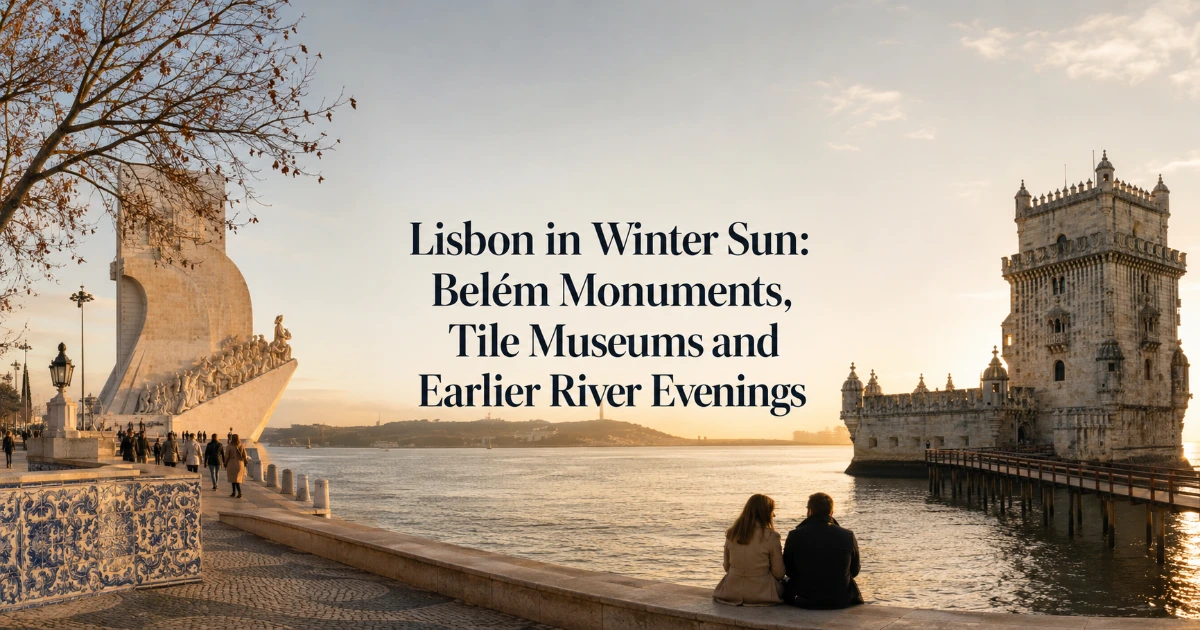
The best Belém winter morning is bright or lightly overcast, with enough visibility across the Tagus to make the river feel broad. This is when the district’s scale works: Jerónimos holds the architectural focus, the Monument to the Discoveries reads clearly against the water, and the walk toward the Tower of Belém can be treated as a choice rather than a test. When travelers ask for Lisbon winter sun, this is usually the morning they imagine, even if the actual day includes a coat and changing cloud.
The second-best morning is after overnight rain, when the air feels rinsed but the pavement may still be uneven underfoot. This is where pacing matters. Start with the monastery area and decide later how much riverfront walking the group wants. The Jerónimos complex is the anchor; the full riverfront extension is optional. The official Jerónimos page is the place to confirm operational details before you lock the day, because openings, access and restoration rhythms are not things to guess from an old itinerary: Jerónimos Monastery official page (https://www.museusemonumentos.pt/en/museus-e-monumentos/jeronimos-monastery).
The morning to avoid is the one that begins late from the opposite side of the city with no firm priority. A late departure from Avenida da Liberdade or Príncipe Real can still work if Belém is the main event, but it cannot carry Belém, a pastry stop, both monument interiors, a museum across town and a long river evening. The first decision is whether Belém is a setting or the cultural core. If it is the core, treat the morning as protected time.
This is also where a private Belém plan earns its place. A guide can keep the morning from becoming a queue-and-photo sequence: which exterior deserves time, which interior deserves context, when the river walk is worth extending, and when the group should pivot before energy starts to leak. For a route built around the monastery and western Lisbon, a Belém and Jerónimos private tour is the more relevant next step than a generic all-city sprint.
Belém is especially good for first-time visitors who want Lisbon’s imperial, maritime and river story without beginning in the steep historic quarters. It is also good for families because the district offers more horizontal breathing room than Alfama, even though distances still matter. It is less ideal for travelers who only want compact old-town atmosphere; for them, Belém can feel too ceremonial unless a guide connects the stone, river and departures into a coherent morning.
Where the indoor tile or art stop belongs
The indoor stop belongs after the Belém morning unless rain, mobility or museum priorities give you a reason to reverse the day. In winter, the museum is not filler; it is the hinge that keeps the shorter day from feeling thin.
For tile travelers, Madre de Deus is the most meaningful indoor anchor because the National Tile Museum is housed in the former convent of Madre de Deus and lets azulejos become a story of architecture, devotion, trade, taste and domestic life rather than a decorative pattern hunt. Confirm the current visitor details on the official museum page before building the route around it: National Tile Museum official page (https://www.museusemonumentos.pt/en/museus-e-monumentos/museu-nacional-do-azulejo). The planning caution is geography. Madre de Deus is not in Belém, and it is not a casual add-on to a western river morning unless your transfer is deliberate.
The cleanest placement is Belém first, lunch or a short reset, then Madre de Deus when the day is ready for an interior. This order lets the morning carry the open-air monuments and gives the museum the kind of attention tiles deserve. If the group is design-minded, a guide can frame the collection before the eye becomes tired: how patterned surfaces shaped churches, palaces, stairways, shops and ordinary Lisbon interiors. Without that frame, visitors sometimes leave admiring beauty but missing why tiles are one of the city’s most revealing cultural languages.
There is a case for doing Madre de Deus first. Choose it when the morning is wet, when a family needs an easier opening, or when the traveler’s main passion is azulejos rather than Belém. The tradeoff is that Belém becomes lighter later. You may choose Jerónimos plus a river walk, not every monument interior. That is not a failure; it is the price of making tiles the day’s intellectual center. For a more tile-led version, read the Lisbon Tile Museum morning and then decide whether this winter day should still include Belém or should remain a focused east-side route.
For travelers who want art but not a tile-specific day, the better indoor stop may be closer to the route’s existing shape. MAAT and the Belém cultural district can work when you want to keep the day west and reduce cross-city movement. Gulbenkian can work when your hotel geography or dinner plan points north rather than back to the river. The decision is not which museum is “best.” It is which museum prevents a transfer from breaking the day.
The overstuffed version is two museums after Belém. That tends to punish precisely the travelers who care most about quality: couples celebrating, multigenerational families, and art lovers who prefer interpretation to scanning. In winter, the museum should deepen the day, not crowd out the river ending. Choose one indoor anchor and let it do its job.
How to end by the Tagus before the day feels thin
The river ending should happen earlier than many travelers expect: before the group is hungry, before the sky has fully gone dull, and before the hills begin to turn a pleasant day into a logistical return. The early Tagus evening window is the quiet prize of this itinerary.
If you are still in Belém, the simplest river finish is to stay west and let the light fall across the water near the monument zone, the MAAT exterior, or the promenade when conditions are comfortable. This is not the time to turn the day into a long march. The riverfront is broad, exposed and beautiful in the right moment, but it can feel empty once the light leaves. For many groups, the best version is a short, intentional river pause rather than a heroic waterfront walk.
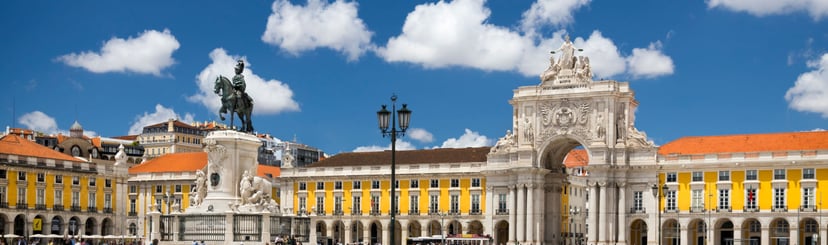
If dinner or the hotel pulls you back toward the center, consider ending closer to Cais do Sodré, Ribeira das Naus, or the Praça do Comércio edge of the river. This creates a different mood: less monumental, more urban, easier to connect with dinner. It is particularly useful for couples and food-and-wine travelers who want the river as a transition, not as a second tour. The Tagus should make the evening feel open before Lisbon folds into restaurants, not delay everyone until dinner begins with fatigue.
There is also a sailing question in winter. A private or small-group river hour can be wonderful when conditions are settled and the timing is respected, but it is not automatically better than a land-based river pause. If the day already includes Belém and a museum, a winter sail must be chosen for mood, not for checklist value. For couples weighing that choice separately, Lisbon sunset sailing for couples and small groups is the better companion guide; this article’s answer remains narrower: do the river early enough that the evening still has shape.
The mood consequence is real. When the river ending is timed well, the day feels spacious even though winter daylight is shorter. When it is pushed too late, the same plan can feel abruptly finished: monuments in memory, museum in the head, then a dark transfer and a dinner table everyone reaches slightly depleted. Lisbon is generous with atmosphere, but it does not reward pretending that December, January and February have summer evenings.
The Lisbon body check: flat Belém, cobbled hills and transfer resets
A good winter plan respects what Lisbon does to the body: it makes short distances feel different depending on slope, paving, wind and the moment of the day. Belém is kinder than Alfama in the morning, but it still requires decisions about walking length and exposure.
The city’s limestone calçada can be slippery after rain, and the historic quarters ask for more ankle attention than many visitors expect. Alfama, Graça and Bairro Alto are rewarding places, but they are not neutral add-ons after a west-side monument morning and an east-side museum. Each uphill return takes a small tax from the evening. Trams can be atmospheric, yet crowding and waiting can turn “local movement” into the least private part of a premium day.
This is where private pacing is more valuable than a bigger vehicle alone. A chauffeur can reduce cold transfers, spare older travelers some uphill walking, and make a cross-town museum pivot less punishing. Paying for a chauffeur does not create extra daylight. It changes comfort and recovery time; it does not change the winter clock. The better spend is a guided sequence that protects the day’s few valuable outdoor moments and uses transfers only when they serve the route.
Premium spend is most useful when it removes avoidable friction: hotel pickup at the right moment, an informed guide who knows when Belém needs depth and when it needs editing, a transfer that prevents the Madre de Deus pivot from becoming a tired taxi hunt, and a dinner plan that does not require a late uphill return. It is least useful when it is used to justify a bloated itinerary. A private day can be richer than a self-guided day, but not if it is asked to defeat winter.
Travelers who want the broader chauffeur question can compare this route with the Lisbon chauffeur day guide. For this particular winter plan, the judgment is more precise: hire help to preserve the order, the comfort and the quality of explanation, not to multiply stops until the river ending disappears.
What to cut first when the winter day starts shrinking
When a Lisbon winter day runs short, cut the least mood-giving piece first: usually the extra interior, the late hilltop or the full Belém riverfront extension. Do not cut the day’s structure before you cut the ornament.
- Cut the second museum first. A tile museum plus another art stop after Belém usually asks concentration to do more than it should. Choose the museum that best fits the traveler, then let the day breathe.
- Cut the late hilltop next. A viewpoint after dark can be lovely on a dedicated evening plan, but it is often the wrong add-on after Belém, Madre de Deus and river time.
- Shorten the Belém waterfront extension if needed. Jerónimos and a focused river moment beat a forced walk to every western landmark when wind, damp or low light changes the feel of the promenade.
- Move Sintra out of the day. Sintra should be moved to a separate day in winter, especially when your Lisbon day already includes Belém and a museum. Palaces, hills, transfers and shorter light deserve their own rhythm.
- Do not sacrifice dinner energy to preserve a checklist. Celebration travelers and food-and-wine travelers remember whether the evening arrived gracefully. They rarely remember the extra stop that made everyone late.
The strongest cut-first rule is to protect the beginning and the ending. Belém gives the day its Lisbon winter identity; the Tagus gives it emotional closure. If you must reduce the middle, reduce it cleanly. A single excellent indoor stop is better than a museum crawl that makes the river feel like an afterthought.
A practical winter sequence from hotel door to dinner
The cleanest winter day-flow has four movements: a decisive departure, a Belém core, one indoor cultural hinge, and an early river close. Thinking in movements keeps the day from becoming a map with too many pins.
Start with a real departure, not a soft morning
A winter Belém day loses quality when the first hour is vague. Breakfast lingering can be lovely on a leisure day, but on this route it should be intentional. If your hotel is in Chiado, Avenida da Liberdade or Príncipe Real, the transfer west is part of the plan, not dead time; use it to set context for the river, the monastery and the city’s outward-facing history. If your hotel is closer to Alfama or the cruise terminal, be even more disciplined, because crossing the center can make a late start feel later than it is.
The small geographic details matter. Belém Station and Avenida da Índia can make the district feel closer on paper than it feels when a group is deciding where to walk, where to cross, and how much of the riverfront to cover. The monastery side, the gardens, the river edge and the Tower of Belém are related, but they are not one compact courtyard. In winter, do not spend your best light proving that the whole district can be walked end to end. Decide the cultural priority first, then let the walk serve it.
Let Belém be a chapter, not a scavenger hunt
The Belém chapter should have a clear center. For many travelers, that center is Jerónimos: the Manueline stonework, the maritime imagination, and the way the monastery makes Portugal’s outward movement feel architectural rather than abstract. For others, the riverfront monument axis is the memory they came for. The guide’s role is to prevent those two interests from competing for every minute. A polished Belém morning has one main interpretive thread and one secondary texture, not five equal claims.
This is also where pastry timing can either help or interrupt. A sweet stop can belong in the morning, but it should not become the event that breaks the monument rhythm unless the group has deliberately made food the priority. In winter, warmth and a pause are useful; a long detour or queue is less useful. The question is not whether a pastry is “worth it.” The question is whether it helps the group continue with better attention.
Use lunch as the hinge between outside and inside
Lunch should not be treated as a random gap. It is the hinge between the open Belém morning and the indoor museum chapter. A heavy, extended lunch can make Madre de Deus feel like an obligation; a rushed lunch can make the museum feel like a holding pen before the river. The best version leaves the group restored enough to look closely. Tile, especially, rewards attention to sequence and detail. Arrive too tired and the museum becomes a blur of blue and white; arrive too hungry and no guide can make the collection land properly.
For comfort-first travelers, this is where customization is most visible. A couple may want a quieter lunch and a slightly later museum. A family may need a shorter lunch and a quicker transition before children lose momentum. A small group may need the guide to manage different attention spans without turning the afternoon into a compromise. The city gives you the pieces; the day succeeds when the spaces between them are designed.
Bring the river back before Lisbon turns inward
The river should return before the day is mentally over. After the indoor stop, do not assume that everyone wants another dense cultural layer. A short Tagus pause, especially when the sky still carries winter color, changes the meaning of the day. It tells the body that the touring portion has found an ending. It tells the mood that dinner will be entered from openness rather than from transit.
That is why the early river finish beats a late forced finale. If the group is in Belém, stay west and keep it concise. If the group has crossed back toward the center, use the river edge near Praça do Comércio or Ribeira das Naus as a softer landing. What you should not do is ask a winter day to end with a complicated transfer, a cold wait and an uphill walk simply because the itinerary still has one blank space left.
A winter day-flow for couples, families, small groups and food travelers
The same Belém-museum-river sequence can serve different travelers, but the emphasis should change. A winter private day earns its value by adapting the pace without losing the order.
Couples and celebration travelers
Couples should keep the day elegant by resisting the “one more stop” habit. Belém gives scale, the museum gives intimacy and the early river pause gives the evening a shared exhale. If the day is attached to an anniversary dinner, shorten the museum before you shorten the return. A beautiful dinner begins earlier than the reservation: with enough time to dress, cross town calmly and arrive with attention still intact.
Families and multigenerational groups
Families should use Belém’s flatter morning and avoid turning the afternoon into a lecture marathon. Children and older parents often do better with one clear cultural interior and a river ending that does not require stamina theater. The museum guide’s job is selection: explain enough that tiles or art become memorable, then move before the room count overwhelms the group.
Food-and-wine travelers
Food-and-wine travelers should plan the evening backward. If dinner is part of the reason for the day, do not let the museum or river walk drift. A reservation such as Marlene, on MICHELIN Guide (https://guide.michelin.com/us/en/lisboa-region/lisboa/restaurant/marlene), or a restaurant whose official PDF (https://belcanto.pt/uploads/Belcanto_FAQ_EN_Abr25.pdf) needs a careful pre-dinner read, belongs to the same planning conversation as Belém timing. Winter sightseeing should deliver you to dinner awake, not merely on time.
Tile and design travelers
Tile and design travelers should decide whether azulejos are the supporting act or the reason for the day. If they are the reason, Madre de Deus may deserve the morning and Belém should become lighter. If they are the supporting act, keep Belém first and use the museum as a concentrated afternoon chapter. The mistake is pretending both priorities can be maximal without flattening the day.
For guests who want the route adjusted around hotel location, restaurant reservations, mobility, children, or a celebration, this is where tailoring matters. The value is not in making a shorter winter day frantic; it is in keeping each part of the day in the place where it can still feel generous. For a custom sequence rather than a fixed route, tailor-made Lisbon private tours can hold the Belém, Madre de Deus and Tagus pieces together without asking the day to behave like summer. Inquire now
How this differs from a broad Lisbon winter guide
This plan answers one narrow question: how to use winter light for Belém monuments, an indoor tile or art stop, and an earlier river evening. It is not a full seasonal calendar, and that restraint is the point. A broad winter guide can help you decide whether Lisbon belongs in your travel year; this guide helps you decide what the day should do once you are here.
The broader seasonal tradeoffs still matter: daylight, rain rhythm, closure checks, crowd pressure around major monuments and the booking habits of restaurants. But within this specific day, the governing choice is sequence. Belém needs the fresher hours. The museum needs a protected interior slot. The Tagus needs to be treated as an early evening, not a late leftover. If you want to compare winter with jacaranda season, Atlantic-breeze months and the right place for Sintra, keep the Lisbon stay-by-season guide open alongside this more focused plan.
The final editorial judgment is firm: in winter, the best Lisbon day is not the one that captures the most neighborhoods. It is the one that lets each city condition do the right job. Belém handles scale. Madre de Deus or a selected art museum handles depth. The Tagus handles the transition to night. Once those roles are clear, the day feels composed rather than abbreviated.
FAQ
Is Lisbon good for winter sun?
Lisbon can be excellent in winter, but the safest plan is not to depend on guaranteed sunshine. Build the day around outdoor Belém time in the morning, an indoor museum hinge, and an earlier Tagus finish so the route still works if the light changes.
Should I visit Belém in the morning or afternoon in winter?
Visit Belém in the morning by default. The monuments and riverfront benefit from fresher energy and better usable light, while the afternoon is better reserved for a tile or art museum unless the morning is wet enough to justify reversing the route.
Where should the National Tile Museum fit into a winter Lisbon day?
The National Tile Museum at Madre de Deus usually fits after a Belém morning and lunch or a short reset. Put it first only when tiles are the main priority or when rain makes an indoor morning more sensible.
Can I combine Belém and Sintra in winter?
You can combine them only by making both weaker. In winter, Sintra should normally be a separate day because palace visits, hill movement, transfers and shorter light compete directly with Belém and the river ending.
Is a chauffeur worth it for this Lisbon winter route?
A chauffeur can be worth it for comfort, hotel pickup, cross-town movement and reducing uphill fatigue, especially for families or older travelers. It is not worth treating a chauffeur as a way to add daylight or force too many stops.
What should I skip if the winter day is running behind?
Skip the second museum, the late hilltop or the full Belém waterfront extension before you skip the core structure. Keep Belém, one meaningful indoor stop and an early Tagus pause.
Where is the best place to end by the Tagus in winter?
End in Belém if the day remains west and the light is still useful; end near Cais do Sodré, Ribeira das Naus or Praça do Comércio if dinner or your hotel pulls you back to the center. The best place is the one that keeps the evening calm rather than late.
If you’re interested in any private tours of Lisbon, please reach out to us.


 So if you are looking for the absolute best in Lisbon & surroundings with authentic local fully-licensed native guides whose English you can actually understand and with an exclusive and amazingly fun itinerary













