Baixa After 1755: Lisbon’s Carmo and River Story Without Old-Town Blur

Updated
Start a serious Lisbon old-town day in Baixa and Carmo, then use the Tagus before climbing into Alfama. That order works because the Carmo ruins above Baixa make the 1755 rupture visible, the rebuilt lower city gives you the post-earthquake answer under your feet, and the riverfront gives the day air before the cobbles tighten. The clearest exception is a traveler whose main goal is castle views rather than city reconstruction; in that case, begin high and descend with Start High in Alfama. Lisbon becomes more legible when the day follows the break between the city that fell, the city that was rebuilt, and the older quarters that survived in fragments.
This is not an earthquake-disaster itinerary. It is a route discipline for travelers who dislike “old town” blur: one hour of context, one visible scar, one rebuilt grid, one river release, then Alfama only after the lower city has done its work. The Carmo ruins above Baixa are the hinge. Stand there before you wander Rua Augusta, Rossio, Praça da Figueira or Praça do Comércio, and the lower city stops looking like a handsome shopping grid. It becomes a decision made after collapse.
The earthquake theme should stay a short framing device rather than the whole day when the group has limited patience for disaster history, mixed ages, a serious lunch, or a first Lisbon visit that needs beauty as much as explanation. Use 1755 to order the walk, then let Baixa, Carmo, the Tagus and Alfama each do their own work. The strongest route is not the one that repeats the earthquake at every corner; it is the one that makes the difference between pre- and post-earthquake Lisbon obvious enough that the guide can stop over-explaining.
The counterintuitive correction is that Alfama is often overvalued as the first history stop. It feels older, so travelers assume it should explain Lisbon first. In practice, starting there can blur the day because the lanes are atmospheric before they are legible, the climbs demand energy before the story has a frame, and the castle-view impulse can turn a cultural morning into a hill-management exercise. Baixa and Carmo first make Alfama more rewarding later, not less.
The planning verdict: Baixa and Carmo before Alfama, Tagus before the second climb
The best sequence is Carmo, Baixa, Praça do Comércio, the Tagus edge, then Alfama or São Jorge only if the group still has appetite for older fabric and steeper walking. This is the route that avoids the most common Lisbon regret: seeing beautiful fragments all morning without understanding which city belongs before 1755, which city belongs after it, and why the river changed the rebuilding story.
For a first private day, this pairs naturally with the lower-city portion of the Best of Lisbon private tour, especially when the guide uses Baixa not as filler between monuments but as the central object of interpretation. A good guide should be able to make the straight streets, repeated facades, arcades and squares feel like evidence rather than scenery. That is where this route becomes commercially worth it for discerning travelers: not because you add more stops, but because each stop clarifies the next one.
The order matters in real city conditions. Carmo sits above Baixa near Chiado, so beginning there lets you look down into the rebuilt lower city before entering it. From there, you can descend toward Rossio or the Baixa-Chiado edge instead of forcing the day to start with the sharper Alfama climb. Baixa then gives you a flatter interval through the gridded streets. Praça do Comércio opens the route toward the Tagus, where the mood changes from tight city detail to broad river space. Only after that should you decide whether Alfama is still an addition or whether the lower city has already delivered the day’s point.
The mistake to avoid is treating Carmo, Rua Augusta, Praça do Comércio, the cathedral area and Alfama as one continuous “historic center” walk. They are close enough to be combined, but not similar enough to be blurred. Baixa is the post-earthquake answer. Carmo is the visible wound. Alfama is the older surviving texture. The Tagus is the breathing room that keeps the story from becoming a lecture.
The ranked ladder for a 1755 Lisbon route that stays sharp
Use this ladder when deciding what belongs in the day and what should be cut first. The point is not to see every earthquake-adjacent place. The point is to make the city readable without exhausting the people who came to enjoy it.
1. Carmo ruins above Baixa: the visible scar that makes the route honest
Carmo comes first because it turns a famous date into a physical route decision. The official Carmo Archaeological Museum history notes that the 1755 earthquake caused serious damage to the building and that fire later almost totally destroyed its interior, which is why the roofless church remains such a strong visual hinge for the day: it is not a scenic ruin inserted for drama, but a place where the old city’s rupture can be seen before the rebuilt city is walked. Carmo Archaeological Museum history (https://museuarqueologicodocarmo.pt/mac_en.html)
The traveler consequence is immediate. When you stand at Carmo before Baixa, the lower city below is no longer just a convenient flat neighborhood. It becomes the rebuilt answer to catastrophe. That one shift makes the rest of the morning cleaner: Rossio and Praça da Figueira become more than squares; Rua Augusta becomes more than a stroll; Praça do Comércio becomes the river-facing end of a reconstruction project rather than simply a large photogenic plaza.
Carmo also keeps the story restrained. A lesser route lingers on destruction because disaster is easy to dramatize. A better route uses Carmo to ask a practical question: how does a city rebuild itself when the old center is no longer usable in the same way? That question belongs at the beginning of the day, not buried after three hours of wandering.
2. Baixa Pombalina: the rebuilt grid that explains Lisbon’s lower city
Baixa is the core because it shows the post-1755 city in the most walkable form. The UNESCO tentative listing for Pombaline Lisbon describes the area as an Enlightenment-informed reconstruction after the destruction of the city center, and that is the useful proof point for travelers: Baixa is not “less old” in a disappointing way; it is the planned response that made modern Lisbon legible. Pombaline Lisbon UNESCO tentative listing (https://whc.unesco.org/en/tentativelists/6226/)
This is where paying for expertise changes the experience. Without context, Baixa can feel too tidy, too commercial or too obvious compared with Alfama. With the right guide, its straightness becomes the story: how a lower city was reordered, how the relationship between commerce and royal space changed, how the river-facing square becomes a civic stage rather than a palace backyard, and why the grid is a visible argument about order after trauma.
There is a clear cut-first rule here: do not keep adding small Baixa stops if the group has already understood the reconstruction logic. Another church facade, another side street, or another quick interior can dilute the point. Baixa earns its place when it is read as a system, not when it is padded as a scavenger hunt.
3. Praça do Comércio and the Tagus: the release valve that keeps the day from tightening
The river belongs in the route because the Tagus changes both the story and the body. After Carmo’s exposed ruin and Baixa’s grid, Praça do Comércio opens the city toward water, light and scale. That shift is not decorative. It gives travelers a mental pause before the older quarters become narrower, steeper and more irregular. The body consequence is that the group gets a flatter, brighter reset before the next possible climb instead of moving straight from interpretation into cobbles and fatigue.
This is also where the city’s mood changes. A morning made only of stone, facts and dense streets can feel shorter on paper than it feels in the body. The riverfront makes the day feel calmer. It lets couples talk rather than only listen, gives families a natural pause before the next climb, and helps celebration travelers keep the day elegant instead of turning it into an endurance test. The mood consequence is a calmer, more spacious second half: Alfama becomes a choice made with appetite, not a forced march after too much lower-city density. The Tagus does not need to become a boat plan every time; sometimes its best role is simply to widen the morning before Alfama.
For travelers considering a river add-on, use the same discipline: a Tagus moment helps when it replaces crowding, repetition or a rushed second hill. It does not help when it creates a transfer reset that steals the clean movement from Carmo to Baixa to Praça do Comércio. For a deeper river-first comparison, use Lisbon by River Before the Hills.
4. Alfama after the lower city: the older texture, not the whole explanation
Alfama is strongest after Baixa has set the historical contrast. Entering it too early can make the day feel romantic but imprecise. Entering it after Carmo and Baixa allows the older lanes, slopes and viewpoints to work as a counterpoint: this is what Lisbon can feel like when it was not remade into the same rational lower-city grid.
The route consequence is practical. Alfama’s cobbles and slopes require more effort, and the rewards are less linear. That is wonderful when the group still has attention and energy. It is frustrating when travelers arrive already full of facts, sun and step count. If Alfama is the second act, keep it selective: one route, one viewpoint or castle context, one descent strategy. The dedicated São Jorge Castle and Alfama private tour makes more sense when the older quarter is the day’s main subject rather than a rushed add-on after Baixa.
Why the 1755 story changes the route, not just the commentary
The 1755 earthquake should change where you walk, not merely what the guide says while you walk. If the event is treated as a fact inserted between landmarks, the day becomes a city-facts page in motion. If it controls the sequence, Lisbon’s lower city becomes understandable: before, rupture, reconstruction, river, older survivor.
That distinction matters for travelers who want guide-led depth without a seminar. The earthquake, fires and rebuilding are too large to be reduced to a dramatic anecdote, but too specific to carry every minute of a full day. The earthquake theme should stay a short framing device rather than the whole day when your group includes younger children, mixed-interest relatives, food-and-wine travelers with a serious lunch, view-led travelers, or anyone who came to Lisbon for texture as much as history.
The route should therefore behave like a reconstruction lens. Carmo gives you the before-and-after shock. Baixa gives you the planned response. Praça do Comércio and the Tagus give you civic scale and relief. Alfama gives you the surviving older texture. Once those pieces are clear, the guide should stop hammering the theme and let the city breathe.
This is also the difference between a private tour that feels expensive and one that feels worthwhile. Paying for more stops does not help if the route blurs pre- and post-earthquake Lisbon. Where premium spend does not earn its cost is in extra name-checking: another quick church, another viewpoint, another photo stop, another transfer that makes the day look richer on paper but weaker in memory. Premium spend earns its cost when it buys judgment: the right starting point, a guide who can read the urban fabric, a flexible pace, and the confidence to cut a famous thing when the route is already complete.
How to walk Baixa after Carmo without making it feel flat
Baixa works best as a guided reading of a rebuilt city, not as a shopping-street crossing. The simplest successful sequence is to begin near Carmo, descend toward the Rossio side or Baixa-Chiado edge, use the grid deliberately, and finish at Praça do Comércio with the Tagus in view.
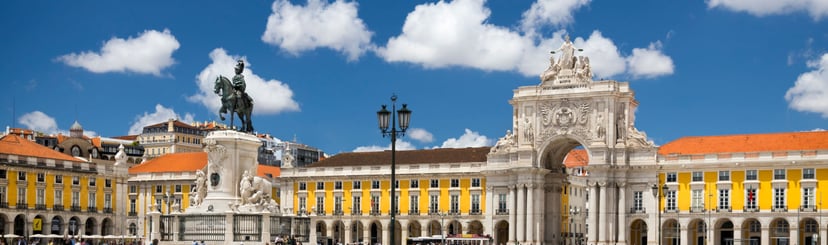
The important local proof cues are not obscure facts; they are route hinges. Carmo sits above Baixa, so the descent has meaning. Rossio and Praça da Figueira mark the northern side of the lower-city fabric, so they help orient travelers who otherwise lose direction in the grid. Rua Augusta’s straight run toward the triumphal arch gives a visual axis. Praça do Comércio opens the city to the Tagus and prevents the morning from ending in another narrow street. Cais do Sodré, if used, should be a river-edge extension rather than a random transport reset.
Travelers often underestimate what Lisbon does to the body. The city asks for balance on calçada stones, attention on sloped pavements, patience at pinch points, and more energy than the map suggests. A route that starts with Carmo and then descends through Baixa lets the body warm into the day. A route that starts by chasing hills can turn the same morning into a negotiation with knees, heat, shoe choice and late-day fatigue.
That does not mean Baixa is effortless. Its open stretches can be bright, the paving can be slick, and the grid can feel repetitive if the story is weak. The solution is not to skip it; the solution is to make the grid do interpretive work quickly. Once the group can see why the lower city is ordered, move toward the river. Do not keep circling Baixa simply because it is flatter than Alfama.
A clean half-day sequence that keeps the route from swelling
A disciplined half day can start with twenty to thirty minutes around Carmo and the Baixa-facing edge of Chiado. This is not the moment for every possible monastery detail. It is the moment to understand why the missing roof, the surviving stone and the position above the lower city matter. A guide should point the group toward the rebuilt city below, establish the rupture, and then move before the ruin becomes a museum-heavy detour.
The next forty-five to sixty minutes belong to Baixa as a system. Use Rossio or Praça da Figueira to orient the northern side, then let the grid do its work. Rua Augusta should not be treated only as a pedestrian street; it is useful because the eye can follow the lower-city axis toward the arch and the river-facing square. Side streets can help when they show repetition, proportion or commercial order, but they should not become an excuse to add filler. If the group has already understood the grid, move south.
At Praça do Comércio, slow down. This is where a good route lets the city open rather than rushing to the next named attraction. Give the square and the Tagus enough time to change the scale of the morning. For many travelers, ten to twenty unhurried minutes here do more for memory than another small interior. The lower-city story lands because the route has moved from rupture to order to river-facing space.
Only after that pause should Alfama enter the decision. If the group is fresh, choose one controlled older-quarter contrast: a selective climb, a viewpoint, cathedral-area context, or a short approach toward the castle fabric. If the group is fading, stop proudly. A Carmo-Baixa-Tagus route that ends clear is better than a Carmo-Baixa-Tagus-Alfama route that ends with people remembering only heat, stones and another hill.
Where Carmo fits if you are staying in Chiado, Avenida or near the river
Carmo is easiest for travelers based in Chiado or Baixa, but it is still worth building in from Avenida da Liberdade or a riverfront hotel when the day’s goal is Lisbon’s historical reconstruction. Hotel geography matters less than the first interpretive hinge: reach Carmo without spending the group’s first energy on a climb that has no story attached.
From Chiado, Carmo can be almost immediate, which is why nearby hotels often tempt travelers into casual wandering. The risk is that casual wandering turns Carmo into a pretty ruin and Baixa into a lunch corridor. A guide should slow the first minutes enough to establish the before-and-after frame, then keep the movement purposeful. From Avenida da Liberdade, the route can begin with a transfer or gentle approach toward Rossio and Carmo, depending on the group’s mobility. From the river, it can be tempting to begin at Praça do Comércio and walk inland, but that reverses the strongest reveal. The city reads better when you see the scar above Baixa before you arrive at the river-facing answer.
For visitors still deciding where to base the trip, Lisbon Without the Hills Shock is the broader hotel-and-mobility guide. This article is narrower: it assumes you want one serious lower-city historical route and helps you keep that route from dissolving into a generic old-town walk.
When the river should be a pause, a walk or a larger plan
The Tagus should match the day’s energy, not compete with the history. After Baixa, the river can work in three ways: a short pause at Praça do Comércio, a light riverside walk toward Cais do Sodré, or a larger river-led plan if the group is deliberately keeping hills to a minimum.
The short pause is best for culture-first travelers who still want Alfama. Stand long enough for the geometry of the square and the scale of the Tagus to register, then decide whether the group is ready for the next climb. This is the cleanest option when the guide has already made Carmo and Baixa clear.
The riverside walk is best for couples, food-and-wine travelers, and comfort-first visitors who want the morning to exhale before lunch. It gives time for conversation, changes the soundscape, and prevents the day from feeling like a string of explained buildings. It is also useful for private groups because the river edge absorbs people better than narrow lanes do. The group can spread out slightly without losing the guide or blocking a street.
The larger river-led plan is best when Alfama is not the priority or when the group includes older parents, young children, or celebration travelers who need the day to feel graceful rather than complete. In that case, let the Tagus carry more of the day and save Alfama for a separate, shorter route. The wrong move is to force a full Baixa-Carmo-Alfama sequence and then add a boat or distant river stop because it sounds premium. That can make the route feel more expensive and less coherent.
What to cut first when the plan gets crowded
Cut the extra hill before you cut Carmo. If the purpose of the day is Baixa after 1755, the route needs the visible scar and the rebuilt lower city. It does not need every viewpoint, every old-quarter lane, or every dramatic contrast available within walking distance.
The first cut is usually a second viewpoint. Lisbon views are seductive, but they compete with each other quickly. Once you have one clear city-reading moment, more elevation can turn into body cost rather than insight. The second cut is a long castle interior if the group’s main question is reconstruction rather than medieval power. The third cut is a museum-style earthquake experience if it crowds out the actual city route. The Lisbon Story Centre, for example, has an official presentation of the 1755 earthquake as part of its visitor experience, and it can be useful in the right weather or mobility conditions, but it should not replace the outdoor logic of Carmo, Baixa and the Tagus when the city itself is readable. Lisboa Story Centre official page (https://www.lisboastorycentre.pt/pt/content/lisboa-story-centre)
Also cut any stop whose only job is to make the itinerary look fuller. A premium Lisbon morning can be weakened by excessive inclusion: a second church when Carmo has already made the rupture visible, a second shopping street when Baixa has already explained the grid, or a second river transfer when Praça do Comércio has already opened the day. The clearer question is not “what else is nearby?” but “what will this stop clarify that the group has not already understood?” If the answer is vague, protect the route and move on.
The unusual comparison is Évora. A full-day archaeology and heritage route outside Lisbon can legitimately lean on source-led proof such as the UNESCO Historic Centre of Évora listing (https://whc.unesco.org/en/list/361/) or the official Évora Megalítica PDF (https://www.cm-evora.pt/wp-content/uploads/2020/06/EVORAMEGALITICA.pdf). Baixa should not borrow that kind of day-trip logic. If you are planning Évora, let Évora be the deep-time, megaliths-and-Roman-layers day. If you are planning Baixa, keep the focus on Lisbon’s rupture and reconstruction. Mixing those proof layers in one city morning makes the route feel learned but unfocused.
When a private guide changes this route most
A private guide changes this route most when your group wants historical depth but does not want to be trapped in a chronological lecture. The value is in translation: turning Carmo, Baixa, the Tagus and Alfama into a readable sequence while adjusting the walk to pace, weather, shoes, lunch, and evening plans.
For couples, the guide should protect the rhythm. The route should have enough content to feel substantial and enough breathing room to feel like Lisbon, not a classroom. For families, the guide should compress the abstract history into visible cues: roofless Carmo, straight Baixa, open Tagus, older Alfama. For small groups, the guide should prevent narrow-street bottlenecks and avoid starting debates about every optional stop. For celebration travelers, the guide should preserve the mood by knowing when to stop explaining and let the river or a well-timed pause carry the experience.
The strongest private guide is not the one who talks longest about 1755. It is the one who can notice when the group has understood enough to move, when the sun is making an open square feel harsher than expected, when calçada is slowing older parents, and when a view is worth the climb or should be replaced by a river pause. That judgment is the practical luxury. It keeps the article’s core route from becoming a generic old-town marathon with better vocabulary.
The best private version also protects the evening. A lower-city historical morning can be paired with lunch, design time in Chiado, a hotel pause, fado context, or a dinner plan without making the day feel depleted. If you want Lisbon’s old and rebuilt quarters made legible before you climb into older lanes, Tailor-Made Private Tours of Lisbon is the right planning doorway. Inquire now
How long this route needs
This route needs a focused half day if Baixa, Carmo and the Tagus are the core, and a longer private day only if Alfama is treated as a selective second act rather than another complete neighborhood study. The danger is not that the route lacks content; the danger is that it attracts too much nearby content.
In a half day, the strongest version is Carmo, Baixa, Praça do Comércio and the Tagus edge, with Alfama either omitted or reduced to a carefully chosen contrast. This is ideal after an overnight flight, before a serious dinner, or for travelers who want Lisbon’s lower city to make sense without committing to a full old-town day.
In a longer day, add Alfama only with a disciplined brief. Choose a route that climbs or descends deliberately, not one that wanders until fatigue decides the ending. The moment Alfama becomes the main event, acknowledge the flip and plan it as such. That may mean using a dedicated Alfama and castle route another day rather than making Baixa carry less attention than it deserves.
For comfort-first travelers, the cleanest full-day arc is lower city in the morning, river air before or after lunch, then one older-quarter contrast if energy remains. It is better to end with one lucid contrast than with four half-understood stops. The memory you want is not “we saw a lot of old Lisbon.” The memory is “we understood why Lisbon changes under your feet.”
Who should avoid making 1755 the day’s main frame
Do not make 1755 the main frame if your group is primarily food-led, view-led, shopping-led or traveling with children who respond better to movement than explanation. Use the earthquake story briefly, then let the day serve the traveler rather than the theme. In those cases, the earthquake theme should stay a short framing device rather than the whole day, because the best Lisbon plan is the one that keeps the group curious, comfortable and emotionally available for the city.
Food-and-wine travelers may prefer Carmo and Baixa as a pre-lunch intellectual frame before moving into Chiado or a river-facing pause. Families may do better with the visible contrast of Carmo and Baixa, then stop before the explanation becomes too abstract. Repeat visitors who already know Baixa may want a more specialist route through architecture, tiles or Jewish Lisbon instead. Comfort-first travelers with limited mobility should prioritize the lower city and river, then be honest about whether Alfama’s cobbles and slopes are worth the body cost that day.
The wrong fit is the traveler who wants Lisbon to feel spontaneous from the first minute. This route is not rigid, but it is structured. It is for people who enjoy a city more when the first hour gives them a lens. If you mainly want alleys, music, views and dinner atmosphere, let Alfama or Chiado lead and keep the earthquake as a short aside.
FAQ
Should Baixa or Alfama come first on a Lisbon history day?
Baixa and Carmo should come first if the goal is to understand Lisbon before and after 1755. Alfama should come first only when the main goal is castle views, medieval texture or a hill-led old-town day.
Is Carmo worth visiting if I am not doing a museum-heavy trip?
Yes. Carmo is worth visiting because the ruins make the 1755 rupture visible before you walk the rebuilt lower city. You do not need to turn it into a long museum stop for it to anchor the route.
How much time should I spend in Baixa on a private tour?
Spend enough time to understand the reconstructed grid, the relationship between Rossio, Rua Augusta and Praça do Comércio, and the movement toward the Tagus. Once that logic is clear, move on rather than adding filler stops.
Does the Tagus need to include a boat ride?
No. The Tagus can simply be a riverfront pause or short walk after Baixa. A boat ride helps only when it improves the day’s rhythm; it can hurt the route if it creates extra logistics after the lower-city story is already complete.
Is the 1755 earthquake too heavy a theme for a vacation day?
It can be too heavy if handled as disaster history. It works well when used as a short framing device that explains Carmo, Baixa and the river-facing reconstruction without dominating the entire day.
What should I cut if I cannot do Baixa, Carmo, the Tagus and Alfama?
Cut the extra hill or second viewpoint first. Keep Carmo and Baixa if the theme is post-1755 Lisbon, then use the Tagus for relief. Add Alfama only if the group still has energy and attention.
Is a private guide worth it for Baixa and Carmo?
A private guide is worth it when you want the lower city to become legible rather than simply pleasant. The guide’s value is in sequencing, context, pacing and knowing when not to add more stops.
Can this route work for older parents or multigenerational groups?
Yes, if the route stays disciplined. Carmo, Baixa and the Tagus can be shaped into a gentler historical morning, while Alfama should be shortened, delayed or saved for another outing if cobbles and slopes are likely to drain the group.
If you’re interested in any private tours of Lisbon, please reach out to us.

 So if you are looking for the absolute best in Lisbon & surroundings with authentic local fully-licensed native guides whose English you can actually understand and with an exclusive and amazingly fun itinerary