Lisbon Before a Porto Train: Santa Apolónia, Oriente or One Last Riverfront Walk

Updated
Choose Santa Apolónia for the final Lisbon morning if your Porto train departs there or if you are staying in Alfama, Baixa, Chiado or Avenida da Liberdade: it lets the day stay low, close and luggage-safe. That works because Lisbon’s last hours are shaped less by mileage than by gradients, cobbles and river-edge access; Santa Apolónia sits beside the Tagus at the foot of Alfama, so breakfast, one last riverfront look and platform arrival can remain one clean line. The clearest exception is Oriente: when your ticket says Lisboa Oriente, your hotel is in Parque das Nações, or airport-side logistics matter, forcing a downtown farewell can turn an elegant morning into a transfer gamble. The thesis is simple: Santa Apolónia versus Oriente departure geography should decide the mood of the morning before scenery does.
This is not a Lisbon-to-Porto transport guide and it should not be read as a substitute for checking your actual train. Confirm the named departure station on the official CP site (https://www.cp.pt/passageiros/en), then design the final hours around that station rather than around the most photogenic idea on the map. Lisbon is unusually good at offering one beautiful last moment, but it is also unusually good at punishing the traveler who tries to add one more climb after checkout.
The ranked ladder: how to use the final Lisbon morning before Porto
The best plan is the one that reduces station friction before it adds charm. In a departure window, the winner is not the longest route or the most famous view; it is the option that keeps bags controlled, feet fresh and the Porto arrival unshadowed by a rushed platform entrance.
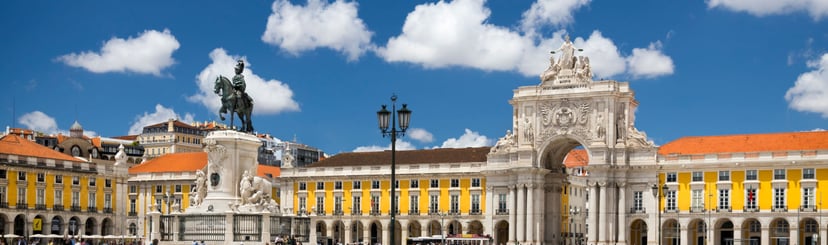
1. Santa Apolónia-first, the default winner. Choose this when your train leaves from Santa Apolónia and your hotel is in Alfama, Baixa, Chiado, Avenida da Liberdade or Príncipe Real. The final morning can stay between breakfast, the lower edge of Alfama, Praça do Comércio, Cais das Colunas and the station. It feels like Lisbon without asking the city for another hill.
2. Oriente-first, the runner-up that becomes the winner for eastern logistics. Choose this when your train leaves from Oriente, when you are sleeping in Parque das Nações, or when your morning is already tied to the airport side of the city. The architecture and riverfront are different from old Lisbon, but the plan is cleaner than dragging luggage or attention back through the historic center.
3. One last Tagus walk, best as an insert, not a separate mission. Choose this when it lies on the way to the station: Cais das Colunas, the Terreiro do Paço river edge, or the flat stretch toward Santa Apolónia for a downtown departure; the Parque das Nações waterfront for Oriente. A short walk works because it gives the trip a final image without changing the logistics.
4. One last hill, the wrong fit for most departure mornings. Castelo de São Jorge, Graça, the upper Alfama lanes and Bairro Alto can be wonderful earlier in the stay, but they are rarely the best final act before a Porto train. The uphill approach, uneven paving and descent timing create too many small chances for stress.
The comparison criteria are departure station, luggage position, slope, transfer direction and group energy. If an option improves only the view but worsens two of those criteria, cut it. If it improves the station approach and still gives you a Lisbon memory, keep it.
- Departure station. The name on the ticket outranks every scenic preference. Santa Apolónia and Oriente can both make sense, but not for the same morning.
- Luggage position. Bags at a hilltop hotel, bags already loaded in a vehicle and bags in hand create three different days.
- Slope and paving. A ten-minute walk on the riverfront is not the same physical choice as ten minutes above Alfama.
- Group energy. A couple may absorb a small detour; a multigenerational group often pays for it twice, once before the train and again after arriving in Porto.
For travelers still shaping the whole city stay, the broader context sits in Lisbon for a two-base Portugal trip. This article stays narrower: the final Lisbon morning before a Porto train, and the decision between Santa Apolónia, Oriente and one last Tagus-side pause.
When Santa Apolónia is easier: keep the morning below the hills
Santa Apolónia is easier when your last Lisbon morning belongs to the old city but your body does not need another old-city climb. The station sits on the river side of Alfama, close enough to the lower streets that you can feel you have not abandoned Lisbon too early, yet removed from the steep lanes that can turn the final hour into a calf-and-cobblestone test.
The non-obvious advantage is not just centrality; it is the way the station lets you descend into departure instead of climbing out of it. A traveler staying around Chiado can take breakfast, move gently through Baixa or the Praça do Comércio edge, and end near the Tagus without needing to reverse uphill to retrieve bags. A traveler staying in Alfama can avoid the temptation to wander upward, because the station sits below the neighborhood rather than above it. That geography is more useful than one more viewpoint.
Santa Apolónia also suits travelers who want an emotionally complete exit. You can let Lisbon finish with river light, tiles, café noise and the open space around Terreiro do Paço, then arrive at the station with the city still coherent in your mind. The morning feels like a closing paragraph rather than a logistical evacuation. For couples, that matters; for families, it matters even more because the final minutes do not become a negotiation over stairs, bathrooms, snacks and bags.
There is a historical authority cue here, too, but it should serve planning rather than trivia. Infraestruturas de Portugal describes Santa Apolónia as the terminal station of the current Linha do Norte and as Portugal’s first railway station on its Santa Apolónia station note (https://www.infraestruturasdeportugal.pt/pt-pt/estacao-ferroviaria-de-santa-apolonia-celebra-160-anos). That helps explain why the station feels like a true rail terminus at the river edge, not just a transit stop. For the traveler, the consequence is practical: if your ticket begins there, do not overcomplicate the final morning by treating Oriente as the inevitable rail hub.
Do not confuse the Santa Apolónia advantage with an invitation to roam all of downtown. Cais do Sodré, Time Out Market, Chiado shopping and the lower Alfama lanes can all look close on a map, but they pull in different directions. On a departure morning, closeness is not enough; the stop must also point toward the station. Praça do Comércio works because it sits on the river line. A late wander into Chiado works less well because it asks you to climb or to manage a second vehicle move.
The best Santa Apolónia plan is short, low and deliberately incomplete. Breakfast near the hotel, a downhill or level movement toward Baixa, ten to thirty minutes by the Tagus, then the station. If you want a fuller old-city plan with hills and interpretation, place it earlier in the stay through an Alfama and Bairro Alto private route, not in the narrow space between checkout and the Porto train.
When Oriente changes the plan before a Porto train
Oriente changes the plan when the departure is no longer an old-city farewell but an eastern Lisbon transfer. It sits in Parque das Nações, away from Alfama, Baixa and Chiado, and that single fact should reshape the final morning more than any wish to squeeze in one last downtown view.
The mistake is assuming Oriente is only “another Lisbon station.” It is a different departure geography. Visit Portugal places Gare do Oriente in Lisbon’s eastern zone on its Gare do Oriente page (https://www.visitportugal.com/en/NR/exeres/4C914B28-3923-4D58-B087-AEC8FBAD4FD2), and the traveler consequence is immediate: the sensible farewell is Parque das Nações, the modern riverfront, the station concourse and a clean platform approach, not a downtown loop that ends with a cross-city transfer under time pressure.
Oriente is the better choice when your hotel is already nearby, when you are traveling with children who do better on flat promenades, when your morning begins near the airport, or when a driver can collect you from an eastern hotel and move directly into the station zone. It can also be the calmer choice for travelers who have already had a full old-town Lisbon stay and do not need the final morning to prove anything. A walk by the Parque das Nações waterfront may not look like postcard Alfama, but it preserves attention and time in the place where your train actually leaves.
The tradeoff is atmosphere. Oriente gives you architecture, river width and a simpler station approach, but it does not give you the layered goodbye of Baixa, the Praça do Comércio arcades or the Alfama slope. That is acceptable when the train is close. It is not acceptable if you choose Oriente only because it sounds larger or more modern while your ticket, hotel and morning are all better aligned with Santa Apolónia.
A downtown-to-Oriente plan is not impossible, but it should be treated as a transfer plan rather than sightseeing with a station attached. Once the group has left the old center, resist the impulse to add Rossio, Avenida or a final tile shop on the way. Those stops feel harmless until the vehicle has to rethread traffic, the bags are in the back, and the station still needs to be entered calmly.
Oriente also changes how much interpretation belongs in the morning. In the old city, a guide can make ten minutes of street movement feel dense with context. In Parque das Nações, the value is often orientation: where the riverfront sits, how the Expo-era district changed Lisbon’s eastern edge, how to keep the walk near the station rather than drifting toward another attraction. The plan should feel intentionally modern, not like a consolation prize for missing Alfama.
For families considering Parque das Nações anyway, the adjacent guide Parque das Nações or Belém with Lisbon kids helps separate a child-friendly riverfront day from a departure-window plan. Before Porto, however, the rule stays tight: if Oriente is the departure station, let Oriente set the final hour.
What belongs in a short riverfront walk before the train?
A short riverfront walk belongs in the plan only when it is flat, close to the correct station and easy to abandon. The Tagus should be a mood-setter before the Porto train, not a new activity that creates another transfer.
For Santa Apolónia, the cleanest version is the river edge around Praça do Comércio and Cais das Colunas, with time to look back at the city grid and forward to the water. From there, the movement toward the station stays legible: river on one side, old city behind or beside you, no need to climb. The route can also work from the lower Alfama edge if you resist the urge to go uphill into the lanes. The best last walk is the one that can end after ten minutes without feeling failed.
For Oriente, the correct riverfront is not downtown. It is the Parque das Nações waterfront, where the walk can sit near the station instead of pulling you away from it. The Vasco da Gama Bridge in the distance, broad paving, modern gardens and the station’s lattice-like roof give the morning a different Lisbon vocabulary. That difference is useful: it tells your brain you have moved from city stay to onward journey.
- Keep a seat option. A river walk before a train should include a place to pause, not only a route to complete.
- Keep the camera moment brief. The final image can be the columns, the water, a ferry crossing or the bridge line; it does not need a full photo session.
- Keep the exit obvious. Everyone in the group should understand where the station is and how the walk ends.
- Cut any stop that needs a ticket, queue or fixed entry time. A departure window is the wrong place for another admission-controlled experience.
What does not belong is a decorative detour to Belém, unless your luggage is already controlled and your train time gives a generous margin. Belém is magnificent when it owns the morning; it is clumsy when it becomes a sentimental add-on between checkout and a rail departure. The Monastery, the monumental riverfront and pastry timing deserve their own rhythm, which is why we treat Belém more fully in a private Belém morning. Before a Porto train, Belém should usually be a memory from yesterday, not a new logistical knot.
The river also changes the trip mood. A controlled Tagus walk makes the day feel longer because it gives you a pause before the station; a forced one makes the day feel shorter because everyone starts checking watches, phones and traffic. The difference is not scenic quality. It is whether the walk is on the line of travel or against it.
When to skip one last hill in Lisbon
Skip one last hill when the climb creates a second deadline. Lisbon’s hills are not just vertical; they are made of uneven calçada, narrow pavements, staircase shortcuts, slow viewpoints and descents that take longer than the map admits.
This is the counterintuitive correction: the famous viewpoint is often the overvalued final stop. A miradouro can be the emotional peak of a Lisbon stay, but on departure morning it can also become a trap. Graça, the Castle area, upper Alfama and Bairro Alto all ask you to climb, pause, photograph, descend and then reconnect with luggage or transport. That sequence is too brittle when a train time sits behind it.
Lisbon does specific things to the body. The city loads the calves before the lungs; polished stone makes steps feel shorter but less stable; heat reflects off pale paving; and a bag strap that seemed harmless at breakfast becomes irritating by the second staircase. Older parents, children, anyone in dress shoes, and travelers managing a celebratory lunch or dinner in Porto will feel that small physical cost later in the day.
The cut-first rule is firm: if the plan has a hill and a riverfront walk, cut the hill first. If it has a hill and a relaxed breakfast, cut the hill first. If it has a hill and uncertainty about bags, cut the hill before you debate the bags. Lisbon’s upper views are better enjoyed when you can descend slowly and let the evening absorb the fatigue. A Porto train morning has no such cushion.
For travelers who still want a view-based Lisbon day, use the hill strategy earlier in the trip rather than on departure morning: the Lisbon hill strategy explains when one viewpoint is enough. Before Porto, one last river-level look usually beats one last climb.
The luggage-and-checkout sequence that keeps the day from fraying
The smoothest sequence is bags first, meaning first decision, not necessarily first movement. Before you choose a café, viewpoint or walk, decide where the luggage will be at every stage between hotel checkout and the station entrance.
For Santa Apolónia, the elegant sequence is often hotel breakfast, checkout, bags held at the hotel or loaded into a prearranged vehicle, a low city pause, then direct station arrival. If the hotel is close enough and the route is flat enough, a short return can work. If the hotel is up in Chiado or Príncipe Real, avoid building a plan that requires a relaxed downhill walk and then a hurried uphill retrieval. The second movement cancels the grace of the first.
For Oriente, the luggage logic is even stricter. If bags are in the vehicle, go toward Parque das Nações and stay there. If bags are at a downtown hotel, decide whether the final Lisbon moment is worth the transfer to retrieve them and then cross the city. Many travelers underestimate this mental friction. The bag is not only a physical object; it is a claim on attention. Once the group is thinking about who has passports, who has the small suitcase, and whether the driver can stop close enough, the city becomes background.
Station choice also shapes bathroom timing, snack timing and the last purchase. Santa Apolónia works well when the final purchase is modest: water, coffee, perhaps a small edible memory from near the hotel. Oriente works when the final stop is contained within the eastern plan rather than a hunt for one more old-town specialty. Neither station rewards a sprawling last-minute shopping errand.
For a private group, appoint one luggage decision instead of several luggage opinions. It sounds minor, but departure mornings often fray because every traveler assumes someone else knows whether bags are staying at reception, moving with the driver, or coming to breakfast. The more polished version is decided before anyone orders coffee: bags here, walk there, vehicle at that point, station after that. Once this is settled, the morning can feel leisurely even when it is short.
There is also a hotel-position consequence that many travelers only notice too late. A beautiful address in Príncipe Real or upper Chiado may be perfect for evenings, but after checkout it can make the final morning feel like a small expedition if the bags have to return uphill. A riverfront hotel may be less atmospheric at night but simpler on departure. Neither is universally better; the final morning simply exposes the tradeoff.
Private planning earns its value here when it aligns bags, checkout and one meaningful final stop. A guide can keep the walk purposeful, a driver can reduce the awkward return to the hotel, and the plan can be customized for a couple, family or small celebration group rather than copied from a generic itinerary. For a made-to-measure version of this departure morning, tailor-made Lisbon private tours can be shaped around the actual station, train time and luggage plan. Inquire now
Where a guide and driver change the morning, and where they cannot
A guide and driver change the morning when they remove backtracking, protect the luggage chain and make the final stop meaningful without making it larger. They do not change the basic geography of Lisbon.
A private transfer can make Santa Apolónia feel effortless from a hilltop hotel because it removes the bag drag and the uncertain taxi moment. It can make Oriente feel calmer because the eastern station approach becomes intentional rather than a last-minute cross-city ride. It can also help a family keep grandparents, children and luggage moving together without dividing the group between a hotel lobby, a café and a curb.
But premium spend has a limit. A private transfer cannot remove stress if the final stop is wrong for the station. Paying more does not make a late Belém detour fit a Santa Apolónia train, does not make a Graça viewpoint flat, and does not make a downtown farewell sensible for an Oriente departure when the clock is already tight. Premium spend does not earn its cost when it is used to defend an overpacked plan instead of simplifying the morning.
The spend that does earn its cost is planning judgment: where to meet the vehicle, whether to tour before or after checkout, which stop to cut, and how to keep the group from splitting attention. A chauffeur-led morning can be especially useful when the hotel is up a slope, when the group has several bags, or when there is a celebratory Porto evening ahead and no one wants to arrive already depleted. For a broader look at when a car changes Lisbon movement, see the chauffeured Lisbon day guide.
How the choice shifts for couples, families and small groups
Couples usually need restraint more than coverage. The most satisfying final Lisbon morning is often breakfast, a low Tagus-side walk, and enough unscheduled time to let the conversation catch up with the trip.
For couples leaving from Santa Apolónia, the best plan can be almost cinematic in its simplicity: a hotel breakfast that does not run late, a walk through Baixa or along the river edge, a final look at Alfama from below, then the station. Adding a museum, tram or hill often breaks the spell. The couple begins the morning inside Lisbon and ends it managing a checklist.
Families need fewer transitions. Children may handle a long train perfectly well but resist the messy hour before it: bathroom uncertainty, heat, bags, waiting, and adults saying “just one more thing.” Oriente can be excellent for families when the train leaves there because Parque das Nações gives space and flatter movement. Santa Apolónia can be excellent when the hotel and station align. The wrong plan is the one that asks children to climb into Alfama, descend, retrieve luggage and then behave calmly on the platform.
Small groups need a single meeting logic. Six travelers can lose ten minutes simply deciding who is ready, who has checked out, and where the vehicle is allowed to stop. In that context, a shorter final walk is not less ambitious; it is more respectful of the group. The guide’s role is not to talk more, but to prevent the morning from splintering into micro-decisions.
Celebration travelers should be particularly careful. If the Porto evening includes a special dinner, family gathering or wine-led plan, Lisbon’s final morning should not take the first withdrawal from the day’s energy. Leave the romance in the view, not in an overextended route.
Food, wine and celebration travelers: finish with a taste, not a detour
The best final taste before Porto is close to the luggage plan. It should be a breakfast, pastry, coffee or compact market-adjacent moment that belongs to the route, not a destination meal that starts competing with the train.
A celebratory trip can make this temptation stronger because no one wants the last Lisbon morning to feel ordinary. The better instinct is to make the ordinary thing excellent: the table with enough time, the coffee taken without standing, the pastry eaten before hands are full of tickets and handles. This kind of restraint is not austere. It is what lets the next city begin with appetite rather than recovery.
Food-and-wine travelers are often tempted to turn the final morning into one last culinary hunt. In Lisbon that can backfire. A famous pastry stop across town, a late seafood lunch, or a wine-bar errand before departure may sound like a generous farewell, but it adds ordering time, payment time, bathroom time and transfer time. Those are the small frictions that make a train morning feel oddly compressed.
For Santa Apolónia, keep the taste near the hotel, Baixa, Chiado or the lower river route. For Oriente, keep it within Parque das Nações or the hotel zone. The goal is not to find the single best bite in Lisbon; it is to leave with appetite, memory and calm intact. Porto will have its own food rhythm, and arriving ready for it is part of the value.
The main exception is a privately planned morning where the taste and transfer are designed together. A guide can make a short food stop feel contextual rather than random: why a pastry belongs here, why the river matters, why the city changed as it opened toward the Tagus. But the stop still has to obey the station. The food should serve the departure, not take it hostage.
One useful mental test: if you would be disappointed to leave the café after fifteen minutes, it is probably wrong for this morning. Save it for a real Lisbon day, not a rail window.
The breakfast-and-station-only morning
Some final Lisbon mornings should be only breakfast and station transfer. This is not a failure of planning; it is the most polished choice when the departure window is tight, the group is tired, weather is awkward, or luggage is already absorbing too much attention.
Choose breakfast-and-station-only when the train leaves earlier than the group wants to admit, when checkout is slow, when children are fraying, when older travelers had a hill-heavy previous day, when rain makes cobbles slippery, or when the hotel is poorly aligned with the departure station. The absence of one last stop can be what keeps the day from beginning with apologies.
This is also the correct answer after an overfull Portugal itinerary. If you have already placed Sintra, Cascais, Évora or a wine-country day into the Lisbon stay, the final morning does not need to prove the trip was complete. It needs to hand you to Porto in good condition. Even a culturally important place such as Évora, supported by the UNESCO Historic Centre of Évora listing (https://whc.unesco.org/en/list/361/), belongs in its own day-trip decision, not as a fantasy detour before a northbound train.
The mood consequence is real. A breakfast-only departure can feel calm, adult and quietly confident. A forced final stop can flatten the entire day because the group leaves Lisbon with the sensation of almost missing something, almost being late, almost enjoying the view. That “almost” is what good departure planning removes.
For travelers comparing this with cruise or check-in windows, the nearby guide Lisbon between cruise boarding and hotel check-in solves a different problem: what to do when the day opens around a cruise and hotel room. Before a Porto train, the station is the anchor.
Rail checks to make without turning the morning into a timetable article
Make the rail checks early, then stop obsessing over them. The goal is to confirm the departure station, train category, passenger names, luggage expectations and platform approach without letting timetable anxiety dominate the final Lisbon hours.
Check whether your ticket says Lisboa Santa Apolónia or Lisboa Oriente. Do not rely on the phrase “the Lisbon station” because both names can appear in rail searches and trip conversations. Also check whether your Porto arrival is Campanhã or another station connection, but do that as part of the onward Porto plan rather than letting it bloat the Lisbon morning. This article avoids fragile schedules because departure times, engineering works and service patterns can change; your live ticket is the authority.
Build a station buffer that reflects the group, not an abstract rule. A solo traveler with a carry-on, checked-out hotel and Santa Apolónia departure needs a different margin from a family of five leaving a hilltop apartment for Oriente with several bags. The more people, bags, stairs and cross-city movement you add, the earlier the sightseeing should end.
Do not build the plan around unverified assumptions such as “all Porto trains use the same Lisbon station” or “we can always board at the other one.” Rail searches, ticket classes and intermediate stops can create confusion for travelers moving through Portugal for the first time. Use the exact station on the confirmed ticket and treat any station change as a planning change, not a small edit.
Weather should adjust ambition, not only clothing. On a hot day, shorten the hill plan before you shorten the station buffer. On a wet day, treat polished paving and luggage wheels as a reason to simplify. On a windy river day, keep the Tagus walk flexible rather than heroic. Lisbon is generous, but the final morning is not the moment to test the city.
Finally, keep the rail conversation in one place. One traveler checks the live ticket, one confirms the pickup or station route, and then the group returns to Lisbon. Rechecking the same details every ten minutes rarely improves accuracy; it usually spreads anxiety. Good planning should make the departure visible enough to trust and quiet enough to stop discussing.
The best final check is emotional: does the plan make Porto feel closer or farther away? If the final Lisbon stop makes the onward city feel like a burden, cut it. If it gives the group a last image while making the station feel natural, keep it.
FAQ
Should I choose Santa Apolónia or Oriente for a Lisbon to Porto train?
Choose the station printed on your ticket, then plan around it. Santa Apolónia is usually easier for old-city hotels and a short Tagus farewell; Oriente is better for Parque das Nações, airport-side logistics and eastern Lisbon departures.
Is Santa Apolónia better than Oriente for a final Lisbon morning?
Santa Apolónia is better when you are staying in Alfama, Baixa, Chiado or Avenida da Liberdade and want a low, old-city finish. Oriente is better when the train leaves from there or your hotel and luggage are already aligned with eastern Lisbon.
Can I do one last riverfront walk before the Porto train?
Yes, if the walk is close to the correct station and easy to shorten. Use Praça do Comércio, Cais das Colunas or the lower Alfama edge for Santa Apolónia, and the Parque das Nações waterfront for Oriente.
Should I visit Belém before a Porto train from Lisbon?
Usually no. Belém deserves a proper morning, not a rushed add-on between checkout and a train. Consider it only if luggage is controlled, the train time is generous and the stop does not create a cross-city scramble.
Is one last Alfama or castle hill a good idea before the train?
Usually no. Upper Alfama, the Castle area and Graça add climbing, uneven paving and descent time. Before a Porto train, a lower riverfront farewell is normally calmer and more reliable.
What should I do with luggage before a Lisbon departure morning?
Decide the luggage chain before choosing the final stop. Bags should be at the hotel, in a vehicle or otherwise controlled in a way that does not require backtracking uphill or crossing Lisbon twice.
When should the final Lisbon morning be only breakfast and station transfer?
Choose breakfast and station only when the train is early, the group is tired, the weather is poor, luggage is awkward or the hotel is poorly aligned with the departure station. It is often the most comfortable choice.
Can a private guide or driver make a final Lisbon stop before the train worthwhile?
Yes, when the guide or driver aligns checkout, luggage, station choice and one meaningful stop. No, when the stop itself is wrong for the station; better service cannot make a badly placed detour calm.
If you’re interested in any private tours of Lisbon, please reach out to us.


 So if you are looking for the absolute best in Lisbon & surroundings with authentic local fully-licensed native guides whose English you can actually understand and with an exclusive and amazingly fun itinerary













