Lisbon Between Cruise Boarding and Hotel Check-In: Belém, Baixa or a Riverfront Reset?

Updated
Choose Baixa as the safest default, Belém as the richer choice only when luggage and driver timing are already settled, and the Tagus riverfront reset when the window is too short to justify a monument visit. That verdict works in real Lisbon conditions because the Lisbon cruise port sits around the Santa Apolónia and Doca Jardim do Tabaco edge, many premium hotels sit uphill or west of Baixa, and Belém is a separate westward move that only feels easy with a clean Belém to hotel or port handoff. The clearest exception is a group that has already dropped luggage, has a later boarding or confirmed room-ready window, and wants one focused heritage stop rather than a city sampler.
The thesis is simple: between cruise boarding and hotel check-in, Lisbon rewards the plan that protects the luggage endpoint before it rewards the plan with the grandest sight. A private guide can make the unused middle of the day feel like a considered first chapter, but the itinerary still has to respect the port, the hotel, the hills, and the difference between a real half-day and a stranded two-hour gap. Lisbon cruise layover and arrival tours can be shaped around that handoff, but the choice of neighborhood should come before the wish list.
What should you do in Lisbon before cruise boarding or hotel check-in?
Use a ranked ladder, not a sightseeing checklist: first secure the bags, then protect the deadline, then choose the most rewarding route that still leaves the day feeling composed.
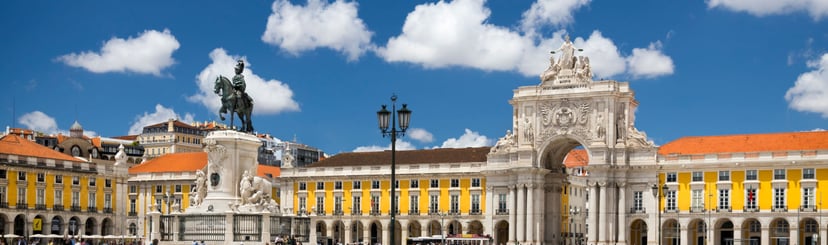
1. Baixa wins when the clock is hard. It is the safest plan when your room is not ready, your ship is not ready, or the boarding time is close enough that every extra crossing feels expensive. Baixa gives you Praça do Comércio, the river-facing grid, Rossio, the Rua Augusta axis, and an easy retreat toward taxis, the port edge, or central hotels. It is not the deepest Lisbon, but it is the least likely to become a problem.
2. Belém wins when the handoff is clean. Belém is the best cultural payoff in a limited, well-managed half-day: Jerónimos, the Monument to the Discoveries, the Belém waterfront, and a pastry pause can make the gap feel intentional. It breaks down when luggage is still unresolved or when you need to cross back through the center under boarding pressure.
3. The riverfront reset wins when the day is already full. A short Tagus riverfront pause around Cais das Colunas, Praça do Comércio, Ribeira das Naus, or the port-facing stretch can be the correct plan when the group is tired, hot, travelling with children, or waiting for a message from the hotel. It is not “doing less” if it prevents a flat first evening or a rushed embarkation.
In a room-not-ready or ship-not-ready window, the best plan is the one that can stop cleanly the moment the next message arrives. That is why the itinerary should be measured by handoff quality, not only by the number of sights named on it.
The comparison criteria are practical rather than atmospheric: how much time the route consumes, whether bags are already handled, how easily the plan can be shortened, how much hill exposure the group accepts, and whether the mood of the next commitment matters. A couple boarding a ship after a late hotel checkout is not solving the same problem as a family leaving the Lisbon cruise port at 9:30 and waiting for a 3:00 hotel check-in. The sights may be the same; the correct sequence is not.
The counterintuitive correction is that the most famous westward choice is not automatically the easiest. Belém is flatter than Alfama and often more gracious than old-town hill streets, yet it is not central to the port-to-hotel problem unless the driver route is built around it. The popular tram idea is also overvalued here: tram charm does not help much when a boarding window, bags, and a mixed-energy group are setting the terms.
Why Baixa is the safer default when timing is tight
Baixa is the safer default because it lets you turn a vague waiting window into a controlled, cuttable Lisbon introduction. It sits between the river, the rebuilt downtown grid, Chiado’s lower edge, and the approach toward the cruise terminal, so it can be made shorter without making the morning feel like a failed tour.
For cruise boarding, Baixa reduces the number of irreversible moves. If you have left a hotel in Avenida da Liberdade, Chiado, Príncipe Real, or a riverfront property and need to end at the port, a Baixa route can descend toward Praça do Comércio and the Tagus rather than sending the group west to Belém and then back east under pressure. If you are coming off a ship and the room is not ready, Baixa gives you a credible city introduction after a luggage drop at the hotel or a driver-held bag plan, then keeps you close enough to adjust when the hotel message finally comes.
The best Baixa version is not an attempt to cover Baixa, Chiado, Alfama, and a viewpoint in one compressed sprint. It is a river-to-grid route: start at Praça do Comércio or Cais das Colunas, read the city from the waterline, move through the Rua Augusta axis, touch Rossio or the lower Chiado edge if the group has energy, and avoid climbing into the old quarters unless the timing is stable. This is why Baixa works well for first-time visitors who want to understand the city without spending the first day fighting its vertical map.
Lisbon does something very specific to the body: the city asks for short climbs, uneven calçada, glossy cobblestone surfaces, bright river glare, and repeated decisions about whether to go up, down, or around. Those demands are manageable on a fresh morning; they become more noticeable after a ship disembarkation, a travel day, or a hotel checkout with the evening still ahead. Baixa keeps the walking load more level than Alfama, Bairro Alto, or a hilltop viewpoint and leaves optional climbing as a choice rather than a requirement.
Baixa also protects the mood of the day. The wrong Lisbon gap plan makes the city feel fragmented: the group spends the morning checking phones, wondering where bags are, and calculating whether the ship or hotel will be ready. A Baixa plan can feel complete even when it is short because the river, the downtown grid, and the city’s rebuilt civic center explain Lisbon quickly. It gives travelers enough orientation to enjoy dinner later without turning the afternoon into recovery time.
The mistake to avoid is pushing from Baixa into Alfama just because it is close on a map. Alfama climbs, narrows, and turns a simple route into a stop-start negotiation with steps, trams, tuk-tuks, and old-street crowding. That can be rewarding on a dedicated walking tour. Between boarding and check-in, it is often the add-on that takes a good plan past its natural limit. For a fuller comparison of cruise-day city options, use the related Lisbon cruise-day guide as the wider frame; this article’s narrower answer is about the luggage-and-deadline window.
When Belém works between the port, the hotel, and the ship
Belém works when the half-day is not actually a gap but a planned handoff with the bags already accounted for. It is the best choice when you have a driver, a guide, a settled pickup point, and enough time to move west without stealing calm from boarding or check-in.
The attraction logic is strong. Belém is where Lisbon can tell a large part of its maritime and imperial story without requiring steep old-town climbing. The official Jerónimos Monastery page describes the monument as set in a historical landscape next to the Tagus, and that river-facing geography matters for travelers: Belém gives you depth, scale, and open air in a route that is easier on the legs than a hilltop old-town plan. Check the official Jerónimos Monastery page (https://www.museusemonumentos.pt/en/museus-e-monumentos/jeronimos-monastery) before fixing the stop, because current access, closures, ticketing, and visiting details matter more here than a generic “must-see” label.
The travel consequence is equally important. Belém sits west of the center, while the main cruise terminal area is east of Baixa around Doca Jardim do Tabaco and Santa Apolónia. That does not make Belém difficult; it makes it directional. It works beautifully when the day is built as hotel checkout, driver pickup, Belém focus, then port handoff. It also works when disembarkation happens early, bags go to the hotel or remain securely managed, and the group has enough margin to travel west and back without treating every red light as a threat.
Belém is especially good for travelers who dislike the feeling of “waiting around.” A private guide can keep the focus narrow: Jerónimos exterior and cloister if access fits, the south portal and Manueline detail, the riverside monuments, the Belém garden axis, and a pastry pause that feels like a Lisbon ritual rather than a sugar stop squeezed between transfers. The point is not to see every Belém attraction. The point is to make one westward district carry the whole gap.
There is a strong family version of Belém, too. Children and grandparents often do better with space, benches, river air, and fewer steep turns. A Belém route can absorb different walking speeds more gracefully than a tight old-town climb. For a monument-led version with private pacing, a Belém and Jerónimos private tour is the cleaner foundation than trying to bolt Belém onto a mixed downtown itinerary.
The plan breaks when Belém is used as a trophy stop rather than a route choice. If the cruise line asks you to arrive with a safety margin, if baggage drop-off is not yet active, or if the hotel still has your room in limbo, adding a westward monument stop can make the day feel more impressive on paper and worse in the body. The official Lisbon Cruise Port FAQ advises passengers to check cruise documentation for embarkation timing and to arrive with margin for check-in, security screening, and unforeseen delay; that is the kind of operational reality a good Belém plan must obey, not work around. Review the official Lisbon Cruise Port FAQ (https://lisboncruiseport.pt/frequently-asked-questions/) close to travel, especially for baggage drop-off, boarding, screening, and locker-service details.
When the Tagus riverfront reset is the correct plan
The Tagus riverfront reset is the correct plan when the available window is too short, too uncertain, or too fatigue-loaded for a monument visit to earn its cost. It is the option discerning travelers often underestimate because it sounds smaller than Belém or Baixa; in practice, it can be the most elegant answer to a messy transition.
A riverfront reset is not a generic stroll. It should be a deliberate low-friction bridge between the previous commitment and the next one. Near Praça do Comércio, Cais das Colunas, and Ribeira das Naus, you can give the group Lisbon’s broadest arrival image: the river, the arcaded square, the city opening to the water, and the short distance back to taxis, drivers, cafés, or the hotel. Near the port-facing side, the reset can be even simpler: fresh air, a guided orientation, a drink or light bite, and a plan that ends before anyone starts watching the clock.
This is the right answer after a poor night of sleep, after a ship arrival when the group has been standing in queues, during heat or glare, or when children are already at the edge of patience. It is also right when the hotel has promised an update but has not confirmed the room. A private guide can make that hour useful by explaining what you are seeing, orienting you to the city’s east-west shape, and helping you choose what not to attempt. But it should still feel like a reset, not a disguised full tour.
The riverfront option is also a mood decision. Travelers who force a monument visit in a thin window often remember the hurry more than the monument. Travelers who choose a well-paced riverfront pause often arrive at check-in or boarding with the sense that the day has begun, not that it has been spent solving logistics. For celebration travelers, food-and-wine travelers, and couples with dinner plans, that difference matters: the afternoon should not drain the evening before it starts.
The riverfront reset also gives the guide a chance to set boundaries for the rest of the stay. From the waterline, it is easy to explain why Belém belongs west, why Alfama rises behind the port and Baixa, why tram routes are atmospheric but not always comfortable, and why the 25 de Abril Bridge belongs to a different kind of visual Lisbon than the old center. That orientation pays off later: travelers stop treating the city as a list of scattered names and start understanding why some routes should descend, why some should be chauffeured, and why some should be saved for a fresher morning.
The cut-first rule is firm: if the day is tightening, cut the hilltop view before you cut the luggage margin. Cut the second neighborhood before you cut the calm handoff. Cut the interior visit before you cut the group’s chance to sit down, hydrate, and move on time. Lisbon will still be there tomorrow; a missed boarding margin or a frazzled first evening is harder to repair.
How luggage and driver timing shape the day
Luggage is the real itinerary boss in this specific Lisbon problem. Before choosing Belém, Baixa, or the riverfront, decide where the bags will physically be at the beginning, middle, and end of the window.
There are three clean luggage models. The first is hotel-held luggage: you check out, the hotel stores bags, and your driver or guide returns you for a port transfer later. This favors Baixa if the hotel is central or Belém if the driver can collect the bags on the way to the port without backtracking. The second is driver-held luggage: the vehicle carries the bags while the guide shapes a short route. This can work beautifully, but only if the vehicle can stay with the day and the walking route does not separate the group from the pickup logic. The third is port or ship-side drop: luggage is accepted according to the cruise operation, then the group tours without bags. This can make Belém possible, but only when the ship’s actual drop-off rules match the plan.
Hotel geography can flip the answer even when the clock looks generous. A hotel near Avenida da Liberdade may be easier to serve with a Baixa route that descends toward the river before the port transfer. A Chiado hotel can make lower Baixa feel natural but can turn a late uphill return into a nuisance if the group is tired. A Príncipe Real hotel adds elevation to the end of the day; that matters when everyone is dressed for boarding or waiting for luggage to be delivered. A riverfront hotel near Cais do Sodré or Santos can make a Tagus-facing pause feel seamless, while a westward hotel can make Belém more logical than it would be for a port-side endpoint. The right plan is not “which neighborhood is best?” It is “which neighborhood belongs between this door, this bag plan, and this deadline?”
Do not assume early bag drop just because the ship is in port. The Lisbon Cruise Port FAQ notes that baggage drop-off times can vary and that baggage is accepted for the ship conducting an active drop-off operation, with proper ship labels. That wording matters for travelers: your plan must follow your cruise documentation and the day’s operation, not a general idea of what ports usually allow. The port also publishes an official PDF (https://www.portodelisboa.pt/documents/20121/160664/LCP%2B2025%2B-%2BRegulamento%2BTarifas%2B%28EN%29.pdf/84f1a596-124f-96be-b212-f43831604a7a?t=1719910780507) for terminal rate regulation, which is useful proof of the operational environment but not a substitute for passenger instructions from your cruise line.
The Lisbon cruise port itself is not an abstract “near downtown” point. The Port of Lisbon’s terminal page places access along Avenida Infante Dom Henrique and connects the terminal area with Lisbon-Santa Apolónia railway station; the same page describes the new terminal and Santa Apolónia cruise terminal together. That means a route ending near the port can be practical, but a route that crosses from Belém back to the east side can still feel long when the group is now thinking about boarding. Use the Port of Lisbon terminal page (https://www.portodelisboa.pt/en/terminal-de-cruzeiros-de-lisboa) for the fixed geography, then let the private plan solve the softer problem: where people and bags should be at each point.
A chauffeur changes comfort, not physics. A chauffeur does not fix a bad plan if the luggage endpoint and hill route are misaligned. Premium spend does not help when the route still asks the group to climb into a dense old quarter, cross back through the city, and reappear at the port with no time margin. It does help when the vehicle removes bag anxiety, anchors the pickup and drop-off, and gives the guide permission to keep the route narrow instead of wandering in search of the next thing.
For this reason, a chauffeured half-day is most valuable when it prevents the two errors that travelers rarely see in advance: dead time and wrong-direction movement. Dead time is standing with bags, waiting for a room, or hovering near a port desk too early. Wrong-direction movement is starting west, needing east, then discovering that the scenic part of the day has placed you on the wrong side of your deadline. A tailored car-and-guide plan through a chauffeured Lisbon private tour should solve those errors before it adds any sights.
The best sequence for each real-life window
The right sequence depends on whether the unknown is the ship, the hotel, or the group’s energy. Start with the uncertainty you cannot control, then choose the neighborhood that creates the fewest new dependencies.
Hotel checkout before cruise boarding
When you have checked out but the ship is not yet ready, Baixa is usually the safest answer unless luggage has already been accepted or a driver is holding it securely. Start from the hotel, keep the route descending or level where possible, use Praça do Comércio and the river-facing grid as the main city introduction, then hand off to the Lisbon cruise port with a visible time margin. Belém can replace Baixa only when the pickup, bag storage, and return-to-port timing are fixed before the morning begins.
Cruise disembarkation before hotel check-in
When you leave the ship before the room is ready, the first move should usually be hotel luggage drop or driver-managed bags, not sightseeing. After that, Baixa gives the cleanest orientation if the hotel is central; the riverfront reset is better if the group is tired or waiting for a hotel message; Belém is best if the hotel is westward or the driver plan can create a smooth loop without dragging the group back and forth. This is the version where a private guide earns value by saying “not yet” to the hills.
Airport-to-port or port-to-airport with a city pause
When the day touches the airport as well as the port, keep the sightseeing window even narrower. Lisbon Airport’s cruise terminal page describes the cruise terminal as just over eight kilometres from the airport and notes transfer-related services, but the practical lesson is simpler: do not spend the middle of a multi-transfer day proving how much can fit. A riverfront pause or Baixa orientation is often better than Belém unless the flight timing, cruise timing, and luggage transfer are all settled in advance. Check the Lisbon Airport cruise terminal page (https://www.lisbonairport.pt/en/lis/access-parking/getting-to-and-from-the-airport/cruise-terminal) when airport services or baggage transfer questions are part of the day.
Room-not-ready window with a strong dinner plan
When a first evening matters, the day should leave the group with appetite, clean clothes, and enough energy to enjoy the table. A riverfront reset followed by a proper check-in can beat a forced monument visit. If you want more than that, choose Baixa over Belém when the room-ready message could arrive at any time; choose Belém only when the hotel and driver have agreed on the sequence. The strongest arrival days often look modest on paper because they are designed around how travelers will feel at 8:30 p.m.
What to skip when the plan starts to tighten
Skip the hilltop add-on first, then the second district, then any interior visit that depends on current access or a slow line. That order protects the purpose of the day: a calm bridge between one obligation and the next.
The hilltop view is the most seductive add-on because it promises an instant Lisbon panorama. It is also the easiest way to turn a clean transfer day into a physical grind. Reaching a viewpoint, stepping in and out of a vehicle, navigating slopes, and returning to the route can absorb more energy than the view gives back. On a dedicated Lisbon day, a viewpoint can be magnificent. Between cruise boarding and hotel check-in, it should earn its place through route logic, not through fame.
The second district is the next thing to remove. Baixa plus Belém in a short window often means neither district gets the attention it deserves. Belém plus Alfama is worse if the group has to climb or cross the city under deadline pressure. A strong private half-day should feel edited. It is better to make one place legible than to leave three places as blurred labels.
Interior visits need the most restraint. Jerónimos can be the anchor of a Belém plan when access and timing are suitable, but an interior visit should not be treated as mandatory in a boarding or check-in gap. If the group is carrying fatigue, waiting on a hotel text, or subject to an uncertain drop-off rule, an exterior-and-context Belém plan can be wiser than forcing a ticketed interior stop. For travelers who want a broader first-day framework after an overnight arrival rather than a cruise handoff, the Lisbon first-day arrival guide is a better companion piece.
Food should be edited too. A pastry pause in Belém or a light riverfront drink can be a gift; a heavy lunch before boarding, before a late check-in, or before an important dinner can flatten the rest of the day. Food-and-wine travelers often do better treating this window as a taste and saving the serious table for an evening when no one is watching luggage or boarding time.
How a private guide turns a dead logistics window into a useful city introduction
A private guide is most valuable here when they make the day smaller, not bigger. The service advantage is not merely narration; it is judgment under constraints.
In Baixa, that means reading the group’s energy and keeping the route near exits: river, square, downtown grid, lower Chiado only if it adds value, and no guilt about skipping a climb. In Belém, it means using the riverfront and monastery context without letting one monument swallow the handoff. On the Tagus riverfront, it means making a short pause feel interpreted rather than idle, so travelers understand the city’s relationship to the water before they ever unpack.
The private format also helps with mixed groups. Couples may want one polished cultural thread before boarding. Families may need space, bathrooms, snacks, and no surprise climbs. Older parents may need the city to unfold from a vehicle and a few carefully chosen walks. Celebration travelers may care less about how many sites they saw and more about whether the first dinner still feels special. A good guide does not turn all of those groups into the same itinerary.
The value rises further when the driver and guide are coordinated. The guide should know whether the car is waiting, moving, or returning; the driver should know which side of the city the luggage endpoint belongs to; and the plan should have a pre-agreed shorter version. That is the difference between a private tour as a premium extra and a private tour as a logistics solution. When the middle of the day would otherwise be spent waiting, checking messages, or dragging bags through a city built on slopes, a tailored plan can turn the gap into your first calm read of Lisbon. Inquire now to shape the handoff around your ship time, hotel timing, luggage plan, and evening priorities.
FAQ
Is Belém or Baixa better before cruise boarding in Lisbon?
Baixa is usually better before cruise boarding when timing is tight or luggage is unresolved. Belém is better only when bags are already handled and you have enough driver-supported margin to go west and then return to the port calmly.
Can I visit Jerónimos Monastery between hotel checkout and cruise boarding?
Yes, but only when the luggage endpoint, pickup time, and port arrival margin are fixed in advance. If any of those are uncertain, use Belém for exterior context and the riverfront rather than forcing an interior visit.
What should I do if my Lisbon hotel room is not ready after disembarkation?
Drop luggage at the hotel or keep it with a coordinated driver first, then choose Baixa or the Tagus riverfront. Do not begin with a hill route or a westward monument plan until the bags and room-update plan are clear.
Is the Tagus riverfront enough for a short Lisbon gap?
Yes. A guided riverfront reset can be the right answer when the window is short, the group is tired, or the next commitment matters more than adding another sight. It gives Lisbon context without creating a new timing problem.
Does a chauffeur make Belém easy before boarding?
A chauffeur makes Belém more comfortable, but not automatically easy. The route still needs a clean Belém to hotel or port handoff, a realistic boarding margin, and a luggage plan that does not require backtracking.
Should I try to see Alfama in this window?
Usually not. Alfama is rewarding on a dedicated route, but its slopes, narrow streets, and stop-start movement make it a poor add-on when cruise boarding, check-in timing, luggage, or evening energy is already shaping the day.
How much time do I need for a useful Lisbon half-day between port and hotel?
A useful plan can be short if it is focused. With only a thin gap, choose the riverfront. With a firmer half-day, choose Baixa. Choose Belém only when there is enough margin for the westward move and the return or hotel handoff.
What is the biggest mistake in planning Lisbon between cruise boarding and hotel check-in?
The biggest mistake is trying to cover all of Lisbon before check-in or boarding. The better plan is to solve luggage first, avoid unnecessary hills, choose one route, and let the day end before the deadline starts to dominate it.
If you’re interested in any private tours of Lisbon, please reach out to us.


 So if you are looking for the absolute best in Lisbon & surroundings with authentic local fully-licensed native guides whose English you can actually understand and with an exclusive and amazingly fun itinerary













