The Productive Alhambra: Orchards, Water and the Working Landscapes Behind Courtly Gardens

Updated
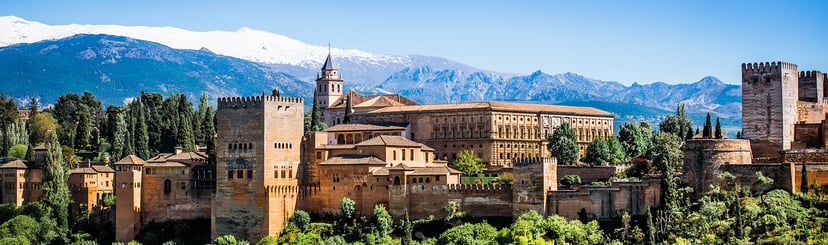
Below the celebrated patios of the Generalife, the slope is divided by walls, channels and bands of cultivated ground. From a distance, these terraces can seem like a green margin around the monument: pleasant foreground for a palace view, but secondary to carved stucco, tile and water courts. Look longer, and the hierarchy reverses. The retaining walls hold soil where a steep site would otherwise shed it. Irrigation lines turn elevation into a sequence of controlled deliveries. Orchards occupy land that is both visible from royal spaces and capable of feeding them. What appears to be scenery is also infrastructure.
This is the productive Alhambra: not a hidden annex to the courtly complex, but a landscape in which cultivation, hydraulic control, labor and pleasure were made to reinforce one another. The central question is therefore not simply what grew beside the palaces. It is how a royal estate converted water and work into food, shade, fragrance, prospect and political meaning. Read that way, the Generalife orchards and the cultivated terraces of the Alhambra become evidence for a larger proposition: Nasrid garden culture did not separate utility from beauty as neatly as modern visitors often do.
A palace city written into a working slope
The Alhambra occupied a demanding position. Its height above Granada created defense, visibility and climatic advantages, yet the same elevation complicated the ordinary requirements of residence. A palace city needed drinking water, construction water, baths, cleaning, animals, workshops, cultivated ground and a dependable supply of food. The Generalife, on the neighboring slope, added a royal place of retreat, but retreat did not remove material needs. Its pleasure spaces were embedded in an estate that had to be watered, maintained and harvested.
The most useful interpretive shift is to stop treating “garden” and “farm” as opposite categories. The Generalife contained formal spaces shaped for courtly occupation, including controlled views and intimate water effects. It also contained huertas: irrigated plots whose fruit trees, vegetables and pulses had productive value. The Alhambra landscape beyond the most photographed courts included woodland, pasture, dry cultivation, irrigated orchards, buildings and paths. These were not equal in status or identical in use, but together they formed the environmental base of a dynastic center.
A scholarly study published through Cuadernos de la Alhambra dates the opening of the Acequia Real to 1238 and describes the resulting territory as a mosaic of irrigated orchards, dryland, pasture, woodland and buildings. That formulation matters because it replaces the image of an isolated palace with that of an organized estate. Water did not merely animate fountains after the architecture was finished. Its arrival helped make sustained occupation, cultivation and landscape formation possible during the early Nasrid period.
The point is not to demote the palaces in favor of agricultural history. It is to understand why their refinement was credible. Courtly abundance depends on systems that make abundance appear effortless. At the Alhambra and Generalife, the apparent ease of shade, flowing water, fruit and greenery was produced through gradients, channels, storage, allocated labor and seasonal timing. The garden’s serenity was real as an experience, but it rested on work that the formal spaces were designed not to foreground.
The four huertas: named ground, not an ornamental blur
The Generalife orchards are easiest to misunderstand when they are viewed only as a continuous green expanse. Historical and conservation research instead treats them as differentiated units. The Patronato de la Alhambra y Generalife identifies the Huerta Colorada, Huerta Grande, Fuente Peña and Mercería in its modern study of the estate. Its account of the conservation and management project explains that documentary, historical, artistic, topographic and botanical evidence was combined to understand these areas.
That multidisciplinary method is itself a guide to reading the landscape. Documents can preserve names, tenures, crops or structures. Images may reveal patterns of planting and enclosure at particular moments. Topography explains what water can reach by gravity and where walls are required to retain soil. Botanical evidence records living material, though present trees cannot automatically be projected back into the Nasrid period. Archaeology can expose construction phases beneath later repairs. No single category proves the whole history; the productive landscape emerges from their agreement and their tensions.
The word huerta deserves care. In Andalusian usage it can describe intensively cultivated, irrigated ground, often combining trees with annual crops rather than matching the English image of a single-species orchard. A huerta can be productive without looking industrial, and visually rich without ceasing to be agricultural. Rows, terraces and mixed planting may create texture and shade while serving practical ends. That overlap is central to the Generalife, where cultivated land belonged to a royal estate and was seen from spaces of leisure.
Nor should the four named orchards be imagined as frozen medieval parcels. Their boundaries, internal organization, crops and management changed over time. The value of naming them is not to claim perfect continuity but to resist abstraction. “The gardens” can make every green surface sound equivalent. Huerta Colorada, Huerta Grande, Fuente Peña and Mercería restore scale and difference: separate pieces of managed ground, each conditioned by contour, water distribution, access and later intervention.
For garden travelers, this changes the visual task. The question is no longer “Which historic plant am I looking at?” but “What kind of land organization am I looking across?” A fruit tree may be recent; a terrace wall may contain several repair phases; a water line may be functioning within a conserved system rather than an untouched medieval one. Yet the relationship among slope, irrigation and productive planting can remain historically legible even when individual species or surfaces have changed.
The Acequia Real: water as allocation rather than metaphor
Water in the Alhambra is often explained through symbolism: purity, paradise, reflection, the sensory refinement of moving sound. Those readings are valuable, especially inside the Nasrid palaces. They become incomplete, however, when the same water is detached from the work of supplying residents and cultivating land. The Acequia Real should be understood first as a hydraulic intervention that brought water from the Darro system toward the elevated complex, using controlled gradient to sustain the Alhambra and Generalife. Only after that material fact is established can its courtly meanings be read in full.
The date 1238 places the canal at the formative edge of Nasrid Granada. A new dynasty establishing itself on the Sabika needed more than walls and audience halls. By securing a managed flow, it created the conditions for settlement and for a designed landscape. The canal’s importance was therefore territorial. It linked an upstream water source to palaces, orchards and other lands, and it generated a corridor in which different forms of cultivation and occupation could coexist.
Branches reveal priorities
An acequia is not simply a line carrying water from one point to another. It is a distribution system. Once flow enters an estate, branches, gates, channels and level changes determine who or what receives water, in what order and for how long. The visible beauty of a rill is only the final surface of a sequence of decisions. Productive ground needs enough flow to wet soil effectively; palace uses require their own deliveries; reservoirs and tanks help mediate between continuous movement and timed demand.
The Patronato’s description of recovered Andalusi cultivation in the Generalife orchards connects the Acequia Real, reservoirs and other hydraulic devices with the support of cultivated land. It also describes year-round cultivation involving vegetables, pulses and fruit trees for court supply. The significance is not that every crop can now be mapped to a specific channel. It is that agricultural production belonged inside the hydraulic story, rather than appearing as an accidental beneficiary of water designed for fountains.
Distribution also makes water political. On a steep royal estate, control of flow means control of productive capacity. A channel can increase the value of land below it, while interruptions, leakage or poor maintenance can reduce a plot’s yield. Allocation requires authority, knowledge and repeated oversight. The dynasty’s ability to command water was therefore visible not only in spectacular pools but in the sustained greenness of terraces and orchards.
Storage made timing possible
Gravity delivered movement; storage created flexibility. Reservoirs and tanks could hold water so that demand did not have to coincide exactly with supply. This matters in a Mediterranean environment where seasonal conditions, crop needs and daily uses vary. Stored water could buffer the system, allow controlled releases and support parts of the estate that could not rely on an uninterrupted direct flow.
It is important to distinguish water storage, which is clearly part of the documented hydraulic landscape, from claims about the storage of harvested produce. The palace complex must have had ways to receive, process and keep food, but the supplied evidence does not justify reconstructing a complete chain of medieval granaries, pantries or storerooms for the Generalife orchards. A careful reading therefore follows what can be supported: reservoirs and hydraulic devices regulated water; crops were cultivated for court supply; later records document agricultural buildings and equipment. The precise path from each harvest to each kitchen remains only partly visible.
This distinction is more than scholarly caution. It shows why landscape interpretation benefits from separating physical evidence, documentary evidence and reasonable inference. Channels and reservoirs can be inspected as built systems. Crop cultivation is stated by the official conservation account. The labor required to operate irrigation can be inferred from the mechanics of the system. But the quantities delivered, exact schedules and full administrative hierarchy should not be invented to make the story feel complete.
Visitors interested in the poetic and acoustic uses of water can place this material reading beside the Alhambra’s courtly soundscape. The two approaches are not rivals. The murmur that cools and orders a patio depends on the same larger culture of hydraulic knowledge that watered productive land. Symbolism becomes stronger, not weaker, when its engineering base is visible.
Terraces were agricultural architecture
On a slope, fertile soil is not enough. It must be held in place, reached safely and watered without destructive runoff. Terraces answer those problems by turning incline into a series of workable surfaces. Their retaining walls are therefore agricultural architecture: structures that create cultivable ground, control erosion and organize movement. In the Alhambra and Generalife landscape, they also shape what can be seen from above.
A terrace is easy to treat as background because its form is quiet. Unlike a carved capital, it may not present a concentrated field of ornament. Its intelligence lies in relation: wall height, soil depth, gradient, channel position and access. A successful terrace keeps water long enough to benefit plants without allowing saturation or collapse. It demands repair because soil pressure, roots and weather act continuously on masonry. The landscape’s apparent permanence is consequently the outcome of repeated maintenance.
Terracing also creates a visual rhythm. Horizontal bands interrupt the steep descent, registering human order against the natural slope. Trees rise from these bands and partially conceal the engineering beneath them. From courtly viewpoints, the cultivated land could read at once as abundance, enclosure and command of terrain. Productive order became part of the view. The monarch did not look only at distant Granada; he also looked across an estate whose patterned ground demonstrated the conversion of hillside and water into useful fertility.
This is why “working landscape” should not be taken to mean a zone hidden from elite sight. Some tasks and service routes may have been kept away from formal reception, but the orchards themselves contributed to the estate’s identity. Their greenness, fruiting trees and changing textures could be enjoyed visually. The labor that sustained them might recede from representation, while the evidence of successful labor remained prominently present.
What grew there, and why a crop list is not the interpretation
The official account of cultivation names broad categories rather than offering a definitive medieval planting plan: vegetables, pulses and fruit trees, grown through the year for the court. These categories are enough to establish a mixed productive system. Trees provide fruit, shade, structure and longer-term investment. Annual vegetables and legumes require more frequent preparation and replanting. Their coexistence allows land beneath and between trees to remain useful, though exact historical combinations would have varied.
Modern recovery of Andalusi crops is valuable because it makes productive use visible again. Yet a restored crop is not a time machine. Present cultivation reflects conservation choices, available plant material, contemporary horticultural knowledge and current management constraints. It can demonstrate plausible practices and renew the orchards’ agricultural character without proving that one specific bed contains an unbroken lineage from the fourteenth century.
A plant-identification walk therefore misses the larger evidence. Naming a pomegranate, vine, fig or vegetable can be satisfying, but the productive Alhambra is best understood through relationships:
- How does the crop sit within a terrace, and what wall makes that soil platform possible?
- Where could irrigation enter, divide and leave without damaging the plot?
- Does the planting provide a seasonal harvest, long-term fruit, shade, fodder or soil benefit?
- How visible is the cultivated ground from a path, pavilion or palace room?
- Which features appear historic, which are later, and which belong to present conservation?
These questions protect the visit from two opposite errors. One is to treat every plant as an authentic Nasrid survivor. The other is to dismiss all current cultivation as modern display. Landscapes carry continuity through structures, practices, names and spatial logic as well as through biological age. A replanted field can still reveal why the terrace exists, how water reaches it and how a royal estate joined food production to sensory experience.
Seasonality is part of that experience. Annual crops rise and disappear; fruit trees flower, leaf, fruit and rest; maintenance may expose more bare soil at one time and more canopy at another. A single visit captures one phase, not a permanent appearance. The companion guide on seasonal water and changing Alhambra conditions helps distinguish the enduring hydraulic idea from the variable conditions in which visitors encounter it.
The seasonal labor behind an apparently effortless garden
Historical courtly landscapes are often presented at the moment of completion: water running, shade established, fruit ready, paths clean. Agriculture is different because it continually returns to beginnings. Soil must be prepared again. Channels silt up. Walls move. Trees need pruning and replacement. Annual crops are sown, weeded and harvested. Water demand shifts with weather and growth. The productive estate was not a finished artwork but a cycle of tasks.
The supplied sources do not provide a complete Nasrid labor roster for the Generalife, so names, wages and exact divisions of responsibility should not be fabricated. The work itself, however, can be inferred from the physical requirements of irrigated cultivation. Someone had to inspect channels, clear obstructions, manage openings and watch whether water reached the intended beds. Someone repaired terrace edges, carried tools, handled manure or composting materials, pruned trees, gathered produce and moved it toward places of processing or consumption. Animals and buildings recorded in later documentation indicate an estate that also required care beyond planting.
Seasonal work would have been uneven. Spring growth can increase the urgency of weeding and water management. Summer heat raises irrigation pressure and brings some fruits and vegetables into harvest. Autumn may combine gathering, soil work and preparation for new planting. Winter is not an absence of labor: pruning, repair, channel cleaning and planning can be concentrated when some crops are dormant. Specific historical calendars varied by species, climate and period, but the broader point is durable. The year-round supply described by the Patronato depended on a sequence of different crops and tasks, not on a permanently abundant surface.
Water management made labor social as well as technical. A branch opened for one terrace affects what remains for another. Leakage upstream changes conditions below. A reservoir must be filled, monitored and released. Effective irrigation therefore depends on coordination and authority. In a royal landscape, that coordination would have sat within a hierarchy of ownership and service, even where the identities of individual workers are now difficult to recover.
This is the limit of the courtly view. A pavilion can frame orchard, sky and city while excluding the repetitive actions that maintain the frame. The design does not erase labor, but it can aestheticize its results. Fruit appears as abundance; a clean channel appears as natural flow; a stable terrace appears as landscape. Reading productively means restoring the chain of work without pretending that every link is documented in equal detail.
From orchard to court: supply without the myth of self-sufficiency
The Generalife orchards contributed to court supply, but that statement should not be stretched into a claim that the Alhambra fed itself. A palace population required grain, oil, meat, fish, fuel, spices and many other goods that connected it to Granada, the surrounding Vega and wider trade networks. The huertas were one component in a distributed provisioning system. Their importance lies in what they could provide close to the royal estate: fresh produce, fruit, pulses and perhaps products suited to repeated seasonal harvesting.
Proximity has practical value. Fresh crops are perishable, and moving them uphill requires time and labor. Cultivation within the estate reduces part of that distance and allows closer oversight. It can also supply foods whose quality depends on being gathered at the right stage. Yet proximity has representational value too. A ruler able to enjoy fruit and greenery beside his retreat inhabits an image of ordered fertility. The productive source and the courtly experience occupy the same landscape.
The chain from field to consumption can be read in stages even when exact accounts are absent. Water makes cultivation possible. Terraces and soil management create stable growing space. Seasonal labor produces harvests. Paths and service areas enable movement. Processing equipment or farm buildings, where documented, extend the chain. Palace kitchens and tables complete it. Each stage transforms natural resources through human organization, and each offers a different kind of evidence.
Later records help make the estate’s agricultural density concrete. The transcribed act for the transfer of the Generalife on 2 November 1921 identifies Fuente Peña, Huerta Grande and Huerta Colorada as irrigated by the Acequia del Tercio and containing fruit trees. It also records farm dwellings, corrals, stables, a winepress, olive cultivation and vines. These details describe a much later moment than the Nasrid court, so they cannot simply be projected backward. They do show, however, that the Generalife remained an agricultural property with varied productive components well into the modern period.
The winepress is especially instructive as evidence of processing rather than mere planting. Vines in the landscape do not automatically reveal where grapes became wine or must; equipment completes part of that story. Corrals and stables point to animals, transport and manure as elements of estate management. Dwellings remind us that working land implies working lives. The 1921 act thus counterbalances the tendency to preserve the Generalife only as an image of aristocratic leisure.
At the same time, continuity must be handled precisely. A twentieth-century olive grove does not prove an identical Nasrid grove in the same place. A later farm building may occupy an earlier service zone, or it may represent a changed use. The evidence is strongest when it demonstrates the long productive character of the estate, not when it is forced to supply missing medieval detail.
The Generalife’s double identity was its strength
The Generalife is often described as a royal country estate or place of recreation. That designation is accurate but easily softened into the modern idea of a holiday garden: a beautiful refuge detached from production. The evidence points instead to a compound identity. It was a leisure estate because rulers could withdraw there, enjoy water, air, planting and views, and occupy spaces less ceremonially constrained than the main palaces. It was productive because irrigated huertas and associated facilities supported cultivation.
These functions did not merely coexist; they enhanced one another. Productive trees could create shade, fragrance and seasonal color. Water needed for crops also enabled cooling and sensory effects. Terraces made cultivation possible and generated ordered views. The sight of fertile land confirmed that the retreat was not wilderness but controlled abundance. Conversely, royal presence elevated agricultural ground into a dynastic landscape.
Modern categories encourage a division between ornamental horticulture and food production. Formal gardens are expected to display, farms to yield. The Generalife complicates that division. Its most courtly spaces are highly designed, but they belong to a larger estate where utility could itself be aesthetically legible. The straightness of a channel, repetition of trees, horizontal rhythm of terraces and contrast between foliage and masonry are useful and beautiful at once.
This does not mean every productive plot was laid out primarily for visual effect. Agricultural decisions respond to soil, water, exposure and labor. Nor does it mean courtly users encountered the same landscape as workers did. A ruler could experience shade and abundance from a privileged position while others performed the maintenance. The double identity is therefore not a harmonious social ideal. It is a structure in which practical productivity, sensory pleasure and hierarchy are bound together.
For travelers building a broader garden-focused stay, the relationship among the Generalife, Carmen de los Mártires and Granada’s viewpoints offers a useful comparison. The Generalife’s distinction is not simply age or fame. It is the unusually legible union of palace garden, hydraulic system, cultivated slope and political prospect.
Productive aesthetics: when usefulness becomes part of the view
“Productive aesthetics” does not mean that agriculture was disguised as ornament. It means that the signs of successful production could carry aesthetic and political value. A watered terrace shows command of scarcity. A fruiting tree joins nourishment to pleasure. A green slope beneath a palace contrasts with surrounding dryness. Repetition, enclosure and seasonal change give cultivated land visual structure even when no ornamental parterre is present.
From the Alhambra and Generalife, views operate at several scales. Close at hand are channels, paving, beds, trunks and walls. Mid-distance terraces reveal the organization of the estate. Farther away, Granada and its surrounding plain place the royal complex within a broader productive territory. The gaze can therefore move from controlled detail to claimed landscape. This expansion of scale is part of dynastic staging: the court is shown not as isolated from the land but elevated above and connected to it.
Other senses reinforce the effect. Irrigated soil changes temperature and smell. Trees modify wind and light. Working water produces sound before it reaches a ceremonial fountain. Harvest seasons bring color, weight and human activity. None of these conditions is purely ornamental, yet all can enrich the experience of place. The estate’s beauty arose partly from processes that also sustained it.
The strongest evidence for this reading is relational rather than decorative. A palace opening aligned toward cultivated land; a terrace visible beneath a pavilion; a watercourse serving both plot and patio; an orchard whose canopy contributes to the prospect—each relationship shows productive ground entering courtly perception. The agricultural landscape becomes a stage set only in the limited sense that it is seen. Unlike painted scenery, it must continue to function.
This helps explain why the usual language of paradise gardens can feel insufficient here. Paradise imagery speaks to water, shade, fruit and enclosure, but it can float free of material conditions. The productive Alhambra returns those qualities to the hillside: water has a source and a gradient; fruit has a season; shade has a tree that needs pruning; enclosure has a wall that needs repair. The ideal is persuasive because it is engineered and cultivated.
A landscape changed by centuries, not a sealed Nasrid exhibit
The Generalife orchards have passed through political changes, different forms of ownership, altered cultivation and modern conservation. Their present appearance is therefore layered. Some structures may preserve early alignments; others have been rebuilt. Planting can reflect older practice, later agriculture or recent recovery. Paths and visitor sightlines may emphasize some relationships while making others difficult to perceive. A responsible interpretation does not ask the current landscape to be an untouched fourteenth-century document.
Archaeology has helped separate phases. A University of Granada record of Luca Mattei’s research notes three interventions carried out from 2011 to 2017 to investigate the orchards’ foundation, planning, construction techniques, original organization and later modifications. That research agenda is revealing: even basic questions about how the huertas were formed require excavation and close architectural reading. The terraces are historical constructions, not merely empty ground on which crops happen to grow.
Modern conservation must make choices that historic agriculture did not. A working medieval or early modern estate could replace a wall for immediate use, shift a channel, change crops or respond pragmatically to yield. A protected heritage landscape must also preserve archaeological evidence, manage erosion, maintain visitor safety and decide which historic layer to emphasize. Productive cultivation may be revived, but it operates within conservation priorities.
This creates a productive tension. An orchard kept only as static scenery loses the agricultural practices that gave it meaning. An orchard managed only for yield could damage buried evidence or simplify a layered historical landscape. Conservation must mediate between use and preservation. The Patronato’s combination of documentary, topographic, botanical and other evidence reflects that challenge.
Visitors should consequently treat visible condition as evidence of the present stewardship of a historical system. A freshly planted bed may express an effort to recover productive character. An apparently empty terrace may be resting, under study or between seasonal crops. A repaired channel may preserve an old route while using newer material. Exact conclusions depend on specialist knowledge and current conservation information, but the larger interpretive framework remains stable: the huertas are living heritage precisely because they cannot be understood through masonry alone.
Three counter-readings that sharpen the interpretation
A deep cultural reading benefits from resistance. The productive-landscape thesis is persuasive, but it becomes stronger when its limits are stated.
Not every garden feature is agricultural
The Alhambra and Generalife include spaces whose primary purposes were ceremonial, residential, contemplative or ornamental. A courtly pool cannot be reduced to irrigation infrastructure merely because both depend on water. Design choices concerning reflection, inscription, proportion and sound deserve interpretation on their own terms. The productive reading adds the estate-scale system; it should not flatten every feature into utility.
Not every present crop is medieval evidence
Historic names, archaeological structures and restored cultivation do not guarantee biological continuity. Species may be historically plausible without occupying the same plot in the same period. The safest claims distinguish current recovery from documented past practice. This is why a crop list alone cannot carry the article’s argument.
Production did not erase dependence on Granada
The orchards supplied the court, but the palace city remained connected to markets, farms, craftspeople and transport beyond its walls. Royal self-sufficiency is an attractive myth because it makes the estate seem complete. The more accurate picture is one of selective internal production within a wider urban and regional economy. The Alhambra’s power came partly from coordinating those connections, not from escaping them.
These counter-readings prevent overstatement while preserving the central insight. Courtly display and agricultural work belonged to the same landscape, but they were not identical. Current conservation reveals historical relationships, but it also interprets them. Local cultivation mattered, but it formed one strand of a larger supply network.
How to read the productive Alhambra on a visit
A landscape-led visit works best as an evidence chain rather than a hunt for isolated highlights. Official routing and conservation conditions can change, so the useful sequence is conceptual rather than a promise that every point will always be accessible. The aim is to connect what can be seen from different parts of the monument.
- Begin with the slope. Identify the difference between steep uncultivated ground and horizontal terraces. Ask what structures make planting possible and where soil would move without retaining walls.
- Follow water mentally. Locate the highest visible channels or storage points, then consider how gravity could distribute flow to lower plots and palace uses. Look for branching rather than treating each rill as an isolated decorative line.
- Read planting as a system. Notice the relationship between trees, annual ground, shade and access. Avoid assuming that current species or arrangements reproduce one medieval moment exactly.
- Change viewpoint. Compare the orchard from within or beside it with the orchard seen from a courtly position. The same land can read as workplace at one scale and dynastic prospect at another.
- Look for the missing labor. Every clean channel, stable wall and ordered bed implies maintenance. Ask which tasks are visible, which are represented only by their results, and which remain undocumented.
- Separate periods. Use later evidence, such as the 1921 act, to understand continuity of agricultural character without projecting every modern feature into the Nasrid age.
This method changes the pacing of attention. The most informative moment may not be a famous patio but a view across an orchard wall where channel, terrace and canopy align. It may be a transition between formal and productive ground, or a place where a branch of water disappears toward a lower plot. Such evidence is subtle because it was built to work, not to announce itself as an exhibit.
A second visit can make this approach much more rewarding. The first Alhambra experience often concentrates on the Nasrid Palaces, where timed movement and visual intensity demand attention. Returning with one interpretive theme allows the landscape to come forward. The guide to choosing a second Alhambra visit by theme helps decide whether productive landscape, restoration, inscriptions or court life should lead that return.
Expert interpretation has particular value here because the visible evidence belongs to different dates and disciplines. A garden historian may notice cultivation patterns; an archaeologist reads masonry phases; a hydraulic reading follows gradient and distribution; an art-historical reading connects prospect with dynastic staging. A strong private route does not simply add facts at each stop. It sequences viewpoints so that one kind of evidence tests another: the reservoir explains the channel, the channel explains the terrace, the terrace explains the crop, and the palace view explains why productive land also mattered as representation.
That sequence is the material reason to consider Orange Donut Tours’ bespoke private Alhambra and Generalife planning in Granada. Its concrete consequence is interpretive and sequential: time can be held at unobtrusive hydraulic and agricultural features, viewpoints can be ordered so that reservoir, channel, terrace and courtly prospect explain one another, and present conservation can be distinguished from historical cultivation as the visit unfolds. For garden and landscape travelers who already know the palace interiors, this specialist framing makes the estate legible as one working system rather than a succession of beautiful stops.
The politics of making fertility look natural
Royal landscapes communicate through control. Walls command entry; towers command sight; inscriptions command memory. Productive ground communicates more quietly. Irrigated fertility on a difficult slope implies access to water, labor and technical knowledge. Fruit, shade and green continuity suggest that the ruler can order resources across seasons. The landscape turns administration into atmosphere.
This is political theater, but it is not false in the ordinary sense. The orchards had to produce; the channels had to carry water; the walls had to hold. The display depended on functioning infrastructure. What makes it theatrical is the framing. Courtly users encountered the results of labor as ease, abundance and sensory pleasure. The system’s difficulty was concealed by its success.
The Generalife’s views intensify that message. From elevated spaces, cultivated terraces appear within a wider field of Granada, the Albaicín and the plain beyond. Near and far production can be held in one gaze: the estate’s own irrigated ground and the broader territory that sustained the city. The view does not prove direct administrative control over everything seen, but it places royal leisure within a geography of resources.
There is also a moral and cultural dimension to cultivation. Ordered water and fertile land can signify good governance, knowledge and care; neglected channels and barren plots can signify failure. It would be reductive to assign one fixed message to every orchard view, yet the association between rule and managed fertility was powerful across premodern societies. At the Alhambra, it gains local force because water had to be brought and distributed across elevation.
The laboring body remains the unresolved element. Dynastic representation celebrates command but rarely grants equal visibility to those who cleared channels, tended trees, rebuilt walls or carried harvests. A contemporary reading should not romanticize this hierarchy. Restoring labor to the interpretation does not require inventing individual biographies. It requires acknowledging that courtly nature was produced nature, and that its beauty was socially organized.
What this landscape adds to the meaning of the Alhambra
The productive landscape changes several familiar interpretations at once. Water becomes a resource allocated across an estate before it becomes a poetic surface. The garden becomes cultivated infrastructure as well as an image of paradise. The Generalife becomes a royal retreat whose leisure depended on active huertas. The palace view becomes an encounter with managed land, not only distant scenery. Even conservation becomes part of the story, because keeping the orchards legible requires decisions about use, planting and historical layers.
It also changes the scale of the monument. The Alhambra is often experienced as a sequence of rooms and courts enclosed by walls. The huertas insist on a more expansive unit: canal, slope, terrace, orchard, service building, palace and city. Architecture remains central, but it belongs to a metabolism. Water enters; labor transforms land; produce moves; waste and manure return; walls and channels are repaired; seasons alter demand. The monument lives through exchange.
This wider scale makes the distinction from purely ornamental garden history clear. The most consequential evidence is not a rare flower or a decorative planting scheme. It is the integration of hydraulic engineering, agricultural ground and elite perception. That combination explains why the orchards matter even to travelers who are not horticultural specialists. They reveal how the court inhabited its environment.
The productive Alhambra also offers a corrective to the idea that beauty begins where necessity ends. Here, necessity could generate form. A retaining wall creates a horizontal line; a channel produces sound and reflection; a fruit tree gives shade and food; an orchard becomes a view. The transformation of use into experience is one of the estate’s most sophisticated achievements.
The lasting question is not what the gardens symbolize, but what they do
Stand before the cultivated slope and the courtly garden no longer appears self-contained. Its water has traveled. Its soil is held. Its trees are tended. Its abundance is timed. Behind the serenity of the Generalife lies a system that joined the Darro watershed to terraces, reservoirs, crops, workers, palace consumption and royal representation.
That system should not be reconstructed as more complete than the evidence allows. The current orchards are layered, later documents cannot answer every Nasrid question, and restored cultivation is interpretation as well as continuity. Yet the central relationship is defensible. The Alhambra and Generalife were shaped by working landscapes, and those landscapes were capable of being useful, beautiful and political at the same time.
The interpretive payoff is a different kind of monument. Instead of a palace miraculously surrounded by water and greenery, the Alhambra becomes a place where technical knowledge and seasonal work were converted into courtly ease. The orchards do not sit behind the gardens as a lesser story. They explain how the gardens could exist, what their abundance meant, and whose labor made dynastic leisure visible.
For a visit centered on that evidence—one that distinguishes historic structure from present conservation and connects subtle features across the Alhambra and Generalife—Inquire now.
If you’re interested in any private tours of Granada, please reach out to us.



 So if you are looking for the absolute best in Granada & surroundings with authentic local fully-licensed native guides whose English you can actually understand and with an exclusive and amazingly fun itinerary













