A Private Granada Gardens Day for a High-End Stay: Generalife, Carmen de los Mártires and Albayzín Views After the Alhambra
Updated
Should you plan a Granada gardens day after the Alhambra?
Yes, a private Granada gardens day is the right second layer after the Alhambra when you want the city to feel calmer, more legible and less like another race through monuments. It works because Generalife, Carmen de los Mártires and the Albayzín sit in real hill country, where the short-looking move along the Generalife-to-Carmen de los Mártires slope can define whether the day feels graceful or unnecessarily tiring. The clearest exception is simple: if your second day must be packed with churches, museums, royal burial history or a full-day excursion, a gardens-and-views day will feel too soft.
The article-specific thesis is this: Granada rewards visitors who treat gardens and viewpoints as a sequence of altitude, water, shade and perspective, not as a set of pretty stops added after the Alhambra. Done well, the day extends the Nasrid logic you have just encountered inside the palaces, then eases you toward Realejo quiet and finishes with the Alhambra seen from across the Darro valley rather than from inside its walls.
This is not the same decision as whether to visit the Alhambra by day or night, nor is it a general second-day menu of Royal Chapel, Sacromonte or Sierra Nevada choices. If you still need to solve the main Alhambra day, start with Alhambra and Generalife private touring or the broader planning guide to planning Granada around the Alhambra without burnout. This guide answers a narrower question: whether a garden-led day is worth one of your precious Granada slots, and how to route it without turning a serene idea into a hill-management problem.
- Choose it as your soft second day if you have already seen the Nasrid Palaces and want continuity without another ticket-driven schedule.
- Use it as a half-day plus sunset if you prefer a long lunch, hotel rest or a food-focused evening after the viewpoint.
- Skip it as the main plan if your group wants interiors, museums, shopping or the drama of a long private day trip.
- Upgrade the logistics if stairs, heat, dress shoes, older parents or a celebration dinner make late-day fatigue costly.
The three-stop rhythm: Generalife, Carmen de los Mártires, Albayzín
The best rhythm is not to rank the three places as competitors, but to give each a different job. Generalife supplies meaning and continuity after the Alhambra. Carmen de los Mártires supplies a quieter hillside interlude near the Realejo edge. The Albayzín supplies distance: the moment when the Alhambra stops being a monument you entered and becomes a composition across the valley.
That distinction matters because each stop asks a different kind of effort from the body. Generalife is structured walking, ticket awareness and formal garden interpretation. Carmen de los Mártires feels looser, but it still sits above the city and involves paths, terraces and uneven moments rather than a flat urban park. The Albayzín is the most atmospheric finish and the easiest place to misjudge, because a viewpoint that sounds like a ten-minute photo stop can require steep cobbles, vehicle restrictions, crowds at the lip of the view and a careful return plan.
Granada’s official heritage geography supports that sequence. UNESCO describes the Alhambra and the Albayzín as two medieval areas on adjacent hills, separated by the Darro, with Generalife to the east of the Alhambra as the former rural residence of the Nasrid rulers. UNESCO’s Alhambra, Generalife and Albayzín listing (https://whc.unesco.org/en/list/314/) is useful not as a sightseeing checklist, but because it explains why a viewpoint day has more depth when you read the city from both hills instead of staying on one side.
In practical terms, the day should feel like a controlled release of attention. Begin with the most historically loaded garden material while your energy is clean. Move into a quieter, less formal garden before the day becomes too hot or too crowded. Save the Albayzín for late afternoon or early evening, when the final view can feel like a crescendo rather than one more climb imposed on tired legs.
This rhythm also protects the evening. A packed Granada day can flatten into logistics: find the taxi, climb the lane, check the time, hold the restaurant, keep everyone moving. A garden-and-view day should do the opposite. It should make the city feel slower, even though the route is actually quite strategic. The private advantage is not secrecy; it is editing the visible beauty so the group has enough stamina to receive it.
Generalife is the interpretive anchor, not just the green add-on
Generalife should come first when the day is meant to extend the Alhambra experience. Its value is not that it offers flowers after palaces; its value is that it lets a good guide keep the conversation going about water, controlled views, courtly retreat, agriculture, shade and power. The Patronato de la Alhambra y Generalife describes the monumental complex as a cultural landscape with a significant environmental dimension, and that is the right frame for this kind of private day. The official Alhambra and Generalife site (https://www.alhambra-patronato.es/en/discover/alhambra-y-generalife) is the primary reference point for the complex and its conservation context.
The consequence for travelers is clear: if you saw the Alhambra yesterday with little explanation, Generalife can become the place where the whole hill finally settles into meaning. If you saw the Alhambra with an expert guide, Generalife can be shorter and more selective, because the day does not need to repeat every idea. A premium visit earns its place when it edits, not when it adds more walking to prove value.
One counterintuitive correction belongs early: do not treat Generalife as the easy part of the Alhambra hill. Many travelers remember the Nasrid Palaces as the ticketed highlight and assume the gardens are where the day relaxes. In reality, Generalife still involves exposure, changes of level and a sense of distance from the lower city. The wrong move is to leave it until the group is already hungry, sun-hit or worried about getting down to the next reservation.
For private touring, the strongest use of Generalife is selective interpretation rather than exhaustive coverage. A guide can decide when to pause for the Patio de la Acequia, when to keep the group moving through cypress shade, when to connect water channels to the palace experience, and when to avoid draining the mood with every available detail. That is especially important for couples and celebration travelers: the day should preserve attention for the final view, not spend it all before lunch.
There is also a ticketing consequence. If Generalife is included with a full Alhambra visit, the day has to respect the official entry structure rather than pretending the gardens can float freely around lunch. If the palaces were visited separately on another day, the guide has more freedom to treat Generalife as a thematic return to the hill. Those two versions may sound similar on paper, but they feel different in the body: one is a monument extension, the other is a slower second reading.
Carmen de los Mártires is the Realejo counterweight
Carmen de los Mártires is the right second garden when you want the day to soften after Generalife without losing the hilltop atmosphere. It is not a substitute for Generalife; it is a mood shift. Generalife carries the discipline of Nasrid garden meaning, while Carmen de los Mártires offers romantic hillside calm, mixed garden styles and a more private-feeling pause above the Realejo.
The Generalife versus Carmen de los Mártires contrast is the difference between formal garden meaning and hillside release. One helps you understand the Alhambra’s cultivated world; the other lets the day breathe before you ask the Albayzín to deliver the final view.
The city tourism page for Carmen de los Mártires notes its French garden, English garden, palm garden, landscape garden and Nasrid courtyard, which is precisely why it works as a counterpoint rather than a repetition. Granada’s official tourism page for Carmen de los Mártires (https://turismo.granada.org/en/node/5974) gives a useful primary-source snapshot of the site’s garden variety. For a traveler, the important consequence is not the label of each garden style; it is that the place changes tempo, allowing a couple or small group to stop performing the “major monument” mode for a while.
This is where the Generalife-to-Carmen de los Mártires slope becomes a real planning hinge. On a map, the move can look modest because both places belong to the Alhambra-side hill world. In the body, especially after a palace morning or a previous day of climbing, it can feel like the moment the day starts to fray. The plan should not depend on everyone being cheerful about gradients, sun and cobbled edges just because the next stop is beautiful.
Use Carmen de los Mártires when the group values quiet, photography without constant jostling and a sense of Granada as a lived hillside city rather than only a monument machine. Cut it when the day is already running late, when lunch is fixed at a lower-city restaurant, or when anyone is measuring the day by famous-name recognition. It is rewarding, but it is not the stop to force for travelers who only feel satisfied when each hour contains a headline attraction.
Orange Donut Tours can build this portion as a focused Carmen de los Mártires visit through Carmen de los Mártires private touring, or weave it into a broader garden-and-view sequence. The private value here is restraint: knowing when the garden should be an interpretive pause, when it should be a quiet walk, and when it should be dropped to protect the evening.
Albayzín views after garden time should feel like a crescendo
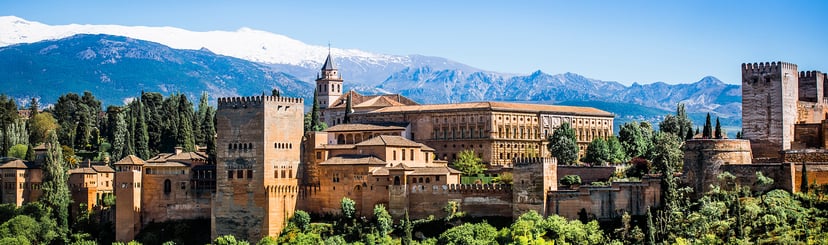
Albayzín views belong late because distance is the emotional payoff of a garden-led day. After Generalife and Carmen de los Mártires, you have experienced the Alhambra-side hill through water, terraces, shade and slope. Crossing the city’s visual axis toward the Albayzín lets you see what you have been inside, with the Alhambra stretched along the opposite ridge and the Sierra Nevada often framing the scene.
The best-known finish is the Mirador de San Nicolás, but the key decision is not whether the view is famous. It is whether the approach preserves the mood you have built. A direct transfer close to the Albayzín edge, followed by a guided walk through a manageable slice of the neighborhood, feels very different from climbing up from Plaza Nueva through every steep lane just because the route looks romantic in theory. For couples, the mood-preserving decision is to arrive with enough energy to enjoy the view; the mood-killing mistake is treating the climb as part of the charm when one person is already done.
For many travelers, the Albayzín portion should be framed through viewpoint geography rather than a generic old-quarter tour. The neighborhood deserves its own private walk, and an Albayzín private tour can go deeper into lanes, houses, churches, cisterns and Moorish urban memory. On this day, however, the Albayzín’s job is narrower: to end the garden sequence with perspective across the Darro valley, not to become a second full district itinerary.
That is why Mirador de San Nicolás should be handled with judgment. It is a powerful view, but it is also a popular gathering place, especially near sunset. For a high-end stay, “arrive at sunset” is an incomplete plan. The better question is whether the group should arrive before the densest moment, use a nearby quieter vantage for part of the time, or finish at San Nicolás only after the light has begun to change. The final viewpoint should feel earned and composed, not like a crowded photo errand.
What Granada does to the body on a gardens-and-views day
Granada makes a short day feel longer when you ignore gradients, surfaces and transfer resets. The body cost comes from repeated elevation changes: Alhambra-side paths, the Generalife-to-Carmen de los Mártires slope, Realejo descents, the Darro-side crossing, and then Albayzín cobbles if the evening view is added without a vehicle strategy. None of those pieces has to be extreme; together, they can turn a calm concept into an accumulative fatigue problem.
The city also punishes the wrong shoes and the wrong lunch timing. A traveler can handle one steep stretch in polished loafers or sandals, but not multiple garden paths, cobbles and viewpoint edges while also preserving appetite for dinner. A long lunch can be excellent, yet if it ends in the lower city with the group already sleepy, the later Albayzín ascent becomes the least elegant part of the day. Better sequencing means deciding before lunch whether the view is still the finale or whether the plan should end with a gentle Realejo descent and dinner near the hotel.
For families and older travelers, the issue is not only mobility; it is mood. Children who enjoyed water channels and shade at Generalife may not tolerate another “just a little farther” climb toward the viewpoint. Older parents may be happy walking on level garden paths but less comfortable with descending cobbles after dusk. Comfort-first planning should not wait for the group to announce exhaustion; it should remove avoidable friction before it becomes the day’s memory.
The most practical cut-first rule is this: if the day is starting to feel heavy, cut the extra Albayzín wandering before you cut the final view. A focused arrival near the viewpoint gives you the emotional payoff without requiring the neighborhood to carry a full walking tour. If even that feels too much, keep the gardens and move the view to another evening when the group can approach it fresh.
Chauffeur drop-offs change the day, but they do not flatten Granada
A chauffeur is worth considering when the day includes both Alhambra-side gardens and an Albayzín finish, but the value is precision rather than fantasy. Chauffeured support can reduce awkward transfers, prevent unnecessary backtracking, keep dressier travelers from arriving overheated, and make the late-day viewpoint feel deliberate. It cannot turn Generalife, Carmen de los Mártires or the Albayzín into flat, door-to-door experiences.
A chauffeur cannot eliminate the essential walking and slope exposure inside the gardens and viewpoint areas. That sentence matters because premium spend does not help when the underlying problem is expecting Granada to behave like a level boulevard city. Paying more changes comfort between zones, timing reliability, hotel pickups, return ease and the ability to protect a dinner reservation. It does not remove the need for suitable shoes, a realistic walking threshold and a guide who knows where to stop before the group loses its patience.
The strongest chauffeured pattern is not “car everywhere.” It is targeted relief: hotel pickup, a well-placed Alhambra-side drop, a controlled move between Generalife and Carmen de los Mártires when needed, and a later transfer that avoids making the Albayzín climb the price of admission to the view. Readers weighing this choice can compare the broader logic in luxury chauffeured Granada private touring, but the gardens day has its own rule: use the vehicle to save energy for interpretation and atmosphere, not to chase more stops.
There are cases where a chauffeur is overvalued. If your hotel is already well placed near Realejo, if the group is strong on hills, and if you are ending before the Albayzín, the car may add more coordination than benefit. Conversely, if you are staying in Centro, dressing for a celebration dinner, traveling with older parents or linking the day to sunset, chauffeured timing can make the difference between an elegant arc and a late scramble for taxis around Plaza Nueva.
Private transport also changes who carries the mental load. Without it, someone in the group usually becomes the unofficial dispatcher, checking maps, estimating climbs and deciding when to call a taxi. On a celebration trip or family stay, that invisible job can quietly drain the person who planned everything. A guided chauffeur plan does not make Granada flat, but it can remove the repeated decision points that make a beautiful route feel administratively heavy.
Timing the day by season without fragile bloom promises
The dependable seasonal advice is to plan for light, shade and heat load, not for specific bloom promises. Granada’s gardens change through the year, but a high-end plan should not be built on fragile claims that a certain flower will be at its peak on your date. The safer question is when the group will have the best energy for exposed paths, viewpoints and transfers.
In warmer months, start earlier, shorten interpretation when the sun is direct, and treat the late afternoon as the natural home for the Albayzín view. In cooler months, the day can carry more walking, but the light fades earlier and the return from the viewpoint needs more intention. Shoulder seasons often give the most balanced feel: enough life in the gardens, enough softness in the light, and less pressure to hide from the middle of the day.
Rain changes the decision less than heat, but it changes surfaces. Wet cobbles in the Albayzín and shaded garden paths can make a romantic plan feel tentative underfoot. On those days, the better private adjustment is usually not cancellation; it is shortening the walking spans, keeping the viewpoint flexible and choosing a return that does not depend on a long downhill walk after dark.
Official opening patterns and ticket conditions can change, and the Nasrid Palaces have time-specific entry rules when they are part of an Alhambra visit. The safest planning habit is to verify current conditions on the official site before locking the day. The Patronato’s official opening-hours and ticket information (https://www.alhambra-patronato.es/en/visit/opening-hours-and-prices) is the place to check if Generalife is being paired with ticketed Alhambra access rather than treated as a separate planning layer.
For this gardens-and-views day, the more important timing decision is psychological. Do not place the Albayzín view after a heavy lunch, a long hotel reset and an ambitious walk unless your group genuinely likes evening climbing. If the day is meant to feel restorative, build a clean pause between gardens and viewpoint, or keep the garden portion compact enough that the view still feels like the natural end of the story.
Who this softer second layer serves best
A gardens-and-views day serves travelers who want Granada to stay in the body without overwhelming the itinerary. Couples often do well with it because the day has atmosphere without the pressure of constant sightseeing performance. Returning travelers appreciate it because it deepens the Alhambra rather than trying to compete with it. Comfort-first visitors like it when the routing is honest about hills and the day ends with a view rather than an obligation.
It also works for families when expectations are precise. Children may respond well to water, shade, peacocks if encountered, and the visual drama of the Alhambra across the valley, but they may not care about garden typologies or long architectural explanations. The private version should reduce lecture density, keep snack timing realistic and avoid making every viewpoint sound essential. One excellent view is usually better than three partial ones with fading attention.
The wrong fit is equally important. A gardens day is too soft for travelers who want monuments, museums or a full day trip. If your group measures value by interiors entered, collections seen or miles covered outside Granada, choose Royal Chapel and Cathedral, a historic-center plan, Sacromonte, Sierra Nevada or a private day trip instead. The garden sequence is intentionally not the most “productive” day; it is the day that makes Granada feel layered without making the stay heavier.
It can also frustrate travelers who are chasing sunset photos above all else. Mirador de San Nicolás is famous for a reason, but a premium day should not be reduced to waiting in a crowded viewpoint scrum. If the only goal is a single photograph, arrange a simple transfer and skip the garden depth. If the goal is understanding why the view feels powerful after the Alhambra, the garden sequence earns its place.
How to sequence lunch, hotel rest and the Albayzín finish
The safest full-day sequence is morning Generalife, late-morning or midday Carmen de los Mártires, a lower-pressure lunch, hotel rest if needed, then Albayzín views late in the day. That order lets the most interpretive walking happen before the group is depleted and gives the viewpoint its proper role as a visual conclusion.
Lunch should not become a trap. A long, wine-led meal can be lovely in Granada, but it changes the rest of the day. If the group has a celebratory dinner later, keep lunch lighter and closer to the route. If lunch is the main indulgence, reduce the Albayzín plan to a concise viewpoint arrival rather than a full district walk. Granada’s free-tapas culture can also work beautifully in the evening after a softer day, and travelers deciding between casual tapas and formal dining can read when a private Granada tapas night beats formal dining after the Alhambra.
Hotel location changes the sequence. A Realejo base makes Carmen de los Mártires and a midday reset easier, while a Centro base simplifies dinner and taxi returns but can make hill transitions feel more segmented. An Albayzín stay can sound ideal for views, yet it may complicate luggage, vehicle access and late returns for guests who dislike cobbles. That is why base choice should be tied to your Granada days, not to the single most atmospheric address.
The planning principle is to avoid transfer resets that feel like starting the day over. If you descend from the gardens to the lower city, rest, change clothes and then ask the group to climb into the Albayzín, the evening needs to feel clearly worth it. A private guide can make that handoff smoother by choosing the right meeting point, avoiding repetitive lanes and making the final view the answer to the day rather than a detached finale.
A sample private arc that keeps the day calm
A strong private arc is selective rather than encyclopedic. Begin with Generalife while attention is high, then let the guide choose the garden pauses that explain water, shade and retreat without repeating the whole Alhambra visit. Move toward Carmen de los Mártires before the day has become meal-driven. Leave enough space after lunch for either a real hotel pause or a lighter transition, because the Albayzín finish should not begin with the group already negotiating tiredness.
The morning should feel intellectually clear, not rushed. If the previous day included the Nasrid Palaces, the guide can use Generalife to make sense of what the palaces only hinted at: the controlled sound of water, the management of sightlines, the way gardens created privacy and power on a hill that also had agricultural and defensive logic. If the Alhambra visit is still to come, keep Generalife lighter so it becomes a prelude rather than a spoiler.
The middle of the day should be where you resist adding more. Carmen de los Mártires can absorb a quiet half hour or a longer guided walk, but it should not become the excuse to fill every terrace, path and garden corner. If the group is enjoying the calm, linger. If shoes, heat or hunger are beginning to show, descend or transfer before the atmosphere breaks. In Granada, the graceful exit is often more important than the extra stop.
The late-day Albayzín segment should be planned backwards from the desired ending. If dinner is near Plaza Nueva or Centro, the return should be easy. If dinner is in the Albayzín or near a view, the approach should not leave the group overheated before sitting down. If the final plan is a tapas night, the viewpoint can be concise, letting the evening loosen rather than asking the neighborhood walk to do everything.
What to cut first, and what not to over-prioritize
The first thing to cut is not usually Carmen de los Mártires or the final view; it is the urge to turn the day into a complete Granada overview. Do not add Cathedral, Royal Chapel, Sacromonte, shopping and a hammam to a garden sequence just because the distances look compact. Granada’s map hides vertical effort, and a premium stay loses polish when every beautiful idea is forced into one day.
Cut extra viewpoints before cutting the main viewpoint. A private guide may know several places where the Alhambra appears beautifully, but multiple viewpoint hops can flatten the emotional arc. San Nicolás, or one carefully chosen alternative nearby, is enough for this day. The point is to see the Alhambra from across the city after having understood its gardens, not to collect angles until the view stops feeling special.
Do not over-prioritize bloom calendars, secret-photo promises or a restaurant-with-view at any cost. A restaurant view can be memorable, but it is not automatically better than a clean viewpoint followed by dinner where the food, service and seating are stronger. Likewise, a garden that is not at peak bloom can still be the right planning choice if it gives the day shade, continuity and relief from monument intensity.
The firm editorial call is this: the best version of the day is not the fullest one. It is the version that finishes with enough energy for the evening you came to Granada to enjoy. If that means Generalife, a selective Carmen de los Mártires walk and a single Albayzín view, that is stronger than an overpacked day that adds more names and subtracts pleasure.
That restraint is especially valuable on a two-night stay. Granada often sits between larger Andalusian bases, so visitors arrive determined not to waste a minute. The better premium instinct is to waste less energy, not less time. A well-edited gardens day leaves room for conversation, a clean change of clothes, and an evening that still feels like Granada rather than recovery from Granada.
How a private guide turns gardens and views into one Granada story
A private guide earns their place on this day by connecting meaning, geography and comfort. Without that connection, the plan can become a pleasant but disjointed set of green spaces and photographs. With it, Generalife explains the controlled world of Nasrid retreat, Carmen de los Mártires offers a later romantic hillside layer, and the Albayzín view reveals the two hills in conversation across the Darro.
The practical value is equally important. A guide can decide whether to linger in cypress shade, whether the group should descend toward Realejo or transfer, whether the Mirador de San Nicolás is worth the busiest minute of the evening, and whether the group needs a quieter approach. These are not generic luxury upgrades; they are Granada-specific judgments about slope, timing, crowd texture, light and how much interpretation a group can absorb after the Alhambra.
This is the natural planning handoff: if you want Nasrid garden meaning, Carmen de los Mártires calm, Albayzín viewpoint geography and hill-aware logistics to feel like one composed day rather than three separate errands, Orange Donut Tours can shape the route privately around your hotel, season, mobility, meal plans and evening mood. Inquire now to start with the version that protects the day’s arc instead of simply adding more stops.
For guests who want the route built entirely around their pace, celebration plans or previous Alhambra experience, tailor-made private touring in Granada is the better frame than a fixed checklist. The question is not how many garden paths can be covered. The question is how to let Granada feel rich, calm and physically manageable after its most demanding monument.
FAQ
Is a Granada gardens day worth it after seeing the Alhambra?
Yes, it is worth it if you want a calmer second layer that extends the Alhambra through gardens, hillside geography and final views. It is less worthwhile if you want a monument-heavy day with many interiors or a full excursion outside the city.
Should Generalife and Carmen de los Mártires be done on the same day?
They can work very well on the same day when the route is paced carefully. Generalife gives the day its Nasrid garden meaning, while Carmen de los Mártires gives it a quieter Realejo-side pause. The transition should be planned around slope, heat and lunch timing.
Is Mirador de San Nicolás the best Albayzín viewpoint for this day?
Mirador de San Nicolás is the classic finish because it gives a direct, memorable view of the Alhambra. It is not always the calmest choice at peak sunset, so a private route may approach it early, use a quieter nearby pause, or keep the stop concise.
Can a chauffeur remove the hill fatigue from this route?
No. A chauffeur can reduce transfer friction and make drop-offs and returns smoother, but it cannot remove the essential walking, slopes and uneven surfaces inside the gardens and viewpoint areas. The best plan combines vehicle relief with realistic walking expectations.
Is this a good private day for couples?
Yes, especially for couples who want atmosphere, views and a softer pace after the Alhambra. The key is to avoid the mood-killing mistake of adding too many climbs, viewpoints or late-day errands when the day should be building toward one memorable finish.
Is this route suitable for older parents?
It can be suitable for older parents if the route is shortened, drop-offs are planned, and the Albayzín portion is handled as a focused viewpoint finish rather than a long uphill walk. It is not ideal for anyone who needs a mostly flat day.
What should we cut if the day is getting too full?
Cut extra viewpoints, extra district wandering and unrelated monuments first. Keep the core arc if energy allows: Generalife for meaning, Carmen de los Mártires for calm, and one Albayzín view for perspective.
Do we need exact bloom dates to plan this well?
No. A strong Granada gardens day should be planned around light, shade, walking effort and mood rather than fragile bloom-calendar promises. Seasonal conditions matter, but the route should still work even if a specific flower is not at peak.
If you’re interested in any private tours of Granada, please reach out to us.



 So if you are looking for the absolute best in Granada & surroundings with authentic local fully-licensed native guides whose English you can actually understand and with an exclusive and amazingly fun itinerary













