Granada With a Split Alhambra Day: Palaces, Generalife and a Lower-City Recovery Plan

Updated
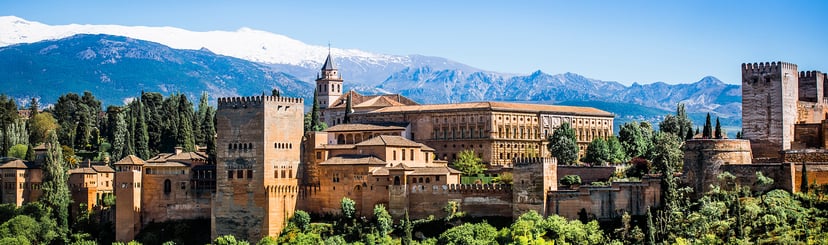
Split an Alhambra day only when the Nasrid Palaces remain the fixed anchor and Generalife becomes the flexible breathing room, not a second forced climb. This works in real Granada because the official visit-time guidance (https://www.alhambra-patronato.es/en/visit/organize-your-visit/time-of-the-visit) makes the Nasrid Palaces time explicit on the ticket, the site spreads across the hill between the Entrance Pavilion, Generalife, Partal and the palace zone, and the Alhambra hill descent into Realejo or Centro changes how much evening your group has left. The clearest exception is an early palace slot with a mobile group: keep the Alhambra as one concentrated visit and let the lower city begin only after you are finished with the entire hill.
The thesis is simple: a split Alhambra day in Granada is not a way to see more; it is a way to stop the Nasrid Palaces from consuming the Generalife, and to stop the hill from consuming the evening. The important planning hinge is not only the hour printed on your ticket. It is whether your group is nearer the Puerta de la Justicia and palace zone or the Entrance Pavilion and Generalife when fatigue begins to show. That small map detail is why a neat-looking itinerary often collapses after the palaces.
This article is not ticket-hunting advice and it is not a generic Alhambra history primer. It solves one decision: how to place the Nasrid Palaces, Generalife and lower-city recovery when you want depth without ending the day as a staircase exercise. For travelers who already have a confirmed palace time and want the site interpreted as one coherent arc rather than a timed admission problem, the natural starting point is Alhambra and Generalife private tour.
One counterintuitive correction belongs early: the famous Albaicín viewpoint finish is usually overvalued on a split Alhambra day. Mirador de San Nicolás can be magnificent, but after hours on the Alhambra hill it often asks for another climb, another crowd edge and another transfer puzzle. If the day is getting overpacked, cut the viewpoint before you cut lower-city recovery.
The priority ladder for a split Alhambra day
The best split-day plan is controlled by a priority ladder: protect the Nasrid Palaces, keep adjacent Alhambra spaces close to the palace story, decide whether Generalife deserves separation, then descend only once for recovery. If the plan violates that order, it may look fuller on paper while giving you a thinner, more tiring day in Granada.
- First priority: the Nasrid Palaces slot. The ticketed entry time is the one piece that should not be treated as flexible.
- Second priority: the immediately related Alhambra arc around the palace zone, Partal, the Palace of Charles V and any Alcazaba time that still serves the story.
- Third priority: Generalife, but only when it is placed as a garden release rather than a late punishment.
- Fourth priority: the lower-city recovery in Realejo or Centro, after the final hill movement, not before an avoidable return uphill.
The official Alhambra General ticket page (https://tickets.alhambra-patronato.es/en/producto/alhambra-general/) confirms the practical shape behind this ladder: the Nasrid Palaces have a time indicated on the ticket, while other parts of the complex, including Alcazaba, Partal and Generalife, sit within the broader opening span for the day. That does not mean every sequence is equally graceful. It means the non-negotiable piece is known in advance, and the rest should be placed around body, light, guide logic and the mood you want after the hill.
For private touring, the priority ladder matters because it gives the guide permission to say no. A good guide can deepen the Nasrid Palaces without trying to lecture through every tile, shorten an Alcazaba climb when legs are already taxed, or hold Generalife for the moment when gardens will land emotionally instead of feeling like homework. The private value is not in making the official time disappear. It is in shaping the interpretive arc so that the palace, water, garden and city descent feel like one designed day.
The ladder also prevents a common premium-travel mistake: assuming comfort is created by adding a car at every seam. Granada resists that. The Alhambra is a hill complex with controlled access points, pedestrian transitions and route logic that no amount of polish fully erases. A car can improve the start, the return, or a family regroup; it cannot make a poor sequence intelligent.
Access seams deserve more attention than many visitors give them. The official FAQ names three walking approaches: Cuesta Gomérez from Plaza Nueva, Cuesta del Realejo from Plaza del Realejo, and Cuesta del Rey Chico from Paseo de los Tristes, along with the C30, C32 and C35 bus lines. Those are not just transport notes. They are clues about how the day will feel. A start from Plaza Isabel la Católica by bus can spare the first climb; a descent through Realejo can soften the finish; a return toward Paseo de los Tristes can quietly turn into a second hill decision. A private plan should choose the approach and the exit for the same reason it chooses the palace hour: because movement shapes attention.
This is especially important for small groups. The traveler who wants every viewpoint, the traveler who wants a seated lunch and the traveler who is quietly managing knees may all agree to the same itinerary in the morning. They do not experience the same itinerary after the Nasrid Palaces. The split-day plan is a way to keep those needs from colliding at the worst possible moment: when the group is halfway between the palace story and the lower city.
What must follow the Nasrid Palaces slot
What follows the Nasrid Palaces should be low-risk, close by and emotionally quieter than the palaces themselves. Do not schedule a fixed lunch, a hard driver pickup, a second guide handoff or a lower-city appointment immediately after the slot. The palace visit has its own internal rhythm, and the group usually needs a release zone before deciding whether Generalife still belongs that day.
Give the palaces a release zone before the next commitment
The Nasrid Palaces are the high-concentration portion of the day. The route compresses the group into interiors, thresholds, courtyards and controlled movement. Even travelers who are very fit tend to come out with their attention full. The better next move is not a sprint toward Generalife or a dash down to Centro. It is a short release zone: a pause around the palace side of the complex, a brief open-air transition, a bathroom and water moment, or a small interpretive bridge through Partal or the Palace of Charles V if it still serves the arc.
This is not wasted time. It is the hinge that keeps the rest of the day from becoming reactive. Without it, families start negotiating snacks in the wrong place, couples rush a garden they expected to love, and small groups split between the person who wants one more view and the person who wants a chair. In Granada, ten unglamorous minutes after the Palaces can protect the next three hours.
Do not make the palace exit carry the whole city
The common mistake is to treat the palace exit as a launchpad for everything else: Alcazaba views, Generalife gardens, lunch in Realejo, Cathedral quarter browsing and perhaps an Albaicín viewpoint by dusk. That is not a split day; it is a day without a governor. The more discerning move is to decide what the exit must do. If the group is still fresh, it can open toward Generalife. If the group is saturated, it should begin the descent. If the trip has only one Granada evening, it should protect dinner geography rather than chase another famous view.
For first-time visitors, the only firm rule is this: do not put anything fragile immediately after the Nasrid Palaces. A tasting-menu reservation, a timed hammam, a remote pickup, or a lower-city guide meeting can all work later, but not as the first thing after the palace slot. The consequence of being too tight is not only lateness. It is losing the capacity to enjoy what you paid to preserve.
Use the official rules to reduce guesswork
The official Alhambra FAQ (https://www.alhambra-patronato.es/en/visit/faq) is unusually helpful for split-day planning because it states two points travelers often misunderstand: each place inside the Alhambra is accessed just once, while visitors can go in and out of the complex as needed, within opening hours and the special Nasrid Palaces time. That supports a split strategy, but it also disciplines it. A split should never rely on re-entering a space you have already used, and it should never treat the palace time as movable.
That official nuance is why Generalife needs a decision rather than an assumption. If you have already entered it, it is done. If you have not, it can be the garden chapter later in the day. The question is whether returning to that side of the hill will restore the day or drain it.
When should Generalife be separated from the palaces?
Generalife should be separated from the Nasrid Palaces when the gardens are a real priority and when the separation reduces saturation rather than adding a second hill burden. It should stay attached to the Alhambra visit when the group is mobile, the palace slot is early, the weather is moderate, or the whole point of the day is one concentrated Alhambra narrative.
The Generalife is easy to misplace because it feels gentler than the palaces. Gardens sound like recovery. In practice, Generalife still requires movement across the complex, time on paths, standing, sun or weather exposure, and a return decision. Its softness is visual, not logistical. For garden-led travelers, separating it can be excellent. For tired first-timers who simply feel they “should” include everything, it can be the part that tips the day from rich into blurred.
Separate Generalife when it is the second act, not the leftover
The strongest case for separation is a morning Nasrid Palaces slot followed by a deliberate pause, then Generalife as a second act. This works for couples who want the palaces to land intellectually before the gardens land sensually, for culture travelers who care about water, landscape and courtly life, and for families who need a lower-pressure chapter after the most controlled interiors. The separation should be planned, not improvised. A guide can use the pause to change register: less dynastic context, more water, shade, views and how a palace complex breathes.
In that plan, do not descend all the way to Centro for lunch and then climb back unless your group is comfortable with the return and the entrance mechanics are clear for your ticket. A near-hill pause, a short rest, or a carefully managed route inside the complex often works better than turning Generalife into an afternoon comeback tour. If the gardens are your central interest beyond the Alhambra, a separate Granada garden lens can also make sense later in the stay, especially through Carmen de los Mártires private tour, but that is a different decision from squeezing Generalife into the same hill day.
Place Generalife before the palaces when the slot is late
With a late Nasrid Palaces slot, Generalife usually belongs before the palaces, not after, if you want it to receive real attention. This is the safer order because the palaces create the emotional peak and the descent afterward should be simple. Saving Generalife until after a late palace slot can work for energetic garden specialists, but for most comfort-minded visitors it creates the wrong mood: “one more thing” instead of a garden release.
The late-slot sequence should feel like a controlled build. You arrive with enough margin, use Generalife and perhaps nearby open spaces before the fixed palace time, then let the Nasrid Palaces close the Alhambra chapter. After that, the plan should release downward. Realejo, Centro or a hotel pause will do more for the evening than trying to convert the hill into an endurance loop.
Keep the Alhambra concentrated when the day is already clean
The Alhambra should remain one concentrated visit when the Nasrid Palaces slot is early, your party moves at a similar pace, and the day has no major dinner, transfer or family fatigue risk later. In that case, splitting can be a solution in search of a problem. A continuous Alhambra visit can preserve the intellectual arc from fortress and palace to garden, reduce re-entry questions, and give you a clean descent into Granada once.
This is the honest counterpoint: not every premium traveler needs a split. Some travelers are better served by one excellent Alhambra visit, a calm lunch, and a very light lower-city evening. If your group enjoys deep touring in one uninterrupted block, do not break the day just because split pacing sounds more curated.
Where lower-city recovery belongs after the Alhambra hill descent into Realejo or Centro
Lower-city recovery belongs after the final Alhambra movement, not between the palaces and a forced return to Generalife. The phrase matters: Alhambra hill descent into Realejo or Centro is not just geography; it is the moment when the day changes from monument discipline to city recovery.
Realejo is the cleaner landing if you want a softened descent, a meal that does not require crossing the whole center, and a neighborhood mood that does not immediately ask for another climb. Campo del Príncipe gives the area a useful shape: open enough to feel like a release, close enough to the hill to avoid a transfer reset, and more forgiving after the Alhambra than a push toward Albaicín. For travelers deciding whether to base or recover there, Granada’s Realejo strategy is the more focused next planning layer.
Centro is the better landing if the day needs easy hotel access, Cathedral-quarter orientation, shopping edges, or a smoother connection to a later dinner. It is also better for multigenerational groups when the next decision is not “which historic lane now?” but “who needs a chair, who wants coffee, and how do we keep the evening intact?” A lower-city private walk can be worthwhile here, but only if it is genuinely gentle. The useful version is context around the Cathedral quarter, the Madraza edges or the city’s Christian and Islamic layers without pretending the group is starting fresh. For that role, Granada historic center private tour should be shaped as a short recovery chapter, not a second full tour.
Do not confuse lower-city recovery with doing nothing. Recovery can be a sit-down drink, a short tapas-and-wine sequence, a hotel pause, a gentle Realejo walk, or a Centro orientation that leaves the group better placed for dinner. What it should not be is an upward march to Sacromonte, an ambitious Albaicín loop, or a distant reservation that makes everyone watch the clock after the Palaces.
The body consequence is concrete. Granada adds climbing, uneven stone, queue drag, garden paths, sun exposure in open sections, and descending pressure into one day. Even if the distances look short on a map, the transitions are not flat-city transitions. Cuesta de Gomérez, Cuesta del Realejo and Cuesta del Rey Chico are not interchangeable scenic lanes; they are decisions about knees, heat, shoes and how much conversational energy remains at dinner.
The mood consequence is just as real. A good split Alhambra day leaves the evening feeling earned and available. A poor split makes Granada feel smaller, because everyone is too tired to let the lower city work. The wrong final hour turns the day into logistics: where is the taxi, how far is the table, why are we climbing again? The right final hour lets the city widen after the monument: Realejo for an easier landing, Centro for clarity, and Albaicín saved for a different evening when it can be enjoyed rather than survived.
Scenario bullets: how to choose your split
Use the scenario that matches your palace time and energy risk, not the one that looks most complete. The right split is the one that keeps the Nasrid Palaces meaningful, Generalife unhurried and the lower city usable after the hill.
- Morning Nasrid Palaces, garden-interested travelers: visit the palaces with full attention, pause near the palace side, then give Generalife its own garden chapter before descending. This is the strongest split when gardens matter.
- Morning Nasrid Palaces, celebration dinner later: keep Generalife shorter or attached to the main visit, descend once into Realejo or Centro, and protect a hotel pause before the evening. The dinner is part of the day’s success, not an afterthought.
- Noon or early-afternoon Nasrid Palaces: avoid overbuilding the morning. Use a modest pre-palace plan, let the palaces anchor the day, then choose either Generalife or lower-city recovery based on real energy, not obligation.
- Late Nasrid Palaces: place Generalife before the palaces if it matters, then descend after the palace slot. Do not save Generalife as a late add-on unless your group asked for a garden-heavy day and accepts the effort.
- Families or multigenerational groups: cut the second hill first. Realejo or Centro recovery is usually more valuable than an Albaicín viewpoint after the Alhambra.
- Art-and-context travelers: let the guide connect the palaces, Partal and Generalife through fewer, better explanations. Do not demand equal depth from every stop; that is how a meaningful day becomes a lecture trail.
The firm editorial call is this: Generalife is worth preserving when it is part of the Alhambra’s emotional architecture, but it is not worth forcing after the group has already descended and mentally left the hill. If the plan is getting crowded, stop forcing the return uphill. Cut the viewpoint, shorten the Alcazaba climb, or leave one lower-city stop for another day before you turn Generalife into a tired obligation.
What the hill does to the body and the trip mood
The Alhambra day is tiring not because one element is extreme, but because Granada stacks small frictions. Timed entry, controlled interiors, exposed walks, uphill approaches, downhill returns and uneven paving accumulate. A comfort-first plan acknowledges that accumulation before it becomes visible.
This is where many polished itineraries misread the city. They treat the Alhambra as a contained monument and the lower city as a separate evening. In the body, those are connected. If you walk up from Plaza Nueva through Cuesta de Gomérez, stand through the palace route, cross to Generalife, descend toward Realejo and then decide to climb into Albaicín, the city has asked for several different kinds of effort in one day. None is outrageous alone. Together, they change how people listen, eat and make decisions.
The trip mood changes when the group feels that the day is releasing rather than tightening. After the Nasrid Palaces, a good plan should gradually reduce pressure: fewer entry rules, fewer hard times, fewer climbs, shorter explanations, better seating, and a clear route to the evening. If instead the plan adds another hill, another viewpoint crowd and another uncertain taxi, the Alhambra does not feel richer. It feels as if it has colonized the whole day.
This is also why the lower city should not be treated as consolation. Realejo and Centro are not merely places to recover because the “real” sightseeing is finished. They are the areas that allow Granada to become a lived city again after the Alhambra’s intensity. For food-and-wine travelers, that may mean a short tapas rhythm rather than formal dining immediately. For couples, it may mean a quieter walk and a drink before dinner. For families, it may mean the hotel pause that prevents the evening from becoming a negotiation.
Spend with judgment: guide, chauffeur and access without pretending away the hill
Paying more changes the Alhambra day when it buys better interpretation, cleaner routing, calmer timing and fewer avoidable transfers. It does not change the fundamental hierarchy of the day. The Nasrid Palaces still govern the clock, the hill still governs energy, and the lower city still needs to receive the group after the final descent.
A private guide earns the cost when the day needs an interpretive arc rather than a sequence of facts. The Alhambra is especially vulnerable to over-explaining: too much detail in the palaces can flatten Generalife, while too little context can make the gardens feel decorative. The best guide shapes the day as a progression: palace concentration, open-air release, garden meaning, then a descent into the city that does not require another lecture. This is where private touring is commercially sensible because the guide is not merely adding information; the guide is protecting the day’s structure.
A chauffeur or private vehicle earns the cost at specific moments: a clean start from a hotel that is poorly placed for the hill, a planned pickup after the final descent, family or mobility support, or a transfer that prevents the evening from collapsing. It is less useful when the proposed route is mostly inside the pedestrian logic of the Alhambra itself. For travelers weighing vehicle support, luxury chauffeured Granada private tour is strongest when it is designed around access seams, not as a promise that no walking will matter.
Premium access does not remove the need for lower-city recovery after a full hill day. That sentence should be explicit because it is where many expensive Granada plans lose value. Better access can reduce queue anxiety or improve flow; it does not make Generalife closer to Realejo, make Cuesta del Rey Chico flat, or make a late Albaicín finish automatically wise.
When a short stay asks one Alhambra day to carry the palaces, Generalife, the slope and a livable evening, the value of private planning is not ornament. It is preventing the day from losing its shape. Orange Donut Tours can build the interpretive arc around your confirmed Nasrid Palaces time, decide whether Generalife should sit before or after, and place the Alhambra hill descent into Realejo or Centro where your evening still has a chance. Inquire now.
A realistic split-day sequence that does not overreach
A realistic split Alhambra day should have one fixed summit and one gentle landing. The summit is the Nasrid Palaces. The landing is Realejo or Centro after the final hill movement. Everything else should serve those two moments.
For a morning Nasrid Palaces slot
Begin with enough margin to reach the palace side without making the first hour frantic. Let the guide hold the group’s attention for the Palaces, then move into a short release zone. If Generalife is a priority, continue to it before the group mentally leaves the Alhambra. If the group is already saturated, shorten the remaining hill time and begin the descent. Afterward, choose Realejo for a softer neighborhood landing or Centro for hotel clarity and later dinner access.
For a midday Nasrid Palaces slot
Keep the morning deliberately light. A lower-city morning can work, but it should not be a full historic-center tour before the Palaces. The risk is arriving at the Alhambra already half-spent. After the Palaces, choose one: Generalife if gardens are essential, or lower-city recovery if the group is done. Do not try to make the afternoon carry both at full depth unless your travelers specifically prefer a long cultural day.
For a late Nasrid Palaces slot
Use the earlier part of the hill for Generalife if gardens matter, and arrive at the Palaces without deadline panic. Once the palace slot is complete, descend. This is the sequence where the cut-first rule matters most: do not add Albaicín simply because the view is famous. A late palace finish already gives the day a strong close; the recovery plan should keep that close from fraying.
Before locking any version, check the official opening-hours page (https://www.alhambra-patronato.es/en/visit/opening-hours-and-prices) for your travel date and season. The planning principle is evergreen, but the exact day shape should respect current opening spans, special conditions and the ticket you actually hold.
FAQ
Is splitting the Alhambra day better than seeing it all at once?
Splitting is better when the Nasrid Palaces, Generalife and lower-city evening would otherwise blur into one exhausting block. Seeing it all at once is better when your palace slot is early, your group walks comfortably and you want one uninterrupted Alhambra arc.
What must happen after the Nasrid Palaces time slot?
After the Nasrid Palaces, plan a low-risk release zone before the next commitment. Stay close, let the group reset, and avoid fixed lunches, pickups or lower-city appointments that depend on a precise palace exit.
Should Generalife be before or after the Nasrid Palaces?
Generalife should usually come after a morning palace slot if gardens are a true priority, and before a late palace slot if you want the gardens to receive proper attention. After a late palace slot, Generalife often feels like one more obligation unless your group is highly garden-focused.
Can I leave the Alhambra and come back later the same day?
The official FAQ says visitors can go in and out of the complex as needed, while each specific place inside the Alhambra is accessed only once. Build your split around that rule and never rely on re-entering an area you have already visited.
Where should we recover after the Alhambra: Realejo or Centro?
Choose Realejo for the softer landing after the hill, especially if you want a meal, drink or short neighborhood walk without crossing the city. Choose Centro when hotel access, Cathedral-quarter orientation or dinner logistics matter more.
Is Albaicín a good finish after a split Alhambra day?
Albaicín is often too much after a full Alhambra day because it adds another hill and another crowd-management problem. Save it for a separate evening unless your group is energetic and specifically wants a viewpoint finish.
Does a private guide make a split Alhambra day more comfortable?
A private guide helps most when the day needs interpretation and pacing, not just admission. The guide can make the Palaces, Partal and Generalife feel connected while also knowing when to shorten, pause or descend.
Should families split the Alhambra day?
Families should split the day only if the split reduces pressure. A palace-focused visit followed by Realejo or Centro recovery is often better than forcing Generalife, Albaicín and a late dinner into the same day.
If you’re interested in any private tours of Granada, please reach out to us.



 So if you are looking for the absolute best in Granada & surroundings with authentic local fully-licensed native guides whose English you can actually understand and with an exclusive and amazingly fun itinerary













