Granada Before a Parador Dinner: Alhambra Hill, Realejo or a Driver Return Strategy

Updated
Verdict: before a Parador dinner, the best default is to stay on the Alhambra hill after a controlled afternoon, then return by prearranged driver if your hotel is in the lower city. It works because Granada’s dinner geography is vertical: the Realejo-to-Alhambra hill approach can turn a romantic final hour into a hot climb, a taxi scramble or a slow negotiation with tired legs. The clearest exception is a traveler who has already done the Alhambra deeply and needs a lower-city pause; in that case, Realejo becomes the calmer base, but only if the climb to the Parador is treated as a transfer, not as an atmospheric stroll.
Granada is unusually unforgiving when dinner is set on the hill. A Parador reservation is not only a table; it is a destination above the city, beside the Alhambra precinct, reached through slopes, gates and route choices that change how the whole evening feels. The useful question is not “what should we see before dinner?” but “where should our bodies be when dinner begins?” That is the thesis of this guide: in Granada, the meal is not the anchor until the hill has been solved.
This is deliberately not a restaurant review, and it is not a formal ranking. Travelers comparing a Parador dinner with a wider MICHELIN Guide selection (https://guide.michelin.com/us/en/andalucia/granada/restaurants) still face the same practical decision: a stronger reservation cannot rescue a badly sequenced afternoon. If your day ends on the wrong side of Cuesta de Gomérez, Plaza Nueva, Carrera del Darro or the Albayzín slope, the cost is paid before the first course arrives.
Three dinner-geography choices, judged by the hill
The winning plan depends on where you want the hour before dinner to happen: on the Alhambra hill, in Realejo, or in the car between the two. Use this compact read before you start adding viewpoints, cocktails, hotel resets or one more monument.
Stay on the Alhambra hill before dinner: best when the Parador is the evening’s emotional peak, when you have an afternoon Alhambra or Generalife focus, or when you want the transition from history to dinner to feel continuous. This is the default winner because it avoids the late climb.
Use Realejo as the pre-dinner base: best when you need a lower, softer afternoon, a hotel pause, or a short cultural walk before going up. Realejo is the runner-up because it keeps you near the hill without committing you to it too early.
Add a driver return strategy: best when your hotel is below, your group includes older parents, children, formal shoes or celebration clothes, or dinner is likely to end after everyone’s walking tolerance has dropped. This is the upgrade that changes the evening most.
Cut the Albayzín viewpoint before dinner: the wrong squeeze is trying to add Mirador de San Nicolás, a Parador dinner and a lower-city return into one seamless romantic arc. The view may be famous, but before dinner on the Alhambra hill it usually puts you on the wrong side of the ravine.
The comparison criteria are simple: walking load, direction of travel, heat exposure, ticket timing, return certainty and dinner mood. A good plan does not maximize the number of Granada moments before dinner. It removes the moment that will make the table feel like recovery. For a guided visit that keeps the Alhambra and Generalife sequence connected to the dinner location rather than scattered across the day, see Alhambra & Generalife private touring.
Why staying on Alhambra hill usually wins before a Parador dinner
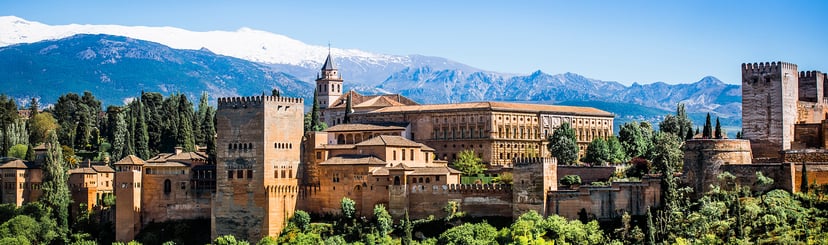
Staying on the hill wins when the evening should feel like a continuation of the Alhambra rather than a separate transfer puzzle. The Parador sits inside the Alhambra’s elevated world, so the strongest plan keeps you near that altitude once the afternoon has begun. The point is not to linger endlessly around the monument. The point is to avoid spending the hour before dinner climbing from Realejo, hunting for the correct approach, or trying to fit an Albayzín view that pulls you away from the table.
The most elegant hill plan is usually not the longest Alhambra plan. It may be a guided visit that ends with space around the Generalife, the Partal area or the shaded approaches rather than a late rush from the Nasrid Palaces. It may also be a lighter hill sequence with the Alhambra forest, Puerta de las Granadas and Carmen de los Mártires used as texture rather than as a checklist. A private guide matters here because the value is not only explanation; it is knowing when the group has had enough stone, water, courtyards and slope before dinner clothes and evening attention begin to fade.
Granada does something specific to the body. It asks for short climbs repeatedly rather than one dramatic ascent: the lower-city pull from Plaza Nueva, the shaded but rising path of Cuesta de Gomérez, the uneven edges near the Alhambra forest, the extra steps between viewpoints, gates and gardens, and then the mental fatigue of checking the clock against dinner. In warm months, the body reads those slopes earlier than the itinerary does. In dress shoes, sandals or celebration clothes, a distance that looked minor on a map becomes the part of the evening everyone remembers for the wrong reason.
The hill plan also gives the day a cleaner rhythm. You can place serious interpretation earlier, then let the final stretch become slower and quieter. That matters for couples and celebration travelers because the pre-dinner hour should not feel like a negotiation. If one person wants one more photo, another wants to change shoes, and a third is watching the reservation time, the atmosphere thins. Staying on the hill reduces those competing claims. You have already arrived where dinner belongs.
The honest counterpoint is that the hill can be too much if you have already spent the morning inside the Alhambra, toured the Generalife in full sun, and then tried to remain on site until dinner. In that case, staying high becomes waiting high. The better move is to leave the hill, recover below, and return by car. The hill wins only when the pre-dinner time is curated, shaded, paced and finite. It loses when travelers are stranded there because no one built a reset into the afternoon.
For travelers staying at an Alhambra-hill hotel, the route logic changes again. A separate guide on Alhambra-hill hotel dinner returns covers that more hotel-specific question. This article is narrower: you have a Parador dinner as the anchor, and the afternoon must serve that one table without turning the route into a second endurance event.
When Realejo is the better pre-dinner base
Realejo is better before a Parador dinner when you need softness, not spectacle. It gives you a lower-city base close enough to the Alhambra to make the evening feel connected, but it lets the afternoon breathe before the climb or transfer begins. This is especially useful when travelers have already done the main Alhambra visit earlier in the trip, when the day includes a long lunch, or when a hotel reset matters more than one more viewpoint.
The neighborhood’s advantage is its position at the hinge between Granada’s lower city and the hill. Around Campo del Príncipe, the Realejo mood can be local and unforced, with routes that are more forgiving than the Albayzín’s stone lanes. From there, the move toward the Alhambra can be intentional: either a managed climb through the Realejo-to-Alhambra hill approach, a short taxi or chauffeured transfer, or a guided ascent that uses the edge of the old Jewish quarter and the Alhambra forest without pretending the slope is incidental.
The non-obvious planning point is that Realejo is not automatically “easy” just because it is lower than the Parador. It is easy only if you stop treating the last climb as part of the romance. The walk from the Realejo side toward the Alhambra can be memorable in the right shoes, in mild weather, with time in hand and no group member already depleted. It can also become the moment a beautiful evening starts to feel like logistics. For older parents, children, travelers with limited mobility, or anyone wearing dinner clothes, Realejo should be the base, not the proof of stamina.
Use Realejo when you want a short, grounded pre-dinner chapter: a guided neighborhood context walk, a pause near Campo del Príncipe, a quiet drink, or a hotel stop if you are staying nearby. Use it when the day has been culturally dense and the meal needs appetite, not another achievement. Avoid using Realejo as a staging area for an Albayzín detour, a Cathedral Quarter loop and a hill climb all at once. That version asks the neighborhood to solve too many problems.
Realejo also works well for travelers who want private touring to feel personal rather than monumental all day. A good guide can connect the lower city to the Alhambra without forcing another palace-length explanation: the former Jewish quarter, the pressure of the Reconquista story, the edges of Carmen de los Mártires, and the way Granada’s hills divide social and sensory experience. For a deeper base-choice view, the companion guide to Granada’s Realejo strategy is useful before you choose a hotel or build a two-night stay.
How a driver return changes the Parador evening
A driver changes the Parador evening by removing the one decision travelers are worst at making after dinner: how much descent they still have left. Before dinner, people overestimate their post-meal walking appetite. After dinner, they notice shoes, temperature, children, stairs, cobbles, fatigue and the distance back to a lower-city hotel. The driver is not only a comfort upgrade; it is a mood decision made in advance.
The best driver plan is two-part. First, decide whether the car is needed before dinner, after dinner, or both. Second, set the return around the actual emotional ending of the meal rather than an abstract “we’ll see how we feel” plan. A pre-dinner drop can help if you have been in Realejo, the Cathedral Quarter or a hotel below the hill. A post-dinner return is the larger gain because it prevents the evening from ending with a descent through Cuesta de Gomérez, a taxi uncertainty around Plaza Nueva, or a slow walk that turns quiet into tired.
Driver timing also changes what you should do in the afternoon. With a confirmed post-dinner return, you can allow the pre-dinner plan to be more atmospheric: a measured Alhambra-hill finish, a short garden edge, or a Realejo pause before going up. Without a return, you should be stricter. Cut the viewpoint. Cut the extra lower-city loop. Cut any plan that leaves you across the Darro in the Albayzín when the reservation clock starts to matter. The fewer moving pieces you leave for after dinner, the more the table can feel like the point of the evening.
The city does something equally specific to the trip mood. It can make the day feel shorter and more intimate when movement is solved, or surprisingly fragmented when every beautiful place demands another slope. A couple can leave the Alhambra in a reflective mood and arrive at dinner still connected to the story. The same couple can also spend the last thirty minutes checking maps, debating whether the driver can access a certain point, and arriving at the Parador with the faint sense that the meal has become a reward for route management. The difference is not luxury language. It is a practical decision made before fatigue has a vote.
Premium spend does not help when it is spent only on a better table while the route still requires overheated travelers to climb at the wrong hour. A better dinner reservation cannot fix an afternoon that leaves travelers overheated or on the wrong side of the hill. Spend earns its cost when it changes timing, privacy, return certainty, or the guide’s ability to finish the Alhambra sequence near the dinner location rather than somewhere merely scenic.
This is the natural place to hand the plan to someone who can coordinate the moving parts. If your evening depends on a guide-led hill sequence, a Realejo pause and a driver who appears at the right moment after dinner, Orange Donut Tours can design the route and return together through a chauffeured Granada private tour. Inquire now.
The Albayzín viewpoint to cut before dinner
Cut Mirador de San Nicolás before a Parador dinner unless the viewpoint is the main event and the driver plan is already fixed. This is the counterintuitive correction many travelers need, because San Nicolás is the famous view of the Alhambra, and the Parador is on the Alhambra hill. On a map, the two appear emotionally connected. In practice, the Albayzín and the Alhambra face each other across a valley; combining them just before dinner often means crossing the Darro, climbing or descending steep lanes, then re-positioning to the opposite hill.
The view is not the problem. The timing is. San Nicolás belongs beautifully in a separate Albayzín evening, a guided viewpoint walk, or a night when the meal is below in the city and the return is simple. It belongs less well before a Parador dinner because it spends the hour when you should be simplifying. Add Sacromonte to the same window and the mistake compounds: the route becomes about distance and slope, not mood.
If you want one pre-dinner visual moment, keep it on the Alhambra side. Use the Alhambra forest, the edge near Puerta de las Granadas, the exterior rhythm of the hill, or a short garden-adjacent pause rather than a cross-city viewpoint chase. If the group has not yet seen the Albayzín at all, plan it earlier in the day or on another evening with an expert who can make its lanes legible. The Albayzín is too important to be reduced to a rushed pre-dinner photograph.
The cut-first rule is firm: when the dinner is at the Parador, the extra viewpoint is the first thing to remove. Do not cut the buffer, do not cut the shoe change, do not cut the driver return and keep the viewpoint. That is the wrong hierarchy. The viewpoint can be saved; the dinner mood cannot be rebuilt once everyone arrives hot, late or quietly annoyed.
There is one exception. If this is a proposal, anniversary or once-in-the-trip photo moment and the Albayzín view is more important than a relaxed arrival at the Parador, then design the whole afternoon around that fact. Start earlier, use a driver, avoid additional monuments and accept that the dinner will be the second peak, not the first. What does not work is pretending that San Nicolás, Realejo, the Parador and an easy return are all equally light additions.
A clean afternoon sequence before a Parador dinner
The cleanest afternoon sequence is one that ends at the same altitude as dinner. That does not always mean staying inside the Alhambra until the last minute. It means ending the meaningful part of the day near the hill, then leaving a margin for quiet, clothes, water and arrival.
If the Alhambra visit is the same afternoon
Keep the visit focused and let the Parador dinner inherit the setting. The Nasrid Palaces time, if part of your ticketed visit, should control the rest of the afternoon; do not place a lower-city detour after it unless a car is involved. A guide can help decide whether the Generalife, Alcazaba, palace sequence or garden edges should carry the most interpretive weight, but the dinner consequence is the same: the final hour should not ask travelers to descend and climb again.
The strongest same-afternoon pattern is controlled depth rather than maximal coverage. See the essential Alhambra elements with context, pause before the group becomes saturated, and transition to the Parador without turning the last stretch into an extra tour. If travelers still want more, save the commentary for the table conversation rather than forcing one more stop.
If you toured the Alhambra earlier in the trip
Use Realejo as the pre-dinner base and return uphill intentionally. This is when a lower-city afternoon makes sense: a shorter heritage walk, a rest near the hotel, a quiet hour at Campo del Príncipe, or a private route that touches Granada’s layered history without re-entering the Alhambra’s intensity. The key is to choose the uphill move before the day starts. Walking up can be lovely for fit travelers in mild weather. A car is wiser for mixed groups, warm evenings or polished clothing.
If dinner is the celebration, not the sightseeing finale
Strip the afternoon back. Do not over-explain the city before a meal meant to carry the emotional weight of the evening. For a birthday, anniversary, family milestone or proposal, the best pre-dinner plan may be Realejo, a brief hill approach and a chauffeured return. The guiding should add orientation and texture, then step out before the day becomes too full. A luxury trip does not need every hour to be ornamental.
This is also where private planning beats generic advice. One couple may want Islamic art context and a slow approach through the Alhambra forest. Another may want family-friendly pacing with no late climb. A food-and-wine traveler may be comparing the Parador dinner with other Granada dining options and need geography, not another list. A small group may need staggered walking tolerance and a driver who can solve the return without making the evening feel managed. The same reservation can require four different afternoons.
The last hour before the Parador matters more than the first stop
Plan the final hour before a Parador dinner as a buffer, not as a sightseeing slot. Many Granada itineraries fail because the first half of the afternoon looks beautiful and the last half has no margin. The city gives you small choices that feel harmless when made separately: one more lane in Realejo, a quick look toward the Albayzín, a photograph near Puerta de las Granadas, a pause in the Alhambra forest, a return to the hotel for a jacket. The problem is not any single choice. The problem is that the last hour before dinner cannot absorb all of them.
If you are already on the Alhambra hill, the last hour should become quieter as dinner approaches. Stay near the Parador side, allow time for water and orientation, and do not restart the visit as though the evening has no fixed point. If you are in Realejo, the last hour should contain the climb or transfer, not a new neighborhood idea. If you are in the Cathedral Quarter or near the Alcaicería, the last hour is already a transfer window; using it for shopping, photographs and a hill move is how a polished dinner begins to feel improvised.
This timing rule is especially important for couples. The hour before dinner shapes the emotional tone more than the first monument of the afternoon. A measured approach lets conversation slow down, lets the Alhambra story settle, and lets the Parador feel like a natural arrival. A packed approach creates a subtle pressure that follows you to the table: one person is still warm from the climb, one is wondering about the return, and both are aware that the beautiful setting has been reached with just enough stress to flatten it.
For small groups, the last-hour rule prevents democratic drift. Six people can agree on the Alhambra and dinner, then lose twenty minutes deciding whether a viewpoint is “on the way.” In Granada, “on the way” needs to mean the same altitude, same side of the valley and same direction of travel. If it fails one of those tests, it belongs earlier, tomorrow, or not at all.
What to upgrade, what to leave alone
Upgrade movement, timing and interpretation before you upgrade symbolism. The Parador already gives the evening a strong setting; spending more only earns its cost if it removes avoidable strain or gives the afternoon a cleaner story. A guide, a well-placed transfer and a post-dinner return can change how the night feels. An additional viewpoint, a second hill neighborhood or an overlong pre-dinner walk often changes only how tired people are when they sit down.
Paying for expert guidance earns its place when the Alhambra and the Parador need to feel connected. Without interpretation, the afternoon can become a sequence of courtyards, water, walls and photographs. With a good guide, the Nasrid story, Christian transformations, garden logic, views toward the Albayzín and the physical location of the Parador can become one coherent arc. The value is not more information; it is information placed at the right hour, with enough restraint to leave space for dinner.
Paying for a driver earns its place when the return would otherwise be uncertain or mood-killing. It is especially worthwhile for travelers staying near the Cathedral Quarter, in parts of Centro, below Plaza Nueva, or anywhere that makes the descent feel longer after dinner than it looked before. It also earns its place when there are children, older parents, formal outfits, mobility concerns or a group whose walking pace changes after a meal.
Do not pay for complexity. A second viewpoint, a late Albayzín add-on, a Sacromonte extension, a lower-city shopping loop and a Parador dinner do not become refined because they are private. They become overbuilt. The more premium the evening, the more disciplined the afternoon should be. The planner’s job is not to fill the day around the reservation; it is to remove the parts that would make the reservation work harder than it should.
For travelers still shaping the full Granada stay rather than this one evening, Private Tours in Granada is the broader planning doorway. For this article’s narrow decision, the hierarchy remains: hill position first, Realejo if you need softness, driver return if the hotel is below, and Albayzín viewpoint only if it has been promoted from “nice extra” to the evening’s actual purpose.
How to choose if your group is split
Choose according to the least flexible traveler, not the most energetic one. Granada punishes plans built around the person who can walk anywhere. The decisive traveler may be the parent who dislikes slopes, the child who fades after palace interiors, the partner wearing formal shoes, or the guest who needs a quiet transition before a serious meal. If the plan works for that person, it will feel generous for everyone else.
- Couples: keep the last hour emotionally simple. The mood-preserving decision is to arrive on the hill without a rushed climb; the mood-killing mistake is trying to fold San Nicolás into the route because it sounds romantic.
- Families: use Realejo for the pause and a driver for the hill. Children may enjoy the story of the Alhambra, but they rarely enjoy an extra climb presented as a shortcut.
- Older parents: treat every uphill move as a transfer unless they actively want the walk and conditions are mild. The Parador dinner should not become proof that they can manage Granada’s gradients.
- Food-and-wine travelers: separate restaurant ambition from route ambition. Let the meal be the dining event; let the afternoon supply appetite and context rather than another full itinerary.
- Small groups: decide the return before dinner begins. Groups lose time when everyone has a different post-meal idea; a driver turns the ending into one shared decision.
The clearest sign you have chosen correctly is that nobody needs to discuss the route at the table. The Parador can then do what it is meant to do in the itinerary: let the Alhambra hill carry the evening without making travelers pay for the setting with fatigue.
FAQ
Should we stay on Alhambra hill before a Parador dinner?
Yes, staying on Alhambra hill is usually the best plan before a Parador dinner if the afternoon includes the Alhambra, Generalife or nearby gardens. It keeps you at the right altitude and avoids a late climb from the lower city.
When is Realejo better before a Parador dinner?
Realejo is better when you need a lower, calmer pre-dinner base, especially after an earlier Alhambra visit, a long lunch or a hotel pause. It works best when the final uphill move is planned as a transfer or a deliberate short walk.
Can we walk from Realejo to the Parador for dinner?
You can walk from Realejo toward the Parador if the weather is mild, the group is fit, shoes are practical and there is time in hand. For formal clothing, older parents, children or warm evenings, a car is usually the better choice.
Which viewpoint should we skip before a Parador dinner?
Skip Mirador de San Nicolás before a Parador dinner unless the viewpoint is the main event and the driver plan is fixed. It is a wonderful Albayzín view, but it pulls you across the valley and away from the Alhambra hill just when the evening should simplify.
Is a driver worth it after a Parador dinner in Granada?
A driver is worth it when your hotel is in the lower city, your group has mixed walking tolerance, or dinner may end late. The main benefit is not distance alone; it is removing the post-dinner descent from the mood of the night.
Should we add the Albayzín before a Parador dinner?
Add the Albayzín before a Parador dinner only if it is the centerpiece of the afternoon and you have a clear transfer plan. Otherwise, save it for a separate viewpoint evening or a guided neighborhood walk.
Is the Parador dinner a good fit after an Alhambra tour?
Yes, it can be an excellent fit after an Alhambra tour if the visit is paced to finish near the hill and leaves a buffer before dinner. It is a weaker fit when travelers try to descend into the lower city, add another neighborhood and climb back up.
What is the biggest planning mistake before a Parador dinner?
The biggest mistake is treating the hill as a minor detail. In Granada, dinner geography controls the afternoon: solve the hill, protect the return and cut the extra viewpoint before adding anything else.
If you’re interested in any private tours of Granada, please reach out to us.



 So if you are looking for the absolute best in Granada & surroundings with authentic local fully-licensed native guides whose English you can actually understand and with an exclusive and amazingly fun itinerary













