Alhambra Museum, Archaeological Museum or Casa de los Tiros? Choosing Granada’s Object-Led Second Visit

Updated
What do you want objects to explain on a second Granada visit?
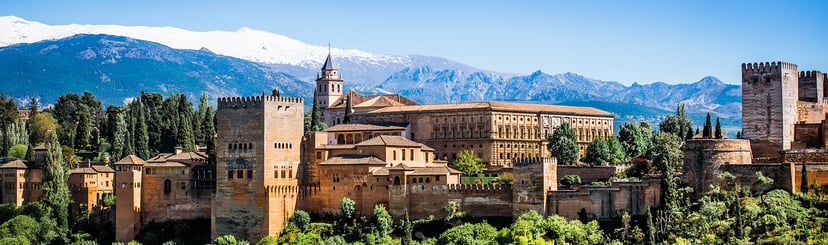
You have already walked through the Nasrid Palaces and seen how water, light and ornament organize the courtyards. On a return visit, should you climb back to the Alhambra for objects the palace rooms cannot explain, follow the archaeological record across thousands of years, or stay near the Realejo and read how Granada represented itself after the conquest?
These are not three versions of the same museum day. The Museo de la Alhambra centers material and technique. The Museo Arqueológico y Etnológico de Granada centers long chronology across the province. Casa de los Tiros centers urban memory, from dynastic imagery and local arts to Romantic visions, festivals and print.
The choice depends less on fame than on the question left by your first visit. Decide whether you are seeking objects made within the culture of the Alhambra, a sequence extending far beyond it, or documents and images showing how later Granada remembered and staged its past.
Route matters too. The Museo de la Alhambra is inside the Palace of Charles V on Alhambra Hill; the archaeological museum occupies Casa de Castril on Carrera del Darro; Casa de los Tiros stands at the Centro–Realejo seam. An intellectually ideal museum can still be a poor second stop if it requires an uphill return or leaves too little time before closing.
This guide treats the three museums as evidence sets rather than attractions to be ranked. Travelers still considering another thematic reading of the palace complex should first compare the main approaches to a second Alhambra visit; an object-led museum day answers a different need.
Three collections, three kinds of material evidence
Museo de la Alhambra: the object becomes a close reading of the monument
The Museo de la Alhambra is the most direct continuation of a palace visit, but it is not merely a smaller Alhambra indoors. Its collection converts surfaces and spaces into things that can be examined as made objects. The official collection description presents a chronological survey of Hispano-Muslim art and daily life, with domestic ceramics, marble architectural elements, carved decorative panels, plasterwork and decorated architectural timber among its central strengths. Its named masterpiece is the Jarrón de las Gacelas, the Gazelles Vase, identified by the museum as the principal work in its domestic ceramic holdings. The collection overview is set out on the Patronato’s official collection page.
The vase is valuable on a second visit because it changes the scale of attention. In the palaces, the eye tends to move across repeated geometry, inscriptions, tilework and reflected light. In the museum, a single vessel can hold the gaze long enough to ask how large-format ceramic was modeled, fired, glazed, colored and balanced; how an object moved between utility, prestige and architectural display; and why animal figures, calligraphy and vegetal pattern can coexist within Nasrid visual culture. The important distinction is not simply that the vase is beautiful. It is that its form, narrow support, surface and technical ambition make courtly production legible in a way that a general palace walk rarely permits.
The architectural fragments matter for the opposite reason. A marble capital, carved panel, strip of plasterwork or section of decorated wood is no longer doing its original structural or spatial job. That loss of context is a limitation, but it is also the museum’s analytical advantage. You can compare carving depth, tool traces, pattern transitions, joins and material differences without the sensory competition of an entire room. For a repeat visitor, the museum becomes a laboratory for understanding why the Alhambra’s apparent unity is actually a collaboration among ceramics, carpentry, plaster, stone, pigment, metal, glass and water.
This is the right museum when your first Alhambra visit produced admiration but not yet connoisseurship. It helps distinguish portable from architectural ceramics, structural from ornamental wood, and original fragments from later interventions. It is especially efficient when the day is already anchored on the hill.
The risk is thematic duplication. After a specialist day on Nasrid epigraphy, plaster, carpentry or restoration, the museum may deepen the same inquiry rather than open a new field. Choose it for concentrated material culture, not because “Alhambra” is the best-known name. To move the Islamic-art question into the lower city, extend the comparison through Granada’s surviving Islamic sites beyond the hill.
Museo Arqueológico y Etnológico: the long chronology behind Granada
The Museo Arqueológico y Etnológico de Granada asks a broader question: what does the territory reveal when the Alhambra is only one late chapter in a much longer human record? Its collection is not organized around a single dynastic aesthetic. Its strength is the movement between periods, materials and social practices. The museum’s official singular-works index names a hominin molar, a Bronze Age funerary urn containing an infant skeleton, a carp’s-tongue sword, a red-figure bell krater, an anatomical cuirass and a bronze portacandil, among other objects. The range is visible in the official singular-works catalogue.
These anchors are useful because they prevent “archaeology” from becoming a vague promise of old things. The molar reduces early human presence to a fragment whose evidential importance is disproportionate to its size. The infant burial asks how archaeologists infer age, rite and social practice from a ceramic container and human remains. The sword shifts attention to metallurgy, typology, exchange and violence. The red-figure krater raises questions about imported forms, trade networks and elite consumption. The anatomical cuirass makes the body itself a political image. The portacandil, a bronze lamp stand, returns the visitor to the medieval world through metalworking and controlled light rather than through palace architecture.
No single object has to carry the visit. Its advantage is comparative distance: a Nasrid object looks different after evidence from prehistory, Iberian communities and the Roman period. Granada stops appearing to begin with the Alhambra, even when the surviving record cannot form a seamless story.
This suits a repeat visitor whose first trip was monument-heavy. The frame is the province and its sites, not only the court city. It also rewards travelers comfortable reconstructing cultures from partial evidence: classification, dating, context and comparison can support strong interpretations without producing a complete narrative.
The tradeoff is fragmentation. The museum asks you to move from a tooth to a vessel, weapon, armor or burial without one continuous aesthetic. It is less suitable when you want to remain within Nasrid art or study how modern Granada fashioned its public image. Its strength is temporal expansion, not a polished continuation of the Alhambra.
The building and address also matter. The official Junta de Andalucía listing places the museum at Carrera del Darro 41–43, in Casa de Castril. That setting gives the visit a productive tension: a collection spanning deep time is encountered inside one of Granada’s best-known historic urban corridors. The current official location and opening information appears on the Junta’s museum listing. The Darro location is not Alhambra Hill and not the flat commercial center; it should be treated as its own route zone.
Casa de los Tiros: Granada as memory, image and civic performance
Casa de los Tiros is the least useful choice if you are looking for a second archaeological chronology or a concentrated survey of Nasrid art. It is the most revealing choice if you want to understand how Granada became an image: conquered city, Christian city, Romantic city, festival city, artistic subject and object of travel. The official directory describes chronologically arranged holdings devoted to Granada, supported by a Granada-focused newspaper collection and a specialist library on travel and local subjects. It places the museum at Calle Pavaneras 19; the institutional summary is available in the official Casa de los Tiros directory entry.
The first anchor is the house itself, particularly the Alfarje de la Cuadra Dorada, the richly worked sixteenth-century wooden ceiling of its principal hall. This is not a neutral container for a collection. The room’s heraldic and dynastic program turns architecture into a statement about lineage, authority and the post-conquest order. Looking upward in the Cuadra Dorada, the visitor encounters a Granada in which memory was actively arranged: notable figures, inscriptions, reliefs and ornamental structure combine to define who belonged in the city’s authorized historical imagination.
Portable objects complicate that official memory. The museum’s official singular-works catalogue includes a portrait of Isabel the Catholic, a Fajalauza ceramic amphora, images associated with Mariana Pineda, historical Corpus festival posters, models and views of Nasrid architecture, photographs and print. Some commemorate; some advertise civic celebration; some preserve local craft; some show how later viewers reframed the city. Their value lies in those differences, not in one nostalgic story.
Casa de los Tiros therefore rewards a visitor interested in reception history. Why did later Granada emphasize certain rulers, heroines, festivals, landscapes and picturesque views? How did Orientalism affect the way the Alhambra was pictured? How did print culture turn local events into public identity? How did an artisanal object such as Fajalauza pottery move between daily use, regional style and museum category? The collection is about the city’s self-description as much as the city’s past.
For someone who already knows the palaces well, this may be the most distinctive second visit: it reveals the interpretations layered over Nasrid Granada. It also fits naturally with a Realejo or lower-center day. For a wider sequence of later power structures, follow Granada’s institutions after the conquest.
The caution is display variability. A museum of urban memory often has more material than can be shown at once, and rooms, works or temporary displays may change. Do not choose Casa de los Tiros only for one portable object unless its current display has been confirmed. Choose it for a cluster of questions: the building’s political program, Granada’s visual afterlife, local print and festival culture, and the relation between historical evidence and later representation.
Use five criteria before choosing
1. Decide whether you want manufacture, chronology or memory
The most efficient question is not “Which museum is best?” but “What kind of evidence should shape this visit?” At the Museo de la Alhambra, the evidence is often technical and material: glaze, carving, joinery, plaster, proportion and the relation between object and architectural setting. At the archaeological museum, the evidence is contextual: findspot, date, burial practice, typology, trade, settlement and the sequence of cultures. At Casa de los Tiros, the evidence is representational: portrait, poster, photograph, print, craft object, interior program and the institutional act of collecting Granada’s memory.
This distinction changes the guide’s task. A material-focused visit slows down around how an object was made. An archaeological visit keeps asking where it was found, what accompanied it and what can reasonably be inferred. A memory-focused visit asks who created the image, for whom, and what version of Granada it promoted. A visitor who uses the same looking method in all three museums will miss their differences.
2. Measure the risk of repeating your first Alhambra visit
Repetition is not simply returning to the same hill. The real issue is whether you are asking the same interpretive question. The Museo de la Alhambra can feel entirely new after a general palace tour if the second visit concentrates on ceramic technology, architectural fragments and daily-life objects. Conversely, it can feel repetitive after a specialist tour devoted to Nasrid materials and conservation. The archaeological museum offers the greatest chronological distance from the palaces. Casa de los Tiros offers the greatest distance in terms of reception and urban identity, even though the Alhambra remains present in paintings, models, photographs and later imagination.
A useful test is to complete this thought: “The palace visit explained how the monument worked; the unanswered question is…” If the answer is “how its objects were made,” choose the Museo de la Alhambra. If it is “what came before and how the region’s societies changed,” choose the archaeological museum. If it is “how later Granada turned the past into identity,” choose Casa de los Tiros.
3. Choose an anchor object and a backup question
An anchor object gives the visit focus, but it should not make the plan brittle. At the Museo de la Alhambra, the Jarrón de las Gacelas can anchor a study of courtly ceramics, while architectural wood or plaster provides the backup question. At the archaeological museum, the funerary urn can anchor a study of burial and family life, while the sword, krater or portacandil opens another period if a gallery is unavailable. At Casa de los Tiros, the Cuadra Dorada can anchor the relationship between house, lineage and civic memory, while festival posters, local ceramics or Granada imagery provide alternative lines of inquiry.
This two-part design matters because permanent collections are not static in practice. Loans, conservation, installation work and temporary closures can remove a work or room from view. A strong second visit survives the absence of one highlight because the visitor has chosen a question larger than one display case.
4. Count geographic cost, not just walking distance
Granada’s museum geography is vertical and interpretive. Returning to the Alhambra Museum means returning to the hill schedule. The archaeological museum belongs to the Carrera del Darro corridor, naturally linking with Plaza Nueva and the lower Albayzín rather than a simple Centro grid. Casa de los Tiros sits at the Realejo edge, easier within a lower-city day than as an improvised add-on after the Generalife.
Geographic cost includes mental transition. Alhambra Museum to Casa de los Tiros means leaving Nasrid material culture for post-conquest memory; archaeological museum to Casa de los Tiros means shifting from excavated chronology to curated identity. A short map distance does not remove the need for a clear second question.
5. Protect time for looking, not collection coverage
Object-led museums punish highlight collecting. The value lies in comparison: one ceramic surface against another, one burial practice against another, one nineteenth-century image of the Alhambra against the building you remember. For most repeat visitors, a focused reading of one collection produces more insight than a hurried circuit through two. Two museums become worthwhile only when the contrast itself is the subject.
This is the point at which specialist planning can materially improve the day. A knowledgeable guide can select a small set of objects that answers one question across periods, check current opening information, and prevent a return to Alhambra Hill from consuming the lower-city half of the visit. That is useful when the aim is collection depth without repeating palace commentary or wasting the day in transitions. To build that kind of sequence, see private touring in Granada or Inquire now.
The geography changes the answer
Alhambra Hill: low extra cost only when the hill is already in the plan
The Museo de la Alhambra occupies the ground floor of the Palace of Charles V inside the Alhambra complex. The official page confirms both that location and free admission. At the 15 October 2026 source review, its core seasonal pattern was Wednesday to Saturday from 08:30 to 18:00 between 15 October and 31 March, and to 20:00 between 1 April and 14 October; Tuesday and Sunday were shorter mornings, and Monday was closed. Because hours are operational facts, check the official location and hours page for the exact date.
If you already have a hill-based morning, the museum can be the most efficient of the three. It can follow the Nasrid Palaces or precede a more selective return to them, allowing an immediate comparison between in situ architecture and detached material. The route cost is mainly attention: after several hours in the monument, can you still look slowly at ceramics and fragments?
If the rest of the day is in Centro or the Realejo, the calculation changes. A dedicated ascent for the museum is justified when Islamic art is the central purpose, not when it is being added because the collection is free or famous. The descent also affects what follows. A lower-city lunch, Casa de los Tiros visit or evening plan may remain possible, but the day will be organized around the hill rather than around a compact museum pair.
For travelers building a stay around distinct historical zones, place Nasrid, Renaissance and Baroque Granada in a deliberate sequence rather than treating every museum as interchangeable filler between major sights.
Carrera del Darro: central on the map, specific in route character
The archaeological museum’s address on Carrera del Darro makes it easy to underestimate its route cost. It is close to Plaza Nueva in absolute terms, but the river corridor behaves differently from the broad central streets. Visitor density, narrowness, surfaces and the temptation to continue uphill into the Albayzín can all stretch a transition. The right pairing is usually with a Darro, Plaza Nueva or lower-Albayzín sequence, not with a schedule that already requires returning to the Alhambra entrance or crossing the center for a fixed appointment.
Its geography does, however, provide interpretive value. Archaeological objects from the wider province are seen within a historic urban fabric where Roman, Islamic, Christian and modern Granada overlap. That does not replace provenance, but it makes the question of continuity more vivid. The visitor leaves a long chronological collection and immediately re-enters a city whose visible fabric is itself layered and selective.
From a Centro base, this is a moderate outward movement rather than a separate hill excursion. From the Realejo, it is a cross-center move toward Plaza Nueva and the Darro. From an Alhambra Hill itinerary, it is a descent into a different corridor, best treated as the beginning of the lower-city half of the day rather than a quick detour before climbing again.
Casa de los Tiros: the lowest route cost for a Realejo-centered day
Casa de los Tiros sits on Calle Pavaneras, where the historic center meets the Realejo. That location suits a day concerned with post-conquest Granada, local cultural memory, artisan traditions or the relationship between the city and the images made of it. It can be combined with a Realejo walk or a Centro sequence without requiring a return to Alhambra Hill.
The lower geographic cost should not be confused with lower intellectual demand. Casa de los Tiros contains several different Granadas: dynastic assertion in the house, Romantic and Orientalist representation, civic festival culture, local craft, print, photography and historical personalities. A brief visit can become a blur of local references. The museum is efficient only when you arrive with a theme, such as “how the city memorialized itself after 1492” or “how travelers and artists transformed the Alhambra into an image.”
It is the easiest of the three to place before or after another lower-city cultural stop. It is also the easiest to stop at one museum, leave with a coherent thesis and continue through the Realejo without the day feeling incomplete. That makes it particularly useful when time is limited but the visitor wants something substantially different from another palace visit.
Opening patterns are a decision criterion, not a footnote
The institutions do not share one simple rhythm. The Museo de la Alhambra has its own seasonal schedule and shorter Tuesday and Sunday hours. The archaeological museum concentrates summer opening in the morning but extends Tuesday-to-Saturday access later in the rest of the year. Casa de los Tiros follows a comparable seasonal pattern, though its current hours and room limitations must be checked directly.
For planning, the important consequence is not memorizing every hour. It is recognizing three failure points:
- Monday can remove all three options. Do not build a museum decision around a day when the institutions are normally closed without checking exceptions.
- Summer compresses the lower-city museums. A two-museum idea that works with long autumn or winter hours may become unrealistic when both visits must fit into a morning.
- A museum can be open while the object you want is not visible. Conservation, loans, temporary exhibitions or room work can change the practical collection.
At the 15 October 2026 source review, the archaeological museum’s official listing gave 09:00–15:00 opening from 16 June to 15 September, and a longer Tuesday-to-Saturday day from 16 September to 15 June, with shorter Sunday and holiday hours. Because this is volatile information, use the exact official archaeological museum listing immediately before the visit. Casa de los Tiros should be checked on its own official directory page, not assumed to match another museum merely because both are administered within the same regional system.
Opening patterns can decide between equally attractive collections. A summer afternoon may favor the Museo de la Alhambra after the lower-city museums close; a long autumn weekday may favor the archaeological museum or Casa de los Tiros. Operational fit determines whether the collection can be read rather than rushed.
The one-museum versus two-museum stopping rule
A second visit does not improve in proportion to the number of institutions entered. Use a stopping rule that protects attention and gives the second museum a distinct purpose.
Choose one museum when any of these conditions applies
- You cannot state two different questions. “Seeing more Granada objects” is one broad wish, not a reason for two collections. “Comparing Nasrid manufacture with later images of Nasrid Granada” is a genuine two-part inquiry.
- The first museum already contains your full historical range. A slow archaeological visit can carry a visitor from early human evidence through medieval material. Adding another collection may reduce rather than expand understanding.
- The route crosses Alhambra Hill and the lower city without another reason. A special ascent or descent should serve the day’s main theme, not the anxiety of leaving a museum unchecked.
- You arrive with less than a full viewing window before closing. A second museum is not useful when admission, orientation and a few rooms consume the remaining time.
- Your interest depends on close looking. Ceramics, inscriptions, metalwork, print and archaeological assemblages all reward comparison. Fatigue turns them into labels and glass cases.
One museum is also the stronger choice when the collection is followed by another demanding cultural visit. A focused Casa de los Tiros morning plus post-conquest architecture in the center can be richer than Casa de los Tiros plus the archaeological museum plus a rushed church interior. The same applies on Alhambra Hill: the museum and a carefully chosen palace theme may already form a complete object-and-building study.
Choose two museums only when all four tests are passed
- The contrast is intentional. The museums answer different questions that can be compared in the same day.
- The opening windows overlap generously. The second visit begins with enough time to orient, select objects and stop without racing the closing announcement.
- The geography supports a one-way sequence. The route should move from hill to lower city or between lower-city zones without backtracking.
- The group agrees on the depth. Two museum names on a plan do not matter if half the group wants a quick circuit and the other half wants sustained object analysis.
A practical editorial rule is to stop after the first museum unless you can name the second museum’s distinct question in one sentence and still protect a substantial viewing period there. Spare time alone is not enough. The second collection should alter the interpretation of the first.
The most coherent two-museum pair
For most object-led repeat visitors, the archaeological museum and Casa de los Tiros form the most coherent pair. They are both in the lower city, but they do not duplicate one another. The archaeological museum shows how material evidence constructs a long chronology; Casa de los Tiros shows how later institutions, artists and citizens constructed Granada’s memory. The intellectual hinge is the difference between what was excavated or preserved from past societies and how later Granada selected and represented its past.
The route still needs discipline. Begin with the archaeological museum if deep chronology is the foundation: early human evidence, burial, exchange, classical material and medieval objects establish the long view. Then move to Casa de los Tiros to ask why later Granada foregrounded certain episodes, personalities and images. Reverse the order if the visitor is primarily interested in historiography: first see the city’s self-portrait, then test its selective memory against a much longer archaeological record.
The pair is less attractive in summer if morning-only hours force both into a compressed window. It is also less attractive when a temporary closure removes the Casa de los Tiros rooms or object groups central to your comparison. In those conditions, choose one and let the surrounding neighborhood extend the theme.
When the Alhambra Museum can be paired
The Museo de la Alhambra pairs well only when the hill is already fixed and the second museum has a sharply different function. A morning of Nasrid objects followed by Casa de los Tiros can produce a sophisticated comparison between objects made within medieval Islamic culture and later images of that culture. Yet the route requires a deliberate descent and a change of interpretive register. It is not a casual double bill.
The Alhambra Museum and archaeological museum can also work for a traveler studying Islamic material within a long regional chronology. The museum on the hill offers concentration and technical detail; the archaeological museum situates medieval objects among earlier and later cultures. This pairing is demanding because both collections reward close reading and because the route crosses zones. It is better suited to a full study day than to an afternoon added after the Nasrid Palaces.
Do not pair the Alhambra Museum with another museum merely to compensate for having seen the palaces before. The museum is already a valid second visit on its own. Its purpose is depth, and depth disappears when every room is treated as a prelude to the next address.
Conditions that change the answer
You remember atmosphere but few objects from the Alhambra
Choose the Museo de la Alhambra. The first visit gave you space, water, ornament and dynastic theater; the second can recover the material intelligence behind that effect. Use the Jarrón de las Gacelas as the visual anchor, then compare ceramic, wood, plaster, marble and metal. The gain is not more palace history but a better vocabulary for seeing how the palace was made.
You have already studied Nasrid art in depth
Choose the archaeological museum if you want to widen time and territory. Choose Casa de los Tiros if you want to study reception, civic identity and the later invention of Granada as an image. Either will reduce the chance that a second day merely repeats the categories of your first specialist visit.
Your interest is the province, not only the city
Choose the archaeological museum. Its objects connect Granada to sites, communities and exchange networks beyond the urban center. The collection is the best of the three for understanding that the city’s political importance rested within a much larger landscape of settlement, production and movement.
Your interest is post-1492 Granada
Choose Casa de los Tiros. The house and collection make visible the work of memory after conquest: lineage, royal imagery, local heroes, festivals, Romantic representation, photography, print and craft. The museum is particularly useful when paired conceptually with Renaissance and later institutions in Centro or the Realejo rather than with another Nasrid-focused interior.
You have only a summer afternoon
Check the day-specific official hours before choosing. The lower-city regional museums may have finished their summer opening by mid-afternoon, while the Museo de la Alhambra can have a longer seasonal day on selected weekdays. In this edge case, schedule may decide the museum before subject does. Do not infer that an institution is open because a general search result or an old itinerary says it is.
You are planning around one promised masterpiece
Broaden the plan. The Jarrón de las Gacelas is a strong reason to choose the Alhambra Museum, but the visit should still work through architectural fragments and other materials. The archaeological museum’s named works should be treated as a set of possible anchors, not a guaranteed checklist. At Casa de los Tiros, the Cuadra Dorada is a more stable conceptual anchor than any one portable work, because collection rotations can change what is displayed.
Your group has different interests
Use the difference to choose a museum with multiple entry points rather than forcing two institutions. The archaeological museum can satisfy a visitor interested in early humans, another drawn to classical art and another curious about medieval technology. Casa de los Tiros can connect architecture, painting, print, local craft and social history. The Museo de la Alhambra can connect design, technique, court culture and conservation. A well-framed single visit often serves a mixed group better than a split itinerary.
You want the strongest contrast with the Alhambra
Decide what “contrast” means. For chronological contrast, choose the archaeological museum. For contrast in how history is constructed and remembered, choose Casa de los Tiros. For contrast in scale, from immersive rooms to examinable objects, choose the Museo de la Alhambra. The hill museum may be physically closest to the palace experience, yet analytically it can create the sharpest shift from atmosphere to material evidence.
How to read each museum without turning it into a checklist
At the Museo de la Alhambra, compare materials across functions
Begin with a portable object such as the Gazelles Vase and ask what its size, surface and likely display function imply. Then move to an architectural fragment and ask what changes when decoration is fixed to a wall, ceiling, opening or column. Finish with a daily-life object or smaller work that lowers the social scale. This sequence prevents the museum from becoming a parade of masterpieces and makes courtly culture, building practice and lived experience part of one material system.
Pay attention to absence. A fragment in a museum no longer has its original light, height, neighboring inscriptions or relationship to water and movement. Rather than treating that as failure, use it to identify what architectural context contributes. The palace and the museum become complementary sources: one preserves spatial effect; the other permits close comparison.
At the archaeological museum, move by questions rather than dates alone
Chronology is the collection’s structure, but human questions make it memorable. Follow three themes across periods: how communities treated the dead, how status was displayed, and how objects or techniques traveled. The infant funerary urn belongs to the first question. The sword, cuirass and imported ceramic can belong to the second. The krater, metalwork and medieval portacandil can contribute to the third. This approach reveals continuity and change without pretending that every society fits one linear story.
Keep the distinction between object and inference clear. A vessel is directly observable; its use may be strongly supported, probable or uncertain depending on context. A weapon’s type can be classified, but the identity of its owner may not be known. The museum is most rewarding when the visitor understands how knowledge is built from material evidence rather than treating every label as a complete biography.
At Casa de los Tiros, separate historical event from later image
Ask of each portrait, poster, photograph or painting: when was it made, what earlier subject does it depict, and what audience was expected to see it? A nineteenth-century image of the Alhambra is evidence for nineteenth-century vision even when its subject is medieval. A Corpus poster records graphic design and civic promotion as much as the festival itself. A portrait of a historical figure reveals commemoration as well as likeness. The house’s rooms similarly express the ambitions of their patrons, not an objective summary of Granada.
This distinction is the museum’s core lesson. Cities are remembered through selection. Casa de los Tiros preserves valuable evidence of that selection, including what was celebrated, romanticized, domesticated or made picturesque. The visit becomes richer when the visitor asks not only “What happened?” but “Why did later Granada choose to show it this way?”
A concise decision recap
Choose the Museo de la Alhambra when the unanswered question is material: how Nasrid ceramics, wood, plaster, marble and architectural fragments produced the effects you remember from the palaces. It is especially convincing when Alhambra Hill is already part of the day and when the Jarrón de las Gacelas is one anchor within a broader study of making and use.
Choose the Museo Arqueológico y Etnológico de Granada when the unanswered question is chronological: what the province reveals before, around and beyond the Nasrid period. Its strongest assets are the distance between objects and the reasoning required to connect them, from a hominin molar and Bronze Age burial to classical ceramics, armor, weapons and medieval lighting equipment.
Choose Casa de los Tiros when the unanswered question is memorial: how Granada understood and represented itself after the conquest, through architecture, portraits, local craft, festival graphics, Romantic imagery, photographs, books and newspapers. It is the most natural fit with a Realejo or lower-center sequence and the least dependent on repeating palace interpretation.
Choose two museums only when the second changes the meaning of the first. The archaeological museum plus Casa de los Tiros is the most coherent lower-city comparison: excavated chronology followed by curated memory, or the reverse. Add the Museo de la Alhambra to another collection only when the hill is already fixed, the opening windows are generous and the second question is genuinely different.
Otherwise, stop after one. The strongest object-led second visit is not the one with the most rooms, the most famous address or the longest list of named works. It is the one that leaves you able to explain, with evidence, something your first Granada visit did not yet reveal.
If you’re interested in any private tours of Granada, please reach out to us.



 So if you are looking for the absolute best in Granada & surroundings with authentic local fully-licensed native guides whose English you can actually understand and with an exclusive and amazingly fun itinerary













