Granada Beyond the Alhambra for Islamic-Art Travelers: Madraza, Corral del Carbón and Albayzín Context

Updated
The best base route after the Alhambra for Islamic-art travelers
Verdict: after the Alhambra, Islamic-art travelers should build the lower-city route around the Madraza, the Madraza to Corral del Carbón transition, and a restrained Albayzín context rather than chasing every Nasrid trace. It works in real Granada because the Madraza and Corral del Carbón sit in the historical center on the Cathedral-side street grid, so you can extend the Alhambra story without another climb up the Sabika hill or an immediate ascent into the Albayzín. The exception is clear: if the Nasrid Palaces have already filled your eye and your patience for epigraphy, muqarnas and dynastic detail, let the Alhambra remain the only Islamic-art focus of the day.
The point of this route is not to compete with the Alhambra; it is to show how Nasrid Granada continued as a working city of learning, trade, streets and views below the palace ridge. The Alhambra gives you courtly art at the height of power. The Madraza, Corral del Carbón and Albayzín give you the city that made that court intelligible: a school near the former main mosque, a merchant inn beside the commercial center, and a hill district whose lanes explain why Granada is read as two medieval realities facing one another across the Darro.
The non-obvious routing cue is that the Madraza sits on Calle Oficios, beside the Cathedral and Royal Chapel precinct, while Corral del Carbón is reached by a short lower-city move toward Calle Mariana Pineda rather than by crossing the Darro or climbing Cuesta de Gomérez. That little piece of geography is the reason this route works after a palace visit: it adds meaning while sparing the body another uphill push. Travelers who want the Alhambra itself handled in depth should keep that as a separate, guided anchor through Alhambra and Generalife private touring, then use this article for the smaller, more interpretive extension.
One correction matters early: the famous Mirador de San Nicolás is not automatically the best next move for Islamic-art travelers after the Alhambra. It is a wonderful viewpoint when the day has room for it, but forcing the San Nicolás climb after a dense Nasrid Palaces visit often turns the afternoon into a hill-management problem. A more elegant heritage answer is to keep the lower city tight, add Albayzín context only where it clarifies the Alhambra, and save the deepest viewpoint version for a fresher hour.
What to see after the Alhambra if Islamic art is the priority
The strongest answer is a three-anchor route: Madraza for learned Nasrid Granada, Corral del Carbón for the commercial city, and Albayzín for urban context rather than another palace interior. This is a specialist heritage route, not a second Alhambra. It asks a better question than “what else is Islamic?” The better question is: what helps you understand the Alhambra without diluting the day?
Use these scenarios to decide how much to add:
- Best base for most Islamic-art travelers: Madraza, the Madraza to Corral del Carbón transition, Corral del Carbón, then a compact Albayzín frame from the lower edge of the district or by taxi-assisted descent. This gives the route a clear argument without turning the day into a monument hunt.
- Best short version: Madraza plus Corral del Carbón only. This is the right choice after a demanding Alhambra morning, for families with limited patience for small interiors, or for travelers saving appetite and attention for a serious evening.
- Best deeper version: add Albayzín as a guided district reading, not as a random climb to the highest mirador. The aim is to understand streets, thresholds and the Darro-facing relationship with the Alhambra, not to collect another postcard view.
- Best cut-first move: cut the viewpoint chase before you cut the Madraza to Corral del Carbón transition. The transition is where the city story becomes visible; the viewpoint is optional if legs, heat or dinner timing are already under pressure.
The route’s discipline is its value. The Madraza and Corral del Carbón are small enough to become forgettable if visited as isolated “also nearby” stops. They become memorable when a guide connects them to the Alhambra’s larger story: who was educated for the court, where commerce moved, how the lower city sat beside the mosque, and why the Albayzín is not just a pretty hill but a surviving urban fabric. For a private version of this city-center arc, Historical City Center private touring is the natural planning base.
There is another reason to be selective. Granada’s Islamic heritage is emotionally powerful but physically uneven. The Alhambra is a controlled monument visit with entrances, timed palace access and long internal walking. The lower city is compact but visually busy around the Cathedral, Alcaicería and Reyes Católicos axis. The Albayzín is atmospheric but steep. Treating all three as equal sightseeing zones creates a day that looks coherent on a map and feels overstuffed in the legs.
Madraza after the Alhambra: why this small site earns the first stop
The Madraza earns its place after the Alhambra because it moves the story from palace artistry to the intellectual and civic life of Nasrid Granada. The official Granada tourism page for the Madraza (https://turismo.granada.org/en/madraza-palace) places it on Calle Oficios and notes its foundation by Yusuf I in 1349; for travelers, the practical point is that this was not a remote monument but a learned institution in the most privileged part of the lower city, near the former main mosque and the Alcaicería.
That location changes how you read the Alhambra. After the Nasrid Palaces, it is tempting to treat Granada’s Islamic art as a courtly visual language that lived behind palace walls. The Madraza corrects that. It reminds you that the dynasty’s cultural project also depended on scholarship, law, medicine, mathematics, religious learning and civic authority. In a guided route, the Madraza is best handled as a concentrated interpretive stop: a threshold between the palace above and the city below, not a place to over-explain every surviving detail.
The traveler consequence is simple. If you start the extension here, the day keeps its intellectual thread without adding transfer drag. You are already in the Cathedral-quarter grid, close to the Royal Chapel, Alcaicería and Bib-Rambla side of the center. You do not need to re-enter the Alhambra ticket world, find a new timed slot, or climb back toward the Sabika. The stop can feel calm even when the surrounding city is busy, because its purpose is precise: it gives the Alhambra a civic echo.
The Madraza is also where a private guide pays for judgment rather than access claims. The site is small; the value lies in knowing what not to force. A guide who has just spent time with you in the Alhambra can decide whether to lean into Qur’anic inscriptions, Nasrid patronage, the institution’s later Christian civic role, or a simpler “this is how the palace culture reaches the lower city” explanation. That flexibility matters for couples who want depth, families who need compression, and repeat visitors who do not want a generic Granada overview.
The mistake is treating the Madraza as a miniature Alhambra. It is not. It does not deliver the same sensory abundance, and that is exactly why it works. After the Court of the Lions, another attempt at visual spectacle can feel smaller than it deserves. The Madraza is stronger when it is presented as a hinge: court culture becoming city institution, palace artistry becoming civic memory, and the lower town beginning to speak in its own register.
The Madraza to Corral del Carbón transition is the route’s quiet payoff
The Madraza to Corral del Carbón transition is the most important walking hinge in this route because it keeps the Islamic-art story inside the lower city instead of scattering it across hills. This is not a dramatic walk. That is the point. From Calle Oficios, the route can pass the Cathedral and Alcaicería edge, then angle toward Calle Mariana Pineda and the Corral del Carbón without crossing the Darro, without committing to the Albayzín climb, and without resetting the day around transport.
This small transition prevents a common Granada planning error: trying to make every Islamic-art stop feel monumental. Between the Madraza and Corral del Carbón, the traveler sees how close learning, worship, commerce and later Christian power sat to one another. The Cathedral quarter can look like a post-conquest center if rushed. With the right narration, it becomes layered ground: former mosque context, silk-market memory, royal chapel authority, and Nasrid-era commercial infrastructure all within a walkable lower-city radius.
The physical consequence matters. Granada does not punish visitors with long distances as much as it punishes them with poorly timed slopes. A route that sends travelers from the Alhambra down to the center, then up into the Albayzín, then back down for dinner can make a compact city feel surprisingly heavy. The Madraza to Corral del Carbón transition gives the body a reprieve. It keeps steps purposeful, avoids an immediate river crossing, and lets travelers decide later whether the Albayzín should be a short context layer or a separate, higher-energy outing.
The mood consequence matters just as much. When this transition is handled well, the day feels shorter, calmer and more intelligent. You are not collecting monuments. You are watching the Alhambra’s world descend into the city. When it is handled poorly, the afternoon becomes a set of disconnected “nearby” stops, and even good sites start to feel like errands. The best private pacing here is not slower for its own sake; it is more selective, so each stop has a job.
Food-and-wine travelers should pay particular attention to this hinge. If dinner is part of the day’s design, especially if you are saving focus for a tasting menu or a MICHELIN Guide selection (https://guide.michelin.com/us/en/andalucia/granada/restaurants), the lower-city version protects the evening better than a heroic late climb. It gives cultural satisfaction without dulling appetite, conversation or arrival time.
Corral del Carbón: the commercial counterweight to palace art
Corral del Carbón is the route’s commercial counterweight: it shows Granada as a trading city rather than only a palace city. The Patronato de la Alhambra’s Corral del Carbón page (https://www.alhambra-patronato.es/en/discover/andalusian-monuments/corral-del-carbon) identifies it as al-fundaq al-yadida, a first-half-fourteenth-century New Corn Exchange used for wheat storage, sales and merchant accommodation. For the traveler, that means this is the stop where Nasrid architecture becomes infrastructure.
The Corral’s role is not to overwhelm. Its power comes from the courtyard logic, the threshold, the merchant function and the sense that goods, animals, water, supervision and lodging all had an architectural order. After the Alhambra, this can be more useful than another decorative fragment because it reveals a different kind of sophistication. The palace organized power and ceremony. The Corral organized trade and movement. Together, they make Granada feel less like a museum of Islamic art and more like a city with a working system.
Visit it with a clear editorial frame. The facade and entry sequence are the essential read; the courtyard then lets the guide explain the funduq idea without turning the stop into a lecture on every architectural term. Travelers who enjoy Islamic art often want muqarnas, inscriptions and geometry, but here the better payoff is functional: how a merchant inn controlled access, stored goods, housed people and sat near the city’s commercial arteries. That is a different kind of beauty from the Alhambra and one that becomes clearer when you stop comparing the two.
Corral del Carbón also helps prevent palace fatigue. The eye rests on a simpler architectural problem. The body is still in the lower city. The route can pause, look, explain and move on without demanding the emotional crescendo expected inside the Nasrid Palaces. That is why it belongs after the Madraza, not before it. The Madraza tells you the court had a learned city; the Corral tells you the city had commercial muscle.
There is an honest wrong-fit case. If a traveler wants only highly polished interiors and photogenic abundance, Corral del Carbón may feel too austere after the Alhambra. That does not make it weak; it means it requires the right question. Ask “is this as spectacular?” and the answer is no. Ask “what did Granada need in order to function?” and the stop becomes indispensable.
Albayzín context without hill fatigue
Albayzín should be added as context, not as a compulsory climb, when the day has already included the Alhambra, Madraza and Corral del Carbón. UNESCO’s Alhambra, Generalife and Albayzín, Granada (https://whc.unesco.org/en/list/314/) page frames the Alhambra and Albayzín as adjacent hill realities separated by the Darro, with the Albayzín preserving a rich legacy of Moorish town planning and architecture. That is the reason it matters here: it completes the spatial argument, not the monument count.
The best Albayzín addition depends on energy. The lightest version is a lower-edge reading around Plaza Nueva, the Darro-facing approach and the beginning of the climb, where a guide can explain the district’s relationship to the Alhambra without committing the group to a full ascent. The more immersive version uses a taxi or carefully chosen drop-off to start higher and descend, letting the district unfold downhill through lanes, small squares and views rather than forcing tired travelers to climb toward them. For a dedicated neighborhood version, Albayzín private touring is better than tacking on an improvised march at the end of an Alhambra day.
The cut-first rule is firm: do not force both a deep Albayzín walk and a Sacromonte extension after this lower-city Islamic-art route. Sacromonte has its own identity and payoff, but it pulls the day toward a different story and a higher physical load. If the question is Islamic-art context after the Alhambra, Albayzín is already enough, and even there the route should be edited. Add the district for urban understanding, not for the feeling of having “done” another Granada neighborhood.
Granada does something specific to the body here. The shift from the historical center to the Albayzín is not only a change of scenery; it is a change of gradient, surfaces and return logic. Carrera del Darro can feel gentle and beautiful, but the climb beyond the river edge quickly changes the day’s energy. Cuesta del Chapiz, the lanes above Calderería Nueva, and the push toward San Nicolás ask for calves, balance and patience. In warm weather or after a long Alhambra visit, that can flatten the pleasure of the district before the view arrives.
The mood shift is equally real. A compact Albayzín frame can make the day feel complete: palace above, learned and commercial city below, residential hill across the Darro. An overlong Albayzín add-on can make the day feel like a test. Travelers stop listening, children start negotiating, couples begin thinking about dinner shoes, and older visitors become aware of every return step. The point is not to avoid the Albayzín. The point is to choose the version that leaves its atmosphere intact.
For repeat visitors, the district can become the route’s most rewarding layer if it is not rushed. A slower Albayzín morning on another day can include viewpoints, house museums, tea streets, the Plaza Larga side of the hill and the dialogue with the Alhambra from across the valley. For this article’s route, keep it lean unless the group arrived with unusual stamina and a specialist appetite for urban history.
When the Alhambra should remain the only Islamic-art focus of the day
The Alhambra should remain the only Islamic-art focus of the day when attention is already saturated, mobility is limited, or the evening carries real importance. This is the most important restraint in the whole plan. Islamic-art travelers often assume that more Nasrid context must equal a better day. In Granada, that is not always true.
More sites do not improve the day if the traveler is already detail-fatigued after the Nasrid Palaces. That sentence is worth taking literally. If the group has spent the morning decoding inscriptions, water symbolism, dynastic patronage, plasterwork, wood ceilings and palace sequence, the next best cultural move may be lunch, shade, a hotel pause or an unstructured lower-city stroll. Premium spend does not change that equation. Premium spend does not help when the problem is detail fatigue rather than logistics. A better guide, a smoother taxi plan and private pacing can improve comfort and clarity; they cannot make an overfilled mind absorb another three heritage layers with pleasure.
Keep it short when the Alhambra visit ran long, when timed access created early-morning pressure, when children have already cooperated generously, or when older parents are managing uneven surfaces. Also keep it short before a formal dinner, a concert, a celebration evening or a transfer next morning. In those cases, Madraza plus Corral del Carbón may be the ideal finish because it gives a satisfying city echo without asking the day to peak again.
Cut the Albayzín first if the decision is between a calm finish and a view-driven climb. Cut extra interiors before you cut the interpretive thread. Do not add sites just because they are close on a map. Granada’s closeness can be deceptive: a place may be geographically near but physically or mentally expensive after the Alhambra. The best route is the one that preserves comprehension, not the one that maximizes stops.
There is one exception to the restraint: a true specialist group with a private guide, good shoes, no major evening commitment and a deliberate interest in urban continuity may want the full version. Even then, the route should be designed around descent, shade and a clear finish. The reward is not more content. The reward is a cleaner understanding of how the Alhambra, lower city and Albayzín form a single landscape of power, learning, trade and residence.
How a private guide changes this route without overloading it
A private guide changes this route by connecting fragments, editing emphasis and protecting the group’s energy. The Madraza and Corral del Carbón are not difficult to find, but they are easy to under-read. Without context, they can become quick photo stops. With too much context, they can become exhausting. The value is in calibrating the explanation to what the traveler has already seen inside the Alhambra.
For a couple, that might mean a refined thread through patronage, learning and the lower city, with enough silence to let the architecture register. For a family, it might mean turning the Corral into a practical story of merchants, animals, goods, doors and water rather than a vocabulary lesson. For a small group of heritage travelers, it might mean a more rigorous comparison between palatial decoration and urban infrastructure. For celebration travelers, it might mean ending with a graceful lower-city walk that leaves the evening feeling composed rather than depleted.
The guide also makes the Albayzín decision easier. Instead of asking whether you should “do the Albayzín,” a better guide asks which Albayzín solves the day: a district edge, a taxi-assisted descent, a viewpoint-only pause, or a separate neighborhood walk. That is especially helpful in Granada because the wrong five minutes of uphill walking at the wrong hour can change the tone of the next two hours.
This is where tailor-made planning earns its place naturally. If you want the Alhambra’s palace language connected to the Madraza, Corral del Carbón and a measured Albayzín frame without turning the day into a lecture or a hill workout, tailor-made private tours of Granada are the right planning route. Share your Alhambra timing, hotel location, walking tolerance, dinner plans and whether you prefer deep art history or a more conversational heritage arc. Inquire now.
What a private guide should not do is inflate the route. The best guide may recommend fewer sites than a self-planned list, not more. That can feel counterintuitive when paying for expertise, but it is exactly where expertise shows. In Granada, quality often comes from sequencing and stopping at the right moment.
How to place the route around your Alhambra timing
The route belongs after the Alhambra when the palace visit ends with enough energy for interpretation, and it belongs on a separate day when the Alhambra already dominates the schedule. This article is not another guide to managing Nasrid Palaces time slots; Orange Donut Tours already covers that planning problem in what belongs before and after the Alhambra. Here, the question is narrower: when does the Islamic-art extension preserve the Alhambra’s meaning rather than compete with it?
If the Alhambra is in the morning, the lower-city route can work after lunch or after a short hotel pause. The advantage is narrative continuity. You have just seen the courtly peak, so the Madraza and Corral feel like consequences rather than unrelated monuments. The risk is fatigue. If the morning included long walking, timed pressure, heat or a deep scholarly guide, keep the extension short and use Albayzín only as context.
If the Alhambra is in the afternoon, use the morning for Madraza and Corral only if you want a thoughtful prelude and have no desire to fill the day with another major sight. This can be excellent for repeat visitors because it lets the palace arrive with the lower city already in mind. It is less ideal for first-timers who may become anxious about the Alhambra slot; in that case, keep the morning lighter and do not let small sites create timing noise.
If the Alhambra is at night, this route is better earlier in the day, with a long pause before the evening. Night visits change the mood of the palace, and they do not need a heavy preamble. A Madraza and Corral morning can set the intellectual frame; an Albayzín climb immediately before or after the night visit usually asks too much unless the group is unusually energetic and staying very close to the right return route.
The hotel base also matters. Centro and Realejo stays make the lower-city route easier to weave around meals and rest. Albayzín stays can be atmospheric but may complicate returns if the group is tired, dressed for dinner or traveling with older relatives. If lodging location is still undecided, where to stay in Granada for Centro, Realejo or Albayzín can help you avoid choosing a beautiful base that works against this kind of specialist day.
A polished sequence for different traveler styles
The same three anchors can serve different travelers if the route is edited by stamina, attention and evening plans. Do not change the core logic; change the depth. Madraza, Corral del Carbón and Albayzín context remain the spine, but the amount of explanation, walking and view-chasing should shift.
For repeat visitors: lean into the city systems. You have probably seen the Alhambra before or will see it with stronger attention this time, so the lower city can carry more nuance. The Madraza’s scholarly role, the Corral’s merchant logic and the Albayzín’s urban fabric will feel like a welcome expansion rather than a smaller sequel.
For first-time couples: keep the route elegant and legible. Use the Madraza and Corral as a calm bridge between palace and evening, then choose either a short Albayzín context moment or a separate neighborhood walk later. This avoids the common first-timer regret of turning Granada into a blur of beautiful but under-digested places.
For families: make the Corral practical and the Madraza brief. Children often respond better to how a building worked than to why a dynasty mattered. Doors, goods, animals, water, rooms and rules can make Corral del Carbón easier to grasp than an abstract art-history explanation. Add Albayzín only if the walking plan is gentle.
For older parents or mixed-mobility groups: protect the lower-city route and be selective with slopes. The Madraza and Corral can be satisfying without committing to the Albayzín. If the district matters, use a vehicle-assisted strategy and descend where possible rather than climbing for the sake of a view.
For celebration and food-and-wine travelers: choose the short version unless heritage is the centerpiece of the trip. The route should sharpen conversation before dinner, not consume it. The best cultural day is the one that leaves guests alert enough to enjoy the evening they planned.
The polished choice is usually not the longest route. It is the route that makes the Alhambra feel better understood 24 hours later. If you remember that the Madraza gave the palace an intellectual city, the Corral gave it a commercial city, and the Albayzín gave it an urban counterpart across the Darro, the route has done its job.
FAQ
What should Islamic-art travelers see in Granada after the Alhambra?
Start with the Madraza and Corral del Carbón, then add Albayzín context only if energy allows. This gives you learning, commerce and urban fabric without trying to compete with the Alhambra.
Is the Madraza worth visiting after the Alhambra?
Yes, if you visit it for context rather than spectacle. The Madraza helps connect Nasrid palace culture to the lower city’s learned and civic life.
What is the role of Corral del Carbón in this route?
Corral del Carbón shows the commercial side of Nasrid Granada. It is valuable because it explains trade, storage and merchant accommodation, not because it rivals the Nasrid Palaces visually.
How do you add Albayzín without hill fatigue?
Use Albayzín as a contextual layer rather than a full climb. Choose a lower-edge explanation, a taxi-assisted descent, or a separate neighborhood walk instead of forcing San Nicolás after a demanding Alhambra visit.
When should the Alhambra be the only Islamic-art focus of the day?
Keep the Alhambra as the only Islamic-art focus when travelers are already detail-fatigued, when mobility is limited, or when the evening plan matters. Adding more sites will not improve the day if attention is already full.
Should this route happen before or after the Alhambra?
It works best after the Alhambra when energy remains, because the smaller sites then feel like city context. It can work before the Alhambra for repeat visitors who want a thoughtful lower-city prelude.
Is a private guide useful for the Madraza and Corral del Carbón?
Yes, because these sites are small and easy to under-read. A private guide can connect them to the Alhambra while keeping the explanation proportionate to the group’s interest and stamina.
Can families or older travelers do this route comfortably?
Yes, if the route stays focused on the lower city and treats Albayzín as optional. Madraza plus Corral del Carbón is usually the most comfortable short version for mixed ages and mixed mobility.
If you’re interested in any private tours of Granada, please reach out to us.
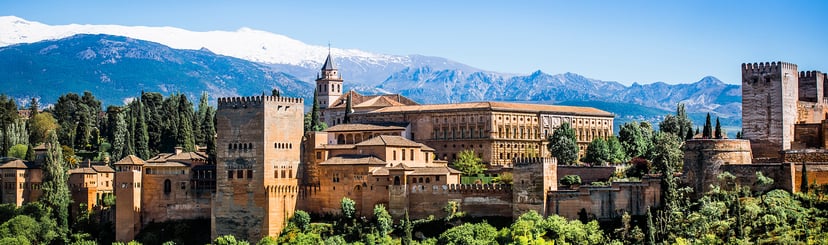



 So if you are looking for the absolute best in Granada & surroundings with authentic local fully-licensed native guides whose English you can actually understand and with an exclusive and amazingly fun itinerary