Barcelona’s Design Century: Eixample, Sant Antoni and the Mies Pavilion Without Another Gaudí Interior

Updated
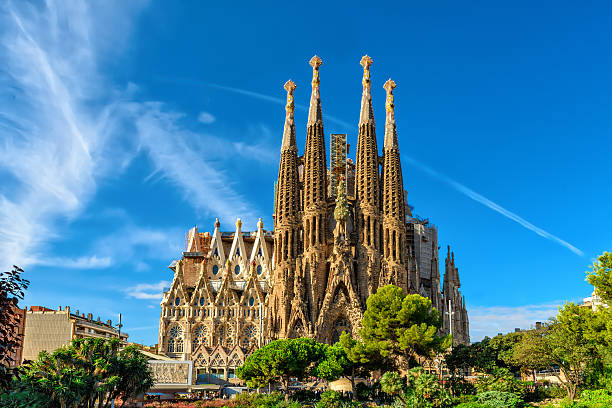
Choose the Eixample, Sant Antoni and Mies van der Rohe Pavilion arc when you want Barcelona’s design century to read as a city, not as another ticketed Gaudí interior. It works in real city conditions because the route moves through broad Eixample blocks, a lived market district, and Montjuïc without forcing a Gothic Quarter reset or a beach-side detour. The clearest exception is a first-time visitor who has not been inside Sagrada Família; in that case, buy Sagrada Família official tickets (https://sagradafamilia.org/en/tickets-individuals) first and let this route become the deeper second act.
The article-specific thesis is simple: Barcelona’s design century becomes sharper when you feel the Sant Antoni to Montjuïc Pavilion shift, from market streets and Cerdà logic to a pavilion built as an architectural argument. The non-obvious hinge is not Passeig de Gràcia; it is the movement from Comte d’Urgell and Avinguda Mistral toward Plaça d’Espanya, where the city changes from lived fabric to exhibition ground before the Pavilion appears beside Montjuïc’s formal axis.
Why this design-century route beats another Gaudí interior
This route wins when your real question is not “Which beautiful building should we enter next?” but “How did Barcelona move from nineteenth-century urban planning to twentieth-century architectural modernity?” Eixample gives you the grid, Sant Antoni gives you the everyday infrastructure inside that grid, and the Mies van der Rohe Pavilion gives you the modern break. That sequence is more revealing than stacking Casa Batlló, La Pedrera and another Modernisme interior into one day, especially for travelers who already understand Gaudí’s visual language.
The counterintuitive correction is that a second or third celebrated interior can make the day feel smaller, not richer. More ornament, more audio corridors and more ticket windows can blur the design question just when the city is ready to explain itself outdoors. The mistake is treating Barcelona architecture as a set of interiors to collect; the better move is to let the street, market, and pavilion argue with each other.
That does not make Gaudí optional in Barcelona. It means one Gaudí interior can be enough when the day’s real value comes from comparison. For travelers building a broader architecture itinerary, our adjacent guide to Modernisme without Gaudi overload covers a different route through Sant Pau, Eixample and Palau de la Música; this article deliberately avoids repeating that shell and instead follows the design-century line toward Sant Antoni and Montjuïc.
The firm editorial call is to let the Pavilion be the end of the architectural argument, not a prelude to one more interior. Barcelona encourages the opposite because the famous houses are close enough to tempt you and photogenic enough to justify themselves after the fact. But a traveler’s memory has limited hierarchy. If every hour tries to be a climax, the day loses its main idea, and the Pavilion’s restraint is the first thing to disappear.
The decision test: should your Barcelona design day stop before another interior?
You should stop before another interior when the group has already absorbed one major Gaudí space, wants a clearer architectural arc, or cares about urban design as much as individual monuments. This is common for repeat visitors, design-minded couples, architects, collectors, and families with older children who respond better to movement and contrast than to a second long interior visit.
Use this route when:
- You have already seen Sagrada Família or one major Passeig de Gràcia interior and want the city to widen, not repeat.
- You are staying in Eixample or near Plaça de Catalunya and prefer a route that does not keep crossing the old town.
- You want Sant Antoni to feel like part of Barcelona’s design intelligence, not merely a lunch or market add-on.
- You want the Mies van der Rohe Pavilion to land as a change in architectural thought, not as a quick Montjuïc afterthought.
Choose a different day when:
- This is your first Barcelona visit and you have no Sagrada Família interior on the trip.
- Your group wants a maximal Gaudí day, with Park Güell, Casa Batlló, La Pedrera and Sagrada Família as the central promise.
- You have limited mobility and are not using a driver for the Sant Antoni to Montjuïc Pavilion shift.
- You want shopping appointments as the main event; that belongs to a different design-buyer route, not this architecture day.
The planning standard is not how many famous stops fit on paper. It is whether each stop changes what the next stop means. Eixample without Sant Antoni can feel like façade-spotting. Sant Antoni without the Pavilion can feel like a market morning. The Pavilion without the approach can feel like a beautiful object on a hill. Together, they make a compact argument.
The decision also depends on the energy you want to keep for the evening. Another interior usually means another arrival window, another entrance sequence, another crowd pattern and another mental reset. This route uses movement differently. The city itself supplies the transitions, so the day can end with a sharper idea and still leave room for a proper dinner, not just a recovery meal after too many thresholds.
The route order that avoids style whiplash
The clean order is Eixample first, Sant Antoni second, Pavilion third. That may sound obvious on a map, but it solves a real interpretation problem. If you start at the Pavilion, the building becomes an isolated masterpiece and the rest of the day has to work backward to explain it. If you start in Sant Antoni, the civic layer is strong but the urban plan arrives late. If you start with Eixample, every later stop has a framework.
Within Eixample, do not overcommit to Passeig de Gràcia. It is valuable, but it can dominate the morning with famous façades, luxury storefronts and the expectation of another interior. A better design-century route may use Passeig de Gràcia briefly, then move west through left Eixample, where the city’s planned rhythm, residential scale and less theatrical corners help the group understand the grid as a living system rather than a monumental showcase.
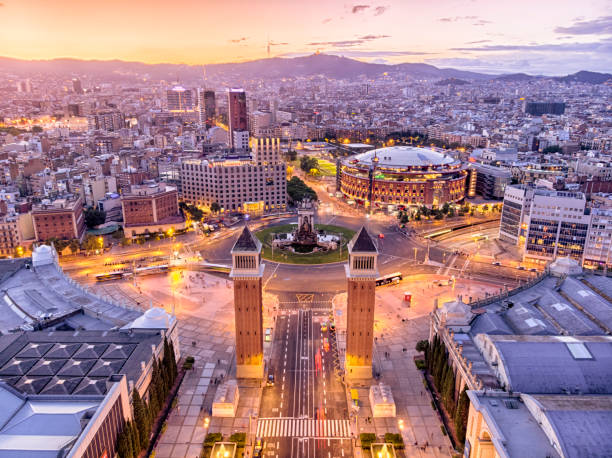
The move into Sant Antoni should feel like a change of temperature, not a change of subject. Ronda de Sant Antoni, Carrer del Comte Borrell and the market’s perimeter show how the district handles commerce, movement and neighborhood return. The later approach toward Montjuïc should then feel more formal. Plaça d’Espanya, the Fira edges and the axis toward Avinguda de la Reina Maria Cristina remind the traveler that the Pavilion belonged to an exhibition landscape, not to an ordinary residential block.
Start in Eixample: read the city before reading buildings
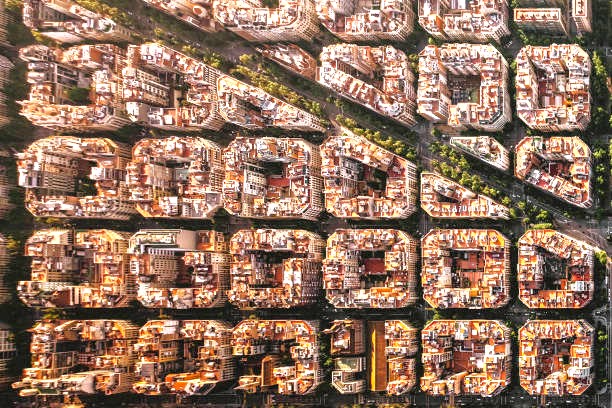
Begin in Eixample because the grid makes the rest of the day legible. The district is not just a convenient hotel zone or a collection of Modernisme façades; it is the planning device that lets Barcelona expand from medieval compression into a rational, repeatable city. When a guide explains chamfered corners, long sightlines, block rhythm, inner courtyards and the tension between plan and property speculation, the walk stops being decorative and starts becoming the day’s operating system.
For a private route, Eixample is especially useful because it allows calibration. A guide can read the group quickly: do they want more urbanism, more craft detail, more social history, or more visual comparison? That choice matters before any ticketed stop. It determines whether you spend time near Passeig de Gràcia, move west toward Sant Antoni, or use a quieter sequence through left Eixample blocks where the city feels less staged. A focused Eixample private tour can be the cleanest base for this day because the route’s point is not to admire façades in isolation; it is to understand why this district made later Barcelona possible.
The local friction is block-scale walking. Eixample looks simple on a map, but its blocks are large enough that careless routing creates a slow accumulation of crossings, sun exposure and repeated pavement time. The body feels the grid before the mind finishes praising it. A route that moves with purpose from Eixample toward Sant Antoni prevents the morning from becoming a beautiful but tiring zigzag.
Eixample also helps comfort-first travelers without needing to advertise itself as easy. Pavements are broader than the old town, taxis and cars can usually work with the grid more predictably, and the neighborhood gives more chances for a dignified pause than the dense lanes around the Cathedral. The tradeoff is that it can feel repetitive if the guide does not supply the right question. The grid is not scenery; it is a structure to decode.
When one Gaudí interior is enough in Barcelona
One Gaudí interior is enough when it has already answered the emotional question of the trip. Sagrada Família answers scale, light, religious ambition and the city’s most powerful unfinished story. Casa Batlló answers theatrical domestic fantasy. La Pedrera answers structure, rooftop silhouette and apartment-house invention. Once one of those has landed strongly, forcing another interior on the same day can flatten memory rather than deepen it.
The exception deserves plain language: first-time travelers who have never entered Sagrada Família should usually prioritize it over this design-century arc. The Mies van der Rohe Pavilion changes the architectural story, but it does not replace Sagrada Família as the one Barcelona interior that many visitors most regret missing. The better sequence for a short first stay is often Sagrada Família on one day, then this Eixample, Sant Antoni and Pavilion route if there is a second cultural day available.
The cut-first rule is this: do not add another Gaudí interior just because the ticket exists and the building is famous. Add it only if it answers a different question from the interior you have already seen. Travelers who need help choosing that one anchor can use our one Gaudi interior decision before committing the design day to a wider Barcelona story.
For many discerning travelers, the strongest Barcelona memory is not produced by maximal coverage. It is produced by contrast that remains legible after the trip. A single Gaudí interior plus Eixample streets, Sant Antoni and the Pavilion gives you a richer mental map than three interiors that all compete for emotional dominance. This is especially true when the trip also includes food, wine, coast time or family obligations; architecture should carry the day, not consume the whole stay.
Why Sant Antoni belongs in a design day
Sant Antoni belongs in a design day because it shows how Barcelona’s planning ideals become daily life. The market is not a decorative snack stop between famous buildings; it is a piece of neighborhood infrastructure set inside the Eixample system, with iron architecture, surrounding streets, book culture, food rhythms and residential scale all pressing into one place. The official city page for Sant Antoni Market (https://www.meet.barcelona/en/visit-and-love-it/points-interest-city/mercat-de-sant-antoni-92086009452) is useful for confirming its public identity as a neighborhood meeting point, but the reason it matters here is editorial: Sant Antoni turns planning into behavior.
The market also corrects a common Barcelona mistake. Visitors often treat design as either luxury shopping on Passeig de Gràcia or museum time on Montjuïc. Sant Antoni sits between those categories. Its value is not that every stall is of equal interest to a visitor; it is that the market, its restored structure, the surrounding streets and the Sunday book culture reveal a more civic kind of design. This is where Barcelona’s design intelligence is less about spectacle and more about how a district organizes appetite, errands, browsing and neighborly return.
There is a timing consequence. Sant Antoni works best before the Pavilion, not after it. Before the Pavilion, the market district gives texture and human scale. After the Pavilion, it can feel too busy and too practical, as though the day has fallen out of its architectural register. This is one reason our separate Sant Antoni market morning guide treats the market as a food-and-neighborhood question; here, it plays a different role in a design-century route.
The right Sant Antoni stop is disciplined. Do not turn it into a stall-by-stall tasting mission unless food is the declared priority. Let the guide use the market hall, perimeter streets and district edge to explain how public architecture anchors daily life. If the group wants a snack or coffee, take it as a pause that supports attention, not as a second theme that redirects the day.
The Sant Antoni to Montjuïc Pavilion shift is the route’s hinge
The Sant Antoni to Montjuïc Pavilion shift is the moment that makes this day more than a neighborhood walk. The city changes underfoot: Eixample’s regular blocks loosen, Paral·lel’s broader traffic energy pulls you toward Plaça d’Espanya, and Montjuïc announces itself not as a hilltop escape but as the site of fairs, museums, axes and staged civic ambition. That transition prepares the Mies van der Rohe Pavilion better than arriving by isolated taxi from a hotel lobby.
This is where private pacing can change the trip without theatrical intervention. Some groups should walk part of the move, especially if the weather is mild and everyone is comfortable with urban distance. Other groups should use a driver for the transfer and save the walking for the Pavilion and the Montjuïc approach. The wrong compromise is to walk too much of the connective tissue in heat, arrive tired, and then expect a quiet modernist building to revive concentration.
What the city does to the body matters here. Barcelona does not have Lisbon’s relentless hills or Granada’s steep lanes, but it creates fatigue through block length, exposed avenues, repeated crossings and transfer resets. The move from Sant Antoni toward Montjuïc can add glare, traffic noise and slow legs if it is treated casually. The body arrives at the Pavilion either alert enough to read space, or dulled enough to treat it as another photo stop.
The micro-route also changes the interpretation. Approaching via Plaça d’Espanya and the exhibition area reminds you that the Pavilion was not conceived as a domestic building or a neighborhood monument. It belonged to an international display environment on Montjuïc. That matters because the building’s silence can otherwise be misunderstood as minimal taste rather than diplomatic, spatial and modernist intention.
How the Mies van der Rohe Pavilion changes the architectural story
The Mies van der Rohe Pavilion changes the day because it removes the decorative expectation that Barcelona often teaches visitors to crave. Designed by Ludwig Mies van der Rohe and Lilly Reich for the 1929 Barcelona International Exhibition, the Pavilion asks a different question: what happens when walls, planes, stone, glass, water and proportion become the experience? The official Pavilion page (https://miesbcn.com/the-pavilion/) is the best direct source for the building’s origin; the route value comes from seeing it after the city has already shown you grid, market and movement.
That is why the Pavilion should not be rushed. It is small compared with Sagrada Família, quieter than Casa Batlló, and less obviously narrative than a museum collection. Its power comes from calibration. You notice the low plane, the reflective surfaces, the pools, the almost ceremonial movement around walls, and the way modern architecture can create drama without ornament. It changes the architectural story by making absence feel designed.
The Pavilion also resets the mood of the day. After Eixample and Sant Antoni, the space slows conversation. A couple can stand apart and still feel inside the same composition. A family can compare reactions without being pushed along a corridor. A small private group can debate whether the building feels calm, severe, luxurious, artificial or timeless. That conversation is the payoff; without it, the Pavilion becomes an elegant but under-explained box.
One practical advantage is scale. Because the Pavilion is concentrated, it can produce a high intellectual payoff without consuming the rest of the afternoon. The risk is the inverse: travelers may assume a smaller site needs less context. In fact, it needs more precise context because there is less narrative signage, less spectacle and fewer obvious cues telling a non-specialist what to notice.
Eixample grid versus Pavilion modernism: what the contrast teaches
The Eixample grid versus Pavilion modernism contrast teaches that Barcelona’s design history is not a straight line from ornament to minimalism. It is a set of answers to different problems. Eixample asks how a growing city should expand, circulate and distribute light and air. Sant Antoni asks how a district’s everyday systems can occupy that plan. The Pavilion asks how space itself can become the exhibit.
That contrast matters for travelers because it prevents style whiplash. Without a clear frame, the day can feel like “pretty streets, market, modern building.” With a guide’s connective tissue, each stop changes the next. Chamfered corners help you understand urban rationality. Sant Antoni’s market shows how public architecture can carry daily life. The Pavilion then feels less like a foreign object and more like a deliberately different answer placed on Montjuïc’s exhibition terrain.
There is also a spend consequence. Paying for more interiors does not help if the traveler has not chosen a clear architectural question. A better investment is expert interpretation, cleaner sequencing and a route that knows when not to enter. In Barcelona, premium value often comes from restraint: fewer thresholds, fewer ticket windows, and more confidence about why the day is moving where it is moving.
The contrast also protects the traveler from false equivalence. Gaudí, Cerdà, Rovira i Trias, Mies and Reich do not belong in the same sentence because they all made attractive things. They belong in one route only when the route explains what each was trying to solve. A private guide’s job is to hold that difference steady so the day does not collapse into a praise tour.
What to cut first when the plan gets too full
Cut the extra Gaudí interior first. Then cut the design-shopping detour. Then cut the vague Montjuïc “views” add-on. Those three additions commonly weaken this route because they pull the day back into collecting, browsing or scenery when the real purpose is architectural comparison. A good design-century day is not anti-pleasure; it simply refuses to let every attractive possibility dilute the central question.
The most tempting mistake is adding Passeig de Gràcia retail time after Eixample because it feels nearby and elegant. That can work on a shopping-led day, but here it interrupts the line toward Sant Antoni. The second mistake is adding a long museum visit on Montjuïc immediately after the Pavilion. That can overfeed the day and make the Pavilion feel like a preface instead of a climax. If art is the priority, build a different Montjuïc art day rather than smuggling a full museum agenda into this one.
Another cut is the old-town lunch reset. A Gothic Quarter or El Born detour may sound atmospheric, but it forces a different street scale and often adds crowd drag exactly when the route needs clarity. For this design day, lunch or a pause should support the westward movement, not pull the group across town and make everyone reassemble their attention.
Also cut the urge to make every pause educational. A market coffee can simply be a pause. A short transfer can simply save legs. A view can be skipped if the group has already reached the route’s intellectual finish. Premium travelers often overfill cultural days because they do not want to waste access; the actual waste is losing the hierarchy of the day.
How to pace the route for bodies, mood and dinner
The best pacing is a measured morning in Eixample, a mid-route Sant Antoni phase, and a controlled transfer toward Montjuïc before attention drops. That order lets the day tighten rather than scatter. Eixample is analytical in the morning, Sant Antoni warms the route with daily life, and the Pavilion gives the afternoon a clear architectural landing.
The mood consequence is just as important as the physical one. A day made of too many interiors can leave travelers comparing queues, lockers, audio devices and thresholds. This route feels calmer when it allows conversation to accumulate. By the time the group reaches the Pavilion, the question has matured from “what are we seeing?” to “how does a city decide what modernity looks like?” That kind of day leaves dinner with material to discuss rather than a list of rooms to remember.
Families and multigenerational groups need a slightly stricter rhythm. Do not use Sant Antoni as an open-ended wander if older parents, children or mixed-interest travelers are present. Give it a defined role: market as civic design, district as lived Eixample, pause as energy management. Then move on. The route should feel shorter than it looks, not because it hides distance, but because each piece has a job.
For celebration travelers, the route should avoid late-afternoon friction. Do not finish with an uphill drift, an uncertain taxi point or a last-minute interior that risks making everyone dress again mentally before dinner. End with clarity: Pavilion, short Montjuïc context, clean return. That makes the evening feel like a continuation of the day’s intelligence rather than a rescue from exhaustion.
Where premium support earns its place
Premium support earns its cost when it changes sequencing, attention and comfort. A private guide can connect Cerdà’s urban logic, Sant Antoni’s market fabric and the Pavilion’s modernist break without turning the day into disconnected lectures. A driver can be valuable for the Sant Antoni to Montjuïc Pavilion shift when heat, mobility, celebration clothes, older parents or a tight dinner plan make extra walking a poor use of energy.
Premium support does not earn its cost when it simply adds more tickets. Paying for access to one more interior rarely improves this route unless that interior answers the day’s architectural question. The better upgrade is judgment: which blocks to walk, where to pause, when to transfer, how long to stay in Sant Antoni, and how to let the Pavilion be quiet enough to matter.
This is the point where a tailor-made route can be genuinely useful. A guide can treat the city as a connected design text, not a sequence of isolated attractions, and can adjust the day for couples, families, small groups, celebration travelers and food-and-wine travelers who still want the architecture to hold. For a short stay where one cultural day must do more than list monuments, Inquire now about a route that links Eixample, Sant Antoni and Montjuïc with the right amount of walking, transfer support and interpretation.
The best premium version also protects silence. Not every minute needs commentary, and not every transfer needs a new fact. A good guide knows when to frame, when to let the city prove the point, and when to stop talking inside the Pavilion so the group can actually notice proportion, reflection and space. That restraint is a service choice, not an absence of service.
How to attach Montjuïc without letting it swallow the day
Attach Montjuïc through the Pavilion, not through a broad hill itinerary. Montjuïc is rich enough to absorb a full day, but this article’s route needs it to serve one purpose: to make the Pavilion land as Barcelona’s twentieth-century turn. Add too many gardens, viewpoints, museums or Olympic-era references, and the design-century argument starts to dissolve.
The best Montjuïc extension is short and purposeful. A guide can frame Plaça d’Espanya, the exhibition landscape, the relationship between the Pavilion and the surrounding ceremonial terrain, then decide whether the group has energy for one additional view or museum exterior. A fuller Montjuic private tour belongs on another day if Montjuïc itself is the object of study.
This restraint is especially important for travelers with dinner plans or a celebration evening. Montjuïc can make a day feel expansive, but it can also lengthen the return if the route keeps climbing or drifting. The Pavilion should sharpen the afternoon, not start a second itinerary that everyone politely endures.
The easiest Montjuïc mistake is believing proximity equals compatibility. The Joan Miró Foundation, the National Art Museum of Catalonia, the gardens, stadium areas and viewpoints all have legitimate claims, but they do not all belong after this route. If you add one, add it because it extends the design question. If it only adds coverage, leave it for a dedicated hill or art plan.
A shorter version when time is tight
The shorter version keeps the same logic but reduces dwell time. Start with a concise Eixample walk, use Sant Antoni as a defined civic-design stop, then transfer to the Pavilion with enough context to understand Montjuïc as exhibition ground. Do not try to compensate for limited time by adding a famous interior at the beginning or end. That is how a focused route becomes a rushed sampler.
In a short version, the guide’s selection becomes more important. One or two Eixample blocks can teach more than a long wander if they are well chosen. A short Sant Antoni stop can still show market architecture, neighborhood rhythm and the district edge. The Pavilion can still deliver the modernist turn if the group arrives prepared. The sequence matters more than duration.
The short version is especially useful before a late lunch, a cruise boarding window, a train departure, or a dinner that sets the evening’s tone. It gives travelers a serious cultural arc without the weight of a full museum day. The only condition is discipline: no “quick” extra interior, no old-town loop, no vague Montjuïc drift.
A practical way to keep the shorter version honest is to choose one interpretive emphasis before you begin. If the group cares most about urban planning, spend more of the morning on Eixample and keep Sant Antoni tighter. If the group cares most about modern architecture, keep Eixample crisp, use Sant Antoni as the lived bridge, and give the Pavilion more quiet time. If the group includes food-and-wine travelers, give Sant Antoni a proper pause but resist turning the route into a tasting morning.
Who this route suits, and who should avoid it
This route suits travelers who enjoy architecture as a way of thinking. It is strong for repeat Barcelona visitors, design professionals, culturally curious couples, older families with good attention spans, and small groups who want a private guide to connect urban planning, market life and modern architecture. It also suits first-time visitors who have already secured Sagrada Família elsewhere in the itinerary and want their second cultural day to be less predictable.
It is a weaker fit for travelers who want maximum Gaudí, landmark density or shopping as the main event. It can also frustrate visitors who prefer interiors with obvious narrative payoff. The Pavilion is demanding in a quiet way; it rewards looking, comparing and slowing down. If your group is not willing to give it that attention, another Gaudí or old-town route may produce more immediate satisfaction.
The strongest version of the day is neither austere nor overdesigned. It allows a coffee pause, a market texture, a good lunch decision and enough silence at the Pavilion. For travelers who want the whole Barcelona stay designed around this kind of judgment, tailor-made Barcelona private touring is the better frame than trying to force a standard architecture itinerary into a bespoke trip.
The route is also not the right answer for every first stay. Some travelers want Barcelona to be all Gaudí, sea air and old-town atmosphere, and that is a valid first encounter. This design-century day is for the traveler who would rather understand why the city feels designed at multiple scales, from block corner to market hall to pavilion plane.
FAQ
Is the Mies van der Rohe Pavilion worth visiting if I am not an architect?
Yes, if you enjoy spaces that change how you see a city. The Pavilion is not a long museum visit; it is a concentrated architectural experience that becomes much more rewarding when you arrive after Eixample and Sant Antoni rather than treating it as an isolated Montjuïc stop.
Should I visit Sagrada Família or do this Eixample, Sant Antoni and Pavilion route?
Choose Sagrada Família if this is your first Barcelona visit and you have never been inside. Choose this route when you already have one major Gaudí interior covered and want Barcelona’s broader design century to make sense through streets, market life and modern architecture.
How long should this Barcelona design route take?
Plan it as a focused half day to long half day, depending on walking pace, stops and whether you add lunch. It should not become a full-day sprawl unless you intentionally expand Montjuïc or add a separate museum.
Why include Sant Antoni instead of going straight from Eixample to Montjuïc?
Sant Antoni shows how the Eixample plan becomes daily neighborhood life. Without it, the route can jump too quickly from façades to the Pavilion and lose the civic design layer that makes the architectural contrast more meaningful.
Is this route good for families or older parents?
It can be, but only with controlled pacing. Families and older parents usually need fewer open-ended blocks in Eixample, a defined Sant Antoni stop, and a sensible transfer toward Montjuïc so the Pavilion is reached with attention still intact.
Can I add another Gaudí interior after the Mies Pavilion?
You can, but it is usually the wrong cut of the day. Add another Gaudí interior only if it answers a different architectural question; otherwise it turns a coherent design-century route back into a ticketed building collection.
What is the best base for this route?
Eixample is the cleanest base because it lets the route begin with the city plan rather than a transfer. Staying near the Gothic Quarter or the beach can still work, but it usually adds a reset before the design story properly begins.
Does this replace a general Barcelona architecture tour?
No. It solves a narrower question: how to understand Barcelona’s design century through Eixample, Sant Antoni and the Mies Pavilion without adding another Gaudí interior. A general architecture tour should be broader; this route is stronger because it is selective.
If you’re interested in any private tours of Barcelona, please reach out to us.








 So if you are looking for the absolute best in Barcelona & surroundings with authentic local fully-licensed native guides whose English you can actually understand and with an exclusive and amazingly fun itinerary













