Seville in the Golden Hours: A Heat-Smart Plan for Patios, Plazas, Tapas, and Flamenco

Updated
The best heat-smart Seville day starts early, disappears from the hardest sun, returns in the golden hours, and saves flamenco for a night that still has energy. This works because Seville’s old town is not difficult in the abstract; it is difficult when narrow lanes, stone plazas, ticket windows, and late Spanish dining all compete for the same overheated middle of the day. The clearest exception is a very short winter stay, when you can be more ambitious at midday and may prioritize monuments over rhythm. In warm months, the thesis is simple: Seville is most generous when you stop trying to “use” every daylight hour and instead let the morning, shaded pause, late-afternoon walk, tapas, and flamenco each do one job well.
That logic begins with the Santa Justa-to-old-town reset. Arriving by train can look easy on a map, but the transition from Santa Justa into Santa Cruz, El Arenal, or the Cathedral quarter is where many otherwise polished days lose their calm: luggage, check-in uncertainty, taxi access on tight streets, and the temptation to start walking before the body has adjusted. For guests planning private tours in Seville, the question is not “How much can we fit in?” It is “Which hour of the day deserves which kind of Seville?”
The golden-hours matrix: what each window should own
A good Seville day is a sequence, not a collection. Treat each part of the day as having a proper task, and the city becomes easier to read. Use the morning for context and controlled entrances. Use midday for shade and recovery. Use late afternoon for plazas, river air, and the visual city. Use tapas to bridge appetite and timing. Use flamenco only after you have removed one earlier ambition.
Early morning: monuments, tight lanes, and guide-led context
Best for: the Real Alcázar, Cathedral area, Santa Cruz edges, Archivo de Indias context, and the first serious walk of the day. The consequence is lower heat load and better attention. A guide matters here because the route can stay compact: Plaza del Triunfo, Patio de Banderas, Avenida de la Constitución, and the shaded turns toward the Jewish-quarter lanes can form one readable arc instead of a stop-start sprint.
Midday: hotel, courtyard, shaded interior, or lunch
Best for: a pool break, a quiet patio, a seated lunch, or one interior that genuinely earns its place. The consequence is evening stamina. Midday is where visitors often overspend on the wrong thing: a fancier car or longer tour cannot make exposed walking pleasant when the plan itself is fighting the city.
Late afternoon: Plaza de España, María Luisa, Arenal, or the river
Best for: open-space beauty once the day begins to soften. The consequence is mood. Plaza de España is far more rewarding when it is not a punishment after three hours of monuments, and the Guadalquivir feels more elegant when it is not being used as a recovery room.
Tapas window: Arenal, Triana, or Santa Cruz with a purpose
Best for: a deliberately placed food hour, not a random search after the group is already tired. The consequence is pacing. Tapas should either lead toward flamenco, follow the river, or sit near the hotel return; otherwise it becomes another transfer disguised as dinner.
Night: flamenco, riverfront air, or a shorter finish
Best for: one final atmosphere, not a second full itinerary. The consequence is whether the day ends with memory or fatigue. A flamenco night should feel chosen, not squeezed in because the schedule still has a blank line.
Start with the morning, but do not make the morning carry the whole city
The morning should carry Seville’s intellectual weight, not every famous sight. The strongest start for a first visit is usually a compact old-town and monument arc: the Alcázar area, Cathedral context, and Santa Cruz lanes, with the guide controlling shade, timing, and how long the group stands in open stone spaces. This is where the city’s density helps. Plaza del Triunfo, the Cathedral, the Archivo de Indias, and the Alcázar sit close enough to make a layered morning possible without turning the day into a taxi puzzle.
The mistake is assuming that because the main monuments are near each other, they are easy to absorb back-to-back without consequence. They are not. The body experiences them as standing, queuing, looking up, crossing bright stone, entering cool interiors, and returning to glare. The mind experiences them as overlapping centuries: Islamic palace craft, Catholic power, imperial administration, orange trees, tile, water, and procession routes. A private guide helps not because the monuments need more adjectives, but because someone has to decide which details deserve your attention and which doorway, courtyard, or lane should be saved for later.
For many travelers, the Alcázar should be the morning anchor, but it should not own the entire day. If you let the palace consume the schedule, you will often pay for it later in the form of a limp late afternoon: Plaza de España becomes a photo stop rather than a place, tapas become a hunt rather than a pleasure, and flamenco becomes a duty. The better move is to keep the palace visit focused, then use the nearby Cathedral quarter or Santa Cruz edge as context rather than as a second endurance test. Travelers who want a deeper monument day can build around a dedicated Alcázar plan, but the golden-hours version needs restraint.
The counterintuitive correction is that Santa Cruz is often overvalued as an all-day base for wandering. Its lanes are beautiful, but beauty does not remove friction. In warm weather, the same maze that feels romantic at 9:30 can feel airless after lunch, especially for families, older parents, and anyone dressed for a smart dinner later. Use Santa Cruz in the morning or as a short pre-dinner thread; do not ask it to be your full-day solution simply because the postcards say it is charming.
When the group starts from a hotel outside the tightest old town, the morning should include a clean arrival plan. From Santa Justa, the Santa Justa-to-old-town reset is not a scenic transition; it is a logistics hinge. Go straight to the hotel if the room or luggage plan is clear, or to the first guided meeting point if bags are handled separately. Do not add an “easy” coffee stop in no-man’s-land unless it genuinely solves timing. The first hour sets the tone: either the day feels curated, or everyone begins by improvising.
Midday belongs to shade, lunch, and the hotel—not one more sunlit plaza
Midday in Seville should be designed as a deliberate pause, not treated as unused time. This is the single rule that most improves the day for couples, families, celebration travelers, and small private groups. The middle hours are when the city does the most to the body: heat accumulates in stone, open plazas reduce conversation, narrow lanes trap warmth, and every extra queue or taxi reset feels larger than it looked on the itinerary. Even fit travelers can lose the evening here, not because they walked too far on paper, but because they walked at the wrong hour.
A heat-smart midday has three good shapes. The first is a hotel return, especially if the property has a calm lobby, shaded patio, or pool. The second is a proper seated lunch near where you already are, preferably in El Arenal, the Cathedral edge, or a route that does not require a speculative crossing of the old town. The third is one shaded interior or courtyard that earns the interruption, such as a palace, museum, or church chosen for its location as much as its content. What does not work is the vague plan to “keep wandering until lunch.” In Seville, that phrase usually means the group will drift into the hottest lanes with no clear finish.
The most expensive version of the wrong day is still the wrong day. Premium spend does not help when it buys a longer outdoor itinerary between lunch and late afternoon; it only buys a hotter, more expensive version of the wrong plan. Where money does help is in removing uncertainty: a guide who shortens explanations when the group is flagging, a driver for a clean pickup after a distant stop, a hotel chosen for a real midday break, or prearranged tickets that prevent standing in exposed lines. The upgrade is not more Seville. The upgrade is better timing.
For high-heat trips, the midday decision deserves its own planning layer, especially if your group includes children, older relatives, or anyone who dislikes returning to the room once the day has begun. A separate midday hotel-reset strategy can be the difference between a family that resurfaces happily at 6:00 and one that cancels the evening. The hotel return should not feel like defeat. In Seville, it is often the move that allows the trip to stay elegant.
If you resist the hotel break, choose a seated lunch with intent. A late lunch can work beautifully when it is near the next move: Arenal if you are easing toward the river, Santa Cruz if the evening is old-town flamenco, or Triana if you are already crossing the river and not returning immediately. Avoid building lunch around a famous address that forces a hot transfer unless the restaurant is the actual point of the day. For food-and-wine travelers, this is where editorial discipline matters: a memorable meal can carry midday, but only if the hours before and after are lighter.
Patios belong carefully in this window. Seville has courtyards worth seeking, but patio-chasing can become another checklist if you treat every courtyard as a trophy. A shaded courtyard works best when it is already on your route or when it gives the group a genuine atmospheric pause. It works poorly when it adds a dogleg from the Cathedral to a distant neighborhood and then requires everyone to cross back for dinner. The question is not whether a patio is lovely. It is whether reaching it improves the next three hours.
How to plan Seville in high heat and still enjoy the late afternoon
The late afternoon should be the city’s release valve: one open-air experience, one direction of travel, and no heroic zigzags. This is when the day can begin to look like the Seville travelers imagined, but only if the morning and midday did not exhaust the group. The best late-afternoon options are not equal; each solves a different problem.
Plaza de España and María Luisa Park
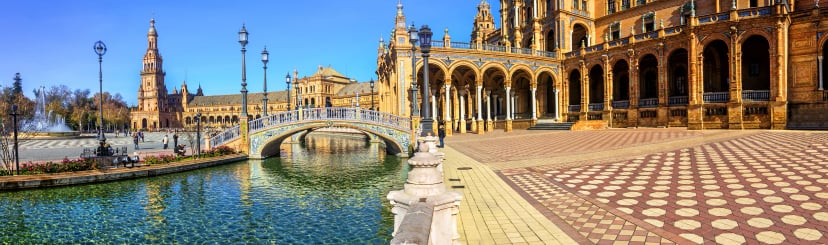
Choose this when: the group wants a grand visual finish and does not need to be in Triana immediately afterward. Plaza de España is a magnificent late-afternoon choice because its scale finally makes sense when the light softens and the walk through Parque de María Luisa can slow the pulse. The consequence is distance: from the Cathedral quarter, it is not the same as stepping around the corner for one more square. It needs a real slot, a clear pickup or return plan, and no expectation that everyone will then cross to Triana, eat tapas, and reach flamenco without fatigue.
Arenal and the river edge
Choose this when: you want the easiest bridge between monuments, tapas, and evening atmosphere. El Arenal is less poetic than Santa Cruz on paper, but it often works better in real conditions because it sits between the Cathedral area, the bullring context, the river, and the route toward Puente de Isabel II. The consequence is fewer resets. You can move from a shaded interior to a river walk, then toward dinner, without asking the group to decode another maze.
Triana and Calle Betis
Choose this when: the night will stay west of the river or you want ceramics, food, and flamenco context in one side of the city. Triana is not just a “local” alternative; it changes the return math. Crossing Puente de Isabel II late in the day can feel like a lift in mood, but crossing back and forth because the plan was vague can flatten the evening. Put Triana on the night’s spine or leave it for another day.
Santa Cruz at the edge, not the center
Choose this when: the group wants a short, atmospheric thread before dinner rather than an extended wander. Jardines de Murillo, Calle Agua, and the lanes around Mateos Gago can be beautiful in the right light, but they should not become a post-lunch endurance loop. The consequence of keeping Santa Cruz short is that it remains romantic rather than claustrophobic.
A firm editorial no: do not force Plaza de España, Triana tapas, and a flamenco show into one unbroken evening after a full monument morning. That plan looks triumphant in a spreadsheet and feels rushed in the body. It creates three separate movements: south to Plaza de España, west across the river, then possibly back to the old town after the show. Each movement may be manageable alone, but together they turn the golden hours into transport management.
A better river-led version is to choose Arenal and the Guadalquivir as the late-afternoon hinge. You can finish monument time near the Cathedral, pass toward the bullring and river edge, cross Puente de Isabel II only if Triana is the night’s destination, or stay on the old-town side if dinner belongs there. Travelers who want the river to carry more of the day can use a dedicated Guadalquivir day plan rather than pretending the river is a quick add-on after everything else.
This is also where Seville changes the mood of the trip. A well-timed late afternoon makes the day feel shorter, even if you have seen less on paper. Conversation returns. Children stop negotiating every corner. Couples begin to notice the city again rather than managing the itinerary. A badly timed late afternoon does the opposite: the group keeps moving through beautiful places with no appetite for them, and the evening becomes a recovery project. The golden hours are not a decorative bonus; they are the part of the day that decides how Seville will be remembered.
Tapas timing: choose Arenal, Triana, or Santa Cruz by the next move
Tapas should be placed by geography first and appetite second, not by a generic list of “best streets.” In Seville, the food hour can rescue the evening or complicate it. The difference is whether tapas is used as a bridge. If your show, hotel, or river plan is in Triana, eat on that side or near the bridge. If your hotel is near the Cathedral or Arenal, avoid a late-night cross-city food hunt unless food is the point of the night. If Santa Cruz is the chosen atmosphere, keep the route tight and accept that the area’s romance comes with slower movement.
Arenal is the pragmatic choice when the day has included the Cathedral, the Archivo de Indias, or a river walk. It gives you access to the river without committing to a full Triana evening, and it keeps taxis and hotel returns straightforward. For small groups, this matters. A group of six or eight does not move through narrow tapas bars like a couple; it needs more lead time, clearer meeting points, and fewer last-minute changes. A private guide or host can make the food hour feel casual while quietly preventing the slow drain of “Where should we go next?”
Triana is the choice when you want the evening to have neighborhood identity. A walk across Puente de Isabel II, a short ceramics context near Calle San Jorge or the market area, and dinner west of the river can create a coherent night. But Triana becomes inconvenient when the show is back in the old town or when your hotel return requires a late scramble across the bridge after everyone is tired. The bridge is charming once; it is logistics twice.
Santa Cruz works when the goal is a softer, more enclosed evening. It is especially good for couples who want a slow pre-show route or for travelers staying nearby. But it is not ideal for guests who dislike crowds in narrow lanes or groups that need easy seating. The lanes near Mateos Gago and the Cathedral edge can become a pleasant short walk, but they should not be treated as an open-ended tapas crawl after a hard day. Set the expectation: one or two chosen stops, then the show or hotel.
For travelers considering a serious dining night instead of tapas, the timing changes. A tasting-menu reservation usually asks the rest of the day to behave. That may mean a lighter afternoon, a shorter river walk, and no pre-dinner flamenco. If you are comparing formal restaurants, use direct restaurant pages such as abantalrestaurante.es/menu (https://abantalrestaurante.es/menu/) and ispal.es (https://ispal.es/reservas/) to confirm the current menu or reservation path before locking the evening. The planning point is not status; it is whether the meal’s timing leaves room for Seville rather than swallowing the night.
Food-and-wine travelers often need permission to cut. If dinner is the major experience, cut the late-afternoon monument, not the recovery time. If flamenco is the major experience, keep tapas informal and geographically aligned with the venue. If the group includes children or older parents, choose certainty over novelty: a known route, a seated pause, and an easy return usually outperform a theoretically more exciting food search. The meal should make the evening feel fluent, not make the route more fragile.
Flamenco belongs after the day has been narrowed
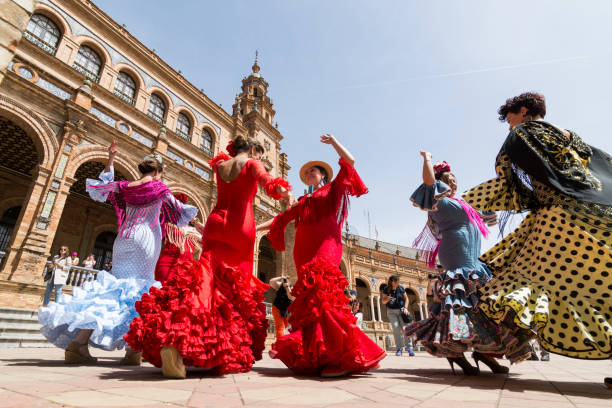
Flamenco is strongest when it is the night’s chosen focus, not the last item surviving an overbuilt itinerary. Seville gives travelers several good formats, and the right choice depends less on abstract ranking than on where the day has placed you. A Triana-focused night, an old-town museum-and-show pairing, and a quieter Casa de la Memoria evening can all be right; the mistake is choosing the venue without considering the walk before and after.
Teatro Flamenco Triana (https://www.teatroflamencotriana.com/en/home/) is useful to verify directly when the evening is already leaning toward Triana. The practical value is not only the performance; it is the way the venue can make the river crossing, tapas, and return plan coherent. If you spend the late afternoon on the west side, or if your group wants Triana to have more substance than a dinner label, placing the show there can reduce late-night movement. Confirm the current program and timing on the official site before arranging dinner around it.
Museo del Baile Flamenco (https://museodelbaileflamenco.com/index.php/el-museo/) belongs to a different kind of evening. It can work well when the old town is already the night’s center and when travelers want context rather than only a performance. The surrounding route is compact, which helps guests staying near Santa Cruz, the Cathedral quarter, or El Arenal. The consequence is that the night remains enclosed in the historic center; this can be beautiful, but it is not the same mood as crossing to Triana at dusk.
Casa de la Memoria (https://www.sevillaflamenco.org/en/casa-de-la-memoria/) suits a quieter old-town finish, especially when the day has already been rich and the group does not need a big dinner arc. It is a good example of why “best flamenco in Seville” is too blunt a planning question. The better question is whether the venue preserves the evening you have built. A show that sits near your hotel and follows a measured tapas hour may beat a theoretically more atmospheric option that creates a late return across the city.
For a deeper venue-by-venue evening framework, the guide to before a flamenco night in Seville is the natural next layer. In this golden-hours plan, the principle is simpler: pick the flamenco geography before you pick the tapas route. If the show is in Triana, make Triana the evening. If the show is in the old town, stop pretending you will also “do” Triana properly that night. If the group is tired after lunch and late-afternoon walking, choose a shorter finish and protect the next morning.
Flamenco also changes the clothing, dining, and return calculation. Travelers often dress more carefully for the night, which makes a hot, dusty, or overlong late-afternoon walk less attractive. Families may need a clearer food plan before the show. Celebration travelers may want a private transfer after the performance, not because distances are impossible, but because the emotional arc of the night should not end with a debate about taxis. Again, premium service earns its value when it protects the transition, not when it adds more stops.
Patios and plazas should be pauses, not trophies
Patios and plazas work best in this plan when they change the pace of the day. Seville is full of courtyards, small squares, church forecourts, and tiled interiors, but the traveler consequence is more important than the inventory. A patio gives shade, texture, and a feeling of domestic Andalusia; a plaza gives scale, orientation, and light. Use each when the day needs that effect.
Patios are most valuable after intensity. After the Alcázar, a quieter courtyard or shaded interior can help the group digest what it has seen. After a hot transfer, a patio lunch can slow the body before the evening. For design-minded travelers, tile, ironwork, plants, and water features can become a thread, but only if the route stays tight. The danger is turning patios into a scavenger hunt. If Córdoba is already in your Andalusia trip, do not over-prioritize Seville patio-hunting just to repeat a courtyard theme; save your Seville energy for river light, flamenco context, and the old-town monument arc.
Plazas need stronger timing. Plaza del Triunfo and Plaza Virgen de los Reyes are useful in the morning because they orient the Cathedral, Giralda, Alcázar, and Archivo de Indias in one compact frame. Plaza de España belongs later because its exposed scale can be punishing too early in the warm season and underwhelming if the group arrives already depleted. Smaller neighborhood squares work best as pauses: a place to regroup, not another sight to explain at length.
For private touring, this is where customization becomes concrete. A guide can read whether the group needs a story, a seat, a shaded route, or silence. That sounds small until you are traveling with three generations, a celebration group, or food travelers with a major dinner ahead. The difference between a polished day and an exhausting one is often not the list of places visited; it is the moment someone decides that the next plaza should be skipped because the previous courtyard already gave the day what it needed.
What to cut first when the golden-hours plan is getting too full
When the day is overpacked, cut the place that creates the biggest transfer, not the place with the least fame. In Seville, the famous stop is not always the damaging one. A short Cathedral-context stop may be easy because it sits on the morning route. A “quick” Plaza de España detour may be damaging if it splits the late afternoon from dinner and flamenco. A Triana crossing may be wonderful if the night stays there and wasteful if it is only a photo gesture before returning east.
- Cut the second open-air late-afternoon zone. Choose Plaza de España and María Luisa, or choose Arenal and the river, or choose Triana. Do not pretend all three are one fluid evening.
- Cut the vague tapas crawl. Replace it with a chosen neighborhood that supports the show or hotel return. Seville rewards appetite, but it punishes indecision when the group is tired.
- Cut the extra courtyard if Córdoba is already in the trip. Let Seville be Seville: palace, river, old town, tapas, flamenco, and the particular social rhythm of late light.
- Cut the rooftop sunset if it complicates the night. A rooftop can be pleasant, but it is often overvalued when it steals the best walking hour and pushes dinner or flamenco into a rushed sequence.
- Cut the long explanation before dinner. By evening, even serious travelers usually need atmosphere more than another dense chapter. Save the deeper history for the morning.
The cut-first rule is especially important for celebration trips. Birthdays, anniversaries, and private family occasions often fail not because the chosen experiences are weak, but because the day has no negative space. A graceful Seville celebration might include an early guided monument arc, a hotel pause, one golden-hour river or plaza experience, and flamenco. It does not need three more “while we’re nearby” additions. Nearby is not the same as wise.
Where private planning changes the day
Private planning matters most where the city has hidden seams: ticket timing, heat exposure, dinner geography, and returns after dark. It is less about exclusivity and more about judgment. A couple may want a slower, more romantic old-town evening. A family may need a pool break that is treated as part of the itinerary rather than as an apology. A small group may need seating, pacing, and a guide who can prevent half the party from waiting in the sun while the other half negotiates the next stop.
Where paying more changes the experience: a guide who knows when to shorten the Cathedral context, a driver used for specific pickups rather than all-day idling, carefully chosen flamenco geography, and a hotel or lunch plan that makes the midday pause real. Where paying more does not earn its cost: adding more guided outdoor hours in the hottest part of the day, booking an impressive restaurant without adjusting the afternoon, or forcing a chauffeur into old-town movements where walking a short shaded route would be calmer.
The strongest version of this article is not a rigid itinerary; it is a rhythm you can hand to a planner. Ask for an early monument-and-context arc, a protected midday break, one late-afternoon visual experience, a tapas route that supports the show, and an evening finish that does not require a second wind. Orange Donut Tours can shape that into a tailor-made Seville tour with the right guide, pickup logic, flamenco placement, and food pacing for your party. When those pieces need to work as one day rather than five separate reservations, Inquire now.
FAQ
What is the best time of day to tour Seville in hot weather?
The best time to tour Seville in hot weather is early morning, with the hardest outdoor walking finished before midday. Save open plazas, river walks, and Triana crossings for late afternoon or evening, when the city feels more generous and the group has more energy.
Can you see the Alcázar, Plaza de España, tapas, and flamenco in one day?
Yes, but only if the day is tightly sequenced. Make the Alcázar the morning anchor, take a real midday pause, choose either Plaza de España or a river/Triana late afternoon, then place tapas near the flamenco venue. Do not add a second major late-afternoon zone.
Is Triana better than Santa Cruz for a flamenco evening?
Triana is better when the evening will also include the river crossing, neighborhood context, or tapas west of the Guadalquivir. Santa Cruz is better when you want a compact old-town finish near the Cathedral quarter or your hotel. The right choice is the one that reduces late-night movement.
Should I book a flamenco show before or after dinner in Seville?
Either can work, but the route matters more than the abstract order. If the show is early, keep tapas light beforehand and dinner nearby afterward. If the show is later, have a seated tapas plan first and avoid crossing the city after the performance.
Are patios worth planning around in Seville?
Patios are worth including when they give the day shade, texture, or a calm pause. They are not worth turning into a checklist, especially if Córdoba is already part of your trip. In Seville, patios should support the rhythm rather than dominate it.
Is a hotel break really necessary in Seville?
In warm months, a hotel break is often the move that preserves the evening. It is especially valuable for families, older parents, celebration travelers, and anyone planning flamenco or a serious dinner. In cooler months, you can shorten the break or replace it with a seated lunch.
Where should tapas fit in a heat-smart Seville plan?
Tapas should fit between the late-afternoon experience and the night’s final focus. Choose Arenal for an easy bridge from monuments to the river, Triana for a neighborhood-led flamenco night, or Santa Cruz for a compact old-town evening.
What should I skip if my Seville day is too full?
Skip the extra transfer-heavy stop first. In practice, that usually means cutting either Plaza de España, Triana, or a rooftop sunset rather than trying to stack all three before flamenco. A calmer evening will feel more luxurious than a longer checklist.
If you’re interested in any private tours of Seville, please reach out to us.





 So if you are looking for the absolute best in Seville & surroundings with authentic local fully-licensed native guides whose English you can actually understand and with an exclusive and amazingly fun itinerary













