Seville’s Hotel-Reset Strategy in High Heat: Where the Midday Break Actually Belongs

Updated
The midday hotel break belongs immediately after the Alcázar or a Cathedral-and-Alcázar morning, not after a long lunch and not after “one more” afternoon monument. In Seville high heat, the decisive hinge is the Alcázar shade exit: the moment you leave the palace gardens and step back toward Patio de Banderas, shade turns into exposed paving, short alleys, queues, and return logistics. The workable strategy is to tour early, return to a nearby hotel before the city asks for a second outdoor chapter, and rebuild the day around dinner or flamenco rather than sightseeing pride. The clearest exception is a hotel far from Santa Cruz, Arenal, or the Cathedral edge; if the return itself becomes a transfer project, the break may belong at a shaded lunch room, a small museum, or an early finish instead.
Seville is not difficult because the old town is vast. It is difficult because the most desirable first-visit pieces sit close enough to tempt overpacking, yet the route between them becomes much less forgiving once the morning cool is gone. The thesis of this guide is simple: in hot conditions, the hotel is not a pause at the end of touring; it is the piece that decides what the afternoon is allowed to become. That is why a private day should be designed around the return leg as carefully as the monument entry. For travelers who want a broader seasonal framework around this narrower decision, seasonal private touring in Seville is the adjacent planning route; this article stays focused on the hotel-reset placement itself.
Where should the hotel reset fit in a hot Seville day?
The reset should interrupt the day before the second exposed movement, not after it. The practical version is a morning that ends at the Alcázar shade exit, Patio de Banderas, Plaza del Triunfo, or the Cathedral edge, followed by a direct return to the hotel before anyone starts negotiating a “short” extra stop. That is the difference between a real reset and a symbolic one. A symbolic reset is a cold drink taken while everyone is still wearing the morning, still carrying bags, still thinking about the next entry time, and still sitting in clothes meant for the street. A real reset means shower, quiet, clean clothes, air conditioning, no agenda for a short window, and a clear evening plan.
The counterintuitive correction is that the most atmospheric base is not always the most useful base. Deep Santa Cruz can feel irresistible at night, but the small-lane charm that makes it memorable can also slow the return if your hotel is tucked into a lane where cars do not comfortably wait. Triana is even more frequently overvalued for this specific problem. It is a superb evening neighborhood for many travelers, yet as a high-heat reset base after the Alcázar it asks you to cross the Guadalquivir or manage the bridge approach from Puente de Triana, then reverse the effort later if dinner or flamenco is back in the historic center. The bridge is not the issue on a mild evening; it is the extra exposed hinge at exactly the wrong hour.
A chauffeur cannot replace a real hotel reset during severe heat. A driver can make pickups cleaner, reduce cross-town fatigue, and spare you the awkward taxi hunt near Puerta de Jerez or Paseo de Colón, but the body still needs stillness. In the worst midday window, premium spend does not help if it only buys a better car that moves you from one hot threshold to another. It helps when it changes the shape of the day: a private guide trims the morning before it breaks, a hotel-aware route avoids a needless loop through Santa Cruz, and the afternoon is rebuilt around one worthwhile evening rather than a defensive list of missed sights.
For fixed monument days, confirm operational details from primary sources rather than memory. The official Alcázar site (https://alcazarsevilla.org/) and the official Cathedral site (https://www.catedraldesevilla.es/en/) are the places to check for visit conditions, ticketing, and schedule changes for your date. The editorial decision, however, is not simply “book early.” It is to let those confirmed entries determine when the hotel must reclaim the day.
Reset-placement matrix
- Santa Cruz or Cathedral-edge hotel: Best when the return from Patio de Banderas or Plaza del Triunfo is genuinely short. This is the easiest base for a shower-and-quiet reset after the Alcázar, especially for couples, older travelers, and families with younger children.
- Arenal hotel: Best when you want a cleaner car approach, river-adjacent evenings, and less deep-lane navigation. It can be easier than romantic Santa Cruz for pickups, but you must keep the morning compact so the walk back does not become the second tour.
- Triana hotel: Best when the evening belongs in Triana or along the river. It is weaker for a monument-morning reset because the bridge crossing makes the break feel less immediate.
- Hotel outside the old-town core: Best for arrivals, business groups, or chauffeur-led Andalusia days, but weak for a midday reset unless the vehicle is already built into the plan. If the return takes too much effort, cut the afternoon monument instead of pretending the hotel break will be easy.
The morning route has to earn the break
The morning should be designed to end near the hotel, not merely to include the famous monuments. For a first visit, the temptation is to thread Alcázar, Cathedral, Giralda, Santa Cruz, and perhaps Archivo de Indias into one continuous triumph. In mild weather, that can be shaped into a rich day with the right pacing. In high heat, it usually creates a debt that the afternoon pays. The hotel reset works only if the morning finishes before the group is already negotiating sore feet, shallow attention, and lunch impatience.
The most stable sequence is to make the Alcázar the morning anchor, then choose whether the Cathedral sits before it, after it, or on another morning. If you are touring the Alcázar in depth, with palace rooms, courtyards, and gardens, the exit itself is a planning signal. The Alcázar shade exit is not just a poetic phrase; it is a physical shift from layered garden shade to the brighter edge around Patio de Banderas and Plaza del Triunfo. That is where a guide should be reading the group, not pushing a prewritten route. If shoulders drop, steps slow, or children start asking about the pool, the day has already given its answer.
The Cathedral-and-Giralda question is where many high-heat plans become too proud. Climbing the Giralda can be a memorable part of Seville, but it is not the correct add-on for every hot morning. If the group includes older parents, a stroller-aged child, or anyone who has already reached the “I need a chair” stage after the Alcázar, the tower belongs on a cooler morning or outside the compressed first-day plan. If you keep it, keep it intentionally, not as a reflex because the bell tower is there. A forced climb can turn an otherwise elegant monument morning into the reason dinner feels like an obligation.
Private pacing is most valuable here because the guide can compress interpretation without making the experience feel thin. A good guide can choose the Alcázar rooms that carry the story, use the gardens when shade and energy still support them, and skip a marginal detour through Santa Cruz if the hotel is already calling. The best private route is not the route that covers the most stone. It is the route that returns travelers to their rooms while they still want the evening. Travelers prioritizing the monuments themselves can compare that logic with Historical Monuments Private Tour planning, where timing, ticket order, and guide judgment matter more than a generic “see everything” promise.
There is also a mood consequence. When the morning ends at the right moment, the break feels like a privilege; when it ends twenty-five minutes too late, the break feels like first aid. The difference changes how travelers remember Seville. A couple celebrating an anniversary will not remember the afternoon fondly if it begins with a silent walk back through heat and ends with both people canceling dinner. A family will not care that the plan was historically coherent if the return leg becomes the day’s emotional low point. In Seville, restraint is not a lesser version of the trip; in high heat, it is the mechanism that lets the best pieces land.
Hotel geography decides whether the reset is real
The best hotel zone for a high-heat reset is the one that turns the return from a decision into a reflex. That usually means Santa Cruz, the Cathedral edge, or Arenal, but each works for a different reason. The name of the neighborhood is less important than the micro-location: how far your lobby is from the Alcázar exit, whether a car can reach the door, whether the return cuts through shade or exposed stone, and whether you can rejoin the evening without a second logistical negotiation.
Santa Cruz is the strongest reset zone when the hotel is close enough to matter. A hotel tucked near the Cathedral, Calle Mateos Gago, or the edge of Plaza Virgen de los Reyes can make the Alcázar-to-room return feel almost automatic. That is powerful because the reset begins before the group starts bargaining with itself. The distance does not have to be dramatic to change behavior; even a few extra turns through lanes that feel charming at 9 p.m. can feel like a puzzle when everyone is hot, hungry, and carrying museum tickets or children’s water bottles. This is the required micro-location truth: Santa Cruz hotel distance determines whether the reset is realistic, not merely whether the hotel sounds central.
Arenal works best for travelers who like cleaner movement. Around the bullring side, Paseo de Colón, or the streets between the river and the Cathedral, you often get a more forgiving approach for pickups and evening returns than in the tightest Santa Cruz lanes. The tradeoff is that Arenal can tempt you into adding a river walk at the wrong time because the Guadalquivir feels close. In high heat, do not spend the reset window on a river-adjacent “little stroll” unless it is evening. Arenal’s advantage is logistics, not permission to keep moving.
Triana is the neighborhood most likely to be misunderstood in this specific article. It can be a wonderful base for travelers who want ceramics, local dinner texture, and a different evening feel. It is not the best answer for a midday reset after the Alcázar unless your day is intentionally river-led or chauffeur-supported. The Puente de Triana crossing is attractive in the right light, but at the wrong hour it adds the precise thing the reset is meant to remove: exposed transition. If you are staying in Triana, the sharper plan is often to return by vehicle, keep the afternoon empty, and let the evening happen on your side of the river instead of forcing a second old-town chapter.
Hotels farther out can be comfortable in every conventional sense and still be poor reset bases. A larger room, calmer lobby, or better pool does not help if returning there consumes the day’s most fragile hour. This is where a stay-planning guide matters. The broader neighborhood choice is covered in Santa Cruz, Arenal and Triana stay guide, but for this narrow question the ranking is stricter: choose the base that makes the midday return easy enough that you will actually take it.
What should be cut after lunch in Seville high heat?
The first thing to cut after lunch is the afternoon monument that exists only because it is nearby. That means no automatic Casa de Pilatos after a full Alcázar morning, no Giralda climb because the Cathedral is “right there,” and no forced Plaza de España transfer because the photos look unfinished without it. The afternoon monument should be cut entirely when the morning included both major monument interpretation and garden time, when children or older travelers have slowed noticeably, or when the evening already includes dinner, a flamenco show, or a celebration plan.
The most common mistake is treating lunch as the reset. Lunch helps; it is not the reset. A seated meal in Arenal or near the Cathedral can cool the group and stabilize the day, but it usually keeps everyone in public mode. You are still managing bags, timing, table service, and the next move. A real hotel break removes the next move for a while. If lunch is late or long, the answer is not to squeeze a monument afterward. The answer is to let lunch become the bridge to the hotel and stop pretending the afternoon still has architectural obligations.
Casa de Pilatos is the classic overpacked add-on because it sounds manageable: another palace, a short ride or walk away, culturally aligned with the Alcázar, and easier to justify than a random museum. In hot conditions after a serious Alcázar visit, that logic is exactly why it often disappoints. The issue is not whether Casa de Pilatos is worthwhile. It is whether travelers can still receive another palace with fresh attention. If the answer is no, save it for a palace-focused second morning rather than letting it blur into a same-day afterthought. If you want that second-morning logic, compare it with Seville’s palace-focused second morning rather than stacking it after lunch.
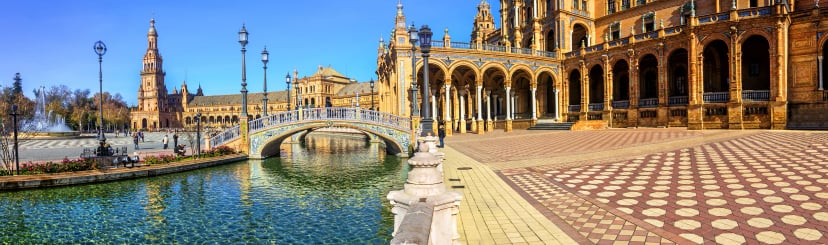
Plaza de España is another stop that belongs in the right hour, not merely the right itinerary. After lunch, it can become a wide, bright transfer with too little interpretive payoff for the energy it costs. It works better as an early, shaded park-adjacent moment, a separate María Luisa Park decision, or an evening visual stop when the group has recovered. Do not pair a full Alcázar morning, a Giralda climb, and Plaza de España after lunch with children in high heat. That is the do-not-stack-these-icons judgment. It reads well on paper and often fails in the body.
The Giralda is the cut that feels hardest because it is central, famous, and visible from half the day. Still, if it was not placed early and intentionally, it should not be rescued after lunch just to complete the Cathedral experience. The return down, the exit back into bright stone, and the walk to the hotel can flatten the very evening many travelers hoped to preserve. For first-timers, it is better to leave one famous height unseen than to make the whole day feel like endurance.
The cut-first rule is practical: after lunch, cut the stop that requires the most exposed transition, the most standing, or the least fresh attention. In many hot Seville plans, that is not the least important sight; it is the sight that would have deserved a better slot. This is an editorial distinction worth keeping. You are not downgrading the city. You are refusing to spend a premium day on the wrong hour.
Families and older travelers need a different reset clock
Families and older travelers should treat the hotel return as a fixed appointment, not a flexible preference. Mixed-age groups do not fail because one person is weak; they fail because the day is paced for the most enthusiastic adult and then judged by the least resilient traveler. In Seville heat, that is unfair to everyone. A private plan should choose the morning’s cultural core, name the hotel return before touring begins, and keep the post-lunch plan deliberately modest.
For children under seven, the strongest plan is one major morning story, a clear snack or lunch, and a real hotel break before the afternoon has a chance to fray. The Alcázar can work beautifully at this age because gardens, water, tiles, and palace rooms give the guide different ways to hold attention, but the visit should not be paired with a tower climb and a long Santa Cruz walk. Stroller reality matters here. Santa Cruz is navigable in many places, but narrow lanes, curb moments, uneven surfaces, and crowds can make the return leg slower than adults expect. If you are using a stroller, a Cathedral-edge or Arenal base can be calmer than a deep-lane hotel even if the deep-lane hotel looks more romantic.
For children eight to twelve, you can ask for more, but not for everything. This age band often does well with a focused Alcázar, a short Santa Cruz context walk, and an early evening plan if the hotel break is real. They are old enough to enjoy a story about palace life, trade, or city layers, yet young enough that heat can turn curiosity into resistance quickly. The afternoon should not become a second school day. If a flamenco introduction is planned, keep the afternoon empty enough that the show feels special rather than like the last class of the day.
Teenagers can handle more distance, but they need the plan to feel purposeful. Do not use teenage stamina as an excuse to run Alcázar, Cathedral, Giralda, Plaza de España, and Triana in one hot day. They may finish it, but finishing is not the same as caring. A better teenage version is one serious monument, one visually different evening, and a hotel interval that lets them reappear as participants rather than passengers. If they want shops, ceramics, or a river moment, save it for evening or a separate day rather than using it to fill the heat gap.
Older travelers need the same honesty with different details. The issue is often not total distance but repeated standing, small thresholds, bright plazas, and the psychological drag of “nearly there.” The body consequence in Seville is cumulative: a short walk from Patio de Banderas, a pause in Plaza del Triunfo, a few more minutes toward Arenal, a wait for a car near Puerta de Jerez, and suddenly a modest morning has become a high-load sequence. The hotel reset is what stops those small frictions from accumulating into a cancelled evening.
The mood consequence matters as much as the physical one. When families and older travelers return before anyone feels defeated, the evening remains voluntary. People can choose flamenco, a river-side dinner, or a short Arenal walk with curiosity. When the break comes too late, the evening becomes a negotiation: who is too tired, who feels guilty, who wants to push through, and who silently wishes the plan would end. For comfort-first travelers, that emotional preservation is not a soft benefit. It is the difference between a private trip and a forced march with better restaurant reservations.
Weather pivots should be made before pride enters the room. If the morning is hotter than expected, the guide should shorten Santa Cruz, remove the tower, and move the group toward the hotel. If the hotel is too far, the pivot should be a shaded lunch and early finish, not an extra indoor stop that still requires a hot transfer afterward. For families who need a fuller age-specific plan, Seville with older parents and the hotel reset gives a companion perspective, but the operating rule is the same: return before recovery becomes urgent.
How private pacing and chauffeur logistics should divide the job
Private pacing should decide what the day contains; chauffeur logistics should make the chosen movements cleaner. Confusing those two jobs is the expensive mistake. A chauffeur is valuable when the route includes a hotel outside the old core, an Arenal pickup after lunch, a Plaza de España evening transfer, a Triana dinner, or a multi-generational group that should not be asked to hunt for taxis at the hottest point of the day. A chauffeur is less valuable when the real problem is that the itinerary contains too much.
This is where premium spend has to be judged plainly. Paying more changes comfort when it buys better sequencing, a guide who can trim the route in real time, timed monument planning, a cleaner pickup point, and a hotel-aware return. Paying more does not earn its cost when it only protects an overstuffed afternoon from admitting it is overstuffed. A luxury vehicle waiting near the old town can reduce the pain of a bad plan; it cannot turn a bad plan into a good one.
The best private design often separates the day into two guided chapters rather than one heroic block. The morning guide handles Alcázar, Cathedral context, or Santa Cruz while attention is high. The hotel break is respected as part of the architecture of the day. The evening chapter may be a short context walk to flamenco, a river-side transfer, or dinner geography that avoids backtracking. That is more sophisticated than simply adding a driver for the whole day because it acknowledges that Seville’s problem in high heat is not only distance. It is the timing of exposure.
For travelers who do want vehicle support, chauffeured Seville private touring is most persuasive when the chauffeur is used to protect the edges: hotel return, evening pickup, family movement, and cross-river decisions. It is less persuasive as a moving lounge between monuments. Much of Seville’s old-town value still comes from walking with someone who can read shade, scale, and context. The car should solve the transitions that cars solve well, not replace the close-up city where walking still wins.
The cleanest handoff sounds almost boring, which is why it works. Morning: meet early, tour the agreed monument core, and end near the hotel before the group is spent. Midday: no touring, no errand disguised as a stroll, no “quick” shopping stop. Evening: restart with one purpose. That purpose may be flamenco, a dinner route, an Arenal river walk, or Plaza de España in a better hour. If a planner cannot say what the evening is for, the afternoon should not be filled by default.
Orange Donut Tours is most useful when the brief is honest about hotel geography, group stamina, and the evening that matters. Share the hotel zone, ages, mobility concerns, fixed tickets, dinner reservations, and whether you prefer a private guide, a driver, or both. The answer may be a shorter morning than you expected and a more satisfying evening than a maximal itinerary would have allowed. To have that day shaped around your actual hotel and heat tolerance, Inquire now.
Where the evening belongs after the hotel break
After a proper hotel break, the evening should be one controlled re-entry, not a second sightseeing race. The best choice depends on where you are staying and what the morning did to the group. A Santa Cruz hotel supports an easy flamenco or dinner arc nearby. An Arenal hotel supports river time, a cleaner walk toward the Cathedral edge, or a pickup to Plaza de España if the group has genuinely recovered. A Triana hotel supports staying west of the river for dinner or ceramics context rather than crossing back just because the old town feels obligatory.
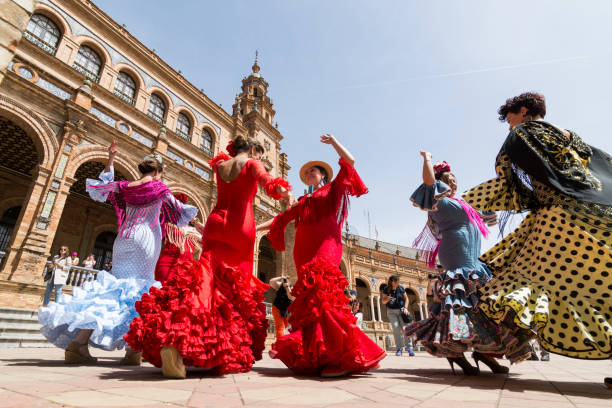
Flamenco is often the smartest evening anchor because it gives the day a cultural finish without demanding another monument. The decision is not simply which show is “best.” It is which venue fits the return path after the break. The Museo del Baile Flamenco (https://museodelbaileflamenco.com/index.php/el-museo/) can make sense when the hotel and evening are centered around Santa Cruz or the old town, especially if you want a compact cultural frame before the performance. Casa de la Memoria can make sense when the evening is closer to the central shopping and old-town edge. Confirm current show details directly before fixing dinner around either one.
The show should not be treated as an energy patch. If the morning was too much and the hotel break was too short, even an excellent performance can feel like another appointment. If the morning was trimmed properly, flamenco can become the reason the day feels complete without needing an afternoon monument. That is the subtle win of the hotel-reset strategy: the evening is not asked to compensate for what the afternoon cut. It is allowed to be the day’s second focus.
Food-and-wine travelers should be especially careful with late lunch. A long lunch is one of Seville’s pleasures, but in this planning problem it can steal the true reset. If lunch is the main culinary event, the afternoon should probably be empty and the evening lighter. If dinner is the main event, lunch should be close to the hotel or light enough to support a real break. The worst version is a major morning, a long lunch, a fake reset, and then a serious dinner. That can look indulgent in an itinerary and feel strangely joyless in the body.
A river evening works when it is chosen for air and simplicity, not used as a consolation prize for missed sights. From Arenal, a short Guadalquivir-side movement can be gentle. From deep Santa Cruz, it may require more street navigation than the group wants after dinner. From Triana, it may be the natural evening rather than a detour. The point is not to declare one neighborhood the universal winner. The point is to make the evening local to the hotel rather than dragging the group across Seville to satisfy a map.
The practical reset window: what the day actually looks like
A workable high-heat Seville day has fewer moving parts than travelers expect. The point is not to under-tour; it is to put the city’s best attention hours where they pay off. A clean version begins with an early guide meet near the hotel or monument entrance, uses the first part of the day for the Alcázar or Cathedral logic, and reaches the hotel before the afternoon becomes an argument. The break then occupies enough time to change clothes, cool down, stop speaking in logistics, and restart with one evening intention.
The exact clock varies by season, hotel, tickets, and traveler pace, so avoid fake precision. What matters is the order of operations. Monument first. Hotel return before the exposed second movement. Lunch either before the hotel if it is very close and calm, or after the break if the group prefers a later meal. Afternoon monument cut unless it has a compelling reason and a gentle route. Evening rebuilt around one anchor.
For a couple, this might mean Alcázar in the morning, hotel break near Santa Cruz, and a flamenco-and-dinner evening with a short walk rather than a car-heavy night. For a family, it might mean Alcázar plus a shaded story walk, hotel pool time, and a simple dinner without another cultural obligation. For older parents, it might mean a guided monument morning, a full hotel return, and a driver-assisted evening if dinner is not close. For a celebration group, it might mean the morning is deliberately shorter so the evening feels like the event, not the aftermath.
The mistake to avoid is treating the hotel break as a blank space that can be shortened if the morning runs long. In high heat, the break is not leftover time; it is the day’s central structural support. If it shrinks too far, the evening inherits the cost. If it is protected, every later choice becomes calmer: where to dine, whether to attend a show, whether a driver is useful, whether a river moment belongs, and whether tomorrow needs to start later.
Travelers building a multi-day stay can use this strategy more than once, but not identically every day. A monument-heavy day needs the strictest reset. A shopping or ceramics day may need an easier hotel return but less formal silence. A day trip to Córdoba, Jerez, or Cádiz may need an early finish rather than an old-town evening. The reset is not a universal afternoon nap instruction. It is a routing tool. Use it when the morning’s heat load, walking load, and evening ambition all point to the same conclusion.
How to brief a private guide before the day starts
The best brief gives the guide permission to protect the day from your optimistic self. Before touring starts, state the hotel location, the evening commitment, and the stop you are willing to lose. That last piece is important. If nobody names the cut in advance, the group often cuts the break instead, because the break has no ticket and no famous façade. In Seville high heat, that is almost always the wrong sacrifice.
A useful brief might say: “We care most about the Alcázar and understanding the Cathedral context. We are staying near Arenal, have dinner later, and want to be back at the hotel before the afternoon feels heavy. If something has to go, cut the Giralda climb or the extra Santa Cruz loop.” That gives the guide a hierarchy. It also prevents the common drift where the route keeps expanding because everyone is polite and nobody wants to be the first person to say they are hot.
For families, the brief should include ages, stroller use, snack needs, and whether a pool or quiet room is part of the reset. For older travelers, include walking speed, stair tolerance, and whether standing still is harder than walking slowly. For celebration travelers, include the evening’s emotional priority. A birthday dinner, anniversary flamenco night, or family gathering should shape the morning. The city does not reward treating the evening as an afterthought.
If you are not sure whether your hotel makes the reset easy, choose a tailored plan rather than buying isolated components. The question is not “Can we see the Alcázar?” but “Where does the day turn after the Alcázar?” That is a route-design question, a hotel-geography question, and a traveler-fit question at once. For a fully customized answer around your hotel, tickets, group profile, and evening plans, tailor-made Seville planning is the most natural next step.
The final verdict
The best Seville hotel-reset strategy in high heat is to place the break immediately after the morning monument core, especially after the Alcázar shade exit, and to protect it from late lunch drift, nearby-monument temptation, and chauffeur overconfidence. Santa Cruz and the Cathedral edge win when the hotel return is genuinely short. Arenal wins when you need cleaner logistics and an easier evening re-entry. Triana wins only when the evening belongs there or a vehicle makes the return painless. Farther-out hotels need stricter cutting because comfort inside the room does not matter if reaching it consumes the fragile part of the day.
The afternoon monument is not the mark of a better traveler. In Seville heat, the better traveler is the one who can identify when the city has already given enough and when the evening deserves to remain intact. Cut the extra palace, save the tower for a better hour, move Plaza de España out of the heat, and let the hotel do the work it is meant to do. The reward is not simply comfort. It is a Seville day that still has appetite, attention, and grace after sunset.
FAQ
Where does the midday hotel break belong in Seville high heat?
It belongs immediately after the morning monument core, especially after the Alcázar or a Cathedral-and-Alcázar sequence. Do not delay it for a long lunch, a tower climb, or one more nearby sight.
Is Santa Cruz or Arenal better for a hotel reset?
Santa Cruz is better when the hotel is genuinely close to the Alcázar, Cathedral, or Patio de Banderas. Arenal is better when you want cleaner pickups, easier evening logistics, and less deep-lane navigation.
Is Triana a good base for a midday reset?
Triana is a better evening base than midday-reset base for most monument mornings. The river crossing can add an exposed transition at the very hour when the reset should be immediate.
Can a chauffeur replace the hotel break?
No. A chauffeur can improve pickups, transfers, and evening movement, but it cannot replace the physical and mental recovery of returning to the hotel during severe heat.
What should we cut after lunch in Seville?
Cut the afternoon monument that requires exposed movement, standing, or fresh concentration. In many plans that means Casa de Pilatos, the Giralda climb, or Plaza de España after a full Alcázar morning.
Should families do the Alcázar and Cathedral in one hot day?
Families can do both only if the day is tightly paced, the hotel is close, and the afternoon is protected. With younger children, it is usually better to prioritize one major monument and save the rest for another slot.
How long should the hotel reset be?
It should be long enough to shower, cool down, change clothes, and stop managing logistics. If it is only a drink or a quick lobby pause, it is not doing the job this strategy requires.
What if our hotel is too far from the old town?
If the hotel return takes too much effort, do not force the reset as a token gesture. Use a shaded lunch, an early finish, or chauffeur-supported return, and cut the afternoon monument rather than compressing recovery.
If you’re interested in any private tours of Seville, please reach out to us.





 So if you are looking for the absolute best in Seville & surroundings with authentic local fully-licensed native guides whose English you can actually understand and with an exclusive and amazingly fun itinerary













