From Triana Kiln to Palace Wall: A Seville Ceramic Sequence Through Workshop, Museum and Installed Tile

Updated
Seville’s ceramic story is easiest to understand as a west-to-east movement. Begin on the Triana side of the Guadalquivir, where clay, glaze and firing still belong to a maker’s vocabulary. Continue to Centro Cerámica Triana, where preserved kilns, moulds and tools place that vocabulary inside the remains of an industrial workplace. Then cross the river and walk into the historic centre to Casa de Pilatos, where tile stops behaving like an individual object and becomes architecture: a continuous skin that controls scale, movement, status and light.
The order matters more than the number of stops. A palace-first visit gives you colour and pattern without enough evidence to ask how they were made. A museum-first visit can teach terminology, yet leave production feeling abstract. A workshop-first sequence reverses that problem. Once you have seen how clay is formed, how glaze is kept within or across boundaries, how firing changes colour and surface, and how repetition is organised, the museum becomes a test of technique rather than an introduction. Casa de Pilatos then becomes the place where those technical decisions meet patronage, construction, wear and repair.
Read the route as three connected sites
- Workshop anchor in Triana: establish the material chain from clay body to finished surface, and ask a maker which variables can be controlled, tolerated or only discovered after firing.
- Centro Cerámica Triana: compare contemporary explanation with historical evidence inside a former pottery factory built over the remains of the Santa Ana factory.
- Casa de Pilatos: read extensive installed tile at architectural scale, paying attention to room hierarchy, junctions, missing material, repairs and the relationship between the ceramic surface and its supporting walls.
Geographically, the first two anchors sit in Triana on the west bank. A documented contemporary workshop, Cerámica Sevillana, lists its school at Calle Pureza 72, close to Triana Bridge; Centro Cerámica Triana is at Calle Callao 16. Casa de Pilatos is at Plaza de Pilatos 1 in the Santa Catalina-Santiago sector of the old city. The crossing over Puente de Isabel II is therefore not incidental. It separates the production district from the palatial setting in which elite commissions were assembled and displayed.
For wider neighbourhood context before committing most of a morning to craft, see why Triana deserves more than an evening walk. This ceramic route is narrower in subject and stricter in sequence: it is not a general neighbourhood circuit and it should not dissolve into browsing every shopfront.
Fix the maker appointment first
The workshop is the least replaceable part of the day because access cannot be assumed. Centro Cerámica Triana and Casa de Pilatos are public-facing institutions with published visitor information. A working studio has production, teaching and commercial obligations that may not align with a traveller’s preferred hour. Build the day around a confirmed appointment, then fit the museum and palace around it. If a specialist conversation is unavailable, change the route rather than pretending that an unannounced retail visit offers the same evidence.
One producer’s own page provides a useful, verifiable example of the vocabulary a current Triana workshop may cover. Cerámica Sevillana’s workshop page places its school at Calle Pureza 72 and describes hand-building by pinch, coil and slab; decoration with oxides, slips and coloured glazes; glazing; and Sevillian cuerda seca. It also publishes regular two-hour session formats. Those details establish that the techniques are actively taught there. They do not establish that a private technical appointment, kiln discussion or commission consultation will be available on any particular date. That must be requested and confirmed directly.
What the first conversation should establish
A productive workshop stop is not measured by how many pieces you paint. For a design buyer or architecture traveller, the central task is to map the stages between an idea and an installed surface. Ask to see process samples where possible: unfired clay, biscuit-fired bodies, glaze tests, failed firings, edge pieces, moulds, transfer or tracing material, and finished examples. Not every studio will keep or show all of these. The value lies in identifying which stages are visible and which remain outside the appointment.
- Clay body: Is the body prepared in the workshop or supplied ready to use? Is it selected for wall tile, tableware or sculptural work? How much shrinkage is expected between forming and the final firing?
- Forming: Is the piece hand-built, pressed in a mould, rolled as a slab or produced through another repeatable method? Where does hand variation enter a series?
- Drying: How slowly must a tile dry to reduce warping? Are corners, relief and thickness common points of stress?
- Decoration: Are colour fields separated by a resist line, raised ridge or painted contour? Does the design require one-off drawing, a reusable guide or a mould?
- Glaze: Which colours are reliable, which are sensitive to thickness, and which react differently at edges or where glazes meet?
- Firing: How many firings are involved? Which defects can be corrected, and which require the piece to be remade?
- Series control: How are dimensions, colour and motif alignment kept coherent across dozens or hundreds of units without erasing the evidence of handwork?
These questions are more useful than asking whether an object is “traditional.” Tradition is not a single finish. It may refer to a forming method, a decorative technique, a motif source, a kiln practice, a workshop lineage or simply the fact that an object was made in Triana. Ask the maker to name the specific continuity being claimed. That distinction becomes essential later, because the museum presents several historical techniques and Casa de Pilatos combines tile with architecture from more than one phase.
Clay, glaze and firing should remain separate in your notes
Visitors often compress ceramic production into one decorative act: a design is painted, then “baked.” That shorthand makes it difficult to interpret either failure or quality. Clay determines the body’s porosity, shrinkage and mechanical behaviour. Drying establishes whether the piece reaches the kiln without cracking or twisting. Firing changes the body and, depending on the process, may precede or follow decoration. Glaze is a glass-forming surface system whose colour, opacity and flow depend on materials, thickness and heat. A clean line in a finished tile may result from a resist, a raised boundary, controlled brushwork or a combination of methods.
The maker stop should therefore end with a simple verbal chain that everyone in the group can repeat: body, forming, drying, first firing if used, decoration, glazing, final firing, sorting and installation. The exact sequence varies by technique, and that variation is the point. Once the chain is clear, you can look at museum displays without treating every tile as the same process in a different pattern.
Use the appointment to improve commissioning judgement
For a potential commission, ask about the difference between a sample and a production run. A single beautiful tile proves that a design can exist. It does not prove that a workshop can hold module size, colour range, surface character and motif alignment across an architectural quantity. Ask how many test pieces are normally required, what degree of colour variation is considered acceptable, whether corners and borders need separate designs, and how replacements would be produced after installation.
Also ask what information the workshop needs from the architect or installer. Wall dimensions alone are rarely enough. Openings, corners, skirting transitions, electrical plates, taps, niches, changes of plane and the intended joint width can alter the module. The day’s later palace stop will make this clear: an installed ensemble is not a stack of independent squares. It is a negotiated system of fields, borders, interruptions and endings.
The workshop’s contact and directions page states that Calle Pureza 72 is a few steps from Triana Bridge and describes the walk from the central side as about five minutes after crossing. Treat that as location guidance, not as a promise of access or an exact route time for every traveller. Confirm the appointment, meeting point, language, group size, photography policy and whether a technical discussion is possible before fixing the rest of the day.
Let Centro Cerámica Triana test what you just learned
After the maker encounter, move to Centro Cerámica Triana. The municipal tourism page describes the centre as a former pottery factory built over the remains of the Santa Ana factory, one of Triana’s last active twentieth-century workshops. It records preserved kilns, moulds and tools and says that the displays explain artisanal production and the role of ceramics in Seville’s architecture, art and daily life. The same page publishes current visitor information while advising travellers to check opening hours. See Seville’s official page for Centro Cerámica Triana when confirming the date.
The centre works best here as evidence, not atmosphere. You arrive with a production chain already in mind and can ask what the surviving factory adds. A kiln is no longer merely a picturesque brick volume. It is the fixed infrastructure around which fuel, heat, loading, cooling, labour and production capacity were organised. A mould is not just a craft relic. It records the need for repeatable relief or shape. Tools and old photographs can reveal how many hands and stages sat behind an apparently seamless decorative surface.
Read the kiln as a production constraint
A workshop explanation may emphasise what a maker intends. A historical kiln introduces what the process permits. Chamber size affects batch size. Loading affects how heat circulates. Position within a firing can influence results. Cooling occupies time during which the kiln cannot simply be reopened and restarted. Even without reconstructing every technical detail, the structure makes one point unavoidable: firing is a collective event for a batch, not an instant finish applied to one object.
That matters for architectural commissions. A wall-sized scheme requires sequencing, sorting and tolerance. Some pieces will vary. Some may fail. Replacements may be fired later under conditions that do not reproduce the first batch exactly. The museum’s surviving industrial context helps explain why variation is not automatically carelessness and why a buyer should define acceptable variation before production rather than after installation.
Look for evidence of workflow rather than hunting only for masterpieces. Where would raw material have entered? Where could pieces dry without being moved too early? How were moulds stored? How close were decorating areas to kilns? Which activities demanded light, ventilation, water or heat? The building may not preserve every answer, and museum interpretation should lead. The exercise is to see production as spatial organisation.
Keep the principal techniques distinct
A scholarly study of ceramics applied to architecture in Seville outlines a broad technical sequence: alicatado and cuerda seca, followed by the more productive cuenca or arista method, and then the arrival and expansion of flat painted tile associated with Italian influence around the turn of the sixteenth century. The article is available as a conservation study on ceramic material applied to architecture. Its purpose is conservation methodology rather than a complete stylistic catalogue, so use it to keep material categories clear rather than to force every object into a quick label.
- Alicatado: small separately cut pieces are assembled into geometric compositions. The pattern depends on the geometry and fit of individual components as much as on surface colour.
- Cuerda seca: a separating line prevents differently coloured glaze fields from running together. The line is part of the process, not merely an outline added for graphic effect.
- Cuenca or arista: relief boundaries produced through a mould help separate glaze areas and make repeated production more efficient.
- Flat painted tile: imagery or ornament is painted on a flat prepared surface, allowing a different relationship between drawing, brushwork and the square module.
Do not treat these as a ladder from crude to refined. Each technique solves a different production and visual problem. Alicatado can produce extraordinary geometric precision but requires cutting and assembly. Cuerda seca offers strongly separated colour fields. Cuenca or arista supports repeatability through relief. Flat painting expands pictorial possibilities but places greater weight on drawing and painterly execution. The museum can show where techniques coexist, persist or return rather than replacing one another cleanly.
Use museum evidence to revise the workshop questions
By the end of the museum visit, return to the notes from the maker. Which questions were too general? Perhaps “How is this painted?” should become “Is the boundary created by resist, relief or brush control?” Perhaps “Is every tile handmade?” should become “Which parts of the process are repeated through moulds or guides, and where does the hand remain visible?” Perhaps “Can the colour be matched?” should become “Can the colour be held within a defined range across firings, and how will later replacements be documented?”
This revision is one of the route’s most valuable outcomes. The workshop supplies present-tense explanation. The museum adds historical infrastructure and a larger technical vocabulary. Neither alone proves how a particular palace wall was produced, but together they prevent the palace from being reduced to surface decoration.
At this point the benefit of coordination becomes concrete. A confirmed maker appointment, a museum visit shaped around the same technical questions, and a specialist reading at Casa de Pilatos can turn three attractive stops into one traceable argument. For a private sequence built around that material logic, Inquire now.
The river crossing is a change of evidence
Leaving Triana for Casa de Pilatos is not simply a transfer between attractions. On the west bank, the dominant evidence is production: workshop practice, factory remains, tools and kilns. On the east side, the evidence becomes architectural and social: a palatial complex, elite patronage, room hierarchy and the long life of ceramic surfaces attached to masonry. Crossing the Guadalquivir makes the change legible in the city itself.
The practical cost is that the day has two different clocks. The workshop runs on appointment time. The museum runs on published opening and last-entry conditions. The palace runs on its own admission arrangements. Between them sits a real urban walk, with a river crossing and movement east through the historic centre. Do not schedule the three entries as if they shared one doorway.
A planning sequence that preserves attention
The following blocks are editorial allowances, not official durations or observed transfer times. Adjust them for the confirmed appointment, the group’s mobility, current opening information and the depth of discussion.
- Maker appointment: allow enough time for a process conversation rather than a rapid demonstration. Ninety minutes is a practical minimum for a serious technical visit; a hands-on session may require substantially longer and may create drying or collection issues that continue beyond the day.
- Local Triana movement: leave a buffer between the workshop and Centro Cerámica Triana. The sequence should survive a conversation that runs slightly long, a short backtrack within the neighbourhood and the simple fact that a group does not leave a working studio instantly.
- Centro Cerámica Triana: protect at least an hour for kiln context and displays. A specialist group may need longer if it is comparing techniques or discussing production scale.
- Crossing and pause: treat the bridge and old-city walk as a separate block. A light pause can help, but avoid a rigid midday reservation that forces the museum to be cut just as the evidence becomes useful.
- Casa de Pilatos: arrive with sufficient time to read the tile ensembles slowly. This is the interpretive climax, not a final photo stop squeezed before closing.
The maker appointment should determine whether the route begins early or later. If it is available only in the afternoon, consider reversing the public sites only as a fallback, while acknowledging the interpretive loss. A museum-plus-palace morning followed by a maker can still be valuable, but the conversation becomes retrospective: you ask the maker to explain things already seen rather than carrying production knowledge into the historic sites.
For a group with limited walking tolerance, a short vehicle transfer after the museum can reduce fatigue, but it does not remove the need for a timing buffer. Central access, drop-off points and traffic conditions vary. Transport is useful here only when it protects the palace reading; it should not become the organising theme of a route whose subject is ceramic production and installation.
At Casa de Pilatos, tile becomes architecture
Casa de Pilatos is the correct final anchor because its ceramic ensembles are inseparable from a complex palatial setting. The official Andalusian heritage designation dates the origins of the complex to 1483, records construction continuing through the sixteenth century, and notes restoration from the nineteenth century after relative eighteenth-century neglect. It describes massive use of azulejo within a building where Mudéjar inheritances and Renaissance forms coexist. It also attributes most of the exceptional tile collection to the workshops of the brothers Diego and Juan Polido, with the Salón del Pretorio tiles assigned to Diego Rodríguez and Juan Moreno. The source is the Andalusian heritage designation for Casa de Pilatos.
Those facts change how the palace should be read. The tile is not an anonymous “Moorish” backdrop, nor does one date explain the entire visual field. The building developed through construction and restoration, and the designation itself describes successive and overlapping interventions by different authors. The responsible visitor therefore looks for relationships and phases without claiming to date every patch by eye.
First pass: see the height and continuity of the tiled field
Before isolating a favourite motif, stand far enough back to see how high the tile rises, where it stops and how it runs around the room. A zócalo protects lower walls, but in a palace it also establishes a visual datum: a horizontal band against which columns, arches, doorways and plasterwork are read. When the tiled field is extensive, it changes the perceived proportions of the space. The room is not decorated after the fact; its lower zone is materially and optically organised by ceramic.
Watch what happens at thresholds. Does the pattern continue through a doorway, break at the jamb or change to signal a new room? Does a border turn the corner cleanly? Are half modules, cut tiles or specially designed edge pieces used where the field meets an opening? These are installation questions. They reveal planning that is largely invisible when a single tile is viewed in a shop or display case.
Second pass: distinguish module, repeat and composition
A repeated tile can create a field larger than any one object. Identify the basic module, then follow how rotation, reflection or alternating colour produces a more complex pattern. Some schemes depend on a single square repeated consistently. Others use borders, corner units or combinations of pieces. The visual richness may come less from the complexity of each tile than from the intelligence of assembly.
This is where the workshop and museum sequence pays off. A mould or guide makes repetition possible, but installation determines whether the pattern resolves. A small dimensional error repeated over many units can become a major alignment problem. Joint width can either regularise the field or expose variation. A border that appears simple may require separate corner solutions. The palace allows a buyer to see why commission drawings need elevations, not just individual motif sketches.
Third pass: compare technique with viewing distance
Move between close and middle distance. At close range, look for relief boundaries, painted contours, glaze pooling, pinholes, wear, edge chipping and differences in surface reflection. At middle distance, ask whether those variations disappear into rhythm or remain part of the ensemble’s character. An architectural ceramic surface is judged at several distances at once. A commission that looks perfect on a sample board may become visually noisy across a room; conversely, small hand variations that seem pronounced in the hand may give life to a large field.
Do not touch or test the surface. The task is visual comparison. Light can exaggerate raised ridges and glaze gloss, while shaded passages may flatten them. Photographing one tile straight on can also mislead by removing the oblique reflections through which relief is normally seen in the room.
Fourth pass: read patronage through abundance and placement
At Casa de Pilatos, ceramic abundance is evidence of more than local taste. It is part of an elite programme in which imported Renaissance elements, Mudéjar craft traditions, sculpture, gardens, plasterwork and carpentry coexist. The heritage designation’s workshop attributions give the tiled ensembles named makers rather than treating them as generic regional texture. The scale of the commission implies planning, capital, labour and control across a large number of pieces.
Ask where the most elaborate schemes are placed. Do they frame ceremonial circulation, principal rooms or points of transition? Are quieter patterns used in secondary areas? Does the ceramic field compete with or support other ornament? Patronage is visible not only in the cost of material but in the decision to coordinate several crafts into a coherent architectural sequence.
A palace-first visitor may describe the tile as colourful. A production-first visitor can ask a more precise question: what system of modules, boundaries, firings, sorting and installation made this degree of continuity possible, and what did the patron need to specify or approve? The answer may not survive in full, but the question is historically and commercially sharper.
Fifth pass: look for the building behind the tile
Installed ceramic is attached to a support. Look at corners, wall bases, zones near openings and areas where the plane changes. Variations in alignment, cracks, losses or differently finished joints may indicate movement, moisture, past intervention or simply the long history of maintenance. None should be diagnosed casually. The point is to stop viewing the glazed face as independent from the wall.
The heritage designation notes restoration beginning in the nineteenth century but does not provide a tile-by-tile repair map for a visitor. Avoid declaring a particular piece original or replaced unless site interpretation or conservation documentation supports it. Instead, use visible irregularities to ask which parts of an ensemble have been maintained, reinstalled or reintegrated and what evidence would be needed to distinguish those histories responsibly.
Travellers who want to compare Casa de Pilatos with other aristocratic interiors can place this route beside a broader palace day beyond the Alcázar. Do not combine both full sequences on the same day. The ceramic route needs the workshop and museum to remain intellectually present when you reach the palace.
Repair history changes the meaning of “original”
The conservation study cited earlier makes a crucial argument: the deterioration of ceramic applied to architecture is directly dependent on the pathology of the building to which it is attached. Preventive conservation of tile may therefore require architectural intervention. This reframes repair. A chipped glaze is not always an isolated surface problem, and replacing a damaged square without addressing moisture, salts, failing mortar or wall movement may treat the symptom rather than the cause.
The same study discusses cleaning tests, removal of damaging deposits or mortars, fixing lifted glaze, reintegration of losses, reproduction of pieces, documentation, compatibility and discernibility. Its case study concerns a sixteenth-century tiled dado in the Church of Santa Ana in Triana, not Casa de Pilatos. That distinction matters. The paper supplies a professional lens for reading installed ceramic; it is not evidence that Casa de Pilatos underwent the identical treatment or that a particular visible patch there has a specific conservation history.
What can be observed without overclaiming
- Continuity: Does a pattern remain coherent across a visibly different piece, suggesting a replacement or later intervention designed to restore legibility?
- Discernibility: Can newer work be recognised on close inspection without disrupting the ensemble at normal viewing distance?
- Joint behaviour: Are joints unusually wide, narrow, recessed or visually different in one area? This may prompt a question about remounting or mortar, not a conclusion.
- Surface loss: Is the glaze missing while the ceramic body remains? Conservation may preserve original support rather than replace the whole piece.
- Building interface: Do cracks or losses correspond with a corner, opening, rising damp zone or change in wall plane? The relationship may be more informative than the defect alone.
For collectors, this is a useful correction to the romance of patina. Age does not automatically make every condition desirable, and visual uniformity does not automatically prove authenticity. A responsible intervention may preserve fragments, introduce compatible new material, document replacements and keep additions distinguishable. Conversely, an immaculate surface can conceal extensive renewal. The appropriate question is not “Has this ever been repaired?” but “What was preserved, what was added, why was intervention necessary, and is the work documented?”
Installed tile is a maintenance commitment
A new architectural commission begins a future conservation history. Substrate preparation, waterproofing strategy, mortar compatibility, joint design, movement accommodation, cleaning methods and access to spare pieces will affect how the work ages. A workshop can control ceramic production; it cannot alone control the wall, installer, plumbing or building movement. Casa de Pilatos makes this interdependence visible at historic scale.
This is also why a buyer should resist selecting solely by surface image. Ask whether the proposed tile is appropriate for the intended interior or exterior conditions. Ask who is responsible for installation drawings, setting out and substrate acceptance. Ask how many spare units should be retained, how they will be labelled, and whether glaze and body records will be kept for later matching. A commission is not complete when the kiln cools. It is complete only when the ceramic system is installed, documented and maintainable.
Convert the sequence into a commissioning brief
By the final rooms of Casa de Pilatos, the three stops should have produced a more disciplined set of buying questions. The route is not designed as a souvenir hunt. It may lead to a commission, but its primary achievement is to separate visual preference from production feasibility and installation responsibility.
Questions about authorship and process
- Which stages are carried out in the named workshop, and which are supplied or subcontracted?
- Who designs the motif, prepares the mould or guide, decorates the surface, manages firing and approves the final sorting?
- Which features will vary by hand, and which dimensions must remain within a specified tolerance?
- Will the workshop provide process samples and a signed-off control sample before the full run?
- How will rejected pieces, seconds and later remakes be distinguished from the approved batch?
Questions about architectural resolution
- What is the exact module including the intended joint, and how does it fit the wall elevation?
- Which borders, corners, returns, skirtings, caps or termination pieces need separate designs?
- How will the pattern resolve around doors, sockets, taps, niches and changes of plane?
- Who produces the setting-out drawing, and who has authority to adjust it on site?
- What degree of colour, relief and dimensional variation is acceptable across the installed field?
Questions about firing, replacement and documentation
- How many firings are expected, and what lead time includes drying, firing, sorting and remakes?
- Can a later batch reasonably match the original, or should a larger reserve be made at the outset?
- Which glaze colours or effects are most sensitive to kiln position, thickness or batch change?
- What records will identify clay body, glaze references, firing programme, batch and installation location?
- What cleaning products or methods should be avoided, and who should assess future cracks or glaze loss?
These questions do not guarantee a flawless project. Ceramics retain material variability, and historic examples should not be used to demand artificial sameness from contemporary hand production. They do, however, place variation inside an agreed framework. The palace teaches that repetition can remain lively; the workshop teaches where variation enters; the museum teaches that production capacity and tools shape the result.
For a route focused more directly on purchasing, shipping and a lighter monument day, use the dedicated Triana ceramics planning guide. Keep the present sequence for travellers whose priority is to understand how workshop decisions survive, change or become difficult to read once tile is installed in architecture.
Optional branches that do not break the argument
The full sequence is strongest when all three anchors fit comfortably. Optional layers should deepen one stage, not add unrelated landmarks.
Technical branch: extend the maker stage
Choose this when a commission is plausible and the workshop confirms a suitable format. Replace a generic hands-on activity with a focused review of samples, failures, borders, corners and production tolerances. Ask in advance whether the maker can discuss architectural quantities and installation interfaces. A teaching session may be excellent for understanding hand pressure, glaze application or resist lines, but it should not be presented as a commission consultation unless the workshop has agreed to that purpose.
Remember that a piece made during the visit may need drying, firing, later collection or shipping. Do not promise same-day completion. If taking an object home is central, obtain the workshop’s current policy and timing directly.
Historical branch: spend longer inside the museum
Choose this when the group cares more about production history than acquisition. Slow down around kiln architecture, moulds, tools and photographs. Compare what the factory context makes visible with what the contemporary workshop could explain. This branch works particularly well for architects, conservators and design students because it expands the discussion from individual authorship to labour organisation and repeat production.
Architectural branch: deepen Casa de Pilatos
Choose this when the group can sustain a longer final visit. Read the tiled zones in relation to columns, plaster, ceilings, gardens and changing room functions rather than isolating ceramics. The objective is not to count motifs. It is to understand why a patron selected tile for particular spaces and how a repeated modular surface negotiates a building full of irregular edges and layered interventions.
Shorter branch when one anchor fails
If no maker appointment can be verified, do not substitute an unannounced shop call and claim the same sequence. Use Centro Cerámica Triana followed by Casa de Pilatos, while stating that the route now moves from historical production evidence to installed architecture. Prepare the workshop questions anyway; they will help interrogate the museum and may guide a later appointment.
If palace timing is unavailable, keep the workshop and museum together and end with a structured review of how the observed techniques would change an architectural commission. That shorter route explains making but cannot demonstrate patronage, scale or repair in the same way. Save Casa de Pilatos for another day rather than rushing its tile ensembles at the edge of closing.
If the group has only one serious ceramic stop, choose Centro Cerámica Triana for broad historical production context or Casa de Pilatos for installed architectural impact. A workshop alone is preferable only when access is confirmed and the user’s task is specifically process or commissioning. The full information gain comes from comparison, so one-stop versions should be presented honestly as partial.
Use a stopping rule before the day becomes decorative overload
Stop after Casa de Pilatos when the group can answer five questions in its own words:
- Which stage of production creates the body, the boundary between colours and the final glazed surface?
- What do kilns, moulds and tools reveal about batch production and repeatability in Triana?
- How does an individual tile become a larger architectural composition through module, border and installation?
- Why can damage to an installed tile originate in the wall, mortar, moisture or building movement rather than the glazed face alone?
- Which specifications and records would make a contemporary commission easier to approve, install and maintain?
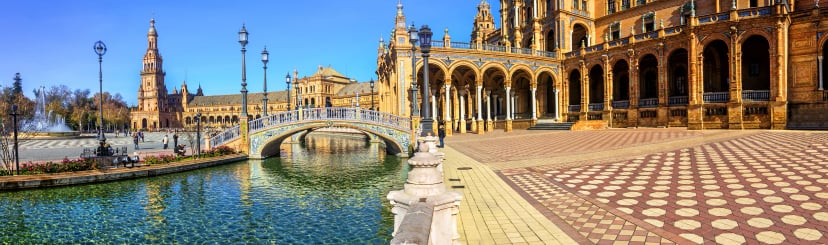
Once those answers are clear, another tiled monument may add beauty but not necessarily insight. Avoid attaching the Real Alcázar, Plaza de España and multiple retail calls merely because they contain ceramics. They introduce different scales, dates, visitor conditions and interpretive problems. On a separate day they are worthwhile; appended here they can blur the production-to-installation chain and reduce Casa de Pilatos to one more patterned backdrop.
A specialist-led private day is justified when it secures the maker appointment, keeps technical terminology consistent across the three sites, and manages the public-site timing so the palace is not sacrificed to an overlong first stop. The service value is coordination and interpretation, not ceremonial transport or repeated sales language. Relevant options sit within Orange Donut Tours’ private Seville touring.
Decision recap: keep the sequence intact
Build the day from the least flexible event outward. Confirm a Triana maker appointment and its purpose. Use it to establish clay body, forming, decoration, glaze, firing, sorting and installation as separate decisions. Follow with Centro Cerámica Triana so preserved kilns, moulds, tools and factory remains can test the maker’s explanation against historical production evidence. Then cross the river and finish at Casa de Pilatos, where extensive tile ensembles reveal what happens when modular ceramics serve a patron, a room and a building over centuries.
Protect the transitions. The workshop may run long; the museum has public hours; the palace deserves unhurried attention. Build in a river-crossing buffer and avoid a rigid meal or extra monument that forces the final anchor into a sprint. Use a vehicle only when mobility or heat makes it materially helpful.
At the palace, do not chase a single “original” surface. Read scale, pattern, thresholds, junctions and signs of maintenance. The documented restoration history of Casa de Pilatos and the broader conservation principle that architectural ceramics depend on their host building both argue for humility: visible difference is a prompt for evidence, not permission to invent a repair narrative.
The route succeeds when a beautiful tile is no longer just an object to admire or buy. It becomes the visible end of a chain: earth selected for a body, labour organised around forming and drying, colour controlled through glaze and boundaries, heat managed in a kiln, batches sorted, modules set out, walls prepared, patterns resolved, damage monitored and repairs documented. That chain is what connects a Triana workshop to a palace wall.
If you’re interested in any private tours of Seville, please reach out to us.





 So if you are looking for the absolute best in Seville & surroundings with authentic local fully-licensed native guides whose English you can actually understand and with an exclusive and amazingly fun itinerary













