Marylebone for a London Stay: Quiet Streets, Wallace Collection and West End Evenings

Updated
Marylebone is a strong London base when you want a quieter stay that still keeps culture, shopping, and West End evenings within reach. It works in real city conditions because Marylebone High Street to the Wallace Collection is a genuinely useful morning: a short, low-drama walk, a museum that rewards focus rather than stamina, and an easy return to the hotel before the night begins. The clearest exception is a first London stay built around late Covent Garden theatre every night, South Bank dinners, or riverfront sightseeing from morning to dark; in that case, Marylebone can feel one district too far north.
The thesis of this guide is simple: Marylebone is not a compromise between Mayfair and Regent’s Park, but a base strategy for travelers who want London to feel edited. The non-obvious proof is Manchester Square itself: the Wallace Collection sits just behind Oxford Street, close enough to Bond Street and Mayfair to be practical, yet its entrance mood is entirely different from the shopping crush a few streets south. That edge condition is Marylebone’s value. It lets you step into the city without staying inside its loudest corridor. For a private, tailor-made stay, that can mean a guide beginning at the hotel, building the morning around the Wallace Collection, and shaping the day toward dinner rather than forcing a rigid sightseeing circuit through three districts. Tailor-Made London private tours
Is Marylebone a good area to stay in London for a first visit?
Marylebone is a good area to stay in London for a first visit when the trip is cultural, comfort-led, and not trying to turn every day into a landmark race. It suits couples who want evenings to feel unhurried, families who prefer streets that are legible rather than theatrical, and travelers who value a polished neighborhood base more than instant proximity to one famous square. The reason is not that Marylebone is hidden or sleepy. It is that it gives you a calm northern edge to central London, with Baker Street, Bond Street, Regent’s Park, Oxford Street, and Mayfair all close enough to be useful without making the hotel doorstep feel like a queue.
The mistake is assuming that a quieter base means a weaker London stay. In Marylebone, quiet does not mean remote. It means your day can begin on streets with smaller blocks, shops, cafes, and village-scale transitions before crossing into heavier London. Wigmore Street and Manchester Square give you a softer approach to art than Trafalgar Square or South Kensington. Marylebone High Street gives you a place to wander without having to “do” another monument. Baker Street gives you Underground and taxi logic for longer moves. The neighborhood is therefore best judged by consequences: easier mornings, a more human first walk, and fewer moments when the group has to decide whether it has the energy to cross the city again.
Marylebone is the wrong base for a first London stay if your emotional picture of London is the river, the Houses of Parliament, the Tower, and walking back from Covent Garden every night. It also frustrates travelers who want constant late-night street theatre immediately outside the hotel. For them, Covent Garden or the Strand may be more satisfying, even if the tradeoff is noise and heavier foot traffic. Marylebone wins when you want London within reach, not when you want London’s busiest scenes under your window.
A Marylebone stay matrix: base, half-day anchor, or wrong fit
The most useful way to evaluate Marylebone is not “nice neighborhood or not,” but whether it is acting as your base, your half-day anchor, or the wrong tool for the trip. This matrix keeps the decision practical. It also prevents the common error of paying for a prestigious address while building a day that still zigzags from museum to river to theatre to restaurant with no recovery space. Choosing a more expensive hotel area will not fix a day routed across too many districts.
Marylebone stay decision matrix
- Choose Marylebone as your base when the trip prioritizes the Wallace Collection, Mayfair edges, Regent’s Park air, thoughtful shopping, and West End access without sleeping in the middle of theatre traffic.
- Use Marylebone as a half-day anchor when you are staying in Mayfair, Soho, or Bloomsbury but want a morning that feels smaller than the British Museum or National Gallery.
- Choose somewhere else when the trip is dominated by Westminster, the Tower, the South Bank, Greenwich, and late river crossings; Marylebone will add a repeated north-south return that does not earn its keep.
- Upgrade the plan, not just the postcode when you are mixing icons with serious dinners; a guide, driver, or better sequence can remove more friction than simply moving to a costlier hotel zone.
This is the counterintuitive correction: Mayfair is sometimes overvalued for travelers who are actually planning Marylebone days. A Mayfair hotel can be beautiful, but if your best morning is Wallace Collection, Marylebone High Street, a short shop or gallery stop, and a calm pause before dinner, a Mayfair address may add shine without improving the rhythm. The same is true of Covent Garden for travelers who only have one theatre night. Staying there for the one night can make every non-theatre morning busier than it needs to be.
The matrix also explains why Marylebone often works better for small groups than it first appears. A couple can drift from the Wallace Collection to lunch and back to the hotel with almost no discussion. A family can divide a morning between art, a snack, and a short Regent’s Park reset without turning the adults into traffic managers. A celebration group can gather in a neighborhood that feels polished but not performative. None of those advantages are abstract. They show up in how little energy the group spends correcting its own route.
Why the Wallace Collection changes the morning
The Wallace Collection makes Marylebone more than a pleasant place to sleep because it gives the neighborhood a serious cultural anchor that does not consume the whole day. At Hertford House on Manchester Square, the museum is rich enough for art lovers but compact enough for a focused visit. Before relying on any fixed timing, check the official Wallace Collection (https://www.wallacecollection.org/visit/) visit page for current opening details and visitor guidance; the permanent collection is the draw, but calendar details should always be confirmed close to travel.
For many travelers, the Wallace Collection is the antidote to London museum fatigue. The British Museum can be magnificent and overwhelming. The National Gallery can reward a guided route but still sits in one of the city’s most trafficked visitor zones. The Wallace Collection changes the body feel of the morning. You are not beginning with a long Tube approach, a vast forecourt, and a mental negotiation about which wing to skip. You are walking into a house-museum setting where furniture, paintings, porcelain, armor, and rooms remain part of the experience. That matters because a calmer museum does not simply feel nicer; it leaves more appetite for the rest of the day.
The best Wallace morning is selective. Do not treat the collection as a box to clear. Let it shape a two-part morning: first, a guided or self-guided focus on a few rooms and themes; second, a short Marylebone walk or lunch plan that does not drag the group into Oxford Street by accident. Travelers who want a deeper comparison with other smaller London museums can use our London smaller museum day guide, but the planning point here is narrower: when your hotel is in Marylebone, the Wallace Collection gives you a museum morning without a transport prelude.
That transport prelude is easy to underestimate. In London, people often count only the journey time on a map. The body counts more: getting to the station, finding the right platform, standing through a transfer, emerging into a busy street, then recalibrating the group at the museum door. Marylebone removes much of that for a Wallace morning. It is not about saving a dramatic number of minutes. It is about starting the day without spending your best attention on logistics.
The morning route that proves the base strategy
The clearest Marylebone morning begins with the hotel door, not with a taxi. Walk Marylebone High Street to the Wallace Collection, using the neighborhood’s scale as part of the plan rather than treating the museum as an isolated stop. The move is short enough to feel natural, but it still gives the morning a sense of arrival: shopfronts, side streets, the shift toward Wigmore Street, then Manchester Square, where the museum appears without the theatrical buildup of a national monument.
This route proves the base strategy because it gives travelers an actual sequence they can feel. A couple can leave after breakfast without negotiating transit. Older parents can start with a short, level-feeling neighborhood walk rather than a crowded Tube approach. A small group can meet a private guide in the lobby and arrive together, with no one already separated by escalators, traffic lights, or different walking speeds. For first-time visitors, that creates a better first impression of London’s smaller rhythms before the city becomes more demanding later in the day.
After the Wallace Collection, keep the next move close. Marylebone High Street is the natural return, not a prelude to an all-day shopping march. If you want a second cultural note, choose something nearby and small. If you want lunch, choose it for proximity and mood rather than chasing a name across town. If the evening is important, return to the hotel before the late afternoon slump. This is especially valuable for celebration travelers, who often underestimate how much grooming time, shoe changes, and a quiet hour affect the night.
The cut-first rule is firm: do not add the Tower of London, South Bank, or Greenwich after a Wallace morning unless the whole day has been deliberately built around distance. Those are excellent London experiences, but they belong to different route families. Adding one because the morning felt “easy” is how the day becomes tired by 5 p.m. Marylebone’s strength is not that it lets you do everything. Its strength is that it gives you permission to stop before the day flattens.
What Marylebone does well after lunch, and what to cut first
After lunch, Marylebone works best as a controlled hinge between a calm morning and a sharper evening. The neighborhood can support a light second act: a Regent’s Park walk, a design or bookshop stop, a short move toward Mayfair, or a hotel pause before the West End. It is less successful when travelers use the afternoon to compensate for everything they did not schedule elsewhere. That is the wrong instinct. The value of staying here is partly in not turning every open hour into another transfer.
Regent’s Park is the easiest air break from Marylebone, especially for travelers who need a non-museum hour. It changes the body without asking for a major itinerary decision. Baker Street is useful when the day needs to move outward. Bond Street and the north edge of Mayfair are useful when the plan leans toward shopping or dinner. What you should not do is drift south into Oxford Street at its busiest and pretend it is a gentle neighborhood continuation. It is not. The city changes texture quickly there, and that change can drain the exact calm Marylebone gave you in the morning.
London does not usually exhaust visitors with one giant climb. It wears them down through repeated resets: station corridors, platform decisions, curbside waits, traffic lights, dense pavements, overheated shops, and the mental work of keeping a group together. Marylebone helps because many good post-lunch choices are adjacent rather than heroic. The group can move, pause, and move again without every step becoming a new plan.
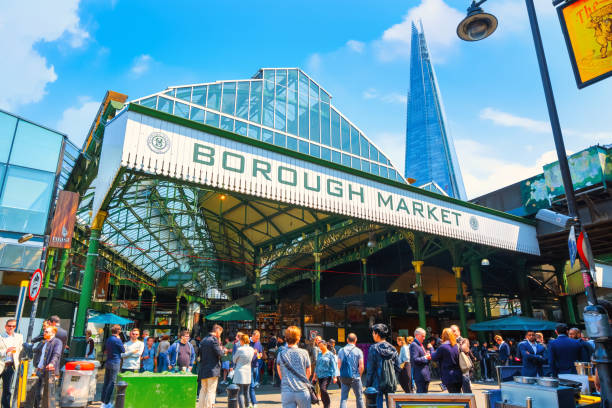
For that reason, the first thing to cut is the famous add-on that belongs to another district. If your morning is Wallace Collection and Marylebone, do not force the British Museum unless the whole trip lacks an antiquities anchor and the evening is intentionally quiet. Do not force Westminster unless it is the primary story of the day. Do not force Borough Market for a casual lunch unless food is the day’s real purpose. A more coherent London day often feels richer than a longer one because the traveler is still awake to it.
What evenings work from Marylebone and what kills the mood
West End evenings work from Marylebone when you treat the theatre or dinner as the night’s destination, not as one more stop after a stuffed day. The West End is close enough for a planned taxi or Underground move, and Marylebone’s hotel return can feel calm after a loud performance or a serious meal. This is a different kind of advantage from staying in Covent Garden. Covent Garden gives you instant theatre energy; Marylebone gives you a quieter return and a better chance that the whole day does not feel like it happened in a crowd.
The mood-preserving decision for couples is to keep the late afternoon unclaimed. A Wallace morning, a neighborhood lunch, and a hotel pause can set up a West End evening beautifully. A Wallace morning, Oxford Street browsing, a rushed cross-town museum, drinks in Soho, and then theatre will not. The mood-killing mistake is trying to make the day look impressive on paper. By the time you reach the restaurant or theatre, the group is managing sore feet, damp coats, phone batteries, and timing anxiety instead of enjoying the night.
For theatre, Marylebone pairs best with planned West End routes: Soho, Covent Garden, St James’s, and the streets around Piccadilly or Leicester Square. If theatre is a central reason for the trip, compare this strategy with our private theatre-and-sightseeing day, which is built around reducing backtracking on performance days. The point is not that Marylebone beats Covent Garden for theatre. It does not, if theatre is every night. It beats Covent Garden when one or two theatre nights need to sit inside a calmer cultural stay.
Late dinners also work, but only when the route is honest. A Marylebone base can support Mayfair, Soho, Fitzrovia, and parts of the West End without much drama. It becomes less elegant when the dinner is south of the river, east in Shoreditch, or paired with a daytime plan that already crossed the city twice. London taxis are comfortable but not magic; at the wrong hour, the road can make a short-looking journey feel much longer. Build the evening around one strong destination and let the hotel return be part of the pleasure.
Mayfair, Covent Garden or Marylebone: the comparison that matters here
Marylebone should not be judged as a softer Mayfair or a quieter Covent Garden. It should be judged by the day it makes easiest. Mayfair is stronger for high-end shopping, members-club style dinners, and a more formal luxury-hotel feel. Covent Garden is stronger for theatre concentration, lively streets, and first-time visitors who want London’s stage-set energy immediately. Marylebone is stronger when the plan needs a cultural morning, refined neighborhood walking, and West End evenings without sleeping in the middle of the nightly surge.
This is why the comparison differs from a standard where-to-stay guide. A traveler choosing between Mayfair, Covent Garden, and South Kensington for a broad first visit should read the broader Mayfair, Covent Garden or South Kensington comparison. Here, the narrower question is whether Marylebone solves a particular stay rhythm. If the Wallace Collection, Marylebone High Street, Regent’s Park, and a short move to the West End sound like your ideal day one or day two, Marylebone is not secondary. It is the most coherent base.
The practical comparison
- Marylebone wins for culture-led calm, Wallace Collection mornings, softer hotel departures, and evenings that need a quiet return.
- Mayfair wins for the most formal luxury-hotel ecosystem, Bond Street shopping, and dinners where the address itself is part of the occasion.
- Covent Garden wins for theatre saturation, short walks after late performances, and travelers who actively want crowds, street life, and central bustle.
- South Kensington wins for families or museum-heavy stays built around the V&A, Natural History Museum, Science Museum, and western London pacing.
The honest counterpoint is that Marylebone can feel too discreet for travelers whose first London trip needs constant visual confirmation. You do not step out to Big Ben, the river, or a theatre marquee. You step out to handsome streets, neighborhood restaurants, shops, and a slower scale. That is exactly why many discerning travelers like it, but it is also why it is not universal. The best base is the one that matches how you want to feel at 9 a.m. and 10:30 p.m., not the one with the most glamorous reputation.
Premium spend: what it improves around Marylebone and what it cannot solve
Premium spend improves a Marylebone stay when it buys better pacing, privacy, room quality, guiding, and smoother transitions. A hotel with a calmer lobby, more responsive concierge, and easier car coordination can make departures feel less improvised. A private guide can turn the Wallace Collection from a pretty house-museum into a concise cultural arc. A well-timed car can help a group reach a West End dinner without asking everyone to manage the Underground in evening clothes. These upgrades change comfort and attention.
Premium spend does not help when the underlying plan is incoherent. Choosing a more expensive hotel area will not fix a day routed across too many districts. A suite in Mayfair does not make a Tower morning, a Marylebone lunch, a South Kensington museum, and a Covent Garden show feel relaxed. A chauffeur does not remove the fatigue of trying to absorb four unrelated stories in one day. In London, money can soften transitions, but it cannot make a scattered route feel edited.
Where a driver can earn the cost is in boundary moments: hotel to theatre in rain, dinner return after a long performance, a move between Marylebone and a less convenient restaurant, or a family day where older parents and children need different energy protection. Where it does not earn the cost is a simple Marylebone High Street to Wallace Collection morning. That should usually remain a walk unless mobility needs require otherwise. Paying to avoid the best part of the neighborhood is not an upgrade.
Guiding is different. The Wallace Collection can be self-guided, but a good guide changes the density of the visit. Instead of wandering room to room until attention fades, the guide can choose a route through collecting, taste, power, domestic interiors, and paintings that makes the museum feel memorable rather than merely beautiful. The value is not access for access’s sake. It is selection, context, and the confidence to leave while the group still wants more.
How a private guide turns Marylebone from pleasant to easy
A private guide is most useful in Marylebone when the day begins at the hotel and stays deliberately shaped. The guide can meet you in the lobby, walk the route to the Wallace Collection, decide how much of the museum the group can enjoy, and then protect the afternoon from creeping overreach. This is the planning handoff that matters: not “see Marylebone,” but use Marylebone to make London feel legible.
For couples, the guide can keep the morning from becoming a lecture and the evening from becoming a logistical scramble. For families, the guide can vary the pace, shorten the museum before resistance appears, and build in a snack or park moment without making it feel like a compromise. For small celebration groups, the guide can hold the timing together so the person who planned the trip is not constantly checking maps, restaurant times, and who is falling behind. That is where private touring becomes commercially relevant in a natural way: it removes the social labor from the traveler.
Marylebone also suits a more local-feeling private route. It can connect the Wallace Collection with side streets, design shops, food stops, Regent’s Park edges, or a Mayfair transition depending on taste. A traveler who wants that less formulaic side of London can pair this base with a London like a Londoner private tour, especially when the goal is to avoid a day that feels copied from a first-visit checklist.
A well-built day could begin at a Marylebone hotel, walk to the Wallace Collection, pause for lunch nearby, leave space for a hotel return, and then end near a West End dinner or theatre. That is the exact kind of route where customization matters because the success depends on what you do not add. When you are ready to shape the day around your hotel, museum appetite, dinner plans, and group pace, Inquire now.
Food-and-wine planning from Marylebone without turning the day into a commute
Marylebone is useful for food-and-wine travelers because it sits between several strong dining zones without requiring the day to become a restaurant chase. Mayfair, Fitzrovia, Soho, and the West End are all plausible from here, and Marylebone itself can support a polished lunch or early evening without demanding a major transfer. The planning judgment is to decide whether the meal is the anchor or the reward. If the meal is the anchor, keep the day lighter. If it is the reward, keep the route compact enough that everyone arrives with appetite.
This is where travelers should resist the temptation to stack prestige. A serious lunch and a serious dinner on the same day can make London feel smaller in the wrong way: hotel, car, dining room, car, dining room, hotel. If you want a notable dinner, let the morning be Wallace and Marylebone, not Wallace, Westminster, shopping, and a long museum. If you want a notable lunch, let the evening be a theatre or relaxed bar rather than another demanding reservation.
For a high-end dining night, use primary sources for the facts that change decisions. Check Ikoyi menu & reservations (https://www.ikoyilondon.com/) directly if that restaurant is shaping the evening, because tasting-menu format, availability, and booking policy are not details to remember casually. If a classic Mayfair lunch is being considered instead, See the current three‑course lunch menu (https://www.theritzlondon.com/restaurant-three-course-lunch-menu) before building the day around it. The editorial point is not that either meal must be chosen. It is that a menu-led day should be routed with the same seriousness as a museum-led day.
Marylebone also sits naturally inside a broader food-and-wine decision for London. If you are comparing Mayfair, Marylebone, and Borough Market as different culinary day shapes, our curated London food-and-wine day guide handles that wider choice. For this article, keep the narrower rule: Marylebone works best when the meal is either nearby or deliberately placed after a quiet afternoon. It works less well when the day’s food plan is a chain of scattered bookings.
Families, older parents and small groups: who Marylebone quietly helps
Marylebone is especially helpful for travelers whose group contains different speeds. A couple may simply enjoy the calm, but a multigenerational family or small celebration group benefits in more practical ways. The streets are easier to read than Soho at night, the Wallace Collection can be shortened without feeling like a failed museum day, and Regent’s Park gives the plan an air break without requiring a full garden excursion. The neighborhood lets a group be together without constantly performing togetherness in crowds.
For older parents, the value is not just fewer steps. It is fewer decisions under pressure. A morning that begins at the hotel and walks to Manchester Square avoids the first friction point of the day. A post-museum lunch nearby avoids the second. A hotel return before the West End avoids the third. These choices preserve dignity because no one has to announce that they are tired in order for the plan to become kinder.
For families with children or teenagers, Marylebone works when the adults do not oversell the museum. The Wallace Collection can be a focused cultural stop, not a marathon. Pair it with a neighborhood walk, a snack, or a park moment, and the day stays cooperative. Pair it with a long second museum and a formal dinner, and resistance is predictable. The neighborhood helps only if the plan respects why you chose it.
For small groups celebrating a birthday, anniversary, graduation, or reunion, Marylebone gives the organizer control. Meeting points are simpler, the first stop can be close, and the evening can be dressed up without everyone feeling worn down first. The quieter base also makes private logistics less visible. A guide or car can meet the group without the curbside theatre of a busier hotel zone, and that can make the day feel more graceful even before the formal experiences begin.
Airport, rail and Tube realities from a Marylebone base
Marylebone is practical for many central London movements, but it is not a universal transport answer. Baker Street is useful for Underground connections. Bond Street and Oxford Street edges connect the neighborhood to Mayfair and the Elizabeth line corridor. Marylebone station itself matters more for specific rail routes than for most first-time sightseeing. The main planning rule is to treat Marylebone as a calm central base with good options, not as a magic midpoint for every London attraction.
For airport arrivals, Marylebone can be comfortable because the first neighborhood experience is not overwhelming. After a long-haul flight, that matters. A traveler can check in, take a short walk, perhaps use the Wallace Collection or Regent’s Park on a light first day, and avoid the false ambition of “using the afternoon” for a major monument. For Eurostar arrivals at St Pancras, Marylebone is also manageable by taxi in many conditions, but the better question is what you do after arrival. The neighborhood is strong when day one should be soft.
The Tube-versus-taxi decision changes by time of day, weather, footwear, and group size. A couple in comfortable shoes may find the Underground perfectly reasonable for many West End and Westminster moves. A family with a stroller, older parents, or formal evening plans may prefer a taxi or car for selected segments. Do not make this a moral question about traveling “like a local.” Make it a comfort decision. In London, the best movement is the one that leaves the group ready for the next experience.
The route reality that matters most is the north-south return. Marylebone is excellent for Wallace, Mayfair edges, Regent’s Park, Fitzrovia, Soho, and West End evenings. It is less clean for repeated South Bank, Tower, and Greenwich days. If your itinerary crosses the river constantly, consider whether a different base or a Thames-led day would make more sense. Marylebone is elegant when the route respects its position; it is inefficient when treated as a neutral dot on the map.
The practical verdict: when to book Marylebone, when to stay elsewhere
Book Marylebone when you want a London stay that begins quietly, handles culture with restraint, and still lets the evening sharpen. It is at its best for travelers who plan one or two major experiences a day rather than four, who would rather enjoy a museum deeply than collect museum names, and who see the hotel neighborhood as part of the trip rather than merely a bed location. The Wallace Collection is the proof anchor because it gives the base a natural morning, not just a pleasant backdrop.
Stay elsewhere when the river is the spine of the trip, when every night is theatre, when children need South Kensington museums on repeat, or when the group wants the fastest possible walk to Westminster icons. In those cases, Marylebone may still be a lovely half-day, but it is not the best base. The wrong Marylebone booking usually happens when travelers fall for the neighborhood’s calm without admitting that their actual itinerary lives somewhere else.
The best Marylebone stay has a clear rhythm: neighborhood morning, focused culture, close lunch or hotel pause, then a deliberate evening move. It is not a base for travelers who want to wake up in the spectacle. It is a base for travelers who want to enter the spectacle on their own terms. That difference is subtle on a map and obvious in the body by day three.
Our firm editorial call is this: for culture-first couples and comfort-led small groups with one or two West End evenings, Marylebone is often a smarter base than it gets credit for. It is not the city’s most dramatic address, and that is precisely why it works. The neighborhood gives London a calmer opening tempo, and in a city where many trips fail from overreach, that restraint is not a minor luxury. It is the reason the plan still feels good at night.
FAQ
Is Marylebone a good place to stay in London?
Yes, Marylebone is a good place to stay in London if you want a quieter central base with easy access to the Wallace Collection, Regent’s Park, Mayfair, Soho, and the West End. It is not the best fit if you want to be beside the river, the Tower, or Covent Garden every night.
Who is Marylebone best for?
Marylebone is best for couples, culture-focused travelers, comfort-first families, older parents, and small groups who want a calmer hotel neighborhood without leaving central London. It suits travelers who prefer edited days, short neighborhood walks, and a more composed return after dinner or theatre.
Can you walk from Marylebone High Street to the Wallace Collection?
Yes, Marylebone High Street to the Wallace Collection is one of the neighborhood’s clearest planning advantages. The walk is short, useful, and gives the morning a natural sequence from hotel or neighborhood street to Manchester Square without starting the day with a Tube transfer.
Is Marylebone better than Mayfair for a London stay?
Marylebone is better than Mayfair when your priority is a calmer cultural base, the Wallace Collection, Regent’s Park, and West End access without a formal luxury-hotel district feel. Mayfair is better when high-end shopping, grand hotels, and address prestige are central to the trip.
Is Marylebone better than Covent Garden for theatre?
No, Marylebone is not better than Covent Garden for theatre if you plan to attend performances most nights and want to walk back immediately afterward. Marylebone works better when theatre is one part of a quieter cultural stay and you value a calmer return after the show.
How should you spend a morning in Marylebone?
The best Marylebone morning is a short walk from the hotel or Marylebone High Street to the Wallace Collection, followed by a focused museum visit and lunch or a neighborhood pause nearby. Avoid adding a cross-city attraction afterward unless the whole day has been built around that distance.
What evenings work well from Marylebone?
West End theatre, Soho dinners, Mayfair meals, Fitzrovia restaurants, and a polished neighborhood evening all work well from Marylebone. South Bank or far-east dinners can also work, but only when the rest of the day is lighter and the return is planned realistically.
When is Marylebone the wrong base for a first London trip?
Marylebone is the wrong base when the trip is built around Westminster, the Tower, South Bank, Greenwich, or nightly Covent Garden theatre. It can also feel too understated for travelers who want London’s busiest scenes at the hotel door from morning to late night.
If you’re interested in any private tours of London, please reach out to us.


















 So if you are looking for the absolute best in London & surroundings with authentic local fully-licensed native guides whose English you can actually understand and with an exclusive and amazingly fun itinerary













