Granada from Seville by Driver or Train: Let the Alhambra Slot Decide the Transfer

Updated
Choose the transfer by the Alhambra time slot first, not by habit. From Seville to Granada, a private driver usually wins when the Alhambra is on arrival day, because the city adds a station handoff, luggage decisions, hotel timing and a steep final approach before you even reach the Nasrid Palaces. The train is the cleaner choice when your Alhambra visit is the next morning, or when your same-day slot sits late enough that you can arrive, drop bags and breathe. The clearest exception is simple: if your ticket forces a tense rush from Seville, sleep in Granada the night before and stop trying to buy your way out of the clock.
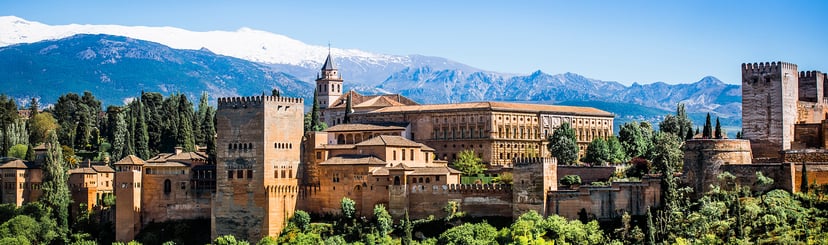
The article-specific rule is this: in Granada, the transfer is not a transport decision; it is a ticket-timing decision disguised as a transport decision. Seville Santa Justa and Granada’s rail station look tidy on a map, but Granada station sits north of the historic core, while the Alhambra climbs above Realejo, Plaza Nueva and Cuesta de Gomérez. That last city hinge is where polished plans start to fray: a taxi queue, a hotel room not ready, suitcases that cannot join you comfortably, and a fixed Alhambra time slot that does not care how elegant the morning felt in Seville.
Orange Donut Tours plans this route as one joined sequence: Seville departure, Granada arrival, luggage placement, Alhambra access, first walk and evening mood. If the visit is the centerpiece, the most relevant next step is usually not a generic transfer quote but a combined Alhambra-and-arrival plan such as Alhambra and Generalife private touring built around the hour printed on the ticket.
Should you travel from Seville to Granada by train or private driver?
The best answer is scenario-based: choose a driver for a same-day Alhambra slot that needs luggage control, choose the train for a calm arrival before a next-day visit, and avoid both as a “solution” when the slot itself is badly placed.
Driver wins when:
- Your Alhambra time slot is on the same day you leave Seville and you need a direct, controlled handoff from hotel to hotel, hotel to monument, or station-free arrival.
- You are traveling with children, older parents, formal clothing, celebration luggage, mobility limits or a group that does not recover well after platform-to-taxi logistics.
- Your Granada hotel is in or near Realejo, the Cathedral quarter, Plaza Nueva or a lower-hill location where a planned drop and immediate reset prevent the day from feeling improvised.
- You want the transfer to become part of the private plan, not a separate booking that ends just when the Granada decisions begin.
Train wins when:
- Your Alhambra visit is the next morning or comfortably late the same afternoon, and you can treat arrival day as a light Granada landing rather than a monument sprint.
- Your luggage is modest, your group moves easily, and you prefer the mental simplicity of a station-to-station ride with no road-day dependency.
- You are staying near a practical taxi route rather than deep in Albaicín lanes or high on a slope where bags and arrival fatigue become part of the sightseeing.
The wrong fit is:
- A same-day plan that reaches Granada with barely enough buffer for the Nasrid Palaces. The official Alhambra guidance is explicit that the Nasrid Palaces have a specific access time printed on the ticket, and the visit must be made in that time. Check the official timing guidance before shaping the day: Alhambra time of the visit (https://www.alhambra-patronato.es/en/visit/organize-your-visit/time-of-the-visit).
The counterintuitive correction is that the glamorous base can be the worse transfer base. Albaicín and upper-view neighborhoods may feel more romantic once you are settled, but they are not the easiest places to arrive with luggage before a fixed monument appointment. On a transfer day, lower Realejo, Centro and practical Cathedral-quarter edges often beat prettier hillside drama because the route allows the group to drop, change pace and reach the Alhambra without turning arrival into a climbing exercise. For a deeper base decision, the practical companion is Granada’s Realejo strategy.
Let the Alhambra time slot set the transfer, not the timetable
The Alhambra time slot should be treated as the hard clock for the whole Seville-to-Granada day. Train departures, driver pickup times and lunch ideas are secondary because the Nasrid Palaces are the point where the day stops being flexible.
That does not mean every visitor needs a driver. It means the first planning question should be: “What must be true in Granada one hour before the Nasrid Palaces?” By then, your group should have the correct documents, no problematic luggage, realistic walking energy, and enough calm to move through the Alhambra access sequence without arguing about bags, bathrooms, sun, snacks or whether the hotel can still take check-in. That is where a trip that looked premium in Seville can become ordinary fast.
If the slot is early in the day, the answer is usually not to leave Seville at dawn and hope. The stronger answer is to sleep in Granada the night before. This is especially true for a morning Nasrid Palaces time, for older travelers who do not want a rushed breakfast and transfer, for families who need predictable bathroom and snack rhythms, and for celebration travelers who care how they arrive, not only what they see. Granada rewards clarity. A well-rested morning from Realejo or the Cathedral quarter can make the Alhambra feel like the start of the day; a forced same-day transfer can make it feel like a deadline.
If the slot is late morning or early afternoon, a driver often has the advantage because the route from your Seville hotel can be designed backward from the required arrival in Granada. A chauffeur can pick up at the door, hold luggage in the vehicle during a hotel check attempt, coordinate the approach to the Alhambra or to a planned luggage drop, and remove the station taxi step. That does not create extra access inside the monument, but it protects the vulnerable handoffs around it.
If the slot is late afternoon or evening, the train becomes much more attractive. You can leave Seville without converting the morning into a road operation, arrive at Granada station, take a taxi to the hotel, and keep the pre-Alhambra period deliberately light. The official ticketing site is still the place to confirm the exact ticket type and entry conditions before shaping the rest of the day: official Alhambra tickets (https://tickets.alhambra-patronato.es/en/).
The mistake to avoid is treating the Generalife, Alcazaba and Nasrid Palaces as if they all respond to the same clock. They do not feel the same under transfer pressure. The Nasrid Palaces carry the fixed appointment; the gardens and Alcazaba carry walking, light, exposure and stamina consequences. A private guide can sequence those spaces intelligently, but the best guide in Granada cannot make a missed or poorly placed slot disappear.
When a driver beats the train from Seville to Granada
A private driver beats the train when the cost buys control at the vulnerable moments: hotel pickup in Seville, luggage continuity, Granada drop-off, and a smoother handoff into the Alhambra or hotel reset.
The most persuasive driver day is not the one that tries to see more. It is the one that removes the weak links. Seville Santa Justa is efficient, but it still asks your group to leave the hotel, manage bags, enter the station, board, arrive at Granada station, find ground transport, reach the hotel or monument, and then reassemble everyone emotionally before a high-stakes visit. For two agile adults with light luggage and a late slot, that may be perfectly fine. For a family with school-age children, grandparents, multiple rooms of bags or a celebration wardrobe, those steps are where the day becomes smaller than it looked on paper.
The route from Seville to Granada by road also lets the departure clock respond to the Alhambra rather than to the train schedule. That matters when the slot falls in a narrow band: not early enough to justify sleeping in Granada, not late enough to allow a loose arrival. A private vehicle can leave the Seville hotel at the right moment, avoid a station transfer, and keep luggage under one plan until the guide or hotel handoff. For a commercially serious private itinerary, this is the case where Seville and Granada private planning earns its place: the transfer, Alhambra ticket and first Granada route are coordinated rather than stitched together afterward.
A driver is also better when the arrival address is awkward. Lower Realejo works well because it gives a manageable bridge between hotel, Alhambra access and evening tapas streets. A hotel near Plaza Nueva can be practical if the final approach is handled with care. An address high in Albaicín or along lanes where vehicle access is restricted may be beautiful after sunset but irritating on arrival. The driver cannot always take you to the exact doorway; the value is in knowing that before the day begins and designing the drop accordingly.
Where the driver does not earn the premium is in sightseeing sprawl. Adding a major stop between Seville and Granada often weakens the Alhambra day unless the slot is late and your group is deliberately treating Granada as an overnight, not a monument sprint. The most tempting mistake is to add a famous lunch detour, a white-village pause or “just a quick” second city because the private vehicle seems to make it possible. Possible is not the same as polished. If the Alhambra is on the same day, the transfer should feel quiet and accurate, not ambitious.
A private driver cannot fix a poor Alhambra time slot or luggage plan. That sentence is worth keeping because it is the premium-spend boundary travelers often miss. Paying more changes comfort, privacy, timing control and handoff quality; it does not change the monument’s entry rule, the body’s response to heat and slopes, or the problem of arriving with the wrong bags at the wrong place.
When the train is the cleaner choice from Seville
The train is the cleaner choice when the Alhambra is not pressing on the arrival clock and your Granada landing can stay deliberately light.
This is the right answer for travelers who sleep in Granada before the Alhambra, for couples with compact luggage, and for anyone who prefers a defined city-to-city transfer rather than a road day. Use the operator’s current schedule rather than a remembered timetable; Renfe’s official Granada destination page is a sensible starting point for checking the Seville to Granada rail option: Renfe Granada trains (https://www.renfe.com/es/en/inspirate/destinos/granada). The point is not that the train is always faster door to door. The point is that when the Alhambra is tomorrow, the train allows today to remain a transition instead of a private-car production.
A cleaner train day has a very specific shape. Leave Seville without overloading the morning. Arrive at Granada station. Take a taxi to the hotel. Check in if possible or store luggage if arranged. Then do one low-friction Granada piece: lower Realejo, a Cathedral-quarter orientation, a short Plaza Nueva walk, or a calm tapas evening. Do not force Albaicín viewpoints, Sacromonte, a full shopping loop or an extra monument into that first afternoon unless your group arrived early and everyone is clearly fresh.
If you choose the train, make the arrival intentionally boring. That is a compliment in this context. The best rail arrival is not the one that squeezes in the most Granada before dinner; it is the one that turns the city change into a controlled landing. Ask the hotel in advance about luggage, keep the first walk low in the city, and resist the urge to preview every neighborhood. The next day’s Alhambra will feel richer if the first evening does not spend the group’s patience on slopes and decisions.
Train days work best when luggage is disciplined. Large rolling bags, multiple small bags and dress bags can make the station-to-hotel step feel clumsy even if the rail ride itself is easy. The problem is not the train seat; it is the moment after the train, when everyone is in Granada but not yet settled. In a city where the most famous visit sits above the center, the wrong arrival baggage turns a simple taxi transfer into a logistical mood shift.
The train is also cleaner when you value separation between travel and touring. Many discerning travelers assume private always means better, but Granada is a useful exception. If the Alhambra is tomorrow morning, a private driver may simply deliver you earlier at a higher cost while still leaving you with check-in timing and a first-day energy question. In that scenario, the upgrade that matters is not the vehicle; it is the next morning’s guide, the exact Alhambra sequence, and a hotel base that does not force a hard climb before or after the visit.
The train becomes less clean when the same-day slot falls in the middle of the day. A mid-day Nasrid Palaces appointment can make the rail plan brittle because any arrival delay, taxi wait, luggage uncertainty or bathroom stop consumes the margin. This is where travelers often underestimate Granada’s last-mile reality. The distance from the station to the historic core is not the whole story; the story is the transition from bags and platforms into an uphill monument visit with a timed palace entry.
The luggage question: why the Alhambra day often breaks at the handoff
Luggage affects the Alhambra day because Granada’s best arrival sequence depends on separating travel bags from monument movement before the clock gets tight.
The Alhambra is not a place to approach casually with transfer luggage. Official guidance notes that backpacks, bags or suitcases above stated dimensions are not permitted in visitable spaces, and the practical point is broader: even bags that technically fit can make the visit feel awkward when the group is tired, warm or moving through uneven surfaces. The official pages also remind visitors to wear appropriate shoes and note limits around pushchairs and large bags. Those details matter less as abstract rules than as trip consequences. A group that arrives from Seville with the wrong luggage plan may spend the first Granada hour solving bags instead of entering the city with composure.
The handoff has four possible answers. The best is a confirmed hotel drop before the Alhambra, with enough time for bathrooms, a change of shoes and a short transfer or walk to the monument. The second-best is a private vehicle holding luggage while the guide and driver coordinate the sequence, useful when the room is not ready but the slot cannot move. The third is station luggage management, which may be workable for some travelers but adds a second Granada stop and should be checked carefully rather than assumed. The weakest is carrying or improvising with bags near the monument.
Hotel location changes the answer. A lower Realejo hotel can make the transfer feel elegant because it sits close enough to the Alhambra approach without forcing the entire group into a steep arrival. A Cathedral-quarter hotel can work if taxi access and bag drop are clear. Albaicín can be lovely later, but its lanes and slopes make it a poor first landing for travelers who need to be at the Nasrid Palaces soon. The city is not punishing; it is simply literal. Hills, cobbles, lanes and restricted approaches behave the same whether the trip is ordinary or expensive.
Granada also changes the body. After the Seville departure, the body has already spent energy on packing, checkout, station or car departure, and the mental vigilance of changing cities. Then Granada adds an uphill gradient toward the Alhambra, irregular surfaces in parts of the visit, exposure in the gardens, and the need to stay on time for the palace entry. This is why the arrival day can feel shorter than the itinerary says. It is not because Granada lacks richness; it is because the body has to pay for every transition before it can enjoy the monument.
The mood consequence is just as important. A smooth luggage handoff makes Granada feel intimate and deliberate, especially if the evening can descend into Realejo or the lower center afterward. A poor handoff makes the day feel administrative: “Where are the bags?” “Can we check in?” “How do we get up there?” “Are we late?” Once those questions dominate, even a private tour has to recover the atmosphere before it can deepen the experience. That is why luggage belongs in the first planning conversation, not in a text message from the station.
What to cut on arrival in Granada
Cut the hill add-ons first: Albaicín viewpoints, Sacromonte, extra Andalusian monuments and formal lunch plans are usually the first things to remove from a Seville-to-Granada Alhambra day.
The first cut is Albaicín after the Alhambra if you are arriving from Seville the same day. The viewpoint walk sounds natural because everyone wants the postcard angle back toward the Alhambra, but the Albaicín climb after a transfer and a palace visit can turn the evening into a test of knees, patience and footwear. Save it for a separate morning or a carefully driven viewpoint plan, especially with older parents, children or anyone dressed for dinner. This is where many itineraries overvalue the famous view and undervalue the quality of the evening.
The second cut is Sacromonte. It is not that Sacromonte lacks merit; it is that its position makes it a poor casual add-on when the day has already moved from Seville to Granada and through the Alhambra. If flamenco or cave context matters, give it its own evening structure. Do not attach it to a transfer day because there is a blank line after dinner. Blank lines after the Alhambra are not empty. They are recovery space.
The third cut is the “complete Granada” impulse: Royal Chapel, Cathedral, Alcaicería, Albaicín, Sacromonte and the Alhambra in one arrival day. That plan reads efficient and feels flattened. After the Alhambra, the better arrival-day choice is often a short Realejo descent, a simple Cathedral-quarter orientation, or a tapas route that does not require another climb. For travelers tempted to tour immediately after the train, when not to tour on arrival is the more honest companion piece.
The fourth cut is a fixed fine-dining plan if your Alhambra slot is late or if the group has traveled that day. Granada has a serious food scene, including restaurants recognized in the MICHELIN Guide selection (https://guide.michelin.com/us/en/andalucia/granada/restaurants), but dinner should not become another clock competing with the palace. If gastronomy is part of the trip, let it breathe on the second night or choose a lighter tapas plan after the Alhambra. A special dinner after a strained arrival often feels less special because everyone is still catching up with the day.
The cut-first rule is blunt: after a Seville transfer and same-day Alhambra, do not chase the view, the cave, the extra monument and the tasting menu. Choose one soft landing and stop. The itinerary will look less impressive in writing and feel far better in the body.
When to sleep in Granada before touring the Alhambra
You should sleep in Granada before touring the Alhambra when the Nasrid Palaces slot is in the morning, when the group includes slower movers, or when the trip is meant to feel celebratory rather than efficient.
This is the most important exception to the driver-versus-train question. A private driver can make a Seville departure easier; it cannot make a morning Alhambra slot generous if you are still waking up in another city. A train can keep the transfer clean; it cannot remove the fact that a morning palace appointment rewards being already settled. If your available slot is early, the comfort-first answer is to arrive in Granada the prior afternoon, keep the evening simple, and let the Alhambra own the next morning.
Sleeping in Granada also protects the hierarchy of the trip. If the Alhambra is the reason you are going, it deserves the freshest part of a day, not the portion left after checkout, transfer, luggage and hotel negotiation. This matters for first-time travelers who want context rather than a checklist, and it matters even more for family groups. Children and grandparents often do well with the Alhambra when the approach is calm; they do less well when the first hour in Granada is spent catching up to an appointment.
Where you sleep changes the morning. Realejo is often the lower-hill compromise: close to the Alhambra approach, useful for evenings, and less punishing than a high-view base. The Cathedral quarter can work if you prefer flatter evening movement and easy taxis. Albaicín can be magical for a second Granada stay or a view-led trip, but it is not the default recommendation for luggage-heavy, first-time, Alhambra-focused arrivals. The city’s slopes turn romance into friction when the wrong person is pulling a suitcase.
If you are building a broader Andalusia sequence, the prior-night decision should be made before you finalize Seville. It may be better to leave Seville in the afternoon, arrive in Granada without touring ambition, and keep the first evening light. That preserves the next morning for the Alhambra and keeps Seville from stealing energy from Granada. For travelers deciding where Granada belongs among Madrid, Córdoba and Seville, sequencing Granada around the Alhambra is the strategic layer beyond this transfer decision.
How to make the transfer, ticket and first route feel like one plan
The polished version of this day coordinates the Seville departure, Alhambra ticket, luggage handoff, Granada base and first walking route before any single supplier is booked.
That is the planning gap most travelers discover too late. A train ticket seller solves the train. A driver solves the drive. A hotel solves the room. The Alhambra ticket solves admission. None of those pieces automatically solve the day. The day is solved only when the pieces meet: the train arrival or driver drop leaves enough time; the bags have a known destination; the guide meets at a sensible point; the Alhambra route starts in the right order for the time slot; the evening asks less from the body than the monument already demanded.
This is where bespoke private planning earns its value. It does not need to turn everything into a luxury production. It needs to prevent the seams from showing. A well-shaped plan may choose a driver and a direct Alhambra handoff. It may choose the train, a hotel reset and a next-morning private tour. It may tell you to skip the arrival-day Alhambra entirely because the only available slot would make the entire Granada stay feel rushed. The best answer is not the most expensive answer; it is the answer that protects the reason you are traveling to Granada in the first place.
For comfort-first travelers, the upgrade that matters most is often route judgment. Where should the driver drop? Should the guide meet at the hotel, the Access Pavilion or lower in the city? Should the Generalife come before or after the Nasrid Palaces? Should the evening descend into Realejo, stay near the Cathedral, or end with a hotel reset? Those are not decorative questions. They decide whether the day gathers momentum or leaks it. For travelers who want a private vehicle inside the Granada plan rather than as a standalone transfer, chauffeured Granada planning is the right service frame; for a broader design conversation, private tours in Granada gives the wider route options.
If you want Orange Donut Tours to build the Seville-to-Granada handoff around the Alhambra slot, luggage reality and first Granada route as one joined decision, Inquire now.
FAQ
Is it better to go from Seville to Granada by driver or train for the Alhambra?
A private driver is usually better for a same-day Alhambra visit with luggage, a tight slot or a comfort-sensitive group. The train is usually better when you arrive the day before the Alhambra or when your slot is late enough to allow a proper hotel drop and reset.
Can I visit the Alhambra on the same day I travel from Seville?
Yes, but only when the Alhambra time slot gives you enough buffer after the transfer, luggage handoff and Granada arrival. If the Nasrid Palaces slot is early or awkwardly tight, sleep in Granada the night before instead of forcing a same-day plan.
What is the biggest risk with taking the train from Seville to Granada before the Alhambra?
The biggest risk is not the train ride itself; it is the Granada handoff after arrival. You still need to manage luggage, taxis, hotel timing and the uphill approach to the Alhambra before a fixed palace entry.
When does a private driver not help?
A private driver does not help when the Alhambra slot is fundamentally poor or when there is no clear luggage plan. The driver can improve comfort and timing control, but it cannot change the entry hour or make unsuitable bags disappear.
Should I keep luggage with me at the Alhambra?
No. Treat luggage storage as a planned step before the Alhambra. Use a confirmed hotel drop, a coordinated vehicle hold or another checked solution; do not arrive at the monument assuming travel bags will be easy to manage.
What should I cut after arriving from Seville and seeing the Alhambra?
Cut Albaicín viewpoints, Sacromonte and extra monuments first. After a Seville transfer and the Alhambra, a short Realejo descent, Cathedral-quarter orientation or easy tapas plan will usually feel better than another uphill commitment.
Is Realejo a good area after a Seville-to-Granada transfer?
Yes. Realejo is often practical because it sits between the Alhambra approach and lower evening streets without forcing the same hill severity as higher-view neighborhoods. It is especially useful when luggage, taxis and dinner energy matter.
Can I book the Alhambra first and decide transport later?
You can, but you should not treat transport as separate for long. Once you know the Alhambra time slot, choose the transfer, luggage plan and first Granada route around that hour rather than trying to make a preselected train or driver fit afterward.
If you’re interested in any private tours of Granada, please reach out to us.



 So if you are looking for the absolute best in Granada & surroundings with authentic local fully-licensed native guides whose English you can actually understand and with an exclusive and amazingly fun itinerary













