Granada Around the Alhambra: How to Build the Rest of the Trip Before and After Your Visit

Updated
Build Granada around your confirmed Alhambra entry, then let the rest of the city support that appointment rather than compete with it. This works because Granada is not a flat checklist city: the Palaces, Generalife gardens, Realejo edge, Darro valley, Albaicín lanes, Cathedral quarter, and tapas streets all sit close on a map but differently in the legs. The clearest exception is a late-afternoon or evening Alhambra visit; in that case, keep the morning low, avoid a full Albaicín climb first, and save your most atmospheric viewpoint for another evening.
The article-specific rule is simple: in Granada, the best plan is not the one with the most famous names; it is the one that handles the Alhambra-to-Albaicín handoff without turning one hilltop masterpiece into two separate climbs, two taxi resets, and a flattened dinner mood.
For a private, tailor-made stay, the value is not only interpretation inside the Alhambra. It is the orchestration around it: where your guide meets you, whether you descend through Realejo or angle toward Carrera del Darro, whether the Albaicín belongs before sunset or tomorrow, and whether your dinner should be tapas-led, formal, or intentionally easy. Travelers who want a guided Alhambra visit with the surrounding city shaped around it can start with Alhambra & Generalife Skip-the-line Private Tour and then adapt the rest of the day to their actual entry time.
The Best Granada Plan Uses the Alhambra as the Clock, Not the Whole Day
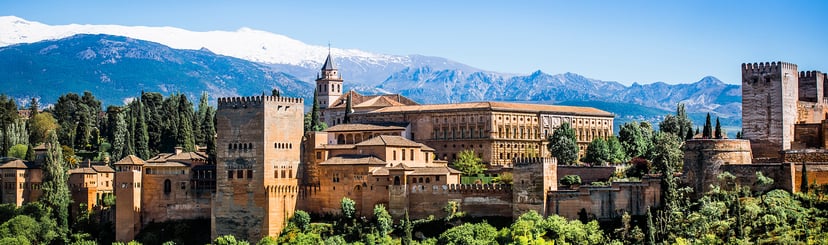
The Alhambra should set the clock, but it should not consume every decision around it. The common planning mistake is to treat the visit as a single attraction block and then paste Albaicín, Sacromonte, Cathedral, shopping, and tapas around it as if Granada were a flat historic center. It is not. The Alcazaba and Nasrid Palaces put you high above the city; the lower city pulls you down toward Plaza Nueva, Reyes Católicos, the Cathedral, and Alcaicería; Albaicín asks you to climb again; Sacromonte pushes the hill farther.
The overvalued default is staying or spending the whole day in the Albaicín just because the views are famous. It can be magical, but it is not automatically the best base or the best same-day add-on after the Alhambra. A hotel or dinner plan high in the Albaicín looks romantic on paper and can become a return-logistics problem after a long palace-and-garden visit, especially for families, older parents, dressier dinners, or anyone who dislikes uphill cobbles at night.
Use these scenarios to choose the shape of the day:
- Morning Alhambra: descend into Realejo or the Cathedral quarter after the visit, pause properly, and choose one Albaicín viewpoint later if energy remains.
- Noon Alhambra: keep the morning gentle near the lower city, avoid a full pre-visit hill climb, and treat dinner as the day’s second anchor.
- Late Alhambra: make the first half of the day low and shaded, then let the Alhambra be the crescendo; do not force Sacromonte afterward.
- Two-night stay: separate the Alhambra day from the full Albaicín or Sacromonte evening; Granada feels richer when the hills are not stacked.
- One-night stay: cut first, not last: choose either a viewpoint evening or a formal dinner, not both after a long Alhambra slot.
That is also where private planning earns its keep. A tailored route can decide whether your day should begin with the Alhambra, hold a lower-city lunch, thread a short Albaicín view, or leave the hill for a different evening. For broader route design, Private Tours in Granada is the better next step than trying to assemble separate tickets, guides, taxis, and dinner reservations into one brittle day.
What to Do Before the Alhambra Depends on Your Slot
Before the Alhambra, the best choice is usually the option that preserves attention, feet, and timing discipline. A palace visit rewards fresh eyes. It is a mistake to spend the pre-visit window on a steep neighborhood wander, a heavy lunch, or an ambitious shopping detour that leaves you watching the clock on Calle Reyes Católicos.
If your Alhambra visit is in the morning
Keep the morning clean. Have breakfast near your hotel, move directly to the Alhambra, and avoid squeezing in Cathedral interiors, Alcaicería browsing, or a Darro walk before entry. The reason is not only punctuality. The Alhambra needs orientation: the difference between the Palaces, Generalife, Alcazaba, and Carlos V Palace is easier to absorb when you have not already spent an hour negotiating old-town lanes and shopfront decisions.
This is especially true for travelers staying in Centro or Realejo. From the lower city, the climb or vehicle approach already creates a transition. Add another stop first and the day begins to feel like logistics before it becomes travel. With children, older parents, or a multi-generation group, this is where the mood can change: one small delay becomes one bathroom stop, one photo stop, one snack need, and suddenly the most important visit of the trip starts with pressure.
If your Alhambra visit is around noon
A noon slot asks for restraint. Do a short lower-city walk, not a hill. The Cathedral exterior, Plaza Bib-Rambla, a brief Alcaicería pass, or coffee near Plaza Nueva can work because they keep you close to transport and do not ask for a big emotional or physical investment before the main visit.
The trap is trying to “use” the morning by going up into Albaicín. On paper, it looks efficient: views before palaces, then history after. In practice, it can mean a climb through lanes, a descent to reset, a second climb or taxi to the Alhambra, and then several hours on your feet. The city does not punish ambition immediately; it collects the cost later, when the late afternoon feels shorter and dinner becomes a recovery exercise rather than a pleasure.
If your Alhambra visit is late in the day
A late Alhambra visit should turn the first half of the day into a low, elegant Granada morning. Choose Cathedral quarter, Realejo, a calm lunch, or a hotel reset. Do not make the morning a mini-Alhambra through Islamic-art sites unless your group is unusually focused and physically fresh. The Madraza and Corral del Carbón are meaningful with the right context, but they should sharpen the Alhambra, not dilute it.
For travelers arriving the same day, be stricter. Train-to-hotel-to-Alhambra timing looks manageable until luggage, check-in, lunch, and uphill movement create drag. If your arrival is tight, read the situation through Granada Between Train, Hotel and Alhambra before assuming a tour belongs on arrival day.
The Alhambra-to-Albaicín Handoff Is the Decision That Makes or Breaks the Day
The Alhambra-to-Albaicín handoff should be treated as a route decision, not a romantic impulse. The two places face each other across the valley, which makes them feel naturally paired, but moving between them is not the same as glancing from one to the other. You are managing elevation, cobbles, crowd flow, and the shift from site visit to neighborhood wandering.
The prettiest-looking sequence is not always the best one. Many travelers imagine leaving the Alhambra and heading straight for Mirador de San Nicolás. That can work for strong walkers with a relaxed evening and no formal dinner deadline. It is less ideal for a group that has already stood through the Nasrid Palaces, crossed gardens, taken photos, and listened carefully for several hours. By then, the body has done more than the itinerary admits.
A smoother handoff often descends first. Realejo works well after a morning Alhambra because it gives you a lower-hill decompression zone before the Cathedral quarter or lunch. Carrera del Darro and Paseo de los Tristes can be beautiful when the group still wants atmosphere without committing immediately to the upper Albaicín. Plaza Nueva is the hinge: from there, you can go lower into the city, follow the Darro for a scenic edge, or decide whether the Albaicín climb still deserves the evening.
Granada does something specific to the body: it hides effort inside short distances. The distance from one historic area to another can look negligible, but repeated inclines, uneven stone, viewpoint stairs, and the mental load of timed entry make the day heavier than a flat city of the same size. The body consequence is usually not dramatic in the moment; it shows up later as slower stairs, shorter patience, lower appetite, and less interest in the dinner you planned so carefully. That is why a chauffeur or taxi can improve comfort at the right moment, but extra spend does not help if the itinerary still stacks Alhambra, upper Albaicín, Sacromonte, and a late dinner into one overfilled line.
For travelers who want the view without the exhaustion, the stronger plan is often to separate the upper Albaicín from the Alhambra day or to make the Albaicín a guided viewpoint arc with careful drop-offs. A Private Albayzín Viewpoint Day is the more useful companion when you are deciding how much of that hill belongs in the same day.
After the Alhambra: Choose One of Three Granada Moods
After the Alhambra, choose one mood rather than adding all of Granada’s famous pieces. The day usually succeeds when the post-palace plan is lower, slower, or deliberately scenic. It fails when the afternoon becomes a second sightseeing campaign.
Choose Realejo if you want a softer landing
Realejo is the best post-Alhambra landing for travelers who want atmosphere without another major climb. It sits below the palace hill, has enough neighborhood texture to keep the day local, and lets you move toward dinner without committing to the Albaicín’s upper lanes. It is especially good after a morning visit, when the group wants lunch, shade, and the feeling that the day has opened rather than ended.
The consequence is practical: Realejo gives you flexibility. You can continue toward the Cathedral quarter, return to the hotel, or shape a tapas evening without a dramatic transfer. It also works well for private groups because it gives a guide room to adjust. If a guest is tired, you shorten. If the group is curious, you add context. If the day is hot, you hold back without making the plan feel like a retreat.
Choose the Cathedral quarter if you want lower-city structure
The Cathedral quarter works best when you want clear streets, shopping edges, café pauses, and an easier evening. The Cathedral, Royal Chapel area, Alcaicería, Bib-Rambla, and Reyes Católicos form a lower-city circuit that is easier to manage after the Alhambra than an upper-neighborhood climb. This is not the most dramatic Granada; it is the most forgiving Granada after several hours above the city.
The editorial no is this: do not force a full Cathedral-and-Royal-Chapel interior block immediately after a deep Alhambra visit unless sacred art is a central interest. For many travelers, the better move is to use the Cathedral quarter as a walk, pause, and dinner bridge, then save a focused sacred-art route for another day. If you do want that art-and-history layer, Royal Chapel & Cathedral Private Tour is better treated as its own curated block rather than a tired add-on.
Choose Albaicín if sunset is the emotional payoff
Albaicín belongs after the Alhambra when the view is the evening’s reason for existing. The payoff is real: seeing the palace from the opposite hill can make the morning’s interiors click into the city’s larger geography. But it is not a casual add-on. It asks for climbing, taxi judgment, and a clear decision about dinner afterward.
The most comfortable version is not necessarily “go to the most famous viewpoint and stay there.” A guided route can use lower Albaicín lanes, tea streets around Calderería Nueva, or a less exposed viewpoint rhythm before dinner. Mirador de San Nicolás is famous for a reason, but it is not the only way to understand the view. If the group is already tired, a shorter view-and-tea plan may preserve the evening better than chasing the fullest panorama.
How to Build the Rest of a Granada Trip Before and After Your Alhambra Visit
The most reliable Granada trip places the Alhambra in the middle of a two-night stay or early in a three-night stay. That gives you a before, a recovery, and at least one evening that is not hostage to palace timing. The mistake is treating Granada as one monument plus leftovers; the city is better when the leftovers are chosen by slope, timing, and mood.
If you arrive the afternoon before the Alhambra, do not over-sightsee. Realejo, a short Cathedral-quarter orientation, or tapas near your hotel is enough. The point is to wake up fresh for the Alhambra, not to prove you have already “done” Granada. This is where comfort-first planning is more disciplined than indulgent: the best first evening is often a restrained one.
If you have the Alhambra on your first full morning, make the afternoon lower and the evening social. Tapas works especially well because it lets the group move lightly, taste locally, and avoid the psychological weight of another formal appointment. For food-and-wine travelers, Granada’s tapas culture can be more satisfying after the Alhambra than a stiff dining room, because it matches the city’s evening rhythm and lets appetite recover gradually.
If you have the Alhambra late in the trip, use earlier days to explain the city around it without exhausting the palace moment. Albaicín context, the Darro valley, Realejo, and the Cathedral quarter all help, but they should not make the Alhambra feel like the final exam after two days of related material. The guide’s role is to create anticipation, not repetition.
For a one-night stay, the correct cut is usually Sacromonte. That does not mean Sacromonte is unworthy; it means it is one hill farther when the Alhambra already owns the itinerary. Add it only if the evening performance, cave context, or family heritage interest is truly the point. Otherwise, keep the night closer and let Granada feel coherent.
For a two-night stay, give one evening to the viewpoint question and one to tapas or a calmer dinner. That split changes the trip mood. Instead of racing from palaces to views to food, you allow the city to breathe: one night looks back at the Alhambra from across the valley; the other lets Granada become social, edible, and lower-lit.
For a three-night stay, resist filling the spare day with every Andalusian possibility. A softer second day can include gardens, a hammam, shopping around Alcaicería, or a private day trip, but the winning choice depends on whether the Alhambra left the group energized or saturated. Travelers deciding whether Granada deserves two or three nights should compare the trip-length logic in How Many Days in Granada before adding another excursion.
Food, Tapas, and Fine Dining Should Follow the Day’s Energy
After the Alhambra, dinner should follow energy rather than status. Granada is one of the Andalusian cities where the wrong formal dinner can feel less rewarding than a well-paced tapas evening, especially after a long palace visit. This is not anti-fine-dining advice; it is sequencing advice.
Tapas works best after a morning or noon Alhambra when the group wants to keep moving but not commit to another heavy structure. A private tapas route can solve several problems at once: it avoids one large late meal, gives picky eaters options, and lets couples or small groups experience Granada’s social rhythm without guessing which bars suit them. The movement should be short and intentional, not a bar crawl across half the city.
Formal dining works best when the Alhambra did not already use the entire emotional bandwidth of the day. Celebration travelers, couples, and food-and-wine guests may still want a serious dinner, but it belongs after a hotel reset or on the non-Alhambra evening. Check current menus directly rather than relying on old roundups: Arriaga – Menú (https://arriagarestaurante.com/menu/) and Faralá – Carta & Menús (https://restaurantefarala.com/carta/) are useful primary-source references for travelers comparing a formal meal with a tapas-led night.
The MICHELIN Guide selection (https://guide.michelin.com/us/en/andalucia/granada/restaurants) can help identify restaurants that merit closer research, but it should not decide the day by itself. A MICHELIN-listed dinner after a late Alhambra slot may look impressive and still be the wrong choice if it turns sunset, transfers, and dressier dining into a single compressed run. Premium spend does not earn its cost when it buys a prestigious table but leaves no time to arrive composed, hungry, and genuinely ready for the meal.
The better luxury move is often invisible: choose the dinner geography first. If you end the Alhambra day in Realejo, do not send the group back across town without a reason. If you end in Albaicín, decide whether dinner should stay nearby or whether a taxi descent is part of the plan. If you end in the Cathedral quarter, keep the evening walk short and let the food carry the night rather than another viewpoint.
Where Premium Planning Changes the Day, and Where It Cannot
Premium planning changes Granada when it reduces bad transitions, not when it adds more famous stops. A private guide can pace the Alhambra, explain the palace-city relationship, judge when the group has had enough, and route the afternoon through the best available descent. A chauffeur can matter at hill moments, especially for older travelers, families, celebration outfits, or high-heat days.
Where it does not help is overpacking. No guide, chauffeur, or dinner reservation can make Alhambra, Generalife, upper Albaicín, Sacromonte, Cathedral interiors, shopping, tapas, and a formal tasting menu feel graceful in one day. The more premium the trip, the more ruthless the editing should be.
Private touring earns its value when the guide has permission to change the plan. In Granada, that might mean cutting a viewpoint because the group is absorbed by the Palaces, switching from a long Cathedral interior to a lighter exterior context, taking a taxi for the steep segment but walking the atmospheric descent, or moving dinner closer to the hotel because the Alhambra visit ran emotionally long. The best version feels customized in the moment, not merely customized on paper.
For small private groups, this is especially important. A couple can sometimes improvise. A family or celebration group cannot pivot as easily when someone is tired, dressed for dinner, sensitive to heat, or managing mobility. If the day has ten moving parts, one person’s fatigue becomes the whole group’s itinerary. If the day has three strong decisions, the guide can protect both the experience and the mood.
The Cut-First Rule for Granada Around the Alhambra
When the Granada plan feels crowded, cut the farthest hill first. That usually means Sacromonte, then the upper Albaicín, then formal shopping, before you cut the Alhambra context itself. This is the opposite of how many travelers plan: they protect the famous viewpoint and then shorten the quieter connective tissue that would have made the day make sense.
The reason is consequence. Sacromonte is not just another neighborhood label; it extends the walking and transfer arc beyond the already demanding Alhambra-Albaicín axis. Upper Albaicín is not just “the old quarter”; it is a vertical experience. Alcaicería is not just shopping; it can either be a light lower-city pass or a time leak before a timed entry. Each choice affects the day’s feet, patience, and appetite. The mood consequence is equally real: when the day is overloaded, Granada stops feeling layered and starts feeling like a set of obligations to finish.
If you want one viewpoint, choose it deliberately. If you want tea streets, do not pretend you are also doing a full neighborhood study. If you want tapas, do not schedule them after a formal tasting menu. If you want fine dining, give it the non-Alhambra evening or build a real pause before it. The trip becomes more premium when the edit is visible.
There is one exception: specialist travelers. Islamic-art enthusiasts, garden travelers, photographers, or families with teenagers who need a strong evening payoff may accept a heavier day because the theme matters. Even then, the plan should say what is being sacrificed. A photography-led sunset may cost you a relaxed dinner. A deep Islamic-art arc may cost you shopping. A family-friendly plan may cost you the most ambitious viewpoint. That clarity prevents regret.
A Practical Two-Day Granada Sequence Around the Alhambra
The most balanced Granada sequence uses the arrival evening to settle, the Alhambra day to anchor, and the following day or evening to add the view or food layer that would otherwise overload the visit. This is not a generic itinerary; it is a way to keep the Alhambra powerful without letting it flatten the rest of the city.
Arrival afternoon or first evening
Keep it low. Realejo, the Cathedral quarter, a short Alcaicería pass, or tapas near the hotel is enough. If you arrive by train or driver, do not make the first evening responsible for Albaicín, Sacromonte, and dinner. The first evening’s job is orientation and appetite, not completion.
Alhambra day
If the Alhambra is in the morning, visit it fresh, descend through Realejo or toward the lower city, pause properly, and choose either a light Cathedral-quarter arc or a later viewpoint. If the Alhambra is at noon, keep the morning low and shorten the afternoon. If the Alhambra is late, build the day toward it and let dinner be easy.
Second day or second evening
Use this slot for the part you did not force onto the Alhambra day. That could be an Albaicín viewpoint route, a hammam-and-dinner evening, a sacred-art route through Royal Chapel and Cathedral, a garden visit, or a food-led night. The point is to give each Granada mood its own oxygen.
This structure is especially useful for couples and celebration travelers because it lets the trip change register. One day is monumental and guided by palace timing. Another can be sensual, social, or scenic. That contrast is what makes Granada feel larger than a single ticketed visit.
When the Recommendation Breaks Down
This Alhambra-led approach breaks down when the trip is really a transfer stop, a cruise-style day, or a specialist pilgrimage. If you have only a few hours in Granada, the Alhambra may need to be the whole point, and the rest of the city should be a controlled glimpse rather than a second itinerary. If you are traveling with serious mobility limits, the Albaicín should be treated as a guided access problem, not a casual walk. If you are returning to Granada for the second or third time, you may reasonably invert the plan and give more time to neighborhoods, gardens, or food.
It also breaks down when travelers insist on “seeing the sunset from San Nicolás” regardless of dinner time, weather, group energy, or where the Alhambra slot sits. Sunset is not a moral obligation. A calmer lower-city evening can be the better choice after a demanding visit, especially when the next day involves a transfer to Córdoba, Seville, Málaga, or the coast.
For a tailor-made plan, the planning handoff is simple: once your Alhambra timing, hotel area, group profile, and dinner ambitions are known, the rest of Granada can be shaped with far less guesswork. Orange Donut Tours can build the day around the palace visit, the hill handoffs, and the evening you actually want rather than a generic list of sights. Inquire now
FAQ
Should I visit the Alhambra first or last in Granada?
Visit the Alhambra first if you have a morning slot or only one full day, because it deserves fresh attention. Visit it later only when the slot is fixed that way, then keep the morning low and avoid a pre-visit Albaicín climb.
What should I do after visiting the Alhambra?
After the Alhambra, choose one path: Realejo for a softer landing, the Cathedral quarter for lower-city structure, or Albaicín for a viewpoint evening. Do not try to do all three well in the same afternoon.
Is Albaicín worth doing on the same day as the Alhambra?
Albaicín is worth doing on the same day only if the group still has energy and the viewpoint is the evening’s main payoff. For many travelers, it is better on a separate evening so the hill does not overload the Alhambra day.
Can I do Sacromonte after the Alhambra?
You can, but it is the first major add-on to cut when the day is crowded. Sacromonte extends the hill and transfer arc, so it suits travelers who specifically want its cave, performance, or heritage context rather than those simply filling time.
Where should I stay in Granada if the Alhambra is the anchor?
Centro and Realejo are usually easier bases for Alhambra days because they give better lower-city returns and dinner flexibility. Albaicín can be beautiful, but it is less forgiving if you dislike steep returns or are traveling with a group.
Should I book fine dining after the Alhambra?
Book fine dining after the Alhambra only if you have time for a proper reset and the restaurant geography makes sense. Otherwise, a guided tapas evening often fits Granada’s post-palace rhythm better.
How many days do I need in Granada around the Alhambra?
Two nights is the most balanced minimum for many discerning travelers: one settled evening, one Alhambra day, and one separate slot for Albaicín, tapas, gardens, or sacred art. One night can work, but it requires sharper cuts.
Is a private guide worth it for planning Granada around the Alhambra?
Yes, if you want the visit and the surrounding day to feel coherent. The guide’s value is not only explanation inside the Alhambra; it is pacing, route judgment, hill management, and knowing what to leave out.
If you’re interested in any private tours of Granada, please reach out to us.



 So if you are looking for the absolute best in Granada & surroundings with authentic local fully-licensed native guides whose English you can actually understand and with an exclusive and amazingly fun itinerary













