Granada and the Costa Tropical: When Salobreña or Nerja Beats Another Mountain Day

Updated
Choose the coast when the day after the Alhambra needs a change of element rather than another high-altitude or hill-town effort: Salobreña is the calmer default, Nerja is the fuller coast day, and Sierra Nevada belongs when mountain air is the actual point. This works in real Granada conditions because the Alhambra, Albaicín, and Realejo already load the body with slopes, timed entrances, stone paths, and taxi-dependent returns; a driver-led drop toward the sea changes the day’s temperature, posture, and pace. The clearest exception is a group that needs either true blank space or a purposeful mountain day, in which case you should stay in Granada or choose Sierra Nevada instead.
Granada’s second-day mistake is assuming that every elegant itinerary needs another ascent. After the Nasrid Palaces, the coast should be chosen not because it is a better beach, but because it removes climbing and interpretive density from a stay that already has both. A useful local cue sits in the first part of the route: once you leave the hotel and the city’s lower bowl, the A-44 drop through the Lecrín Valley toward Motril does a different job from the road up toward Pradollano. One route releases you from Granada’s stone gradients; the other keeps the body in mountain mode.
This is the narrow planning decision: when does the Costa Tropical make a better second-day choice than another mountain or village day? If your Alhambra visit already includes the official timed visit logic on the Alhambra General ticketing page (https://tickets.alhambra-patronato.es/en/producto/alhambra-general/), followed by dinner, tapas, or an evening return across Plaza Nueva and the lower Realejo, the next day should be judged by how it treats energy, not by how many places it adds. For a made-to-measure version of the same logic, Orange Donut Tours’ private tours in Granada can place the coast, mountain, or stay-put day around your hotel base rather than forcing a generic excursion.
The early read: coast, mountain, or stay put
The coast is the best choice when the group wants a cleaner emotional gear change after the Alhambra; the mountain is better when the group actively wants altitude, scenery, and cooler air; staying in Granada is better when recovery matters more than movement.
Use these scenario bullets before choosing the route:
- Choose Salobreña when you want the shorter coast idea, a white-town profile, sea air, and a return that does not make dinner feel like a second performance.
- Choose Nerja when the group wants a stronger coastal landmark, the Cueva de Nerja, and the option to extend toward Frigiliana, accepting that the day becomes fuller.
- Choose Sierra Nevada when the real wish is mountain air, high views, winter sport context, or a clear contrast with Granada’s urban heat rather than a shoreline mood.
- Stay in Granada when the previous day ran late, someone is already resisting another scheduled pickup, or your best remaining pleasure is a slow morning, a shaded lunch, and one lower-city walk.
The default winner for a comfort-led second day is Salobreña because it offers the biggest change in mood for the least route ambition. Nerja is the runner-up when the group wants a more recognizable Costa del Sol landmark and accepts a longer arc. The wrong fit is any coast day that pretends to be rest while quietly becoming a checklist of beach, cave, village, viewpoint, and late return.
The counterintuitive correction is that Nerja is not automatically the more premium choice. It is more famous to many visitors, and the cave gives it a clean planning hook, but a Granada-based traveler often pays for Nerja with a longer westward run along the A-7 and a stronger temptation to add Frigiliana. Salobreña, by contrast, can behave like a proper Costa Tropical interlude: a shorter driver-led descent, one compact hill town, a sea-level pause, and enough daylight left to re-enter Granada without feeling wrung out.
A second correction matters: Nerja is often compared in the same Granada coast conversation, but it sits on the Málaga side rather than Granada’s Costa Tropical. That is exactly why the extra westward A-7 leg should be treated as a choice, not as a footnote. The planning question is not whether Nerja is beautiful enough; it is whether the added arc still leaves the day feeling lighter than another mountain plan.
Why the coast can beat a second mountain day after the Alhambra
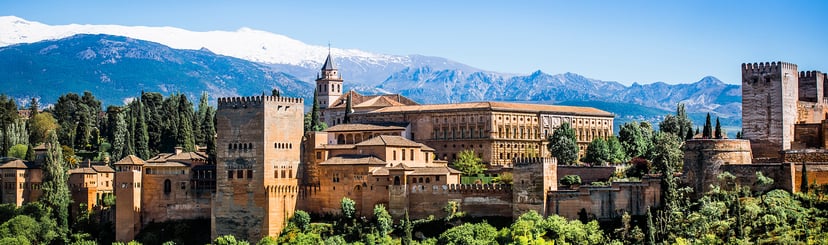
The coast can beat another mountain day because it changes what the body is asked to do. The Alhambra is not a passive monument visit. Even with an excellent guide and carefully managed timing, the day involves stone surfaces, garden gradients, transitions between palaces and Generalife, and the mental attention required to understand a layered Nasrid, Renaissance, and later history. Add an Albaicín viewpoint evening, and the trip has already asked for enough climbing.
That matters because Granada makes beautiful days physically cumulative. A traveler may not remember one single punishing hill; they remember that the morning started with the Alhambra, the afternoon crossed the lower city, the evening drifted toward Plaza Nueva, and the walk back to the hotel was longer or steeper than expected. A mountain day can be magnificent, but after that sequence it continues the same bodily theme: ascent, altitude, road curves, viewpoints, and a feeling that the trip is still working upward.
The coast changes the trip mood instead. A good Salobreña or Nerja day after the Alhambra should feel shorter in the mind than it is on the clock. The vehicle takes over the transition; the landscape opens; the group sits rather than climbs; the conversation becomes easier. The point is not to collect every coastal stop. The point is to keep the day from flattening into another interpretive march when the previous day already held Granada’s main cultural anchor.
For couples, the coast is often the better move when the evening matters. A long mountain day can make a late Granada dinner feel like an endurance test, especially if the previous night included a tapas route or a post-Alhambra walk. For families, the coast works when children or teenagers need a clear sensory break from history: water, horizon, a cave if Nerja is included, and fewer stone streets. For older parents, the coast works when the vehicle can handle the gradients and the route stops are chosen for manageable walking rather than panoramic ambition.
Small groups and celebration travelers feel this difference in a more social way. On another mountain day, the vehicle can become a shuttle between viewpoints, and conversation keeps pausing for the next ascent or photo stop. On a restrained coast day, the drive becomes a shared exhale. People talk more easily, the guide can add context without turning every minute into instruction, and the return to Granada can still feel like part of the celebration rather than the logistical end of an excursion.
Food-and-wine travelers should be especially careful. Granada’s dining rhythm is a pleasure, but it does not reward a day that returns everyone too tired to enjoy it. If you are holding a serious dinner or choosing from a MICHELIN Guide selection (https://guide.michelin.com/us/en/andalucia/granada/restaurants), the coast day needs restraint. Salobreña before a good Granada evening can work beautifully; Nerja plus Frigiliana plus a late return can make the meal feel like a reward for surviving the schedule rather than part of the trip’s pleasure.
Salobreña or Nerja from Granada: which coast day fits your base?
Salobreña fits travelers who want a shorter Costa Tropical day; Nerja fits travelers who want a more defined attraction and can tolerate a longer route. The distinction is not simply beach versus beach. It is shorter Granada-province coast logic versus a wider Costa del Sol arc.
Salobreña wins when the day should stay compact
Salobreña is the cleaner choice when the goal is recovery with a view. Its hilltop old town, castle area, and sea-level beach zone let a private route work in layers: arrive without dragging the group through a long promenade first, decide how much slope is worth it, and come down before the day starts to feel like another Albaicín. The official Salobreña tourism site’s castle page (https://turismosalobrena.com/en/castle/) is useful because it shows the town’s real planning hinge: the old town rises above the shore. That rise is the charm and the friction.
The best Salobreña day is not a heroic walk from sea level to every viewpoint. It is a controlled coast-and-hill sequence. A driver can place the group high enough to enjoy the historic profile without turning the visit into a climb from the beach, then bring the day back down to the water when attention fades. That matters after Granada because the trip has likely already included the Cuesta de Gomérez, Alhambra precinct transitions, or the hill pressure of the Albaicín and Sacromonte.
Salobreña is also the better choice when the hotel base is in central Granada and the evening plan is still important. From a Realejo or Cathedral-quarter base, the departure can be clean: hotel pickup, southbound road, one coast town, lunch or a calm pause, return before the city’s evening rhythm becomes a scramble. From an upper Albaicín base, the advantage is even clearer, because vehicle access and pickup points can already be the day’s first friction. A shorter coast target reduces the number of things that can go slightly wrong before the drive has even begun.
The cut-first rule in Salobreña is simple: do not force a beach ranking into the day. Choose the coast because it changes the rhythm, not because one stretch of sand must beat another. Once you start comparing beaches as the main event, you invite more driving, more parking decisions, and more disappointment from travelers who expected a restorative day rather than a survey of the shore.
Nerja wins when the group wants a stronger coastal anchor
Nerja is the better choice when the group wants a named coastal landmark and is willing to make the day fuller. The Cueva de Nerja (https://cuevadenerja.es/en/) gives the route a clear reason to go beyond a simple sea-air interlude. For travelers who would otherwise feel that Salobreña is too light, Nerja creates a stronger sense of arrival: cave, coast, Balcony of Europe area, and possibly the white-village contrast of Frigiliana.
The consequence is that Nerja behaves less like a soft coast break and more like a proper excursion. That can be exactly right for active couples, families with older children, or travelers who dislike empty hours. It is less right for a group still carrying Alhambra fatigue. The moment you add Frigiliana, the day stops being only coast. It becomes coast plus village plus slopes, which may be delightful on the right itinerary and self-defeating on the wrong one.
Nerja also asks for a more honest evening plan. If the day includes cave timing, a coastal walk, lunch, and a Frigiliana extension, do not book an ambitious Granada dinner as though everyone will return light and refreshed. Use Orange Donut Tours’ Nerja and Frigiliana private day when the goal is a polished full-day arc, not when the group is quietly asking for a half-day recovery disguised as a famous coast outing.
The strongest Nerja case appears when the previous day was Alhambra-focused but not overextended. A morning Alhambra visit, a contained afternoon, and an early night can leave plenty of appetite for Nerja. A day that already included the Alhambra, Generalife, Albaicín viewpoints, late tapas, and a difficult hotel return does not set Nerja up well. The route may still be possible, but possible is not the same as satisfying.
The route threshold: the Granada-to-coast driver leg after the Alhambra
The Granada-to-coast driver leg after the Alhambra earns its place only when transfer time does not erase the recovery benefit. This is the decisive planning threshold. A coast day can feel generous if the vehicle absorbs the effort and the stops are limited. It can feel wasteful if the route keeps stretching west, adding viewpoints, and turning the return into the most memorable part of the day.
Think of the road as part of the treatment. South from Granada, the A-44 direction toward the Lecrín Valley and Motril changes the landscape quickly enough to feel like a release from the city. For Salobreña, that release remains the point. For Nerja, the day adds the lateral coast movement along the A-7, and the group should want the additional payoff. This is why Salobreña can beat Nerja even for travelers who have heard more about Nerja: the shorter leg can preserve the mood better than the more famous destination.
A private route also needs to account for the pickup. Granada hotels do not all behave the same way. A lower Realejo, Centro, or Cathedral-quarter hotel usually gives the route a simpler start than a high Albaicín or Sacromonte base, where vehicle access, meeting points, and luggage-like family gear can complicate the first thirty minutes. If your stay is still undecided, this is where a base-planning guide such as where to stay in Granada becomes part of the day-trip decision, not a separate hotel question.
Heat changes the threshold as much as distance. In high summer or on a hot shoulder-season day, a coast plan should not be overloaded with inland village walking, exposed old-town climbs, and late returns. The sea can make the day feel easier, but it does not cancel heat exposure in a white town or on a promenade. Salobreña needs careful hill handling; Nerja needs careful cave-and-coast sequencing; both need a clean return plan if dinner in Granada still matters.
The practical test is this: if the group would be disappointed to spend a significant part of the day in the vehicle, choose Salobreña or stay in Granada. If the group enjoys the drive as part of the Andalusian landscape shift, Nerja can work. If the group wants high-altitude views and does not care about the sea, stop comparing coasts and choose the mountain.
When Sierra Nevada is better than Salobreña or Nerja
Sierra Nevada is better when the group wants altitude as the day’s subject, not merely a change from Granada. The mountain should not be treated as a second-best coast alternative. It has its own logic: higher air, road ascent, seasonal sport context, and a different visual relationship with Granada. The official Sierra Nevada (https://sierranevada.es/en/) site is the right place to check current resort-specific operations, but the evergreen planning point is simpler: Sierra Nevada is best when the mountain is the reason, not the filler.
Choose Sierra Nevada after the Alhambra when travelers are energized by the idea of leaving the city upward. This can suit winter travelers, photographers who want the drama of mountain light, active families, or guests who have already had enough coastal time elsewhere in Andalusia. It also works when the weather makes the coast feel flat but the mountain feels crisp and specific.
It is not the better choice for a group already tired of slopes. Granada’s beauty is vertical: the Alhambra above the city, the Albaicín across the Darro, Sacromonte climbing into cave-house lanes, and the Realejo rising in smaller but still meaningful gradients. A Sierra Nevada day after all that can be emotionally coherent but physically repetitive. It may deliver views while failing to change the body’s experience of the trip.
There is also a mood consequence. A mountain day tends to keep the itinerary in awe mode. That can be excellent if the group wants a grand Granada finale. A coast day lowers the intensity. It gives the trip permission to be conversational, sunlit, and less interpretive. Neither mood is superior in the abstract; the better choice is the one your group has not already overused.
For travelers choosing between an existing mountain plan and a coast plan, Orange Donut Tours’ Sierra Nevada Mountains private tour makes most sense when the group has specifically asked for the mountains. It should not be used as a reflex because the Alhambra day felt important and the second day needs to feel equally important. Sometimes the more intelligent second day is lower, simpler, and shorter.
How hotel base and heat change the Salobreña-versus-Nerja answer
Your hotel base can flip the answer because Granada’s first and last mile are rarely neutral. A traveler looking only at map distance may miss the point: the hardest part of the day may not be the highway, but the pickup, the return, and the last walk to the room.
From the Cathedral quarter, Puerta Real, or lower Realejo, a coast departure has a practical advantage. The driver can usually connect the group to the southbound route without turning the morning into a negotiation with narrow upper-city access. From the Albaicín, especially above Carrera del Darro or near the steeper lanes around San Nicolás, the day needs more care. The view from the hotel may be wonderful, but the vehicle logistics can be less forgiving. The same is true if a family has beach bags, strollers, mobility concerns, or older parents who should not begin the day with an awkward walk to a pickup point.
Heat then decides how much ambition survives contact with the day. In warm conditions, Salobreña’s old-town climb should be trimmed and paced, not conquered. Nerja’s cave can be a useful anchor because it gives structure, but the route around it should not become an exposed midday march. Sierra Nevada may become more appealing in summer if the group wants altitude and relief, but the road still makes it a mountain day rather than a coast day.
What Granada does to the body is cumulative. It adds extra climbing in small increments: hotel to taxi point, lower city to Alhambra, viewpoint to dinner, dinner to hotel. It adds queue drag when ticket timing matters and mental load when every site has layered historical context. By the time the coast question appears, the group may not be asking for another beautiful place. They may be asking to stop managing stone, slope, and schedule.
What the coast can do to the trip mood is equally specific. A well-cut Salobreña day makes Granada feel larger without making the itinerary feel heavier. A well-cut Nerja day gives the trip a clear coastal chapter. A poorly cut coast day, by contrast, makes the evening smaller: everyone returns with wet shoes, late appetites, and less patience for the city they came to see. That is why route restraint is not a luxury detail; it is the difference between a day that refreshes the trip and a day that borrows energy from the next one.
What to cut when the plan starts getting crowded
Cut the second add-on before you cut the coast itself. The mistake is not leaving Granada for the sea; the mistake is asking one coast day to be beach, cave, village, panoramic drive, shopping stop, and grand dinner prelude.
For Salobreña, cut the idea of doing every upper-town lane and every shoreline pause. Keep the old-town profile, one meaningful viewpoint or castle-area moment if the group wants it, and a sea-level pause. Let the driver handle the gradient rather than proving that the group can walk it. The day should feel like Granada has opened outward, not like the Albaicín has been repeated beside the Mediterranean.
For Nerja, cut Frigiliana first if the group is tired. This is not because Frigiliana lacks appeal; it is because adding a white village changes the category of the day. Nerja alone can be a coast-and-cave day. Nerja plus Frigiliana is a coast-village day with more walking texture and more return risk. Travelers who want that fuller route should read it as such; travelers seeking a restorative day should not smuggle it in as a small extra. For a deeper look at that specific pairing, the existing Nerja and Frigiliana from Granada guide is the more focused companion.
For Sierra Nevada, cut the need to make it a full symbolic counterweight to the Alhambra. A mountain day can be light and still successful. It does not need every possible viewpoint, long lunch, village detour, and late-city re-entry. The same rule applies across all three options: the second day should solve the problem left by the first day, not compete with it.
Also cut the idea that a private day trip must always leave the city. Some of the best Granada decisions involve refusing another transfer. If the previous day was long, if the group has a late dinner, if someone needs a pool or spa hour, or if the hotel itself is part of the trip’s pleasure, stay in Granada. Choose a shaded lower-city walk, a measured Cathedral-quarter lunch, a simple Realejo hour, or no tour at all. A private planner earns trust not by adding a day trip automatically, but by knowing when the better day is smaller.
How a private driver changes the decision without overselling it
A private driver changes this decision when movement is the main source of friction. The value is not glamour; it is control over gradients, pickup points, heat exposure, return timing, and the group’s tolerance for one more stop. That is exactly why coast-versus-mountain planning belongs in a tailor-made conversation rather than a fixed excursion menu.
On a Salobreña day, the driver can turn the town’s vertical shape from a liability into a controlled sequence. The group does not need to spend its best energy getting from sea level to the old town. The route can place a high moment early, keep lunch or a sea-level pause from feeling remote, and return to Granada before the evening loses its ease. On a Nerja day, the driver can keep the cave, coast, and optional Frigiliana extension from fighting each other. On a Sierra Nevada day, the driver can make the mountain feel like a chosen ascent rather than a chain of transfers.
Premium spend earns its cost when it changes comfort, timing, and decision quality: fewer awkward pickups, cleaner sequencing, a better cut when the group is tired, and a return that still leaves room for Granada. Premium spend does not help when the real need is no schedule at all. A driver cannot make a long coast day restorative if the group needs an unstructured recovery day.
This is where the private format becomes more than transportation. A guide or planner can look at your Alhambra slot, hotel base, dinner plan, ages, mobility, and appetite for another interpreted site, then decide whether Salobreña, Nerja, Sierra Nevada, or no day trip is the honest answer. Orange Donut Tours’ broader private day trips outside Granada are useful only when the route fits the stay; the best version is the one that cuts as intelligently as it adds. To hand over your dates, hotel base, Alhambra timing, and preferred level of movement, Inquire now.
The final verdict for a Granada stay
Salobreña beats another mountain day when the group needs sea air, a shorter driver-led change of scene, and a Granada evening that still has life in it. Nerja beats another mountain day when the group wants a more substantial coast chapter and accepts that the day will be fuller. Sierra Nevada beats both when altitude is the point. Staying in Granada beats all three when the trip is already full and the most luxurious move is to stop adding.
The most reliable decision is not coast versus mountain in the abstract. It is whether the next day should lower the intensity or keep it high. After the Alhambra, many discerning travelers do not need another summit. They need the itinerary to breathe without becoming empty. Salobreña does that with the least route ambition. Nerja does it with more structure. Sierra Nevada does something different and should be chosen proudly when that difference is the point.
FAQ
Is Salobreña or Nerja better as a day trip from Granada after the Alhambra?
Salobreña is usually better when the day after the Alhambra needs to stay calmer and shorter; Nerja is better when the group wants a stronger coastal anchor such as the Cueva de Nerja and can accept a fuller route.
When should I choose Sierra Nevada instead of the Costa Tropical?
Choose Sierra Nevada when mountain air, altitude, winter sport context, or highland scenery is the real goal. Do not choose it merely because you feel every Granada day must match the Alhambra in intensity.
Is Nerja too far from Granada for a restorative day?
Nerja is not too far when the group wants a proper excursion, but it is too ambitious for travelers who need a light recovery day. The added westward coast leg only earns its place if the cave, coast, or Frigiliana extension genuinely matters.
Is Salobreña a beach day or a cultural day?
Salobreña works best as a coast-and-hill reset rather than a pure beach day. Its value from Granada is the compact mix of sea air, hilltop town profile, and manageable driver-led routing.
Should we add Frigiliana to a Nerja day from Granada?
Add Frigiliana only if the group wants a fuller coast-village day and still has energy for slopes and a later return. Cut Frigiliana first when the purpose of the day is recovery after the Alhambra.
How does a Granada hotel base affect a coast day?
A lower Realejo, Centro, or Cathedral-quarter base usually makes the coast departure and return easier. A high Albaicín or Sacromonte base can add pickup and drop-off friction, so a shorter Salobreña plan may fit better.
When should we stay in Granada instead of taking any day trip?
Stay in Granada when the previous day ran late, someone needs an unscheduled morning, mobility is already strained, or an important dinner would be compromised by a long return. In that case, a shaded lower-city plan is wiser than either coast or mountain.
Can a private driver make the coast day feel easier?
Yes, a private driver can make the coast day easier by handling gradients, pickup points, route order, and return timing. It cannot turn an overlong day into true rest if the group needs blank space rather than a better transfer.
If you’re interested in any private tours of Granada, please reach out to us.



 So if you are looking for the absolute best in Granada & surroundings with authentic local fully-licensed native guides whose English you can actually understand and with an exclusive and amazingly fun itinerary













