Seville When Córdoba Is Already in the Trip: What to Save, Skip and Slow Down

Updated
Keep Seville, but give it a different job from Córdoba. The Alcázar day before or after the Mezquita changes whether Islamic and Christian palace context feels layered or repetitive, so the best plan is not “more monuments in both cities”; it is a role split. In real Seville conditions, the short-but-exposed moves between Puerta del León, Patio de Banderas, the Cathedral edge and Santa Cruz can tire a first-time traveler faster than the map suggests. The clearest exception is the architecture specialist who actively wants a second palace morning and is willing to cut something atmospheric to earn it.
The thesis is simple and city-specific: Seville should carry royal power, Cathedral scale, river movement, Triana texture and evening performance, while Córdoba should carry the interior shock of the Mezquita and the older-town depth around it. That division keeps both cities memorable instead of turning Andalusia into a sequence of arches, courtyards and conversion stories. For travelers building a private, multi-city plan rather than a collection of separate bookings, tailor-made Seville planning is most valuable before the tickets and transfers are locked, not after the itinerary has already doubled the same theme.
A Seville and Córdoba decision matrix for first-time Andalusia planning
The cleanest way to plan Seville when Córdoba is already included is to decide which city owns each role before adding any extra palace, quarter or evening. This is not a rivalry between Seville and Córdoba; it is a fatigue-control exercise. Both cities are strong enough to deserve a place, but they become weaker when they are asked to do the same work on consecutive days.
Keep in Seville: the Alcázar as the main palace, the Cathedral and Giralda as the statement of Christian and imperial scale, one short Santa Cruz route as connective tissue, and one slower river or Triana evening.
Let Córdoba own: the Mezquita, the densest Islamic-Christian architectural contrast, the Judería at a smaller scale, and the quieter patio or tavern texture that feels better when it is not rushed.
Cut first: a second or third Seville palace, a long Santa Cruz wander after a full Córdoba Judería, and any “historic quarter” repeat that does not change the traveler’s understanding or comfort.
Slow down in Seville: the garden portion of the Alcázar, the Arenal-to-river transition, a Triana crossing over Puente de Isabel II, or an evening around Teatro Flamenco Triana when the show timing fits the meal rhythm.
The matrix matters because private touring does not remove the body from the city. Seville is easier than Granada for slope, but its old center still asks for heat management, hard-paving stamina, queue discipline and careful transitions. A chauffeured pickup can simplify Santa Justa station, a hotel return, or a late dinner movement, yet the core monument cluster remains a walking sequence. Paying for a better guide or driver improves comfort and context; it does not magically make two consecutive days of similar palace language feel new.
That is why the Seville-to-Córdoba plan should be designed as a pair. A private Córdoba day can be beautifully efficient when it has a defined job, especially if the Mezquita is the emotional and historical center rather than one more stop in a crowded checklist. Travelers deciding whether Córdoba should be a day trip, transfer stop or overnight can use a private Córdoba day as a planning anchor, then refine the movement details with the dedicated Seville to Córdoba by rail or driver guide.
One practical test is whether each stop would still make sense if the other city were removed. If the answer is yes, the stop probably has its own role. If the answer is “because it is famous and nearby,” it is probably a candidate for cutting. This test is especially useful for celebration travelers, because the day should leave enough emotional space for the meal, the show or the family moment that prompted the trip.
Keep the Alcázar, but stop asking it to be Córdoba
The Alcázar should stay in the Seville plan even when the Mezquita is already confirmed. Skipping it reflexively is the wrong economy, because the two monuments do not do the same work when guided properly. The Mezquita is a spatial revelation: a forest of arches, a cathedral inserted into a mosque, and a single interior that compresses conquest, adaptation and continuity. The Alcázar is more sequential: gates, courtyards, palace rooms, inscriptions, tile, water, gardens and later royal use. It gives the traveler movement through power rather than one overwhelming interior.
The planning mistake is to guide the Alcázar as if it were merely another al-Andalus monument. If Córdoba comes first, Seville’s Alcázar should lean into court life, royal image-making, garden sequence, craftsmanship and the long life of the palace after the medieval period. If Seville comes first, the Alcázar can introduce Mudéjar language before the Mezquita expands the scale in Córdoba. Either order works, but the guide’s emphasis should change. Use the official Real Alcázar site (https://www.alcazarsevilla.org/en/) for current visit information, but let the itinerary designer decide what role the visit plays inside the wider Andalusia route.
For a discerning first visit, the best Seville monument pairing is usually Alcázar plus Cathedral, not Alcázar plus another palace. The Cathedral changes the day’s register: scale, verticality, empire, procession, and the city’s pivot from royal residence to religious and maritime power. The Giralda is not just a view decision; it is the bridge between mosque-minaret origin and Christian belltower identity. That makes it a useful counterpart to Córdoba without duplicating Córdoba’s emotional center. It also keeps the day compact around the UNESCO cluster instead of scattering the traveler to another palace interior.
There is a comfort reason too. The Alcázar entrance area, Cathedral perimeter and Archivo de Indias sit close together, but the day still involves standing, ticket timing, security rhythm, narrow edges and sun exposure. If you add Casa de Pilatos or Palacio de las Dueñas after that, the itinerary may look elegant on paper and feel like a second round of thresholds, tiles and courtyards in the body. For most first-time, comfort-led travelers, that is where premium curation should say no.
The better upgrade is not another monument; it is a sharper Alcázar visit. A private guide can connect the Alcázar to Córdoba without repeating the Mezquita, adjust the route when one traveler is tiring, and decide whether the gardens need ten restorative minutes or a longer interpretive pause. For deeper Alcázar planning, Alcázar tour planning is the supporting read. The editorial judgment remains firm: keep the Alcázar, but make it carry Seville’s palace-and-power story, not Córdoba’s mosque-cathedral story.
What should you save in Seville if Córdoba is already in the itinerary?
Save the Seville experiences that change the rhythm, scale or mood of the trip. Córdoba gives you one of Andalusia’s strongest interiors, so Seville should not respond by piling on more interior density. It should use its larger urban spread, river edge and performance culture to widen the trip after Córdoba has narrowed attention to the Mezquita and the old town.
Save the Cathedral and Giralda for scale, not as another religious stop
The Cathedral belongs because it changes the traveler’s sense of Seville’s size and ambition. After the Mezquita, another church can sound like repetition; the Cathedral is different when framed around scale, procession, the Giralda’s layered identity and the city’s Atlantic-facing wealth. The consequence for the traveler is clearer memory. Córdoba remains the interior of arches and layered worship; Seville becomes the city of power made vertical and public.
Do not overextend this into a full sacred-art day unless the travelers specifically asked for it. A short Archivo de Indias moment can add empire context without demanding another long interior. The Archivo is especially useful because it changes the medium from stone and tile to paper, maps and administration. That is a small but valuable deconfliction move: after Córdoba and the Alcázar, documentary history can beat another palace room.
Save Santa Cruz only as a hinge, not as a second Judería
Santa Cruz is worth keeping, but it should not be asked to compete with Córdoba’s Judería. Use it as a route hinge between the Alcázar, Cathedral and lunch, not as a long standalone maze. The practical reason is that Santa Cruz can become a blur of white walls, restaurant callers, souvenir edges and narrow lanes if the traveler has just done Córdoba’s old Jewish quarter with real attention. A short, guided passage through Patio de Banderas, Callejón del Agua or the shaded edge near the old walls is enough for most first-time plans.
This is also a mood decision. When Santa Cruz is kept brief, it gives the day charm and intimacy. When it is stretched after a dense monument morning, it can flatten the afternoon into wandering without a decision. Couples and families often feel that difference even if they cannot name it. They remember whether the day had shape.
Save the Arenal and river edge for air
Seville’s Arenal and Guadalquivir edge are not filler when Córdoba is in the plan; they are the release valve. A move from the Cathedral quarter toward the bullring context, Torre del Oro, the river path or Puente de Isabel II lets the city open after enclosed history. This is where Seville earns its place as a base rather than just another old town. The river gives the body a different pace: broader pavements, longer sightlines, and fewer tiny turns than Santa Cruz.
That does not mean forcing a boat cruise into every itinerary. The point is air, not a compulsory activity. For some travelers, a private river moment works beautifully; for others, a short walk and a well-timed drink before crossing into Triana is enough. The upgrade is the timing: avoid using the river as an exhausted afterthought when it should be the transition that makes the evening feel less crowded.
Save Triana for texture and evening identity
Triana is worth saving when it has a job: ceramics, market texture, river identity, flamenco context, or a calmer evening arc. It is less successful when bolted onto the end of a full old-town day simply because it is famous. The crossing over Puente de Isabel II is a useful planning hinge. Once you cross, the traveler has psychologically left the Cathedral-Alcázar zone, which helps the day stop feeling like one long monument corridor.
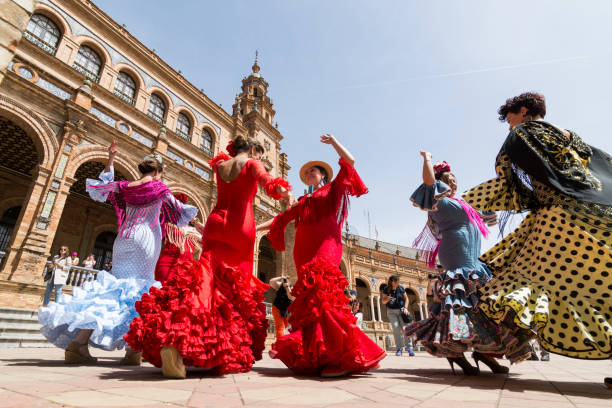
If flamenco is part of the trip, Triana often gives it a stronger Seville identity than a generic show add-on near the hotel. Check current venue details directly with Teatro Flamenco Triana (https://www.teatroflamencotriana.com/en/home/) before building the evening around it, and treat the show as a timing commitment rather than a loose suggestion. For a deeper evening setup, use Triana context before flamenco to decide whether dinner belongs before, after or on the Seville side of the river.
What to skip first: palace repetition, old-town blur and false upgrades
Cut the second palace before you cut the Alcázar. This is the most important editorial call in the article. Casa de Pilatos, Palacio de las Dueñas and Palacio de Lebrija can all be rewarding in the right itinerary, but they are not automatically better because they feel more exclusive or less obvious. A smaller Seville palace should be skipped because Córdoba already carries the historical depth when the trip has only one main Seville monument day and the traveler is not specifically asking for palace scholarship.
This is not a criticism of those palaces. It is a role problem. Córdoba’s Mezquita plus Judería already gives the trip layered history at intimate scale. The Alcázar gives Seville its royal palace core. Adding another Seville palace immediately after those two experiences often creates what travelers describe as “beautiful, but I’m losing the distinctions.” That is the precise moment when a premium itinerary starts to underperform: not because the sites are weak, but because the sequence has stopped making choices.
The same rule applies to old-town walking. Do not do a full Córdoba Judería, then a long Santa Cruz “Jewish quarter” route, then another narrow-lane tapas wander as if each were a new category. The streets are different, the histories are different, and a strong guide can explain those distinctions. But the body experiences them through turns, paving, shade, doorway stops and crowd pinch. After enough of that, even well-explained history begins to feel similar.
A counterintuitive correction: the most atmospheric hotel base is not always the easiest base for this itinerary. Sleeping deep inside Santa Cruz can feel romantic, but it can complicate pickups, luggage movement, heat breaks and late returns if the nearest vehicle access is not close to the hotel door. El Arenal or the Cathedral edge can sometimes work better for travelers who want both old-town access and simpler movement. The point is not that Santa Cruz is wrong; it is that atmosphere has a logistics cost.
Premium spend does not help when the extra spend is used to keep adding similar monuments instead of making a cleaner role split. Private guides cannot make repeated monument themes feel fresh if the itinerary has no role split. They can make a focused Alcázar richer, adjust a Córdoba day around the Mezquita, and smooth the transitions between hotel, station, lunch and evening. They cannot turn an overpacked sequence of comparable courtyards into a more elegant experience simply by narrating harder.
The cut-first rule is therefore practical: when the plan is getting crowded, remove the smaller Seville palace, shorten Santa Cruz, and keep the river or Triana pause. That may sound backwards to travelers who equate value with more admissions. In Seville after Córdoba, value often comes from contrast. The trip feels more premium when each stop has a reason to exist.
Where to slow the Seville day down
Slow Seville down in the places that change the body’s pace, not just in the places that look pretty. The Alcázar gardens, the Arenal river edge, Triana after the bridge, and a carefully timed flamenco evening all create a different kind of time from the Mezquita and Córdoba’s old town. These are the pauses that make Seville feel generous rather than redundant.
Inside the Alcázar, do not rush from room to room to prove you have “done” the palace. The gardens are not decorative leftovers; they are part of the comfort architecture of the visit. A pause there lets the traveler absorb water, shade, plantings and distance after interior concentration. If Córdoba came the previous day, this matters more. The mind may be ready for another explanation, but the body may need a different tempo.
Seville does something specific to the body. It does not punish with steep hills, but it accumulates fatigue through heat load, hard surfaces, standing time, slow security movement, and short transitions that are too brief for a car and too exposed to feel effortless. The walk from the Alcázar area toward Arenal or the river can be easy in mild weather and draining in sun. A river crossing to Triana can feel refreshing at the right hour and needless at the wrong one. That is why the day should include fewer “nearby” extras than the map seems to permit.
Seville also does something to the mood of the trip. A well-placed river or Triana pause makes the evening feel like a continuation rather than a recovery operation. Without that pause, the day can become a relay of entry times, guide explanations, lunch pressure and dinner logistics. Travelers may still see the major sights, but the memory compresses. Slowing down gives the city a second register: not just what was learned, but how the day felt after the learning was done.
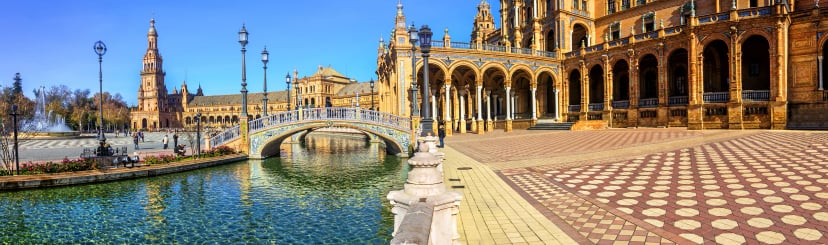
Plaza de España can fit this role when handled carefully. It should not be forced after the Alcázar, Cathedral, Santa Cruz and Triana unless the travelers have the stamina and the route makes sense. It works better as a separate soft-focus interval, a chauffeur-supported stop, or part of a lighter second day. The site is large, open and photogenic, but that is exactly why it can drain a tired group in heat. If Córdoba is already in the trip, Plaza de España should be used for breadth and breathing room, not as one more compulsory landmark.
Food-and-wine travelers should slow down through meal timing, not by stuffing the afternoon with tastings. Córdoba can carry a tavern lunch or patio pause; Seville can carry a later dinner rhythm, a Triana drink, or a market-adjacent texture if it does not collide with the monument day. The better private plan decides whether the day is monument-led with a relaxed dinner, or food-led with only one serious monument. Trying to do both at full strength is where many polished itineraries become uncomfortable.
How to sequence the Alcázar day before or after the Mezquita
The order should change the interpretation, not the list of sights. If Seville comes before Córdoba, use the Alcázar to teach the traveler how to read Mudéjar craft, water, inscription and court space, then let the Mezquita deepen the religious and architectural contrast. This order works well for first-time travelers who like a gradual build. The risk is that Seville’s palace day can become too heavy if it also includes a second palace and a long Santa Cruz walk.
If Córdoba comes before Seville, let the Mezquita remain unmatched. Use the official Mezquita-Catedral site (https://mezquita-catedraldecordoba.es/en/) for current visit information, but do not let operational planning dictate the whole emotional arc. After Córdoba, the Alcázar should be shorter, more selective and more focused on royal life, gardens and Seville’s later power. The Cathedral then becomes the scale shift, and Triana or the river becomes the evening release. This order often feels calmer for travelers who arrive in Seville already saturated with historical detail.
When Córdoba is a day trip from a Seville base, the surrounding Seville days should be lighter than travelers expect. Do not place the heaviest Alcázar-Cathedral day immediately after a long Córdoba return if the group includes older parents, children, heat-sensitive travelers or celebration travelers who want dinner to feel special. A private guide can keep the day graceful, but the itinerary still needs recovery space. The best luxury is often the empty hour between hotel return and dinner.
When Córdoba is a transfer stop between Madrid and Seville, resist the temptation to make the arrival evening in Seville too ambitious. A short Arenal walk, a drink near the river, or a simple Santa Cruz orientation is usually better than trying to “use” the evening for another guided quarter. The traveler has already handled luggage, station timing, monument concentration and a city change. Seville will feel more welcoming if it is allowed to open slowly.
When Seville precedes Córdoba, the night before Córdoba should not be the biggest flamenco-and-late-dinner night unless the group is genuinely late-night by nature. Córdoba rewards attention, and the Mezquita should not be approached with the energy left over from a show that ran too late for the traveler’s rhythm. If flamenco matters, place it after the main Seville monument day or on a lighter evening, not as a trophy squeezed before an early transfer.
The private-planning value: deconfliction before customization
The most useful private itinerary work happens before anyone asks, “What else can we add?” A good designer first decides what each city is allowed to own. Only then should the plan add skip-the-line support, guides, chauffeurs, dinner timing or special access where available. Otherwise the itinerary may become expensive without becoming clearer.
Where premium spend changes the trip is in pacing, privacy, interpretation and logistics. A private guide can decide when to stop explaining and move, when to keep Santa Cruz brief, when to give the Alcázar gardens time, and when a family needs a hotel break more than another site. A chauffeur can help with Santa Justa, the Arenal edge, Plaza de España, heat-sensitive movements and late-evening returns. A designer can make Córdoba and Seville feel like chapters rather than duplicates.
Where premium spend does not earn its cost is in rescuing a plan that refuses to choose. If the itinerary has the Mezquita, the Alcázar, Cathedral, Santa Cruz, Casa de Pilatos, another palace, Plaza de España, Triana, a food route and flamenco in too little time, the problem is not service level. The problem is editorial discipline. The more discerning the traveler, the more obvious that discipline becomes.
This is the natural handoff point for Orange Donut Tours: the value is not simply a private guide in Seville or a private guide in Córdoba, but the judgment to prevent repeated monument fatigue across both. When the trip needs that kind of cross-city editing, Inquire now and share which city comes first, where you sleep, whether Córdoba is a day trip or transfer stop, and which travelers in the party are most sensitive to heat, walking or late nights.
When to break the rule and add another Seville palace
Add a smaller Seville palace only when it changes the trip’s purpose. The exception is not “we have time.” Time alone is a weak reason. The stronger reasons are specific: a traveler loves domestic architecture, tilework, aristocratic collecting, Mudéjar detail, garden rooms, or the social history of private houses. In that case, Casa de Pilatos, Dueñas or Lebrija can be excellent, but the day must give something up.
The most elegant exception is a second Seville morning after the main Alcázar-Cathedral day, with Córdoba already complete and no pressure to turn the afternoon into another historic-quarter march. This works especially well for repeat visitors, architecture-focused couples, or small groups who prefer interiors to shopping or river time. It works poorly for families who need variety, first-time travelers trying to “complete” Seville in two days, or anyone heading next to Granada for the Alhambra.
If you add a palace, do not add it as a consolation prize after a rushed Alcázar. That is backwards. Let the Alcázar be complete enough to matter, then choose a smaller palace because it reveals a different scale of Seville life. If the guide cannot explain why that palace belongs after Córdoba and after the Alcázar, it probably does not belong in this itinerary.
This is also where the hotel base matters. A palace-focused second morning around the inner city can work from Santa Cruz, El Arenal or a central old-town hotel if the route is compact. It becomes less attractive when it creates transfer friction before a train, a long lunch reservation, or a heat-sensitive afternoon. The specialist exception is real, but it is narrower than many luxury itineraries admit.
The final role split to remember
Seville should not be reduced because Córdoba is in the trip; it should be edited more intelligently. Keep the Alcázar, Cathedral scale, a short Santa Cruz hinge, river air, Triana texture and the right evening. Let Córdoba hold the Mezquita and the older-town depth that makes it singular. Cut the smaller Seville palace first unless the traveler’s interests justify it. Slow Seville down where the city changes pace, not where the checklist demands another admission.
That is the difference between a full itinerary and a legible one. A full itinerary proves that many things were possible. A legible itinerary lets each city remain distinct after the traveler has gone home. For a premium Andalusia trip, that distinction is the real luxury.
FAQ
Should I skip the Alcázar in Seville if I am already seeing the Mezquita in Córdoba?
No. Keep the Alcázar, but guide it differently. The Mezquita should carry Córdoba’s mosque-cathedral depth, while the Alcázar should carry Seville’s royal palace, garden and court-life story.
Should the Alcázar day come before or after the Mezquita?
Either order works if the interpretation changes. Before Córdoba, the Alcázar can introduce Mudéjar language; after Córdoba, it should be more selective and focused on royal power, gardens and Seville’s later identity.
Which Seville palace should I skip when Córdoba is already in the trip?
Skip the smaller palace first unless you have a specific architecture or decorative-arts interest. Casa de Pilatos, Dueñas and Lebrija can be worthwhile, but they often repeat palace language after the Alcázar and Córdoba.
Is Santa Cruz still worth visiting if Córdoba includes the Judería?
Yes, but keep Santa Cruz short. Use it as a route between the Alcázar, Cathedral and lunch rather than as another long Jewish-quarter-style walk after Córdoba.
Where should I slow down in Seville after a Córdoba day?
Slow down in the Alcázar gardens, along the Arenal river edge, across Puente de Isabel II into Triana, or around a well-timed flamenco evening. These moments change the pace instead of repeating monument density.
Is Triana worth adding when the Seville day is already full?
Triana is worth adding only when it has a clear role, such as ceramics, river identity, flamenco context or an easier evening rhythm. Do not add it as a tired final stop after every major monument.
Can a private guide prevent monument fatigue across Seville and Córdoba?
Yes, if the itinerary has a role split. A private guide can sharpen context, adjust pacing and reduce confusion, but cannot make repeated palace and old-town themes feel fresh without editorial cuts.
How many Seville days do I need if Córdoba is included?
Two well-shaped Seville days can work if Córdoba is a focused day trip or transfer stop. Three days are better for travelers who want Triana, Plaza de España, food, flamenco or a second palace without rushing.
If you’re interested in any private tours of Seville, please reach out to us.





 So if you are looking for the absolute best in Seville & surroundings with authentic local fully-licensed native guides whose English you can actually understand and with an exclusive and amazingly fun itinerary













