How Many Days in Seville for a Bespoke Andalusia Trip? 2, 3 or 4 Days Before Córdoba or Granada
Updated
Three days is the strongest answer for most first-time Andalusia trips that continue to Córdoba or Granada. It is the stay length that lets Seville work in its natural rhythm: one serious monuments day, one lighter city day, and one evening-led day that proves why this city is better as an overnight than as a box to tick. The case is not only the Real Alcázar or Santa Cruz. It is also the cooler, human-scale hours that appear in places many rushed visitors barely notice, including the shaded lanes behind Plaza del Cabildo, where Seville suddenly feels intimate instead of overprogrammed.
That verdict wins because Seville fills quickly in daylight but pays back generously after the main sights. Triana after dark versus a same-day return to another Andalusia base is the clearest example: one gives you the river, dinner, and a city still unfolding; the other gives you packing, transfers, and an early start. The qualification matters. If Seville is not your emotional center, if the Alhambra is a headline priority, or if you are already squeezing Córdoba tight, then four days in Seville is often too much, and even two well-shaped days can be enough.
This guide answers one planning question only: how much of an Andalusia trip Seville truly deserves before you move on. The thesis is simple but city-specific: Seville is not hard because it lacks things to do, but because heat, monument density, river crossings, and late-evening payoffs can make the same city feel perfectly judged at three days and overallocated at four. If you already know you want one carefully paced city day, start with one well-paced Seville day plan; the rest of this article explains whether to stop there, add a second city day, or shift that extra calendar space to Córdoba or Granada.
How many days in Seville before Córdoba or Granada?
Three days is the default winner, two days is the runner-up, and four days only works under narrower conditions. The decision should not be based on attraction count alone. It should be based on four criteria: how much monument time you want inside the old center, whether Seville nights matter to you, whether heat or family pacing will slow you down, and whether an extra day would be better spent in Córdoba or Granada where the travel payoff changes more sharply with added time.
The common mistake is to assume that because Seville photographs beautifully, it deserves every spare night in Andalusia. It often does not. A fourth Seville day becomes weak when it is only there to repeat Santa Cruz at a slower speed, squeeze in Plaza de España because it feels famous, or compensate for a self-planned first day that was badly paced. In that scenario, the extra calendar space is usually more valuable in Córdoba or Granada than inside Seville itself.
Default winner: 3 days for first-time visitors who want the Real Alcázar, Cathedral, Santa Cruz, Triana, and nights that feel lived rather than rushed.
Runner-up: 2 days for travelers doing a broader Andalusia loop who still want a real Seville experience, not a station-to-monument sprint.
Best narrow use of 4 days: 3 days in Seville plus either one signature regional outing or one deliberately slower day built around food, family rhythm, or a celebration.
Wrong fit: 4 full city days when Córdoba is compressed to a pass-through or Granada is reduced to an arrival night plus an Alhambra slot.
- Choose 2 days if Seville is one chapter of a multi-city trip and you are willing to cut secondary sights.
- Choose 3 days if evenings, dining, and a calmer monument day matter as much as the headline checklist.
- Choose 4 days only if you are buying something specific with that time: a real day trip, a recovery day for heat or kids, or a food-led city day you actively want.
Why Seville can feel both compact and deceptively full
Seville is compact enough that newcomers often underestimate it, then dense enough that they overheat, overqueue, and overbook. On a map, Santa Cruz, the Cathedral, the Real Alcázar, the Archivo edge, and Arenal look almost contiguous. In practice, the old-center rhythm is slower than the map suggests. Narrow lanes fold back on themselves, monument entrances create stop-start movement, and the psychological effort of walking in heat through stone streets is greater than the raw distance. That is why a city that looks easy in theory can feel exhausting if you try to force too much into one day.
It also has a split personality. By late morning, the city can feel monument-heavy and transactional, especially around the Cathedral side of the center. By early evening, it softens. The walk from Arenal toward Triana across Puente de Isabel II is not physically difficult, but it changes the mood of the trip. Suddenly the city becomes social, lingering, and river-facing. That shift is exactly why Seville rewards at least one proper overnight and often three days. You are not only paying for more sightseeing time; you are paying for access to the city when it actually feels most itself.
A second corrective point matters here. The obvious premium solution is sometimes the wrong one. A chauffeured half-day can be useful for arrival, heat management, or families with very young children, but premium spend does not help much once you are threading Santa Cruz, the Cathedral, and the Real Alcázar on foot. The lanes are too tight, the core is too compact, and the real value comes from sequence, timing, and expert pacing rather than from sitting in a car between points that are naturally walkable.
Two days in Seville: enough if you choose hard and stop chasing completeness
Two days in Seville is enough for many first-time Andalusia itineraries, but only if you make peace with what it is not. It is not a leisurely museum-and-neighborhood stay. It is not a version of the city that leaves room for every plaza, palace, church, market, and dinner fantasy. What it can be is a satisfying first encounter: one core monuments day centered on the Real Alcázar and Cathedral area, then one second day that shows you the city breathing beyond the queue corridor.
The real unlock of two days is not simply “one more attraction.” It is the ability to separate headline monuments from the city’s mood. Day one can carry the historical weight. Day two can carry Triana, the river, a stretch toward Plaza de España and Maria Luisa Park, or a more food-led rhythm that lets Santa Cruz feel less like a checklist. That split matters because the body experiences Seville unevenly. Queue drag and heat compound quickly around monuments; a second day gives your energy somewhere else to go.
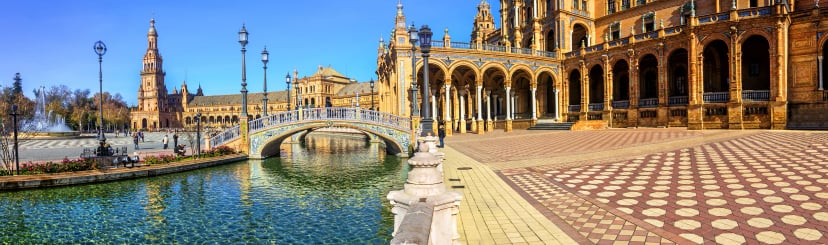
Where two days fails is when travelers use the second day to mop up leftovers without any logic. If the first day was overloaded, do not make the second day a tired continuation of the same old-center route. Cut first instead. Leave out the least consequential add-on, even if it is famous. For many itineraries, that means not treating Plaza de España as a reason by itself to keep an extra night. It is visually grand, yes, but it is not the sight that should force Seville from two days to four.
Two days also works best when your onward city is demanding. If Granada is next and the Alhambra will structure your schedule there, or if Córdoba is not just a stop between trains but a city you want to experience properly, then giving Seville two strong days is often the cleaner editorial call. Many travelers regret undergiving Granada far more than they regret not stretching Seville into a fourth day.
What two days actually unlocks inside the city
Inside the city itself, two days unlocks one complete narrative and one selective counterpoint. The complete narrative is obvious: royal and religious Seville, with the Real Alcázar, the Cathedral environment, and the layered lanes of Santa Cruz. The selective counterpoint is more important than it sounds. It can be Triana ceramics and riverfront texture, or it can be a slower civic Seville around Maria Luisa Park and Plaza de España, or it can be an evening-and-dining approach that lets you stop “collecting” and start inhabiting the city for a few hours.
That is why a private monuments day can earn its keep when your stay is short. A well-timed visit inside the palace-and-cathedral cluster prevents the entire trip from being bent out of shape by tickets, queues, and midday fatigue. If the Real Alcázar is non-negotiable, this is where a focused experience such as a private Real Alcazar visit changes the trip more than another night does. It buys coherence on the hardest day, which is often the difference between leaving Seville feeling satisfied at two days and feeling you needed a third just to recover.
The emotional consequence is just as important as the logistical one. Two days can still feel generous if one of those evenings belongs to you. The shaded lanes behind Plaza del Cabildo, the open edge toward the Cathedral after day-trippers thin out, and then the shift west toward the river can make a short stay feel longer than it is. What flattens the mood is not the number two on the calendar. It is spending both days under the same daylight pressure.
Three days in Seville: the length that makes the city feel intentional
Three days is the strongest answer because it turns Seville from a high-yield stop into a city with shape. The first day can absorb the heavy symbolic sights. The second can be used to rebalance the trip toward neighborhoods, food, parks, or family breathing room. The third creates what two-day stays often miss: margin. That margin is not wasted time. In Seville, it is the space where the city stops feeling like a monument assignment and starts feeling well judged.
This is the stay length I would choose for couples, celebration travelers, small private groups, and most first-time visitors who care as much about evenings as about entry tickets. It is also the smartest length for travelers who want Seville to frame, rather than dominate, a larger Andalusia journey. You get the city’s obvious highlights, but you also get the contrast between Santa Cruz by day and Triana after dark, between the monument spine and the social riverfront, between the dense old core and the looser civic spaces farther south.
Three days also absorbs real-world friction gracefully. Arrivals run late. The weather may push you indoors or change your walking appetite. Monument timing can bend the best plan. With three days, these things remain manageable rather than trip-defining. You do not need every half day to perform at full value. That is why three days usually beats the heroic efficiency of two and the diminishing returns of four.
Most importantly, three days protects the onward journey. You can leave Seville feeling complete without having treated Córdoba or Granada as casualties. That balance is the heart of a well-designed Andalusia trip. Seville gets the time it deserves, but not more than it earns.
What the third day unlocks that two days usually cannot
The third day unlocks separation of pace. In practical terms, it means you no longer need to combine all your important decisions into one or two exhausting blocks. You can give the monumental core its own day, preserve a second day for a different district rhythm, and keep a third day for whatever your specific trip values most: a slow lunch, a design or shopping interest, family downtime, a Guadalquivir-facing experience, or a dinner-led evening without feeling you are wasting daylight.
For food-and-wine travelers, that third day matters more than a long list of restaurant names. Seville dining can be one of the strongest reasons to stay an extra night, but only if the day around it is not already crushed by sightseeing. A serious dinner after a full palace-cathedral-park day can feel dutiful. The same dinner after a softer afternoon feels like part of the trip’s identity. That is the difference between eating well in Seville and actually using the city well.
For families and comfort-first visitors, the third day is where Seville becomes forgiving. Maria Luisa Park and Plaza de España are better as part of a lower-pressure day than as a bolt-on after monuments. Triana is better when the river crossing is a mood shift, not another obligation. Even a simple reset back at the hotel matters more on day three than travelers expect, because Seville’s heat and stone surfaces accumulate in the body. A compact city can still be physically wearing.
This is also the right moment to say what to stop forcing. Do not try to use the third day to prove you have “done” every district. Seville is not a neighborhood-collecting city in the way larger capitals can be. The value of day three is not breadth for its own sake. It is ease, contrast, and timing.
Four days in Seville: worth it only when the extra day has a job
Four days in Seville is not automatically wrong, but it needs a clear purpose. Without one, the city starts to feel overallocated in an Andalusia itinerary. The fourth day must buy something specific that three does not: a real regional outing without a hotel change, a deliberately slow celebration day, significant family recovery time, or a dining-and-leisure rhythm that is central to the trip rather than decorative around it.
This is the stay length that suits travelers who dislike packing, want a planted base, and are consciously choosing ease over maximum geographic coverage. It can also work well for milestone birthdays, anniversaries, or mixed-energy groups where one day is built around a long lunch, a later dinner, shopping, or a river experience instead of more cultural extraction. In other words, four days works when you are paying to feel settled.
Where four days becomes weak is when travelers imagine the city itself will keep unfolding at the same rate. It rarely does. After three days, Seville’s additional gains are more incremental than transformative. Upgrading from three nights to four rarely changes the experience enough to justify the cost if the extra day is only for a lighter repeat of Santa Cruz, a second pass through the Cathedral area, or a vague hope that the city will somehow become deeper through repetition alone.
A plain value judgment belongs here: upgrading from three nights to four does not earn its cost when the only reason is “more time in case we missed something.” In Seville, better sequencing, earlier monument planning, and a stronger guide usually solve that problem more effectively than another hotel night.
When Seville is being overallocated in an Andalusia itinerary
Seville is being overallocated when its fourth day comes at the expense of cities that need time more urgently to make sense. The clearest example is Granada. If the Alhambra matters, Granada punishes compression much more harshly than Seville does. Reduce Granada to an arrival evening and one monument slot, and the city can feel like logistics around a ticket. Reduce Seville from four days to three, and the trip usually still holds together beautifully.
Córdoba is a subtler case, which is why travelers misjudge it. On paper, it looks easy to day-trip or pass through. In lived travel terms, it is the kind of place that benefits from unhurried time precisely because it is smaller. A warm evening by the river, a calmer old-town rhythm, or a simple overnight can change how Córdoba lands. If Seville is taking four full days while Córdoba is reduced to a midday fragment, your balance is probably off.
Another sign of over-allocation is when your Seville plan becomes filler disguised as refinement. If you hear yourself saying, “We can always wander a bit more around Santa Cruz,” that is not necessarily a reason to stay longer. It may simply mean the city has already done its job. A stronger Andalusia itinerary is not the one that maximizes time in the most famous city. It is the one that distributes nights according to how sharply each place improves when given another day.
This is the firm editorial call: if your Andalusia trip includes both Seville and Granada, three days in Seville is usually enough, and the next extra day should go to Granada before it goes to Seville. If the comparison is Seville versus Córdoba, three in Seville and at least one meaningful day or overnight in Córdoba is often the better shape than four and a rushed transfer.
Heat, evenings, and monument density are what really change the answer
Heat changes Seville more than many first-time visitors anticipate, not because the city becomes impossible, but because the cost of doing things in the wrong order rises quickly. Stone, glare, exposed plazas, queue time, and old-town walking all draw from the same energy reserve. A morning inside the monument corridor can be magnificent. The same corridor after you have already crossed the center in midday heat feels expensive in the body. That is why trip length cannot be separated from pacing. Two days in cool weather and two days in punishing heat are not the same product.
Monument density changes the answer too. The Real Alcázar and Cathedral cluster can dominate a day psychologically as well as chronologically. Even when distances are short, the start-stop rhythm is tiring. Then there is transfer reset: returning to the hotel, changing for dinner, finding your second wind, and deciding whether to cross to Triana. Those small resets are exactly what travelers forget when they assume a compact city needs less time. In Seville, the city’s density creates fatigue faster than its map size would suggest.
The mood consequence runs the other way. Evenings stretch Seville in your favor. Light softens, lanes cool, and the city becomes social instead of managerial. This is why at least one overnight matters, and why three days often feels so right. It preserves the evening as part of the trip rather than as the tired afterthought to sightseeing. Triana after dark, especially when you are not thinking about the next morning’s transfer, is not an add-on. It is one of the clearest arguments for staying long enough to let Seville breathe.
If you run hot, travel with older relatives, or have children whose best hours are not the museum hours, heat strengthens the case for three days. If you travel in cooler months, wake early, and genuinely enjoy efficient sightseeing, heat weakens the case for four days but does not erase the value of three. Either way, it is rhythm, not only season, that should make the decision.
When adding a day trip helps the Seville stay and when it dilutes it
A day trip helps when the city itself is already complete at your chosen length and the extra day adds a genuinely different Andalusian texture. It dilutes the stay when you use it as a substitute for Seville time you have not actually secured yet. This is why one Seville city day plus one day trip can be brilliant, while two half-finished Seville days plus a day trip often feels incoherent. The city must first be structurally complete enough that leaving it for a day does not create regret.
For many travelers, the best use of a fourth calendar day is not “more Seville” but “Seville plus contrast.” That contrast could be Córdoba, Cádiz, Jerez, or another signature regional route depending on what the larger trip already contains. But the logic should stay the same: choose the outing because it adds a different register, not because you are nervous about having an unscheduled day. If you are still unsure whether Seville itself is done, you are not ready to leave it for a day trip.
This is where a curated approach beats self-planned sprawl. One city day that fully covers Seville’s monument core, plus one signature regional day, can outperform a longer self-planned stay where every day is half-committed. That is especially true for travelers who value comfort, privacy, or family energy management. If you want to compare the regional options in more detail, use the existing Seville base comparison; if you already know your extra day belongs outside the city, the practical next step is to look at signature day trips from Seville.
The dilution problem is easiest to spot in first-time itineraries that try to do everything at once: one monuments morning, one rushed Triana evening, and then a full day trip before the city has settled in the mind. That sequence leaves travelers with photographs of Seville but not much feeling for it. If Seville matters to you, finish Seville first. Then leave it for a day.
Córdoba or Granada after Seville: where the next extra day belongs
If you are deciding whether the next extra day after Seville belongs to Córdoba or Granada, the answer depends on what you want that day to solve. Granada needs time for structure. The Alhambra shapes the visit, the city’s hills change how you move, and the emotional reward of the place increases when you are not operating on a narrow timetable. If Granada is central to why you came to Andalusia, protect it first. In many trip designs, that means taking Seville at three days and giving Granada the additional space.
Córdoba needs time for texture. It is easier to underestimate because its scale is more compact and its checklist shorter. Yet that is exactly why an overnight can be so satisfying there. You are not fighting to “fit” a giant city; you are allowing a concentrated one to slow down. If your Andalusia trip already leans hard into big-name sights, the extra day may do more emotional work in Córdoba than in a fourth Seville day spent repeating familiar ground.
There is also a routing truth many travelers feel only after the trip starts: intercity transfers are not only about train duration. They alter hotel rhythm, check-in timing, lunch, and the appetite for evening plans. Seville to Santa Justa, then onward, then arrival logistics in the next city can flatten the day even when the rail journey itself seems manageable. That is why the calendar decision should not be made in abstract attraction units. An extra day is valuable partly because it keeps you from using every transfer day as a sightseeing day as well.
So where should the marginal extra day go? Usually to Granada first if the Alhambra is a core priority; to Córdoba next if you want Andalusia to feel more layered and less headline-driven; and only to a fourth Seville day if what you most want is continuity, ease, or a premium day built around dining, celebration, or a regional outing without another hotel move.
Where paying more changes the trip and where it does not
Paying more changes the trip in Seville when it reduces the hardest friction points: ticket stress, queue uncertainty, sequencing errors, heat exposure on the wrong day, and the fatigue that comes from trying to thread monuments and neighborhoods without a clear logic. On a short stay, those improvements matter a great deal. A well-designed private city day, thoughtful hotel position, or carefully timed regional outing can rescue the entire structure of the trip.
Paying more also changes the trip when the group itself needs flexibility. Families, celebration travelers, mixed-mobility parties, or visitors with strong food interests often benefit from a plan that treats comfort as a design choice rather than an upgrade. That does not mean padding the itinerary. It means aligning the day with the hours when each part of Seville works best.
But premium spend does not help where the city itself is already simplest. It does not earn its cost to upgrade from three nights to four just to feel safer about covering Seville. It also does not earn its cost to over-chauffeur the historic core once you are moving between Santa Cruz, Arenal, and the Cathedral precinct on foot. In the center, sequence beats wheels.
The same restraint applies to dining-led extensions. A fourth night can be justified by food, but only if food is genuinely central to the trip. If it is, use real signals before you add that night. Look at the format on abantalrestaurante.es/menu (https://abantalrestaurante.es/menu/), the reservation flow at ispal.es/reservas (https://ispal.es/reservas/), or a trusted dining reference such as the Michelin Guide listing for Cañabota (https://guide.michelin.com/us/en/andalucia/sevilla/restaurant/canabota). If those kinds of meals are not the reason you would stay planted, then dining is probably not the reason to keep a fourth Seville day either. For broader ideas on where a slower food-led evening fits best, see fine-dining options in Seville.
A better split for many travelers: one private Seville day plus one signature regional day
For many discerning first-time travelers, the strongest compromise is not 4 full days in Seville. It is 1 fully designed Seville monuments-and-neighborhood day, 1 second city rhythm day or evening-forward day, and then 1 signature regional outing. In shorter terms: finish Seville properly, then use the next day for contrast. This works especially well for travelers who want quality over sprawl, do not enjoy repacking every night, and prefer one or two excellently structured days to four self-managed ones that blur together.
This is also the point where planning support naturally earns itself. If your instincts say that one great Seville day plus one regional day would serve you better than stretching the city to a fourth night, that is not under-doing Seville. It is allocating time according to payoff. You can explore broader options through private touring in Seville and then hand off the sequence once the shape is clear. Inquire now
What makes this split so strong is that it respects both the body and the mood of the trip. It avoids the sag that sometimes arrives on an underpurposed fourth city day, but it also avoids the brittle feeling of a rushed two-day stay. You get Seville’s monument spine, Seville’s evening personality, and one outward-looking Andalusian contrast without turning the itinerary into a relay race.
How to make the final call in five minutes
If Seville is your emotional headline, if you care about evenings, and if you want the city to feel inhabited rather than merely visited, choose 3 days. If Seville is one stop among several and Granada or Córdoba still need breathing room, choose 2 strong days and cut decisively. If you are considering 4 days, ask one hard question: what exact job does the fourth day do that a better-designed three-day stay does not? If you cannot answer that clearly, the day probably belongs elsewhere.
Then test the plan against your actual travel style, not your aspirational one. Do you move happily in heat? Do you enjoy dense sight days? Will dinners matter enough to shape the calendar? Are you traveling with children, older relatives, or a celebration budget that values ease more than coverage? Seville rewards honesty here. The city is generous when you give it the right amount of time and unforgiving when you keep adding time without purpose.
The final judgment, then, is straightforward. Two days in Seville is enough for a well-built Andalusia loop. Three days is the most convincing answer for most first trips. Four days is for travelers who know exactly why that extra day is there. Everyone else should stop at three and give the surplus time to Córdoba, Granada, or a signature regional contrast.
FAQ
Is 2 days enough for Seville on a first trip?
Yes, 2 days is enough for a first trip if Seville is part of a broader Andalusia route and you are willing to prioritize. It works best when one day is dedicated to the monument-heavy core and the other gives you a different side of the city such as Triana, the riverfront, or a lighter civic day. It works worst when you spend both days trying to mop up an overstuffed checklist.
Is 3 days in Seville too much?
No. Three days is usually the best-balanced answer. It gives you the major sights, preserves one or two evenings that actually feel like Seville, and leaves margin for weather, dining, or family pacing. The city often feels most complete at three days because that is when the old center stops dominating every decision.
When is 4 days in Seville worth it?
Four days is worth it when the extra day has a defined purpose: a regional outing without repacking, a celebration-focused slower day, recovery time for heat or mixed-energy travelers, or a food-led plan that is central to the trip. It is not worth it when you are adding time only because the city is famous or because the first three days were badly sequenced.
Should I give the extra day to Seville, Cordoba, or Granada?
Give the extra day to Granada first if the Alhambra is central to the trip and you do not want Granada compressed around one ticketed visit. Give it to Córdoba if you want a gentler, more atmospheric counterweight to Seville and would enjoy a smaller city with a real evening. Keep it in Seville only if you want continuity, a planted base, or a very specific fourth-day purpose.
Does Seville work better as a base or as a stop before moving on?
It can work well either way, but the answer depends on the wider route. Seville is a strong base if you want fewer hotel changes and plan to add a regional outing. It is a strong stop if you are prioritizing Granada or want Córdoba to have meaningful time too. The best base is not the one with the biggest name; it is the one that keeps the rest of the trip from feeling rushed.
How much does heat change the number of days I need?
Heat does not always mean you need more days, but it does increase the value of better pacing. Travelers who struggle with hot-weather sightseeing, midday glare, or long queue corridors often find that three days feels far more humane than two. The extra time is useful not because the city suddenly has more sights, but because your energy holds together better.
Does Triana justify staying longer in Seville?
Triana by itself does not justify an extra full day, but Triana after dark absolutely strengthens the case for at least one proper overnight and often for three days rather than two. Its value is not monument count. Its value is mood. Crossing the river for dinner and staying out without thinking about a same-night transfer is one of the clearest ways Seville separates itself from a rushed stop.
What is the biggest planning mistake with Seville in Andalusia?
The biggest mistake is giving Seville extra days by default while compressing Córdoba or Granada into whatever time remains. The second-biggest mistake is assuming that more hotel nights will fix a poorly sequenced plan. In Seville, better timing and a clearer structure usually outperform another day that has no real job.
If you’re interested in any private tours of Seville, please reach out to us.





 So if you are looking for the absolute best in Seville & surroundings with authentic local fully-licensed native guides whose English you can actually understand and with an exclusive and amazingly fun itinerary













