A White-Glove Seville Artisan Shopping Day for a High-End Stay: Triana Ceramics, Flamenco Fashion and Easy Hotel Returns

Updated
The best white-glove Seville artisan-shopping day starts in Triana for ceramics and maker context, then crosses into the center only after a parcel handoff at the Triana-bridge parcel-return hinge. That order matches the real craft map of the city: the Centro Cerámica Triana stands on Callao in a former pottery factory, workshops still radiate through Triana, and the most useful central browse for flamenco fashion, shawls, accessories and traditional retail sits around Calle Sierpes and its adjoining streets. A Seville artisan-shopping guide is unnecessary when the traveler only wants a quick souvenir stop; in that case, choose one district, buy one or two light pieces, and move on. citeturn326835view0turn756448view5turn661925view0turn756448view1
The thesis is simple and very Seville-specific: this day is decided less by taste than by when fragility and weight enter the plan. In some cities you can keep browsing after the big purchase without changing the tone of the day. In Seville, once ceramics enter the bag, the bridge crossing, the stone heat, and the stop-start walking through the old center begin to matter. The city looks compact on a map, but a boxed tile or serving bowl turns a pretty river crossing into a logistics event by mid-afternoon. citeturn326835view0turn756448view5turn756448view1
The overvalued move is to begin on Calle Sierpes because it feels polished. If ceramics matter at all, the center is the wrong opener. Central Seville is better as your second act because it gives you lighter browsing, cleaner taxi access, and an easier hotel return once the breakable purchases are already handled. Travelers who want the day curated rather than improvised should look at a Seville shopping private tour only if the brief includes appointments, parcel decisions, and a firm finish point back at the hotel; otherwise you are paying for accompaniment, not design. citeturn756448view1turn661925view0turn326835view0
Should you shop Triana first or Calle Sierpes first?
Triana first wins whenever ceramics, custom work, or anything heavier than a scarf is on the list. Calle Sierpes first only makes sense if your whole priority is central fashion and accessories, or if you have already decided that ceramics will be a glance rather than a purchase. That is the clearest decision in this entire plan. citeturn661925view0turn756448view1turn326835view0
A practical routing matrix
- Choose Triana first, center second if you want tiles, tableware, custom-painted pieces, house gifts, or workshop context.
- Stay central if you mainly want mantones, fans, jewelry, shoes, embroidery, flamenco-inspired fashion, or a refined browse before heading back to a central hotel.
- Keep it to one district if this is only a souvenir errand. A dedicated artisan-shopping half day is too much for one fan, one magnet, or one small dish.
Official Seville shopping guidance supports the split. The city places traditional shops and artisan retail on Calle Sierpes, while the broader central craft-and-fashion cluster extends through Cuna, Puente y Pellón, Plaza del Pan, Regina and Francos. The same official shopping overview treats Triana differently: more neighborhood-based, more rooted in San Jacinto and the local commercial fabric, less like a polished browse for its own sake. That distinction is exactly why the day works as a two-zone sequence instead of one blended wander. citeturn661925view0turn756448view1
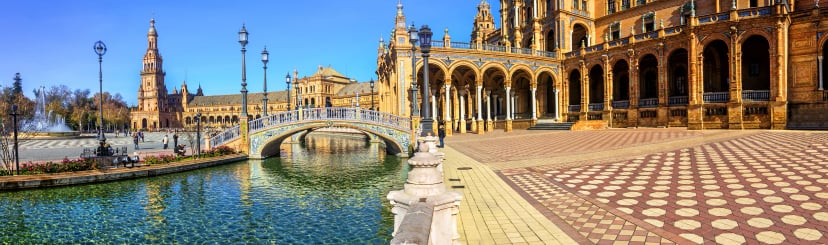
If you need one proof that Triana ceramics are not tourist afterthoughts, use the municipal museum’s own reminder: many of the tiles decorating Plaza de España were made in the historic Triana factories, including the one whose remains now house the Centro Cerámica Triana. That is a non-obvious but important clue. Beginning with ceramics in Triana changes purchase quality because you are not simply entering shops; you are entering the working tradition that skinned some of Seville’s best-known surfaces. citeturn326835view3turn326835view2
Where this recommendation breaks down is equally clear. If you are staying near Santa Cruz, dislike buying breakables, and mainly want a soft afternoon of shawls, fans, combs or embroidered accessories, a central-only plan is more elegant. In that case, Triana becomes an atmospheric detour rather than the reason for the day. The mistake is not choosing the center; the mistake is pretending you are doing a ceramics day when you are actually planning a fashion browse. citeturn756448view2turn661925view0turn756448view1
Another trap is mistaking difficulty for authenticity. You do not earn a better ceramic piece by making the route harder on yourself, and you do not make a fashion purchase more “local” by carrying it through two districts. In Seville, authenticity is geographic: ceramics gain meaning in Triana’s workshop fabric, while flamenco fashion and allied accessories gain usefulness in the center’s broader retail weave. Once you accept that, the route becomes much easier to edit. citeturn326835view0turn661925view0turn756448view2
For most style-led travelers, the refined version of this outing is a strong half day of about four and a half to six and a half hours, not a generic sunrise-to-midnight marathon. A full day earns its place only when you add a proper studio visit, a deliberate lunch, a parcel drop, and a dinner-worthy second act. If you are merely “seeing what happens,” cut the plan shorter. Seville rewards decisiveness more than shopping stamina.
What Triana is for, and what should wait for the center
Triana is for maker context, ceramics, and the purchases that become cumbersome later. The center is for finishing touches, fashion-adjacent browsing, and lighter pieces you would rather choose after lunch than before it. Thinking in those roles keeps the day from dissolving into random shopping. citeturn326835view0turn661925view0turn756448view1turn756448view2
In practical terms, Triana’s most useful ceramic core is tight. The Centro Cerámica Triana is at Callao 16 in the shell of the former Santa Ana factory, and one working studio publishes directions that place its Pureza 72 workshop about five minutes on foot from the bridge via San Jacinto and Plaza del Altozano. That small fan between Callao, San Jorge, Altozano and Pureza is why Triana should be treated as a concentrated first act. You do not need to roam the whole barrio to understand or buy well. citeturn326835view0turn756448view5
What belongs here? Wall tiles, serving pieces, bowls, platters, house gifts, smaller one-of-a-kind glazed objects, and any purchase where glaze, weight, edge finish, or custom detail matters more than label recognition. Triana is also where translation and context have real value: asking whether a piece can be packed flat, whether a tile series can be completed later, whether custom painting is realistic on your timeframe, or whether shipping is wiser than cabin baggage. A Triana-focused private route makes sense when it helps with those questions, not when it simply adds more footsteps. citeturn326835view0turn756448view5
Language friction is different in the two zones. In Triana, conversations tend to be object-specific: glaze, size, weight, whether the back is ready for hanging, whether a set can be completed later. In the center, the questions turn toward fit, styling, gifting, and how an item will actually be used that evening or packed for the flight home. That is another reason not to blur the districts; each part of the city invites a different kind of decision. citeturn326835view0turn756448view2
The center plays a different game. Seville’s own shopping overview places handicrafts and flamenco fashion on the streets orbiting Sierpes—Cuna, Puente y Pellón, Plaza del Pan, Regina and Francos—and describes Calle Sierpes itself as one of the city’s oldest shopping streets, still associated with traditional and artisan shops. That is the right terrain for mantones, mantoncillos, fans, combs, jewelry, shoes, embroidery and the polished kind of gift browsing that benefits from being close to coffee, taxis and hotel districts. citeturn661925view0turn756448view1turn756448view2
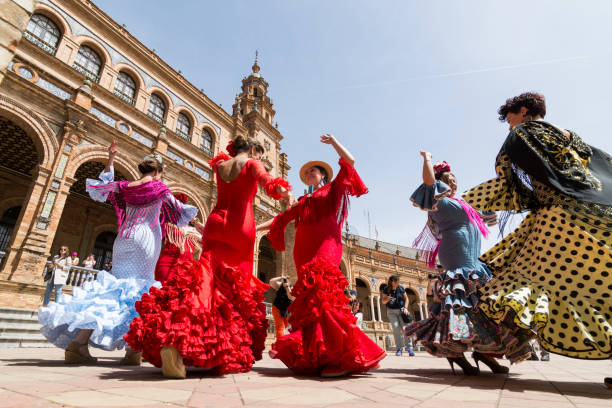
This split is also why flamenco fashion in Seville should not be reduced to costume trivia. Lina’s own history begins in a small sewing workshop on Calle Salado de Triana near the Guajiro tablao, records the house’s early decision to incorporate the mantoncillo differently from prior convention, and later traces moves into Santa Cruz and Lineros. That arc from Triana workshop roots to central-city presentation is a helpful model for the city itself: origin in the neighborhood, finishing and display in the center. citeturn261857view2turn261857view3turn261857view0turn261857view1
Couples and celebration travelers usually benefit most from splitting the categories this way because it keeps the emotional energy of the day intact: Triana for the satisfying “find,” the center for the polished “choose.” Families benefit in a different way. The municipal Cerámica page explicitly flags the center as suitable for families and notes that it is indoors, which makes it a practical anchor before patience thins. Older parents often prefer to do the thinking-intensive shopping before lunch, then take the flatter, café-richer central browse at a gentler pace. citeturn326835view0turn661925view0
The first thing to cut, if your Seville schedule is getting crowded, is monument hopping between the two shopping zones. Do not wedge a long Alcázar visit, a Cathedral queue, or a sentimental Santa Cruz meander between Triana ceramics and the central fashion streets. That middle stretch is where elegant plans become bag-hauling plans. If you want a monuments day, keep it on another date and use a broader Seville day-planning guide instead of forcing two incompatible days together. citeturn661925view0turn756448view1
The bridge crossing is the decision point, not the lunch reservation
The real hinge in this day is the moment you leave Triana, not the restaurant you book. The bridge crossing determines whether the rest of the itinerary feels airy or administrative, because that is when ceramics, heat, and fatigue finally meet. Seville’s map may suggest the river is a small formality; with purchases in hand, it is the exact point where judgment starts paying off. citeturn756448view5turn756448view1
Start with a short, serious morning in Triana
The cleanest opening is a purposeful Triana morning: one context stop, one or two strong shopping stops, and no wandering for wandering’s sake. If the group wants context before buying, the official Centro Cerámica Triana page is worth checking for same-day access, and the museum itself is a smart opening because it is indoors and visually explains kilns, moulds and tools before money enters the conversation. After that, move quickly into the ceramic core rather than drifting down every street in search of atmosphere. official Centro Cerámica Triana page (https://icas.sevilla.org/espacios/centro-ceramica). citeturn255209search3turn326835view0
On hot days, an indoor context stop first is more than an intellectual warm-up. It gives everyone a seated, sheltered calibration point before you start weighing ceramics in the hand. It also prevents the classic mistake of buying too quickly from visual overload. Ten minutes with kilns, tools and historical pieces tends to sharpen judgment more than another twenty minutes of random browsing, especially if the group is balancing aesthetics, packing realities, and a finite amount of patience. citeturn326835view0
This is where thoughtful guidance can genuinely improve purchase quality. A good local guide does not need to perform insider theatre; the value is editorial. They help you compare handmade versus decorative-but-generic pieces, steer you away from buying the first bright object that photographs well, keep the studio stop at the right length, and flag when a custom request is sensible versus optimistic. In Triana, fewer stops usually means better buying.
Use Mercado de Triana and Plaza del Altozano as the handoff point
From a route perspective, Mercado de Triana and Plaza del Altozano give you the cleanest decision point. The market sits on San Jorge beside the bridge, and the official tourism page notes that archaeological remains of the old Castillo de San Jorge can still be seen in its corridors. That makes it more than a snack stop; it is the natural pause between maker time and city-center polish. citeturn756448view3
At the Triana-bridge parcel-return hinge, ask one blunt question: would I still enjoy another ninety minutes of walking if I had to carry everything I just bought? If the answer is no, do the drop now. That drop can be a quick hotel run, a staffed vehicle hold, or a pre-arranged handoff with a porter. Midday parcel storage versus continuing on foot toward central Seville is not a small convenience call; it is the point where the day either keeps its composure or loses it. citeturn756448view3turn756448view5
If you have only bought one or two flat, easily wrapped items, you can sometimes skip the drop and cross straight to the center. Be honest, though, about what easy means. A single decorative plate is not easy if it turns you cautious for the next two hours. The threshold is psychological as much as physical: the moment you start protecting the purchase, the shopping day has changed category.
This is what Seville does to the body when you get the order wrong. Morning shade and curiosity can hide weight. By early afternoon, the bridge crossing exposes you, the old center turns into stop-start walking, and every fragile object asks for a better grip. The municipal Cerámica page explicitly notes that the center is an excellent hot-day stop because it is indoors; Calle Sierpes’ own city guidance recommends early morning or late afternoon for a more relaxed walk. Those small official cues add up to a bigger truth: midday is the worst moment to begin carrying breakables into the center. citeturn326835view0turn756448view1
Cross into the center only after the bags are solved
Once the parcels are handled, the center becomes a pleasure again. This is when Calle Sierpes and the adjoining central streets come into their own: not as a place to begin a craft day, but as the elegant place to finish one. You can browse shawls, fans, jewelry, shoes or embroidered pieces with cleaner attention because you are no longer protecting ceramics. The shopping geography in the official city guide backs that up: Sierpes for traditional retail, and the adjacent streets for handicrafts and flamenco fashion. citeturn661925view0turn756448view1turn756448view2
Central Seville after the handoff should feel edited, not expansive. The official city shopping geography already narrows the useful streets. Use that permission. Work Sierpes and a few adjacent lanes that match your target category, then stop. The goal is not to cover the center. The goal is to end the day with one or two choices made well and no desire to sit down on the nearest church step with tired hands. citeturn661925view0turn756448view1
Do not make Santa Cruz your walking corridor between these acts. Santa Cruz is beautiful, but with parcels it is the wrong connective tissue: tighter lanes, more visual temptation to stop, less shopping logic, and a much higher chance that a craft day dissolves into half-sightseeing with sore hands. If your hotel is in Santa Cruz, return there after the central shopping is done, not as a scenic detour between Triana and Calle Sierpes.
This also changes the mood of the whole trip. When parcels disappear at the bridge or in a vehicle, the late afternoon still feels social: coffee, a quiet fitting, a last fan or pair of earrings, maybe a proper dinner. When parcels stay with you, the same hours feel like unpaid work. The day gets shorter in the mind even when the clock says otherwise. For celebration travelers especially, preserving the evening matters more than squeezing in one extra shop.
This is why the day suits food-and-wine travelers when designed well. Once the bags are gone and the second act is lighter, dinner is no longer recovery time; it becomes part of the same aesthetic mood as the shopping. Once the bags stay, dinner becomes problem-solving: where to put them, how quickly to leave, whether everyone still has the patience for a long menu. The evening tells you whether the route was correct.
Finish close to where the evening begins
The best hotel return is almost never the dramatic one; it is the simple one. Finish the second act where a taxi is easy, where the concierge can take bags immediately, and where you are already geographically pointed toward dinner rather than away from it. If you are staying centrally, that means letting the central browse be the last retail phase. If you are staying in Triana and doing a ceramics-heavy day with almost no fashion component, you can flip this advice and keep the entire outing on your own side of the river. That is the cleanest exception to the usual sequence.
When studio appointments, parcel storage, and one heat-aware transfer are handled well, the day stops feeling like shopping and starts feeling like Seville with objects attached. That is exactly where a tailor-made Seville day earns its keep: not by adding more shops, but by removing the awkward parts between them. If you want Orange Donut Tours to shape the sequence around your hotel, your group, and what you actually hope to buy, Inquire now.
When the car is part of the craft day, and when it is just theatre
A chauffeur is worth paying for only when the vehicle changes the physical reality of the day. In Seville artisan shopping, that means three things: parcel hold, a heat break at the river crossing, and easier movement for people who do not want a long afternoon on foot. If the car is not solving at least one of those, it is probably decoration.
The spend earns its place when the vehicle is doing one of these jobs
- Holding breakables after a ceramics-heavy Triana morning so the center can remain a style browse instead of a carrying test.
- Shortening the hottest seam between Triana and central Seville when the bridge crossing would otherwise happen with bags in strong afternoon light.
- Protecting a celebration evening when someone is shopping for a mantón, comb, shoes, or another formal piece and does not want packaging at dinner.
- Keeping a mixed-age group together when the weakest walker should not dictate the entire shape of the day.
Book the car when the shopping list includes ceramics that you would hate to babysit; when the group is multigenerational and the weakest walker should not set the entire pace; when you are combining Triana with a fitted fashion or accessory stop in the center; or when the day ends at a proper dinner and nobody wants to arrive with shopping bags under the table. In those cases, the vehicle is not luxury symbolism. It is moving shade, discreet storage, and the reason the second half of the day still feels human.
Paying for a chauffeur or private artisan-shopping guide adds little if all your browsing stays inside one compact Seville district. If your whole plan is San Jacinto plus a nearby studio, or only Calle Sierpes and the surrounding central streets, walking and short taxi hops are normally enough. citeturn661925view0turn756448view5
The same logic applies to guide spend. The real benefit is not mystical access to secret shops. It is interpretation and friction removal: calling ahead where appointments are possible, asking the shipping question before you fall in love with a large platter, checking whether a fashion piece is ready to leave with you or needs later collection, translating artisan vocabulary, and keeping the handoff to hotel or car invisible. That is why guided shopping is most defensible when the day includes maker visits, not when it is just browsing.
A private guide without a car can also be the right compromise. If your hotel is central and the day mainly needs judgment, translation, and a parcel drop by taxi at the hinge, you may not need a vehicle on standby. The expensive part to buy is not wheels; it is certainty. That middle option is often the most elegant one for couples who care deeply about taste but do not need climate-controlled transport all day long.
There is one more category where the car earns its cost: celebration travel. If someone is buying a mantón, a comb, shoes or a formal piece for a special dinner, engagement trip, anniversary photos, or fair-adjacent event, the last thing they want is a clammy walk back across the city carrying packaging. In that scenario, a short, precisely timed vehicle interval can matter more than a long chauffeured sightseeing day. That is the same design principle behind chauffeur support in Seville: use the vehicle at the difficult seam, not every minute of the outing.
For families, the decision is usually even simpler. Children and teenagers often enjoy one making process and one food stop, then start bargaining against the plan. Older parents may love the ceramics story but have no interest in carrying fragile objects through a second district. A vehicle becomes useful not because Seville is huge, but because the emotional texture of the day deteriorates faster than the distance suggests once shopping bags appear.
How to make the day feel like Seville instead of an errand
The day feels like Seville when craft, food, and one carefully chosen piece of context sit in the same neighborhood rhythm. It feels like an errand when you turn every purchase into a task list, graze lunch between shops, and keep dragging bags into places that were supposed to feel celebratory. The cure is not more activity. It is one good pause in Triana, one clean second act in the center, and an evening that does not have to recover from the afternoon.
Three versions that work better than a generic full-day shopathon
- Ceramics-first classic: Centro Cerámica Triana or a workshop, two buying stops, market lunch, parcel handoff, one central accessories pass, hotel return.
- Style-led celebration version: decisive Triana proof stop, light ceramic buy, central fashion and shawls, reset at the hotel, then dinner.
- Family or older-parent version: one making story, one simple lunch, and no second district unless energy is obviously still there.
For a ceramics-led day, the best nearby context stop is usually the museum itself, not a major monument queue. Thirty to forty-five minutes at Centro Cerámica Triana gives the purchases meaning, and a simple lunch around Mercado de Triana keeps you beside the bridge rather than stranded deep in the old center. The market’s official page is a helpful reminder of why it works so well here: it is beside the river crossing, on San Jorge, and still carries visible archaeological traces in its corridors. That makes it a natural pause, not a detour. citeturn756448view3turn326835view0
For a style-led day, the right pairing is often the opposite: do not add a big sight at all. Buy well in Triana, solve the parcels, finish with central Seville fashion and accessories, then go back to the hotel long enough to reset before dinner. Travelers underestimate how much mood that reset protects. A shower, a wardrobe change, and twenty quiet minutes in the room can matter more to the evening than one more fan shop or one more river photo.
If dinner is part of the design, use it as the reward for restraint, not as another logistical test. One clean version is to look at abantalrestaurante.es/menu (https://abantalrestaurante.es/menu/) when you want a tasting-menu finish that feels separate from the shopping neighborhoods. Another is to remember that some older planning notes still say ispal.es; the live official booking flow currently appears at restauranteispal.com/book-table (https://restauranteispal.com/book-table/), which is the useful page to verify if a Seville-province dinner narrative appeals after a craft day. Abantal’s official page places the restaurant on Calle Alcalde José de la Bandera, and Ispal’s booking flow points to Plaza de San Sebastián; in both cases the addresses reinforce the same planning point: treat dinner as a final act after the hotel reset, not as something squeezed between Triana and Calle Sierpes. citeturn328690view0turn237717view0turn237717view1
This is also where many travelers overpack the day. They imagine Triana ceramics, a long Santa Cruz stroll, central fashion, sunset by the river, and a serious dinner. On paper it sounds cultured. In practice it often feels like constant switching. If you want the city to stay vivid instead of blurring into transactions, pair the artisan day with either one compact context stop or one strong dinner, not both plus monuments. That edit is what keeps the shopping from feeling transactional.
One more practical note: confirm same-day access before you go, especially for independent workshops and any place you hope to treat as a fixed anchor. The official city pages themselves nudge visitors to check hours, and Seville’s independent rhythm is not something to improvise against late in the day. That does not mean the city is difficult. It means a refined plan wins by being specific. citeturn326835view0turn756448view1
So the best answer is not “shop Triana and the center” in some vague sense. It is this: start in Triana for ceramics, use the Triana-bridge parcel-return hinge before the day sags, finish in central Seville for flamenco fashion and lighter artisan browsing, and refuse the temptation to stuff Santa Cruz or monument hours into the middle. That is the version that feels intentional, not improvised. citeturn326835view0turn756448view3turn661925view0turn756448view1turn756448view2
FAQ
Is a dedicated Seville artisan-shopping day actually worth it?
Yes, if you care about more than one category and at least one of them is ceramics. The dedicated day earns its place when you want Triana for maker context and the center for lighter finishing purchases, or when you expect to buy pieces that change how you move through the city. It is not worth carving out a half day if all you want is one quick souvenir, one fan, or a casual look at shop windows. In that case, choose one district and keep the rest of the day for something else. citeturn326835view0turn661925view0turn756448view1turn756448view2
Should I start in Triana or on Calle Sierpes?
Start in Triana unless you already know you are not buying ceramics. Triana is where the ceramic story is concentrated in a way that actually improves decision-making: the museum, workshop addresses, and the compact route near Callao, Altozano and Pureza make it a serious first act. Calle Sierpes is better later, once bags are solved, because the center is stronger for traditional retail, handicrafts, flamenco fashion and an easier finish back toward central hotels. citeturn326835view0turn756448view5turn661925view0turn756448view1turn756448view2
What belongs in Triana versus central Seville?
Triana is where ceramics belong: tiles, bowls, platters, decorative pieces, and any object where glaze, finish, weight, or maker context matter. Central Seville around Calle Sierpes, Cuna, Puente y Pellón, Plaza del Pan, Regina and Francos is stronger for shawls, mantoncillos, fans, combs, accessories, shoes, embroidery, and polished gift browsing. Thinking this way keeps the day clean because each district is doing the work it is naturally best at. citeturn326835view0turn661925view0turn756448view1turn756448view2
How much time do I need for this route?
A good version is usually four and a half to six and a half hours, including lunch or a proper pause at the bridge hinge. A full day makes sense only if you add a studio visit, a parcel drop, a hotel reset, and dinner. If you only want a quick browse in one district, ninety minutes can be enough. The mistake is neither the short version nor the long one; it is pretending the two-district version will stay graceful if you rush every step.
When is a chauffeur actually worth it?
A chauffeur is worth it when the vehicle changes the day: holding breakable purchases, shortening the hottest bridge-to-center seam, supporting older parents or mixed-age groups, or protecting a celebration evening from bag drag. It is not especially useful when all browsing stays inside one compact district and purchases are light. In other words, the car earns its cost at the difficult seam, not as a status symbol for a day that was already easy on foot. citeturn661925view0turn756448view5turn756448view1
Can I combine this with Santa Cruz or the Alcázar?
You can, but you usually should not. The first thing to cut from an artisan-shopping day is major monument time between Triana and the center. Santa Cruz is lovely, but it is a poor carrying corridor once parcels exist, and a long Alcázar or Cathedral stop changes the day from edited and pleasurable to over-switched and bag-heavy. Keep this route focused, then do your monument day separately. citeturn661925view0turn756448view1
What if I am staying in Triana rather than in the center?
If you are staying in Triana and the day is ceramics-heavy, you can reverse the usual hotel-return logic. In that case the simplest version may be to keep the whole outing on your own side of the river or return to the hotel after the ceramic buy and decide later whether the center still deserves a second act. The standard “Triana first, center second” sequence still works, but staying in Triana gives you a cleaner escape hatch if the purchases are heavier than expected. citeturn326835view0turn756448view5
Is this a good plan with kids or older parents?
Yes, if you edit hard. For children, one making story and one food stop usually work much better than a long accessories browse. For older parents, the museum or workshop gives the day a clear purpose before fatigue sets in, and a vehicle or timely parcel drop can preserve energy for the second district. The official Cerámica page’s emphasis on an indoor, family-suitable visit is one reason Triana works better than people assume as the opening act. citeturn326835view0turn756448view3
If you’re interested in any private tours of Seville, please reach out to us.




 So if you are looking for the absolute best in Seville & surroundings with authentic local fully-licensed native guides whose English you can actually understand and with an exclusive and amazingly fun itinerary