A Seville Private Group Day That Keeps the Alcázar from Owning the Schedule

Updated
For a private group in Seville, the Alcázar should anchor the day, not own it: book the palace entry window first, then build the Cathedral decision, the Alcázar entry-to-lunch handoff and one soft late-afternoon choice around it. That time slot controls the rest of the day, but it should not control the day’s mood. This works because Seville’s historic center is compact but not elastic; a group cannot move through Puerta del León, Patio de Banderas, Calle Mateos Gago and lunch as quickly as a couple can. The clearest exception is a palace-obsessed group with a second Seville day: then the Alcázar can take the best morning and the Cathedral, Santa Cruz and Plaza de España should stop competing for the same hours.
In Seville, the schedule is not won by adding more access; it is won by deciding what the Alcázar is allowed to interrupt. That is the useful correction for private groups. The palace is a fixed appointment, but the rest of the day is a sequence of handoffs: hotel to old city, entry gate to guide narrative, palace exit to lunch, lunch to air or shade, and late afternoon to dinner or flamenco. For Orange Donut Tours guests planning private Seville group tours, the better day starts with that sequence, not with a list of everything that sounds close on a map.
The counterintuitive move is to stop treating Santa Cruz as harmless padding. It is beautiful, central and often exactly where planners add “just a little walk” before or after the palace. For a group, those lanes can be the first source of agenda drift: slow corners, photo stops, bottle-necked doorways, and a guide who has to keep twenty people together while scooters, shop thresholds and shaded pauses break the rhythm. When the Alcázar slot is immovable, Santa Cruz should shrink before lunch starts sliding.
The Alcázar-first matrix for a private group day
The best Seville private group day is built from the palace outward, using four decisions: the entry window, the Cathedral pairing, the lunch handoff and the late-afternoon cut. Before you confirm the day, use the official Alcázar website (https://alcazarsevilla.org/) as the source of truth for current ticketing details and any visit conditions; then let the logistics plan translate that fixed appointment into a route that real people can follow.
Morning Alcázar window: Best when the group wants the palace to feel unhurried, the guide can set context before the gate, and lunch can sit near Arenal or the Cathedral side of the old city. The risk is trying to add too much Santa Cruz after the exit.
Late-morning Alcázar window: Best when the group is arriving from a hotel breakfast, train arrival or first-meeting schedule and needs a calmer start. The risk is that the palace exit collides with lunch decisions, especially for food-and-wine travelers who care where they sit.
Cathedral before Alcázar: Best when the Cathedral access, Giralda choice and palace entry can be treated as one monument arc. The risk is that two major interiors before lunch flatten attention unless the guide edits hard.
Cathedral after Alcázar: Best when the group has strong sacred-art interest and a lunch that keeps everyone close. The risk is physical and mental fatigue: after the palace gardens, tiles, rooms and thresholds, another enormous interior can feel like a duty rather than a discovery.
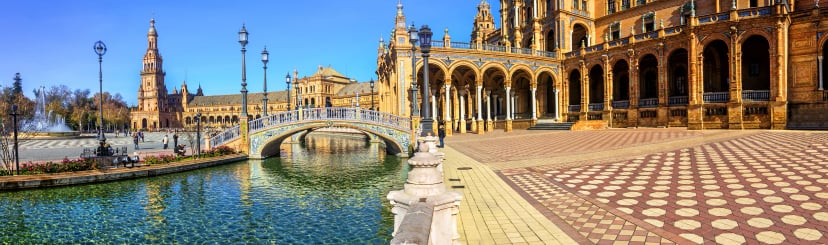
Plaza de España late: Best when the group wants air, photographs and a less text-heavy ending. The risk is transfer drag from the old city, especially if dinner is back across town or in Triana.
The matrix matters because Seville’s old center tempts planners into false proximity. On a map, the Alcázar, Cathedral, Archivo de Indias and Santa Cruz appear to sit in one tidy cluster. In group time, each threshold is a pause: bags, headsets, security, late joiners, bathroom checks, guide regrouping and the simple fact that not everyone hears the first instruction at the same time. What looks like a five-minute transition becomes a quarter-hour mood change.
The firm editorial call is this: for most private groups with one full Seville day, the Alcázar belongs before lunch and Plaza de España belongs only if the afternoon has been intentionally kept light. If the day already contains Cathedral, Alcázar and a proper lunch, Plaza de España is not a required trophy; it is a late-day mood choice. That distinction is what keeps the palace from owning the schedule.
Where the Alcázar belongs in a private Seville group itinerary
The Alcázar belongs early enough to hold attention and late enough that the group does not feel rushed into the gate. For a private group, that usually means shaping the first half of the day around the entry window rather than treating the palace as one stop among many. A guide can give the Moorish, Castilian and imperial layers before entry, but the group still needs time to reach Puerta del León together, pass the gate, settle into the first spaces and understand why the palace is not just a sequence of pretty rooms.
The palace is demanding in a specific way. It does not punish with hills, but it does ask for continuous standing, slow looking, garden walking and repeated transitions from open light to interior detail. The consequence is not only tired feet. A group that enters too late, too hungry or too overheated starts treating the Alcázar as a corridor toward lunch. That is when the palace technically “fits” but fails emotionally.
For smaller family groups, the right answer can be a guided Alcázar morning with one carefully chosen companion stop. For executive groups, the palace often works best after a concise city-orientation walk from the hotel or pickup point, because the first ten minutes establish pace and authority. For celebration travelers, it is usually better to finish the heavy cultural material before lunch and let the afternoon breathe, rather than expecting the group to stay scholarly until dinner.
Orange Donut Tours’ Real Alcázar private tours are most valuable when the guide is not merely explaining ornament. The value is in deciding how much palace context the group can absorb, where to stand so everyone can hear, when to move before attention drops, and how to exit with lunch still feeling like a reward rather than a rescue. A ticket gives entry; the route decides whether the palace becomes the day’s center or its trap.
If the Alcázar time slot is awkward, build a smaller morning
An awkward Alcázar time slot should make the rest of the day smaller, not busier. This is where many private group plans go wrong. A late-morning palace entry creates a tempting gap, and planners fill it with Santa Cruz, Cathedral interiors, shopping, coffee, photographs and a “quick” stop near the Archivo. By the time the group reaches the gate, the palace has become the second act of a morning that has already spent too much attention.
If the entry is late morning, use the time before it for orientation rather than accumulation. A short exterior arc from Puerta de Jerez toward Avenida de la Constitución, the Cathedral edge and the Archivo de Indias can give the group enough city grammar to understand the Alcázar without making anyone feel they have already toured for hours. This is also a good moment to set expectations: where the group will enter, where it will likely exit, how lunch will work and what will be cut if the palace absorbs more time than planned.
If the entry is after lunch, the day needs an even stricter edit. Do not make the morning a full monument day and then ask the group to care deeply about the palace in the afternoon. Keep the morning low-impact: Arenal context, a light river edge, a hotel start, or one focused Cathedral element if sacred architecture is a real interest. The Alcázar then becomes the day’s main cultural appointment, not a late obligation after everyone has already used their best attention.
The worst solution is to fight the ticket window with density. Adding more before a late slot does not make the day feel fuller; it makes the palace feel inconvenient. A private group day succeeds when the guide and planner accept the fixed point early and give the surrounding hours enough restraint to make that fixed point feel intentional.
The Alcázar entry-to-lunch handoff is the hinge
The Alcázar entry-to-lunch handoff is the most important planning moment in the day. It is where a good private group itinerary either stays elegant or begins to fray. The group has just moved through a dense monument, the guide has carried a serious narrative, and the old city outside the gate is full of tempting detours. This is the moment to make lunch feel close, intentional and already decided.
The handoff starts before the group enters the palace. A guide should know whether the exit rhythm points toward Patio de Banderas, the Cathedral side, Arenal, Mateos Gago or a hotel return. The group should not be debating lunch after the gardens, when some people want shade, others want photos, and one guest has already started walking toward Santa Cruz. For discerning travelers, the premium feeling comes from not having to negotiate that moment in the street.
Santa Cruz can be a beautiful bridge to lunch, but it should be a short, guided bridge rather than a wandering promise. Calle Mateos Gago is useful when the group needs an easy old-city food corridor near the Cathedral. Arenal is useful when the planner wants a cleaner exit from monument density and a more practical later move toward the river, Torre del Oro or a coach pickup. Patio de Banderas is useful as an orientation hinge, but it is not a place to let a large group drift without a clear next instruction.
The body feels Seville at this point. Heat load accumulates on open squares, old paving slows anyone in soft shoes, shaded lanes create stop-start movement, and the group’s slowest member quietly becomes the real timekeeper. Even without a steep climb, a palace morning can become physically heavy if lunch is treated as something to find later. The best handoff shortens the distance between cultural attention and seated comfort.
What to pair with the Alcázar for groups
The strongest pairing for most first-time private groups is Cathedral context, not a long Santa Cruz wander. The Cathedral and Alcázar explain each other: royal power, religious authority, the post-conquest city, the Giralda as a former minaret, and the way Seville’s official center gathers around a few charged blocks. But pairing them does not mean giving both the same weight. One should lead; the other should be edited.
If the Cathedral comes before the Alcázar, keep it purposeful. The group needs a clear reason to enter, a decision on whether the Giralda ascent belongs, and a route that does not exhaust everyone before the palace. If it comes after lunch, confirm current cultural-visit details on the Cathedral’s official visit page (https://www.catedraldesevilla.es/en/cultural-visit/schedules-and-rates/) and be honest about attention. A second major monument after lunch suits serious history and sacred-art travelers; it is often too much for mixed-interest groups.
Archivo de Indias can be the cleaner contextual choice when the day needs intelligence without another long monument. It sits between the Cathedral and the Alcázar, and it lets a guide connect Seville’s imperial administration to the surrounding power geography without dragging the group into a full second interior. For groups that value depth but not overextension, this can beat trying to do Cathedral, Giralda, Alcázar, Santa Cruz and Plaza de España in one sweep.
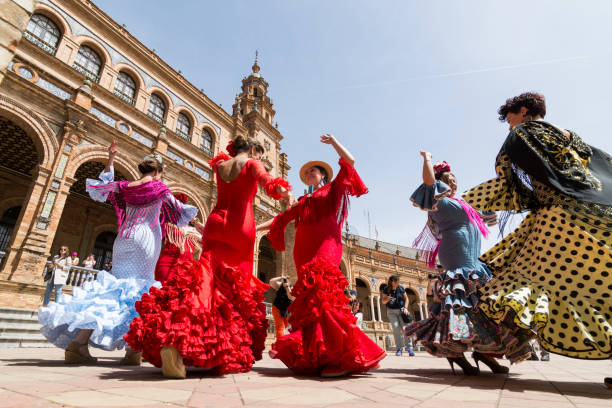
Museo del Baile Flamenco belongs when the day needs an evening cultural handoff rather than more late-afternoon sightseeing. It is not a substitute for the Alcázar, and it should not be crammed in as a fourth daytime stop. Its official museum information (https://museodelbaileflamenco.com/index.php/el-museo/) is useful when planning a flamenco-focused evening, especially for groups that want context before a show. The better sequence is palace, lunch, lighter afternoon, hotel pause if needed, then flamenco with enough energy left to care.
For travelers comparing monument order in more detail, the Cathedral and Giralda timing guide gives a narrower look at how that decision sets up the Alcázar. In this article, the simpler rule is enough: pair the palace with one serious companion, not three.
When Santa Cruz should shrink, not sprawl
Santa Cruz should shrink when the group has an Alcázar entry window, a meaningful Cathedral component and a lunch that matters. This is not because Santa Cruz lacks interest. It is because its value changes with group size. For two travelers, a turn through quiet lanes can feel intimate and spontaneous. For a group, the same turn can become a slow accordion of crossings, shopfront pauses and guests asking whether there is time for one more photograph.
The corrective is practical: use Santa Cruz as a context ribbon, not a neighborhood takeover. A guide can connect the old Jewish quarter, the Cathedral edge, the Venerables area and the palace’s urban setting without promising a full district immersion. That keeps the lanes from swallowing the morning. It also prevents the most common group frustration: guests feel they are “near everything” but keep arriving late to the next thing.
There are days when Santa Cruz deserves more. A heritage-focused group, a smaller family with older children, or travelers staying nearby may want the neighborhood to carry more of the story. In that case, reduce something else. Do not add Santa Cruz fully on top of Alcázar, Cathedral and Plaza de España. That turns the day into a procession of surfaces, and the guide spends more time keeping the route together than deepening the experience.
The cut-first rule is clear: if the palace slot runs late or lunch is fixed, cut the extra Santa Cruz loop first. Keep the route from Patio de Banderas toward lunch, preserve one or two meaningful stops, and save a fuller Santa Cruz treatment for a second morning or a pre-flamenco context walk. The group will remember a coherent day more than another lane they saw while checking the time.
When to cut Plaza de España or Triana from a group day
Plaza de España should be cut when the Alcázar, Cathedral and lunch have already consumed the best attention of the day. It is a strong late-afternoon visual stop, but it is not magically close to the palace in group terms. Reaching it means leaving the monument cluster, crossing into the María Luisa Park side of the city, and then deciding how the group gets back to the hotel, dinner, river or flamenco. That movement can be worth it; it should not be automatic.
Cut Plaza de España first when the group has a formal dinner, an evening show, older travelers, children, a tight coach pickup or any sign that heat is already changing the mood. Keep it when the group wants photographs, open air and a less verbal ending, and when the route can finish nearby or transfer cleanly. For a more detailed Plaza de España and park decision, the María Luisa Park guide is the better companion piece.
Triana should be cut from a one-day private group plan when the only reason for including it is that everyone has heard it is “local.” Crossing the Guadalquivir over Puente de Isabel II changes the day’s geography. The river moment can be lovely, and Triana’s ceramics and flamenco associations can matter, but for a group it creates a real return question. Are you dining there? Is the coach meeting there? Is the hotel on that side? If not, the crossing may add romance for a couple and drift for a group.
Triana belongs when the afternoon or evening is intentionally river-led: ceramics, a lighter food route, a flamenco context, or dinner across the bridge. It does not belong as a casual extra after a heavy palace and Cathedral morning. The honest editorial judgment is that many private Seville group days improve when Triana is saved for a second day or an evening with purpose, rather than forced into the same day as the Alcázar.
Coach, pickup and old-city movement change the whole pairing
Group pickup near the old city changes what can realistically be paired with the Alcázar. Seville rewards walking inside the historic core, but it does not let large vehicles behave like a private sedan at every corner. A coach or multi-vehicle plan may need a practical meeting point near the old-city edge, around Avenida Menéndez Pelayo, Puerta de Jerez, Paseo de Colón or another agreed location rather than directly inside the Santa Cruz lanes.
This is why transport is not a simple luxury upgrade in central Seville. A chauffeur can make hotel returns, park access and river-side moves easier, but the most valuable old-city segments still happen on foot. The guide’s job is to know where walking wins, where a vehicle reset saves the group, and where a transfer only adds waiting. The wrong plan creates the worst of both worlds: people walk when they are tired, then stand around waiting for a vehicle that cannot meet them exactly where they hoped.
The vehicle question is also a timing question. A pickup that is sensible at 10 in the morning may be poor after lunch if half the group has slowed, the sun has moved onto the open pavement, or the next stop requires crossing back through the same tourist flow around the Cathedral. For larger groups, the planner should think in edges: enter the dense core once, make the palace and Cathedral logic count, then use a pickup or walkout that moves the day forward rather than returning everyone to the same bottleneck.
For executive private groups, this is often the difference between a day that feels hosted and a day that feels managed. The guests may not notice the route architecture when it works. They notice when the guide has to gather everyone repeatedly at the edge of the Cathedral, when a late guest is still at the hotel, when the coach pickup is too far after lunch, or when the group crosses a hot open stretch with no reason beyond “it was on the itinerary.”
That is why Seville corporate group private tours should be planned around movement as much as content. The word “corporate” should not mean generic team-building language; it should mean precise handling of start times, mixed walking speeds, headsets, shaded regrouping points, meal timing and a route that does not rely on everyone behaving like two energetic travelers with one shared attention span.
A sample Seville private group day that keeps the palace in proportion
A clean private group day starts with orientation, gives the Alcázar the strongest interpretive window, hands off to lunch deliberately, and uses the afternoon as a mood choice. The exact clock will depend on confirmed tickets, season, hotel location, mobility and dining plans, but the sequence below shows the logic. It is not a promise that every stop belongs; it is a model for preventing the palace from pulling everything else out of shape.
Hotel or old-city edge meeting: Start with a concise briefing, headset check if appropriate, and a route explanation that tells guests when they will sit, eat and have a lighter moment. This reduces anxiety before the first gate.
Cathedral context or exterior power geography: Choose either a focused Cathedral visit or a guided exterior arc around the Cathedral, Giralda, Archivo de Indias and the Alcázar approach. Do not do both at full scale before the palace unless the group is unusually monument-driven.
Alcázar entry and guided palace route: Enter with the group already briefed. The guide should edit for attention, not recite every dynasty and room with equal weight.
Alcázar entry-to-lunch handoff: Exit with lunch geography already decided. Use Patio de Banderas, Mateos Gago, Arenal or a hotel return as a planned transition, not as an improvised debate.
Late-afternoon choice: Choose one: Plaza de España for air and photographs, a river-side Arenal pause, a hotel rest before flamenco, or a short Santa Cruz context walk if the morning stayed light.
For first-time travelers, the cleanest version is Cathedral context, Alcázar, lunch, and one late-afternoon softener. For food-and-wine travelers, lunch may deserve more protection than the extra monument, because a seated meal in the right part of the city can make the afternoon feel curated rather than salvaged. For families or multigenerational groups, the hotel pause may be the most intelligent “sight” of the day, especially if dinner or flamenco matters.
The sample route also shows what not to do. Do not start late, enter the Alcázar near lunch, promise a Santa Cruz wander, add Plaza de España, cross to Triana and still expect a composed evening. That day may look generous in a proposal, but in Seville it often feels like being pulled through a beautiful city by the next obligation.
What money can fix, and what only planning can fix
Premium spend changes the Seville group day when it buys better guidance, cleaner ticket handling, appropriate headsets, smarter meal geography, comfortable transfers at the right moments and a guide who can edit without making the day feel diminished. Those upgrades are real. A private guide can keep the group together in the palace, translate dense history into a shared story, manage pauses without losing the thread, and adjust the afternoon when heat, fatigue or a late lunch changes the facts.
Premium spend does not make a poor sequence good. Private access or transport does not fix a day that ignores group size, shade and lunch timing. A vehicle cannot eliminate the need to walk the old city. A guide cannot make a hungry group enjoy another interior simply because it is important. A palace ticket cannot protect the evening if the route asks everyone to keep performing interest after the day has already peaked.
The highest-value spend is often invisible: choosing a lunch area before the palace, deciding whether the Cathedral should be interior or contextual, arranging a coach or car reset where it actually helps, and cutting a famous add-on before it damages the day. This is where tailor-made touring earns its cost. It is not about making Seville more exclusive; it is about making the city legible, paced and humane for the group in front of the guide.
The lowest-value spend is the upgrade that does not address the real friction. A more expensive vehicle does not help if the route still zigzags from Santa Cruz to Plaza de España to Triana to a hotel across town. A longer guide booking does not help if the group’s attention is gone by mid-afternoon. Pay for judgment before duration.
How the day should feel by dinner
By dinner, the group should feel that the Alcázar was the center of the day without feeling that everything else was squeezed around it. That is the mood test. If guests arrive at dinner still processing the palace, pleased by the lunch, and not resentful of the afternoon, the route worked. If they arrive late, dusty, overexplained and still asking whether they “saw Santa Cruz,” the day had too many claims on it.
Seville changes mood quickly when the plan respects rhythm. A palace morning can feel scholarly and intimate; a lunch near the old center can turn the group social again; a late Plaza de España stop can give air and scale; a hotel return can make flamenco feel chosen rather than endured. The same ingredients in the wrong order flatten the city into errands. The group sees more, but cares less.
This is especially important for celebration travelers and comfort-first visitors. They are rarely buying only information. They are buying the feeling that someone has already thought through the day’s vulnerable moments: the first meeting, the monument entry, the bathroom pause, the lunch transition, the heat dip, the return to the hotel, the evening reveal. When those moments are handled, the day feels shorter in the best sense. It has fewer seams.
The mood consequence is why cutting can feel more premium than adding. A private Seville group day with Alcázar, Cathedral context, lunch and one elegant after-lunch choice will usually feel more generous than a day that adds Triana, Santa Cruz and Plaza de España as obligations. The right cut does not reduce the trip; it protects the part guests came to remember.
How Orange Donut Tours turns the ticket into a coherent route
The planning handoff matters because the Alcázar ticket is only one component of the day. Orange Donut Tours treats the palace slot as the fixed point, then builds the private-group route around hotel geography, walking tolerance, guide pacing, lunch location, vehicle reality and evening plans. That is the difference between “we have tickets” and “the day works.”
For a couple, the guide can adjust in small ways on the street. For a group, those adjustments need to be anticipated. If the group includes older parents, teenagers, executives, celebration guests or food-focused travelers, the route should not depend on everyone wanting the same level of monument detail at the same time. It should have planned release valves: shade, seating, a shorter Santa Cruz ribbon, a clean lunch handoff, and a late-afternoon choice that can be cut without making the day feel broken.
This is also where Orange Donut Tours’ local editorial judgment becomes more useful than a generic “top sights” plan. A guide can decide whether the Cathedral should be entered, framed from outside or saved; whether Plaza de España earns the transfer; whether Triana belongs at night instead of afternoon; and whether Museo del Baile Flamenco fits as cultural continuity or becomes one more appointment. The private value is not claiming special powers over the city. It is having the courage to keep the day coherent.
When the palace entry window, group size and lunch geography need to become one hosted route rather than a stack of bookings, Inquire now. The best plan will not promise that the Alcázar stops controlling time. It will make sure that time slot controls only what it should.
FAQ
Should a private group visit the Alcázar in the morning or afternoon?
Most private groups should place the Alcázar before lunch because attention is stronger, the guide can shape the palace narrative before fatigue sets in, and the lunch handoff can be planned cleanly. Afternoon can work for a slower start or a specific ticket window, but then the morning must stay light.
Can a private guide make the Alcázar schedule flexible?
No. A private guide can improve pacing, interpretation and group movement, but the confirmed palace entry window still controls the day. The guide’s value is in building the route around that constraint rather than pretending it does not exist.
Is Santa Cruz worth including after the Alcázar?
Yes, but only as a short, purposeful connector when lunch and energy allow it. A full Santa Cruz wander after the Alcázar often creates drift for groups, so it should be cut first if the palace runs long or lunch is fixed.
Should Plaza de España be added to a Seville group day with the Alcázar?
Add Plaza de España only when the afternoon has room for a visual, open-air finish and the return logistics are clean. Cut it when the group already has Alcázar, Cathedral, lunch and an evening commitment, because the transfer can cost more energy than the stop returns.
Does Triana belong in the same day as the Alcázar?
Triana belongs when the afternoon or evening is intentionally built around the river, ceramics, food or flamenco. It should usually be cut from a one-day Alcázar group itinerary if it is being added only because it sounds local.
What is the best pairing with the Alcázar for first-time private groups?
The best pairing is focused Cathedral context, either as a concise interior visit or a guided exterior arc around the Cathedral, Giralda, Archivo de Indias and palace approach. The key is not to give every monument full weight in the same half-day.
Is a chauffeured Seville day worth it for an Alcázar group route?
A chauffeur can be worth it for hotel returns, old-city edge pickups, Plaza de España, river moves or comfort-sensitive guests. It is not worth much if the route still ignores walking reality inside the historic center, where the most important transitions happen on foot.
How much should a private group plan after the Alcázar?
Plan one substantial companion before or after the Alcázar, a protected lunch, and one flexible late-afternoon choice. More than that is possible on paper, but it often makes the palace feel like the beginning of a schedule problem instead of the center of a memorable day.
If you’re interested in any private tours of Seville, please reach out to us.





 So if you are looking for the absolute best in Seville & surroundings with authentic local fully-licensed native guides whose English you can actually understand and with an exclusive and amazingly fun itinerary













