Lisbon with Older Parents for a White-Glove First Trip: Belém, Baixa-Chiado and One Hilltop View Without Stair Fatigue

Updated
For a first Lisbon day with older parents, the best answer is to start in Belém, move into Baixa-Chiado, and spend your one climb on a single hilltop view, usually Miradouro de São Pedro de Alcântara. That sequence gives you monumental Lisbon, central Lisbon, and one emotional reveal without asking the day to carry three different uphill battles.
It works because Lisbon taxes energy unevenly. The real problem is rarely mileage alone; it is the stacking effect of cobbles, short gradients, pauses at crossings, queue drag, and the false promise that the next viewpoint is only a little higher. Even a gentle pass along the Praça do Comércio riverfront edge can keep the city feeling open and manageable much later than a castle-first morning.
The clearest exception is a parent who genuinely loves old lanes, does not mind steady inclines, and would trade monastery grandeur for neighborhood texture. In that case, make Alfama the day and move Belém elsewhere. What does not work is trying to prove you have done Lisbon properly by forcing Belém, Baixa-Chiado, Alfama, and multiple miradouros into one heroic sweep.
The thesis is simple: in Lisbon, older-parent comfort improves more when you control where elevation happens than when you merely cut sights. One counterintuitive correction follows from that: paying more for a pretty hilltop hotel district, or starting with the classic castle climb, does not make the first day feel richer. It often makes the freshest hours the hardest ones. If you want the wider city logic behind this narrower article, the route-order guide for first-timers shows the broader first-timer map; this piece is about the older-parent version that keeps the trip joyful.
The ranked ladder: four Lisbon versions of this day, and only one that stays generous
The fastest way to choose is to rank the options by walking load, return energy, and how much “real Lisbon” they still deliver. Older parents do not need the widest possible checklist; they need the version that preserves curiosity into late afternoon. That means judging every route by how it feels at 4 p.m., not how it looks on a map at breakfast.
Here is the ladder I would actually use for a white-glove first trip. It is not a list of equal choices. The order matters because the city punishes overconfidence, and the wrong order can make a good traveler feel older than they are by lunch.
- 1. Belém -> Baixa-Chiado -> Miradouro de São Pedro de Alcântara. This is the winner for most first trips with older parents because it spends the walking budget on broad, legible places and spends the elevation budget once.
- 2. Belém -> Baixa-Chiado, with no hilltop at all. This is the smartest downgrade on hot days, after a poor night of sleep, or when one parent clearly enjoys sitting more than climbing.
- 3. Baixa-Chiado -> one hilltop view, with Belém moved to another day. This works if your hotel is central, your morning starts slowly, or you only have a shorter city window.
- 4. Alfama or the castle first, then Belém, then another viewpoint. This is the version to cut first. It looks classic on paper and often lands as a fatigue story by midafternoon.
The reason the winning route beats the postcard version is not that Belém is flat and Alfama is hilly, though that matters. It is that Belém offers ceremonial scale without immediate punishment, Baixa-Chiado gives you a second act that still feels central, and São Pedro de Alcântara supplies the one elevated emotional payoff people imagine they need from Lisbon. Once you understand that, the trip stops being about omission and starts being about selective compression.
Flat-start or hill-start in Lisbon with older parents? Start flat.
The direct answer is that a flat start wins in Lisbon because the city gets harder as the day goes on, not easier. Morning confidence can trick families into taking on the steepest district first, especially when everyone is freshly dressed, caffeinated, and determined to “do it all.” By late morning, the same group is negotiating cobbles, sun, traffic crossings, and the emotional weight of deciding whether to keep pushing for the next climb.
Belém is the better opening move because it offers width, visual grandeur, and a sense of arrival without making older parents prove themselves before they have found their rhythm. Even when you are dropped directly at an upper site in Alfama, the district tends to ask for more recovery walking afterward than planners expect. The lanes are atmospheric, but atmosphere is not the same thing as ease. For older-parent planning, ease is what lets the city stay charming rather than feel like work.
There is also a mood reason to start flat. Older parents often begin a special trip wanting not to be the ones slowing everyone down. A riverfront or monumental quarter helps remove that social pressure because pauses feel scenic, not apologetic. On the Praça do Comércio riverfront edge, no one looks as though they are stopping to recover; they look as though they are doing exactly what the place invites. That psychological effect matters more than many planners admit.
This is also where premium spend does not automatically help. Paying more to stay in a photogenic hilltop district does not earn its cost if every morning begins with a descent and every evening ends with an uphill return. A more expensive room cannot flatten the slope outside the lobby. For older-parent planning, the day should dominate the hotel romance, not the other way around.
Why Belém earns the morning, and how much of it to do
Belém deserves the first morning because it gives you Lisbon’s imperial scale without front-loading the city’s sharpest friction. The broad apron around Jerónimos, the riverside openness, and the separation between sights make the district feel breathable. That matters when one parent likes to stop for context while the other prefers to keep moving. In tighter neighborhoods, those style differences can create pressure; in Belém, they stay manageable.
The smartest Belém morning is not a maximalist one. Choose one major anchor and one supporting pleasure, then keep moving. For many first-timers, the monastery is the anchor because it delivers instant significance and sets the historical frame for the city. The supporting pleasure might be a pastry stop, a brief riverside look, or simply time to take in the district without feeling hustled from façade to façade.
What you should cut first is the impulse to do every famous Belém interior. A long inside-outside sequence here can turn a calm morning into a series of stands, waits, and “one more thing” negotiations before you have even reached central Lisbon. Here, the exterior presence of a site often carries plenty of value. The difference between a rich first impression and an overpacked morning is usually one extra interior too many.
A useful rule is that Belém should leave your parents feeling oriented, not accomplished. If the morning starts producing the language of accomplishment—“we managed it,” “we got through it,” “at least we did that one too”—you have already taken on too much. The district is supposed to feel ceremonial and expansive. Once it feels like work, the day is spending energy in the wrong place.
That is why a good guide matters more here than generic enthusiasm. Belém rewards explanation, but it does not need to be attacked. If you want the quarter interpreted without turning it into a military march, Belém and Jerónimos private tour is the kind of format that lets the morning feel curated rather than hurried. Older parents tend to remember that gentler structure longer than they remember whether they ticked every possible monument.
Another practical reason Belém works first is that it absorbs variable energy gracefully. If parents feel lively, you can extend the riverside walk a little. If they do not, you can shorten the quarter without making the day feel reduced. That flexibility is harder to achieve in upper Lisbon, where cutting the wrong piece can leave you with all the effort and only half the payoff.
The Belém to Baixa-Chiado handoff is the moment comfort planning becomes real
This is the hinge in the whole day, and it is the place most generic Lisbon advice underrates. The Belém to Baixa-Chiado handoff is where a vehicle stops feeling decorative and starts solving an actual traveler problem. Before this point, you are still in a large, legible district. After it, you are asking older parents to reset, reorient, and keep their enthusiasm while the city changes texture.
The map makes the jump look simpler than it feels. What matters is not only the transfer time; it is the mental restart. Belém has space. Baixa-Chiado feels denser, more urban, and more decision-heavy. Even if public transport is perfectly viable in theory, it still requires everyone to manage platforms, standing, or short navigational bursts at exactly the moment the day has begun to accumulate weight.
This is also the point where group dynamics start to diverge. One parent may still feel fresh because they prefer to keep moving; another may already be saving energy quietly for dinner. In Belém, those differences are easy to hide. During the transfer, they become operational. A clean handoff prevents the stronger walker from accidentally setting the pace for everyone else and prevents the more cautious traveler from feeling like the day is slipping beyond their comfort range.
This is why I treat the handoff as the threshold for upgrading logistics. If you are traveling as a couple with very nimble older parents, separate taxis can be enough. If you are a family group, if one parent tires earlier than the other, or if you care about arriving in the center with the day still feeling polished, this is where controlled transfers start earning their keep. For the broader citywide reasoning behind that, the guide to when a chauffeur is worth it goes deeper on the spend logic.
The practical consequence is simple: if you are already debating whether to “push on” after Belém, do not ask older parents to prove their resilience in the transfer. Protect the second act instead. The entire point of white-glove planning in Lisbon is that you carry the energy forward to the center, not that you arrive there having already paid for the city with your legs.
How Baixa-Chiado should feel at older-parent pace
Baixa-Chiado should feel like relief, not like a second challenge course. The district works because it offers recognizably central Lisbon with a relatively forgiving walking logic. Broad squares, legible streets, visible taxi access, and plenty of places to sit or pause mean the center can still feel elegant even when everyone is no longer moving at the same speed.
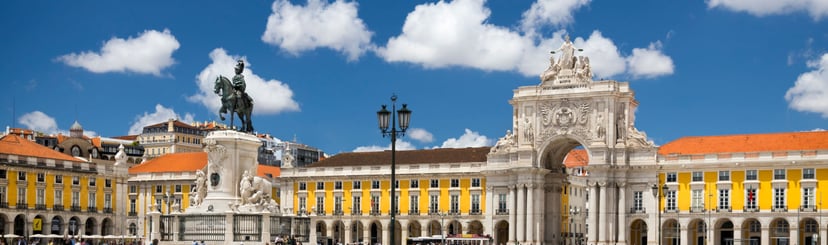
The best entry is often along the lower riverfront side, not because it is more glamorous but because it eases the transition. The Praça do Comércio riverfront edge is one of the most useful micro-locations in the whole plan: it lets older parents feel they have reached historic central Lisbon while still moving on flatter ground. From there, the city can be taken in layers rather than attacked all at once.
Rua Augusta is famous, but for older-parent planning it is often better as a corridor than as a goal. Crowds, photo stops, and stop-start walking can drain more energy than the scenery appears to justify. The real comfort value usually comes from using it briefly, then shifting toward places where lunch, shade, and a calmer pace make the center feel livable. That is where Baixa-Chiado beats the more theatrical old-city districts.
Lunch placement matters more here than many families expect. A meal taken too early in Belém can leave the center feeling oddly task-like, while a late lunch after too much central wandering can arrive after everyone has already begun to fade. The sweet spot is often to reach Baixa-Chiado still interested in the city, sit down before anyone is openly exhausted, and use that meal as the handoff from sightseeing mode into promenade mode. Once older parents feel restored in the center, the odds of a successful single viewpoint rise sharply.
Chiado itself should be sampled selectively. A gentle rise into its better-known shopping and café streets can be rewarding, especially if one parent enjoys people-watching and another likes a sense of urban polish. What you do not want is to keep “just a little farther” into the back streets that pull you toward Bairro Alto or steeper side climbs. That is how a civilized central stroll turns into an unnecessary test.
There is another counterintuitive correction here: premium spend does not help if you waste it on the wrong micro-goal. The Santa Justa area is a good example. The structure is visually striking, but building your older-parent day around waiting for it or around another queue-heavy vertical experience usually does not earn its place. Lisbon gives you better emotional height elsewhere, with less standing and less stop-start fatigue.
Baixa-Chiado is where lunch should do more than feed you. It should quiet the itinerary. Once older parents sit down in the center after Belém, the day begins to feel shorter, even when it is not. That sensation is one of Lisbon’s hidden luxuries. A plan that preserves it is worth more than one extra attraction.
Is one hilltop view enough in Lisbon with older parents? Yes, and it should usually be São Pedro de Alcântara.
Yes, one hilltop view is enough, and insisting on more is usually where the day tips from memorable to draining. Lisbon’s miradouros are seductive because each one promises a slightly different angle, a slightly better photo, a slightly more authentic feeling of the city. For older parents, that logic is a trap. The second view rarely doubles the pleasure; it usually doubles the expenditure of effort.
Miradouro de São Pedro de Alcântara is usually the right single choice because it gives you a broad, legible panorama without requiring you to buy fully into Alfama’s most tiring walking patterns. The view reads instantly: castle, hillside, layered roofs, old-city drama. That immediacy matters. Older parents should not need another ten minutes of stairs to understand what they are seeing.
Just as important, São Pedro de Alcântara behaves well in a comfort-first route. It can be approached strategically, it pairs more cleanly with Baixa-Chiado than the more committed eastern miradouros do, and it lets you stop after the reveal instead of accidentally beginning a new excursion. In other words, it ends the elevated portion of the day instead of multiplying it.
The alternatives are not equal in this plan. Santa Luzia and Portas do Sol are lovely, but they usually arrive bundled with Alfama’s uneven approaches, crowd pinch points, and the temptation to keep wandering when tired legs would prefer to stop. Senhora do Monte offers a bigger high-ground payoff, but its approach asks more of the body and returns less control over the day. Those are good viewpoints for travelers who are building the whole day around high Lisbon. They are less convincing as add-ons.
The one-viewpoint rule is the city-smart compromise: one chosen hilltop view can replace multiple tiring climbs without shrinking the trip. That is the emotional correction many first-time planners need. Lisbon still feels elevated, atmospheric, and unmistakably itself when you see it from one well-chosen terrace. It does not become more authentic just because you collected three.
The classic Lisbon climb that is simply not worth forcing
The climb to Castelo de São Jorge through upper Alfama is simply not worth forcing on a first trip with older parents when Belém and Baixa-Chiado are already in the day. That is the clear editorial call. The route has romance, history, and bragging rights. What it also has, too often, is cumulative strain that shows up only after the family has already committed.
The mistake is not admiring Alfama. The mistake is treating upper Alfama as a compulsory third act after a full morning and a central-city afternoon. At that point the district stops being atmospheric and starts behaving like resistance training. The paving becomes more noticeable, the pauses get more frequent, and the conversation subtly shifts from discovery to management: who needs to sit, who is okay, whether to shorten dinner, whether tomorrow now needs to be easier.
Tram 28 is not the rescue people imagine here. Even when it sounds like the obvious workaround, it introduces its own standing, waiting, jostling, and unpredictability. For older parents, that is often the wrong type of excitement. The ride may feel iconic; the process around it may feel anything but. Do not confuse a famous transport image with a low-friction solution.
If upper Alfama matters deeply to your family story, isolate it. Build a separate half-day around it, use controlled arrival and departure, and let the district be the point rather than the exhausted add-on. If you want that area interpreted properly, São Jorge Castle and Alfama private tour makes much more sense as a dedicated outing than as the third layer on top of Belém and the center. What is not sensible is trying to squeeze Alfama, Belém, and multiple hilltops into one supposedly elegant day.
There is a subtle emotional consequence here too. Older parents often remember the moment they felt the itinerary stop listening to them. In Lisbon, that moment commonly arrives on a “classic” climb someone felt obliged to force. Cut that before you cut lunch quality, before you cut the riverside, and before you cut the one chosen view.
When chauffeur support materially improves the day, and when it does not
Chauffeur support materially improves this day when it removes two specific pain points: the west-to-center handoff and the climb to the single chosen viewpoint. Those are the moments when a vehicle changes the experience rather than just adding polish. In a city where the ground itself can be the main source of fatigue, a controlled transfer is not about status. It is about deciding that energy should be spent on seeing Lisbon, not on getting between its hardest joins.
It helps even more when your hotel is not perfectly aligned with the route. A hilltop departure, a difficult pick-up zone, or a family group whose walking speeds differ widely all make the case stronger. Older parents rarely complain about the main sight itself; they complain about the transitions that felt avoidable. A car addresses avoidable friction in a way that another expensive lunch or nicer room cannot.
There is also a clear line where the extra spend does not help. Paying for a chauffeur does not earn its cost if your day stays entirely inside Baixa-Chiado with one nearby view and a hotel close at hand. In that case, the car will spend more time waiting than solving anything. The same goes for adding a chauffeur only to preserve an overstuffed itinerary that still asks older parents to climb too much. Transport cannot rescue bad sequencing.
When it does make sense, it is usually because it lets you keep the day’s dignity. No one needs to announce that they are tired, split the group, or negotiate one more staircase in public. That is why a chauffeured Lisbon private tour becomes an intelligent upgrade once you combine Belém, the center, and a single hilltop reveal. The vehicle is not the day; it simply protects the part everyone actually came for.
If you want to test your own threshold, ask one plain question: would the car remove a debate you already know your family is going to have? If the answer is yes, the spend is likely justified. If the answer is no, keep the route simpler instead of layering luxury on top of a plan that was already easy.
What Lisbon does to the body by late afternoon, and what it does to the trip mood
Lisbon tires people in short, concentrated bursts. That is why first-time planners sometimes misread it. A day here can look modest on paper and still feel surprisingly heavy in the body because effort is delivered in steps, cross-slopes, uneven stones, queues, and “almost there” rises. Ten difficult minutes in Lisbon can cost more than half an hour on flatter city ground elsewhere.
Older parents feel that accumulation earlier, but they are not the only ones. The whole family begins to slow when the city keeps asking for tiny recoveries. Knees notice descents as much as climbs. Ankles notice the camber of stones. The pause after lunch gets longer. The scenic stop stops feeling scenic and starts feeling necessary. This is why route compression matters more here than headline attraction count.
The mood consequence is just as important. The city feels shorter, kinder, and more celebratory when the hard part is rationed. It feels longer, fussier, and strangely smaller when every hour carries another slope. A good Lisbon day with older parents preserves appetite for the evening. A bad one sends people back to the hotel saying they loved the city but are not sure they can face dinner, shopping, or another walk.
That shift in mood is the real reason to obey the one-viewpoint rule. One carefully chosen reveal can make everyone feel they have “done Lisbon.” Two or three can leave the same travelers less impressed because the cost overshadowed the memory. In this city, restraint is not minimalism. It is what makes the highlights land.
Protect the evening instead of proving endurance
The best late-day move is usually not another sight. It is protecting the evening. Once older parents have had Belém, the center, and one hilltop reveal, the elegant decision is to descend or transfer directly toward dinner, a rest, or an easy pre-dinner stroll near the hotel. The wrong decision is to keep wandering because the map shows one more church, one more lane, or one more famous staircase nearby.
This is where the whole plan pays off. A controlled day does not just spare the legs; it keeps the night usable. That matters for celebration travelers, food-and-wine travelers, and multigenerational groups that want the city to feel special after dark rather than conquered by exhaustion. The travelers who remember Lisbon most fondly are often the ones who still had enough energy left to enjoy what they booked for the evening.
If you are still choosing where to stay, this logic should shape the base as much as the sightseeing. A central district that simplifies the return often matters more than a more photogenic address that demands a final climb. The stay guide for comfort-first Lisbon goes deeper on that hotel tradeoff.
It also helps to be disciplined about operational details. When dinner is part of the reward, trust direct sources over recycled summaries: use the official site (https://www.fiftysecondsexperience.com/en/reservations/) when you book, and if a venue publishes an official PDF (https://belcanto.pt/uploads/Belcanto_FAQ_EN_Abr25.pdf), read that rather than relying on copied concierge text. That habit sounds small, but it prevents the kind of late confusion that can undo a beautifully paced day.
The simplest version of white-glove Lisbon is not a maximalist one. It is a day in which older parents see enough to feel the city, never need to perform toughness, and still arrive at dinner curious rather than depleted. If that is the outcome you want, build the transfers, lunch, viewpoint choice, and hotel return around that standard from the start. Inquire now
How this route breaks down, and when to rewrite it
This plan breaks down when the family is using it to solve a different desire than the title suggests. If what your parents really want is Lisbon’s oldest-quarter atmosphere above all, then the Belém-first answer can feel dutiful. In that case, do not distort this route trying to make it do everything. Replace Belém with Alfama, keep the one-view rule, and build a more concentrated old-city half-day instead.
It also breaks down when planners use comfort language but still chase symbolic completeness. The usual signs are adding the castle “for the photo,” insisting on Tram 28 “for the story,” or keeping two miradouros because one of them is technically nearby. Those are exactly the additions that make older parents feel managed rather than welcomed. If the day starts collecting symbolic trophies, rewrite it immediately.
The final condition that changes the answer is time. If you have only a half-day, do not try to preserve all three acts. Choose Belém and stop there, or choose Baixa-Chiado with one view and save Belém for another day. Compressed time punishes overreach even faster than Lisbon’s topography does. A shorter plan should become cleaner, not more ambitious.
That honesty is what separates a tailored Lisbon day from a brochure version of one. The city rewards selectivity. Older parents do not need a reduced trip; they need a trip whose pleasures arrive in the right order.
If you keep that order straight, Lisbon stops feeling like a city of obstacles and starts feeling like a city of reveals. The monuments feel bigger because you are not rushing between them. The center feels calmer because you arrive there with something left. The hilltop feels more cinematic because it is singular. That is the real white-glove outcome: not more luxury vocabulary, but a day whose shape quietly keeps everyone in good spirits.
FAQ
Is Belém too much for parents in their seventies?
No, not by itself. Belém is often one of the easier major Lisbon districts to handle because its scale is broad and its walking logic is more forgiving than the old hills. What makes it too much is pairing it with too many interiors, then asking the same travelers to tackle upper Alfama or several viewpoints afterward. If you keep Belém selective and treat it as the calm first act, it can be one of the smartest choices on a first trip.
Should we start in Alfama if our hotel is there?
Usually no. Hotel proximity can be misleading in Lisbon because the district outside the door may be exactly what makes the day harder. Starting in Alfama because you sleep there often means spending fresh energy on the city’s most demanding texture. It is better to leave the hotel by vehicle, start where the ground is easier, and approach Alfama separately if it truly matters. The exception is a family that specifically wants an old-quarter half-day and is willing to build the whole outing around that priority.
Which miradouro is the best single viewpoint for older travelers?
Miradouro de São Pedro de Alcântara is usually the strongest single-choice answer because it gives an immediate, recognizable Lisbon panorama without forcing the day deep into the eastern hills. It tends to work cleanly with Baixa-Chiado and with controlled transfers. Other viewpoints may be more intimate or higher, but they more often arrive bundled with tiring approach costs that are not worth paying after Belém and the center.
Is Tram 28 a good idea with older parents on a first trip?
Not as a core comfort strategy. It is famous, but fame and ease are different things. The wait, crowding, jostling, and stop-start nature of the experience can cost more energy than families expect, especially when older parents prefer steadier movement and fewer standing moments. Treat it as an optional nostalgia play on a lighter day, not as the thing that solves Lisbon’s hills.
Can we do Jeronimos, Belém Tower, Baixa-Chiado, Alfama, and a viewpoint in one day?
You can force it, but you should not in this kind of older-parent day. That sequence looks efficient only until the city starts charging for every transition. By the time you reach the third act, the day is running on obligation rather than pleasure. Cut first from the eastern hills, not from lunch quality or the central riverfront. If you want all of those places in the trip, spread them across two days instead of asking one day to carry the emotional and physical load of all of them.
Do we need a chauffeur for the entire day or just the transfers?
That depends on where the friction actually sits in your plan. If the main difficulty is getting from Belém into Baixa-Chiado and then up to one viewpoint without draining energy, targeted chauffeur support can be enough. If your hotel location, family size, or pace differences create repeated transfer debates, full-day support becomes more attractive. What matters is whether the vehicle removes the moments that would otherwise flatten the mood. If it only duplicates easy walking, it is probably unnecessary.
Is Baixa-Chiado really better than staying in the hills for this type of trip?
For many older-parent first trips, yes. The point is not that the hills are less beautiful; it is that central, more navigable ground makes the whole stay feel calmer. A district that simplifies lunch, short strolls, and the final return can contribute more to trip quality than a prettier viewpoint from the room. The best base is the one that reduces repeated uphill decisions, especially at night when everyone is less fresh.
What should we cut first if one parent starts tiring at lunch?
Cut the second climb, not the second coffee. In practical terms, that means dropping Alfama or dropping the hilltop view if it has not happened yet. Keep the central riverfront, keep a comfortable lunch, and keep the part of the day that still lets everyone feel they are in Lisbon rather than hiding from it. The wrong instinct is to keep the hard headline sight and strip out the softer pauses that made the day humane. In Lisbon, those pauses are part of the design, not wasted time.
If you’re interested in any private tours of Lisbon, please reach out to us.


 So if you are looking for the absolute best in Lisbon & surroundings with authentic local fully-licensed native guides whose English you can actually understand and with an exclusive and amazingly fun itinerary













