Lisbon for a Flat-Footed First Day: Riverfront, Baixa and Belém Before the Hills

Updated
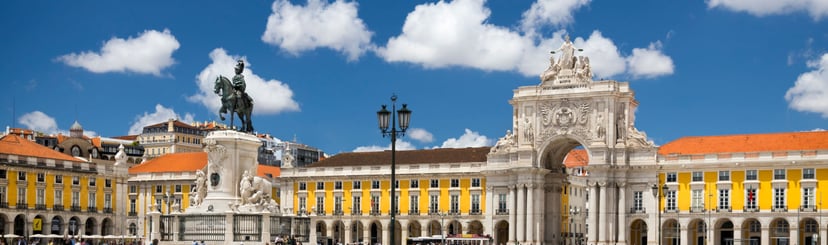
The first-day mistake in Lisbon is usually not missing a viewpoint; it is climbing before the city has become legible. For a flatter first day, start with the Tagus riverfront, use Baixa as the orientation grid, and fit Belém only if the transfer does not turn the afternoon into a logistics exercise. This works because Lisbon gives you a genuine first impression at street level: Praça do Comércio opens to the river, Rua Augusta and Rua da Prata show the planned downtown, and Cais do Sodré can become the hinge between the center and the west. The clearest exception is a traveler whose entire reason for Lisbon is medieval streets, fado context, or a castle view; that traveler can start high, but everyone else is usually better served by Baixa before Alfama.
The thesis is simple: a flat-footed first day in Lisbon should not try to hide the hills; it should use the river and the post-earthquake Baixa grid to explain why the hills matter before asking your feet to negotiate them. That is a very Lisbon-specific choice, because the city’s drama comes from the meeting of a broad estuary, a rebuilt downtown, and older quarters that rise sharply from its edges. A private guide can turn that first day into an orientation route rather than a reduced itinerary, especially when the plan is tailored around arrival energy, older parents, young children, or a serious dinner later. For a route that can be adapted around this lower-city logic, see the Best of Lisbon private tour.
The flat-first-day ladder: what wins, what waits, what gets cut
The best flat first day in Lisbon is not a list of easy attractions; it is a ranked sequence that keeps the city coherent while delaying the steepest streets.
1. The Tagus riverfront wins first. Begin where Lisbon feels wide, readable, and forgiving: Praça do Comércio, the Ribeira das Naus promenade, or the Cais do Sodré edge. The river gives direction immediately. You understand that Belém lies west, Alfama rises east, and Baixa sits between the water and the hills.
2. Baixa comes before Alfama. Baixa is the first-day classroom because its grid helps travelers calibrate Lisbon. Rossio, Praça da Figueira, Rua Augusta, Rua da Prata, and the river-facing arch at Praça do Comércio make sense even when the group is tired or still settling into the hotel.
3. Belém earns its place only with clean timing. Belém works when it becomes the day’s river extension: Jerónimos, the riverfront, perhaps the Monument to the Discoveries, and a pastry pause. It does not work when it is bolted onto a full old-town climb as a trophy stop.
4. Alfama waits unless the hill is the point. Alfama is not being downgraded. It is being saved for the moment when narrow lanes, uneven stone, stairs, and viewpoint pauses can be enjoyed rather than endured. Alfama on day two often feels richer because travelers already understand the river and the lower city.
5. The first cut is the panoramic detour. If the day is getting heavy, do not chase a famous elevator, a castle, a second viewpoint, and Belém in one sweep. Cut the height first. Lisbon will still feel like Lisbon without forcing the climb on day one.
This ladder is deliberately firmer than a generic first-day itinerary. It says that a lower route is not a lesser route; it is the route that lets the city’s shape teach you what to do next. The counterintuitive correction is that the most visibly Lisbon-looking part of Lisbon, Alfama, can be the wrong opening move for travelers who want the first evening to feel unstrained. The other correction is that the Santa Justa Elevator should not be treated as a magic solution. It is photogenic and can be useful in the right context, but planning a first day around waiting to avoid one climb can replace physical fatigue with standing fatigue.
A useful first-day shape is therefore deliberately modest: river light at Praça do Comércio, a Baixa orientation walk toward Rossio or Praça da Figueira, a pause before committing west, and Belém only if the afternoon still has clean movement left in it. Notice what this does not include. It does not add a castle climb, a Graça viewpoint, a Bairro Alto wander, and a full Belém museum run because each item looks close in isolation. The plan is flatter because the sequence is edited, not because Lisbon has suddenly become flat.
Can Lisbon feel like Lisbon without climbing on day one?
Yes, Lisbon can feel unmistakably like Lisbon on a lower first day if the route uses the river, the rebuilt downtown, and Belém’s maritime edge instead of pretending the hills do not exist.
Start at the river because the Tagus is not just scenery. It is Lisbon’s compass. From Praça do Comércio, the city opens in two directions: inland through the ordered streets of Baixa, and west toward Belém, where the maritime story becomes monumental. That first view gives first-time visitors a sense of scale before the city narrows. It also gives older travelers and families a psychological advantage: no one is immediately being asked to climb, keep pace on polished cobbles, and listen to history at the same time.
Baixa then gives structure. Its streets were rebuilt after the 1755 earthquake in a rational grid, which is why it functions so well as an orientation zone. You can move from Praça do Comércio up Rua Augusta toward Rossio without the route constantly asking for tiny route decisions. That matters more than many visitors expect. On a first day, every unnecessary decision burns energy: which alley, which slope, which shortcut, which tram, which taxi stand, which viewpoint. Baixa reduces that mental load.
Belém, when handled correctly, gives the day a second act without asking the group to wrestle with the old town. The monastery facade, the open space around Praça do Império, and the riverfront near Padrão dos Descobrimentos widen the day again. The route can feel generous, not timid. A stronger Belém plan is treated in our private Belém morning guide, but the first-day version should stay leaner: one major interior or exterior focus, one river pause, and one civilized exit.
The point is not to flatten Lisbon into a waterfront walk. The point is to let the first day explain the hills before you climb them. When travelers see Alfama rising from the east side of Baixa, or Chiado lifting from the western edge, the city’s topography becomes part of the story rather than a surprise imposed on tired legs.
Why Baixa before Alfama is the smarter first impression
Baixa before Alfama is the right first-day order when comfort, orientation, and dinner energy matter more than immediate old-town drama.
Alfama is wonderful because it resists straight lines. That is also why it can be a poor first stop. Streets narrow and bend. Surfaces change. A small detour can become a staircase. A promising lane can tilt toward the Sé, the castle side, or a viewpoint that looks close on a map but asks for more than it admits. None of this is a reason to avoid Alfama. It is a reason to meet Alfama when the group is ready to enjoy its texture.
Baixa does the opposite. It gives the first-time visitor an honest map in the body. From Praça do Comércio, walk inland and the grid tells you where you are. Rossio and Praça da Figueira become reference points. The river remains behind you. The hill of Chiado is to one side; Alfama and the castle slope are to the other. In practical terms, that means the guide can explain Lisbon’s rebuilding, royal square, commerce, earthquake memory, and neighborhood geography without asking the group to climb while absorbing context.
There is also a social consequence. Couples can talk while walking. Grandparents do not have to announce that a slope is too much. Teenagers are less likely to turn the first hour into a pace negotiation. Celebration travelers do not arrive at dinner already feeling that the city defeated them. The first day stays graceful because the route does not make one person’s feet the central planning problem.
The exception is clear. If you are staying at the top of the hill, have a morning with no dinner plans, and actively want the medieval texture first, begin high and descend. But that is a different article and a different day shape. For a broader hill strategy, the Start High in Alfama guide is the better place to make that call. This piece is for the first day when the lower city should carry the first impression.
Who needs a flatter first day in Lisbon?
A flatter first day suits travelers who want Lisbon’s first impression without letting terrain, transfer fatigue, or group pace decide the evening.
- Older parents and multigenerational groups benefit because no one has to prove stamina in the first hour. The route can still be cultured and beautiful, but it avoids the awkward moment when one person quietly starts rationing steps.
- Couples with a serious dinner later benefit because the day does not spend all its energy before the meal. The first day can have river light, downtown context, and Belém scale without turning dinner into a recovery exercise.
- Families with children benefit because the riverfront and Baixa give visible anchors. Children understand open squares, trams passing through, boats on the Tagus, and pastry timing more easily than they understand a long historical climb.
- Travelers arriving from another Portugal leg benefit because hotel timing, luggage, and check-in uncertainty do not combine well with steep old-town streets. A lower route leaves more room for a delayed room, a late lunch, or a shorter afternoon.
- Food-and-wine travelers benefit because the day can lead naturally into Chiado, Baixa, Cais do Sodré, or Avenida da Liberdade for the evening instead of forcing an uphill return after wine.
This is not an accessibility guarantee; it is a terrain-aware first-day sequence for travelers who prefer steadier walking, fewer stairs, and more control over the day’s rhythm. Lisbon’s calçada, the small stone pavement underfoot, can still be uneven. Curbs, crossings, tram tracks, and crowded corners still exist. A flatter route reduces strain; it does not turn the city into a level resort promenade.
How Belém fits without crowd drag
Belém fits best as a planned river extension, not as a late add-on after Baixa, Chiado, Alfama, and a viewpoint.
The clean first-day version is selective. Use Baixa and the riverfront for orientation, then decide whether Belém is worth the westward move. If it is, the route should have a purpose: Jerónimos for Portugal’s maritime and monastic story, the riverfront for air and scale, or the Belém monument zone for a visual sense of the age of departures. The day does not need every Belém stop to feel complete.
A comfortable Belém sequence usually keeps the stops close in mood even when they are spread out in space. Jerónimos is dense and architectural. The riverfront is broad and light. A pastry pause is enjoyable because it interrupts the monument rhythm rather than becoming another queue-shaped task. The best Belém first day does not try to prove encyclopedic coverage; it keeps the group from feeling that the city has become a checklist.
The most common mistake is timing Belém after the day has already spent its walking budget. If travelers have climbed to a viewpoint, crossed into Chiado, gone down into Baixa, and wandered Alfama, Belém becomes an obligation rather than a release. The westward transfer then feels longer because the group has already lost patience with movement. In that situation, Belém may still be beautiful, but it will not land well.
Shorten Belém to one monastery-and-river pass if you have a late hotel check-in, an early dinner, heat-sensitive travelers, or a group that is already walking slower than expected. Skip Belém on the first day if the transfer west would make the plan revolve around pickups, drop-offs, and waiting rather than Lisbon itself. There is no shame in saving it for a dedicated morning, especially when Jerónimos deserves more than being squeezed between a tired arrival and a dinner reservation. For travelers who know Belém is central to their trip, the Belém and Jerónimos Monastery private tour is the cleaner choice than treating Belém as a side errand.
The body math: cobbles, crossings, heat load, and late returns
Lisbon feels shorter on a map than it does underfoot because small physical frictions accumulate.
The city works on the body through increments. A gentle slope after lunch feels different from a gentle slope after a flight, a transfer, and an hour of standing. Calçada can be handsome and tiring at the same time, especially when shoes are new, feet are swollen from travel, or the group is moving at different speeds. Praça do Comércio can feel open and magnificent, but in bright weather it also exposes the group to sun and glare. A riverfront walk can revive people, but a poorly timed crossing or a long pause at a tram stop can flatten that benefit.
The body consequence is cumulative: one unnecessary hill, one long standing wait, one bright square crossed at the wrong moment, and one uphill return can make a technically moderate first day feel like an overreach. That is why the flatter plan should protect both steps and pauses.
The bigger risk is the late return. Many travelers can climb in the morning. Fewer enjoy discovering after dinner that the hotel return is uphill, uneven, or dependent on a crowded vehicle. That is why first-day routing should be judged from the evening backward. If the final restaurant or hotel is near Baixa, Chiado, Avenida da Liberdade, or Cais do Sodré, a lower first day can close neatly. If the hotel is high in Bairro Alto, Príncipe Real, or near the castle side, the plan should decide deliberately when the climb happens and how the group gets back.
Private planning matters here not because every step becomes effortless, but because the route can choose where effort is worth spending. A guide can keep stories in the lower city, save the older quarters for a fresher moment, and use a vehicle only when it prevents a dead transfer rather than when it adds formality. That distinction is crucial in Lisbon.
What the flat route does to the mood of the trip
A lower first day changes the mood by making Lisbon feel generous before it feels demanding.
Many travelers arrive in Lisbon expecting charm and views. The problem is not the hills themselves; it is the feeling of being ambushed by them before the city has explained itself. A flat-first route gives the group a shared language early. The river is west and south. Baixa is the grid. Alfama rises. Belém belongs to the maritime edge. Once those relationships are clear, later choices feel calmer: one hilltop view, a dedicated Alfama morning, a fado evening with an easier return, or a separate Belém-focused half day.
The mood consequence is especially visible in mixed groups. On a badly paced first day, the faster walkers start waiting, the slower walkers start apologizing, and the planner starts editing the day in real time. On a better lower route, the group still sees Lisbon, but no one is made to feel like the limiting factor. The first evening then has a different atmosphere: conversation is still available, appetite is still real, and the city has not become a test.
This is why the route should not be judged only by attraction quality. Alfama is more atmospheric than Baixa in the abstract. A hilltop view is more dramatic than a grid street in the abstract. But day-one planning is not abstract. It is about what the sequence does to the people traveling. If the lower route lets the entire group stay together and arrive at dinner with curiosity intact, it has done its job.
Spend on sequence, not just wheels
Premium spend changes a Lisbon first day when it buys better sequencing, precise pickups, thoughtful guiding, and fewer unnecessary transfers; it does not rescue a badly chosen route. Premium spend does not help much if it only adds wheels to a day that still asks the group to cross too many cobbles, stairs, and hills in the wrong order.
A chauffeur can be valuable when the day includes Belém, a hotel on a hill, older travelers, a special dinner, or a weather-sensitive group. The value is in reducing the dead spaces: the awkward cross-town return, the uncertain taxi moment, the long stand while the group decides whether to keep going, the extra walk from a drop-off that looked close on the map. A chauffeured plan can also let the route start in Baixa, continue to Belém, and return toward dinner without making the group manage transport as part of the experience.
But the spend has a limit. A chauffeur does not remove all cobble and hill strain if the route is badly chosen. Cars cannot drive through every narrow lane, stop exactly where a tired traveler wishes, or turn Alfama’s stair logic into a flat walk. Paying more helps when the route has been intelligently edited first. Paying more for a car while keeping an overpacked hill-heavy itinerary usually just makes the inefficient parts more comfortable, not wiser.
The best premium upgrade is often not the longest vehicle block. It is the guide who knows when to keep you on Rua Augusta instead of drifting into a slope, when to stop at Ribeira das Naus before the group overheats, when Belém should be a short westward arc, and when the day should end before the city starts collecting interest from your feet. For private days where a vehicle genuinely changes the comfort equation, compare the luxury chauffeured Lisbon private tour with a walking-led route before assuming one is automatically better.
Where to end before dinner without undoing the flat day
The best place to end is where the evening already wants to be: Baixa, Chiado’s lower edge, Cais do Sodré, or Avenida da Liberdade, depending on your hotel and dinner geography.
End in Baixa if your dinner is central, your hotel is nearby, or the group wants the simplest finish. Rossio, Praça da Figueira, and the lower Baixa streets give you easy orientation and a clear sense of whether to continue, pause, or return. This is the least theatrical finish, but it is often the most elegant one because it does not create a new movement problem at the end of the day.
End by Cais do Sodré if the day has used the Tagus as its spine. The riverfront gives the final hour air, and the area can work well when dinner is near the waterfront or when a vehicle pickup is planned. The caution is mood: do not let a pleasant river ending turn into wandering too far west again after Belém. The final hour should feel like closure, not a second transfer.
End at the lower edge of Chiado if the group still has energy and dinner is uphill but close. This is the one controlled lift in the day, not an invitation to keep climbing. Chiado can give a polished first-evening feel, especially for couples and celebration travelers, but it is easy to overspend steps here. Once you start adding Bairro Alto, Príncipe Real, and a viewpoint, the flat-first logic has been broken.
End along Avenida da Liberdade if your hotel is there or dinner sits near that axis. It is not the most historic finish, but it can be the most comfortable one for travelers who want a clean return and a quieter transition from touring to evening. The avenue also prevents the late-day problem of descending into Baixa only to climb back to the hotel after dinner.
The cut-first rule is firm: if dinner matters, cut the final scenic add-on before you cut the meal’s ease. A first day that ends five minutes too early is usually remembered as well paced. A first day that ends forty minutes too late can make even an excellent dinner feel like a scheduling error.
What to leave for day two
Leave Alfama, the castle-side viewpoints, and any ambitious hill chain for day two unless the hill is the whole reason you came.
Alfama deserves fresher attention than most first-day plans give it. Its value is not only visual; it is the relationship between street pattern, sound, river glimpses, religious landmarks, neighborhood memory, and the feeling of moving through a quarter that does not obey the Baixa grid. If you meet it after the river and Baixa have oriented you, the old streets read more clearly. You understand why the hill matters, not just that it is steep.
Save São Jorge Castle, Portas do Sol, Graça, or a full Alfama descent for a dedicated hill strategy. That strategy might start high and descend, or it might use a shorter loop that chooses one view instead of collecting several. The important point is that Alfama on day two is not a consolation prize. It is the moment when the city becomes layered rather than merely navigable.
Also leave Sintra, Cascais, and Évora out of this first-day question. They are not failed additions; they are different decisions. Évora, for example, belongs to a day-trip conversation shaped by distance, Roman layers, megalithic landscape, and the UNESCO Historic Centre of Évora listing (https://whc.unesco.org/en/list/361/), not to a flat Lisbon first day. If a planner is trying to add one of those places to the same day, the route has already stopped answering the original question.
How a guide can make the lower route feel richer, not smaller
A guide earns the lower first day by turning gentle movement into city orientation, not by apologizing for the absence of hills.
The right guide can make Praça do Comércio more than a photo stop, Baixa more than a shopping grid, and Belém more than a monument cluster. The guiding value lies in the connective tissue: why the riverfront mattered to trade, why the rebuilt downtown looks different from Alfama, why Belém’s maritime confidence belongs west of the center, and why a hillier story should wait until the group can actually enjoy it. This is also where private touring has a real advantage over a fixed public route. The guide can lengthen the river pause, compress Belém, skip an interior when attention is fading, or end near the right dinner neighborhood without making the day feel unfinished.
That customization is especially useful for couples, families, and small groups who do not all walk at the same rhythm. A public itinerary often treats the first day as a coverage problem: fit in as much as possible before the evening. A stronger private itinerary treats it as an orientation problem: make the city readable, keep the group together, and save the higher storytelling for the right moment. For a fully tailored route, start with private tours in Lisbon and ask for a first day built around the Tagus, Baixa, and a deliberately edited Belém arc.
If you want the first day to establish Lisbon without spending the legs you need for dinner, Orange Donut Tours can shape the route around your hotel, dinner geography, walking pace, and the one hillier story worth saving. Inquire now.
FAQ
Is Lisbon possible on a flat first day?
Yes. A first day can stay relatively flat by using the Tagus riverfront, Baixa, and a selective Belém arc. It will not remove every uneven surface, but it can avoid the steepest old-town climbing until the group is better oriented.
Should Alfama wait until day two?
Alfama should wait if your first day involves arrival fatigue, older travelers, young children, a serious dinner, or a group with mixed walking speeds. Waiting is strategic, not timid, because Alfama is more rewarding when you can enjoy its slopes and narrow streets.
Is Belém too much for a first day in Lisbon?
Belém is not too much if it is planned as a clean river extension with one or two focused stops. It becomes too much when added after Baixa, Chiado, Alfama, and a viewpoint, because the transfer west starts to feel like an obligation. Shorten Belém when hotel timing, heat, or dinner pressure tightens the day; skip it when the transfer becomes the main event.
What should I cut first from a flat Lisbon first day?
Cut the extra height first: a second viewpoint, a castle detour, or a hilltop add-on. Keep the riverfront and Baixa orientation, then decide whether Belém still fits without making the afternoon feel rushed.
Is Baixa interesting enough for discerning travelers?
Yes, if it is used as the city’s orientation grid rather than treated as filler. Baixa explains the relationship between the Tagus, the rebuilt downtown, Rossio, Chiado, and Alfama, which makes later touring more meaningful.
Does a chauffeur make a flat first day unnecessary?
No. A chauffeur can improve transfers and reduce awkward returns, especially with Belém or a hilltop hotel, but it does not erase cobbles, stairs, or poorly chosen walking segments. Route design still matters more than vehicle quality.
Where should a flatter first day end before dinner?
End in Baixa, at Cais do Sodré, along Avenida da Liberdade, or at the lower edge of Chiado, depending on your hotel and dinner location. Avoid ending with a new uphill walk unless that climb has been planned deliberately.
If you’re interested in any private tours of Lisbon, please reach out to us.


 So if you are looking for the absolute best in Lisbon & surroundings with authentic local fully-licensed native guides whose English you can actually understand and with an exclusive and amazingly fun itinerary