How to Spend Your First Day in Lisbon After an Overnight Flight: A Five-Star Arrival Plan for the Riverfront Before the Hills

Updated
Begin at the river, not the castle
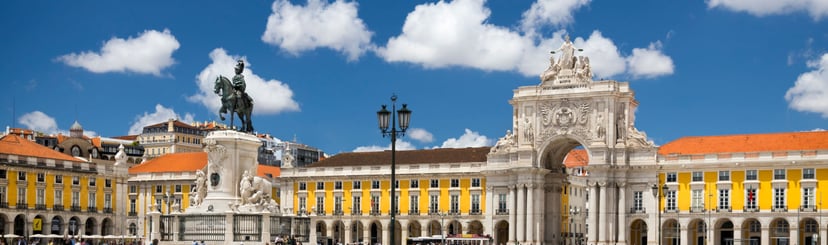
Start your first Lisbon day at the water. The best plan after an overnight flight is to put your opening hours on the flat riverfront around Praça do Comércio, the lower Baixa grid, and perhaps a short Baixa-Chiado edge, because Lisbon drains energy less through one dramatic climb than through a series of smaller ones: baggage claim, a hotel handoff, polished cobbles, a wrong turn uphill, then one more staircase than you expected. At the Praça do Comércio riverfront edge, especially near Cais das Colunas where the steps meet the Tagus, the city feels broad and breathable. Turn inland too quickly and the rhythm changes. The clearest exception is the traveler who slept unusually well, lands early, and is already staying in or just west of Belém. Everyone else should save the serious ascents for day two. If you want luggage, hotel timing, and that first gentle circuit handled as one decision instead of three separate bookings, start with arrival-day support.
Lisbon is one of those cities where the first-day mistake is not doing too little, but beginning one neighborhood too high. That is the thesis for this whole arrival guide. On paper, Baixa-Chiado, Alfama, Belém, and the viewpoints can look close enough to combine. In the body, after a red-eye, they do not. Even strong walkers can feel excellent for ninety minutes and suddenly flat by late afternoon, usually just after the route turns uphill or the return to the hotel becomes another logistical decision. A riverfront-first arrival keeps choices open. You can extend into Chiado if energy holds, end early without regret if it does not, and preserve the evening instead of spending it recovering from the city you came to enjoy.
The first counterintuitive correction is this: Belém is flatter, but it is not automatically the smartest first stop. If your hotel is in Chiado, Avenida da Liberdade, or Príncipe Real and your room is not ready, crossing the city west to Belém before you have settled can make the day feel more fragmented, not less. The winner for most first-time arrivals is the central riverfront before the hills, not simply the flattest district on the map.
The arrival-day ladder: what wins, what works, what waits
Not every famous Lisbon district deserves equal billing on arrival day. After an overnight flight, the right question is not what is most iconic, but which zone lets you enjoy the city without turning the first afternoon into a test of will.
This is the ranking that holds up best for a first day built around calm, appetite, and a usable evening rather than bragging rights.
- Best: Praça do Comércio, the riverfront edge, lower Baixa, and a short Cais do Sodré or Chiado edge if energy is still there.
- Very good in the right setup: Belém, but mainly when you are staying west, arriving unusually well rested, or using a car in a way that removes transfer friction rather than adding sightseeing ambition.
- Borderline: A brief move from Baixa into Chiado, only if you are honest about how the day is landing and stop before the climb becomes the point.
- Wait until day two: A full Alfama push, São Jorge Castle, and any plan whose emotional center is a viewpoint reached after a meaningful climb.
The reason the ladder matters is that day one in Lisbon is rarely ruined by a single bad choice. It is usually undone by stacking two acceptable choices together. Belém plus Chiado sounds manageable until check-in runs late. Baixa plus a sunset castle push sounds romantic until cobbles, queues, and uphill walking turn dinner into survival. A ranked ladder gives you permission to stop while the day still feels good.
Why Lisbon hits harder than it looks after a night flight
Lisbon is harder on an arrival day than many first-time visitors expect because the difficulty is cumulative, not theatrical. The city does not rely on one giant hill that announces itself. It wears you down through repeated small gradients, uneven calçada portuguesa underfoot, brief curving streets that look level until they tip upward, and the constant temptation to tack on one more viewpoint because it is “close.” Add in airport processing, the possibility that your room is not ready, and the mental effort of navigating a new city before you have reset your body clock, and the energy budget gets smaller fast.
The shift can be measured in route texture. The flat Baixa blocks between Praça do Comércio and Rossio let you move, pause, and change your mind with very little penalty. The moment you angle up toward Chiado, Bairro Alto, or the castle, the walk becomes more committed. Stopping for coffee no longer cancels out the effort, because the return is still there waiting for you. Crowded public transport can help in theory, but relying on it as the rescue plan after fatigue has already arrived is not the same as building a gentler day from the start.
The body consequence is obvious by late afternoon: your legs feel heavier than the map suggested, and your recovery window gets shorter. The mood consequence is just as important. A riverfront opening keeps Lisbon feeling elegant and spacious. An overly ambitious uphill first day can make the city feel fiddly, hot, stop-start, and oddly workmanlike. That shift matters because day one sets the emotional tone for the whole stay. The better arrival plan is the one that keeps curiosity intact.
Riverfront first or hill first in Lisbon after an overnight flight?
Choose riverfront first. After a night flight, the difference between flat Baixa blocks and even a modest Chiado climb is not theoretical. It is the difference between sightseeing that can expand and sightseeing that begins to demand recovery. This is where Lisbon punishes optimism. The walk can feel level and civilized around Praça do Comércio, Rua Augusta, and the lower Baixa grid, then change character as soon as you angle up toward the upper town.
The clearest physical proof is the contrast between the Rua da Misericórdia climb and the flat Baixa blocks below it. On a normal day, Rua da Misericórdia is simply part of Chiado’s connective tissue. After an overnight flight, it can be the exact point where a pleasant opening turns into leg fatigue and a narrowed afternoon. Down on the flat grid, you can keep decisions light: stroll, sit, eat, return, continue. Up there, the route becomes more binary. You are doing the hill, or you are backing out of it.
Riverfront-first also leaves you more graceful exits. You can finish after lunch, go back for a nap, or continue into one more district if energy surprises you. Hill-first consumes optionality. Once you have pushed into upper Chiado or toward Alfama, the day often still owes you a descent, a transfer, or a cross-town return. That is why riverfront-first wins even for travelers who usually like to move fast. Arrival day is not the day to prove fitness; it is the day to protect the rest of the trip.
The day-one districts that feel gentle, and the famous ones that do not
The kindest first-day districts are the ones that stay legible, level enough, and easy to leave. In Lisbon, that means the central riverfront first, Belém in selected setups, and only a cautious edge of Chiado if the body still feels cooperative.
Praça do Comércio and lower Baixa
This is the strongest arrival-day base for most first-timers. The square itself gives you air, water, and visual order; the lower Baixa streets let you move without the route turning punitive; and the whole zone is forgiving if you need to sit down, switch plans, or head back to the hotel. Lower Baixa is not just easy because it is flatter. It is easy because it gives you multiple low-effort versions of the same afternoon: a short walk, a longer walk, a coffee stop, a lingering lunch, or a simple loop back.
Belém
Belém can be excellent on day one, but only when the logistics already point you that way. If you are staying nearby, arriving early, or using a car so you are not improvising transfers, the river setting and wider spacing can be restorative. What Belém is not, however, is an automatic jet-lag cure. If your hotel is central and you still need to drop bags, assess check-in timing, and get oriented, a first-day jump west can make the city feel larger and more broken into compartments than it actually is.
Alfama and São Jorge Castle
For most long-haul arrivals, São Jorge Castle on arrival day is a poor choice. The issue is not that the castle is unworthy. It is that the approach, the standing, the uneven surfaces, and the “since we are already here” temptation to continue through upper Alfama pile effort into the exact hours when judgment is weakest. Deep Alfama can be beautiful at the right moment, but on day one it often converts wonder into friction. Save it for when your legs and attention are both back online.
Which iconic climbs should wait until day two
Wait on the castle, the deeper Alfama ridgeline, and any first afternoon built around “just one viewpoint.” Lisbon’s great mistake zone begins when visitors start treating the upper city as a quick add-on to a flight day. It is rarely quick. Even when the mileage is short, the sequence can involve a climb, queueing, standing without much shade or seating, and then a return to wherever you are sleeping. That is enough to flatten the remainder of the day.
Paying for a chauffeur on day one still does not justify a full castle-and-Alfama push. The car can remove airport friction, cross-town transfers, and some of the climb. It cannot eliminate the final uphill approaches, the cobbles underfoot, the standing, or the way fatigue compounds once you are there. This is the place where premium spend does not earn its cost if the plan itself is misjudged. Spend more to make a gentle day easier, not to force a punishing one into the schedule.
Day two is when the classic deeper Lisbon route starts to make sense. That is when Belém, Baixa-Chiado, and a fuller old-city push can finally belong in the same conversation, especially if you want the city’s best-known viewpoints and historical layers without resentment by dinner. When you are ready for that fuller version, use the full first-timer Lisbon day plan rather than copying it onto arrival day.
How your hotel location changes the answer more than most travelers expect
Your hotel location changes what counts as realistic on day one because Lisbon is not emotionally organized by district names; it is organized by how many transitions your body can tolerate before the city starts to feel uphill. The same afternoon can feel seamless from one hotel and oddly disjointed from another.
The practical rule is simple: the higher or more tucked-away the hotel, the more important it is that your first sightseeing hours happen somewhere easier than your address. Travelers often imagine that a beautiful viewpoint hotel will make arrival day feel instantly cinematic. In Lisbon it can do the opposite, because the first outing begins with a climb, a descent, or a confusing transfer before you have even had lunch. A flatter, more legible opening district often makes a high-positioned hotel feel more luxurious later, not less.
If you are staying in Chiado or around Avenida da Liberdade
This is the easiest setup for the riverfront-first plan. You can settle in, reach Baixa or Praça do Comércio without turning the day into a cross-city exercise, and decide later whether to climb a little toward Chiado or simply keep the opening flat. The hotel is close enough to matter, which means returning for a reset does not feel like surrender. If you are still deciding between Lisbon bases, where to stay in Lisbon for a comfort-first trip will help you line up neighborhood choice with arrival-day comfort.
If you are staying in Príncipe Real or Bairro Alto
The hotel may be lovely, but the arrival-day trap is assuming that because your base is attractive, you should start there on foot. This is often where travelers spend their first hours dragging luggage up an incline or repeatedly moving between high and low city levels. A better move is to arrive, settle, and then descend into a flatter opening rather than using the hotel’s elevation as the sightseeing theme of the day.
If you are staying in Alfama or another higher historic pocket
This is where honesty matters most. Atmospheric hilltop or old-quarter hotels can be excellent for character, but they rarely make the first afternoon easier. On arrival day, these locations almost always reward a transfer-assisted start and a flatter first outing. Let the hotel be the address you return to, not the neighborhood you try to conquer immediately.
If you are staying in Belém or farther west
Now the answer can flip. In that setup, a Belém-first day may genuinely be the smoothest opening because you avoid doubling back through the city before you are settled. The key is still restraint. A river walk, a long lunch, and selected exterior or garden moments can be ideal. A full monument marathon is not required just because the district is outside the center.
Transfer style changes what counts as realistic on arrival day
The right transfer on arrival day is the one that simplifies decisions, not the one that encourages you to behave as if jet lag does not exist. In Lisbon, transfer style matters because the city’s first frictions often happen before sightseeing begins: baggage retrieval, meeting a driver, timing hotel access, deciding where to eat before the room is ready, and figuring out how aggressively to start. Remove those frictions and the first afternoon opens up. Stack them, and even a beautiful plan can feel clumsy.
This is particularly true in Lisbon because the cost of a bad first handoff is not merely delay. Delay often pushes you into the steep part of the city at the wrong hour, when the sun is higher, the lunch window narrows, or patience inside the group is already thinning. A well-timed transfer does not just save minutes. It protects the order of the day: settle first, see the river first, then choose whether to enlarge the plan.
A standard taxi or app ride can be perfectly fine if your hotel is straightforward, your arrival is quiet, and you are willing to keep the day small. A private arrival transfer earns its keep when the stakes are higher: children, older parents, celebration travel, multiple rooms, a short stay, or simply the desire to preserve tone. The value is not just the ride. It is the continuity between airport, bags, check-in timing, and the first route through the city.
That same logic explains why a gentle hosted circuit can work so well on day one. You are not buying “more Lisbon.” You are buying fewer avoidable decisions, fewer awkward handoffs, and a cleaner route shape through the part of the city that feels best on tired legs. That is when a chauffeured Lisbon option becomes a real upgrade rather than a decorative one. If that is the kind of arrival you want, with the city meeting you at the right energy level instead of the highest one, Inquire now.
What does not make sense is using a premium transfer as moral permission to over-schedule. The car is a tool, not a loophole. It can get you to the flatter start more comfortably. It cannot turn late-day exhaustion into genuine enthusiasm for a castle circuit you should have left for tomorrow.
How much Lisbon is realistic before dinner on arrival day
Most travelers have fewer usable sightseeing hours on day one than they think. Between landing, clearing the airport, reaching the hotel, waiting on the room, freshening up, and getting to the first meal, the “afternoon in Lisbon” often shrinks to a surprisingly short block. Plans fail when they are built as though every landed hour is fully available and every step after lunch will feel like the first ten minutes.
A better mental model is this: on an ordinary long-haul arrival, you usually have enough bandwidth for one opening district, one good meal, and either a scenic walk or a modest second neighborhood edge, not a full city survey. In Lisbon that is liberating, not limiting. The city’s riverfront gives you a complete-feeling first chapter without pretending you should also conquer the upper town before dark. Once you accept that limit, the day becomes easier to design and much more pleasant to live.
The strongest arrival plans also leave a little margin for mood. Maybe lunch runs long because it finally feels good to sit down. Maybe the room becomes ready and a shower sounds better than pressing on. Maybe the group splits on appetite for walking. The riverfront-first plan absorbs those changes gracefully. A hill-first plan does not. It assumes commitment before the day has earned it.
A five-star first day for three common arrival scenarios
The best first day in Lisbon is not one universal route. It is the right soft-opening for the kind of arrival you are actually having. These three scenarios cover most premium stays without pretending that every flight, hotel, and body clock lands the same way.
Read them as route shapes, not rigid itineraries. The point is not to control every hour. It is to recognize which parts of Lisbon still feel generous on tired legs and which parts begin asking for reserves you may not have yet.
Scenario one: central hotel, ordinary red-eye, room may or may not be ready
This is the default case, and the answer is straightforward: get to the hotel first, not the sights. Drop bags, freshen up if possible, then head for the riverfront around Praça do Comércio and lower Baixa. The ideal first afternoon here is built around one good lunch, a spacious walk by the water, a little movement through the grid, and the freedom to stop before the day tips upward. If energy unexpectedly improves, touch the lower edge of Chiado. If it does not, the city has already given you enough.
The power of this version is that it keeps Lisbon feeling bigger in the best way. You are not counting staircases or mentally pricing the effort of each detour. You are reading the city through open edges and manageable blocks, which is exactly how a place should introduce itself after a long flight. Many travelers underestimate how satisfying this can be because they confuse gentle with incomplete. In reality, it is the version that leaves them most ready for the fuller Lisbon day tomorrow.
If you want a simple clock for this version, think in loose phases rather than appointments: airport and hotel first, lunch second, riverfront third, optional Baixa extension fourth, then dinner within easy reach of the hotel. What you do not add is a second act across town. The moment the plan requires another transfer to “make the day count,” you have usually crossed from restorative into performative.
Scenario two: staying west, arriving early, or already using a driver
This is when Belém can move up the board. If your base is already west of the center, or if a driver makes the transition effortless, Belém’s river light and broader spacing can be a genuine gift on arrival day. The smart version is selective: maybe a riverside stroll, one anchor sight from the outside or at a measured pace, a long lunch, and then back to the hotel. The mistake is turning “Belém is flatter” into “Belém should absorb every famous monument immediately.”
Handled properly, Belém gives a softer visual opening than the inner city without asking for urban problem-solving on tired legs. Handled badly, it becomes a time sink followed by a second act in the center that no one needed. The decision point is simple: if Belém is your natural line of travel, use it; if it is an extra crossing of the city before you have even settled, it belongs later.
This is also the scenario where a driver can be most quietly useful. The benefit is not status. It is being able to move west, see enough, and return before the day frays around transport decisions. Belém rewards selectivity. It does not reward trying to prove that arrival day can also be your big monuments day.
Scenario three: older parents, children, or a celebration group that wants elegance without attrition
This is where the arrival-day riverfront plan becomes even more valuable. Groups do not just multiply walking speed differences. They multiply bathroom needs, bag coordination, snack timing, sitting-down moments, and the cost of one wrong routing choice. On arrival day, that makes the hills expensive. Keep the opening broad and flat. Focus on one district, a comfortable meal, and the easiest possible return to the hotel.
The emotional reward is disproportionate. Instead of spending the first afternoon negotiating resilience levels, everyone feels Lisbon at its most generous: water, light, enough grandeur, and no need to pretend that the steepest streets are somehow part of a graceful recovery. Families and mixed-energy groups especially benefit from leaving Alfama and the castle for a day when enthusiasm is authentic instead of managed.
Celebration travelers often need this reminder too. A trip can still feel special without treating the first afternoon as the headline act. In fact, the celebration lands better when the group reaches dinner with energy left for the toast, the conversation, and the city lights rather than with the slightly dazed feeling that too much day has already happened.
What to cut first if the day starts slipping
Cut altitude before you cut atmosphere. When an arrival day starts running late in Lisbon, travelers often do the opposite: they keep the famous hill or viewpoint and sacrifice the easy waterfront wander or the calm lunch that was making the day pleasant. That is backwards. The flat riverfront portion is the part that matches the body you actually have on day one. The climb is the vanity add-on.
If the day slips, the first cut should be São Jorge Castle or any similar uphill anchor. The second cut should be a district transfer, especially the idea that you need both Belém and central Lisbon on the same first day. The third cut should be a cross-town dinner reservation that turns the evening into another transfer problem. Keep what is nearest, flattest, and most reversible. If the first afternoon narrows to Praça do Comércio, a slow Baixa circuit, and an easy dinner near the hotel, that is still a successful Lisbon arrival.
The common mistake is chasing the photograph that proves you “really arrived.” In Lisbon, the better proof is subtler: you slept that night, woke up wanting the city, and had enough appetite for the day that should actually carry the classic highlights.
Another useful cut-first rule: if you are debating whether to keep the nap, the answer is usually to keep it. A brief hotel reset paired with a riverfront evening is often more successful than grinding through one more uphill hour and losing the night completely. Lisbon rewards travelers who know when to stop just before the city becomes effortful.
Dinner on night one should reward restraint, not bravado
The best first-night dinner in Lisbon is the one that still sounds appealing at 19:00. That usually means a restaurant close to your hotel or close to the district where you naturally finished, a meal long enough to feel special but not so committed that it punishes a body clock still running elsewhere, and a return that does not require a final uphill pilgrimage. Arrival day is a poor stage for restaurant maximalism.
This is why many travelers do better with one well-chosen central table than with a hard-to-reach “big night” reservation. Marlene, on MICHELIN Guide (https://guide.michelin.com/us/en/lisboa-region/lisboa/restaurant/marlene), is the kind of example that makes sense for night one: contemporary, city-smart, and easier to place within a civilized first evening than a drawn-out tasting-menu ordeal across town. The point is not to create a list. It is to choose a meal whose pleasure is not dependent on a heroic energy reserve.
If you are determined to make night one a landmark dinner, be practical about it. Confirm current details directly before you build the evening around them, whether that means checking Belcanto via the official PDF (https://belcanto.pt/uploads/Belcanto_FAQ_EN_Abr25.pdf) or using the Fifty Seconds official site (https://www.fiftysecondsexperience.com/en/reservations/). On arrival day, certainty matters more than fantasy, because a reservation that looks glamorous on paper can feel oddly punitive after one uphill detour too many.
The mood consequence is simple. A manageable dinner keeps Lisbon feeling seductive. An overcommitted one makes the city feel like an assignment. Night one should not be where you prove seriousness. It should be where you cash in on the good decision you made by starting gently.
How a gentle first day improves the rest of a Lisbon stay
A restrained first day is not defensive planning. It is the move that makes the classic Lisbon days better. When you begin by the river, sleep more cleanly, and reach the second morning with curiosity intact, the city’s hills stop feeling like a trick and start feeling like texture. That is when Belém, Baixa-Chiado, and Alfama can finally sit together without the route turning into attrition. It also means you are less likely to waste a later day recovering in your room or quietly downgrading ambitious plans.
This is especially true on shorter city stays. Travelers with two or three nights often feel pressure to “get started properly” the moment they land. In Lisbon, that urge is usually expensive. A softer opening actually increases usable trip time because it protects the day when you want the castle, deeper old-city walking, a fuller chauffeured route, or even a day trip beyond the city. If you are still shaping the wider trip, how many days to give Lisbon helps place arrival-day restraint in the context of the whole stay.
The same principle matters for tailor-made touring. At Orange Donut Tours, the arrival-day advantage is not seeing more before sunset. It is sequencing Lisbon so the stronger, more layered private day arrives when your body can actually enjoy it. That is a different standard from generic “best of Lisbon” advice, and it is why a soft riverfront opening often outperforms a supposedly more impressive hill-first debut.
The real upgrade, then, is not that day one feels luxurious in some abstract sense. It is that Lisbon still feels inviting on day two, which is when the city usually delivers its deepest pleasures.
FAQ
Is Belém the best first stop after landing in Lisbon?
Only sometimes. Belém works very well when you are staying west, arriving unusually fresh, or using a transfer that makes the move effortless. If your hotel is central and you still need to settle in, the central riverfront around Praça do Comércio and lower Baixa is usually the smoother first-day answer.
Should I do São Jorge Castle on arrival day?
No, not in most cases. São Jorge Castle is one of the clearest day-two sights in Lisbon because the effort is larger than it looks once you factor in approach, standing time, cobbles, and the temptation to keep going through upper Alfama.
Is Chiado too hilly for the first afternoon?
Lower edges of Chiado can work if energy is genuinely holding, but a full Chiado or Bairro Alto walk is often too much after an overnight flight. The route usually stays pleasant only until the climb becomes the main event.
Does a chauffeur make sense on day one?
Yes, when it removes friction you would otherwise feel: luggage handling, hotel timing, cross-town transfers, mixed-energy groups, or a short stay where you do not want to spend your first afternoon improvising. No, if the real goal is to force an overbuilt castle-and-Alfama route that the body is not ready for anyway.
What if my hotel room is not ready yet?
Do not fill the gap with the steepest sightseeing. Drop bags, freshen up if you can, and keep the first outing flat and easy to exit. In Lisbon, an unsettled hotel situation is a reason to simplify the day, not to make it more ambitious.
Can families or older parents use the same arrival-day plan?
Yes, and they usually benefit from it even more. The riverfront and lower Baixa reduce arguments about pace, sitting down, snack stops, and whether one more climb is worth it. That keeps the first afternoon from turning into group management.
What is the biggest first-day mistake in Lisbon?
The biggest mistake is stacking a flight day, an unsettled hotel check-in, and one of the city’s iconic climbs into the same afternoon. Lisbon is much kinder when you let the riverfront introduce the city first and leave the hills for the next day.
If Lisbon is only one night, should I still avoid the hills?
Mostly yes. If you have only one night, touch one hill at the edge only if you are honestly landing well and you can keep the rest of the day compact. Even on a short stay, a gentle first afternoon is usually more memorable than a rushed collection of famous climbs.
Should I plan a nap or push through?
If the choice is between a short reset and forcing one more uphill district, choose the reset. In Lisbon, a brief rest followed by a riverfront evening usually gives you a better night and a better second day than trying to power through into the steepest parts of the city.
If you’re interested in any private tours of Lisbon, please reach out to us.


 So if you are looking for the absolute best in Lisbon & surroundings with authentic local fully-licensed native guides whose English you can actually understand and with an exclusive and amazingly fun itinerary













