Jewish Lisbon for a Discerning Private Day: Alfama, Baixa and Shaaré Tikva Without Old-City Blur
Updated
Build Jewish Lisbon as a guide-led heritage day that moves from Alfama to Baixa and places Shaaré Tikva as a controlled, access-aware finish, not as a checklist of old-town sights. That order works because Lisbon’s evidence is uneven: the Alfama slope between Sé and São Jorge changes walking speed and attention, Baixa’s grid explains what was lost after 1755, and the synagogue sits outside the old-city lanes with access that should be confirmed rather than assumed. The clearest exception is a traveler who wants a devotional synagogue visit above all else; in that case, plan around the community’s confirmed access first and let Alfama and Baixa become supporting context.
The thesis is Lisbon-specific: the strongest Jewish day here is about reading absence accurately, through street names, slopes, rebuilt blocks, memorial space and modern community life, so the route has to be interpreted in motion. If you are already deciding whether this should be guided rather than self-led, begin with the service shape behind Jewish Lisbon: Alfama & Shaaré Tikva Private Tour, then use this guide to decide what belongs in your private day.
A ranked ladder for a Jewish Lisbon private day, from essential to optional
The priority order is Alfama for rooted context, Baixa for rupture and reconstruction, Shaaré Tikva for living-community continuity, then one calm reset that keeps the day from dissolving into old-city blur. This sequence gives a discerning traveler the best chance of understanding Jewish Lisbon without pretending the city offers a neat row of surviving medieval monuments. It also keeps the body of the day honest: the climb comes when attention is fresh, the flatter Baixa portion arrives when legs need relief, and the synagogue is treated as an access-sensitive stop rather than a promised interior.
- 1. Alfama earns the first position. Start in the older fabric because the former Jewish presence makes more sense when you can feel the topography around Sé, Rua da Judiaria, the castle hill and the tight turns below São Jorge.
- 2. Baixa should follow, not compete. The post-earthquake grid around Praça do Comércio, Rua Augusta and Rossio explains why much of the medieval evidence is missing and why guide-led context matters more than a monument map.
- 3. Shaaré Tikva belongs as a deliberate modern-community chapter. It is not in the same old-city pocket, and its access should be checked through the community rather than assumed from a casual listing.
- 4. Largo de São Domingos is powerful when handled with restraint. It can connect persecution, memory and public space, but it should not turn the day into a grim lecture with no pacing relief.
- 5. A food, coffee or hotel reset is not indulgence here. It is the practical hinge that prevents the route from flattening into a chain of solemn explanations.
This ladder is also the answer to the most common planning mistake: do not start by asking how many “Jewish sites” can be squeezed into one day. Ask which pieces let the story hold together without exhausting the travelers. Jewish Lisbon should not be sold as a route full of obvious surviving monuments. The better private day accepts the scarcity of visible remains and turns that scarcity into an intelligible narrative, using Alfama’s slope, Baixa’s reconstruction and Shaaré Tikva’s modern presence to create continuity.
Why Jewish Lisbon needs guide-led context more than visible monument stops
Jewish Lisbon is worth a private guide because the most important meaning is often between the visible stops, not inside them. In some European cities, a Jewish heritage route can lean on an intact quarter, a preserved synagogue, a cemetery or a museum circuit. Lisbon is different. The story is older, more interrupted and more embedded in ordinary streets. A self-led traveler can stand in Alfama and see a picturesque alley; a strong guide can explain why that alley should be read alongside medieval residence patterns, forced conversions, later erasures, the Inquisition, the 1755 earthquake and the modern community’s re-emergence.
The consequence for travelers is immediate. Without interpretation, Alfama becomes another old-town walk, Baixa becomes a shopping-grid stroll, and Shaaré Tikva becomes a remote add-on whose meaning arrives too late. With interpretation, the day has a beginning, wound and continuation. The guide’s value is not theatrical storytelling; it is editorial control. The best private guide knows when to stop for a short, serious explanation, when to keep the group moving, when to let a street name do the work, and when not to overclaim. That restraint is especially important in Lisbon because a confident but careless tour can make the city sound fuller of physical evidence than it really is.
There is also a comfort consequence. A group that is reading every corner for hidden clues will tire faster than a group casually sightseeing. Jewish heritage context asks travelers to hold chronology, loss and geography in their heads while negotiating cobblestones, slopes and changing light. Families with teens, older parents, celebration travelers and couples who care about the evening all benefit from a guide who can vary intensity. This is where private touring becomes more than privacy: it lets the day breathe without losing intellectual seriousness.
Do not let a standard Alfama route wear a Jewish label
A Jewish Lisbon day breaks down when it borrows the pacing of a standard Alfama walk and adds a few heritage sentences along the way. The result can sound convincing on paper because the neighborhood names overlap: Sé, Alfama, São Jorge, a viewpoint, perhaps Rossio or Baixa afterward. But the traveler consequence is different. A standard old-town route rewards atmosphere, elevation and scenic transitions. A Jewish heritage route rewards restraint, sequence and the ability to explain what is no longer there without filling the gaps with romance.
The guide should be able to say why the group is pausing in a specific lane, why a broader viewpoint is useful or unnecessary, and why a rebuilt downtown block matters to a medieval and early-modern story. If the plan cannot answer those questions, it is probably using Jewish history as a theme rather than as the route’s organizing principle. That is where old-city blur begins: every tiled wall, church façade and narrow stair feels vaguely historical, but the traveler leaves with less clarity than when the day began.
The corrective is not to make the day more academic. It is to make it more edited. Keep a few locations with real explanatory work, let the guide connect them cleanly, and avoid decorative detours that do not change the traveler’s understanding. A private group should not have to choose between beauty and seriousness, but in Lisbon the beautiful old-town impulse must be kept in service of the heritage question rather than allowed to swallow it.
Start in Alfama because the terrain teaches before the monuments do
Alfama should come first because the district makes the body understand Lisbon before the mind tries to organize the archive. The slope between Sé and São Jorge is not a decorative inconvenience; it changes how long stops can be, how much a traveler can absorb, and whether the route feels intimate or punishing. Begin too late, climb too quickly, or let a generic castle-and-viewpoint rhythm take over, and the Jewish layer becomes an afterthought under the pressure of stairs, tuk-tuks, tram noise and photo stops.
The stronger approach is to treat Alfama as a guided reading exercise with short physical chapters. Sé gives an anchor at the lower edge of the hill. The movement toward Rua da Judiaria and the older lanes nearby lets the guide talk about proximity, trades, religious boundaries and the fact that everyday life did not unfold in the same way as a modern tourist map. From there, the route can rise or contour toward the castle side depending on the group’s stamina. The decision is practical: a steep push toward São Jorge can reward travelers who want the full hill-body experience, while a moderated route gives older parents and heat-sensitive visitors more attention for the actual heritage material.
This is the point at which many private days go wrong. A popular Alfama walk can be beautiful and still be the wrong spine for Jewish Lisbon. Viewpoints such as Santa Luzia or Portas do Sol can help orient the city, but they can also steal time and mood if they turn the morning into scenic browsing. When heritage is the purpose, the guide should use a view only if it explains the river, the castle hill, the lower city and the movement between communities. If it is merely a photo pause, cut it first. Travelers who want the old-city atmosphere as a separate theme can still build from São Jorge Castle & Alfama Private Tour, but a Jewish Lisbon day should not let the castle become the main character.
What Alfama does to the body, attention and pace
Lisbon makes heritage feel physical. In Alfama, polished cobbles, narrow pavements, short stair runs and uneven inclines make the day feel longer than the distance suggests. The climb from the cathedral side toward the castle hill is not extreme for an active walker, but it asks for concentration. That matters because concentration spent on footing is concentration not available for a nuanced discussion of medieval Jewish life, the pressure of conversion, or the difference between a remembered quarter and a preserved monument.
For a private group, the solution is not to remove the slope entirely. The slope is part of the lesson. The solution is to pace it as a sequence of interpretive stops rather than a continuous ascent. A guide can choose the side of the street with the better footing, pause in a place where the group is not blocking residents, and avoid forcing long explanations at the exact moment when everyone is catching breath. In hot weather, after a long flight, or with older parents, this becomes the difference between an attentive morning and a polite endurance test.
The trip mood changes as well. A rushed Alfama morning can make the whole day feel shorter, sharper and more crowded than it actually is. Travelers begin to anticipate the next climb instead of listening to the next layer. A moderated Alfama morning has the opposite effect: the city feels legible, the group trusts the guide, and Baixa later feels like relief rather than a retreat. That emotional shift is not cosmetic. It determines whether Shaaré Tikva at the end feels like a meaningful continuation or a final obligation.
Baixa after the 1755 earthquake is the missing-evidence chapter, not a generic downtown walk
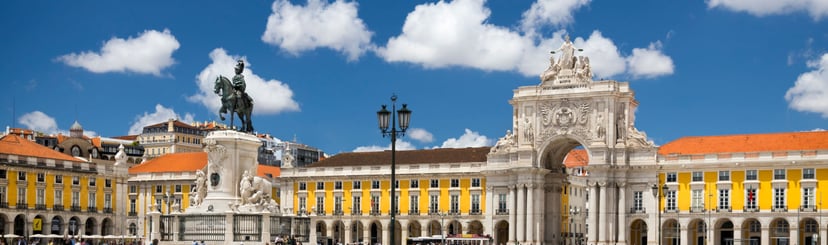
Baixa belongs in a Jewish Lisbon day because its orderliness explains absence. The rebuilt grid, the open scale of Praça do Comércio, the straight commercial pull of Rua Augusta and the formal rhythm of the Pombaline streets are not simply downtown scenery. They show how a city can become easier to navigate while becoming harder to read for older layers of memory. The UNESCO tentative-list description of Pombaline Lisbon (https://whc.unesco.org/en/tentativelists/6226/) is useful as a direct reference because it frames the area as a historically significant reconstruction rather than just a handsome shopping district.
The planning payoff is clear: Baixa should not be used as filler between Alfama and the synagogue. It should be the part of the day where the guide explains why travelers should lower their expectation of intact medieval Jewish fabric. After the 1755 earthquake and the reconstruction that followed, older spatial evidence became more fragmented. That does not make Baixa less relevant. It makes it essential to understanding why Lisbon’s Jewish heritage day must be interpretive rather than monument-led.
A strong Baixa sequence usually needs fewer stops than travelers expect. Praça do Comércio can set up the riverfront and the vanished palace world. Rua Augusta can show the rational grid and the commercial spine. Rossio and the Largo de São Domingos area can introduce public memory, violence and the uneasy relationship between civic space and religious history. The exact route can vary, but the guide should keep the purpose tight: this is where Lisbon teaches that elegant urban clarity can sit on top of rupture.
Praça do Comércio, Rossio and Largo de São Domingos: how to keep the middle of the day serious without making it heavy
The middle of the day should connect public space to memory without turning the route into an uninterrupted account of persecution. Praça do Comércio gives scale: the river, the former royal axis and the rebuilt lower city all help the traveler understand why Lisbon was both an Atlantic capital and a place of vulnerable communities. Rossio and Largo de São Domingos bring the tone closer. They are not merely “nearby sights”; they are urban rooms where civic life, religious power and memory have overlapped in ways that still shape how Jewish Lisbon is discussed.
The practical consequence is that the guide needs judgment about emotional pacing. Largo de São Domingos can be one of the most affecting stops in the day, especially when discussing the 1506 massacre and later memory. But placing too much weight there without relief can overwhelm families, teens or celebration travelers who came for heritage depth, not a day of unbroken tragedy. A good private route makes the stop direct, respectful and bounded. It gives the history enough room, then moves the group into a calmer transition rather than asking everyone to stand in the square until the mood collapses.
This is also where the old-city blur can begin if the plan is not disciplined. Baixa has cafés, shops, tiled façades, churches, transit noise and river pull. A guide who lacks a clear hierarchy may keep adding context until every block feels equally important. The discerning version does the opposite. It uses a few named anchors, then cuts. If the travelers are starting to absorb less, skip the extra church interior, the extra shopping detour and the extra viewpoint. The day’s seriousness improves when the route has the courage to leave things out.
Where Shaaré Tikva belongs when access is uncertain or exterior-only
Shaaré Tikva belongs after Alfama and Baixa unless the confirmed access window requires a different order. The synagogue is the day’s modern-community anchor, but it is not physically embedded in the same old-city route. It sits toward the São Mamede and Avenida da Liberdade side of the city, associated with Rua Alexandre Herculano rather than the lanes around Sé or Praça do Comércio. That separation is useful: it lets the day move from medieval presence and rupture into modern continuity, but only if the transfer is planned deliberately.
Access should be treated carefully. The official synagogue page of the Jewish Community of Lisbon (https://www.cilisboa.org/home/synagogue/?lang=en) states that tourist visits are guided and subject to prior booking, and visitors should confirm requirements directly before building the day around an interior visit. The Visit Lisboa listing for Shaaré Tikvah Synagogue (https://www.visitlisboa.com/en/places/shaare-tikvah-synagogue) is also useful because it notes the synagogue’s discreet street presence and its early twentieth-century opening. Those two details matter for planning: this is not a monument you casually fold into an old-town stroll, and it is not a façade-first landmark that reveals itself from the street like a cathedral.
When interior access is realistic, place Shaaré Tikva as a focused chapter with enough buffer around arrival, security expectations and the group’s energy. When access is exterior-only, do not pretend the stop has the same payoff. Use it instead as a sober conclusion about modern Jewish life in Lisbon, public visibility, and the difference between a historic community’s memory and a tourist’s appetite for access. That honesty actually makes the day feel more trustworthy. Affluent travelers do not need every door opened; they need to know which doors matter, which are uncertain, and how to make meaning when access is limited.
When the answer flips: synagogue-first days
The order should flip when Shaaré Tikva is the emotional or religious purpose of the day rather than the concluding context. Some travelers are visiting because of family memory, community connection, conversion history, a yahrzeit-adjacent trip, or a long-standing wish to stand in Lisbon’s principal synagogue. In that case, do not make the group climb Alfama first simply because the old-city route is editorially elegant. Begin with the confirmed community access, or build the morning so that no hill delay threatens it.
The tradeoff is that Alfama may become shorter and Baixa may need to become more selective. That is acceptable. A synagogue-first day should still avoid pretending that Lisbon’s Jewish past is concentrated in one building, but it can let Shaaré Tikva carry the emotional center. The guide’s job then changes: instead of building toward modern continuity as the final chapter, the guide uses the synagogue to establish living community first, then reads Alfama and Baixa as earlier layers of the same story. This version is not weaker; it is simply for a different traveler priority.
For celebration travelers, this timing choice is especially important. A birthday, anniversary or family reunion can carry a private heritage day beautifully, but only if the emotional center is protected from logistics. If Shaaré Tikva is the reason the trip was planned, build the day around it. If the family is trying to understand Lisbon’s Jewish layers more broadly, let Alfama and Baixa prepare the ground before the synagogue chapter.
The comfort reset that keeps heritage depth from becoming old-city blur
One well-placed reset is the difference between a serious heritage day and a dense morning that nobody fully retains. The best place for the reset is usually after Baixa and before Shaaré Tikva, or just after the synagogue if the access window forces an earlier visit. It can be a seated coffee, a quiet lunch, a hotel pause for travelers staying near Avenida da Liberdade or Chiado, or a private transfer that gives the group ten minutes off their feet. The reset should not become a food tour; it should restore attention for the final chapter.
For food-and-wine travelers, this is the temptation point. Lisbon makes it easy to add a market tasting, a pastry stop, a wine bar or a long lunch. Any of those can be pleasant, but only one belongs inside a Jewish heritage day unless the group has explicitly chosen a lighter historical scope. The cut-first rule is simple: remove the extra culinary detour before cutting Baixa or the synagogue context. The meal can be excellent later; the heritage arc cannot be reconstructed after everyone is tired and the route has scattered.
The mood consequence is significant. A day with no reset often feels morally serious but emotionally flat; travelers become quiet not because they are moved, but because they are saturated. A day with one calm pause keeps the conversation alive. Couples can ask better questions, parents can check in with children, and older travelers can re-enter the final portion with dignity rather than pretending they are not tired. The result is not a softer day. It is a clearer one.
Spend judgment: context earns more here than another vehicle
Premium spend changes this day when it buys expert interpretation, cleaner sequencing, realistic access planning and a pace matched to the travelers. It can also help when the route needs a transfer from Baixa or a hotel area toward Shaaré Tikva, when older parents need fewer uphill returns, or when a family benefits from a private rhythm instead of group-tour timing. It does not help equally everywhere, and this is where the planning should be frank.
A chauffeur does not materially improve the narrow Alfama portion; the premium value is expert context, pacing and the decision about what to include. In the tight lanes near Sé, Rua da Judiaria and the castle-side slopes, a vehicle cannot replace walking interpretation. Paying for a car to hover around Alfama can even create frustration if the group expects door-to-door ease in streets where the real work happens on foot. Use private transport selectively: hotel pickup if needed, a transfer after Baixa if the synagogue timing calls for it, and a smoother return when the day ends away from the old city.
Travelers comparing this with a broader vehicle-led day may find it helpful to read the chauffeured Lisbon day guide. The distinction for Jewish Lisbon is sharper than for a first-time sightseeing route. In a Belém-Baixa-Alfama overview, a chauffeur can solve distance and heat. In the narrow Alfama Jewish context, the guide’s mind and route discipline are the more valuable upgrade.
Three booking questions that reveal whether the route is serious
The easiest way to judge a proposed Jewish Lisbon private day is to ask route questions rather than biography questions. A guide can know the history and still build a day that is physically awkward or emotionally overpacked. A planner can promise a premium experience and still miss the access reality at Shaaré Tikva. Before committing, ask how the route handles terrain, evidence and the reset.
- Where does the Alfama chapter begin and why? A serious answer should mention the relationship between Sé, the former Jewish quarter, the castle-side slope and the group’s stamina. A vague answer about “exploring Alfama” is not enough.
- How is Baixa used? It should not be described only as the next neighborhood or a shopping district. It should explain reconstruction, missing evidence, Praça do Comércio, Rossio or Largo de São Domingos in a way that serves the Jewish heritage arc.
- What is the plan for Shaaré Tikva if access is limited? The answer should distinguish interior visit, exterior context and community-reference planning. If the route treats synagogue access as automatic, ask for more precision.
- Where is the pause? A serious day should name a point at which the group sits, transfers, or resets attention. Without that pause, the final chapter often becomes technically included but weakly absorbed.
These questions also reveal whether the operator understands premium service as more than a higher price. The best answer will not promise to include everything. It will explain what to leave out: an extra viewpoint if the slope is enough, a long food stop if the heritage arc is dense, a castle extension if the day is becoming a general Alfama tour, or a second old-town loop if the synagogue chapter needs space. For discerning travelers, that willingness to cut is a trust signal.
How a private guide turns disconnected stops into one coherent heritage narrative
The private guide earns the day by deciding what each stop is supposed to do. Alfama should not simply prove that Jews once lived in the older city. Baixa should not simply prove that the earthquake changed Lisbon. Shaaré Tikva should not simply prove that there is a modern synagogue. Each stop needs a narrative task: Alfama introduces rooted daily life and the difficulty of reading medieval memory; Baixa explains rupture, reconstruction and absence; Shaaré Tikva brings the story into modern communal presence and controlled access.
This is the natural point to plan the day with Orange Donut Tours if you want the experience shaped around your travelers rather than around a fixed script. The team can build the heritage arc, adjust the hill load, decide whether Shaaré Tikva belongs as an interior goal or exterior context, and keep the day from crowding out your evening. For a more customized version of the route, use Tailor-Made Private Tours of Lisbon or Inquire now.
The benefit is especially clear for mixed-interest groups. One traveler may care most about Sephardic history, another about Lisbon’s urban form, another about present-day Jewish life, and another about not turning the vacation into a graduate seminar. A private guide can give each person enough without making the day feel negotiated at every corner. That is the difference between a tour that is merely private and a day that feels designed.
How to sequence the day from hotel pickup to evening plans
The cleanest sequence is morning Alfama, late-morning Baixa, midday reset, then Shaaré Tikva according to access and travel rhythm. A hotel pickup can work if the travelers are staying near Avenida da Liberdade, Chiado, Baixa or Príncipe Real, but the first meaningful walking chapter should begin where the guide wants the terrain to start making sense. For many groups, that means orienting near Sé and using the climb toward the older Alfama fabric as the day’s first physical lesson.
After Alfama, drop into Baixa while the group still has enough attention for city form. Praça do Comércio and the Pombaline grid are easier to understand after the medieval slope because the contrast is visible. Then decide whether the reset is a seated pause or a transfer. If Shaaré Tikva access is confirmed for a particular window, the order may shift. If not, the exterior or community-context chapter can sit later, when the old-city story has already been built.
The evening matters because this day asks for more concentration than a standard highlights route. Do not plan a late uphill return through Alfama after a full heritage day unless the travelers specifically want that mood. If dinner, fado or a riverfront evening is part of the trip, choose it as a separate rhythm rather than an extension of the same walking arc. For a useful contrast, the nearby planning guide on a private Lisbon evening plan without hill fatigue shows why Alfama after dark is a different decision from Alfama as a heritage morning.
Who should choose this day, and who should not
This route suits travelers who want Jewish Lisbon handled seriously but not abstractly. It is especially strong for first-time Lisbon visitors who already plan to see Alfama and Baixa, heritage-interested couples, families with older teens, small private groups, and travelers with Sephardic interest who want context before they visit other Portuguese Jewish heritage towns. It also suits comfort-first visitors who dislike being rushed, because the route’s value depends on listening, noticing and sequencing rather than racing through stops.
It is the wrong fit for travelers who want a day of obvious surviving Jewish monuments, guaranteed synagogue access without prior coordination, or a purely religious visit with minimal urban history. It is also not the best use of a scarce Lisbon day if the group has no appetite for interpretation and only wants atmosphere, viewpoints and a few beautiful streets. In that case, choose a broader Alfama or first-time Lisbon route and be honest that the Jewish layer will be lighter.
The firm editorial call is this: if Jewish heritage is the reason for the day, do not let Belém, Sintra, a long lunch or a generic castle visit compete for the same hours. They may be excellent elsewhere in the itinerary, but they dilute this narrow route. The best Jewish Lisbon private day is not bigger; it is more legible.
FAQ
Is Jewish Lisbon worth a private guide if few monuments survive?
Yes, and that is exactly why a private guide matters. Lisbon’s Jewish story is often read through interrupted evidence, former neighborhoods, public memory, rebuilt urban fabric and the modern community, so the value is interpretation rather than a long list of intact monuments.
Should Alfama or Shaaré Tikva come first?
Alfama should usually come first because the older terrain sets up the historical context, but confirmed Shaaré Tikva access can override that order. If the synagogue visit has a fixed window, plan around it and adjust Alfama and Baixa as supporting chapters.
Can I visit Shaaré Tikva without advance planning?
Do not assume that you can. Treat Shaaré Tikva as an access-sensitive community site, check the official Jewish Community of Lisbon information before you go, and be prepared for the possibility that exterior-only context is the realistic choice for your date.
How physically demanding is the Alfama portion?
The Alfama portion is not long in distance, but it can feel demanding because of slopes, cobbles, narrow pavements and short stair sections. The area between Sé and São Jorge should be paced carefully, especially for older travelers, warm days or groups that want to absorb detailed heritage context.
Is Baixa really necessary for a Jewish Lisbon day?
Yes, if the goal is understanding rather than checking sites. Baixa after the 1755 earthquake explains why older evidence is fragmented, and the contrast between the rebuilt grid and Alfama’s older lanes helps travelers understand the limits of visible heritage in Lisbon.
What should we cut first if the day is getting too full?
Cut the extra viewpoint, long lunch, shopping detour or generic castle extension before cutting Baixa or the Shaaré Tikva context. Those add-ons may be enjoyable, but they weaken the Jewish heritage arc if they compete with the core sequence.
Does a chauffeur make Jewish Lisbon significantly easier?
A chauffeur can help with hotel transfers and the movement between Baixa and Shaaré Tikva, but it does not solve the narrow Alfama portion. The most important upgrade is a guide who controls context, pace and route discipline.
Can this work for families or celebration travelers?
Yes, if the day includes one well-placed reset and avoids turning every stop into a long lecture. Families and celebration travelers often do best with a private guide who can keep the story coherent, adjust the hill load and leave the evening feeling usable.
If you’re interested in any private tours of Lisbon, please reach out to us.


 So if you are looking for the absolute best in Lisbon & surroundings with authentic local fully-licensed native guides whose English you can actually understand and with an exclusive and amazingly fun itinerary













