Lisbon Without the Hills Shock: Where to Stay, Walk, Ride, and Recover

Updated
Stay lower than your postcard fantasy: choose the Chiado-Baixa edge or the lower part of Avenida da Liberdade, walk downhill when the city gives you a slope, ride uphill when the slope adds no meaning, and reserve one river or countryside recovery block before fatigue becomes the story of the trip. This works because Lisbon is not simply “hilly”; it is a city where a beautiful wrong turn can become a repeated energy tax, especially around the Alfama slope above the tram corridor. The exception is clear: if you actively want a romantic high-old-town stay and no one in your group minds cobbles, steps, late uphill returns, or more vehicle hops, then a higher Alfama or Príncipe Real base can still be worth the trade.
The Lisbon thesis is this: comfort here is not about avoiding hills; it is about assigning every climb a purpose and refusing to let your hotel, dinner, and sightseeing all charge your legs on the same day. Orange Donut Tours builds Private Tours in Lisbon around that distinction, because the best Lisbon days are not the flattest ones. They are the ones where the steepest moments are chosen, explained, and placed before the body starts negotiating with the itinerary.
The ranked ladder for a Lisbon trip without hill shock
The simplest way to remove hill shock is to rank every planning choice by what it does to your legs after 4 p.m., not by how atmospheric it looks at check-in. Lisbon rewards a stay that lets you step out easily, return without drama, and save the steepest streets for guided moments rather than repeated hotel commutes. Use this ladder before you book the hotel, before you assign Alfama to the first night, and before you decide that a tram is a serious transport strategy.
The order below is not a ranking of charm. It is a friction ladder for discerning travelers who want Lisbon to feel layered rather than exhausting. The higher the option sits, the more it reduces repeat climbing, transfer resets, and late-return fatigue; the lower options are not “bad,” but they demand a more deliberate plan.
- 1. Lower Chiado and the Baixa edge: the best all-around base when you want restaurants, shops, old-city access, and a sensible return path after dinner.
- 2. Lower Avenida da Liberdade: the calmer hotel geography for travelers who prefer smoother vehicle access, broader pavements, and easier chauffeur pickups.
- 3. Príncipe Real with a ride plan: excellent for design, gardens, and a polished mood, but less forgiving if you expect every outing to be a casual stroll.
- 4. A start-high Alfama route: a superb sightseeing method, but a demanding hotel choice unless you deliberately accept cobbles, stairs, and tighter access.
- 5. Belém or a riverfront recovery block: not the default base for a first city stay, but a powerful way to give the legs air after old-town climbing.
- 6. Évora when Sintra would overdraw the legs: a strong private-day alternative when another hill-and-palace day would flatten the mood.
Where to stay in Lisbon if you want fewer hills
The most forgiving Lisbon stay is usually lower Chiado, the Baixa edge, or lower Avenida da Liberdade, not the highest old-town address with the most theatrical arrival photo. Lower Chiado works because it lets you reach Baixa, Cais do Sodré, riverward streets, restaurants, and shopping without turning every movement into a climb. Avenida da Liberdade works because vehicles handle it cleanly, sidewalks are broader, and the return after dinner is calmer than in the tighter lanes above the old city.
The difference is felt twice a day. In the morning, a lower base lets you start with control: a driver can collect you without circling narrow lanes, a guide can meet you without first explaining a staircase, and a family can leave the hotel without negotiating the first incline before breakfast has settled. In the evening, the same geography becomes more valuable. After wine, fado, or a long tasting menu, the small climb that looked charming at noon can become the reason the group splits into taxis, complaints, and shoes in hand.
Chiado is not perfectly flat, and it should not be sold that way. The point is that it sits close to decision points: down toward Baixa, across toward restaurants and shops, or up selectively toward Bairro Alto and Príncipe Real when the evening calls for it. That is why our more detailed hotel-geography guide, Chiado, Avenida da Liberdade or Príncipe Real base guide, treats the best base as a routing decision rather than a neighborhood popularity contest.
Lower Avenida da Liberdade is the better answer for travelers who prize door-to-door ease over old-town texture. It suits older parents, celebration travelers in formal shoes, travelers with shopping appointments, and anyone who wants a chauffeur-led day to feel fluid. The cost is that the city may feel a little less immediate when you first step outside. That trade is often worthwhile if the trip includes Sintra, Belém, Évora, airport transfers, cruise logistics, or several private days with vehicle movement.
The micro-location check before you commit to a hotel
The hotel neighborhood is only the first filter; the street and doorway matter almost as much. A Lisbon address can sit inside a recommended area and still create avoidable strain if the entrance is up a sharp lane, the car cannot pause nearby, or the most natural restaurant route returns by stairs. Before committing, look at the hotel’s immediate approach, not just the district name.
In Chiado, the crucial hinge is whether the hotel sits closer to the Baixa side, the Praça Luís de Camões side, or the steeper lanes that begin pulling you toward Bairro Alto. The same neighborhood label can produce three different evenings. A lower edge makes it easy to drop toward Baixa or the river; a higher edge can be delightful for bars and restaurants but asks more of tired legs. For a couple, that may be atmospheric. For three generations, it may be the reason everyone wants separate cars before dessert.
On Avenida da Liberdade, the micro-location question is less about slope and more about access rhythm. A hotel closer to Restauradores gives you an easier old-town handoff; a hotel farther up the avenue may feel calmer but adds a small transfer to many historic-center starts. That is not a flaw. It simply means the day should be planned with pickups and drop-offs in mind rather than with the assumption that everything begins as a stroll.
In Alfama and the castle-side lanes, the check becomes stricter. Ask how luggage reaches the door, where a driver can actually stop, whether the most common dinner return involves stairs, and how the route feels after dark. A hotel that is wonderful for a two-night romantic hideaway may be a poor fit for a family that expects spontaneous returns. Lisbon does not forgive vague geography; it rewards the traveler who checks the last 200 meters.
The photogenic default to reconsider: sleeping high in old Alfama
The overvalued Lisbon default is booking high in Alfama because it looks like the most “authentic” base. Alfama is essential to understand, but it is not automatically the easiest place to sleep. The very qualities that make it seductive during a guided walk, narrow lanes, sudden views, tiled corners, fado doors, and stone underfoot, can become daily friction when luggage, dinner returns, rain, tired children, or older knees enter the plan.
This is the counterintuitive correction: old Alfama is often better as a route than as a base. A carefully designed visit can begin high near the castle side, use the view to orient the city, then descend through lanes, viewpoints, churches, and small historical pivots toward the flatter downtown edge. That gives you the atmosphere without making your hotel room a repeated uphill errand. The same slope that feels like discovery at 10 a.m. can feel like punishment after a late dinner if it is the only way home.
There are travelers who should still stay there. A couple returning to Lisbon for a second visit, traveling light, happy with cobbles, and choosing atmosphere over convenience may love it. A first-time family with a stroller, a multigenerational group, or a couple planning serious dinners should be far more cautious. For the sightseeing version of Alfama, a route like start-high Alfama route usually gives the better result: the climb is handled once, the descent becomes the story, and the hotel remains mercifully easy when the day is done.
Where Príncipe Real and Bairro Alto fit when you still want the hill
Príncipe Real and Bairro Alto are best treated as chosen height, not accidental height. They can be excellent when the trip values design shops, gardens, evening energy, and a sense of being above the Baixa grid. They become frustrating when a traveler books them for atmosphere but expects every old-town, river, and day-trip movement to behave like a flat city stay.
Príncipe Real suits travelers who enjoy a polished, residential-feeling ridge and do not mind assigning vehicles to some movements. It is especially good when the day includes shopping, design, a slower lunch, or a return to the hotel before dinner. The mistake is pretending it is simply a prettier version of Chiado. Its appeal comes with a slope, and that slope should be accounted for before the group chooses shoes, dinner geography, and late-night plans.
Bairro Alto is even more timing-sensitive. It may be enjoyable for a specific evening route, but it is rarely the most graceful base for travelers who want quiet returns, easy pickups, or minimal friction with children and older parents. The district can belong in the trip without controlling the trip. Make it a selected evening or context walk, then sleep where the next morning begins more cleanly.
Where to walk: descend, cross, pause, then decide
The best Lisbon walking plan descends more than it climbs. That sounds obvious until the itinerary starts collecting “nearby” viewpoints that are near on a map but not near in the body. A good walking day starts high only when the height has narrative value, then uses downhill lines, flat river edges, and short pauses to prevent the old town from turning into a test of endurance.
In Alfama, the important choice is not whether to see it; it is where the route begins. Starting low near the tram corridor and climbing into the maze wastes energy before the city has earned the effort. Starting high near São Jorge, Senhora do Monte, or the castle-side lanes can make the same district feel generous: the guide can explain Lisbon’s river, earthquake history, and layered settlement from above, then let the streets narrow as you descend. The traveler consequence is immediate: the group listens better because they are not already calculating how far they still have to climb.
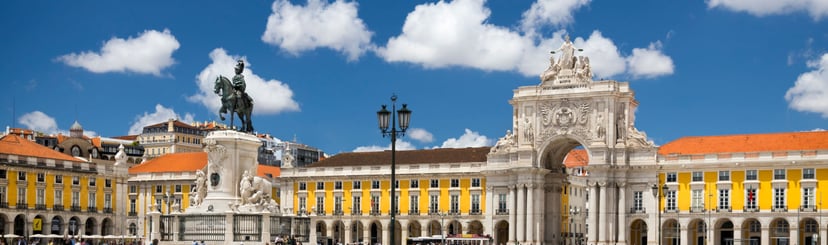
In Baixa, walking is a relief but not a full day. The grid below Chiado is useful because it lets you recover from slopes, connect shops and squares, and recalibrate the pace before the next climb. Rua Augusta and the Praça do Comércio axis can absorb a short, easy stretch, but they should not become a substitute for Lisbon’s harder, more textured neighborhoods. Use Baixa as the hinge: it is where the body settles, the map makes sense, and the next choice becomes more intelligent.
In Belém, walking becomes longer and flatter, but the friction changes from slope to distance and exposure. Jerónimos, the riverfront, the Monument to the Discoveries, and the tower area sit in a rhythm that can feel open and expansive or simply stretched out, depending on heat, wind, crowds, and how much old-town climbing came before. For a comfort-led plan, Belém is best as a morning or recovery block rather than a late add-on after a demanding Alfama day.
Where to ride: elevators, trams, taxis, and chauffeurs without wasting the day
Ride uphill in Lisbon when the ride prevents fatigue; do not ride just because the vehicle is famous. Elevators, funiculars, trams, taxis, and chauffeured cars each have a role, but none should be treated as a magic shortcut. The mistake is assuming that a charming vehicle automatically reduces friction. Sometimes it adds waiting, crowding, awkward standing, or an extra walk at the wrong end.
Editorial no: stop treating Tram 28 as your mobility plan. It can be charming as a Lisbon symbol, but for a comfort-first visitor it is unreliable as a serious way to manage a private day. The tram corridor helps explain the city and can anchor a short story, but building the day around boarding it often creates queue drag, standing fatigue, and an uncertain arrival. The better approach is to use trams and elevators as context when they fit, then choose taxis or a chauffeur when the route needs precision.
Elevators and funiculars are useful when they remove a specific climb and do not create their own bottleneck. They are less useful when the group waits long enough to lose the advantage. A private guide can often decide in real time: use the lift if it is flowing, walk a shorter graded route if the queue is heavy, or call a vehicle if the next segment is meant to preserve energy for an interior visit or dinner. For a deeper transport-by-purpose discussion, the companion piece elevator, tram or chauffeur guide is the practical extension of this article.
A chauffeur changes Lisbon most when the itinerary crosses zones: hotel to Belém, Belém to Alfama, Alfama to a dinner area, Lisbon to Sintra, Lisbon to Évora, or a cruise port to a first city stop. A chauffeur changes less when the day is already compact and pedestrian: Chiado, Baixa, and a short nearby food route may work better on foot. The premium value lies in removing transfer resets, not in turning every doorway into a pickup.
What Lisbon does to the body by day two
Lisbon fatigue is cumulative because the city layers climbing, cobbles, standing, heat exposure, and small navigation decisions. One steep lane is not the issue. The issue is the third climb after a museum, the uneven pavement after wine, the stair choice when the direct route looks short, and the moment a viewpoint detour turns a pleasant afternoon into a silent trudge.
The body notices Lisbon through the calves first, then the lower back, then the mood. Cobbles require tiny balance corrections, especially in shoes chosen for dinner rather than pavement. Hills make conversation thinner because breath and attention are being spent. Waiting for a tram or lift can feel easy at first, but standing still after a long morning often drains energy faster than a seated transfer. By late afternoon, travelers who planned by attraction quality alone may discover that the best thing on the itinerary is no longer the most enjoyable thing to do.
This is why the hotel base matters more here than in many European capitals. In a flatter city, a slightly inconvenient hotel may cost time. In Lisbon, it can cost the best part of the evening. The same applies to groups: a couple can improvise a taxi, but six relatives, a stroller, or celebration guests in polished shoes need fewer improvisations. When the route is planned well, the hills become memorable. When the route is casual, the hills become the editor of the trip, cutting whatever comes last.
What Lisbon does to the trip mood after 5 p.m.
The Lisbon day feels shorter when the evening return is uphill, uncertain, or overstuffed. This is the mood consequence that many city guides underplay. A plan can look rich at breakfast and feel oddly depleted by dinner if it requires too many resets: ride, walk, queue, climb, find the restaurant, climb again, then negotiate the return.
The antidote is to give the evening a softer geography. After an Alfama or castle-side morning, dinner should not automatically sit high in Bairro Alto unless the group genuinely wants that late climb or has a clean ride back. After Belém, a riverward or lower Chiado evening usually feels more natural than pushing into another hilltop view. After Sintra, the wisest Lisbon evening may be one good table, one short walk, and an easy hotel return, not another old-town performance.
Private touring becomes valuable here because the guide can protect the arc of the day rather than simply fill the hours. The question is not “How many sights can fit?” but “What will the group still enjoy after the second slope?” That is where a tailored route earns its keep: it can give the morning intensity, the afternoon air, and the evening enough ease to feel like a reward rather than a recovery ward.
If your Lisbon plan includes a special dinner, older parents, children, a proposal, a milestone birthday, or a first night after a long flight, route design should happen before restaurant geography hardens the evening. Share the hotel, dinner location, mobility notes, and day-trip ambitions with a planner, and ask for the climbs to be chosen rather than inherited: Inquire now.
Dinner geography when the day already used the hills
Dinner should sit on the day’s easiest return line, not at the top of a second itinerary. This is especially true for food-and-wine travelers, because Lisbon dinners often come after a full day of walking rather than replacing it. A restaurant can be excellent and still be wrong for that particular evening if reaching it requires another steep approach or a complicated return.
After an Alfama morning, a Chiado, Baixa, or riverward dinner often keeps the group conversational. After a Belém morning and a lighter afternoon, Príncipe Real may feel reasonable if the ride back is clear. After Sintra, Cascais, or Évora, the smartest dinner is usually the one that requires the fewest decisions after arrival back in Lisbon. The goal is not to make every meal close to the hotel; it is to stop dinner from becoming the day’s final logistical puzzle.
Celebration travelers should be especially strict. Formal shoes, photographs, wine pairings, older relatives, and a late return magnify every slope. If the dinner is the emotional center of the day, reduce the sightseeing load before it. A premium Lisbon evening is often made by what you remove: the extra viewpoint, the unnecessary tram hope, the uphill stroll that sounded charming before lunch.
How to sequence a first Lisbon day without the hills shock
The strongest first Lisbon day usually begins with air and orientation, not with the hardest old-town climb. After an overnight flight, cruise arrival, or late previous evening, the first mistake is rushing directly into Alfama because it feels mandatory. Alfama matters, but it is not gentle. Put the river, Baixa, or a controlled Chiado-Baixa introduction first if the group needs to arrive in the city before being asked to climb it.
A good first-day sequence might start at Praça do Comércio or the river edge, use Baixa to explain the post-earthquake grid, step toward Chiado for a contained rise, and then decide whether the group has earned a higher viewpoint. This keeps the city legible. The Tagus gives scale, Baixa gives order, Chiado gives lift, and the hilltop comes only if it still feels like pleasure. That sequence is especially strong for families, older parents, and travelers arriving in formal or impractical shoes.
If Alfama must happen on day one, make it a short, descending route. Start high by vehicle, keep the history focused, and resist the temptation to add every nearby overlook. Miradouro da Senhora do Monte, Portas do Sol, Santa Luzia, the castle area, and the lower lanes do not all need to be treated as separate trophies. One good height is enough when the purpose is orientation rather than conquest.
For travelers who have three or four nights, the first day should not try to prove Lisbon all at once. Save Belém for a morning, save a serious food route for a day when the group is rested, and save Sintra or Évora for the point in the trip when the body can receive a full day outside the city. The reward for restraint is that Lisbon keeps expanding instead of becoming a blur of slopes and transfers.
A two-day rhythm that turns the terrain into an advantage
The cleanest two-day Lisbon rhythm alternates vertical intensity with horizontal relief. Do not stack Alfama, Bairro Alto, Príncipe Real, and Sintra into the first 36 hours just because the calendar is short. Let day one explain the city from the river and downtown grid, then use day two for the old-town descent or a focused hilltop view when the group is rested enough to enjoy it.
For many first-time travelers, day one should be river, Baixa, Chiado, and one contained rise. This gives Lisbon a shape: water, rebuilt downtown, literary-shopping ridge, and a carefully chosen view if energy allows. It also allows the guide to judge the group before committing to the harder lanes. A family that slept poorly, a couple arriving from New York, or grandparents adjusting to cobbles may need the same historical content in a softer order.
Day two can then carry the steeper memory. Start high for Alfama, descend slowly, pause where the lanes open, and finish near a flatter edge before lunch. If Belém belongs that afternoon, make the transfer deliberate rather than casual. If the group has a serious dinner, use the afternoon to shorten the walking load rather than prove that another district can fit. The terrain becomes an asset because each day has a different physical character.
The same rhythm works for a three-night stay. One day can hold Lisbon’s old-city vertical story, one day can hold Belém and the river, and one day can leave the city for Sintra, Cascais, Colares, or Évora depending on energy and interest. The city feels richer when each day has a dominant movement pattern. It feels flatter in memory when every day repeats the same climb-transfer-climb sequence.
How to recover: riverfront, hotel pause, or Évora instead of another palace day
The best recovery choice in Lisbon is the one that changes the kind of effort, not merely the subject of the sightseeing. A recovery block can be riverfront time in Belém or Cais do Sodré, a deliberate hotel pause before dinner, or a private day outside the city that uses vehicle time, historical depth, and flatter pacing to rebalance the trip. The wrong recovery choice is another beautiful hill simply because it is famous.
Belém is the easiest in-city recovery move because the Tagus opens the day horizontally. It does not remove walking entirely, but it changes the strain from climbing to spacing. That matters after an Alfama morning or a Sintra day. A Belém block can hold Jerónimos, pastry timing, a river walk, and one monument or museum choice without forcing another set of steep lanes. The key is to keep it as a coherent waterfront segment, not a scattered add-on after the old town has already spent the group’s attention.
Évora becomes interesting when the group wants depth but not another palace-and-hill day. The UNESCO Historic Centre of Évora listing (https://whc.unesco.org/en/list/361/) gives the historic center a source-checkable frame, while the official Évora Megalítica PDF (https://www.cm-evora.pt/wp-content/uploads/2020/06/EVORAMEGALITICA.pdf) and the official Almendres Cromlech page (https://www.cm-evora.pt/locais/cromeleque-dos-almendres/) make the megalithic landscape more than a vague countryside detour. This is not about avoiding culture; it is about choosing a day whose energy pattern differs from the city’s steepest streets.
The Roman layer adds another reason Évora can recover the mind without overworking the legs. The official Roman Temple page (https://www.cm-evora.pt/locais/templo-romano/) is useful for grounding that stop, and the comparison with Sintra should be made honestly. The official Pena Palace planning page (https://www.parquesdesintra.pt/en/parks-monuments/park-and-national-palace-of-pena/) is worth checking before you assume a palace day belongs after a hill-heavy Lisbon sequence. Pena can be magnificent, but if your group is already tired, the romance of another elevated site may not survive the logistics. For a dedicated comparison of the countryside option, use the Évora from Lisbon guide.
Premium spend that changes the day, and premium spend that does not
Premium spend changes Lisbon when it buys better geography, better timing, better guiding, and fewer avoidable transfers. A well-located hotel can turn a late dinner return into a short, dignified movement rather than a negotiation. A skilled private guide can decide when to descend, when to pause, when to shorten the story, and when to call the car. A chauffeur can rescue a cross-city day from becoming a chain of taxi decisions.
Premium spend does not help if it buys a beautiful hilltop hotel that makes every dinner return a climb. It also does not earn its cost when it is spent on a vehicle for a route that should simply be walked downhill with context. The most expensive version of Lisbon is not always the easiest version. Spend on the hinges: hotel access, timed pickups, route design, special-entry coordination when relevant, and a guide who can read the group before the itinerary starts to fray.
There is also a point where a premium plan should become smaller, not grander. If the group has a major dinner, do not add one more viewpoint because the car is available. If grandparents are traveling with children, do not use the chauffeur to multiply stops beyond what attention can absorb. If the celebration day is built around wine or food, the best luxury may be a clean return and a slower morning after. Lisbon punishes status planning when it ignores slope, shoes, and time of day.
The firm cut-first rule when the plan gets crowded
Cut the extra hilltop view first. Not the guide, not the hotel pause, not the river air, not the meal that anchors the evening. The hilltop view is the easiest thing to romanticize on paper and the easiest thing to regret when it becomes the third climb of the day. Lisbon does not need multiple viewpoints in one outing to feel beautiful.
The same rule applies to neighborhoods. Do not force Alfama, Bairro Alto, Príncipe Real, Belém, and a food route into one day because they all sound essential. Choose one slope-led story, one flatter recovery arc, and one evening geography that returns cleanly. If the day is already full, the cut is not a downgrade; it is the decision that lets the remaining places stay vivid.
For a first visit, the strongest cut is often the famous transport add-on. A tram ride, a funicular, or a scenic detour can become the least elegant part of a premium day if it adds waiting without improving the route. Keep movement that solves a problem or tells a story. Remove movement that exists only because a photograph made it look inevitable.
If the group wants one final lens, ask whether the next stop changes the trip or merely confirms what a previous stop already gave you. A second viewpoint after a strong first view usually confirms; a river block after a steep morning changes the physical pattern; a quieter dinner after a long day changes the mood. This is how Lisbon stops feeling like a checklist and starts feeling edited.
The cut-first rule also protects the guide’s best work. A private guide can make Alfama, Baixa, Chiado, Belém, or Évora more meaningful, but no guide can make an overdrawn group listen deeply at the end of a bloated day. The most refined Lisbon plan leaves enough appetite for context. When attention is still available, the earthquake grid, the river trade story, the old Moorish lanes, and the Roman or megalithic layers outside the city land with far more force.
FAQ
What is the best area to stay in Lisbon to avoid hills?
Lower Chiado, the Baixa edge, and lower Avenida da Liberdade are usually the best areas for reducing repeated hill strain. They still give access to Lisbon’s historic center, but they make dinner returns, pickups, and cross-city movement easier than a high Alfama or Bairro Alto base.
Can you visit Alfama without climbing too much?
Yes. The best method is to start high by vehicle and descend through Alfama rather than beginning low and climbing into it. This lets the views, lanes, and history remain enjoyable while reducing the stair and cobblestone burden.
Is Tram 28 a good way to avoid Lisbon hills?
No, not as a dependable comfort strategy. Tram 28 may be charming as a symbol, but it can add waiting, crowding, and standing fatigue. Use it as context if it fits smoothly; use taxis, elevators, or a chauffeur when the route needs certainty.
Is Avenida da Liberdade too far from the old town?
Not if you value easy vehicle access, calmer returns, and a polished hotel base. It can feel less immediate than Chiado, but for private touring, day trips, shopping, older parents, or celebration travel, its smoother logistics often outweigh the extra distance.
Should I stay in Belém to avoid Lisbon hills?
Usually not for a first Lisbon stay. Belém is excellent as a flatter morning or recovery block, but it sits away from the old-city evening rhythm. It works better as a planned segment than as the main base unless your trip is intentionally riverfront-led.
Is Sintra too hilly after Lisbon?
Sintra can feel demanding after several hill-heavy Lisbon days, especially if Pena Palace is central to the plan. If the group is already tired, consider placing Sintra earlier, giving it a dedicated recovery evening afterward, or choosing Évora when you want a different energy pattern.
Do private tours really help with Lisbon’s hills?
They help when the guide and planner use Lisbon’s geography intelligently. The value is not avoiding every climb; it is choosing which climbs matter, arranging uphill movement by vehicle when appropriate, and keeping the evening return from becoming the hardest part of the day.
If you’re interested in any private tours of Lisbon, please reach out to us.


 So if you are looking for the absolute best in Lisbon & surroundings with authentic local fully-licensed native guides whose English you can actually understand and with an exclusive and amazingly fun itinerary













