Maimonides’ Córdoba: Medicine, Law and the Intellectual City Behind the Judería

Updated
The first correction: Córdoba does not preserve a Maimonides trail
The familiar version of Maimonides’ Córdoba is seductively simple. A traveler enters the Judería, pauses at the bronze figure in Plaza de Tiberíades, steps into the medieval synagogue, and feels that the philosopher-physician’s world has survived around him. The problem is chronological. The statue is a twentieth-century memorial. The synagogue was founded in 1314–1315, more than a century after Maimonides died. The museum narrative at Casa de Sefarad is a modern act of interpretation inside a later historic building. None of these places is useless; all three matter. But they matter for different reasons than the language of “walking in his footsteps” suggests.
A responsible visit therefore begins with an interpretive question rather than a relic hunt: what can Córdoba reveal about Maimonides when the city preserves memory, atmosphere, later Jewish heritage, and monumental context, but very little that can be securely attached to his own daily life? The answer lies in an evidence chain. Biography establishes what happened and when. Primary texts show what he actually argued. Surviving buildings define the wider urban and religious worlds in which later Cordobans placed him. Memorials reveal how the modern city chose to reclaim a Jewish-born intellectual after centuries in which that inheritance was fractured, obscured, or selectively narrated.
The thesis of this guide is that Córdoba becomes more intellectually rewarding when its gaps are made visible. Maimonides is not important because a statue can stand in for his house, or because a fourteenth-century synagogue can be retroactively turned into his place of worship. He is important because his legal, medical, and philosophical works preserve a method of thinking formed within the Arabic-speaking western Mediterranean and carried through exile into North Africa and Egypt. The city gives that method a point of origin; the texts supply the evidence the streets cannot.
A life chronology that changes what the city can claim
The most useful chronology begins in 1138, the birth year given by the current scholarly account in the Stanford Encyclopedia of Philosophy. Moses ben Maimon, known in Hebrew by the acronym Rambam and in European languages as Maimonides, was born in Muslim-ruled Córdoba to a learned Jewish family. The city was no longer the capital of the tenth-century Umayyad caliphate, yet it retained the prestige, institutions, languages, books, and habits of argument produced by centuries of Andalusi urban culture. Maimonides’ Córdoba was therefore both an inherited intellectual center and a city undergoing political change.
In 1148 the Almohads took Córdoba. Their rule sharply reduced the protected but subordinate status that Jews and Christians had held under earlier Muslim regimes, and Maimonides’ family left the city. He was around ten years old. The family’s subsequent movements are part of the biography, not a decorative prelude: they reached Fez by about 1160, and Maimonides arrived in Egypt in 1166, eventually settling in Fustat, the older urban center beside Cairo. He completed the Commentary on the Mishnah in 1168, produced the Mishneh Torah in Egypt, completed the Guide of the Perplexed around 1190, and died in Fustat in 1204.
This sequence has a direct consequence for a Córdoba visit. The mature physician, communal leader, legal codifier, and philosopher belongs primarily to the Maghrebi and Egyptian chapters of his life. Córdoba belongs to formation, family origin, language, educational inheritance, and the trauma of departure. The city should not be asked to display a career that unfolded elsewhere. Nor should exile be reduced to a triumphant origin story in which adversity merely prepares a genius for greatness. The Almohad rupture changed the conditions of Jewish life, displaced a family, and helped create the trans-Mediterranean biography through which Maimonides later wrote for dispersed communities.
Even the birth date is a small lesson in source discipline. Older commemorative labels and catalogs sometimes use 1135, while the scholarly source followed here uses 1138. A guide does not need to dramatize every discrepancy, but should distinguish a modern label from a current scholarly convention. That modest correction establishes the standard for the rest of the visit: dates are not obstacles to atmosphere; they are what prevent atmosphere from becoming fiction.
The Judería is a setting, not a surviving biography
Córdoba’s Judería gives Maimonides a compelling urban frame: whitewashed lanes, small plazas, courtyard thresholds, the line of the old medina wall, and the overwhelming proximity of the Mezquita-Catedral. Yet “Jewish Quarter” is not a transparent window onto the twelfth century. The neighborhood visible today is a palimpsest shaped by medieval rebuilding, Christian conquest in 1236, the expulsion of Jews from Spain in 1492, changes of use, antiquarian recovery, restoration, tourism, and modern heritage policy. Its power comes from those layers, not from an illusion that the district has remained fixed since Maimonides’ childhood.
That distinction matters because urban continuity and personal evidence are different categories. A lane can preserve a medieval scale without preserving the social map of 1140. A house can contain fourteenth-century fabric without being Maimonides’ birthplace. A plaza can carry his name without marking a documented event. The responsible claim is that the Judería allows travelers to examine how Jewish history has been spatially remembered in Córdoba, while the exact domestic geography of the ben Maimon family remains uncertain. This is less cinematic than a reconstructed “Maimonides route,” but more revealing about how historic cities actually survive.
The best companion page for the physical district is a focused reading of the Judería, synagogue, and Mezquita context. Its value here is not to supply a second checklist, but to reinforce a geographic principle: the Jewish quarter only becomes legible when its monuments are dated against one another. The Maimonides question then becomes sharper. Which parts of the district witness medieval Jewish Córdoba broadly, which parts belong to centuries after his departure, and which parts are modern commemorations?
For an intellectual-history traveler, the neighborhood is therefore a place to practice calibrated attention. Notice thresholds, reused walls, Hebrew inscriptions, Arabic-derived decorative forms, Christian-era restorations, and modern plaques, but ask what kind of evidence each represents. The reward is not skepticism for its own sake. It is the ability to see the Judería as a historical argument made from fragments rather than as a stage set with a single date.
The synagogue proves Jewish continuity, not Maimonides’ attendance
The Córdoba Synagogue is the most important place at which to resist an easy association. According to the Junta de Andalucía’s official monument record, its foundation inscription dates the building precisely to 1314–1315. Maimonides had left Córdoba in 1148 and died in 1204. The synagogue cannot be the one he knew, and there is no responsible basis for presenting it as his place of worship. The chronological distance is not a minor footnote; it changes the meaning of the visit.
What the building does preserve is exceptional. The official account identifies it as the city’s surviving testimony to Jewish religious architecture, a compact Mudéjar structure influenced by Arabic and Nasrid aesthetics. A small courtyard and vestibule lead into the prayer room; the walls retain carved plaster, geometric and vegetal ornament, and Hebrew epigraphy drawn largely from the Psalms. The foundation inscription itself was rediscovered in 1884, and the building’s modern recognition followed a history of altered uses after the 1492 expulsion. In other words, even the synagogue’s current identity is the product of loss, survival, rediscovery, classification, and conservation.
Placed beside Maimonides, the synagogue offers a second kind of evidence: not biography, but the afterlife of Andalusi forms. Hebrew liturgical space is articulated through a visual language connected to the broader artistic world of Islamic Iberia. That does not prove harmonious coexistence, and it certainly does not erase persecution or hierarchy. It does show that religious communities used shared materials, crafts, geometries, and architectural vocabularies even when their legal and political positions differed. The building makes cultural interdependence visible without requiring a sentimental story about tolerance.
It also creates a productive comparison with Maimonides’ legal writing. The synagogue is a spatial ordering of communal practice: entrance, transition, orientation, reading, separation, assembly. The Mishneh Torah is a textual ordering of law: categories, definitions, obligations, exceptions, and purposes. One should not collapse architecture into legal code, but the comparison helps explain why the synagogue can illuminate his world without being his synagogue. Both reveal a culture in which form organizes conduct.
Plaza de Tiberíades: a twentieth-century Córdoba chooses its Maimonides
The seated bronze Maimonides in Plaza de Tiberíades is often treated as the emotional center of a Judería walk. Its visual authority is immediate: philosopher’s robes, composed posture, book in hand, a location close to the synagogue, and the tactile polish produced by generations of visitors. Yet the sculpture is not medieval evidence. The Córdoba municipal library’s record for a 1968 postcard states that the work was made by Amadeo Ruiz Olmos in 1964 and connects the renewal of the square to municipal policy favoring a historicist image of the old city. The record can be consulted in the library’s digital catalog entry for the Maimonides postcard.
This changes the question from “What did Maimonides do here?” to “Why did Córdoba install this Maimonides here in 1964?” The statue belongs to a modern civic project of selecting figures through whom the city could narrate intellectual distinction, plural heritage, and international significance. Its placement near the synagogue condenses several centuries into one memorable ensemble. That condensation is powerful, but it should be named. The square is evidence for twentieth-century commemoration, urban image-making, and the recovery of a Jewish Cordoban as a civic emblem.
The memorial also gives travelers an object through which to examine the making of a universal sage. Maimonides is represented as philosopher, physician, jurist, and humanist—categories that modern audiences can admire across confessional boundaries. Those categories are not false, but they can smooth away the specificity of his commitments. He was not a secular cosmopolitan accidentally born into Judaism. His philosophy was an interpretation of Torah; his legal code organized Jewish obligations; his medicine was practiced within medieval scientific assumptions; his communal leadership responded to vulnerable Jewish communities. The statue universalizes him. The texts reintroduce the particular intellectual problems he was trying to solve.
A strong guide can use the square as a documented scene of reception. Look first at the sculpture as a work of 1964, then at the surrounding medievalizing setting, then at the dates of the nearby synagogue, and only then introduce the twelfth-century biography. The result is a layered reading: Maimonides’ Córdoba is partly the city of his childhood and partly the city that, eight centuries later, chose to remember him in bronze.
Casa de Sefarad: interpretation becomes the exhibit
Casa de Sefarad is useful precisely because it does not pretend to be Maimonides’ preserved home. Its own description of the museum’s rooms presents nine thematic spaces within a house containing late-fourteenth-century elements. One room is dedicated to Maimonides; others address domestic life, festive cycles, music, Judeo-Spanish language, women in Sephardi history, the Inquisition, diaspora, and the synagogue. The institution is therefore a curated argument about Sephardi memory, not an archaeological display of a single twelfth-century life.
That curatorial breadth is its strength. Maimonides appears not as an isolated genius but within a social world of language, ritual, household practice, migration, persecution, scholarship, and cultural transmission. The museum can also correct the disproportion created by the famous male intellectual. A room devoted to forgotten women—thinkers, physicians, librarians, poets—signals that Jewish intellectual history cannot be reduced to the biography of one exceptional man. Even when individual displays are interpretive rather than materially connected to Maimonides, they expand the questions a visitor brings to his work.
The evidence limit should remain explicit. The house’s late-fourteenth-century elements postdate Maimonides, and the museum’s Maimonides room is a modern presentation. Its labels, images, reproductions, and narrative choices are secondary interpretation. That does not make them inferior to an original object; it means they answer a different need. Where primary material is sparse, a museum can assemble dispersed knowledge, but the traveler should keep track of whether a claim comes from a manuscript, a building inscription, a later portrait tradition, or a curatorial summary.
For a specialist visit, Casa de Sefarad works best after the chronological mismatch at the synagogue has been established. The museum then becomes a place to reconstruct context rather than a place expected to prove presence. It can connect Maimonides to Sephardi language and memory, while a guide or prepared reader brings excerpts from the Commentary on the Mishnah, Mishneh Torah, and Guide of the Perplexed into the conversation. The building supplies a human scale; the texts supply Maimonides’ voice.
Law as an intellectual technology: the Commentary and the Mishneh Torah
Maimonides’ legal achievement is often flattened into the phrase “great rabbi.” The more revealing point is methodological. In the Commentary on the Mishnah, completed in 1168, he explained the foundational compilation of rabbinic law and emphasized the authority and structure of the Oral Torah. Its introductions include the famous “Eight Chapters,” a compact ethical and psychological treatise, and the discussion in Sanhedrin from which his thirteen principles of faith emerged. The work already shows his characteristic movement between classification, doctrine, ethics, and pedagogy.
The Mishneh Torah expanded that ambition dramatically. Organized into fourteen books, it sought to make the full field of Jewish law intelligible in a systematic code. Maimonides did not merely collect rulings. He ordered them so that theology, character, study, ritual, civil conduct, courts, kingship, and messianic expectation formed a coherent architecture. The first book, often called the Book of Knowledge, begins with principles of belief and includes laws of character traits, Torah study, idolatry, and repentance. The final book turns to judges and political order. The code’s form makes a claim: law can be arranged as knowledge.
That claim was controversial. A code that states conclusions without reproducing the full chain of Talmudic debate can clarify practice, but it can also appear to displace the very arguments from which authority arises. Maimonides’ critics worried that readers might treat his synthesis as a replacement for prior sources. This tension is essential to understanding him. He was both a transmitter and a radical systematizer, preserving tradition by reorganizing it so forcefully that the new structure acquired an authority of its own.
In Córdoba, this legal method offers a way to read the city beyond biography. The Judería’s fragments require classification: contemporary evidence, later medieval survival, modern memorial, museum interpretation, inherited artistic vocabulary. A Maimonidean visit does not imitate his legal conclusions, but it can borrow his demand for ordered distinctions. The payoff is practical and intellectual. Instead of leaving with a blur of “Jewish Córdoba,” the traveler leaves knowing which object supports which claim.
Medicine inside the law: De’ot, health, and disciplined living
The usual modern profile divides Maimonides into three careers—physician, jurist, philosopher—as though they occupied separate rooms. His writing repeatedly joins them. In the fourth chapter of the laws of character traits in the Mishneh Torah, available in a bilingual edition as De’ot, Chapter 4, bodily health is treated as part of religious life because illness can obstruct understanding. The chapter proceeds into concrete rules about appetite, quantity of food, exertion, digestion, bathing, sleep, elimination, and bodily routine.
These prescriptions should not be presented as current medical advice. They belong to medieval physiology, dietetics, and environmental assumptions. Their historical importance lies elsewhere: health is not merely private comfort, and law is not merely ritual compliance. The body must be governed because intellectual and religious life require physical conditions. Maimonides’ legal code therefore incorporates a preventive regimen. The physician’s concern with habit becomes part of the jurist’s concern with disciplined conduct.
The connection runs in the opposite direction as well. In the “Eight Chapters,” Maimonides compares moral disorder to bodily illness. Character can become unbalanced; repeated actions can train dispositions; the wise teacher treats the soul as a physician treats the body. The Aristotelian idea of a mean between excess and deficiency is translated into a Jewish ethical program, though Maimonides sometimes recommends moving deliberately toward an opposite extreme to correct an entrenched vice. Medicine here is a model for moral education.
This is one reason a text-led Judería visit can produce more information than a monument-led one. A statue tells us that Córdoba honors a doctor. A passage from De’ot shows what kind of doctor-jurist he was: one who linked digestion, exercise, knowledge, worship, and habit inside a single account of human flourishing. The interpretive gain is not that he anticipated every modern wellness idea. It is that the boundaries between medicine, ethics, and law were configured differently in his intellectual world.
Medicine beyond the code: the physician’s named works
Maimonides’ medical reputation did not rest only on health rules embedded in Jewish law. In Egypt he wrote specialist works in Arabic for courtly and learned settings. Titles associated with this medical corpus include the Medical Aphorisms, the Regimen of Health, the Treatise on Asthma, and the Treatise on Poisons and Their Antidotes, alongside works on hemorrhoids, sexual health, drug names, and commentary on Hippocratic aphorisms. These were products of his mature life in Fustat, not books composed in the streets now marketed as his Córdoba.
The genres matter. Aphorisms condense and reorganize inherited medical learning. A regimen addresses the management of a patient through diet, environment, exercise, sleep, and emotional state. A treatise on asthma focuses on a particular chronic condition while still considering air, climate, food, and habits. A work on poisons combines classification with urgent practical response. Together they show a physician working within the Greek medical tradition as transmitted, translated, criticized, and expanded in Arabic.
His medicine was neither “Jewish medicine” in isolation nor a passive copy of Greek authorities. The learned medical environment of the medieval Islamic world made Hippocrates and Galen available through Arabic translation and commentary, while physicians compared texts with observation and practice. Maimonides could respect Galenic medicine, excerpt it, and dispute philosophical claims attached to it. That pattern resembles his philosophical writing: inherited authority is neither rejected wholesale nor accepted without examination.
Córdoba contributes to this story as a western Islamic city in which Arabic intellectual culture shaped the education available to Jews as well as Muslims. But the mature medical network belongs to Egypt, where Maimonides practiced, advised patrons, corresponded, and wrote. A careful guide should therefore use Córdoba to explain the linguistic and intellectual preconditions of his medicine, then deliberately move the biography eastward. The city of birth opens the map; it does not contain the whole career.
Philosophy as controlled perplexity: the Guide of the Perplexed
The Guide of the Perplexed, completed around 1190, is often summarized as a reconciliation of religion and reason. That is accurate only at a high altitude. The work addresses an educated reader whose study of philosophy appears to conflict with the literal sense of scripture. Maimonides examines biblical language, divine attributes, creation, prophecy, providence, law, evil, human perfection, and the limits of demonstration. The “perplexity” is not ordinary indecision. It arises when two disciplined forms of knowledge seem to demand incompatible conclusions.
One of his central strategies is negative theology. Statements that make God resemble a body, personality, or object must be reinterpreted because divine unity excludes composition. Human language can describe effects and deny limitations, but it cannot capture God’s essence as though the divine were one item among others. This makes the Guide both ambitious and restrained. Philosophy is necessary to remove error, yet the highest knowledge includes recognition of what the human intellect cannot establish.
The work also refuses a simple triumph of Aristotle over scripture. Maimonides takes Aristotelian science with great seriousness, and the influence of al-Farabi and the philosophical traditions cultivated in Islamic societies is unmistakable. Yet he questions whether the eternity of the world has been demonstrated and criticizes the confidence of some astronomical and metaphysical systems. The result is not a compromise in which each side gives up half its claim. It is a demanding theory of interpretation: demonstrated truth must shape how scripture is read, but claims lacking demonstration should not be granted certainty merely because they are philosophically prestigious.
That intellectual discipline is the best reason to connect Maimonides with Córdoba. The city’s monuments tempt travelers toward visible synthesis: mosque and cathedral, Arabic ornament and Hebrew inscription, Roman foundations and Christian chapels, Jewish memorial and Andalusi street. The Guide warns against treating visual proximity as an easy resolution. Difference, contradiction, hierarchy, rupture, and uncertainty remain. Córdoba becomes “Maimonidean” not when it is turned into a symbol of perfect coexistence, but when it provokes careful interpretation under conditions of incomplete knowledge.
Jewish, Muslim, and Christian networks without a harmony myth
Maimonides emerged from an intellectual world in which religious boundaries were real and unequal, yet texts, languages, concepts, and professional practices crossed them. Arabic was the major language of philosophy, medicine, science, administration, and much Jewish writing across the Islamic Mediterranean. Jewish authors could write Hebrew-script Arabic, now called Judeo-Arabic, while drawing on rabbinic sources and on philosophical vocabularies developed by Muslim thinkers. Greek learning reached them largely through Arabic translation and commentary. This was a network of transmission, argument, and adaptation rather than a neutral meeting room.
The Muslim side of that network includes Aristotle as refracted through figures such as al-Farabi, as well as the wider medical traditions built around Hippocrates and Galen. Córdoba also produced Ibn Rushd, known in Latin as Averroes, born in 1126 and therefore a near contemporary of Maimonides. The parallel is illuminating: two Cordoban thinkers became major interpreters of Aristotle and authorities far beyond Iberia. It does not prove that they met, studied together, or belonged to a shared local circle. The responsible comparison is structural, not anecdotal.
The Jewish network includes teachers, jurists, communities, correspondents, readers, critics, and translators. Maimonides wrote for communities scattered across the Mediterranean and Near East, answered legal questions, and provoked debate over the authority of his code and the dangers of philosophy. The Guide moved through Hebrew translation and commentary, creating new readerships beyond the Arabic-speaking context in which it was composed. His work became a node connecting Andalusi formation, Maghrebi displacement, Egyptian communal leadership, and European intellectual reception.
The Christian connection is principally a later reception history, not evidence of a three-faith seminar in twelfth-century Córdoba. Latin scholastic thinkers encountered Maimonidean ideas through translation and citation; the Stanford account notes his influence on Thomas Aquinas and later figures including Spinoza, Leibniz, and Newton. This distinction protects the article from the most common “three cultures” simplification. Jewish, Muslim, and Christian intellectual histories intersected, but not always in the same place, at the same time, or on equal terms.
What the Mezquita-Catedral can add—and what it cannot
The Mezquita-Catedral is unavoidable in any serious account of Maimonides’ Córdoba, but it must be used with precision. During his childhood the building functioned as Córdoba’s congregational mosque; the Christian cathedral use followed the conquest of 1236, decades after his death. There is no secure evidence that a particular doorway, bay, or courtyard records his presence. The monument should therefore not be turned into another biographical stop.
What it can reveal is the monumental scale of the Islamic city whose inherited institutions and prestige formed the background to his youth. The hypostyle hall, successive expansions, reused materials, epigraphy, orientation, and later Christian interventions make power visible across time. For a close reading of how columns, spolia, geometry, and political authority work inside the building, see this analysis of Córdoba’s forest of columns. The link serves as architectural support: it explains the monument on its own terms before it is recruited into a Maimonides narrative.
The broader caliphal landscape is equally important. Maimonides was born long after the fall of the Córdoba caliphate, but the city’s intellectual reputation was an inheritance of that earlier period. Medina Azahara, the archaeological museum, and the old town help explain the institutions, court culture, craft systems, and urban hierarchies that made Córdoba a major center in the first place. A wider reading of caliphal Córdoba is therefore a supporting context, not an attempt to place Maimonides at the palace city.
There is also an interpretive warning in the building’s later history. The Mezquita-Catedral is frequently used as a symbol of coexistence, conflict, conversion, appropriation, or hybridity, depending on the speaker. Maimonides is similarly made to symbolize tolerance, exile, rationalism, medicine, Jewish law, or universal humanism. Both monument and thinker exceed those uses. Pairing them responsibly means asking how layered institutions shape knowledge—not forcing either into a single moral emblem.
A text-led sequence for seeing the sites responsibly
The most coherent Maimonides visit is not chronological in the usual sightseeing sense, because the surviving sites are later than the life. It is chronological in the order of evidence. Begin at the synagogue and establish 1314–1315 immediately. This removes the false expectation of personal presence while introducing Jewish communal architecture, Hebrew epigraphy, Mudéjar craft, and the building’s rediscovery. The traveler learns, at the outset, that a meaningful place can be historically important without being biographically direct.
Continue to Casa de Sefarad, where the interpretive frame widens from architecture to culture: domestic life, language, music, diaspora, persecution, memory, and Maimonides as one figure within Sephardi history. Here a guide can introduce short passages rather than a lecture-length biography. An excerpt from the Commentary on the Mishnah clarifies his legal project; a paragraph from De’ot makes the body-law connection tangible; a brief explanation of negative theology introduces the Guide. The museum becomes a place for textual reconstruction, not a substitute archive.
End at Plaza de Tiberíades. Once the medieval and textual layers are clear, the 1964 statue can be read as modern memory rather than mistaken for a relic. The sequence reverses the usual emotional arc: instead of beginning with the famous man and attaching every nearby object to him, it builds the evidence first and asks why modern Córdoba chose this image of him last. That final question opens civic history, heritage politics, and the twentieth-century recovery of Jewish Córdoba.
The route can then extend to the Mezquita-Catedral if the day’s purpose is intellectual context rather than Maimonides alone. The monument explains the scale and artistic language of Islamic Córdoba, while the synagogue reveals a later Jewish use of related forms and the statue reveals modern commemoration. What ties the places together is not a claim that Maimonides stood in each one. It is a disciplined comparison among origin, inheritance, survival, and remembrance.
Why expert interpretation matters in a fragmentary city
For intellectual-history travelers, the challenge is not access to a long list of sites. The principal locations are close together, and the visible objects can be encountered quickly. The challenge is that the most important distinctions are invisible: 1138 versus 1315, childhood formation versus mature Egyptian authorship, a primary text versus a museum label, architectural continuity versus personal association, and medieval evidence versus twentieth-century commemoration. Without those distinctions, the visit can feel complete while delivering very little knowledge.
This is the point at which a private guide with command of the texts materially changes the outcome. The service value is not theatrical storytelling or privileged access. It is the ability to place a paragraph of law beside a prayer-room threshold, a medical regimen beside the public image of the physician, and the Guide’s theory of interpretation beside a city made of layered religious monuments. Just as important, a specialist can say where evidence stops. That restraint prevents the surviving gaps from being filled with invented birthplace claims, imagined encounters with Averroes, or vague celebrations of convivencia.
The benefit is also one of pacing. Dense ideas require intervals in which a traveler can look, question, and revise an assumption. A compact Judería walk can support that rhythm better than a monument marathon, provided the route is designed around a few documents and objects. The premium outcome is intellectual coherence: the visitor understands why each stop is present, what category of evidence it represents, and how it modifies the claim made at the previous stop.
For broader planning, Córdoba private tours designed around specialist interpretation can provide the commercial next step. The relevance here is narrow and earned: when the physical record is fragmentary, expertise is valuable because it converts proximity into an evidence-based argument. It should not promise certainty where the archive does not.
Córdoba’s honest inheritance: the question the visit should leave open
What can Córdoba responsibly claim? It can claim Maimonides as a native son born into the learned, Arabic-speaking environment of Muslim-ruled al-Andalus. It can show the rupture that forced his family from the city. It can preserve a later synagogue whose Hebrew worship space uses an Andalusi artistic language. It can display modern institutions and memorials through which Jewish Córdoba has been reconstructed in public memory. It can place his biography beside the monumental remains of the Islamic city whose intellectual prestige formed part of his inheritance.
What it cannot honestly claim is equally important. The surviving synagogue was not his. The bronze figure is not evidence of a medieval event. Casa de Sefarad is not his house. The exact domestic map of his childhood is not recoverable from the present streets. There is no need to invent a meeting with Averroes or to turn the Judería into an untouched twelfth-century quarter. The city becomes more compelling, not less, when these limits are stated clearly.
The deepest Córdoba connection finally resides in a method. Maimonides organized law, treated bodily regimen as a condition of knowledge, tested inherited philosophy against the limits of demonstration, and wrote across the boundaries of disciplines that modern readers often separate. A responsible visit does something analogous with place: it orders evidence, distinguishes categories, compares interpretations, and refuses conclusions stronger than the sources allow. That is why his Córdoba is an intellectual city rather than a collection of commemorative stops.
For a private, text-led visit that connects the Judería’s surviving places with law, medicine, philosophy, and the evidence limits that make the story trustworthy, Inquire now. The open question is the one Córdoba itself cannot settle for us: when a thinker’s books survive more fully than his birthplace, should the city be read as the source of his identity, the first chapter of his displacement, or the later community that chose to claim him again?
If you’re interested in any private tours of Cordoba, please reach out to us.
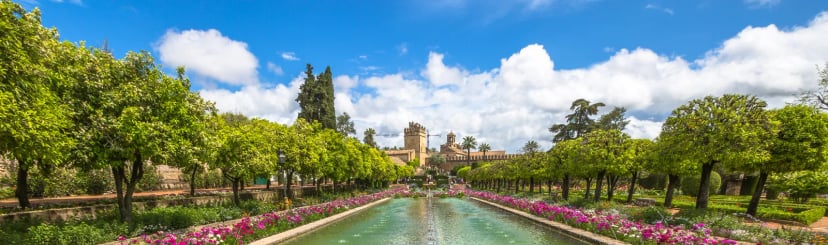



 So if you are looking for the absolute best in Cordoba & surroundings with authentic local fully-licensed native guides whose English you can actually understand and with an exclusive and amazingly fun itinerary