Royal Palace, Prado or Retiro First? A Private Madrid Day for a Luxury First Stay Without Museum Burnout

Updated
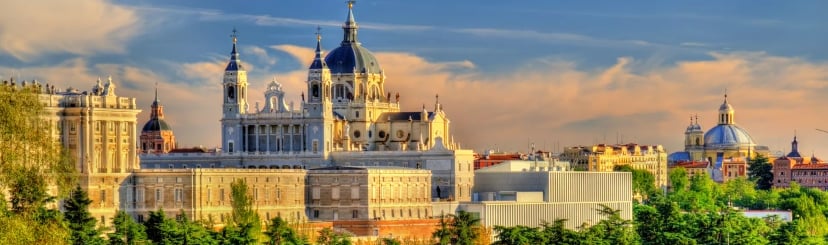
Start at the Royal Palace. For a first Madrid day that still feels composed by dinner, the Palace gives you grandeur before fatigue, and the Plaza de la Armería side of the Royal Palace makes the morning feel ceremonial and front-loaded in a useful way. From there, the city opens outward instead of boxing you into one narrow corridor: you can drift toward lunch in the center, move east toward one museum, or pivot to Retiro Park if the group needs air. The clearest exception is the traveler who came to Madrid mainly for Velázquez, Goya, Bosch, and a serious art edit; that traveler should begin at the Prado Museum and stop trying to force palace theatrics into the same emotional slot.
In Madrid, your first anchor is less about what sounds most important than about what kind of energy you want left by 6 p.m. That is the thesis that matters here. The city’s core is manageable, but it punishes the wrong kind of early intensity: too much looking before lunch, too many east-west resets, or a park delayed until it can no longer do its real job. For most first stays, the smartest framework is to let a west-side monument set the tone, keep the art dose controlled, and protect the rest of the day from turning into an obligation march. If that is the shape you want, Royal Palace Private Tour is the cleanest starting template to build around.
Royal Palace, Prado Museum, or Retiro Park first in Madrid?
The decision should be made by four criteria only: how much concentration the morning demands, how much queue uncertainty your party tolerates, where lunch naturally falls, and whether the evening needs to feel lively or restful.
Default opening: Royal Palace. It suits first-timers who want a sense of arrival, one strong cultural peak before lunch, and freedom to decide later whether the afternoon needs art, gardens, or simply a better meal.
Runner-up: Prado Museum. It is the right first move only when art is the point of the trip rather than the thing you think you “should” do first.
Purpose-built exception: Retiro Park. It is the right opening when the day needs decompression more than monuments: after a taxing arrival, with older parents, with children hovering near threshold, or before a late celebration evening.
Most over-selected by first-timers: Prado Museum. It is chosen out of duty far more often than out of genuine fit, and that mistake often makes the rest of the day brittle.
- Choose Royal Palace first if your group has mixed interests, you care about a smooth lunch handoff, or you want the option of stopping after one major cultural visit without regret.
- Choose Prado Museum first if at least one person would feel underfed without serious painting, and the rest of the day can stay light, local, and short on additional “must-sees.”
- Choose Retiro Park first if calm matters more than checklists, and if what you most need is to lengthen everyone’s patience before the day asks anything difficult of them.
Why Royal Palace wins the first full day
Royal Palace wins because it gives first-time Madrid visitors a strong opening without asking for their sharpest powers of attention at the very start of the day.
That sounds simple, but it is the whole planning problem. The Palace delivers scale, ritual, dynastic context, and an unmistakable sense of place before the day starts fragmenting. Approaching from the Plaza de la Armería side of the Royal Palace, with the space opening wide toward the façade and the cathedral beside it, you get the kind of ceremonial arrival that many travelers mistakenly hope to feel at the Prado. The difference is that the Palace is easier to absorb in chapters. Even visitors who are not naturally museum-minded can read rooms, sequences, and court life without needing a lecture in painting history before coffee has properly finished its work.
This is also where Madrid’s geography helps the Palace-first plan. Starting on the Calle de Bailén and Plaza de Oriente side of the center means you are deliberately beginning on the west side of the old core. That matters because the eastward move later feels like a planned second act rather than a nervous opening scramble. You can stay west and central for lunch, or you can transfer east once, intentionally, toward the museum-and-park spine. What you are not doing is waking up at the north end of Paseo del Prado, taking on the heaviest concentration task of the day first, then trying to manufacture ceremony later on the other side of town.
The Palace also suits the mixed-party reality that first stays usually involve. One traveler may care about art, another about architecture, another about atmosphere, another about simply not standing too long in a line. The Royal Palace gives each of them enough to stay engaged. That is not a small point. A first day collapses less from “too little sightseeing” than from one person quietly checking out before lunch because the morning was calibrated only for the most specialized taste in the group.
There is also a mood advantage that is easy to underestimate. Palace-first makes Madrid feel like it begins with a public statement and then softens into choice. That preserves appetite. It preserves conversation. It preserves the sense that dinner still belongs to this trip instead of to recovery from this trip. Travelers often describe art fatigue as if it were purely intellectual, but in practice it is social too. A group that starts with a cognitively dense museum too early often spends lunch discussing logistics, not what they saw, because the morning was more demanding than it looked on paper.
The body feels this plan as well. Madrid is not punishing because it is steep; it is punishing because the day mixes standing, polished floors, queue drag, broad plazas with little shade at the wrong hour, and deceptively long resets between “nearby” districts. Palace-first uses your freshest feet and attention on a place that rewards both without exhausting either. Then, if the party still wants a second anchor, a short vehicle transfer or deliberate taxi hop east solves the distance cleanly. If the party does not, you have still had a complete first day instead of a half-finished one.
That is where private planning naturally earns its place. At the Palace, the value of a guide is not only facts; it is editing. Which rooms matter most for your group? How long before the pace goes soft? Do you stop in the center for lunch, continue east, or turn the afternoon into an easier local walk? A private route turns the Palace into a hinge rather than a box to tick. It is why Palace-first so often works beautifully inside a tailor-made day even for travelers who thought they were “really more into museums.”
The corrective judgment is straightforward: if you want the day to feel broad, legible, and resilient, start with the Royal Palace. Do not let anxiety about “missing the important museum” bully you into choosing the wrong opening.
When Prado Museum should go first, and what that commits you to
Prado Museum should go first only when art is the main event and everyone in the party understands that the rest of the day must behave accordingly.
That is the condition most first-timers miss. The Prado Museum at the north end of Paseo del Prado is one of Europe’s great painting experiences, but it is not a neutral first move. It pulls the whole day into a different register immediately. You start with concentration, comparison, selective looking, and the quiet pressure of masterpieces that deserve more than a hurried pass. That can be glorious for the right traveler. It can also be the exact wrong thing for a first morning if half the party is still orienting to the city, to the time zone, or to one another’s pace.
This is why Prado is the most over-selected opening by first-timers. It feels like the serious answer. It feels culturally defensible. It feels like what sophisticated travelers are supposed to choose. But if you pick it merely because it sounds weightier than a palace or more “substantial” than a park, you often spend the rest of the day managing the consequences instead of enjoying Madrid.
Those consequences are concrete. Lunch geography narrows quickly toward Jerónimos or Las Letras. That can be a pleasure if you planned for it. It is less appealing if your mental picture of the day also includes the Royal Palace, Plaza Mayor, or a slower west-center ramble. The Prado-first plan also makes Retiro Park feel less like an elegant middle chapter and more like recovery, unless you were intentionally aiming for that. And if you try to save the Palace for late afternoon, you usually get the form without the feeling. The west-side ceremonial start that would have impressed you at 9:30 becomes a dutiful add-on at 4:30.
There is a way to do Prado first well. Make it the singular intellectual peak of the day. Reserve attention for it. Go in with a clear edit, not a completionist urge. Accept that lunch will likely stay on the museum side of town. Then either stop after a gentle walk and an excellent meal, or add only a park or a lighter secondary museum if the group truly wants more. For travelers who know they want that kind of art-led day, Prado Private Tour is the right route, because the point is not to see everything; the point is to see the right things before attention thins.
The one thing not to do is bolt on more heavy art simply because the map suggests it. Before you talk yourself into a multi-museum first day, look at the official Prado visit page (https://www.museodelprado.es/en/visit-the-museum) and the official Reina Sofía visit page (https://www.museoreinasofia.es/en/visit). The issue is rarely whether both institutions can be entered. The issue is what that pairing does to the quality of your looking. If you are tempted by a second museum on the same axis, the official Thyssen permanent collection page (https://www.museothyssen.org/en/collection/permanent-collection) is useful because it reminds many travelers that if they truly want a companion museum, they should choose something that changes texture rather than doubling down on effort.
The art-forward exception is real, and it deserves respect. If Prado is why you came, let it be why you came. But then keep the rest of the day honest. Do not also demand a ceremonial palace opening, a meaningful Retiro stroll, and a celebratory dinner three districts away as if those costs never add up. If art is the center of gravity, build around it deliberately, and read Madrid’s Golden Triangle without museum fatigue as its own planning problem rather than smuggling a second article into this one.
Why Retiro Park first is not filler
Retiro Park is not filler. It is the smartest first move when the day needs decompression more than proof of seriousness.
This matters because comfort-first travelers often feel guilty choosing ease at the start, as though a park were somehow a lesser answer than a palace or a museum. In Madrid, that guilt is often misplaced. A Retiro-first morning can be the most intelligent opening on the board if the trip’s real challenge is not a shortage of sights but a shortage of bandwidth. After an overnight arrival, after a late dinner the night before, with grandparents, with children, or on a celebration trip where wardrobe and dinner energy matter, beginning on Retiro’s Puerta de Alcalá edge can keep the whole day intact.
The key is to understand what Retiro is doing for you. It is not standing in for a monument. It is lengthening everyone’s fuse. It is giving the city to the body before it gives the city to the mind. It is letting people walk, talk, snack, and settle before asking them to look hard, queue, or make choices inside formal interiors. When used this way, Retiro Park can be as strategic as any ticketed attraction, especially for families and mixed-age groups.
The Puerta de Alcalá side is important because it changes both mood and routing. Entering there puts you on the city-facing edge where Jerónimos, Salamanca, and the park’s calmer openings all read clearly. You can do a real park morning without drifting into a vague, all-afternoon sprawl. You can then lunch well on the eastern-center side of town, keep shopping or a gentle museum on the table, and still have an unhurried evening. That is very different from treating Retiro as a leftover patch of green after the museums have already wrung people out.
Retiro-first is especially useful for travelers who already know that they get more from cities when the first two hours are generous rather than ambitious. It is also the best corrective for overpacked celebration days. A couple with dinner plans does not always need a “big” morning; sometimes they need a beautiful one that leaves the face and feet untouched enough to enjoy the night. The same logic applies to travelers with younger children who can handle one meaningful cultural stop later but not two before lunch.
There is, however, a wrong fit. Retiro should not be your first anchor if everyone in the party will feel vaguely deprived without a major monument before midday. It should also not be chosen by people who are secretly trying to keep Palace and Prado ambitions alive in full later on. In that case the park becomes an alibi, not a plan. Use Retiro first only when you genuinely want decompression to be the morning’s main job. If that is your situation, Retiro Park Private Tour makes more sense than many travelers realize, because a guided park start can be paced, contextual, and beautifully finite rather than aimless.
The editorial correction is simple: park-first is only smart when the day needs decompression more than monuments. Under that condition, it can be brilliant. Outside it, it can make a first-timer feel as though Madrid somehow never quite started.
The one-museum rule beats ambition on a first Madrid day
If you are trying to avoid museum burnout, the best rule in Madrid is brutally simple: one museum on the first full day, not two.
This is the cut-first rule that saves more trips than any clever routing trick. When the day begins with the Royal Palace, the museum slot should remain optional and singular. If energy stays high, choose one museum later. If it does not, do not force one merely because you feel you ought to. The Palace has already given you a complete morning. You do not need to “prove” Madrid by adding another dense interior at 3 p.m.
When the day begins with the Prado Museum, the rule gets even stricter. Prado first should usually mean Prado only, at least in terms of heavy looking. A park, a long lunch, a shopping stretch, or a local neighborhood walk can follow. Another major museum often turns appreciation into accumulation. This is the moment many travelers start making the trip smaller without meaning to. They stop noticing the city between sights because the internal scoreboard has taken over.
Madrid’s fatigue is rarely about drama. It is about stacking too many low-grade drains: security pauses, stone floors, careful looking, broad crossings, waiting for the rest of the group, then standing again. You may not feel wrecked at 1 p.m., but by late afternoon the trip starts to flatten. Shoulders round. Attention shortens. Conversation turns procedural. That is what the city does to the body on an overstuffed day.
The mood consequence matters just as much. A first Madrid day works best when the city still feels open after lunch. The wrong first anchor shuts it down psychologically. If you overbuild the schedule around museums, the evening often loses its sparkle before it begins. Dinner becomes the thing you survive toward rather than the thing the day was keeping space for. Palace-first, with one museum at most, tends to preserve that sense of unused possibility. Prado-first with a hard stop can preserve it too. Prado-plus-Reina Sofía-plus-Palace almost never does.
This is why the palace-first logic is stronger than it first appears. It is not saying the Royal Palace is “better” than the Prado Museum in some absolute cultural sense. It is saying that for a first stay built around balance, the Palace is the safer opening because it does not force your hand later. It leaves room for art without turning art into a civic duty.
So what do you cut when the itinerary starts swelling? Cut the second museum first. Not the lunch. Not the stroll. Not the pause. Not the evening. The second museum is the most expensive addition in energy terms and the least likely to improve the memory of the day. Travelers who resist this rule usually imagine they are being ambitious. More often, they are just making the best hours of Madrid unavailable to themselves.
Lunch and evening are decided earlier than you think
The first anchor does not only set the morning; it quietly chooses your lunch district, your transfer rhythm, and the kind of evening you will still want.
That is why this article is not really about attraction ranking. It is about spillover. The wrong opening makes lunch incidental and dinner defensive. The right opening makes both feel natural.
If you start at the Royal Palace
Lunch can stay west and central, which is one of the Palace’s hidden strengths. You can eat around Opera, the Plaza Mayor edge, or toward La Latina without feeling that the city is dragging you off course. If the party decides to continue east later, that move feels purposeful: you have already had your ceremonial chapter and are now choosing your next tone. This also means the evening remains flexible. You can dine in Las Letras, shift toward Salamanca, or keep things central without feeling overcommitted to the museum district.
For travelers who care as much about the quality of lunch as about the sight sequence, this is usually the most forgiving opening. It lets a day breathe into a meal instead of collapsing into one. If lunch and late-afternoon social energy are major parts of the trip, the neighborhood logic in the Madrid food-and-wine day guide becomes especially relevant, because the right district after the Palace changes the whole emotional register of the afternoon.
If you start at the Prado Museum
Lunch usually belongs near Jerónimos or Las Letras, and that is not a drawback unless your heart was set on a west-center day. In fact, for art-first travelers, this can be ideal: a shorter transition, fewer decisions, and an afternoon that either softens into Retiro or stays pleasantly local. The problem comes when travelers start here but mentally remain attached to the Royal Palace, Plaza de Oriente, or another west-side chapter. The map may say it is possible. The mood often says otherwise.
Prado-first also changes your evening threshold. If dinner is a major event, keep it close or easy. Do not assume you will want another long cross-city hop after a serious museum morning and lunch. The better art-first days often end with less distance, not more.
If you start at Retiro Park
Lunch almost always works best on the park-and-boulevard side of town: Jerónimos, the Puerta de Alcalá edge, or the Salamanca side if the day includes dressing for dinner. This can be excellent for couples, multigenerational groups, or shoppers. It becomes less elegant if you then try to reverse the emotional arc and chase a grand palace experience later. West-side monumentality feels more convincing before the park than after it.
Retiro-first therefore works best when you accept its consequences. Let the day remain park-and-boulevard oriented. Perhaps add one museum, perhaps not. Perhaps tilt later into Salamanca. Perhaps keep the whole route unusually gentle. What makes Retiro successful is not that it can be paired with everything; it is that it can save the day from needing everything.
Spend where it changes the route, not where it just flatters the booking
Extra spend is worth it in Madrid when it changes timing, editing, or cross-city comfort. It is not worth it merely because a premium version of a weak plan is still a weak plan.
A private guide helps most at the Royal Palace and the Prado Museum because those places reward intelligent selection. At the Palace, a guide turns state rooms into a legible story instead of a blur of opulence. At the Prado, a guide prevents masterpiece overload by cutting ruthlessly and matching the visit to your actual tolerance. The gain is not only information; it is pacing, morale, and stopping at the right moment instead of ten minutes after the right moment.
Pre-arranged entry and careful sequencing also help where lines or uncertainty threaten to eat the morning. But even the best booked access does not change the mental demand of art-first touring. A smoother entry into the Prado does not make two museums feel like one. That distinction matters.
A chauffeured vehicle earns its keep when the day genuinely spans both sides of central Madrid, especially when you are linking Royal Palace ground to the Prado-Retiro axis, traveling with older parents, keeping children fresh, managing celebration clothing, or protecting energy in hot weather. In those cases, the convenience is not theatrical. It keeps the day from breaking into awkward walks and idle waits.
Here is the plain judgment many luxury travelers need to hear: paying for private guiding or fast tracking does not materially improve a Retiro-first morning taken simply for air, shade, and decompression. The park’s gift is space. If your main need is breathing room, more spend does not automatically create more value there.
The same restraint applies to transport. A chauffeur does not earn its cost for a Prado-Retiro-Las Letras-only day unless mobility needs, timing pressure, or heat make even short resets feel too expensive in energy. Madrid rewards precision, not reflexive upgrading.
This is also the point where a private route can save family and group harmony. When one person wants painting, another wants a proper lunch, another wants a photo-worthy monument, and someone else is already nearing their limit, the wrong first anchor distorts every later choice. A well-built private day solves that by choosing one opening logic, holding the one-museum rule, and making neighborhood transitions feel intentional instead of negotiable. That is exactly when a custom route earns its fee. Inquire now if you want the day edited around your real energy, not around the city’s most obvious checklist. For travelers who already know they want that level of control, Tailor-Made private touring is the clearest next step.
FAQ
Should first-time visitors choose Royal Palace or Prado Museum first?
Most first-time visitors should choose the Royal Palace first. It creates a complete morning with less concentration strain, keeps lunch options broader, and leaves the afternoon flexible. Choose the Prado Museum first only when art is the main reason for the day and everyone accepts that the rest of the route must stay lighter.
Is Retiro Park too light for a first full day in Madrid?
No. Retiro Park is only “too light” when what your group really wants is a monument and you are using the park to avoid deciding. It is an excellent first anchor when the day needs decompression more than grandeur, especially after travel strain, with older parents, with children, or before a major dinner or celebration evening.
Can I do Royal Palace, Prado Museum, and Retiro Park in one day?
Yes, physically, but that does not make it wise. The better question is what kind of memory you want. If you try to fit all three plus a real lunch, the day often becomes procedural. The cleaner version is Royal Palace plus Retiro, or Prado plus Retiro, or Royal Palace plus one museum if energy stays genuinely high.
What is the best first anchor for mixed-interest groups?
Royal Palace is usually the best first anchor for mixed-interest groups. It offers strong visual payoff without demanding a specialist’s attention span, and it lets the group decide later whether they still want a museum. Prado Museum works best when the group is genuinely aligned around art. Retiro Park works best when the group is aligned around ease.
Can I do Prado Museum and Reina Sofía on the same first day?
You can, but most first-time visitors should not. If Guernica is non-negotiable, make that pairing a dedicated art day and check the official Prado visit page and official Reina Sofía visit page before booking. On a balanced first stay, the second museum is usually the first thing to cut.
Where should lunch be if I start at each anchor?
If you start at the Royal Palace, lunch works best in the west-center or central core before any eastward shift. If you start at the Prado Museum, lunch usually fits Jerónimos or Las Letras. If you start at Retiro Park, the Puerta de Alcalá edge, Jerónimos, or Salamanca usually make the most sense.
Does a private guide help more at the Royal Palace or the Prado Museum?
Both, but for different reasons. At the Royal Palace, a guide is most useful for shaping narrative and pace for a mixed-interest group. At the Prado Museum, a guide is most useful for editing the collection so the visit stays sharp instead of sprawling. The stronger need is whichever site would otherwise tempt your party to overstay.
If I only have one full day in Madrid, what is the most balanced order?
For most first stays, the most balanced order is Royal Palace first, a real lunch, then either Retiro Park or one museum depending on appetite. That order gives the city a ceremonial opening, a social middle, and an afternoon you can still adapt without flattening the evening.
If you’re interested in any private tours of Madrid, please reach out to us.



 So if you are looking for the absolute best in Madrid & surroundings with authentic local fully-licensed native guides whose English you can actually understand and with an exclusive and amazingly fun itinerary













