Madrid Around a Royal Palace Ticket Window: Austrias, Opera and Retiro Without Dead Time

Updated
Verdict: build the day around the Royal Palace entry window, use Austrias or Opera as a short pre-entry buffer, and save Retiro for after the palace rather than trying to “warm up” there first. This works in real Madrid conditions because the palace sits on the city’s western edge, Ópera gives you a clean exit if the timing slips, and the Austrias lanes can absorb a 30- to 45-minute gap without forcing a second scheduled visit. The exception is a late-afternoon Royal Palace window: then shorten the route, move Retiro to another day, or treat the palace and dinner-side Austrias as the whole plan.
Madrid rewards this plan only when the Palace clock controls the route; treating the ticket window as dead time is the planning error. Before you lock the day, confirm practical visit details on the official Royal Palace visitor page (https://www.patrimonionacional.es/en/visita/royal-palace-madrid), then decide what belongs near the palace and what deserves a separate slot. The non-obvious cue is the western drop: Calle Bailén and Plaza de Oriente feel central, but the moment you drift toward Cuesta de la Vega, Campo del Moro, or Madrid Río, you add descent, sun exposure, and a climb back to the entry side. That is why the best pre-Palace time is compact, not ambitious.
For travelers who want the palace itself interpreted rather than merely entered, the route pairs naturally with a guide-led visit such as Royal Palace Private Tour. The value is not just commentary inside the state rooms; it is the decision before you arrive, whether to spend the spare half hour in Plaza de la Villa, under the arcades near Plaza Mayor, or closer to Teatro Real so nobody is watching the clock from the wrong side of the district.
The route verdict: the Palace window is the spine, not the pause
The best Madrid route around a Royal Palace ticket window is a west-to-east sequence: Austrias or Opera before entry, Royal Palace at the scheduled time, then a deliberate move toward Retiro only if the day still has enough energy. This is not the same question as whether Palace, Prado, or Retiro should come first in a full first-day itinerary. Here, the ticket window has already made the palace the anchor; the only serious decision is how to keep the hour before it useful without creating a frantic arrival.
The mistake is thinking that “nearby” means “safe.” Plaza Mayor, Mercado de San Miguel, Almudena Cathedral, Sabatini Gardens, Teatro Real, and the Royal Collections Gallery all look close on a map, but they do not all behave the same way when a timed entry is approaching. Some are excellent buffers because they are easy to leave. Others become traps because they ask for security checks, interior time, stairs, or a mental commitment just when the group needs to be moving toward the palace.
The cleanest route-based comparison is simple. Use Austrias when you want historical context, texture, and a walk that can be shortened at any corner. Use Opera when the Palace window is close, the group includes slower walkers, or you want the least theatrical but most controllable buffer. Use Retiro after the palace, not before it, unless your Palace entry is so late that Retiro becomes a separate morning. The moment you reverse that order, you turn a graceful day into a cross-city recoil.
Route option 1: Austrias to Opera buffer. Best when you have 45 to 90 minutes before entry and want context before the palace. Keep the walk between Plaza Mayor, Plaza de la Villa, Calle Mayor, and Ópera, then finish beside Plaza de Oriente rather than at the cathedral steps.
Route option 2: Opera-first buffer. Best when you have less than 45 minutes, children or older parents in the group, or uncertain taxi timing. Stay near Teatro Real, Plaza de Isabel II, and the shaded edges of Plaza de Oriente so the final approach is calm.
Route option 3: Palace to Retiro after entry. Best when the Palace visit finishes before the day has lost momentum. Move east by taxi or a guided transfer toward Cibeles, Puerta de Alcalá, or the Retiro edge instead of trying to stitch every old-town sight into the Palace block.
The firm call: do not make Retiro the waiting room for the Royal Palace. Retiro is beautiful when it has its own air and pace; as a pre-Palace filler it creates distance, transfer anxiety, and a strange mood in which everyone is half in the park and half worried about crossing the city on time. If the palace is the ticketed event, the pre-entry hour should narrow, not expand.
What should you do near the Royal Palace before your timed entry?
Before a Royal Palace timed entry, choose something that can end instantly: a tight Austrias walk, an Opera-side pause, or a brief Plaza de Oriente orientation. This is where Madrid planning becomes more practical than romantic. The hour before the palace is not the moment to “see one more monument.” It is the moment to make sure the group arrives informed, unhurried, and not already tired from crossing too much stone in the sun.
The Austrias to Opera buffer is the best pre-Palace choice when you have enough margin to walk but not enough margin to tour another site properly. Start around Plaza Mayor or the San Miguel side only if you are already there, then use Calle Mayor and Plaza de la Villa to build the Habsburg-to-Bourbon transition in your head. The traveler consequence is immediate: the palace stops feeling like a disconnected royal interior and starts reading as the western end of old Madrid’s political and ceremonial axis.
Opera is the better buffer when your margin is thin. Plaza de Isabel II, Teatro Real, and the approaches to Plaza de Oriente give you context without forcing a deep old-town weave. This matters for families and multigenerational groups because a short wait near Opera can be turned into a restroom pause, a shade break, or a controlled final approach. A short wait in the wrong part of Austrias becomes a debate about whether to push to one more square.
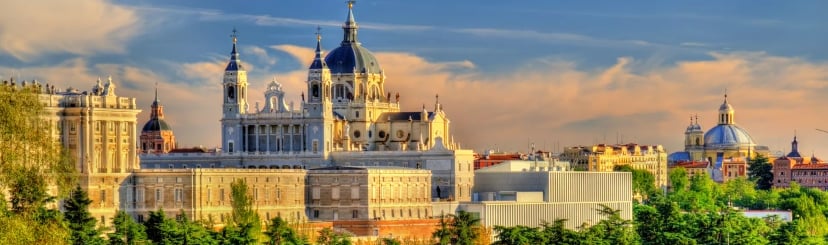
Plaza de Oriente itself is useful, but only if you resist treating it as an attraction checklist. It is the ideal place to orient the group before the palace: the Teatro Real behind you, the Royal Palace ahead, Almudena Cathedral to the south, and Calle Bailén as the hinge. What it is not is an invitation to disappear into the gardens, head down the slope, or make a last-minute cathedral interior visit just because it is close. The palace window should be pulling the group inward, not scattering attention outward.
Plaza Mayor can work, but only as part of a planned Austrias approach, not as a free-form wander. Its arcades, exits, and crowd eddies make it easy for a group to lose five minutes deciding which side to leave from. That is harmless on an evening stroll; before a timed Palace entry, it introduces a small but noticeable drag. A guide can make it feel relaxed because the exit route is already chosen. Without that discipline, the square can flatten the pace right when the route should be tightening.
The counterintuitive correction is that Almudena Cathedral is not automatically the best buffer before the Royal Palace. It is next door, visible, and tempting, but it changes the energy of the hour. Once a group steps inside, people spread out, photos begin, and the countdown becomes awkward. Use the exterior and the palace-cathedral relationship as context if you are nearby; save an interior visit for another slot unless the Palace time is very forgiving.
When Austrias is the right buffer, and when Opera is better
Austrias is the right buffer when you have enough time to walk with intent; Opera is better when the Palace window is close enough that control matters more than atmosphere. The difference is not just taste. It changes walking load, bathroom timing, group cohesion, and the level of explanation that will make sense once you enter the Royal Palace.
Choose Austrias when the group wants context before the Palace
Choose Austrias when the group wants the palace to land historically rather than appear as a standalone monument. A route through Plaza Mayor, Calle Mayor, and Plaza de la Villa lets the story move from civic Madrid toward royal Madrid. It also gives first-time visitors a satisfying old-city texture without needing a separate old-town tour that morning. This is especially good for couples and culture-minded small groups who enjoy a walk that feels purposeful rather than ornamental.
The consequence is that the Palace visit becomes easier to follow. By the time you reach Plaza de Oriente, the shift from narrow Austrias streets to Bourbon scale is visible in your body, not just in a guide’s explanation. You feel the city open, the palace façade assert itself, and the western edge of Madrid arrive. That bodily transition is useful because the Royal Palace interiors can otherwise become a sequence of rooms without a clear urban frame.
Choose Opera when the group needs the lowest-risk holding pattern
Choose Opera when the palace entry is soon, when a taxi arrival is uncertain, or when the group includes children, older travelers, or anyone who dislikes being hurried. Ópera station and Plaza de Isabel II are not the most poetic pieces of Madrid, but they are unusually good at reducing uncertainty. You are close enough to approach the Palace calmly, and you can still use Teatro Real and Plaza de Oriente to give the final minutes cultural shape.
This is also the better choice on hotter days. Madrid heat does not only make people sweat; it shortens patience, makes stone plazas feel longer, and turns small routing errors into group mood problems. A ten-minute overreach in Austrias can mean arriving at security already thirsty and irritable. A ten-minute pause near Opera can be spent gathering the group and setting expectations for the Palace rooms.
Avoid the false buffer: Gran Vía, Sol, and “one quick shop”
Gran Vía and Puerta del Sol are poor buffers before the Royal Palace unless your hotel is there and you are simply passing through. They are central, familiar, and full of services, but they pull the group east when the ticket window needs you west. The same is true of a “quick” shop or café stop on Calle Arenal if it has no defined end. It looks harmless; then someone is paying, someone is in the restroom, someone is outside taking photos, and the palace approach has lost its shape.
Cut this first when the plan gets crowded: remove the casual Sol or Gran Vía detour. Do not cut the final 15 minutes of calm near Plaza de Oriente. That last buffer is what lets the Palace visit begin with attention rather than apology.
What belongs before the Palace, and what belongs after
Before the Palace, keep only places that support arrival; after the Palace, choose one eastward release such as Retiro or a museum-side transfer. The rule is useful because Madrid invites over-connecting. The map shows Austrias, Opera, Palace, Almudena, Sabatini, the Royal Collections Gallery, Plaza de España, Cibeles, Prado, and Retiro in a seductive chain. Real bodies do not experience that chain as a neat line. They experience it as stone, sun, security checks, crossings, and decision fatigue.
Before the Palace, the strongest pieces are Plaza Mayor if it is already on your route, Plaza de la Villa for a compact old-Madrid cue, Calle Mayor for the westward thread, Opera for control, and Plaza de Oriente for orientation. These stops do not need to be “completed.” They need to be used. You are borrowing them to frame the Palace visit.
After the Palace, the calculus changes. The group has already absorbed interior rooms, security, standing time, and a formal setting. The body wants either a seated pause, a clean transfer, or open air. Retiro works after the Palace because it changes the texture of the day. The park’s east-side calm, especially around the Puerta de Alcalá or the more museum-facing edge near the Jerónimos side, feels like a release rather than another royal room. That contrast is the whole reason to place it after, not before.
The wrong post-Palace move is to keep nibbling at nearby sites simply because they are adjacent. Sabatini Gardens can be pleasant, but if the group is already warm and has Retiro planned, they may duplicate the “garden” function without giving the same reset. The Royal Collections Gallery can be excellent for the right art-and-royal-history traveler, but it is a second interior visit next to the Palace, not a neutral add-on. If the goal is to avoid dead time, adding another dense interior may solve the schedule while tiring the people in it.
For a broader first-time route that folds the Palace into the city without turning this narrow plan into a checklist, compare the Palace-window logic with Best of Madrid Private Tour. The distinction matters: a full Madrid route can distribute energy across multiple districts; a Palace-window route should be more disciplined because a fixed entry time compresses the decision-making.
Why Retiro belongs after the Royal Palace, not before it
Retiro belongs after the Royal Palace when it functions as a release valve, not as a holding pen. The park is not far in the abstract, but it is far enough to create transfer consequences before a timed Palace entry. Starting in Retiro, then moving west to the Palace, then possibly coming east again for dinner or museums, makes Madrid feel wider than it needs to feel. It also puts the day’s softest space before the day’s firmest obligation.
The better sequence is Palace first, then Retiro if the group still wants air, shade, and a change of tempo. The move east can be done by taxi for comfort, by guided transfer if you want Cibeles and Puerta de Alcalá to carry meaning, or on foot only for travelers who genuinely enjoy longer urban walks. The point is not to prove that the route can be walked. The point is to preserve appetite for the rest of the day.
Madrid does something specific to the body on this route: it makes distance feel uneven. The Palace side asks for standing, interior focus, and broad stone approaches. The Austrias side uses narrower streets and small squares that slow a group naturally. The Retiro side changes scale again, with larger avenues, crossings, and park entrances that can feel wonderfully open or slightly exposed depending on heat and fatigue. When visitors underestimate that shift, they do not merely lose minutes; they lose the calm that makes the Palace visit feel memorable.
The trip mood changes too. A tight Palace-to-Retiro sequence makes the day feel shorter because each stage has a different job: context, state rooms, then air. A Palace day that keeps grabbing nearby add-ons feels longer because the group never gets a clean tonal change. By late afternoon, that difference determines whether dinner feels earned or merely necessary.
Retiro also pairs best when you do not try to see the whole park. Enter with a purpose: a shaded walk, the lake area if it fits the group, the Crystal Palace exterior if the route and conditions make sense, or a simple pause before returning to the hotel. A private Retiro plan such as Retiro Park Private Tour earns its place when the park is the planned second act, not a vague “we should probably see it” afterthought.
How to route the Palace day without turning it into a museum marathon
A Palace-window day should not become a Prado, Reina Sofía, and Retiro day unless the travelers are unusually museum-hungry and the timing is generous. The Palace itself is a major interior visit. Adding a museum afterward can be rewarding, but only if it replaces something else. It should not be stacked on top of Austrias, Opera, Retiro, and dinner as though attention were unlimited.
If you are tempted to attach a museum, use official sources for the current practicalities and then make a deliberate cut. The official Prado visit page (https://www.museodelprado.es/en/visit-the-museum) and the official Reina Sofía visit page (https://www.museoreinasofia.es/en/visit) are better references for visit logistics than a remembered schedule, because museum conditions can change. Once you have checked the basics, decide whether the museum is the day’s second anchor or whether Retiro is. Do not pretend both can be equally relaxed after the Palace unless the group has exceptional stamina.
For first-time art travelers, the Prado is the more natural museum-side temptation because it sits along the museum-park spine and can pair with Retiro. But that does not mean it belongs after every Palace visit. If the Palace entry is late morning, lunch runs long, and the group wants a meaningful Prado visit, you are no longer planning “Austrias, Opera and Retiro without dead time.” You are planning a museum day with a royal morning attached. That is a different article and a different energy contract.
Reina Sofía is even less forgiving as a casual add-on to this narrow route. It has a different artistic language, a different location pull toward Atocha, and a different emotional register. It can be excellent on a Madrid art day, but when it is forced after the Palace and before Retiro, the day begins to feel like a series of obligations. A guide can help interpret the museum, but interpretation does not remove the cumulative standing time.
The useful cut-first rule is this: if the Royal Palace is fixed and Retiro matters, cut the museum. If the museum matters more, cut Retiro or move it to a lighter evening. The supporting guide for that separate decision is Madrid’s Golden Triangle without museum fatigue, which treats the art spine as its own planning problem rather than a leftover space after the Palace.
Three Palace-window scenarios that actually behave well
The right scenario depends on whether your Palace entry is morning, midday, or late afternoon. The route is not a universal template; it is a way of protecting the fixed moment from Madrid’s most common small delays. Use these scenarios to decide what to keep, what to shorten, and what to move elsewhere.
Morning Palace window: keep the prelude short and make Retiro the reward
For a morning Palace entry, do not spend the best early energy wandering too far. Begin with a concise Austrias-to-Opera approach if you are already central, or meet near Opera if the hotel transfer is the variable. The Palace comes before the group has scattered its attention. Afterward, lunch and Retiro can form the softer second half of the day.
This is the strongest scenario for couples and culture-first visitors who want Madrid to feel coherent without feeling over-scheduled. It also works for families because the most formal visit happens before the day becomes emotionally noisy. The one caution is breakfast timing. A beautiful hotel breakfast that runs long can ruin a morning Palace plan more easily than a modest route choice. Finish breakfast early enough that the Palace arrival is not the first hurried act of the day.
Midday Palace window: use Austrias carefully and refuse the big pre-walk
For a midday Palace entry, the prelude should be shorter and more controllable. This is where the Austrias to Opera buffer earns its name: it is a buffer, not a full neighborhood tour. Use one or two old-Madrid anchors, then get near Plaza de Oriente before the group starts thinking about lunch. A midday ticket window can be elegant, but only if you do not spend the late morning pretending there is time for a complete old-town circuit.
After the Palace, lunch timing becomes the hinge. Some groups should eat before moving east; others should transfer toward Retiro or the museum side and eat there. What does not work is a vague “we’ll find something” immediately outside the Palace when everyone is hungry and the next stop is still undecided. This is exactly where a guide or planner changes the day: not by making the city smaller, but by removing the negotiation.
Late-afternoon Palace window: shorten, skip Retiro, or move the Palace plan
For a late-afternoon Palace entry, shorten the plan or move Retiro to another day. This is the clearest exception case. Austrias before dinner can be lovely, and the Palace can still work well, but the combination of Austrias, Palace interiors, a cross-city Retiro move, and a polished evening is too much for many travelers. The day may look full on paper; in practice it risks making dinner feel like recovery.
If the late Palace window is fixed, turn the route into Austrias, Opera, Royal Palace, and a nearby dinner-side exit. Save Retiro for a morning or a gentler afternoon. If Retiro is more important than the Palace interior, do not force the Palace that day. Move the Palace to a cleaner window or use the exterior context around Plaza de Oriente as part of a lighter royal-Madrid walk.
The spend judgment: pay for control, not for a bad order
Premium service changes this day when it controls the sequence, the interpretation, and the transition points. It does not change the geometry of Madrid. A private guide can decide when Plaza Mayor is worth five minutes and when it should be bypassed, explain the Palace before the group enters, keep children engaged during the waiting interval, and make the move to Retiro feel intentional rather than improvised. A chauffeur can help on the Palace-to-Retiro transfer, especially in heat or with older parents, because it removes the eastbound slog after a standing-heavy interior visit.
Premium spend does not help if you put Retiro before a tight Royal Palace window and then try to buy your way out of the resulting cross-city pressure. More money does not fix poor sequencing; it only makes the consequences slightly more comfortable. The better investment is a route that does not create the problem in the first place.
Where private planning earns its cost is in family friction and group variance. One traveler wants history, one wants photos, one wants shade, one needs a restroom, and one is quietly calculating lunch. The Palace ticket window makes those needs more visible because the group cannot simply drift. A good guide-led sequence turns the buffer into a usable piece of the day rather than a countdown. For a custom route that adjusts the Palace, Austrias, Opera and Retiro around your actual party, Tailor-Made Madrid Private Tours is the more relevant next step than adding another attraction to the list. Inquire now
When to shorten, skip, or move this plan to another day
Shorten this plan when the Palace window is late, when the day is hot, when mobility is uneven, or when dinner is the emotional priority. The route is strong because it is narrow. It loses its strength when it tries to become a full Madrid sampler, a museum day, a park day, and an old-town walk at the same time.
Move Retiro to another day if anyone in the group has limited walking tolerance, if the Palace visit ends near the point when everyone wants lunch, or if a formal dinner or flamenco evening is already scheduled. Madrid’s late rhythm can be generous, but that does not mean every afternoon should be loaded. A lighter post-Palace route can preserve the evening better than an impressive but overbuilt plan.
Skip the Palace interior on this particular day if your only available entry forces the rest of the itinerary into bad shape. That does not mean the Royal Palace is unimportant. It means a premium Madrid stay should not be organized around the worst version of a major sight. Use Plaza de Oriente, Teatro Real, and the Palace exterior for context, then place the interior visit on a day when it can be approached properly.
Shorten Austrias when the group is already staying near Plaza Mayor or has done old Madrid before dinner on another night. There is no virtue in repeating the same lanes just because they are famous. A more focused Palace day may begin at Opera, use Plaza de Oriente well, enter on time, and move east after the visit. That version can feel more polished than a richer route that never quite settles.
If you want the Austrias piece to have its own evening shape rather than serve as a Palace buffer, use the more dinner-oriented planning logic in Madrid’s Austrias Quarter before dinner. This Palace-window guide is narrower: it uses Austrias only when it helps the timed entry, not because every nearby sight must be harvested.
How to make the route feel calm for different travelers
The same Palace-window route should be adjusted by traveler type, not by adding more stops. Couples usually benefit from a leaner Austrias prelude, a more interpreted Palace visit, and a Retiro finish that leaves room for a deliberate dinner. Families need fewer transitions, more visible pauses, and a clear promise that the Palace is the main interior commitment. Small groups need a leader, even informally, because the hour before entry is when opinions multiply.
For families, the Opera buffer is often stronger than a charming but longer Austrias weave. It gives children less time to unravel before the Palace and gives adults fewer micro-decisions. If the family wants old Madrid, put one vivid stop into the prelude, not five. Plaza de la Villa can do more useful work than a long arc through every lane between Sol and the Palace.
For older parents, the key is not only distance but surface and standing time. The Palace approach, security, rooms, and explanations can already demand enough. Retiro afterward should be a chosen comfort move, not a proof of stamina. A taxi to the park edge, a short shaded walk, and a seated pause may be the correct version. Trying to “do Retiro” after the Palace can be less successful than using one edge of Retiro beautifully.
For food-and-wine travelers, the danger is letting lunch become the hidden timed entry. Madrid lunches can stretch, and a serious meal after the Palace may make Retiro unrealistic. Decide which experience owns the afternoon. If lunch is the celebration, let Retiro move later or disappear. If Retiro is the intended reset, keep lunch easy and well placed. The day fails when lunch, Retiro, and an evening reservation all compete for the same energy.
For art-focused travelers, the Palace should either remain the main interior visit or be paired with one carefully chosen museum, not a museum cluster. The temptation to add the Prado after the Palace is understandable, but the result is better when the Prado is treated as the second anchor and Retiro becomes a short transition, not another full experience. This is a priority decision, not a cultural deficiency.
FAQ
Should I visit Austrias before or after the Royal Palace?
Visit Austrias before the Royal Palace when you have 45 to 90 minutes and want old-Madrid context before the Palace rooms. Visit it after only if your Palace window is late and the route is ending nearby for dinner.
Is Opera a good place to wait before a Royal Palace timed entry?
Yes. Opera is one of the best low-risk waiting areas before a Royal Palace timed entry because Teatro Real, Plaza de Isabel II, and Plaza de Oriente keep you close to the Palace without pulling the group into a longer old-town route.
Can I do Retiro before the Royal Palace?
You can, but it is usually the weaker order. Retiro before the Royal Palace creates an east-to-west transfer before a fixed entry time, then often sends you east again later. Retiro works better after the Palace as a change of pace.
What is the Austrias to Opera buffer?
The Austrias to Opera buffer is a compact pre-Palace route that uses Plaza Mayor, Calle Mayor, Plaza de la Villa, and Opera-side streets to fill spare time while moving steadily toward Plaza de Oriente and the Royal Palace.
Should I add the Prado after the Royal Palace?
Add the Prado after the Royal Palace only if it becomes the clear second anchor of the day. If Retiro, lunch, and dinner also matter, the Prado should usually move to a separate museum-focused route.
Is the Royal Palace, Austrias and Retiro route good for families?
Yes, if the route is kept narrow. Families usually do best with Opera or a short Austrias prelude, the Palace as the main interior visit, and Retiro afterward only if the group still has energy.
When should this Palace-window plan be moved to another day?
Move it when the only Palace entry is late afternoon and you still want a real Retiro visit, a major museum, or a formal dinner. In that case, the route becomes too compressed for a polished day.
Does a private guide help with the Royal Palace ticket window?
A private guide helps most when the ticket window creates routing pressure. The guide can shape the pre-entry buffer, keep the group moving without hurry, interpret the Palace, and decide whether Retiro still belongs afterward.
If you’re interested in any private tours of Madrid, please reach out to us.



 So if you are looking for the absolute best in Madrid & surroundings with authentic local fully-licensed native guides whose English you can actually understand and with an exclusive and amazingly fun itinerary













