Convent Art in Madrid: Descalzas Reales, Encarnación and Prado Context in One Day

Updated
Yes, the three can form one excellent day, but only if you treat it as a study in royal patronage rather than three attractions to collect. Build the schedule around the firmest convent entry, include the second convent only when its separate access pattern genuinely aligns, and keep the Prado to a 75- to 90-minute coda of six to eight works. In Madrid’s real geography, the route runs from the palace-and-Ópera side of the center toward Paseo del Prado; it does not benefit from the Prado-to-Reina Sofia corridor that usually shapes an art day. The clearest exception is a first-time visitor whose priority is broad Prado coverage: that traveler should see one convent, not two, and give the museum the afternoon. The thesis is simple: Descalzas Reales and Encarnación explain why court art was commissioned, gifted, enclosed and prayed before; the Prado then shows how related images became a public national collection.
Counterintuitively, do not start at the Prado merely because it is the famous name. When both convent slots are equally usable, begin at Encarnación, continue east to Descalzas Reales, then cross the center once to the Prado. Starting at Descalzas and returning west to Encarnación creates an unnecessary double-back around Ópera and Calle Arenal before the longer eastward move. On this route, access logic outranks prestige.
Use the full three-part day when:
- Both convent visits are confirmed as separate, compatible entries rather than assumed from a general opening pattern.
- Your group enjoys sacred art, dynastic portraiture, textiles, reliquaries and the politics of patronage more than room-by-room masterpiece collecting.
- You are willing to treat the Prado as context, not coverage.
Use one convent plus the Prado when:
- Only one convent entry is secure, the group includes younger children or older relatives, or a serious dinner makes a visually dense afternoon unwise.
- This is a first Madrid visit and the Prado must still feel substantial.
Choose a different art day when:
- Your real aim is the Golden Triangle, twentieth-century Spain or a survey of European painting. In that case, use Madrid’s Golden Triangle without museum fatigue rather than forcing a convent theme onto a museum-comparison day.
Can you visit Descalzas Reales, Encarnación and the Prado in one day?
You can, but the day succeeds only when the convent calendar leads and the Prado accepts a supporting role. Descalzas Reales and Encarnación are not ordinary museums with interchangeable all-day admission. They are functioning royal religious houses managed by Patrimonio Nacional, with controlled visitor access, and their current patterns should be checked independently before any lunch, vehicle or museum entry is fixed. The common planning error is to see two nearby names on a map, assume one morning opening pattern, and then discover that the usable entries do not overlap.
Treat each convent as a hard anchor with its own arrival requirement, visit format and possible operational limits. Confirm the day, entry time, language or guided format, expected duration, stair or standing implications, and any group procedure when booking. Do not rely on a hotel concierge’s verbal assurance that both are “usually open”; the route is not confirmed until the actual visit conditions work together. This is especially important for private groups, because a larger party may face different handling from two independent travelers.
The best directional order, when access is neutral, is Encarnación first, Descalzas Reales second and the Prado last. Encarnación sits in Plaza de la Encarnación by the western court quarter near Plaza de Oriente and Ópera. Descalzas lies farther east beside Plaza de San Martín and Plaza de las Descalzas, beyond the busy pedestrian field around Ópera and Calle Arenal. The Prado then requires the one meaningful cross-center move. This west-to-east line is cleaner than beginning at the Prado, walking or driving back to the convents, and returning to the museum district through traffic and midday heat.
The distance between the two convents is not the day’s main physical problem. The more consequential load is cumulative standing: a controlled interior visit, slow looking in narrow or layered spaces, another interior, then a large museum whose scale encourages overreach. Visitors often count steps and miss static fatigue. By the time you reach Paseo del Prado, backs, knees and attention may be more tired than the map suggests. A short seat, a light lunch and one planned vehicle transfer matter more than squeezing in another church.
Madrid also changes the rhythm of this plan through its late-evening culture. A traveler who expects dinner well after the Prado may believe there is endless time, but a long, unedited museum visit can make the day feel emotionally finished by late afternoon. The right sequence leaves the evening with curiosity still intact. The wrong sequence turns dinner into recovery from a checklist.
There is one practical hierarchy to remember: first secure the convent access, then shape the Prado entry, then place lunch and transport around those anchors. Reversing that order is how a polished-looking itinerary becomes brittle.
Descalzas Reales and Encarnación are not interchangeable
Descalzas Reales is the stronger single choice for art-focused travelers, while Encarnación is the sharper choice for understanding royal devotion as a lived institution. Both belong to Madrid’s court history, but they answer different questions. Seeing the distinction before arrival prevents the two visits from blurring into a generic church crawl.
Descalzas Reales: a court collection formed through women, gifts and enclosure
Descalzas Reales grew from a sixteenth-century royal foundation established by Juana of Austria in the palace where she had been born, folding domestic, dynastic and religious space into one site. Juana established a Poor Clare community there, and the convent was sustained by a network of Habsburg women whose marriages, widowhoods, dowries and religious choices connected Madrid to Portugal, the Low Countries and the wider Catholic court. That network matters more than any single artist name. Paintings, portraits, textiles, reliquaries and precious objects did not arrive as neutral museum acquisitions; they came through family, diplomacy, piety and the material culture of elite female life.
This is why Descalzas often feels denser than visitors expect. The reward is not a sequence of isolated masterpieces but the accumulation of meaning: a dynastic portrait beside a devotional image, a textile designed for ceremony, a relic contained in costly workmanship, a staircase or chapel functioning as architecture and theatre. The space asks you to notice who gave an object, why it entered enclosure, how it was used and what status it carried inside a female religious community.
The most productive Prado connection is the Eucharistic cycle associated with Rubens and the Descalzas tapestries. The important point is not simply that Rubens is a great painter. It is that a court patron could commission designs in one artistic center, have them translated into monumental textiles elsewhere, and place the finished works in a Madrid convent where doctrine, dynasty and display met. When a related Rubens oil sketch is on view at the Prado, it turns the afternoon museum stop into evidence of process: idea, workshop, medium, patron and destination.
For repeat visitors, Descalzas also corrects a Prado-centered bias. National collections tend to separate paintings by school, chronology and attribution. The convent returns them to a world where a portrait, tapestry, reliquary and liturgical object could operate together. The traveler consequence is significant: you need less time reading every label and more help understanding relationships. A guide who can identify the donor, family connection and devotional function adds more value here than one who simply recites artist biographies.
Descalzas can frustrate travelers who need free-roaming independence, rapid movement or guaranteed access to one famous object. The experience is more controlled and the visual field more layered. It is also a poor fit for a group that dislikes religious history or expects the spacious circulation of a major museum. For art lovers willing to look slowly, however, it is the more rewarding of the two convents.
Encarnación: the royal court’s devotional system beside the palace
Encarnación is best understood as part of the palace quarter’s religious geography, not as a smaller imitation of Descalzas. Founded by Queen Margaret of Austria for Augustinian Recollect nuns and positioned near the royal residence, it belongs inside the ceremonial and spiritual ecosystem of the court. The sober exterior does not announce the density of devotion within, which is precisely the useful correction: court culture in Madrid was expressed not only through palaces and public portraiture but through enclosed communities, relics, chapels, ritual and repeated acts of patronage.
The artistic lesson at Encarnación is therefore more architectural and institutional. Rather than asking only, “Which paintings are here?”, ask how the convent, church, reliquary, royal founders and liturgical life worked together. The collection helps explain why precious materials, sculpture, painting and relic display were not decorative extras but instruments of memory, intercession and dynastic identity.
This makes Encarnación especially strong for travelers interested in sacred practice, Counter-Reformation Madrid, the relationship between court and convent, or the way a royal foundation outlived the individuals who established it. It is also the more meaningful first stop when you plan to move east afterward, because the day begins beside the palace and follows royal patronage away from the court quarter toward the later public museum.
Encarnación is the weaker choice for a traveler who wants the greatest variety of portable art in one hour. If the group has only one convent slot and the brief is explicitly paintings, tapestries and dynastic portraiture, cut Encarnación first. If the group is drawn to reliquaries, ritual, architecture and the devotional machinery of monarchy, keep Encarnación and accept that the day will be less object-led.
The useful contrast between the two
Seen together, the convents create a productive contrast rather than repetition. Descalzas is cumulative, international and strongly shaped by the agency and networks of royal women. Encarnación is closer to the palace’s institutional life and clarifies how devotion, ceremony and monarchy reinforced one another. One shows how objects entered a community; the other shows how a foundation structured religious memory beside the court.
That contrast should control the commentary. Avoid giving two separate mini-lectures on “Spanish convents.” Instead, carry three questions through both visits: Who founded or endowed the space? Through what family or political network did the art arrive? How did an object function differently here from the way a painting functions on a museum wall? Those questions make the Prado leg inevitable rather than appended.
Travelers considering a deeper royal-collection day on another date can compare this route with Madrid’s Royal Collections Gallery choice. Do not add that gallery to this day. It belongs as a separate answer to a separate planning question.
How much Prado belongs in a convent-art day?
Plan 75 to 90 minutes and six to eight works; two hours is the upper limit unless one convent has dropped out. The Prado should not be treated as a reward for surviving the morning or as an obligation to see its greatest hits. It is the public chapter that makes the private and enclosed morning legible.
Before the day, use the official Prado visit page (https://www.museodelprado.es/en/visit-the-museum) to confirm current entry procedures and practical information. Do not promise a specific gallery route far in advance, and do not assume every work below will be displayed. A well-prepared guide should build a primary and secondary shortlist so the argument survives loans, rotations or room changes.
A six-work Prado shortlist with real convent connections
The best shortlist moves from private devotion to dynasty, patronage and the public image of court life. It should feel like one conversation, not six disconnected stops.
- Rogier van der Weyden’s Descent from the Cross: use it to discuss how concentrated emotional devotion and elite collecting gave a sacred image power beyond narrative. The point is not that it came from either convent, but that it helps visitors recognize the intensity expected of devotional looking.
- Titian’s Charles V at Mühlberg: read the portrait as manufactured sovereignty. After the convents, the armor, posture and controlled image of empire can be set against the enclosed religious lives of the emperor’s female descendants and relatives.
- Titian’s Empress Isabella of Portugal: this is the more intimate dynastic counterweight. Memory, marriage, widowhood and posthumous image-making help explain why portraits mattered in royal female networks rather than merely recording appearance.
- Alonso Sánchez Coello’s Infanta Isabel Clara Eugenia and Magdalena Ruiz: when available, this is an exceptionally useful bridge between rank, intimacy and the court household. It allows a guide to discuss how a royal woman’s image includes attendants, relationships and social hierarchy.
- A Rubens oil sketch connected to the Triumph of the Eucharist cycle: if one is displayed, make it the direct material link to Descalzas. Visitors can compare the energy of painted invention with the monumental textile destination and the patronage of Infanta Isabel Clara Eugenia.
- Velázquez’s Las Meninas: place it late, not first. After a morning devoted to royal women, household structures and controlled access, the painting becomes less a celebrity stop and more a meditation on presence, service, rank, image-making and who is allowed to see whom.
If attention remains, add Zurbarán’s Agnus Dei or another concentrated sacred image to return the day from court spectacle to tactile devotion. For a later dynastic epilogue, Goya’s Family of Charles IV can show how royal self-presentation changed while the family institution endured. Do not add both merely because they are famous. One well-chosen epilogue is enough.
This approach differs from a standard private Prado tour because the selection begins outside the museum. The guide is not asking, “Which Prado masterpieces should everyone see?” The question is, “Which works make today’s confirmed convent experience more intelligible?” If Descalzas is unavailable, the Rubens and female-network emphasis may weaken while Encarnación’s ritual and palace context becomes stronger. The Prado route should change accordingly.
Why more Prado usually makes the day worse
A second hour often adds names but subtracts meaning. After two controlled interiors, visitors are vulnerable to a familiar museum mistake: moving faster because the building is larger. The result is neither deep convent looking nor satisfying Prado coverage. Attention becomes transactional, and Las Meninas turns into a finish line.
Leave the Prado while the argument still feels coherent. Stop after six to eight works, even if the ticket allows longer. A traveler who wants a comprehensive Prado visit should schedule it separately or choose one convent. Trying to do two royal foundations and a “full Prado” is the overvalued default most readers should reconsider.
The shorter route also improves the trip mood. The day begins in enclosed, intimate spaces and ends in a public collection; that expansion should feel revelatory. If the Prado sprawls into an endurance session, the contrast disappears and the day becomes another long museum afternoon. Leaving with one or two connections still alive in conversation is more valuable than leaving with a longer list of rooms crossed.
Three workable one-day scenarios
There are three viable versions of this day, and the confirmed access pattern should decide which one you use. The plan should be designed as a scenario, not a single brittle timetable.
Scenario one: both convents align cleanly
This is the ideal route for art lovers and repeat visitors. Begin with the earlier confirmed convent entry. If the slots are equally practical, choose Encarnación first, walk through the Ópera–Arenal seam to Descalzas Reales, then pause before moving east. The short walk between the foundations preserves a sense of the old court center and avoids calling a car for a distance that traffic and pickup restrictions can make less efficient than walking.
After the second convent, do not drift toward Plaza Mayor merely because it is nearby and famous. That move pulls the route back west and encourages a heavier, slower lunch in the wrong direction. Transfer once toward Las Letras or the Prado edge, choose a light seated meal, and enter the museum with the shortlist already agreed. The practical benefit is fewer resets: two connected morning interiors, one lunch, one cross-center transfer, one museum argument.
For couples, the full version works particularly well when both enjoy art history but do not need identical levels of detail. One person can focus on textiles and court portraiture; the other may respond more to ritual and architecture. A private guide can keep those interests connected rather than dividing the day into “your convent” and “my museum.”
Scenario two: only one convent is genuinely usable
This is not a failed version. Choose Descalzas Reales for the richest object-and-patronage story, or Encarnación for the stronger palace-devotion frame, then expand the Prado to about two hours. Use the outside of the unavailable convent only as a geographic reference if it lies naturally on the route; do not substitute a random church just to preserve the number of interiors.
The cut-first rule is clear: cut the second convent before you cut lunch, and cut a generic add-on before you extend the Prado. A reliable one-convent day is better than a rushed two-convent day built on uncertain access. It also gives first-time visitors enough Prado depth to feel that the museum was not reduced to a footnote.
This version suits families especially well. One controlled convent visit can be framed around three objects or questions, followed by lunch and a Prado route with visual variety. Two similar access procedures in one morning may feel repetitive to children even when the art-historical distinction is strong. The guide should have permission to end the Prado after four or five works if attention drops.
Scenario three: mixed mobility, summer heat or a celebration evening
This version should use one convent as essential and the second as conditional. Arrange a vehicle for the west-to-east transfer, not for the short convent-to-convent link unless mobility requires door-to-door support. Keep lunch seated and moderate, and cap the Prado at 60 to 75 minutes. The day still communicates the central thesis, but it does not ask the body to prove commitment through standing.
Madrid’s heat magnifies the cross-center move more than visitors expect. A walk that looks reasonable on a phone can include exposed plazas, crowded pedestrian flows and little restorative shade just when the group has finished two inward-looking visits. A taxi or chauffeured transfer is valuable here because it removes the least meaningful physical effort. By contrast, keeping a driver circling between Encarnación and Descalzas often adds pickup delay without improving the experience.
For a birthday, anniversary or multigenerational trip, the evening should influence the afternoon ceiling. A serious dinner after two convents and a long Prado route is not automatically luxurious; it can be too much concentration in one day. A shorter museum finish, a hotel pause and a later meal will usually feel more considered than adding another gallery because the reservation is expensive.
A model sequence with access in control
- First anchor: the earlier confirmed convent visit, with arrival margin and no preceding attraction.
- Short local transition: walk between Encarnación and Descalzas when mobility and weather allow, using the Ópera and Calle Arenal area as the connective tissue rather than a sightseeing detour.
- Second anchor: the other convent only if its access is firm and the group still has attention for a second controlled interior.
- Lunch and transfer: move east once, sit down, eat lightly and avoid a multi-course lunch that consumes the Prado window.
- Prado coda: 75 to 90 minutes, six to eight works, one optional epilogue.
- Evening: end without another museum, church or palace. Madrid’s late dinner rhythm is the continuation of the day, not a prize for overloading it.
What to skip so the sacred-art route keeps its shape
Do not add the Royal Palace, Reina Sofía, Thyssen or a third church to this day. Each addition is defensible in isolation, but together they erase the narrow question the route answers.
The Royal Palace is the most tempting mistake because Encarnación sits beside the palace quarter. It adds scale, security procedures, ceremonial rooms and another major institution at exactly the point when the day needs intimacy and contrast. Save it for a palace-led day. If royal collecting is the next priority, use the separate Royal Collections planning guide already noted rather than inserting another large interior here.
The overvalued museum default is to follow the Prado-to-Reina Sofía corridor simply because it is convenient. The official Reina Sofía visit page (https://www.museoreinasofia.es/en/visit) is the right operational reference when twentieth-century Spanish art is the subject, but adding Reina Sofía here forces a leap from Habsburg and early modern patronage into modernity before the first argument has settled. The official Thyssen permanent collection page (https://www.museothyssen.org/en/collection/permanent-collection) shows why that museum is excellent for a broad chronological survey, yet the survey impulse is precisely what this day should resist.
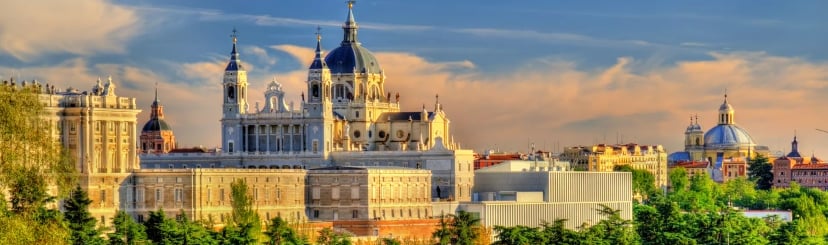
A third sacred interior is equally unhelpful. San Francisco el Grande, the Almudena Cathedral or another church may be worth visiting on a different route, but they do not solve the access-and-context problem created by the two royal convents. More sacred architecture does not automatically mean more sacred-art understanding. The decision is explicit: stop forcing a church crawl.
Also avoid turning the lunch into a destination tasting menu. The morning already asks for close looking, and the afternoon needs alertness. A long lunch compresses the Prado or makes the museum feel punitive. Save the ambitious meal for the evening, and only if the group has a pause between art and dinner.
Celebration travelers may be comparing Smoked Room menus with Deessa at Mandarin Oriental Ritz. The former implies a separate northbound evening move, while the latter is geographically simpler from the Prado end of the route. Neither should dictate the daytime sequence. Fix the convent access first, decide how much Prado the group can absorb, then choose dinner around the energy that remains.
Where expert guidance and premium service earn their cost
The highest-value upgrade is a guide who can connect the confirmed convent experience to a preselected Prado route; the second is one well-timed vehicle transfer. Paying for more time, more rooms or more staff does not automatically improve the day.
A specialist guide changes the experience in four concrete ways. First, the guide can make Descalzas and Encarnación feel distinct by carrying the same patronage questions through both. Second, the guide can adjust the Prado shortlist to what the group actually saw, rather than delivering a fixed masterpiece script. Third, the guide can compress the day when children, older parents or one less-enthusiastic companion begin to fade. Fourth, the guide can distinguish between useful context and decorative trivia, which matters in spaces where objects accumulated through family and religious networks.
This is the natural role for Madrid museum private tours: not adding volume, but selecting the right works and keeping the route coherent when access changes. A private guide is especially valuable for families because the morning can be framed through people and objects rather than doctrine alone, and the Prado can be shortened without anyone feeling that the day has failed.
A driver earns the cost for the transfer from the court quarter to Paseo del Prado, particularly in hot weather, for guests with limited mobility, or when the hotel lies in Salamanca or farther north. The vehicle can also simplify the end of the day if the group returns to the hotel before dinner. It usually does not earn its cost while waiting between the two convents, where pickup geometry and central traffic can cancel the small walking advantage.
Premium spend does not help inside a closed convent or create an extra visit slot; no concierge, chauffeur or higher ticket tier can repair a calendar that does not align. This is the point at which expensive planning can look impressive on paper while adding no real access. The better use of money is to design a graceful one-convent fallback before the day begins.
Likewise, paying for an all-day vehicle is unnecessary when the route is mostly controlled interiors and a short old-center link. Spend on expertise, confirmed logistics and a single comfort-saving transfer. Do not spend on a car that waits while the essential experiences happen on foot and indoors.
For couples, families and small celebration groups, Orange Donut Tours can preselect the Prado works, adjust the day to the convent entry that is actually available, and keep the second convent conditional rather than compulsory. That removes the most common family friction: one traveler pushing to “get full value” from every booking while the rest of the group is already visually tired. A focused tailor-made Madrid tour can preserve the patronage story without making the group serve the timetable. Inquire now
FAQ
Can Descalzas Reales, Encarnación and the Prado really fit in one day?
Yes, when both convent entries are confirmed and the Prado is limited to about 75 to 90 minutes. If the museum needs to be a comprehensive first visit, use one convent rather than two.
Which convent should art lovers prioritize?
Prioritize Descalzas Reales for the richer combination of dynastic portraiture, textiles, reliquaries and royal female patronage. Choose Encarnación first when ritual, court devotion and the palace quarter’s religious geography matter more than object variety.
What is the best order for the route?
If access times are equally practical, visit Encarnación first, Descalzas Reales second and the Prado last. That creates a west-to-east line and avoids returning to Ópera after you have already moved toward the center. Confirmed convent times always override the ideal geography.
How long should the Prado visit be?
Allow 75 to 90 minutes for six to eight connected works. Extend to about two hours only when one convent is unavailable or when this is the traveler’s only realistic Prado visit.
Is this route suitable for children or older travelers?
Yes, but use one convent as essential, keep the second conditional, include a seated lunch and consider a vehicle for the court-quarter-to-Prado transfer. The main strain is cumulative standing and concentration, not just walking distance.
Do I need a private guide for the convents and Prado?
No, but a specialist guide adds unusual value because the best Prado selection depends on what you actually see in the convents. The guide can also shorten the route without losing the central argument and manage different attention levels within a private group.
What should I book first?
Confirm each convent entry first, then choose the Prado window, then place lunch and transport. Do not book a long lunch or fixed museum start until the separate convent access patterns genuinely work together.
What should I do if one convent is closed or unavailable?
Keep the available convent, expand the Prado slightly and use the unavailable foundation only as exterior court context if it lies naturally on the route. Do not replace it with a random church, the Royal Palace or a second major museum.
If you’re interested in any private tours of Madrid, please reach out to us.



 So if you are looking for the absolute best in Madrid & surroundings with authentic local fully-licensed native guides whose English you can actually understand and with an exclusive and amazingly fun itinerary













