A Tailor-Made Madrid Market Morning for a High-End Stay: San Miguel, Chamberí or Las Letras Without Tapas Fatigue

Updated
Choose San Miguel when the morning is built around the Royal Palace or old Madrid; choose Las Letras when the afternoon belongs to the Prado or Thyssen; choose Chamberí when the food story should feel calmer and more residential. That verdict works because Madrid rewards tight route logic: Plaza Mayor, Calle Mayor, Ópera and Plaza de Oriente sit in one old-town arc, while Paseo del Prado belongs to a different museum spine. The exception is simple: if you want an intimate food morning, San Miguel at the wrong hour is the wrong bet. In Madrid, the best market morning behaves like a hinge in the day, not a parade of snacks that steals appetite, energy and attention from the rest of a high-end stay.
The most common mistake is treating a market morning like a daytime version of a tapas night. It is not. A tapas night can be slow, social and wine-led; a market morning should be more selective, more contextual and more useful to the route that follows. San Miguel before a Royal Palace or old Madrid route can be excellent because it puts you close to Plaza Mayor, Cava de San Miguel and Calle Mayor, then lets the morning turn toward the Palace without a transfer reset. But it is also the market most likely to feel crowded if you arrive when everyone else has had the same idea. Premium spend does not help at every point: a private guide cannot make an overcrowded market feel intimate at the wrong hour.
For Orange Donut Tours, the strongest market-led morning is rarely the one with the longest tasting list. It is the one that leaves the group curious, steady on its feet and ready for the Palace, a museum, Salamanca or a proper lunch later. That is why a private food-and-neighborhood route such as Madrid’s Historic Markets Private Tour is most valuable when it controls sequence, portions and neighborhood context rather than simply adding more bites.
San Miguel, Chamberí or Las Letras: the route choice that prevents tapas fatigue
The best Madrid market morning depends on what the morning has to protect: proximity, calm or museum focus. San Miguel is the proximity winner for old Madrid and the Royal Palace. Chamberí is the calmer neighborhood winner for travelers who want market texture without the old-town crush. Las Letras is the best museum-adjacent option when the goal is to reach Prado or Thyssen alert rather than overfed.
San Miguel route. Use it when the morning is anchored by Plaza Mayor, Calle Mayor, the Royal Palace or a first look at old Madrid. It is the default winner for a first private morning that needs immediate place recognition and efficient routing. Its weakness is that it can become a crowded snack stop instead of a guided food lens if the timing is loose.
Chamberí route. Use it when the group has already seen the historic core, or when the traveler profile prizes calmer streets, neighborhood markets and a less performative food atmosphere. It is the runner-up for many high-end stays and the better choice for repeat visitors, food-focused couples and families who dislike dense crowds.
Las Letras route. Use it when the morning needs to lead toward the Prado, Thyssen, Paseo del Prado or a restrained art-and-food day. It is not the best choice for a Royal Palace morning, but it can be the most elegant answer when the day’s real priority is a museum visit with enough food to sustain the group, not dull the eye.
The wrong fit. Any market route is the wrong fit if the group wants a full lunch, a tapas dinner and several museum rooms on the same day. A market morning should not become an all-day tapas crawl for most premium first visits.
The decision criteria are practical, not decorative. First, choose the route that avoids backtracking. Second, choose the market style that matches the group’s patience for standing, browsing and crowd movement. Third, decide how much appetite you want to preserve for the rest of the day. If the market is the central experience, Chamberí can breathe. If the market is a prelude to the Royal Palace, San Miguel is useful. If the market is a support act before Prado or Thyssen, Las Letras usually makes more sense than forcing a west-side detour.
This article sits beside our broader curated Madrid food-and-wine day guide, but it answers a narrower planning question: should a market-led morning be central to the day, and if so, where should it sit so that the rest of Madrid does not become a blur?
Why a Madrid market morning differs from a tapas night
A market morning should teach you how Madrid eats before it asks you to eat too much. The pacing is different from a tapas night because the morning still has work to do: it may need to introduce old Madrid, frame the Palace, feed children lightly, prepare adults for museum focus or leave space for a later Salamanca lunch.
At night, tapas can stretch. People can stand at a bar, move slowly, talk over wine and let the evening become the point. In the morning, the same behavior often creates fatigue. The group samples too broadly, loses its sense of direction, and then arrives at the Royal Palace or Prado with the odd combination of full stomachs and low concentration. That is why the best private market mornings choose fewer stops, explain more context and build toward one clean next move.
Madrid also has a late-day rhythm that many visitors underestimate. A heavy market morning can seem appealing at the time, but it can flatten the day’s mood by making lunch unnecessary, dinner less exciting and the late afternoon feel heavier than it needs to. The better version is to let the market give the morning flavor and local texture, then stop before the group crosses from delighted into dulled.
This matters especially for couples and celebration travelers who have a serious dinner planned. A morning market route can sharpen the appetite for that dinner by introducing ingredients, regions and Madrid habits. It can also sabotage the dinner if it turns into a long parade of fried, salty and bread-heavy bites. The high-end move is not to consume more; it is to understand more while eating just enough.
Families need the same restraint for a different reason. Children may love the visual variety of a market, but they rarely enjoy standing in congested aisles while adults debate the next bite. A guide can make the morning coherent by choosing a few clear tastes, giving the route a story and moving the group before the room becomes overstimulating. That turns the market into a useful morning, not a negotiation.
San Miguel before a Royal Palace or old Madrid route: use the market as a hinge
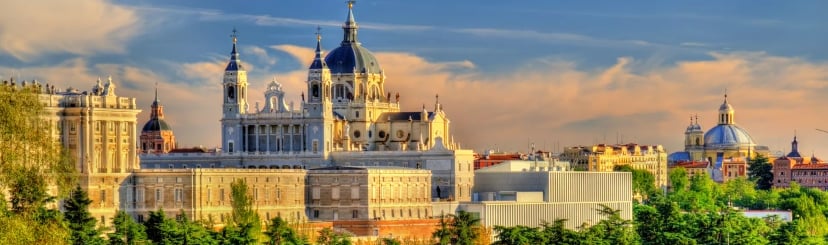
San Miguel is the best market choice when the route needs to stay close to Plaza Mayor, Calle Mayor and the Royal Palace. It sits in the right old-town pocket for a first-time visitor who wants Madrid to become legible quickly: Plaza Mayor on one side, Calle Mayor leading west, Ópera and Plaza de Oriente nearby, and the Palace waiting at the end of the line.
This is why San Miguel before a Royal Palace or old Madrid route is strategically strong. You are not asking the group to cross town before the day has settled. You can start with old Madrid’s commercial and courtly geography, use the market as a sensory doorway, then continue toward the Palace without breaking the morning’s rhythm. For current vendor context, the official Mercado de San Miguel site (https://mercadodesanmiguel.es/) is the cleanest place to confirm the market itself before you travel.
The correction is that San Miguel is not automatically the most luxurious market choice just because it is famous. Its advantage is proximity and polish, not quiet. If the group arrives when the central aisles are congested, the experience becomes visual but not intimate. A private guide can still make it useful by editing the visit, explaining what to notice and moving through decisively, but no guide can turn a busy room into a private salon.
The best San Miguel sequence is compact. Treat the market as an opening chapter, not the whole book. Begin in the Plaza Mayor area, step into San Miguel for a curated look at Madrid’s market-to-grazing culture, then move west along Calle Mayor toward the Royal Palace and Plaza de Oriente. That route keeps the morning in one mental map. It also reduces the chance that a food stop becomes an excuse for wandering without purpose.
For visitors planning a palace-led morning, the market should come before the deeper historical content, not after the group has already spent hours indoors. Food first, Palace second can work because the first bites wake up the city and the Palace then gives the morning grandeur and structure. Palace first, market later can also work in some private plans, but only when the group needs an earlier entry or when the market is being used as a short decompression stop rather than a full food experience. A Palace-first plan is better handled through a focused route such as Royal Palace Private Tour if the building, dynastic history and Plaza de Oriente are the real priority.
San Miguel is also useful for old Madrid routes that include Plaza Mayor, Puerta del Sol, the Austrias quarter and short architectural context. The route should not drift too far east or north if the Palace is still in play. Adding Gran Vía, Chueca or Salamanca on the same morning may look efficient on a map, but it introduces a transfer reset and a new city rhythm. For a high-end stay, the smoother move is to let San Miguel support one old-town arc and then save the polished shopping or museum axis for another part of the trip.
The main cut-first rule is firm: do not add a second market to a San Miguel and Royal Palace morning unless the market comparison itself is the purpose of the tour. The second market rarely improves the day; it usually adds walking, repeat grazing and a weaker Palace visit. If the group wants a food-forward morning, choose Chamberí or a broader market-focused route instead. If the group wants a Palace-forward morning, keep San Miguel short and purposeful.
When Chamberí gives the calmer private-food angle
Chamberí is the better choice when you want Madrid food culture to feel lived-in rather than staged around the historic core. It is not the obvious first-timer route, but that is exactly why it can work for discerning travelers who have already seen Plaza Mayor, dislike dense tourist flows or want a market morning that leaves room to talk.
The neighborhood has a different texture from old Madrid. Around the Alonso Cano, Iglesia, Quevedo and Ponzano edges, the city feels more residential and less ceremonial. Markets such as Chamberí or Vallehermoso belong to a working neighborhood pattern rather than a single postcard route. That changes the traveler consequence. You spend less time bracing for crowd movement and more time noticing how locals structure a food day: buying, browsing, pausing, comparing, then moving on.
Chamberí market texture versus Las Letras grazing is the key contrast. Chamberí is better when the food itself is the center and the guide has room to explain Madrid’s everyday culinary habits. Las Letras is better when the food is part of a museum-facing morning. San Miguel is better when old Madrid and the Palace need the simplest geographic hinge. Treating those three as interchangeable is what creates tapas fatigue.
Chamberí can be especially strong for small groups who value conversation. In a dense market, the guide has to manage positioning, volume and movement. In a calmer neighborhood route, the guide can slow down, compare ingredients, talk about regional Spain without turning the morning into a lecture, and adjust the stops to the group’s appetite. That is not a vague upgrade; it changes the pace of the body. People stand less awkwardly, walk in more regular intervals and arrive at lunch or the next neighborhood without the stop-start fatigue that crowded food halls can create.
The tradeoff is that Chamberí is not as efficient for a Palace morning. If your hotel, Palace visit and old-town walk are already on the west side of the center, detouring north to Chamberí adds a separate zone. That can be worthwhile for repeat visitors or food-first travelers, but not for every first stay. The route should earn the transfer by giving the group something San Miguel cannot: neighborhood calm, a fuller market conversation and a less scripted sense of Madrid.
A private guide changes Chamberí more than San Miguel because there is more interpretive room. In San Miguel, the guide often protects the group from excess and crowd drag. In Chamberí, the guide can build the morning around questions: Spanish ham without turning it into a cliché, olive oils and conservas without overloading the palate, market stalls versus grazing counters, and how Madrid’s neighborhood food culture differs from the more performative evening tapas scene. For travelers who ask good questions, this can be more satisfying than a famous stop.
Chamberí also pairs well with a later move to Salamanca if the day includes shopping, a polished lunch or hotel time in the northeast of the central city. It is less neat if the same day tries to include the Palace, Prado and a long dinner. That is the city’s geography pushing back. Madrid is not impossibly large, but the distance between old Madrid, Chamberí, Salamanca and the museum spine is enough to make a plan feel chopped if every zone is squeezed into one morning.
For travelers who want this kind of calmer local route, a private neighborhood frame such as Madrid like a Local Private Tour can make more sense than a market-only mentality. The point is not to hide from Madrid’s famous places. It is to choose the one morning where quieter streets, residential rhythm and better conversation matter more than immediate landmark proximity.
When Las Letras should lead toward Prado or Thyssen, not away from them
Las Letras is the right market-led choice when the food morning needs to support an art day rather than compete with it. The neighborhood gives you literary Madrid, Plaza de Santa Ana, Calle de las Huertas and a natural line toward Paseo del Prado, which makes it useful before Prado or Thyssen when the group wants culture and food in one controlled morning.
The important word is controlled. Las Letras can become a grazing district if you let it. It has enough bars, cafés and atmospheric streets to encourage “one more stop” thinking. That is precisely what a first-time museum day does not need. The best Las Letras route uses food sparingly: a few meaningful tastes, a neighborhood walk, then a clear transition to the museum spine.
Prado or Thyssen after a restrained market morning works because the group arrives with enough energy to look carefully. The official Prado visit page (https://www.museodelprado.es/en/visit-the-museum) is useful for confirming practical visit details, while the official Thyssen permanent collection page (https://www.museothyssen.org/en/collection/permanent-collection) helps frame the different collection logic before you choose which museum belongs in the day. The planning point is not to prove that a museum exists; it is to make sure the food route does not damage the concentration that good art viewing requires.
Las Letras is particularly good when the group includes travelers who enjoy context but do not want a full museum morning from the first minute. A light food-and-neighborhood start can make Prado or Thyssen feel less abrupt. You enter the museum already oriented to Madrid’s central geography rather than arriving by taxi from a hotel with no sense of how the district fits together.
The route consequence is clear. From Plaza de Santa Ana and Calle de las Huertas, the group can turn east toward Paseo del Prado without a jarring transfer. From San Miguel, reaching Prado or Thyssen is possible, but the old-town-to-museum move becomes a longer cross-center transition through Puerta del Sol or nearby streets. That may be fine in a full-day private plan, but it is not the cleanest market-museum pairing if the museum is the real anchor.
Las Letras also protects the mood of an art day better than a heavy market plan. A museum visit is not only about time; it is about mental freshness. Too many food stops before Prado can make the museum feel like a duty. A restrained route makes the museum feel like the next chapter of the morning. The day feels shorter, calmer and better proportioned because each part has a job.
If the traveler is choosing among Prado, Reina Sofía and Thyssen, the market morning should not be forced to serve all three. Pair Las Letras with one primary museum and, at most, a light second cultural stop if the group has stamina. For a deeper museum decision, Orange Donut’s private museum day in Madrid guide is the better planning layer. This market article’s job is narrower: use food to set up the day without eating the day.
How much should you eat before museums, Salamanca or a late dinner?
Eat enough to make the morning memorable, not enough to make lunch, art or dinner feel optional. In Madrid, that usually means choosing a few representative tastes and one pause with a drink, then stopping while the group still wants more.
The right quantity changes by next stop. Before the Royal Palace, the group needs energy but not heaviness. Before Prado or Thyssen, the group needs steadiness and clear attention. Before a Salamanca lunch or shopping route, the market should be light enough that the later neighborhood still has a reason to exist. Before a serious dinner, the market should feel like education, not a second meal.
For couples, restraint keeps the day elegant. The morning can introduce jamón, olives, conservas, cheeses, seasonal produce or regional specialties without asking the couple to turn the entire day into a food challenge. The goal is conversation and orientation. A private guide can read the appetite of two people quickly and stop before abundance becomes a burden.
For families, the best portion strategy is even more deliberate. Give children something satisfying early, keep the stops visual, and avoid making them wait while adults sample a long series of similar bites. A market can be excellent for kids because it is concrete and sensory. It becomes difficult when the route asks them to be patient through adult indecision. This is where a guide’s editing matters: fewer decisions, clearer movement, better timing.
For small groups, the danger is social momentum. One person wants another taste, another wants a coffee, another has seen a counter across the aisle, and suddenly the morning has lost its route. A private guide can turn that energy into a coherent sequence by setting expectations at the start: how many stops, what each stop is meant to explain, and when the group will move toward the Palace, museum or next neighborhood.
For celebration travelers, especially those with a fine dinner or wine-forward evening planned, the market should sharpen anticipation. A morning of regional context can make dinner more meaningful because the group recognizes ingredients and references later. But if the market becomes a heavy lunch by accident, the evening loses sparkle. The city’s late rhythm works best when appetite survives into the night.
There is also a comfort consequence. Madrid’s central routes involve more standing and sun exposure than many visitors expect, especially across broad plazas and along busy pedestrian corridors. A market morning with too much salt, bread and wine can make the walk to Plaza de Oriente, the museum spine or a taxi pickup feel slower. The city does not punish the body with steep hills like Lisbon or Granada, but it does wear people down through hard surfaces, open squares, crowd navigation and the repeated friction of stopping and starting.
What to cut when the Madrid day is getting overpacked
Cut the extra food stop first, not the route logic. When the day is overloaded, the temptation is to keep every bite and shorten the Palace, museum or neighborhood walk. That usually leaves the group with a crowded snack memory and a thin understanding of Madrid.
If San Miguel is paired with the Royal Palace, cut the second old-town grazing stop before you cut the Palace context. The Palace and Plaza de Oriente need enough attention to feel meaningful. A second snack stop may feel delightful in the moment, but it rarely changes the trip’s memory as much as a better-paced Palace visit.
If Chamberí is paired with Salamanca, cut the attempt to include old Madrid in the same morning. Chamberí and Salamanca can form a polished north-and-east city rhythm, especially for travelers who want local market texture followed by a more refined shopping or lunch zone. Forcing Plaza Mayor or the Palace into that same morning makes the day feel like a checklist. If Salamanca is a serious part of the stay, a focused route such as Salamanca Private Tour belongs in its own lane rather than being tacked onto a market morning as an afterthought.
If Las Letras is paired with Prado or Thyssen, cut the long lunch before you cut the museum. A light food route followed by a strong museum visit is more memorable than an overfed morning followed by a rushed gallery. The museum is not a digestion walk. It asks for attention, and attention is easier when the morning has not been built around excess.
If the group includes older parents or travelers with limited stamina, cut standing time before cutting seating breaks. Markets can be tiring because the body is neither fully walking nor comfortably seated. People hover, pivot, wait and negotiate small spaces. A guide should manage those micro-frictions, but the plan should also allow a proper pause outside the densest part of the route.
If the weather is warm, cut exposed walking and unnecessary transfers before cutting the central idea of the morning. San Miguel works partly because the old-town route can be kept compact. Las Letras works because it can feed into the museum spine without a long cross-city move. Chamberí works when the group accepts it as the neighborhood focus, not when it is asked to touch every other famous area by noon.
The cleanest private-market morning is usually three to four hours, including neighborhood context and the transition to the next anchor. Longer is possible, but length should come from depth, not more grazing. If the group wants a full food day, build a full food day. If the group wants a market morning inside a first Madrid stay, keep the market in proportion.
How a private guide turns market grazing into a coherent morning
A private guide earns the most value when the market route has competing needs: food curiosity, family patience, Palace timing, museum focus, hotel logistics and dinner appetite. The guide’s role is not to make every place exclusive. It is to make the choices feel intentional.
That value appears before the first bite. A strong guide decides whether the group should begin with the market, a neighborhood frame or the landmark route. In San Miguel, that may mean entering with a clear purpose and leaving before the crowd pattern changes the mood. In Chamberí, it may mean slowing down because the neighborhood can support a more conversational food angle. In Las Letras, it may mean declining one more tempting stop because Prado or Thyssen will suffer if the morning sprawls.
The value also appears in portion control. Many travelers do not need help finding food in Madrid. They need help not overdoing it. A guide can make a market morning feel complete with fewer tastes because each one is tied to a city story: old Madrid commerce, regional ingredients, neighborhood buying habits, the difference between a morning market and a tapas evening, and why Madrid’s late dinners reward restraint earlier in the day.
For families, the relief is practical. Parents do not have to make every micro-decision while children wait. The guide can choose the next stop, keep the route moving, adjust the level of explanation and build in a seated pause before the group’s energy dips. That is the difference between a market morning that feels like a shared discovery and one that becomes a series of small negotiations.
For couples and celebration travelers, the relief is tonal. A private route can avoid the feeling of being processed through a generic tasting circuit. It can create a morning that is lighter, more personal and better matched to the dinner, museum or neighborhood that follows. If the market is part of a wider food plan, a specialist route such as Tapas Private Tours in Madrid can be shaped so the morning does not duplicate the evening.
This is the point at which a tailor-made plan earns its keep. The question is not whether Madrid has enough markets, tapas bars or food stops. It plainly does. The question is which few belong in this particular morning, with this particular group, before this particular Palace, museum, Salamanca lunch or hotel return. For a private route that turns market grazing into a coherent Madrid morning instead of a crowded snack crawl, Inquire now.
FAQ
Is San Miguel worth it for a high-end Madrid stay?
San Miguel is worth it when it is used as a concise old-town hinge before Plaza Mayor, Calle Mayor, the Royal Palace or a first look at historic Madrid. It is not the best choice if your main priority is quiet, intimacy or a slow neighborhood market conversation.
Which Madrid market morning is best before the Royal Palace?
San Miguel is the best fit before the Royal Palace because it keeps the route in the old-town arc from Plaza Mayor and Calle Mayor toward Ópera and Plaza de Oriente. Chamberí and Las Letras can be excellent, but they are less efficient for a Palace-led morning.
Should I choose Chamberí or Las Letras for a calmer food morning?
Choose Chamberí if you want a calmer neighborhood food angle with more room for conversation. Choose Las Letras if the morning should lead naturally toward Prado, Thyssen or the Paseo del Prado museum spine.
Can a Madrid market morning replace a tapas night?
A market morning should not replace a tapas night unless the trip is very short or the group wants a lighter evening. The morning is best for context, ingredients and controlled tasting, while a tapas night is better for social rhythm, wine and a slower evening pace.
How do I avoid tapas fatigue in Madrid?
Avoid tapas fatigue by choosing one food-led route per day, keeping market tastings selective, and protecting appetite for lunch or dinner. Do not stack San Miguel, multiple bar stops, a long lunch and a tapas dinner unless food is the main purpose of the entire day.
Is a private guide useful in San Miguel if the market is crowded?
A private guide is useful in San Miguel because they can edit the visit, control timing, explain what matters and move the group before the stop becomes tiring. They cannot make a crowded market feel private at the wrong hour, so the plan still needs restraint.
Should Prado or Thyssen come after a market morning?
Prado or Thyssen can work well after a market morning if the food route is restrained. Las Letras is the cleanest pairing because it lets the morning flow toward Paseo del Prado without a heavy cross-city transfer or too many snacks before art.
How long should a tailor-made Madrid market morning be?
A tailor-made Madrid market morning is usually strongest as a three- to four-hour route, including neighborhood context and a transition to the next anchor. Longer plans should add depth or a clear second neighborhood, not just more grazing.
If you’re interested in any private tours of Madrid, please reach out to us.



 So if you are looking for the absolute best in Madrid & surroundings with authentic local fully-licensed native guides whose English you can actually understand and with an exclusive and amazingly fun itinerary













