Where Oxford Belongs in a London Stay: College Day, Cotswolds Add-On or Save It for Later

Updated
Oxford belongs in a London stay when you want one day of intellectual architecture, college life, and English continuity rather than another palace, museum, or postcard village. It works best because the city rewards a focused morning: an Oxford college stop before lunch, the Bodleian and Radcliffe Square in context, and enough breathing room to return to London without turning dinner into a recovery plan. The clearest exception is a first London trip with only three full days; in that case, Oxford usually should not displace Westminster, the Tower, a serious museum morning, or Windsor if royal history is the stronger family thread.
Oxford is not a decorative add-on to London; it is a compact academic city that needs a college-led rhythm or it becomes a sequence of handsome courtyards without meaning. The local hinge is not only the road or rail time from London. It is the moment you reach central Oxford and start moving between Broad Street, Radcliffe Square, Turl Street, and the High Street, where the map looks short but college gates, narrow pavements, and photo stops around the Bridge of Sighs slow a group more than expected. Travelers considering the dedicated Oxford & Cotswolds Private Tour should decide first whether the day is about scholarship, scenery, or simply not losing an evening back in London.
Oxford alone versus Oxford plus Cotswolds: the decision matrix
The best choice is a standalone Oxford day when the college story matters more than countryside mileage. The runner-up is Oxford plus a very selective Cotswolds add-on when the group wants an English-country contrast and accepts that the Oxford portion will be lighter. The wrong fit is a day that tries to make Oxford, multiple Cotswolds villages, shopping, a long lunch, and a destination dinner all feel unhurried.
Choose a standalone Oxford day when:
- You want the university to feel legible, not merely photogenic.
- Your group includes readers, students, academics, architecture lovers, or travelers who enjoy political and religious context.
- You want one college interior, one library or university-core sequence, and a lunch that does not swallow the afternoon.
- You have dinner plans in London, especially in Mayfair, Marylebone, Soho, or Shoreditch, where the final taxi across town matters as much as the return from Oxford.
Add the Cotswolds when:
- You are using Oxford as the cultural anchor and the countryside as the visual release.
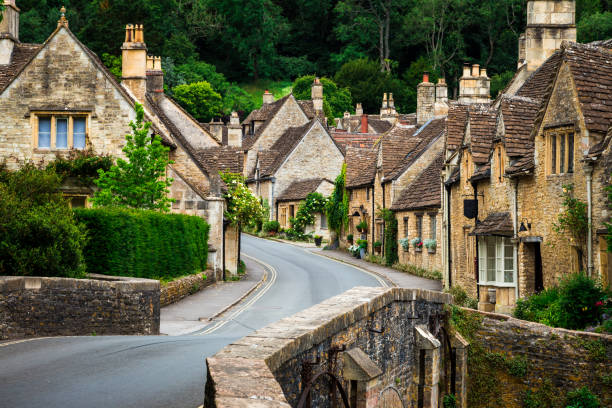
- Your group would rather see honey-stone villages and lanes than deepen the university story after lunch.
- You accept that one village done well is often better than three villages collected from a car window.
- You are not planning a tightly timed theatre night, tasting menu, or celebratory dinner back in London.
Save Oxford for another trip when:
- London itself still has unfinished work: Westminster Abbey, the Churchill War Rooms, the British Museum, the National Gallery, or the Tower of London.
- The family’s real interest is castles, crowns, and ceremony; Windsor will usually land better than Oxford in that case.
- You are already giving a full day to Bath, Stonehenge, Hampton Court, or a major museum day and only have four London nights.
- The Oxford brief is vague: “We should probably see it” is not enough reason to give away a full day.
The counterintuitive correction is that the Cotswolds add-on is not automatically the more premium version of Oxford. It is the more scenic version. A driver cannot make an overpacked Oxford-plus-Cotswolds day feel scholarly. Premium spend does not earn its cost when it is used to add a second village, a shopping stop, and a late dinner to an already full Oxford day; it earns its cost when it protects the right priority from being diluted.
Choose a standalone Oxford day when colleges are the point
A standalone Oxford day is the cleanest answer when you want the city to make sense as a living university rather than as a film set. The day should begin with the college question, not with a list of famous names: which college is realistic to enter, what story does it tell, and how does it connect to the Bodleian, Radcliffe Square, the High Street, and the city’s religious and political layers?
This is where Oxford differs from Windsor or Bath. Windsor gives you a royal center of gravity. Bath gives you a Georgian city and Roman inheritance. Oxford gives you a distributed institution, spread across colleges that are beautiful but not interchangeable. Without someone shaping the route, the visitor often remembers “a cloister, a lawn, a chapel, another quad” rather than why collegiate life mattered, how endowments shaped architecture, why town and gown friction mattered, or how theology, empire, science, literature, and politics all leave traces within a few streets.
The strongest standalone day usually gives the morning to the university core. Start early enough to be in Oxford before the day feels crowded, then anchor the first part around one college or college-adjacent sequence. From there, the Bodleian area gives the city its best compact lesson: the Sheldonian Theatre, the Divinity School when available, Radcliffe Square, the University Church, and the outside of the Radcliffe Camera are close together, but they are not self-explanatory. A guide can turn that tight cluster into an argument about patronage, learning, ceremony, and the power of architecture to make an institution feel permanent.
The practical reason to keep the day focused is that Oxford’s center is walkable but not frictionless. Broad Street feels generous, then the route compresses around Catte Street, Turl Street, and the lanes toward Merton Street. A family group may move slowly because of uneven surfaces, chapel thresholds, narrow pavements, and the constant temptation to pause for photographs. Older parents may not find the distances intimidating, but the stop-start rhythm can be tiring. Teenagers may respond well to Oxford if the story is sharpened around student life, rivalries, writers, science, or power; they may resist if the route becomes a procession of pretty buildings described in the same tone.
For discerning travelers, the best Oxford day is not necessarily the one with the most admissions. College access varies, ceremonies and university use can change what is possible, and some entrances matter less than the story they unlock. Before fixing a college-first route, it is sensible to check the University’s official college visitor guidance (https://www.ox.ac.uk/visitors/visiting-oxford/visiting-the-colleges) and then design the day around what will actually serve the group. One well-chosen college interior before lunch is better than a rushed sequence of gates, queues, and partial views.
The lunch decision matters because it sets the emotional register of the afternoon. A heavy, drawn-out lunch can make Oxford feel complete too early; a frantic grab-and-go lunch can make the day feel less cared for than it is. The best middle path is a pause that lets the group absorb the morning, then returns to one or two afternoon threads: literature, science, gardens, the Covered Market, or a quieter walk toward Magdalen Bridge or Christ Church Meadow. The goal is not to empty Oxford of content. The goal is to leave with a coherent memory.
Add the Cotswolds only when the day is allowed to become more scenic
Oxford plus the Cotswolds works when the countryside is a deliberate mood change, not when it is a rescue attempt for an overloaded cultural day. This version suits couples, families, and small groups who want an English arc: academic morning, village lunch or afternoon, rural lanes, then a return to London with the sense that they have left the city properly.
The important word is “selective.” The Cotswolds is not a single sight; it is a region of villages, roads, market towns, and soft hills. From Oxford, it is tempting to keep adding names: Burford, Bibury, Stow-on-the-Wold, Bourton-on-the-Water, Chipping Campden. That list may look satisfying in an itinerary document, but it often produces the weakest version of the day. You step out, take a photograph, re-enter the car, compare one village to the previous one, and gradually lose the thread that made Oxford worth leaving London for in the first place.
The better add-on is one countryside expression with enough time to feel the scale. A village street, a churchyard, a short walk, or a carefully chosen lunch can do more for the day than three famous stops. This is especially true for celebration travelers. A birthday or anniversary day should not feel like a transfer with scenery attached; it should have a graceful middle. If the group wants a slower rural day without the academic morning, then the dedicated Cotswolds private day may be the better fit than forcing Oxford into the same outing.
Oxford plus Cotswolds is also the version where a private driver changes comfort most clearly. The value is not that the car makes distance disappear. It does not. The value is that it removes platform decisions, luggage worries if you are between hotels, exposed waits, and the awkward last-mile problem between village stops. For a multigenerational group, that can be the difference between a day that stays sociable and a day that frays. For couples, it can keep the afternoon from turning into logistics. For a small group, it avoids the “who is navigating now?” energy that can flatten a trip.
Still, the driver is not a substitute for editorial discipline. If the morning in Oxford is meant to include deep college context, the afternoon should not pretend to cover the whole Cotswolds. If the countryside is the emotional point, then Oxford should become a concise morning rather than a full academic immersion. A private itinerary can flex between those two priorities, but it cannot make both of them the main event.
The strongest Oxford-and-Cotswolds day often begins with college context, leaves Oxford before the group is mentally saturated, and treats the countryside as a release of pace. The worst version leaves London late, tries to “do Oxford” from the outside, adds two villages because they are famous, and returns to London just in time for everyone to discover that dinner is now a clock-watching exercise. When travelers ask whether Oxford plus the Cotswolds is too much, the honest answer is: not if the day has one hierarchy, yes if every stop is treated as equal.
Save Oxford for later when London still has the stronger claim
Oxford should be saved for another trip when it would remove the one London day that gives the rest of the stay its meaning. This is the editorial no that many itineraries need. A famous university is not automatically a better use of time than a well-built day inside London.
For a first visit, Oxford should not displace the city’s core if those pieces are still unresolved. Westminster Abbey, Whitehall, the Churchill War Rooms, the Tower, St Paul’s, the British Museum, the National Gallery, and the South Bank are not interchangeable fillers; they are the framework that helps London make sense. If the traveler has never stood between Parliament Square and Whitehall, never crossed the Thames with the City in view, or never had a focused museum morning, Oxford may be premature. In that case, a curated London day will often produce more understanding than another transfer out of town. For travelers weighing the museum alternative, the curated London museum day is the more relevant comparison than another day-trip list.
Families should be especially honest about the reason for Oxford. Children and teenagers can love it when the story is tailored: student rituals, writers, libraries, inventions, film associations, rivalries, and the idea of a city built around learning. They are less likely to love it if adults are simply collecting prestigious names. If the family wants crowns, guards, castle rooms, and a cleaner story line, Windsor usually beats Oxford. If they want a city that feels different from London and has Roman, Georgian, and social-history layers, Bath may be the stronger day. If they want ancient landscape drama, Stonehenge has a different role altogether. The broader broader London day-trip comparison is useful only after this narrower Oxford question has been answered.
Food-and-wine travelers should also be cautious. A London stay built around serious lunches, reservations, wine pairings, or late dining can absorb a day trip, but only if the return is treated as part of the design. If your real priority is a Mayfair lunch, a Borough Market morning, a Shoreditch dinner, or a long tasting-menu evening, Oxford may be the wrong trade. The better plan may be to keep the city day in London, reduce transfers, and let the meal hold the day’s center. Oxford is satisfying when the mind has room for it; it is less satisfying when everyone is already thinking about whether they will be late for the next reservation.
Celebration travelers have another reason to be selective. A birthday, anniversary, or proposal trip often benefits from one memorable setting, not four competing ones. Oxford can be that setting if the person being celebrated loves literature, history, universities, architecture, or English institutional life. It should not be added merely because the itinerary looks more impressive with another name in it. The cut-first rule is clear: if the London stay is already full, cut Oxford before you cut the city day that the traveler came to London to experience.
How return timing affects dinner in London
Return timing is the detail that most often decides whether Oxford feels elegant or exhausting. A standalone Oxford day can usually be shaped to return with enough margin for a proper London evening; an Oxford-plus-Cotswolds day often asks dinner to absorb the cost of distance.
The difference begins before you leave. If dinner is casual and close to the hotel, the day can run later without much emotional penalty. If dinner is a serious reservation across town, the return should be treated as a fixed design constraint. A Mayfair hotel with a Mayfair dinner is forgiving. A return into Paddington followed by dinner in Shoreditch, London Bridge, or the far side of the West End is a different matter. The last taxi of the day may feel longer than the train ride because everyone is tired, traffic is less charming when you are hungry, and the group has already spent the day processing architecture, history, and transfers.
For a standalone Oxford day, the ideal evening usually comes from leaving Oxford before the city has been wrung dry. You do not need to be the last visitors in a quad to have had the best day. Returning in the late afternoon lets travelers shower, change, and make dinner without the faint sense of having arrived from a school trip. This matters for couples and celebration travelers. It also matters for families: children can enjoy an Oxford morning and still have enough energy for a relaxed London meal if the day does not insist on one final stop.
For Oxford plus Cotswolds, dinner should be simpler, closer, or later. The countryside add-on stretches the day because rural roads and village stops do not compress neatly. Even with a careful route, the return can be vulnerable to traffic approaching London and the final hotel drop-off. That does not make the plan wrong. It means the evening should not be built as if you had spent the afternoon in Kensington. A nearby restaurant, private hotel dining, or a flexible neighborhood meal can make the day feel complete rather than overextended.
The city does something to the body by the end of this day. Oxford adds uneven paving, stone thresholds, narrow college passages, and repeated standing while a guide explains why a chapel, library, or quad matters. The Cotswolds adds getting in and out of the car, short walks on village streets, and more time seated than the body expects after a walking morning. London then adds one last urban negotiation: station concourses, taxi ranks, hotel lifts, or a Tube transfer if someone tries to be efficient at the wrong moment. None of these pieces is dramatic alone. Together, they decide how the evening feels.
The mood consequence is just as real. A well-timed return makes Oxford feel like the day’s rich middle chapter; a late, hungry return can make the same day feel longer than it was. If the group has theatre tickets, a tasting menu, or a dinner that matters emotionally, the Oxford day should end with margin. If dinner is the centerpiece, verify the meal before confirming the route. Official pages such as See the current three‑course lunch menu (https://www.theritzlondon.com/restaurant-three-course-lunch-menu) and Ikoyi menu & reservations (https://www.ikoyilondon.com/) are useful reminders that meal format, timing, and reservation reality should guide the touring day, not trail behind it. For a wider view of London dining choices, the London fine-dining guide belongs in the planning conversation before you commit to a late countryside return.
Train, driver, or guided door-to-door?
The best transport choice depends on whether the day is Oxford-only, Oxford-plus-countryside, or part of a larger hotel-transfer plan. Rail can be efficient for a focused Oxford day; a driver becomes more persuasive when you add the Cotswolds, mobility needs, luggage, or a tightly managed evening.
For Oxford alone, train can work well when the hotel is convenient to the right London station and the group is comfortable with platforms, tickets, and a short transfer on arrival. Paddington is often the mental default for central Oxford rail access, while Marylebone can enter the conversation depending on routing and hotel position. But the true comparison is door-to-door, not station-to-station. A traveler in Mayfair, Marylebone, South Kensington, Covent Garden, or the City does not start from a railway timetable; they start from a hotel lobby, with coats, bags, children, older parents, or dinner clothes in the background.
A driver is more valuable when the group dislikes transfer decisions or when the return must be clean. The comfort is not only the seat. It is the absence of small negotiations: which entrance, where to meet, what happens if someone wants to leave a jacket in the car, where the older parent can sit while the guide handles the next move, and whether the family can adjust the day without consulting a departure board. For travelers who prize privacy, the car also gives the day a quieter emotional envelope between London and Oxford.
For Oxford plus Cotswolds, a driver is close to essential if the aim is a polished day. Villages are not organized around the needs of a London visitor trying to combine scholarship, lunch, scenery, and a return dinner. A private vehicle lets the route choose the village rather than letting public transport dictate the story. It also means the group can stop the day from expanding when the afternoon has already done enough.
Yet there is one upgrade that is often overvalued: paying for transport while underinvesting in interpretation. Oxford is unusually vulnerable to shallow touring because so much of its beauty is institutional. A chauffeur can deliver you to the right streets, but a guide gives those streets hierarchy. Without that hierarchy, the day can become Radcliffe Camera photographs, a famous college name, a quick market wander, and a vague sense that Oxford is old. That is pleasant, but it is not the best use of a London day for travelers who asked for depth.
This is also where private guiding changes group dynamics. Couples can follow a more literary or political line. Families can turn the university into a story about ambition, rituals, rules, and student life. Older parents can keep the route shorter without feeling that the day has been reduced. Small groups can avoid the slow drift that happens when half the party wants coffee, one person wants a shop, and another is trying to understand what they are looking at. The route remains personal without becoming shapeless.
The first thing to cut is the second countryside village
When the Oxford day starts to sprawl, cut the second countryside village first. Then cut the shopping pause. Do not cut the college context that makes Oxford worth doing.
This rule sounds severe until you test the alternatives. If you cut the college visit, Oxford becomes a beautiful exterior walk with an academic label. If you cut the Bodleian-area context, the city loses its institutional center. If you cut lunch too aggressively, the afternoon becomes brittle. If you cut the second village, most travelers lose very little. They still get the Oxford story and one countryside contrast, which is what they wanted before the itinerary began collecting place names.
The same principle applies to a standalone Oxford day. Cut the extra interior before you cut the explanation. Two college interiors without enough context can blur together. One college, well chosen and well interpreted, can carry the day. Cut the distant detour before you cut the university core. Cut the long retail wander before you cut the quieter lane that shows how the city changes away from Broad Street. Cut the late departure from Oxford before you cut the margin that makes dinner in London feel like part of the trip rather than a deadline.
This is where the article’s verdict becomes practical. Oxford is a best-base day trip from London when the base still feels like London at night. You leave the city, enter another intellectual world, and return with enough time to rejoin your own stay. If the day returns you too late, too tired, and too full of partial stops, then the base has stopped working. At that point, either simplify Oxford or save it for a later itinerary with more room.
The hardest travelers to advise are often the ones with the highest standards, because they are used to making ambitious days work. They can book the car, secure the guide, choose the restaurant, and still create a plan that asks too much of attention. Oxford rewards attention. The Cotswolds rewards looseness. London dining rewards punctuality. A strong day can honor two of those at a time; it rarely honors all three at full strength.
When a private guide earns the Oxford day
A private guide earns the Oxford day when the traveler wants the university to become intelligible, not just attractive. This is the natural conversion point for Orange Donut Tours: the guide is not there to recite every date; the guide is there to decide what belongs, what to leave out, and how the city’s colleges, libraries, chapels, markets, and lanes should be sequenced for this particular group.
In Oxford, context prevents disappointment because many of the most photographed places are exteriors or partial views. Radcliffe Square is stirring, but it needs explanation. The Bridge of Sighs is recognizable, but a photograph is not a tour. A college quad can be moving, but only if the visitor understands what a college is, why it is separate from the university, and how the architecture serves rituals of learning, dining, worship, hierarchy, and belonging. Without that, Oxford becomes a set of lovely surfaces.
The private value is also in saying no gracefully. A good guide can shorten the route when older parents are tiring, shift the emphasis for teenagers, slow down the college visit for a traveler with a scholarly interest, or keep the day lighter for a couple who mainly wants atmosphere before the Cotswolds. A good planner can also say that Oxford is not the right day this time. That honesty matters. Orange Donut Tours does not need Oxford to win every London itinerary; it needs Oxford to be placed where it will actually improve the stay.
For travelers comparing several escapes, private day trips from London can frame the larger field, but the Oxford decision should remain narrow: college day, Cotswolds add-on, or save it for later. If you already know Oxford belongs and want the day built around your pace, interests, dinner plans, and tolerance for countryside mileage, Inquire now.
FAQ
Is Oxford worth a day trip from London?
Yes, Oxford is worth a day trip from London when you want college history, architecture, literature, politics, science, or a city built around learning. It is less worthwhile when your London stay still lacks the Tower, Westminster, a major museum, or the royal thread that Windsor would serve better.
Should I visit Oxford alone or combine Oxford with the Cotswolds?
Visit Oxford alone if the university is the point of the day. Combine Oxford with the Cotswolds if you are happy with a lighter academic visit and want one countryside contrast. Do not combine them if you expect deep college touring, multiple villages, shopping, and a serious London dinner to all fit comfortably.
When should Oxford be saved for a later London trip?
Save Oxford for later when you have only a short first stay, when London’s core sights are still unfinished, when Windsor or Bath better fits the group’s interests, or when dinner and theatre plans would make the return feel rushed.
Is Oxford better than Windsor for a private day trip?
Oxford is better for travelers interested in universities, literature, ideas, architecture, and institutional history. Windsor is better for a clearer royal story, castle interiors, ceremony, and families who want a more immediately legible day.
Does a private driver make Oxford plus the Cotswolds easy?
A private driver makes the day more comfortable and makes the Cotswolds more realistic, but it does not remove the need to choose. The day still needs one hierarchy: Oxford depth with a countryside glimpse, or a lighter Oxford morning followed by a scenic afternoon.
What should I do first in Oxford on a London day trip?
Start with the college question. A well-chosen college or college-adjacent stop before lunch gives the city meaning, then the Bodleian, Radcliffe Square, Broad Street, and nearby lanes can build from that foundation.
Can I return from Oxford in time for dinner in London?
Yes, especially on a focused Oxford-only day with a disciplined afternoon. Oxford plus the Cotswolds needs a simpler dinner plan, a later reservation, or a restaurant close to the hotel because the countryside stretch and the final London transfer add fatigue and timing risk.
Is Oxford a good day trip for families with teenagers?
Oxford can be excellent for teenagers when the guide connects the city to student life, writers, rivalries, science, politics, or film associations. It is a weaker choice if the plan relies only on prestigious names and repeated architectural description.
If you’re interested in any private tours of London, please reach out to us.



















 So if you are looking for the absolute best in London & surroundings with authentic local fully-licensed native guides whose English you can actually understand and with an exclusive and amazingly fun itinerary













