Lisbon When Alfama Is Only Half the Day: Castle Descent, Baixa Timing and a Belém Escape

Updated
The strongest Lisbon plan here is not a full-day Alfama crawl. Make Alfama the morning, start high at São Jorge Castle, descend deliberately through the old streets, then choose Baixa if you need a neat central finish or Belém if the afternoon needs river air and a calmer tone. This works in real Lisbon because the São Jorge Castle descent into Alfama uses gravity instead of fighting it, and because the lower city and the Tagus riverfront give the day a second texture before cobbles and stairs turn charm into tax. The clearest exception is a traveler whose main interest is fado, Jewish Lisbon, or tile detail inside the eastern old town; that traveler should stay deeper in Alfama rather than treating Belém as an automatic add-on.
Lisbon rewards a day that changes altitude, surface, and mood before fatigue makes decisions for you. The article-specific rule is simple: let the castle and Alfama carry the cultural density, then let Baixa or Belém decide how much body you have left for the evening. A private guide can make the descent through Alfama feel like a story instead of a stair exercise, especially when the morning starts around the castle gate and uses Largo do Chão do Loureiro, Portas do Sol, and the slope toward the Sé as route hinges rather than postcard stops. That is why a focused São Jorge Castle & Alfama Private Tour can sit naturally at the front of a longer tailor-made day without forcing Alfama to carry the whole schedule.
The verdict: Alfama is the morning, not the whole day
Alfama is best treated as the textured first half of the day, not as an endurance test that keeps expanding until dinner. The district has enough lanes, viewpoints, church fronts, tile fragments, stairways, and lived-in corners to fill many hours, but that is not the same as saying a premium first Lisbon day should spend all its best energy there. The old-town experience is strongest when it has an upper beginning, a controlled descent, and a clear exit. Without that exit, the last hour often becomes a search for a taxi, a crowded tram, or a flat street that never quite arrives.
The most common mistake is to build the day around the famous tram rather than around the hill. Tram 28 can be charming as a Lisbon image, but it is an unreliable spine for a carefully paced private day because it does not remove the real work: you still have to decide where the walking begins, where the descent happens, and where the group exits when the narrow lanes become repetitive. The counterintuitive correction is that Baixa should replace another hilltop view when the morning already included São Jorge Castle, Portas do Sol, or Santa Luzia and you still want a good dinner, a fado evening, or an unhurried hotel return.
That correction matters because Alfama’s pleasures are physical. The neighborhood is not difficult in the abstract; it becomes difficult when travelers ask it to do too many jobs. They want a castle, a viewpoint, a tram ride, a fado prelude, a tile walk, a cathedral stop, lunch, and a second hill, all before the late afternoon. Each individual piece sounds reasonable. Together, they create a day in which the knees know the answer before the itinerary does. A better plan accepts that Alfama is the dense chapter, not the entire book.
The official São Jorge Castle planning page (https://castelodesaojorge.pt/en/plan-your-visit/choose-your-ticket/) is useful for confirming current visit details before you go, but the planning decision is less about tickets than sequence. If the castle is your high start, the route should then descend through Alfama and into the lower city or onward to the river. If the castle is not the point, you can still begin high near Portas do Sol or Santa Luzia and save the formal castle visit for travelers who value fortifications, archaeology, or the wide city view enough to spend the time.
Where to start high for the São Jorge Castle descent into Alfama
Start high at São Jorge Castle when the morning needs a clean beginning, a strong view, and a route that naturally loses altitude. The entrance area, the castle walls, and the slope around Castelo make the first decision clear: you are already above the maze, so the rest of the morning can be read as a descent rather than a climb. This is the difference between Alfama feeling intimate and Alfama feeling punishing. The same streets that are delightful downhill can become a negotiation uphill, especially for older parents, children, travelers in dress shoes, or anyone trying to preserve energy for a serious dinner.
The descent should not rush straight to the river. It should use the small high points as punctuation. From the castle area, Largo do Chão do Loureiro is the practical hinge many visitors miss: it gives you a high-city pause and a route choice before the narrowest lanes absorb the group. From there, Portas do Sol and Miradouro de Santa Luzia can frame Alfama from above without making every viewpoint compete for attention. Then the day can narrow into the lanes around Largo de São Miguel or the slope toward the Sé, depending on mobility, interests, and how much old-town density the group still wants.
This is where guidance changes the quality of the morning. Without context, the descent can feel like a photogenic tangle: a tile here, a church front there, a view, a steep turn, another stair, and then another. With a guide, the route can connect Moorish-era urban logic, earthquake survival, maritime Lisbon, fado atmosphere, and everyday neighborhood life without requiring a museum-style lecture at every corner. That is also why this article is different from a simple “start high in Alfama” guide. The hill strategy is only half the decision; the more important question is where the day goes after the old town has done its work. Travelers who want an even deeper castle-and-view framework can compare this piece with Start High in Alfama.
The route should also be honest about surfaces. Calçada Portuguesa is beautiful but not soft. Sloped cobbles, broken rhythm underfoot, and little stair sequences make the body work harder than a map suggests. Lisbon does not simply add distance; it adds micro-effort. A day that looks short because the neighborhoods are adjacent can feel long because every descent asks for balance, every climb takes breath, and every transfer into a narrow lane slows the group. That is why the best Alfama morning is not the one with the most pins. It is the one that keeps the group oriented, descending, and able to enjoy the second half of the day.
The ranked ladder for the second half
The best second half depends on what the Alfama morning has done to your energy, not on which district has the grandest name. After São Jorge Castle and Alfama, there are three realistic choices: Belém, Baixa, or another hill. For a premium private day, the ranking is not based on importance alone. It is based on how well the choice changes the trip’s physical load, protects the late afternoon, and keeps the evening from becoming a forced march.
Rank 1: Belém when the afternoon needs river air
Belém is the best rescue plan when the morning has been dense, steep, warm, or emotionally full. It changes the day immediately: wider streets, monumental spacing, river light, longer sightlines, and fewer tight-lane decisions. The move from Alfama to Belém also creates a useful psychological reset. You leave the hill city and arrive in a flatter imperial riverfront zone where Jerónimos, Praça do Império, the Belém waterfront, and the tower area can be edited to match the group’s remaining energy.
Rank 2: Baixa when timing is tight or dinner matters
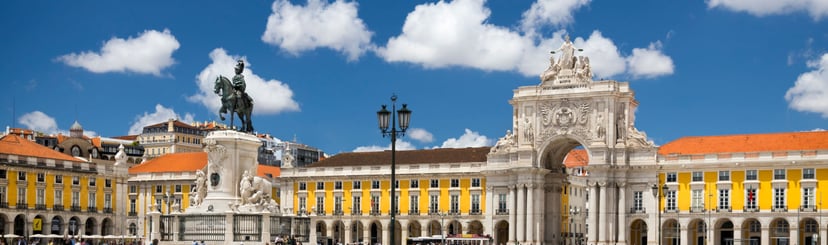
Baixa is enough when you need the afternoon to become simpler, not bigger. It gives you a low-city landing through the Sé edge, Rua Augusta, Praça do Comércio, and the river-facing grid without requiring another major transfer. It is especially useful when you have an early dinner, fado, a cruise movement, children who have done enough stairs, or older parents who will enjoy a dignified finish more than another monument. Baixa is not the lesser choice in those cases; it is the choice that keeps the day coherent.
Rank 3: another hill only when views are the point
Another hill belongs last because Lisbon’s views can start competing with one another. After the castle, Portas do Sol, or Santa Luzia, a second hilltop can become a diminishing-return choice unless the traveler has a specific reason: photography, a Graça focus, Bairro Alto history, or a sunset plan that truly depends on altitude. For a first Lisbon day, adding another climb often steals more from the evening than it gives to the afternoon.
This ladder is deliberately opinionated. Belém wins when the day needs a change of air. Baixa wins when the calendar or the body says the city should stay close. Another hill wins only when a second elevated view is the actual priority, not when the itinerary is trying to prove it has seen more Lisbon. The mistake to avoid is treating all three as equally easy. They are not. They ask different things of the traveler.
Should you pair Alfama with Baixa or Belém?
Pair Alfama with Belém when the second half should feel wider, cooler in tone, and more ceremonial; pair Alfama with Baixa when you need a shorter, lower, more central finish. The decision is less about which district is “better” and more about what the morning has already cost. Alfama uses concentration. Belém gives space back. Baixa gives control back. Another hill asks for more.
- Choose Belém if the group has enjoyed Alfama but is ready to stop negotiating stairs, lane width, and crowded viewpoints. Belém works especially well for couples, families, celebration travelers, and food-and-wine travelers who want the afternoon to feel like a new chapter rather than the fourth act of the same old-town walk.
- Choose Baixa if you have dinner geography to respect, a hotel in Chiado or Avenida da Liberdade, a fado evening in Alfama or Mouraria, a cruise movement, or a traveler who will resent one more transfer after lunch.
- Choose another hill only when the trip’s purpose is viewpoints, photography, or deeper eastern-Lisbon context. Do not add it just because a map suggests Graça or Bairro Alto is near enough.
Baixa is often underrated because it looks straightforward. That is exactly its value after Alfama. The Pombaline grid gives the day a visual exhale: Rua Augusta is easy to understand, Praça do Comércio opens toward the river, and the lower streets let the group walk without guessing whether the next turn hides another climb. For travelers who have already had castle height and Alfama texture, Baixa can be the elegant full stop. It is not trying to out-character Alfama; it is restoring legibility.
Belém is often chosen for its monuments, but its bigger value after Alfama is mood. The district lets the day spread out. The Tagus appears not as a glimpse between roofs but as an organizing force. The spaces around Jerónimos and Praça do Império change the group’s breathing. Even if you keep the interior program light, the transfer west can save the afternoon from becoming a blur of old stones, steep lanes, and repeated viewpoints. Travelers interested in making the riverfront a larger structuring device can also read Lisbon by River Before the Hills.
Why Belém can rescue the afternoon mood after Alfama
Belém can rescue the afternoon because it is flatter, broader, and less visually compressed than Alfama. That does not make it “easier” in a lazy sense; it makes it a better second act when the morning has already delivered density. Alfama asks travelers to look closely. Belém lets them look across. The shift from tile-lined lanes to the monumental riverfront can make the same day feel shorter, calmer, and more considered.
The best Belém version after Alfama is edited. Do not try to turn the afternoon into a complete Belém monuments day unless the group has deliberately saved energy for it. A strong plan might include Jerónimos as the cultural anchor, a riverfront walk for air, and a pastry or coffee pause if the timing supports it. A lighter plan might keep Jerónimos exterior context, Praça do Império, and the riverfront without asking everyone to absorb another major interior. A more architecture-focused plan can add the Belém Tower area or the Discoveries Monument zone as a spatial contrast, not as a checklist race.
Use the official Jerónimos Monastery page (https://www.museusemonumentos.pt/en/museus-e-monumentos/mosteiro-dos-jeronimos-e-capela-de-sao-jeronimo) to confirm current visitor details, then let the day’s rhythm decide how much of the site belongs after Alfama. Jerónimos is powerful, but it is not weightless. It deserves attention; it should not be treated as a decorative stop thrown in because Belém is famous. When the group is fresh, a guided Jerónimos visit can be the intellectual counterweight to the castle descent. When the group is tired, an exterior reading and riverfront pause may do more for the day than another interior queue or slow museum-style hour.
This is where a tailor-made private route earns its place. A guide can make the São Jorge Castle descent meaningful in the morning, hand the day to a calmer riverfront route in the afternoon, and know when Belém should be reduced rather than inflated. For a deeper west-side focus, Belém and Jerónimos Monastery Private Tour makes sense as the anchor; for this article’s day, Belém is the escape valve, not an obligation to see everything west of the center.
The mood consequence is real. A day that stays inside hill streets too long can become inward and slightly tense: everyone watches their footing, the group stretches out on stairs, and conversation breaks because the lane is too narrow for people to walk side by side. Belém changes the social shape of the afternoon. People can walk abreast again. Children can see the river. Older parents can pause without blocking a lane. Couples can shift from “where are we going next?” to “this feels like a different Lisbon.” That change is why Belém often preserves the evening better than one more old-town layer.
When Baixa is enough, and the stops to keep short
Baixa is enough after Alfama when your day needs control more than expansion. This is the right choice when the group is staying central, when dinner is important, when the weather is warm, when a fado plan brings you back toward Alfama later, or when the travelers have already had the essential hill experience and would rather finish with a clean city arc than a transfer west. Baixa does not need to be dramatic to be valuable. Its job is to make Lisbon easier to read at the moment the old town begins to tire the body.
The best Baixa finish descends from the Sé edge toward the Pombaline grid, then uses Rua Augusta and Praça do Comércio as the low-city conclusion. You can add the river edge if the group wants air, or angle toward Chiado if the hotel or dinner sits uphill but not too far. What you should keep short is the temptation to turn Baixa into another viewpoint chase. After São Jorge Castle, the Elevador de Santa Justa is usually overvalued as a planning priority; it can be admired from below or contextualized quickly, but building the afternoon around a second line for a second view often spends energy in the wrong currency.
Baixa should also replace another hilltop view when the route has already delivered altitude. This is not a compromise; it is an editorial cut. The castle has given the city’s roofline. Alfama has given the descent. Baixa gives scale, reconstruction logic, river orientation, and a flat finish. For discerning travelers, that sequence is stronger than a day that keeps chasing views until all the viewpoints blur together.
There is one situation where Baixa can feel too thin: when travelers expected the afternoon to have a ceremonial destination. In that case, Belém is usually better. Baixa is not the answer for someone who wants a strong monument after lunch, a riverfront photo setting with space, or a west-side pastry-and-architecture arc. It is the answer for travelers who want the city to loosen without leaving the center. That is a narrower job, and Baixa does it well.
The hill, the car, and the private-guide judgment
A chauffeur helps Lisbon when the transfer is the problem; it does not fix a badly ordered Alfama walk. A chauffeur does not make narrow Alfama lanes less tiring if the walking order is wrong. This is the premium-spend judgment that matters most for the title of this guide. Paying more can change comfort, privacy, timing, luggage handling, and the ease of moving from central Lisbon to Belém. It cannot make a steep cobbled descent feel elegant if the route starts too low, climbs at the wrong moment, or asks the group to double back through lanes that only work in one direction.
Extra spend earns its cost when it removes dead time between incompatible zones. A private vehicle can be valuable after the Alfama descent if the plan turns west to Belém, especially for families, older travelers, celebration groups, or guests dressed for a polished lunch or dinner. It can also help if the day includes a hotel pickup, a lunch handoff, or a return from the riverfront when the group has had enough walking. In that scenario, the vehicle is not a luxury prop; it is the bridge that lets the day change from hill-city density to riverfront calm without asking everyone to solve transport at the tired point.
Where it does not earn its cost is inside Alfama itself. Narrow streets, pedestrianized stretches, awkward drop-off realities, and the basic shape of the hill mean the core experience is still walked. The better investment is not simply “more car.” It is better choreography: start high, keep the descent meaningful, avoid unnecessary upward loops, and decide in advance whether the exit is Baixa, Cais do Sodré, or a westbound Belém transfer. Travelers comparing transport-heavy days can review Luxury Chauffeured Lisbon Private Tour, but the key lesson remains route order first, vehicle second.
A private guide changes the morning in a different way. The guide can slow the group where the story is strong, move briskly where the lane is pretty but repetitive, and avoid the false promise that every miradouro must be visited. This matters for couples who want conversation, families who need momentum, and cultural travelers who want context without becoming pinned to every façade. It also matters for the evening. A day that uses a guide well in Alfama and a vehicle well for the Belém handoff feels considered rather than cushioned. That is the standard to aim for.
When the day has already solved the hill and the second act, customization becomes practical rather than decorative: castle context, Alfama descent, Baixa finish, Belém transfer, lunch placement, and return comfort can be tuned around the actual travelers. Inquire now if you want Orange Donut Tours to shape the castle descent and the riverfront handoff around your pace, mobility, dinner plans, and preferred level of cultural depth.
A half-day Alfama blueprint that still leaves room for Baixa or Belém
A half-day Alfama plan works when it has a beginning, middle, and exit before lunch starts drifting. The point is not to see less; it is to stop before the old town becomes visually and physically repetitive. A strong morning usually has four beats: a high start, one or two viewpoint pauses, a meaningful descent through the lanes, and a lower-city or transfer-ready exit. The castle may be the formal start, or the route may begin nearby if the group does not need the full castle visit. What should not happen is a low start in Baixa followed by an uphill push into Alfama and then a second descent because the itinerary wanted to include the castle later.
- High start: São Jorge Castle for travelers who want the view and fortress context, or the Portas do Sol and Santa Luzia area for travelers who want a lighter high beginning without spending the first part of the day inside the castle.
- Descent core: Use the slope through Alfama for context and atmosphere, with the guide selecting lanes that match mobility and interest rather than turning every narrow street into a required detour.
- Lower hinge: Exit toward the Sé and Baixa when the day should stay central, or toward a pickup point that makes the Belém transfer simple instead of improvising transport after fatigue has arrived.
- Second act: Choose Baixa for control, Belém for air, and another hill only when the additional elevation is genuinely the point.
The timing should be generous enough to absorb pauses but disciplined enough to prevent drift. If the castle is included, the morning can expand quickly, so the guide should decide what to compress later. If the castle is not included, the route can put more attention into Alfama’s lived streets and the descent toward the cathedral. The worst version is the one that includes the castle, every viewpoint, a tram ambition, and a deep Alfama wander, then pretends Belém will still feel light. It will not.
The “half-day” idea also helps food-and-wine travelers. Lisbon meals often shape the emotional success of the day more than travelers expect. A rushed lunch after too much climbing can flatten the afternoon before Belém or Baixa even begins. A better route decides whether lunch belongs near the lower city, around Chiado, near Cais do Sodré, or after the westward transfer. The answer depends on appetite, dinner ambition, and whether the afternoon needs a monument or a river walk. This is not restaurant-list planning; it is energy planning.
The cut-first rule: stop forcing distant monuments after Alfama
The first thing to cut after an Alfama morning is not Baixa and not Belém; it is the distant add-on that belongs to another day. Sintra, Cascais, Évora, and the wine country can all be excellent in the right structure, but they should not be used to “improve” an already full castle-and-Alfama morning. The day in this article is about a Lisbon hill descent and a lower-city or riverfront second act. Once that is clear, the unnecessary pieces become easier to remove.
Évora is the best example of why the cut matters. It is not a casual afterthought to tack onto a Lisbon morning just because a private vehicle exists. The UNESCO Historic Centre of Évora listing and the official Évora Megalítica PDF (https://www.cm-evora.pt/wp-content/uploads/2020/06/EVORAMEGALITICA.pdf) point to a destination with its own historical and landscape weight. If Évora is important, give it a dedicated day and compare the fit through Évora from Lisbon. Do not let it steal the afternoon from a Lisbon plan that is supposed to recover through Baixa or Belém.
The same principle applies within the city. If the day begins at São Jorge Castle, descends through Alfama, and then goes to Belém, do not add Ajuda uphill unless there is a very specific reason and the group has the appetite for another climb or interior. If the day finishes in Baixa, do not force Graça because the map makes it look near. If the evening includes fado, do not use the late afternoon to exhaust the same travelers who need to sit, listen, and enjoy the night. The cut-first rule is not anti-ambition. It is how the best Lisbon days stay sharp.
How the city changes the body and the mood
Lisbon changes the body by adding effort where maps show proximity. Alfama to Baixa is close, but the descent asks for balance. The castle to the river is not far, but the cobbles, steps, bright stone, and small pauses make the legs work. A westward move to Belém is not hard in itself, but it is a transfer at the moment when many groups are deciding whether the day still feels elegant. Heat, glare, and late-day uphill returns can turn a beautiful plan into a negotiation if the morning used too much energy without a clear exit.
Lisbon changes the mood just as strongly. A morning in Alfama can feel intimate, historic, and almost cinematic when it is paced well. The same morning can feel cramped if it is overpacked. Baixa calms the mood by making the city legible again; the grid, Praça do Comércio, and the river edge reduce decision fatigue. Belém calms it differently, by widening the horizon and giving the day a ceremonial westward release. The best choice is the one that lets travelers arrive at dinner with a sense of completion, not the faint irritation of having been routed through one charming lane too many.
This is why the article’s firm recommendation is not “always go to Belém” or “always stay central.” The recommendation is to make Alfama a focused half-day and refuse to let it sprawl. Belém is the strongest second act when the afternoon needs air and occasion. Baixa is the strongest second act when the day needs control and a central landing. A second hill is the choice to treat with suspicion unless views are the stated purpose. That ranking gives travelers a way to cut, not just add.
FAQ
Is Alfama enough for half a day in Lisbon?
Yes. Alfama is strong as a focused half-day when you start high near São Jorge Castle, descend through selected lanes and viewpoints, and exit before the streets become repetitive. The half-day version is often better than an overextended Alfama plan because it leaves energy for Baixa, Belém, dinner, or fado.
Should I start at São Jorge Castle or in Baixa?
Start at São Jorge Castle if you want the most comfortable walking logic, because the route can descend into Alfama instead of climbing into it. Start in Baixa only if the castle is not part of the plan or if mobility, hotel geography, or timing makes a lower-city beginning more sensible.
Should I add Belém after Alfama?
Add Belém after Alfama when the afternoon needs a flatter, wider, riverfront shift. Belém is especially useful after a dense hill morning because it changes the mood, gives the group more space, and can be edited around Jerónimos, the waterfront, and a lighter monument sequence.
When is Baixa better than Belém after Alfama?
Baixa is better when timing is tight, dinner matters, your hotel is central, or the group has had enough transfers. It gives a lower-city finish through the Pombaline grid, Rua Augusta, Praça do Comércio, and the river edge without asking the day to expand west.
Is Tram 28 a good way to plan an Alfama day?
No. Tram 28 can add atmosphere, but it should not be the planning spine for a private Alfama day. The real decision is walking order: where you start high, how you descend, and where you exit before the hill streets use too much energy.
Does a chauffeur make Alfama easier?
A chauffeur can make transfers to and from Alfama easier, especially for hotel pickup or a Belém handoff, but it does not remove the core walking inside narrow Alfama lanes. Route order and guide judgment matter more than the vehicle inside the old town.
What should I skip if the day is getting too full?
Skip the second hilltop view first, then any distant add-on that belongs to another day. If the morning already includes São Jorge Castle and the Alfama descent, protect either a Baixa finish or a Belém escape rather than forcing Sintra, Évora, Graça, or another major interior into the same day.
If you’re interested in any private tours of Lisbon, please reach out to us.


 So if you are looking for the absolute best in Lisbon & surroundings with authentic local fully-licensed native guides whose English you can actually understand and with an exclusive and amazingly fun itinerary













