Lisbon on a Rain-Sensitive Day: Tile Museums, Covered Stops and a Shorter Alfama Route

Updated
Verdict: on a rain-sensitive Lisbon day, anchor the morning around the National Tile Museum if it is open on your date, use the Madre de Deus to Alfama handoff by car rather than forcing a long climb, and shorten Alfama to its lower, music-linked lanes before finishing in covered Baixa. This works because Lisbon rain is not just wet; it turns steep calçada, wet Alfama cobbles and exposed viewpoints into a pacing problem. The clearest exception is a barely damp day with sure-footed travelers who still want the castle descent; in that case, start high and come down, but do not climb up into Alfama once the stones are slick.
The thesis is simple: a good Lisbon rain day is won at the route hinges, not by collecting indoor attractions. The non-obvious hinge is east of the usual first-timer circuit, around Rua da Madre de Deus and Santa Apolónia, where a covered culture stop can hand off to a controlled lower-Alfama walk without asking your group to fight the hill from Baixa. That is why this plan sits beside, rather than replaces, a dedicated Lisbon Tile Museum morning: the rain version keeps the cultural spine but cuts the slippery ornamental detours.
Before building the day, check the official page for the National Tile Museum (https://www.museusemonumentos.pt/en/museus-e-monumentos/national-tile-museum). Museum access, renovation works and closures can change, and this is the one fact in the plan that should not be guessed from an old blog post. If the museum is not available on your travel date, the route still works as a rain strategy, but the first indoor anchor changes: choose a Baixa history stop, the Fado Museum, a church interior, or a curated design pause rather than turning the day into shopping-mall filler.
A rain-sensitive Lisbon day is a route design problem, not an indoor list
A rain-sensitive Lisbon day should keep the day short in the hills, deep in context, and easy to re-sequence. The mistake is to ask, “What is indoors in Lisbon?” and then stitch together a museum list from Belém, Alcântara, Baixa and Alfama. That looks safe on a map, but it creates transfer churn: jackets on, umbrellas folded, car doors opened, wet shoes on polished floors, and a group that never quite settles. The better question is, “Which indoor anchor lets us reduce exposed climbs without flattening the sense of Lisbon?”
Lisbon does something specific to the body in rain. A normal climb becomes a calf-and-knee calculation; a scenic stair becomes a handrail search; a charming shortcut becomes a single-file negotiation around shiny stones, delivery scooters and umbrellas. Baixa is comparatively forgiving because its Pombaline grid is flatter and easier to read. Alfama is not: its lanes were not designed for comfort-first sightseeing in wet weather. A route that feels romantic in dry light can become fragmented when one guest is watching every footstep and another is trying not to lose the guide under umbrellas.
Lisbon also does something specific to the mood. A wet day can still feel intimate and cultural if the group is dry at the right moments, understands why the route is changing, and gets one memorable neighborhood thread rather than five damp fragments. It feels shorter and calmer when the guide names the cuts early: no forced castle climb, no performative tram queue, no second viewpoint just because it was in the original plan. Rain does not have to shrink the day into disappointment; it should make the editing more honest.
Tile-first culture cluster: best for travelers who came for azulejos, design history and a quieter start. It works when the National Tile Museum is open, the group is happy to begin east of the historic core, and the day can then move toward Alfama without backtracking.
Baixa covered-history cluster: best when the tile anchor is closed, the rain is steady, or the group needs flatter ground. Use Terreiro do Paço, covered arcades and a timed indoor stop to keep the day legible without overloading it.
Low-Alfama music-and-lanes cluster: best when travelers still want Alfama but should not climb. Keep the route around Largo do Chafariz de Dentro, the Fado Museum edge and a short section of lanes before exiting cleanly.
Belém monument backup cluster: best only when the rain is intermittent and the group already has Belém high on the list. It is not the default rain rescue because the exposed riverfront and monument spacing can make the day feel more interrupted than sheltered.
The day flow that usually works: Madre de Deus, controlled Alfama, covered Baixa
The most reliable rainy-day sequence is east-to-center: start at Madre de Deus, use a covered transfer into lower Alfama, then finish on flatter Baixa ground. This order matters because it avoids the common first-timer error of beginning in Baixa, climbing toward the Sé and castle, getting wet halfway up, then trying to rescue the day with a museum afterward. By then the group has already spent its energy on the least rain-friendly part of the plan.
Start with the National Tile Museum when it is open
The National Tile Museum is the strongest indoor anchor for this particular day because it turns rain into cultural focus rather than delay. Its setting in the former Madre de Deus convent also gives the morning architectural weight: you are not merely escaping weather, you are using one of Lisbon’s most city-specific art forms to read the city differently. Azulejos are not a decorative side note here; they explain facades, devotional interiors, trade, taste and the way Lisbon’s surfaces carry memory.
The traveler consequence is that the day begins seated, sheltered and coherent. Couples get a slower start without losing substance. Families get color and pattern before the hill work begins. First-time visitors understand why tiles keep appearing on walls, churches, stairwells and old shopfronts later in the day. Culture-focused travelers avoid the “rainy day museum drift” that happens when a guide is forced to make three unrelated indoor stops feel connected.
The caution is equally important. If the National Tile Museum is closed for works, a premium plan does not pretend otherwise and does not send you across the city to fill a slot just because “tile museum” was in the first draft. It changes the day’s anchor. That may mean using Baixa and the Lisboa Story Centre (https://www.lisboastorycentre.pt/en/content/home) for a compact city-history frame, then adding a Fado Museum stop before a short Alfama walk. It may mean choosing a curated design pause with a guide who can explain what to look for in contemporary tile work without turning the afternoon into a souvenir hunt.
Use the Madre de Deus to Alfama handoff as the hinge
The Madre de Deus to Alfama handoff is where the rain plan succeeds or fails. The museum sits east of the most familiar old-city axis, so the wrong move is to leave the museum and ask everyone to “wander back” toward the historic center. That creates dead walking on damp pavements and then deposits the group near Alfama with less patience than the neighborhood deserves. The better move is a covered transfer to the lower Alfama edge, usually around Santa Apolónia or Largo do Chafariz de Dentro, with the guide using the short ride to prepare the cut: what you will see, what you will skip, and why.
This is where a private guide earns trust. The guide should not simply recite the original Alfama route with an umbrella. They should shorten the route before the group gets tired, choose lanes that do not require unnecessary ascent, and make the handoff feel intentional. A chauffeured Lisbon day can help here because the car creates a dry reset between the east-side museum and the lower neighborhood edge; see chauffeured Lisbon private tour for the kind of routing support that makes this pivot easier. But the car is not the solution by itself; the walking edit is the solution.
Finish in Baixa instead of chasing another hill
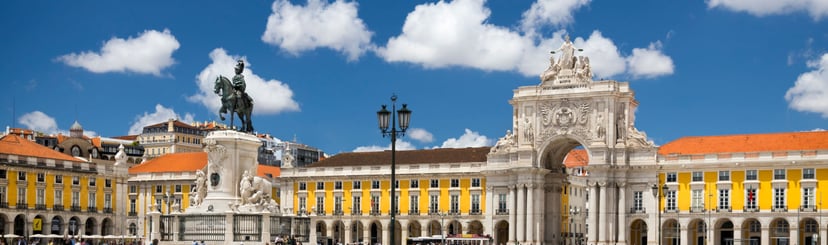
Baixa is the best late-day landing zone in this plan because it gives the group flatter streets, clearer exits and more covered pauses. Praça do Comércio and Terreiro do Paço can be windy in rain, so the point is not to stand exposed in the square. The point is to use the arcaded edges, the grid behind Rua Augusta, and a short indoor or café pause to give the day a graceful end. Baixa also makes hotel returns easier than trying to finish high in Graça, Bairro Alto or near a viewpoint where cars, rain and narrow lanes complicate the last ten minutes.
This is the counterintuitive correction: the glamorous rain idea is often “let’s do Alfama in the mist.” The better plan is to let Alfama appear briefly and intelligently, then leave before the hill becomes the story. On a wet, wind-sensitive day, the castle viewpoint climb should be cut outright. If you want one hill moment, choose it deliberately and descend; do not add a second climb because the itinerary looked thin on paper.
The timing rhythm that keeps the rain plan from feeling small
A rain-sensitive Lisbon itinerary should be built in three protected blocks rather than a chain of small stops. The first block is the sheltered cultural anchor. The second is the short neighborhood exposure. The third is the flat finish or hotel-facing exit. This matters because rain makes every transition feel larger than it looks on the map: a five-minute walk can become ten minutes of umbrellas, crossings, wet thresholds and people checking whether their shoes can handle another lane.
Begin with the deepest indoor stop while everyone is still fresh. That is why the National Tile Museum belongs early when available. A late museum visit after a wet climb often feels like recovery, not discovery. Early in the day, the same museum becomes the lens through which guests read Lisbon’s tiled surfaces later. This is also why a guide should resist the temptation to open with a quick Baixa wander “before the rain gets worse.” If the sky is already uncertain, spend the first weather window on a controlled arrival, not on a half-walk that may have to be abandoned.
Place Alfama in the middle, not at the end. Lower Alfama works best after the group has had shelter and before anyone is cold, hungry or negotiating dinner clothes. When Alfama is placed late, every upward lane feels like a test. When it is placed after the Madre de Deus to Alfama handoff, it feels like a deliberate taste of the old quarter. The guide can make the neighborhood legible in a shorter distance: why the streets turn, why fado belongs nearby, why the river edge matters, and why the upper viewpoints are being left for a drier hour.
End with ground that forgives weather. Baixa is not the most dramatic finish in Lisbon, but that is exactly why it works in rain. The grid gives choices. If the rain softens, the group can step toward Terreiro do Paço or the river-facing edge. If the rain hardens, the route can stay under arcades, move toward a car, or pause indoors without feeling trapped. A high finish has fewer graceful exits. A flat finish gives the day room to close well.
This rhythm is also what keeps a private tour from feeling overmanaged. Guests do not need to be told every backup plan in advance; they need to feel that the day has a spine. When the route has a spine, a closed museum, a heavier shower or one tired traveler does not collapse the experience. The guide changes the block, not the whole day.
What to move indoors without making the day feel like filler
Move indoors the parts that deepen the route, not the parts that merely occupy time. In Lisbon, the rain-friendly hierarchy is tile culture first, city-history context second, music context third, then a carefully chosen covered meal or design pause. Shopping malls should not be the main solution for travelers who came to understand the city; they solve dryness but usually drain the day of place.
Move tile context indoors. When open, the National Tile Museum is the cleanest answer because it gives a city-specific cultural lens before Alfama. It is especially strong for design travelers, first-time visitors who keep noticing azulejos but do not yet know how to read them, and comfort-first travelers who want substance without a hard morning climb. Keep the visit focused. The museum can absorb time, but on a rain-sensitive day the point is not to exhaust every room; it is to create a visual vocabulary that pays off later.
Move city-history framing indoors. When the tile anchor is unavailable or the rain is heavy enough to delay outdoor movement, Baixa’s history can be handled in a compact indoor format. The Lisboa Story Centre is not a substitute for walking Lisbon, but it can be useful when the weather would make a long 1755 earthquake and Pombaline reconstruction explanation unpleasant in the open air. The traveler consequence is attention: guests hear the city’s rebuilding story while dry, then recognize Baixa’s grid and Praça do Comércio’s ceremonial scale in shorter exterior bursts.
Move fado context indoors before shortening Alfama. The Fado Museum (https://www.museudofado.pt/en) is useful because it sits on the lower Alfama side and supports a shorter route rather than pulling the group away from it. It suits travelers who plan a fado evening later, couples who want the neighborhood’s emotional register without a long wet climb, and families who need a contained stop before another short walk. It should not be treated as a box to tick; it works best when the guide connects the museum to the lanes, taverns and social geography around it.
Move the pause indoors, not the whole afternoon. A covered lunch, coffee or carefully selected design stop can save the day’s rhythm, but only if it is placed after a meaningful sequence. Put it too early and the day loses momentum; put it too late and it becomes a rescue stop after the group is already cold. For celebration travelers, this is where a private plan can quietly preserve the tone of the day: dry coats, a table that does not feel random, and no argument about whether to keep climbing.
Which Alfama section should you shorten in the rain?
Shorten upper Alfama and the castle-facing climb; keep lower Alfama around the Fado Museum, Largo do Chafariz de Dentro and a small lane sequence that can exit cleanly. This is the most important cut in the article. Alfama is not one single walking condition. The lower edge near the river and Chafariz de Dentro can support a short, atmospheric route. The climb toward the Sé, Portas do Sol, Santa Luzia and Castelo de São Jorge becomes much less forgiving when stones are wet, umbrellas narrow the lanes, and the group’s attention moves from history to footing.
The exact shortened section depends on the group. For confident walkers, a guide may include a controlled ascent to one nearby lookout if the rain is light and the surface is manageable. For older parents, children, dress shoes, mobility hesitation or a special-occasion group trying to stay polished before dinner, the better choice is lower Alfama only. That can still include neighborhood texture: the sound world of fado, the old waterfront edge, short lanes near Rua dos Remédios, and a quick sense of how Alfama folds in on itself. What it should not include is a damp march upward because “Alfama must be done properly.”
The popular add-on to avoid is the tram-as-rescue idea. Tram 28 sounds covered, charming and easy. In rain, it can become the opposite: waiting outdoors, boarding with a crowd, standing instead of sitting, and still needing to walk on wet stones when you get off. The tram can be delightful in the right context, but it is overvalued as a premium rain solution. A guide-led shortened walk, with a dry transfer placed before or after it, is usually more comfortable and more respectful of the group’s time.
If Alfama is the emotional reason you booked the day, use a private route that can be shortened without becoming thin. The Alfama and Bairro Alto private tour is the adjacent experience to think from, but on a rain-sensitive day Bairro Alto may belong later or not at all. Do not try to preserve every neighborhood in wet weather. Preserve the one that still feels good under the conditions.
Where covered transfers matter most
Covered transfers matter most at three points: hotel to Madre de Deus, Madre de Deus to lower Alfama, and the post-Alfama exit toward Baixa or the hotel. These are the moments when a short dry reset changes the day’s energy. They reduce umbrella fatigue, keep the group from arriving at the next stop already irritated, and let the guide reframe the plan while everyone is seated rather than shouting over rain in a narrow lane.
The first transfer, from the hotel to Madre de Deus, decides whether the day begins composed. If guests are staying around Avenida da Liberdade, Chiado, Príncipe Real or Baixa, the eastward move is not difficult, but it is not a scenic walk to force in rain. Start dry, arrive ready, and use the museum as the morning’s cultural anchor. If the group is staying farther west, avoid pairing this with an ambitious Belém morning unless the weather is truly intermittent; that creates a cross-city day with too many resets.
The second transfer, from Madre de Deus to Alfama, is the route hinge. It should be short, purposeful and timed before the group cools down after the museum. The guide can use it to explain why the walk is lower and shorter than a dry-day Alfama route. This is the moment when private touring feels different from a pre-set walking itinerary: the day pivots without making guests feel that they have lost the plan.
The third transfer, after Alfama, prevents the common late-day mistake of ending high, wet and mildly stranded. Exit toward Baixa if you want a flatter finish, toward the hotel if the group needs a reset, or toward dinner if the evening is the priority. For food-and-wine travelers with a serious dinner, this choice matters: a wet upper-Alfama finish can make the evening feel like recovery rather than anticipation.
Here is the premium-spend judgment in plain terms. A chauffeur helps with transfers but does not make steep wet lanes pleasant if the walking route is wrong. Paying more changes comfort when it reduces exposed transitions, protects clothing and shoes, and gives the guide room to pivot. Premium spend does not earn its cost when it is used to keep an overstuffed hill route alive after the conditions have clearly changed.
If you want Orange Donut Tours to build a private Lisbon day that can pivot from tile culture to lower Alfama to Baixa without forcing slippery climbs, Inquire now. The value is not just the vehicle or the guide in isolation; it is the judgment to cut the hill before the hill cuts the day.
Traveler-fit clusters: who should choose which rain route
Different travelers should use the same weather day differently. The route above is the default, but the emphasis changes depending on who is traveling, what would frustrate them, and what the evening needs to feel like.
Couples who want atmosphere without a damp endurance test
Couples should choose the tile-first or low-Alfama route and keep the day slightly shorter than planned. The win is not doing less; it is leaving room for the evening to feel unforced. A museum-to-lower-Alfama sequence gives texture, then Baixa gives an easier exit. Avoid the temptation to chase a miradouro in rain for romance. Wet railings, fogged views and a windy square rarely feel as elegant as they sounded at breakfast.
Families and multigenerational groups who need fewer negotiations
Families should use the Baixa covered-history cluster if the rain is steady, or the tile-first cluster if the National Tile Museum is open and attention spans are good in the morning. The practical consequence is fewer micro-decisions: no arguing over every staircase, no guessing whether a child can manage another climb, no splitting grandparents from faster walkers. A shortened Alfama route still gives the old-neighborhood feeling without turning the day into a sequence of “be careful” reminders.
First-time visitors who worry they will miss the real Lisbon
First-time visitors should not panic and replace the whole day with museums. The real Lisbon is still present in the route: Madre de Deus, the tile tradition, lower Alfama, Baixa’s post-earthquake grid, the river-facing edge of Terreiro do Paço. What changes is the proportion. You trade the long scenic climb for clearer context and fewer wet transitions. For first-timers trying to understand how Lisbon’s hills should be edited in any weather, the Lisbon hill strategy is the broader planning frame.
Food-and-wine or celebration travelers with an evening to protect
Food-and-wine and celebration travelers should make the rain day end earlier and flatter. If dinner is important, do not spend the late afternoon climbing toward a viewpoint in damp shoes. Use the afternoon for Baixa, a covered pause, or a hotel reset. The day should feed the evening, not consume it. This is especially true for anniversaries, birthdays and private groups where one uncomfortable guest can change the tone for everyone.
What to cut first when the plan starts shrinking
Cut viewpoints, upper Alfama climbs and tram queues before you cut the cultural anchor. This is the firm editorial judgment. A rain-sensitive Lisbon day does not need a castle, a tram, Belém, Baixa, Alfama and a design stop. It needs one strong indoor anchor, one short neighborhood thread, and one easy finish. The route should feel edited, not apologetic.
The first cut is any viewpoint that requires a wet climb and has a high chance of a compromised view. Miradouro da Senhora do Monte, Graça and the castle-facing approach may be magnificent in the right conditions, but on a slick day they can cost more energy than they return. Cut them outright when rain is continuous, wind is up, or anyone in the group is hesitant on cobbles.
The second cut is a second neighborhood hill. If Alfama stays, Bairro Alto usually goes. If the day begins in Baixa and Chiado because the museum is closed, then Alfama should be lower and shorter. Do not ask the group to compare wet hills as if they were museum rooms. Lisbon’s charm is not reduced because you choose one hill condition well instead of sampling three badly.
The third cut is the cross-city add-on. Belém is excellent in the right plan, but it is not automatically the best rain answer. The monuments sit farther west, the riverfront can be exposed, and the spacing between stops can create more weather contact than guests expect. If Belém is already a priority, consider moving it to a clearer morning or using a dedicated Belém and Jerónimos private tour rather than bolting it onto a rain-sensitive Alfama day.
The Évora exception: when leaving Lisbon is actually the cleaner rain decision
Évora is not the default answer to a wet Lisbon city day, but it can be the cleaner exception when the group dislikes slick city hills, already planned a private day trip, and would rather spend the day in a chauffeured cultural arc than in short umbrella bursts. The reason to consider it is not that Évora is “indoors.” It is that the transfer pattern is calmer: one outbound drive, a historic center, lunch, and a return, with less stop-start friction than a multi-neighborhood Lisbon day in heavy rain.
The caution is that Évora has its own outdoor demands, especially if megalithic landscape stops matter. The UNESCO Historic Centre of Évora listing (https://whc.unesco.org/en/list/361/) supports the city’s heritage depth, while the official Évora Megalítica PDF (https://www.cm-evora.pt/wp-content/uploads/2020/06/EVORAMEGALITICA.pdf) is useful if the Almendres landscape is part of the decision. But those sources also make the point: Évora is a different day, not a patch for a poorly edited Alfama walk. If the forecast is wet but manageable, keep Lisbon and shorten the hills. If the rain is severe and the group wants a calmer cultural day by car, compare the separate Évora from Lisbon plan instead of improvising halfway through breakfast.
How the route feels when it is done well
A well-run rain-sensitive Lisbon day should feel deliberate from the first transfer. Guests should understand why the day begins east of the core, why the museum is not just a weather shelter, why Alfama is shortened, and why Baixa makes a better finish than another climb. The guide should make the cuts visible without making them sound like losses. That is what separates a tailored rain day from an itinerary that simply got wet.
The best version has a clear rhythm: dry start, deep context, short atmospheric lane sequence, flat finish, optional reset before dinner. It avoids the two moods that spoil rainy city touring: forced cheerfulness and constant renegotiation. Travelers should not have to keep asking whether the next stop is worth it. The route itself should answer: yes, because it is close, dry enough, connected to what came before, and easy to leave if the rain worsens.
The final rule is to stop treating rain as an invitation to add more interiors. Add judgment instead. Lisbon rewards the traveler who knows when one hill is enough, when a museum is the anchor rather than the backup, and when the most premium choice is the clean cut made before anyone is tired.
FAQ
What is the best rainy-day route in Lisbon for first-time visitors?
The best rainy-day route is a National Tile Museum morning when open, a covered transfer to lower Alfama, a short Alfama walk around the Fado Museum edge, and a flatter Baixa finish. It keeps Lisbon-specific culture in the day while reducing slippery climbs.
Should I still visit Alfama when it rains in Lisbon?
Yes, but shorten it. Keep lower Alfama around Largo do Chafariz de Dentro, the Fado Museum and nearby lanes, and cut the climb toward the castle or Graça when wet cobbles, wind or mobility concerns make footing the main issue.
Is the National Tile Museum a good rainy-day stop?
Yes, when it is open on your date. It is one of Lisbon’s strongest rain-day anchors because it gives context for azulejos across the city. Check the official museum page before planning, because closures or works should change the route.
What should I cut first from a rainy Lisbon itinerary?
Cut viewpoints and upper-hill climbs first, especially Castelo de São Jorge, Graça or Senhora do Monte if rain is steady. Then cut tram queues and cross-city add-ons. Keep one strong indoor anchor and one short neighborhood thread.
Does a chauffeur solve a rainy Alfama day?
A chauffeur solves transfers, not the hill itself. It helps with the hotel-to-museum start, the Madre de Deus to Alfama handoff, and the post-Alfama exit, but the walking route still needs to avoid steep wet lanes.
Is Baixa better than Alfama in heavy rain?
Baixa is better for the end of a heavy-rain day because it is flatter, more legible and easier to exit. Alfama is still worthwhile in a short lower section, but Baixa is the safer finishing zone when the group is wet or tired.
Should I switch to Belém on a rainy Lisbon day?
Only if Belém was already a high priority and the rain is intermittent. Belém has strong monuments and indoor possibilities, but the riverfront and spacing between stops can feel exposed. It is not the automatic rescue for a slippery Alfama plan.
When does Évora make more sense than a rainy Lisbon route?
Évora makes sense when rain is heavy, the group dislikes slick city hills, and you prefer a chauffeured cultural day with fewer neighborhood transitions. It should be planned as a separate day-trip decision, not used as filler because Lisbon was overpacked.
If you’re interested in any private tours of Lisbon, please reach out to us.


 So if you are looking for the absolute best in Lisbon & surroundings with authentic local fully-licensed native guides whose English you can actually understand and with an exclusive and amazingly fun itinerary













