Lisbon in High Summer: River Air, Shorter Hills and a Coast Day in the Right Place

Updated
The best high-summer Lisbon plan is a shorter hill day, not a longer sightseeing day: put Belém and the riverfront early, take one high neighborhood before midday, and save the coast for the day that would otherwise become your hottest city push. That works because Lisbon’s beauty sits on slopes, shiny limestone, cobbles and exposed viewpoints; by noon, the climb from Baixa into Alfama or up toward Graça feels much longer than it looks on a map, while the Tagus-facing side of Belém still gives you open air and easier walking. The exception is a two-night stay with one fixed restaurant or celebration evening: then Cascais may be the calmer add-on than Sintra, or the coast may need to disappear completely.
Lisbon in high summer is not asking how much you can see; it is asking how gently you can move between the Tagus, one hill, and one coast decision without giving the evening away. The small route hinge that proves the point is the Cais do Sodré-to-Belém corridor: it stays low, runs along the river side of the city, and behaves very differently from the uphill edge between Santa Apolónia, Alfama and Graça. A Belém riverfront morning is not a soft compromise. It is the move that lets a first Lisbon day feel complete before the hills start charging interest. Travelers who want the whole season shaped around that logic can start with Lisbon seasonal private planning, but the article below solves the narrower high-summer question: what should be early, what should be late, and where Sintra or Cascais belongs.
The high-summer verdict: make the day lower, shorter and more west-facing
The winning high-summer Lisbon route starts lower and west-facing, then uses one hill as a chosen experience rather than a repeated obligation. Belém, Ribeira das Naus, Praça do Comércio and the river edge are not interchangeable with Alfama, Graça and Bairro Alto when the day is hot. They ask different things from the body. A low riverside morning lets the group settle into Lisbon without making every conversation happen while climbing. A hilltop morning can be beautiful, but after one serious ascent the return on a second viewpoint drops sharply.
The counterintuitive correction is this: the famous hilltop add-on is often the overvalued summer choice. Many visitors try to collect São Jorge Castle, Portas do Sol, Senhora do Monte and a tram moment in the same day because each sounds short in isolation. In practice, the spaces between them create the fatigue. The distance is not only measured in minutes; it is measured in cobblestones, glare, narrow pavements, pausing for crowds and recovering from the incline before anyone is ready to listen again.
That is why a private guide or chauffeur should change the order before adding more stops. A vehicle can reduce transfers, make hotel returns smoother and spare the group from a hot cross-town reset. But a chauffeur cannot make a steep midday walking plan feel elegant if the route order is wrong. In high summer, premium spend earns its cost when it buys better sequencing, cleaner drop-offs and the confidence to cut a view; it does not rescue a plan that insists on climbing at the wrong hour.
The practical rule is simple. Do Belém, the riverfront, or a low historic district early; do one hill before midday if the hill matters; reserve late afternoon for a lower, more atmospheric walk or a coast-facing return. If the day has a serious dinner, sunset sail, family celebration or older parents in the group, cut earlier, not later. Lisbon rewards restraint in July and August more than it rewards completion.
The ranked ladder for Lisbon in high summer
The best way to plan Lisbon in high summer is to rank the day by heat load and recovery value, not by the fame of the sights. The ladder below is deliberately opinionated because neutral planning is what turns a beautiful city into an overlong day.
- Rank 1: Belém and the Tagus early. Start with Belém when you want monuments, pastry timing, river air and flatter walking before the city tightens around the hills. This is the most forgiving first move for families, multigenerational groups and travelers arriving after a late dinner the night before.
- Rank 2: One high neighborhood before midday. Choose Alfama, Graça or the castle slope, not all of them. The value is the view, the descent, and the guide’s context; the penalty is repeating the same uphill pattern after the group is already warm.
- Rank 3: A low, shaded lunch or hotel pause. This is not wasted time in high summer. It is what keeps the evening from becoming a tired transfer between dinner and bed.
- Rank 4: A late-afternoon Lisbon return that does not climb. Think lower Chiado edges, Praça do Comércio, Ribeira das Naus, or a carefully placed waterfront moment. Late light is generous, but late uphill walking still asks for energy.
- Rank 5: Cascais or Sintra as a separate day, not a city-day extension. The coast should replace a heavy city day, not sit after it. A private Sintra and Cascais route belongs where it can breathe, not where it becomes a trophy at the end of a hot morning.
- Rank 6: A second hilltop view after midday. This is the first thing to remove. Cut the second hilltop view when it would begin after midday, when someone in the group is already managing heat or stairs, or when the evening has a fixed reservation.
This ladder is not anti-Sintra, anti-Alfama or anti-viewpoint. It is pro-evening, pro-attention and pro-mobility. A trip feels more luxurious when people still have appetite, patience and curiosity at 7:30 p.m.; it feels flatter when the afternoon is spent negotiating whether one more climb is “only ten minutes.”
What to do early versus late in Lisbon in high summer
Early should carry the walking load; late should carry the atmosphere. That is the cleanest answer to the summer sequencing problem, and it matters more in Lisbon than in flatter capitals because the city makes small distances behave unevenly.
Early: use Belém before the riverfront becomes a transit decision
Belém is the most useful high-summer morning anchor because it gives Lisbon scale without immediately sending the group up a hill. The monastery area, the monumental riverfront, gardens, the Tower of Belém exterior and the walkway toward the water create a morning that feels open rather than compressed. The point is not to stand in every possible line. The point is to begin with Lisbon’s maritime story, its western light and enough space for people to move comfortably.
There is a tactical reason to start here rather than “save Belém for later.” Later, the question becomes whether the group wants a transfer west after already walking central Lisbon. That transfer may be easy on paper, but it often feels like a second beginning: gather the group, leave the historic center, travel along the river, reorient, then decide what still deserves attention. In high summer, that reset can drain more energy than the visit itself. A morning Belém plan avoids the reset by making the river the opening frame.
If Belém is a priority, go deeper into the timing rather than simply adding it to a checklist. Orange Donut Tours’ dedicated Belém planning guide, a private Belém morning for a five-star Lisbon stay, is the better companion when the question is how to handle Jerónimos, pastry timing and riverfront pacing. In the high-summer city flow, Belém’s job is simpler: it gives you one strong Lisbon morning without spending your hill budget.
Midday: stop pretending shade is the same as rest
Midday in Lisbon should be a pause, a low transfer, or an indoor-led segment, not a heroic old-town push. Shade helps, but it does not cancel the work of climbing over calçada pavements, stepping around tram queues, or pausing in narrow lanes while the group reforms. A guide can find quieter turns through Alfama; a driver can reduce the approach; neither changes the fact that the body experiences repeated slope as effort.
This is the part of the day when many high-end trips lose their tone. People are still technically seeing Lisbon, but they stop absorbing it. The guide’s best story lands during the moment someone is looking for a place to sit. A grandparent starts calculating the return walk. A child becomes quiet in the way that precedes a meltdown. A couple with a dinner reservation starts wondering whether the next stop is worth the cost of the evening. The itinerary has not failed because the sights are weak; it has failed because the demanding part of the city was placed when the group had the least margin.
For a comfort-led plan, midday is where you either lower the intensity or declare the city portion complete. A cool lunch, a hotel return, a short museum interior or a chauffeured reposition can all be right. What is usually wrong is adding a hill because it appears nearby. “Nearby” in Lisbon can still mean steps, polished stone, sunlit slope and a slow regroup at the top.
Late: choose atmosphere over conquest
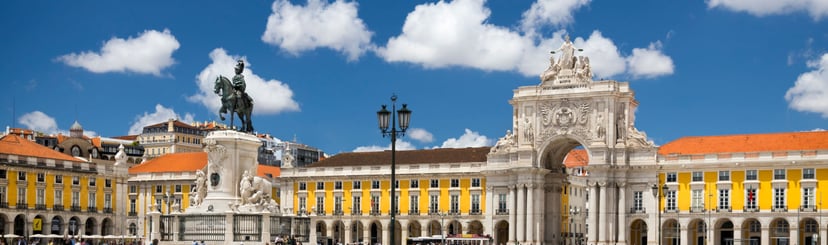
Late afternoon is for Lisbon’s mood, not for catching up on missed hills. A lower walk near Praça do Comércio, Ribeira das Naus or the Chiado edge can feel graceful after a rest because the group is moving with the city rather than fighting it. Alfama can work late if the route descends and the return is planned. Graça can work if it is the chosen view, not the second or third viewpoint after a full day.
The late slot should also respect dinner. Lisbon’s best evenings often include a slow aperitif, a river-facing pause, a Fado-adjacent context walk, or simply enough hotel time to arrive at dinner composed. If the city day has already emptied the group, even an excellent restaurant becomes a recovery room. When the evening matters, do less in the afternoon and do it better.
When to limit hilltop viewpoints in July and August
Limit hilltop viewpoints when the view repeats the same emotional payoff but adds new walking strain. In high summer, one excellent viewpoint is usually enough, and the right one should be chosen by route logic rather than postcard ranking.
Alfama and Graça are not just names on a list. They are slope systems. Starting high near the castle or Graça and descending through Alfama can be coherent because gravity works with you. Starting low in Baixa, climbing into Alfama, crossing toward another miradouro, then trying to return to a hotel in Chiado or Avenida da Liberdade can feel like several separate days compressed into one. The romance of old Lisbon survives better when the route descends.
There is also a surface issue that does not show up in most attraction descriptions. Lisbon’s calçada can be beautiful and tiring at the same time, especially on slopes and in the shiny patches near heavily walked streets. The city does something physical to the day: it adds micro-effort through short climbs, uneven stone, sun exposure, standing pauses, tram crowding and late-return fatigue. None of those is dramatic alone. Together, they turn the fourth “quick stop” into the moment the group stops caring.
The mood consequence is just as important. A good Lisbon summer day should feel breezy, edited and slightly spacious, even when it includes history. Too many hilltop views make the day feel extractive, as if every beautiful angle must be claimed before anyone is allowed to enjoy the evening. One well-timed hill gives the trip lift. Two badly timed hills make Lisbon feel more vertical than generous.
The firm cut-first rule is this: if you already have Alfama in the morning, do not force Graça after lunch unless the whole trip is built around viewpoints and everyone in the group actively wants the climb. If the route is becoming a negotiation, cut the second viewpoint, keep the descent, and save the energy for dinner or the coast. For a deeper viewpoint-specific decision, use the Lisbon hill strategy for Alfama, Graça and Bairro Alto alongside this summer routing logic.
Where Sintra or Cascais belongs in a short summer stay
Sintra or Cascais belongs as a replacement for a demanding city day, not as a reward added after one. In high summer, the coast decision should be made before the Lisbon days are packed, because it changes how much hill walking the city can reasonably carry.
For two nights, choose either one edited city day or Cascais as the lighter escape
A two-night Lisbon stay is too short for a heavy city day plus a heavy Sintra day unless the travelers are energetic, early-rising and comfortable with long touring hours. The usual better choice is one edited city day: Belém early, one hill before midday, a real pause, and a low evening. If the group wants sea air more than palaces, Cascais can be the more forgiving add-on because it gives a coastal change of mood without requiring the same palace-and-hill concentration that Sintra often asks.
This is especially true for celebration travelers. A birthday dinner, anniversary evening or family gathering can be undermined by a day that returns too late or too tired. Cascais works best when it is given the role of release: lunch by the sea, a promenade, a controlled return, and no attempt to prove the day by stacking every nearby stop. Sintra works best when the group is ready for a full cultural day and the city itinerary on either side has been kept lean.
For three nights, place Sintra and Cascais between two different Lisbon moods
A three-night stay gives the coast day a proper place. The strongest sequence is usually city-river-hill on day one, Sintra and Cascais on day two, then a lighter Lisbon day or food-and-wine day on day three. The coast day sits between city days because it changes the body rhythm. You leave the old-town slopes, breathe differently, and return with enough separation that Lisbon does not blur into one extended uphill walk.
This is where a private route matters because Sintra and Cascais are not the same kind of stop. Sintra asks for palace choices, transfer discipline and restraint; Cascais asks for coastal pacing and a decision about how much beach-town ease you actually want. Putting them together can be excellent, but only if the order is controlled and the day does not pretend every viewpoint, palace exterior, lunch and seaside stroll can receive full attention. The most useful next step for that version is a private Sintra and Cascais day from Lisbon, especially when the stay is short enough that one inefficient day affects the whole trip.
For four nights, the coast can be a true decompression day
With four nights, you can let the coast earn a slower pace. That does not mean doing less because the trip is less ambitious; it means giving each Lisbon mood a cleaner assignment. One day can hold Belém, the river and one hill. Another can hold art, food, design or a more local neighborhood. The Sintra or Cascais day can then become a contrast rather than a rescue mission from overheated planning.
Four nights also reduces the pressure to make Sintra and Cascais solve every summer need. You might choose Sintra for cultural depth and return through Cascais for air, or choose Cascais more squarely if the group wants coast over palaces. You might skip Sintra entirely if the Lisbon stay is built around restaurants, family time and one excellent river evening. The value is not in obeying a fixed formula; it is in keeping each day from borrowing energy from the next.
The city day that feels shorter without becoming thin
A high-summer Lisbon day can be shorter and still feel complete when it has a strong opening, one vertical moment and a deliberate finish. The mistake is assuming that fewer stops means less substance. In Lisbon, fewer stops often means people hear more, notice more and return to the hotel in a better state.
A polished summer city day might begin in Belém, using the riverfront, Jerónimos context and the westward scale of the city before moving back toward central Lisbon. It might continue with a controlled climb into Alfama, ideally arranged so the group descends through the neighborhood rather than repeatedly climbing into it. It might finish with a lower late-afternoon walk near Praça do Comércio or a hotel pause before dinner. That is not a thin day. It gives Lisbon’s maritime, old-town and river identities separate breathing room.
What it should not do is chase every district edge. Belém to Baixa to Alfama to Graça to Bairro Alto to Príncipe Real can look like a satisfying arc on a planning document. In high summer, it often becomes a series of transfer resets and incline negotiations. The group sees more names but experiences less place. The right private guide does not simply narrate more efficiently; they protect the day from its own ambition.
For couples and celebrations, keep the afternoon from stealing the evening
Couples and celebration travelers often care less about maximizing daylight than about arriving at the evening with appetite and composure. That changes the route. A morning that opens by the Tagus, a single view, a good lunch and a shorter late walk can support a serious dinner. A city day that forces Graça, Alfama and Bairro Alto before a tasting menu turns the dinner into the day’s casualty.
For dinner-led travelers, exact logistics should come from primary sources rather than overheard advice. If the evening is built around a restaurant with published guest information, read the restaurant’s own material, such as Belcanto’s official PDF (https://belcanto.pt/uploads/Belcanto_FAQ_EN_Abr25.pdf), or use a venue reservation official site (https://www.fiftysecondsexperience.com/en/reservations/) when it controls current booking conditions. The route can stay flexible, but the evening anchor should be verified before the day is built around it.
For families, trade one viewpoint for one smoother transition
Families do not usually need a less interesting Lisbon day; they need fewer moments where everyone has to stand, wait, climb and regroup in heat. Belém works well because children and grandparents can move with more space. Alfama can work beautifully if it is framed as a story-rich descent rather than a wandering climb. A tram ride can be charming, but in high summer it should not be treated as reliable comfort transportation if waiting and crowding would sour the group.
The family upgrade is often a transition upgrade: a better drop-off, a cleaner lunch location, a guide who knows when to skip the next lane, and a vehicle positioned for the return rather than summoned after everyone is already tired. That is a different kind of luxury from adding an exclusive stop. It is quieter, but it changes the whole day.
For food-and-wine travelers, make lunch a routing tool
Food-and-wine travelers should use lunch as a routing tool, not an interruption. A well-placed lunch can end the hill portion, set up a lower afternoon, or become the natural bridge to a coast-facing evening. A poorly placed lunch can force the group to climb again after eating, which is rarely the elegant version of Lisbon in July or August.
If the day includes wine, tasting menus or a long dinner, the city route should be even more edited. Lisbon’s culinary pleasure is not improved by arriving overheated. A private food day in high summer can be excellent, but it should favor fewer neighborhoods, shorter walks between tastings and a stronger evening buffer. The goal is to taste Lisbon, not to drag appetite over every hill.
What private guidance changes, and what it cannot fix
A private guide changes a high-summer Lisbon day by making better decisions sooner. The value is not only knowledge; it is judgment under conditions that shift by hour, group energy and street texture. A guide can decide that Alfama should descend rather than climb, that Graça is not worth the second ascent, that Belém belongs first, or that Cascais should replace an overheated afternoon. A chauffeur can reduce transfer drag, keep the group from waiting in exposed places and make a hotel pause realistic.
Where private guidance earns its keep is in the order of the day. A chauffeured Lisbon route can connect Belém, a hilltop start and a low evening with fewer awkward transitions, especially for older parents, children, cruise arrivals, small private groups or celebration travelers carrying a fixed dinner time. Travelers considering that level of support can compare the route logic with a luxury chauffeured Lisbon private tour, but the important point is restraint: the car should make the day calmer, not tempt the planner to add two more stops.
Where premium spend does not help is equally clear. It does not make narrow cobbled lanes smooth. It does not make a crowded tram cool. It does not turn a second post-lunch hill into a good idea. It does not remove the need to choose between Sintra depth and Cascais ease on a short stay. The most elegant private Lisbon summer day is often the one where the guide removes a stop before the group has to ask.
This is the natural place to build the day around guidance rather than volume. If the goal is a private Lisbon plan that keeps the city day elegant by changing order, not adding more stops, Inquire now.
What to cut first when the plan is overloaded
When a high-summer Lisbon plan is overloaded, cut the part that repeats effort rather than the part that defines the day. The order of cuts matters because some removals preserve the trip’s shape while others hollow it out.
- Cut the second hilltop view first. Keep the best view for the route and remove the one that requires another climb, another exposed pause, or another transfer into a similar payoff.
- Cut tram-as-transport next. A tram can be atmospheric, but if the goal is comfort, do not build the day around standing in heat for a crowded ride that may not solve the routing problem.
- Cut a late Belém add-on if Belém was not placed early. Belém is strongest as a morning anchor. As an afterthought, it can become a westward reset at exactly the time the group should be simplifying.
- Cut Sintra as an extension after a full Lisbon morning. Sintra deserves its own day or a very intentionally partial version. Treating it as the afternoon prize after hills in Lisbon is how short stays become punishing.
- Cut cross-town shopping or design stops unless they are the point of the day. Príncipe Real, Chiado and Avenida da Liberdade can be excellent, but in high summer they should not be glued onto a river-and-hill plan without a reason.
What should usually remain is the day’s identity: river, one hill, coast or food. Once you know which identity matters, the cuts become less emotional. A family that wants a graceful first taste of Lisbon should keep Belém and one descent. A couple with a major dinner should keep the evening buffer. A first-time visitor with three nights should keep the Sintra and Cascais day, but make the city day before it lighter.
How the answer changes for two, three or four summer days
The right high-summer answer depends less on ambition than on how many evenings you need to protect. Lisbon days are easier to edit when you stop treating every day as a self-contained sightseeing contest.
Two summer days: river, one hill, one evening; coast only if it is the priority
With two days, do not try to prove Lisbon and the coast at the same intensity. One day should carry Belém, the riverfront and one high neighborhood. The other should either go to Cascais for a lighter coastal change or stay in Lisbon for food, tiles, art or a more local route. Sintra can fit, but only when the group accepts that the Lisbon city day must be edited hard. A two-day trip that includes Sintra should not also chase every central viewpoint.
Three summer days: city, coast, softer city
Three days is the sweet spot for many first-time high-summer stays. Day one can introduce Lisbon through Belém, Baixa and one hill. Day two can be Sintra and Cascais, with the understanding that the palaces and coast need a disciplined order. Day three can return to Lisbon at lower intensity: a tile museum, a food route, a design morning, a family-friendly neighborhood plan or a river evening. For broader stay-length choices, use the comfort-first guide to how many days in Lisbon as the companion piece.
Four summer days: give each day one job
Four days lets Lisbon breathe. One day can be the Belém-river-hill day. One can be Sintra and Cascais or a more purely coastal Cascais day. One can be food, art, tiles or shopping without turning into a cross-city scramble. One can remain flexible for weather, rest, sailing, a late dinner or a neighborhood that deserves more time. This is the most comfortable version of high-summer Lisbon because no single day has to carry the whole city.
The important summer judgment is not that longer is always better. It is that a longer stay lets you avoid the most expensive kind of waste: seeing the right places when no one has the attention left to enjoy them.
FAQ
Is Lisbon too hot to visit in high summer?
Lisbon can work very well in high summer if the day is routed around river air, shorter hills and a real midday reduction. The mistake is not visiting in summer; the mistake is planning Lisbon as if it were flat, mild and equally comfortable at every hour. Put Belém or the riverfront early, choose one hill before midday, and avoid using the afternoon to catch up on exposed viewpoints.
Should Belém be first or last on a summer Lisbon day?
Belém is usually better first in high summer. It sits lower and more open than the old hill neighborhoods, so it gives the morning a smoother start and avoids a late westward transfer after the group is already tired. Save late afternoon for a lower central walk, a hotel pause, or a river-facing evening rather than turning Belém into an afterthought.
How many hilltop viewpoints should I plan in Lisbon in July or August?
Plan one strong hilltop viewpoint in July or August unless your group is especially energetic and actively wants a viewpoint-led day. One well-timed view from Alfama, Graça or the castle side can define the day. A second view after midday is usually the first thing to cut because it repeats the payoff while adding heat, slope and late-day fatigue.
Is Sintra worth it in high summer?
Sintra is worth it in high summer when it has its own day and the Lisbon city days around it are not overloaded. It is not ideal as an afternoon extension after a full Lisbon morning. In a short stay, choose Sintra for cultural depth and palace atmosphere; choose Cascais when the group needs a lighter coast day, sea air and a simpler return.
Where does Cascais belong in a short Lisbon stay?
Cascais belongs where it can replace a tiring city push, not where it becomes one more stop after the hills. In a two-night stay, it may be the better coastal choice if the trip is celebration-led or comfort-led. In a three-night stay, it pairs best with Sintra on a dedicated day or stands alone as a calmer coast reset between Lisbon city days.
Does a chauffeur solve Lisbon’s summer hills?
A chauffeur helps with transfers, drop-offs, hotel pauses and avoiding exposed waits, but it does not solve a badly ordered walking plan. The route still needs to limit steep midday walking and avoid repeated hilltop stops. The best chauffeured summer day uses the car to make the order cleaner, not to add more sights than the group can enjoy.
What is the first thing to skip if my Lisbon summer itinerary is too full?
Skip the second hilltop viewpoint first, especially if it falls after midday or before a fixed dinner. Keep the view that fits the route best, then preserve the riverfront, the descent through one historic neighborhood, or the coast day if that is the trip’s main contrast. Removing repeated effort protects the whole day better than removing the part that gives it identity.
If you’re interested in any private tours of Lisbon, please reach out to us.


 So if you are looking for the absolute best in Lisbon & surroundings with authentic local fully-licensed native guides whose English you can actually understand and with an exclusive and amazingly fun itinerary