When Sacromonte Belongs in a Granada Stay and When It Is One Hill Too Many

Updated
The verdict: Sacromonte belongs when it has a job, not as a reflex add-on
Sacromonte belongs in a Granada stay when it adds a second layer to Albayzín: cave heritage, zambra context, and a wider hillside reading of the city. It works because Granada’s upper neighborhoods are not flat sightseeing zones; the route from Carrera del Darro toward Cuesta del Chapiz and Camino del Sacromonte is a rising, decision-heavy edge where one extra hill changes the rest of the evening. The clearest exception is a first stay already built around the Alhambra, Mirador de San Nicolás, and a serious dinner: in that case, Albayzín is often enough. This article’s point of view is simple: Sacromonte is not the “more authentic” prize after Albayzín; it is a threshold district that improves the trip only when timing, mobility, and interpretation are strong enough to carry it.
The mistake is treating Sacromonte as a scenic extension that can be bolted onto any Albayzín wander. In real Granada conditions, the hinge is not the map distance. It is the shift after Paseo de los Tristes, where the Darro valley begins to feel enclosed, the climb steepens, and the way forward asks whether your group wants another layer of history or simply another viewpoint. The answer is different for a couple on a second Granada stay, a family after a morning Alhambra slot, and food-and-wine travelers with a late reservation in Realejo.
Our editorial call is firm: include Sacromonte when it is guided, paced, and placed as a purposeful hill district; skip it when it would turn Albayzín into a prelude instead of a complete neighborhood experience. If Sacromonte is the reason you are walking, make it the subject. If you are only adding it because it appears beside Albayzín on every map, stop at Albayzín and let the evening breathe. Travelers who already know they want the district as a focused cultural chapter can start with a Sacromonte private tour, but the decision below is meant to help you know whether that chapter belongs in this particular stay.
The three planning scenarios that decide the hill
The cleanest way to decide on Sacromonte is to place your day into one of three scenarios: extend, stop, or return separately. This is not a generic “which neighborhood is prettier” comparison. It is a threshold choice shaped by walking load, sunset timing, cultural appetite, hotel location, and how much of Granada has already been spent on the Alhambra.
- Extend to Sacromonte after Albayzín: best when your group is mobile, curious about cave heritage, not rushing to dinner, and willing to let a guide control the route instead of chasing every mirador.
- Stop with Albayzín: best when this is your first Granada stay, the Alhambra has already taken the morning, or Mirador de San Nicolás plus the tea streets gives enough atmosphere without adding a second hill district.
- Return for Sacromonte separately: best for repeat visitors, culture-led travelers, and small groups who want zambra, cave dwellings, and hillside history handled with context rather than as an afterthought.
The counterintuitive correction is that Mirador de San Nicolás should not automatically become the base for a Sacromonte decision. It is famous, and the Alhambra view can be magnificent, but it can also pull travelers into a static crowd moment just when the route needs discipline. If the group spends too much energy lingering there, Sacromonte becomes the overrun, not the reward.
If your real goal is an Albayzín viewpoint afternoon with a glimpse toward Sacromonte rather than a deeper district threshold, use the neighboring route logic in Albayzin viewpoint planning guide. This article is narrower: it asks when Sacromonte itself deserves a place in the stay and when the extra hill quietly steals more than it gives.
Who should include Sacromonte in a Granada stay
Sacromonte belongs most clearly for travelers who want Granada to feel layered rather than simply beautiful. If your interest goes beyond the Alhambra’s architecture and Albayzín’s lanes into how communities lived on the city’s edge, how cave homes shaped identity, and why performance culture should not be consumed without context, Sacromonte earns its place. Couples often enjoy it when the evening has room to widen slowly. Repeat visitors often appreciate it because it prevents Granada from collapsing into the same palace-and-viewpoint memory.
It also suits small groups who prefer one strong cultural addition over a scattered checklist. A family with teenagers can find Sacromonte memorable if the route is not framed as “another pretty walk” but as a hillside district with cave dwellings, music history, and a different social geography from the palatial Granada above the Darro. Food-and-wine travelers can include it when dinner is not so tightly fixed that every late return becomes a negotiation. Celebration travelers can include it when the aim is a more private-feeling hill moment before the evening, not a nightlife crawl.
The best-fit visitor is comfortable with the idea that Sacromonte may be shorter in distance than it feels. From Albayzín to Sacromonte, the experience is shaped by gradients, uneven surfaces, bends in the road, and the psychological effect of moving away from the most photographed terrace in the city. A private route can make that transition feel intentional: start with Albayzín context, avoid wasting energy on redundant viewpoints, then cross into Sacromonte when the story changes.
It is especially worthwhile when you care about interpretation. Without it, Sacromonte can be flattened into cave facades, night performances, and postcard views. With it, the district becomes a way to understand Granada’s edge: the relationship between the old Muslim quarter, the Roma and Gitano histories associated with the hillside, the evolution of zambra, and the way visitors have long romanticized the very communities they came to watch. That is not a reason to avoid Sacromonte. It is a reason to handle it more carefully.
When Albayzín is enough and Sacromonte should be skipped
Albayzín is enough when the day already has one major hill, one major monument, and one evening commitment. This is the most important “no” in the article. If you have toured the Alhambra in the morning, returned to the hotel, then climbed into Albayzín for Mirador de San Nicolás, forcing Sacromonte afterward often turns a strong Granada day into a tired one. The city does not reward every extra ascent equally.
Skip Sacromonte if anyone in the group is managing knee strain, heat sensitivity, balance concerns on cobbles, or low patience for a late return. Skip it if children have already hit their walking limit. Skip it if you are staying in Realejo and have an ambitious dinner plan that depends on returning cleanly downhill. Skip it if the only reason you are going is that the district sounds famous, not because you want the cultural context it requires.
The cut-first rule is clear: when the trip is getting too full, cut Sacromonte before you cut a well-paced Albayzín. Albayzín can stand alone. It gives you lanes, whitewashed walls, carmen gardens glimpsed behind high walls, Alhambra views, and a legible sense of medieval Granada in a more compact frame. A carefully paced Albayzin private tour can be the better answer for first-time visitors who need one hill district done well, not two hill districts done thinly.
There is no failure in stopping at Albayzín. The overvalued choice is the traveler’s reflex to turn every upper-neighborhood evening into a conquest: Plaza Nueva, Carrera del Darro, Paseo de los Tristes, Albayzín lanes, Mirador de San Nicolás, Sacromonte, then dinner. On paper it sounds efficient. In the body, it becomes a chain of climbs and descents that blurs the places you came to understand.
How the Albayzín to Sacromonte route changes the body
The route from Albayzín to Sacromonte changes the body because Granada’s beauty is built on slopes, not smooth transitions. Visitors underestimate this because the map compresses everything into neighboring labels. Albayzín and Sacromonte touch each other, but the lived experience is a sequence of rises, stone surfaces, narrow turns, and pauses that feel very different depending on heat, footwear, group age, and whether you are still carrying Alhambra fatigue.
The city asks for repeated micro-decisions. Do you climb higher for a view, or hold the line toward Camino del Sacromonte? Do you linger at Mirador de San Nicolás, or save that standing time for the district beyond? Do you descend toward Paseo de los Tristes and then rise again, or keep a higher contour and accept a less direct but more coherent path? These choices sound minor until a family member is thirsty, a parent is moving cautiously, or the dinner time in Realejo is no longer comfortably distant.
This is where Sacromonte after Albayzín becomes a threshold rather than a simple add-on. The body feels the change before the itinerary admits it. Legs that were content in Albayzín become aware of the next bend. A group that was happily photographing the Alhambra starts asking whether the return is by taxi, on foot, or through another lane. The district can still be worth it, but only if that bodily cost buys meaning rather than repetition.
Comfort-first planning in Granada is not about avoiding walking altogether. It is about spending walking where the payoff changes. Climbing for the Alhambra is one kind of investment; wandering Albayzín is another; extending to Sacromonte is a third. When all three happen in one day, the trip can feel shorter, not richer, because the body stops receiving the city as texture and starts reading it as effort.
Sunset makes Sacromonte better, but the return makes it harder
Sunset is the strongest argument for Sacromonte and also the moment when Sacromonte most often overextends the evening. The hillside can feel more generous as the light drops, especially when the Alhambra and the Sierra Nevada edge shift from glare to outline. But sunset changes the return. The same route that felt adventurous before dinner can feel longer after dark, especially for travelers who do not want to negotiate steep lanes, taxis, or uncertain group energy at the end of the night.
This is why the sunset question should be answered backward. Start with where you need to end: a hotel in Realejo, a restaurant near the Cathedral quarter, a tapas route, or a quiet return to the lower city. Then decide how far into Sacromonte you can go before the evening becomes overcommitted. Travelers often plan the view first and the return second. In Granada, that is how a beautiful hour becomes a flattened dinner.
For couples, a Sacromonte sunset can be memorable if dinner remains flexible and the return is part of the plan rather than an afterthought. For families, sunset can be risky because it delays food, lowers patience, and makes every descent feel more consequential. For small groups, the problem is not usually the distance; it is the split pace. One person wants photos, another wants context, another wants to sit down, and the guide or host has to keep the route from dissolving.
A chauffeur can help with the return from accessible edges, especially when the itinerary includes hotel movements or a dinner transfer. But a chauffeur does not turn Sacromonte into a drive-by district. The value is in placing the pickup intelligently, not pretending the hill has disappeared. That is why the driver question belongs inside a route plan, not as a substitute for one.
How your hotel base changes the Sacromonte decision
Your hotel base changes the Sacromonte decision because the difficulty is not only getting there; it is returning with the right evening mood intact. A traveler staying in lower Realejo reads the hill differently from a traveler staying inside Albayzín. A traveler based near the Cathedral quarter reads it differently again, because the return has to rejoin the flatter commercial center after a steep, atmospheric district.
Realejo is often the most comfortable base for Alhambra days, but it does not automatically make Sacromonte easier. From Realejo, you may feel close to the Alhambra and the lower city, yet Sacromonte sits across a different slope logic. If your evening plan is dinner in Realejo, the question is whether the extra hill gives you enough cultural value to justify leaving that smoother dinner arc. Sometimes it does. Sometimes the better move is Albayzín, one view, then a lower-hill return.
Staying in Albayzín can make Sacromonte feel temptingly close, but it can also blur the boundary that should be doing the planning work. Guests often assume that because they are already high, the extension is easy. In practice, the issue becomes late movement through lanes, a split group pace, and whether the route home is clear after dinner or a performance. A hotel inside Albayzín does not remove the need to decide how much hill the evening can carry.
Staying around the Cathedral quarter or Plaza Nueva can make the Sacromonte choice cleaner. You start lower, climb with more intention, and know that the return is a full descent into the city rather than a vague drift through upper lanes. That can be useful for families and older travelers because the day has a visible end point. It can also make the no easier: if the group is not ready to climb again from the Darro edge, Albayzín alone is the sensible ceiling.
If the base choice is still open, the larger neighborhood tradeoff belongs in where to stay in Granada for a comfort-first trip. For this narrower decision, use the base as a return test: Sacromonte belongs when the route back to your hotel or dinner feels planned, not improvised. If the return is fuzzy before you begin, the hill is already warning you.
One night, two nights, or a return visit changes the threshold
One night in Granada usually makes Sacromonte a specialist choice, not a default inclusion. With a single night, the Alhambra normally controls the stay, and the remaining hours have to decide whether the city should feel expansive or manageable. If the Alhambra is the emotional center, Albayzín gives the most efficient second layer. Sacromonte can still belong, but only when the traveler came to Granada with a specific interest in cave heritage, zambra context, or the hillside communities beyond the standard first-view circuit.
Two nights make Sacromonte much easier to justify because the district no longer has to compete with every first-day priority. The first evening can stay lower or focus on Albayzín, and the second can carry Sacromonte with a calmer start, a cleaner return, and more patience for interpretation. This is often the sweet spot for couples and comfort-first travelers: not because they see more, but because the district does not have to borrow energy from the Alhambra day.
Repeat visitors should treat Sacromonte differently from first-time visitors. If you already know the Alhambra and have seen Mirador de San Nicolás, Sacromonte is not an extra hill after the obvious view; it becomes the reason to re-enter Granada’s upper neighborhoods with a sharper question. That changes the walking psychology. You are no longer asking, “Can we fit it in?” You are asking, “What part of Granada did we not understand last time?”
The shortest stays should be more ruthless. A cruise-style day, a transfer day, or a stop between Andalusia cities rarely gives Sacromonte enough room unless it is the main cultural request. In those cases, the better luxury is not a longer list; it is a day that still feels legible by dinner. Sacromonte deserves attention, not leftovers. If the stay cannot give it that, save it for a trip when the hill can be read rather than merely reached.
The cultural context that has to be handled carefully
Sacromonte should be approached as a living and historically loaded district, not as a cave backdrop for atmosphere. Its cave heritage, Roma and Gitano associations, zambra traditions, and long history of visitor fascination require more care than a casual “flamenco neighborhood” label allows. The district can be deeply rewarding, but the reward is not just seeing something unusual. It is understanding why the hillside has been represented, consumed, and sometimes simplified by outsiders.
The most respectful Sacromonte visit avoids two mistakes. The first is romanticizing cave life as pure charm without acknowledging social hardship, adaptation, and the complex identity of the communities associated with the area. The second is reducing zambra to a nightlife product detached from place. A performance may belong in a Granada stay, but this article is not a flamenco-show listicle; the decision here is whether the district itself should carry part of your cultural day.
A respectful Sacromonte plan also leaves room for discomfort. Some travelers arrive wanting an atmospheric, almost cinematic hill; the better guide gently complicates that expectation. Cave homes are not props, and the word “authentic” can become lazy when it asks a living community to perform a visitor’s idea of old Granada. The more useful question is not whether Sacromonte feels authentic, but whether your visit understands who has carried the district’s stories and who benefits from the way those stories are shown.
A good guide should be able to explain why Sacromonte is not merely “beyond Albayzín” but different from it. Albayzín holds the memory of the old Muslim quarter, domestic architecture, water routes, and urban texture. Sacromonte asks different questions: who lived at the city’s edge, how cave dwellings worked, how performance and identity were shaped for residents and visitors, and how the hillside became both home and spectacle. That difference is the main reason to include it.
For travelers who want Granada beyond monument logic, Sacromonte can pair well with a broader local-style route, especially if the day has room for neighborhood nuance rather than only formal sights. The link is not “hidden Granada” in the cliché sense; it is Granada interpreted through social geography. That is where a Granada like a Local private tour can help, provided Sacromonte is treated as context and not decoration.
How to sequence Sacromonte after the Alhambra without flattening the day
Sacromonte works after the Alhambra only when the Alhambra has not consumed the entire day’s attention and walking budget. A morning Nasrid Palaces slot, Generalife time, lunch, and then a full upper-neighborhood extension can be too much for many travelers, even if every individual component is worthwhile. The question is not whether Sacromonte is interesting after the Alhambra. It is whether your group will still be able to receive it.
The smoother sequence is usually Alhambra first, real pause second, Albayzín or Sacromonte decision third. The pause matters. It might be lunch, a hotel return, or a low-demand hour in Realejo. Without it, Sacromonte becomes the fourth act of a long monument day, and even strong cultural interpretation has to fight fatigue. With it, the district can feel like a shift in scale: from palace to neighborhood, from royal and Nasrid space to lived hillside.
Do not combine the Alhambra, a deep Albayzín walk, Sacromonte, and a formal dinner unless the travelers are unusually energetic and the day is deliberately built around movement. Granada punishes the fantasy that a short city can absorb every desire without consequence. The Alhambra sets the mental weight; Albayzín sets the hill rhythm; Sacromonte adds a cultural edge; dinner asks the body to arrive with some grace left.
If food is a major part of the stay, treat dinner as its own anchor. Granada can support both casual tapas culture and serious restaurant planning, and travelers who are comparing more polished dining can use the MICHELIN Guide selection (https://guide.michelin.com/us/en/andalucia/granada/restaurants) as a narrow external reference. The planning point is not to make dinner grander. It is to avoid letting a late Sacromonte return make a good meal feel like recovery rather than pleasure.
Where private guidance and premium spend change the outcome
Private guidance changes Sacromonte most when it prevents route drift. The value is not a louder explanation or a faster pace. It is choosing which lanes to skip, where to pause, when to leave Mirador de San Nicolás, how far to continue along Camino del Sacromonte, and when the group has had enough. In this district, restraint is a premium skill.
A guide also changes the cultural quality of the visit. Sacromonte needs context before it needs spectacle. The right interpretation can connect cave heritage, zambra, Albayzín, the Darro valley, and the visitor gaze without turning the walk into a lecture. That matters for discerning travelers because the alternative is often a sequence of impressions: caves, views, music, photos, taxi. Impressions are not the same as understanding.
Premium spend does not help if it is spent only on a chauffeur and no route discipline; a chauffeur cannot remove the need for walking and context inside the hill district. This sentence is deliberately plain because it is where many high-end Granada plans go wrong. A car can improve drop-offs, reduce return anxiety, and help travelers who are staying away from the upper neighborhoods. It cannot make Sacromonte flat, cannot interpret cave heritage, and cannot solve a group that has already spent its energy.
The best upgrade is a combined decision: a guide who knows when Sacromonte belongs, a route that uses the car only where it earns its keep, and an itinerary that does not pretend every famous hill is mandatory. For travelers who want that level of pacing, the luxury chauffeured Granada private tour can be useful when paired with walking judgment rather than used to avoid it. If the core problem is meaning, hire guidance. If the core problem is the late return, add the car. If the core problem is an overstuffed day, cut something.
When you want Orange Donut Tours to make the Sacromonte call inside a broader Granada stay, the handoff is best made after you know your Alhambra timing, dinner ambitions, and group mobility. Share those constraints, and the route can be shaped around the hill rather than against it. Inquire now
What to cut first when Granada is getting too full
When Granada is getting too full, cut the extra viewpoint before you cut the meaningful district. This can mean skipping a second mirador, not skipping Sacromonte, if Sacromonte is the cultural reason for the afternoon. It can also mean cutting Sacromonte entirely if your only plan for it is another view. The rule is not anti-viewpoint; it is anti-repetition.
Mirador de San Nicolás is the classic place where repetition hides. The view is famous for good reason, but if it becomes the emotional peak of the afternoon, Sacromonte needs to justify itself through a different kind of value. If the next hour offers only more walking and another angle, you have probably passed the point of return. If the next hour offers a careful explanation of cave dwellings, zambra, and the hillside’s social history, the extension can still earn its place.
Cut shopping detours before Sacromonte if the group is culture-led. Cut Sacromonte before shopping if the group is tired, heat-sensitive, or traveling with younger children who need a lower-stakes evening. Cut the formal dinner before Sacromonte only if the entire night is meant to belong to the hill and everyone accepts a looser food plan afterward. Do not keep all three: deep Albayzín, Sacromonte, and a demanding dinner. That is the combination that often makes the day feel less generous.
For travelers based in Realejo, the cut decision is sharper because the return is not just downhill; it is a transfer back into a different evening mood. Realejo can give a lower-hill dinner rhythm that feels civilized after the Alhambra. If Sacromonte delays that rhythm too much, the day can lose its polish. If Sacromonte replaces a repetitive viewpoint stop and returns in time, it can deepen the stay without roughening the night.
A practical route shape that works without turning Sacromonte into a checklist
A strong Sacromonte plan usually begins before Sacromonte. Start low enough to let Granada’s geography reveal itself: Plaza Nueva, Carrera del Darro, and the river edge give the city’s old movement a readable line. From there, the route can climb toward Albayzín, not randomly but with a purpose: enough lanes to understand the quarter, enough pause for the Alhambra view, and enough restraint to leave energy for the threshold beyond.
Then decide whether to cross the threshold at Cuesta del Chapiz. This is one of the most useful route hinges in Granada because it separates “we are still in the Albayzín mood” from “we are choosing the Sacromonte layer.” If the group is fading, this is where the guide should say no. If the group is engaged, this is where the guide should narrow the route and make Sacromonte the subject instead of another wandering extension.
In practical terms, this means fewer stops with better reasons. Do not let the route become a scavenger hunt for every named overlook or every cave facade that someone has saved on a phone. Choose the moment that explains the district, the view that clarifies the geography, and the return that keeps the evening composed. A shorter Sacromonte that the group understands is stronger than a longer one that becomes a blur.
Once in Sacromonte, the route should not try to exhaust the district. A concise, interpretive walk is better than a heroic one. The aim is to understand cave heritage, the hillside’s relationship to Albayzín, and the way views, homes, and performance histories intersect. The group should leave with a sharper understanding of Granada’s upper edge, not just a memory of having climbed farther.
The return should be designed before the first step uphill. That may mean a planned taxi from an accessible point, a guide-managed descent, or a chauffeured pickup if the wider itinerary supports it. It may mean skipping a performance if the group wants dinner clarity. It may mean saving zambra for another night. Sacromonte works best when the exit is as intentional as the entrance.
The mood test: does Sacromonte deepen the evening or make Granada feel smaller?
Sacromonte belongs when it makes the evening feel deeper, not merely longer. This is a useful mood test because Granada can trick travelers into thinking that more height equals more magic. Sometimes it does. Sometimes it makes the city feel cramped by logistics: one more climb, one more return, one more decision about taxis, one more compromise before dinner. The difference is not visible in a photo; it is felt in the group.
A well-placed Sacromonte hour can change the tone of a stay. The Alhambra becomes less isolated as a monument because the hillside shows another kind of Granada. Albayzín becomes less of a view platform and more of a neighborhood edge. The evening can feel slower, more adult, and more textured. For repeat visitors, that is often the reason to go.
A poorly placed Sacromonte extension does the opposite. It compresses the day. The group starts measuring time instead of listening. The Alhambra becomes the morning that tired everyone, Albayzín becomes the climb that took too long, Sacromonte becomes the hill that was one too many, and dinner becomes a recovery mechanism. That is not a premium experience, no matter how polished the hotel or restaurant.
The best Granada plans accept that restraint can be the more sophisticated choice. Sacromonte is not mandatory. Albayzín is not incomplete without it. The right decision is the one that preserves attention. If your group can still look, listen, and ask better questions, Sacromonte belongs. If your group is only collecting the next name, one hill has already done enough.
FAQ
Is Sacromonte worth visiting on a first trip to Granada?
Yes, Sacromonte is worth visiting on a first trip if your Granada stay has enough time, mobility, and cultural interest beyond the Alhambra and Albayzín. If your first stay is short and already includes the Alhambra, Mirador de San Nicolás, and a dinner plan, Albayzín is often enough.
Should I visit Sacromonte after Albayzín?
Visit Sacromonte after Albayzín only if the group still has energy and the route has a clear purpose. The Albayzín to Sacromonte transition is not difficult for every traveler, but it adds enough hill walking and return logistics that it should not be treated as automatic.
When is Albayzín enough without Sacromonte?
Albayzín is enough when you want one strong upper-neighborhood experience, especially after an Alhambra morning or before a serious dinner. It gives historic lanes, Alhambra views, and Granada atmosphere without the extra hillside commitment of Sacromonte.
Is Sacromonte mainly about flamenco shows?
No. Sacromonte is associated with zambra and performance culture, but it should not be reduced to a show decision. The district also asks for context around cave heritage, community history, visitor romanticization, and its relationship to Albayzín.
Can a chauffeur make Sacromonte easy?
A chauffeur can make the approach or return easier, but it cannot remove the need for walking inside Sacromonte. The best comfort upgrade is a guide-led route with a planned pickup or return, not a car used as a substitute for cultural context.
Is Sacromonte good at sunset?
Sacromonte can be excellent at sunset, but the return becomes more important as light drops. Plan the exit before chasing the view, especially if you are staying in Realejo, dining in the lower city, or traveling with family members who tire late in the day.
Who should skip Sacromonte?
Skip Sacromonte if the group is already tired from the Alhambra, managing mobility concerns, traveling with children near their walking limit, or trying to preserve a polished dinner evening. In those cases, a focused Albayzín plan is usually the better choice.
How much time should Sacromonte take in a comfort-first Granada plan?
In a comfort-first plan, Sacromonte should usually be a focused chapter rather than an open-ended wander. The exact timing depends on route, guide style, sunset, and return logistics, but the important rule is to decide the exit before extending beyond Albayzín.
If you’re interested in any private tours of Granada, please reach out to us.
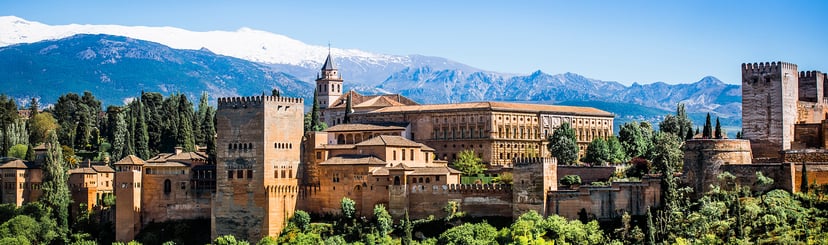



 So if you are looking for the absolute best in Granada & surroundings with authentic local fully-licensed native guides whose English you can actually understand and with an exclusive and amazingly fun itinerary













