Trevélez Ham from Granada: Mountain Curing, Regional Standards and Producer Appointments in the Alpujarras

Updated
A whole ham hanging in a Trevélez drying room still carries more evidence than a plate of perfect slices. The hoof and rind show the protected form; a numbered seal connects the piece to a registered lot; its weight category explains the minimum curing period it had to complete. The mountain view outside is part of the story, but it is not the whole proof. The pig did not have to be born or raised in Trevélez, and the village name does not make the ham Iberian.
That distinction is the beginning of a worthwhile producer day from Granada. Serious provenance here is divided among the raw leg, the processor, the curing zone, the documented method and the final certification. A visit has value when it lets you follow those divisions rather than merely taste a local specialty. The central question is therefore not “Is this authentic mountain ham?” but “Which claims belong to the animal, which belong to the curing process, and which can the protected label actually verify?”
Trevélez sits in the high Alpujarras on the southern side of Sierra Nevada. It deserves a dedicated day when cured-ham production is the subject, not an incidental stop folded into a village circuit. Travelers still deciding between landscapes should first read the Alpujarras and Sierra Nevada day-trip comparison; the Trevélez plan below assumes that the purpose is producer context, traceability and mountain curing.
The seal matters before the scenery
The official specification for the Protected Geographical Indication, or PGI, gives the most reliable starting point. It defines eligible legs as coming from crosses of Landrace, Large White and Duroc-Jersey pigs. It also requires the protected ham to retain a rounded form, rind and foot; sets minimum curing periods by fresh-leg weight; describes a delicate, lightly salted profile; and limits measured sodium chloride to no more than 5 percent in the specified sample. Those are regulatory characteristics, not a tasting-room script. The governing details are set out in the official Jamón de Trevélez PGI specification.
Verified fact: the eligible genetics are not Iberian genetics. “Jamón de Trevélez” and “jamón ibérico” are different claims governed by different standards. A producer may sell both kinds of ham, and a tasting may place them side by side, but one category does not turn into the other because it was sliced in Trevélez. For collectors, the practical safeguard is to read the full product name and certification on each piece rather than allowing the setting, the appearance of a neighboring sample or a salesperson’s shorthand to merge categories.
Editorial interpretation: Trevélez is most interesting precisely because its protected identity is concentrated in transformation. It is a case study in how place can reside in salting, controlled transition and natural maturation even when the livestock stage is not geographically enclosed. That makes the visit intellectually stronger, not weaker, provided the producer explains the boundary honestly.
What “Trevélez” protects—and what it does not
The animal and the fresh leg
The specification begins with an incoming leg, not a pig grazing beneath Sierra Nevada. Legs may come from castrated males or females and must meet technical criteria before they can enter the protected process. Fresh weight must exceed 11.3 kilograms. The thickness of subcutaneous fat rises with the weight category: at least one centimeter for lighter eligible legs, one and a half centimeters for the middle range, and two centimeters for legs above 13.5 kilograms. The pH in the semimembranosus muscle must fall between 5.5 and 6.4 when measured at least 24 hours after slaughter. Temperature at reception is also specified.
These details matter because “raw material” is not just a breed name. Fat cover affects protection during a long drying period; weight determines the curing schedule; pH, temperature, appearance and hygiene affect whether the leg is accepted at all. At reception, the registered business records breed, provenance and transport conditions as well as quality and sanitary characteristics. An eligible piece receives a numbered seal, and the lot retains an alphanumeric record through the process.
The institutional IRTA manual for sensory evaluation of cured ham makes the geographical boundary explicit: the pigs supplying Jamón de Trevélez PGI are not tied to the protected zone. It identifies the same Landrace, Large White and Duroc-Jersey crosses and locates the protected processing on Sierra Nevada’s southern side above 1,200 meters. This is the point to remember when a label uses mountain imagery. The mountain certifies where the defined transformation happens; it does not by itself certify where the pig lived.
PGI is a processing-geography claim
A PGI does not require the same territorial enclosure as a Protected Designation of Origin. In broad terms, a PGI links a product’s quality, reputation or other characteristic to a place while allowing at least part of the chain to occur elsewhere. For Jamón de Trevélez, the protected core is the processing sequence inside a delimited high-altitude area. The official zone covers parts above 1,200 meters in Trevélez, Juviles, Busquístar, Pórtugos, La Taha, Bubión, Capileira and Bérchules. Only registered businesses in that zone may produce protected Jamón de Trevélez.
The University of Granada comparative study of Jamón de Trevélez PGI is useful here because it treats the label as both a legal boundary and a rural network. Its economic figures are historical snapshots rather than current operating counts, but its structural point remains valuable: the product’s identity joins place, know-how, registered processors, collective control and protection of the name. The label itself must carry the wording “Indicación Geográfica Protegida «Jamón de Trevélez».” It is not a poetic synonym for “made somewhere in the Alpujarras.”
The protected processing zone should not be confused with every later presentation step. The same study notes that boning, cutting, slicing and pre-packing are not geographically restricted to the PGI area. A packet prepared elsewhere may therefore contain certified Jamón de Trevélez, while a packet sliced in the Alpujarras is not proven protected merely by the place of slicing. The numbered seal, producer and exact label remain the useful evidence.
There is also a separate regional vocabulary around Alpujarra ham. The same study discusses a “Jamón de la Alpujarra” guarantee mark created after the PGI. A visitor should not treat that phrase, “serrano,” “Granada ham,” “mountain cured” and “Jamón de Trevélez PGI” as interchangeable. Each may describe something real, but only the exact protected name, required label wording and certification system answer the Trevélez provenance question.
A provenance chain you can inspect
The most productive way to read a whole ham is as a sequence of five linked proofs. A producer appointment should reveal as many of these as hygiene, confidentiality and the day’s production schedule allow:
- Eligible raw leg: breed cross, sex, fresh weight, fat cover, pH, temperature and acceptance checks.
- Traceable entry: numbered seal, supplier and receiving date, lot record and the possibility of disqualification if the piece later fails.
- Protected transformation: salting, washing, postsalting and drying-maturation inside a registered business in the delimited zone.
- Category-specific time: a minimum period tied to the leg’s fresh weight, not a free-floating age claim selected for marketing impact.
- Final qualification: verification of curing time, weight loss and qualitative characteristics, with the unique seal and lot identification supporting genuineness.
This chain is more revealing than a certificate displayed in a shop. It allows the visitor to ask where control is strict, where the producer exercises judgment and where natural conditions remain variable. It also exposes a common weakness in food tourism: the final tasting is often presented without the receiving records, category logic or label that make the taste interpretable.
The same approach applies to other producer days near Granada, although the evidence changes by product. The comparison with Riofrío sturgeon farming and caviar access is instructive. Caviar provenance depends heavily on species, water, husbandry and processing; Trevélez ham depends on an eligible leg entering a protected curing system. Both visits improve when access is arranged around the production questions rather than around a sales counter.
The curing process is a controlled handoff to the mountain
Reception and salting
Once a leg has passed the receiving checks and been sealed, salting begins the preservation and dehydration process. The official method stacks the legs with layers of sea salt in refrigerated salting chambers. No additives are permitted in this salting operation, and its indicative duration is one day per kilogram of fresh-leg weight. “Indicative” matters: the producer works within the specification while accounting for the piece, not by reciting a universal number detached from weight and condition.
For a visitor, the salting room is where romantic language should give way to process discipline. Ask how the team confirms the leg’s weight category, how lots are separated, what records follow the piece, and how a producer determines that the salt exposure is appropriate. Do not expect unrestricted entry while active handling is under way; food-safety rules may keep visitors behind a barrier or outside the chamber. A serious explanation can still show the logic through records, empty equipment, diagrams or a master ham-maker’s account.
After salting, the pieces are washed with potable water to remove salt adhering to the surface. That apparently simple step separates surface salt from the salt already beginning to move through the muscle. It also corrects a misleading mental image: the ham does not spend months buried in salt. The official schedule is followed by washing and then a controlled postsalting period in which moisture loss and salt distribution continue gradually.
Postsalting: the room that explains the whole system
The postsalting stage is arguably the most revealing part of Trevélez production. The specification sets controlled conditions between 3 and 7 degrees Celsius and 75 to 85 percent relative humidity, for a maximum of 90 days. As the stage progresses, temperature and humidity are adjusted toward the conditions in the natural drying room according to the season.
Original local insight: the decisive transition is not from “factory” to “nature,” as though one were artificial and the other pure. It is a managed handoff. Postsalting equalizes salt and slows dehydration while the piece moves toward an environment that will be less mechanically uniform. The quality of the final ham depends on not rushing that handoff. For a provenance-minded visitor, seeing or discussing this room can be more informative than standing among rows of mature hams, because it shows how the producer prepares a biological material for mountain variability.
This is also where broad claims about “air curing” become testable. Ask when the producer begins adapting a lot toward natural conditions, what seasonal signals matter, and how they prevent the exterior from drying too quickly while the interior remains insufficiently stabilized. The official document does not prescribe a theatrical set of open windows. It requires adequate ventilation, air renewal without damaging drafts, and maturation in a natural environment. Producer judgment lies in operating within those boundaries.
Natural drying and maturation
After postsalting, pieces are classified by weight and hung in natural drying rooms under the area’s temperature and humidity conditions. Dehydration continues, creating stability, while proteolytic processes contribute to aroma and flavor. The specification allows the Regulatory Council to authorize limited changes to humidity and temperature when climatic conditions are wholly adverse. That clause is important. “Natural” does not mean abandoning the product to whatever weather arrives; it means the protected method is built around local conditions, monitored within a controlled quality system.
The high Alpujarras provide cold winters, comparatively fresh summers and an altitude band associated in the specification with a particular curing environment and microbial flora. Yet climate is never the sole author. Salt dose, leg size, fat cover, airflow, moisture loss, time, inspection and final qualification all remain part of the result. A visit that attributes flavor only to altitude has skipped most of the work.
The process also includes a measurable endpoint. Hams must lose at least 35 percent of their initial weight over the full process or, failing that, receive at least three additional months beyond the relevant minimum curing period. That rule joins time to physical transformation. It prevents “months cured” from functioning as the only quality signal and gives the visitor a better question: how did this particular piece satisfy both its category and its maturation criteria?
Altitude is a condition, not a shortcut explanation
Altitude is central because the protected zone is defined above 1,200 meters and because the curing rooms work with the temperature and humidity of the high southern Sierra Nevada. It is not a magical ingredient that erases every other variable. Two drying rooms in the same municipality may differ in orientation, airflow, building fabric, window management and the way their teams respond to a warm spell or wet period. The specification creates a common floor; producer practice shapes the expression above it.
That leads to three useful distinctions. First, “cured at altitude” is a geographical statement only when the exact facility falls inside the defined zone and is registered. Second, “natural drying” is a process statement, not proof that no monitoring or limited correction occurs. Third, “mountain flavor” is an interpretation unless it is translated into observable conditions and sensory characteristics. A knowledgeable host should be able to move from altitude to humidity, temperature, airflow, season and maturation rather than treating elevation as self-explanatory.
The landscape still matters. Trevélez and the other listed municipalities occupy a steep, sparsely settled territory where production has economic and cultural weight. The University of Granada study connects the PGI with local employment, collaboration among processors, protection against misuse of the name and the persistence of specialist activity in an isolated rural area. Those findings make the secadero part of the living Alpujarras, not a scenic prop. They do not, however, prove that every ham sold in the village is protected or that every registered producer offers visitor access.
A collector can therefore appreciate the view without allowing it to become evidence. The mountains explain why this processing geography developed and why the protected method remains place-specific. The numbered seal and registered chain explain whether the leg in front of you belongs to that system.
Curing time only makes sense beside fresh weight
The official minimums are 14, 17 or 20 months, assigned according to the leg’s weight when it enters the process. Fresh legs from 11.3 to 12.3 kilograms require at least 14 months; those from 12.3 to 13.5 kilograms require at least 17; and those above 13.5 kilograms require at least 20. The wording matters because a finished ham is lighter after dehydration. A final display weight cannot be substituted casually for the fresh weight that established the curing category.
Some summaries reduce Jamón de Trevélez to a single minimum age. The IRTA manual, for example, presents 17 months in its compact comparison of Spanish cured-ham quality schemes, while the governing specification gives the three weight-based bands. There is no need to treat this as a contradiction in the visit. It is a reminder to use the primary specification for category detail and a technical manual for broader comparison. Ask the producer which incoming weight band governed the piece and whether it exceeded the minimum because of maturation needs, desired style or the alternative weight-loss rule.
More months do not automatically make a better purchase. A longer-cured piece may offer greater concentration and a different texture, but balance depends on raw material, fat, salt distribution and condition as well as time. An impressive age statement without the original category, seal and sensory condition is incomplete evidence. Conversely, a 14-month certified piece is not deficient simply because a heavier piece required 20 months. The legal schedule recognizes that different masses need different time.
This is why the best appointment question is often “What did this leg weigh when it arrived?” rather than “What is your oldest ham?” The first question opens the process; the second can invite a prestige answer detached from how the product was made.
How to taste without losing the evidence
Tasting belongs after the provenance explanation, not before it. The protected specification describes red, bright meat with partially infiltrated fat, delicate flavor, low apparent salt and glossy, yellowish-white, unctuous fat. Those are reference characteristics. They do not guarantee that every slice from every muscle will feel identical, and they should not be converted into a compulsory list of poetic aromas.
A whole cured leg contains several muscles, gradients of fat and different exposure to dehydration. The IRTA manual treats sensory evaluation as a disciplined exercise involving appearance, odor, flavor, texture and persistence, and it warns that packaging and sample preparation can influence some attributes. For the traveler, the practical consequence is simple: one thin slice taken from an unknown part of the ham is not a complete verdict. Ask where the sample came from, whether it was freshly cut or vacuum packed, and whether the tasting is intended to compare muscles, curing categories or entirely different legal types of ham.
“Sweet” or “delicate” should also be understood in cured-ham language. They do not imply added sugar. The Trevélez specification allows sea salt without additives in the salting stage and sets a low-salt profile; sensory sweetness may emerge as a relative impression within the balance of fat, amino acids, salt and maturation aromas. A good presenter should be able to explain that without claiming that low salt alone proves quality.
For collectors considering a whole leg, the tasting should lead back to condition and serviceability. Inspect the mandatory protected wording, numbered seal and producer identity. Ask how the piece has been stored, when it should be opened, what cutting skill it requires and whether the producer can prepare a format suited to your actual use. Do not assume international shipping or import eligibility; those are separate logistical and regulatory questions that must be confirmed for the destination.
The registered producers and the access gap
The Regulatory Council’s current public list is more useful than a crowd-sourced map because it distinguishes registered PGI producers from businesses that merely sell ham in the area. At the 3 August 2026 check, the council listed six registered companies: Antonio Álvarez Jamones in Trevélez; Jamones Diego Martín in Pórtugos; Jamones de Juviles in Juviles; Jamones Nevadensis in Trevélez; Hijos de Catalina Rodríguez Castaño in Trevélez; and Jamones Vallejo in Trevélez. The list and contact details can be rechecked on the Regulatory Council’s registered-company page.
Verified fact: registration establishes eligibility to produce protected Jamón de Trevélez under the control system. It does not establish that a business offers tours, that a production area will be active on the chosen date, that an English-speaking specialist is available, or that a visitor can examine records. Those are appointment facts and must be verified separately.
This access gap is where a specialist private day either gains substance or collapses into a retail stop. Calling a producer and asking “Can we visit?” may secure entry to a shop or museum without answering whether the group will see a drying room, speak with someone who understands the specification, compare label categories or discuss raw-leg sourcing. Producer vetting should match the visitor’s questions to a named host, language and permitted spaces.
The geographic spread also matters. Pórtugos and Juviles are part of the protected high-zone network, not lesser substitutes for Trevélez, and a technically strong appointment there can be more relevant than a more photogenic but shallow stop in the namesake village. The right choice depends on verified access, the production stage available that day and the route you can complete without rushing. Certification is collective; visitor experience is producer-specific.
This access gap is the natural conversion point for a serious private day. A vetted producer, a technically useful host and experienced mountain transport allow the group to examine labeling and curing practice without losing the appointment to navigation, an unsuitable visit format or an overfilled village circuit. That combination belongs within a tailor-made private Granada plan. Inquire now when the provenance questions are already clear and the remaining need is credible coordination.
Three visit formats, with only one publicly verified here
A structured public experience
Museum Vallejo provides the clearest operationally verified example in the supplied research. Its booking page states that a master ham-maker leads visitors through the drying room and explains production in Spanish; the experience also includes a museum audioguide, a tasting and a drink. The listed total duration is approximately 60 minutes for a group of one to ten, with date and time selection required. The page also states that online purchases are non-refundable and that weekend capacity should be confirmed.
Those details were verified on 3 August 2026 and are volatile. Language, availability, price, refund terms, weekend procedure and the exact route through the facility should be checked again before committing. The exact operational source is the Museum Vallejo guided-visit booking page. A one-hour format can be excellent for orientation, but a collector should ask in advance whether there will be time to examine PGI labels, fresh-weight categories and the distinction between Vallejo’s different ham lines.
A prearranged technical appointment
A deeper visit is possible only when a producer agrees to a more focused conversation and the right person is present. It may include receiving and traceability records, the logic of salting, the postsalting transition, drying-room management, final qualification and a comparative tasting tied to specific pieces. None of that should be promised merely because the company is registered. Production confidentiality, hygiene, staffing and workflow can limit access, and the visitor may need to accept an explanation in an office or viewing area rather than on the active floor.
The advantage is interpretive density. Sixty or ninety minutes with a technically fluent host can answer more than several casual stops. The disadvantage is coordination: the appointment may exist only on particular working days, in Spanish, for a small group and with a firm arrival time. This is the moment when producer-specialist access is materially relevant. The service is not valuable because it makes the day sound exclusive; it is valuable because it converts specific provenance questions into a visit the producer is prepared to answer.
A shop or tasting-counter stop
A retail stop can still be useful for inspecting labels, buying a sealed piece and comparing formats. It is the weakest format for understanding curing unless staff can explain the specification and the ham can be tied to a registered producer and category. A tasting counter should never be described afterward as a producer visit if no production context was available.
For travelers who prefer a broader food day rather than a single-subject appointment, the Granada market, olive-oil and mountain-wine route is the more balanced alternative. Trevélez is strongest when the group is willing to let one product occupy the day’s intellectual center.
The questions to settle before the appointment
A credible booking should answer the following before the vehicle leaves Granada:
- Certification: Is the facility currently registered for Jamón de Trevélez PGI, and will the visit distinguish protected pieces from other hams the company sells?
- Host: Who will explain the process, what is that person’s production role, and in which language will the technical conversation take place?
- Access: Will visitors see a natural drying room, a museum display, a shop, records, or some combination? Are closed shoes, coats or other hygiene measures required?
- Evidence: Can the host show the numbered seal, fresh-weight category, lot traceability and mandatory PGI wording on an actual piece?
- Process depth: Will the explanation cover raw-leg criteria, salting, postsalting, seasonal adaptation, maturation and final qualification rather than only family history?
- Tasting design: Which exact products will be tasted, and are any Iberian or non-PGI hams included for comparison? How will each sample be identified?
- Timing: What is the firm start time, realistic duration and late-arrival policy? Is the appointment refundable or movable if mountain conditions disrupt the approach?
- Purchase: Are whole legs, boneless pieces or sliced packs available, and what storage, cutting, shipping or destination restrictions must the buyer verify?
When those answers are missing, the risk is not merely inconvenience. The group may travel deep into the Alpujarras and receive a pleasant tasting that cannot resolve the reason for making the journey. When they are secured, the visit can be built around evidence rather than improvisation, with the specialist conversation protected from late arrival, category confusion and a sequence of unconfirmed stops.
From Granada, the road sets the day’s scale
The official approach leaves Granada on the A-44 toward Motril, takes exit 164 for Lanjarón and La Alpujarra, follows the A-348 past Lanjarón toward Órgiva, and then turns left onto the A-4132 signed toward Trevélez. The Junta de Andalucía publishes that sequence in its directions to Capileira; the same approach reaches the high-Alpujarras corridor before the Capileira branch. The exact source is the Junta de Andalucía visitor directions.
That page is a route description, not a live road-condition service. It does not certify that there are no works, closures, ice, rockfall, event traffic or weather disruptions on the chosen day. Current conditions should be checked close to departure, especially in winter or after severe weather. A navigation app’s optimistic arrival time should also be treated as a baseline rather than an appointment guarantee.
Route judgment: allocate roughly two hours each way between central Granada and Trevélez, then add a separate contingency rather than consuming it with a scenic stop. This is an editorial planning allowance, not a measured promise. The mileage looks modest beside a full-day allocation, but the latter part is mountain driving with repeated bends, village approaches and limited opportunities to recover time safely. Travelers prone to motion sickness should sit accordingly, avoid reading, and disclose the issue before the route is set.
The outward leg should serve the appointment. Lanjarón, Pampaneira, Capileira and other villages can all justify time, but collecting them before a fixed producer visit turns the first half of the day into a timing gamble. A single short comfort stop is more sensible than a chain of viewpoints. After the appointment, add one village only if daylight, weather and group energy remain favorable.
Parking and final meeting instructions must come from the producer. “Trevélez” is not a single curbside address: facilities are distributed through a steep settlement, and a site’s street, loading access and visitor entrance may differ. The appointment confirmation should include a map pin, a telephone contact and what to do if the vehicle reaches the village early. For travelers continuing through the mountains with bags rather than returning to Granada, the Alpujarras luggage and one-way transfer plan addresses a different set of vehicle and drop-off constraints.
Seasonality changes risk, light and what you can observe
The PGI does not have a visitor “season” in the way a harvest product does. Because curing spans many months, a facility may hold pieces at several stages, although what visitors can see depends on workflow; a producer can explain the full process even when the group sees only part of it. Seasonality matters because the curing system is built to adapt from controlled postsalting toward natural conditions, and because the road, daylight and visitor comfort change across the year.
Winter: the official specification characterizes the high zone as cold with substantial snow. Plan an earlier return, confirm the route close to departure and avoid placing an inflexible city engagement immediately after the expected arrival. A drying-room visit may be especially legible in winter because the relationship between cold external conditions and ventilation can be discussed, but access still depends on the producer.
Spring: changing weather can produce large differences between Granada, the lower valley and the high villages. Layers matter, and a clear morning should not be treated as a full-day guarantee. This is a good season for observing the contrast between the mountain environment and the more controlled postsalting conditions, provided the host can explain the transition.
Summer: Trevélez is cooler than lower Andalusian terrain, yet the approach can still be hot and tiring. Do not confuse cooler altitude with a short transfer. Hydration, a measured lunch and a sensible departure remain important. The specification describes fresh summer temperatures in the high zone, but the group’s exposure includes the lower route as well as the village.
Autumn: shortening daylight changes the value of late scenic additions. It is often better to protect the producer appointment and one carefully chosen stop than to chase several villages on the return. In every season, the most valuable observation is not a particular weather condition but how the producer works with seasonal variability without abandoning the protected method.
A credible same-day sequence
An eight- to nine-hour allocation is a realistic starting frame for a same-day Trevélez visit from Granada. That is a planning model, not an assertion of opening hours. It assumes two substantial road legs, contingency, a focused visit and a meal or pause. A group that wants a longer technical session, multiple producers or extensive village walking should either lengthen the day or stay in the Alpujarras.
Early departure: leave Granada with enough margin to reach a late-morning appointment without using mountain speed to repair a city delay. Confirm the producer that morning only when the booking terms or host request it; otherwise keep the line open for genuine disruption.
One producer, one set of questions: devote 60 to 90 minutes to the facility. Begin with the label and incoming leg, then follow the process toward the natural drying room, final qualification and tasting. If the public format is fixed at about an hour, choose the three questions that matter most before arrival rather than trying to force a private seminar into a scheduled visit.
Lunch or a simple mountain pause: allow the ham to remain the day’s subject instead of turning lunch into another exhaustive tasting. The practical aim is to eat well, hydrate and preserve a comfortable return. A full formal dinner in Granada can still work later, but it should not depend on an exact mountain arrival. Use the Granada fine-dining guide to place an ambitious meal on another night or choose a booking with enough margin.
One optional place stop: after the appointment, choose a village or viewpoint for a reason—architecture, landscape, a short walk or a specific purchase. Pampaneira, Capileira and the high villages are not interchangeable checkboxes, and adding several reduces each to parking and departure. The producer day is already complete without a collection of village names.
Buffered return: avoid a tightly timed Alhambra entry, train, flight or nonrefundable performance after the excursion. A mountain day belongs on a date with a forgiving evening. The road can run smoothly and still consume more attention than its distance suggests.
Where Trevélez belongs in a Granada food itinerary
Trevélez works best as the specialist counterpoint to Granada’s urban food culture. In the city, a visitor can encounter cured ham as one ingredient among many, sliced without its whole label and consumed without seeing the environmental transition behind it. In the mountains, the leg becomes an archive: incoming weight, supplier record, numbered seal, salt, moisture loss, time and final certification remain connected.
That makes the day different from a market crawl, an olive-oil mill, a winery or a fine-dining evening. It is slower, narrower and more technical. Food collectors who enjoy asking how a quality scheme defines its boundary will find the concentration rewarding. Travelers primarily seeking village scenery may prefer the broader Alpujarras village day, where ham can remain part of lunch rather than the organizing subject.
Do not place Trevélez immediately after an exhausting arrival or before a fixed long-distance departure. It also competes poorly with a first Alhambra day, not because the two subjects conflict, but because each deserves attention and buffer. The mountain producer visit is strongest on a second or third Granada day when the group has enough energy for the road and enough context to understand how the Alpujarras extend the province’s food identity beyond the city.
The interpretive payoff
A credible Trevélez visit changes the meaning of provenance. The most important local fact is not that the ham comes from a high village in a vague, total sense. It is that an eligible leg from permitted crosses enters a registered high-Alpujarras process, receives a traceable seal, moves from controlled salting and postsalting into natural drying, completes a weight-based minimum period and passes final qualification.
That chain leaves room for both regulation and craft. The standard defines what every protected piece must satisfy. The producer decides how to manage lots, read seasonal conditions, judge maturation and present the finished ham within those rules. The mountain contributes a real curing environment, but it does not replace records, time or technique.
The day is worth the road when those layers become visible. A slice then carries more than sweetness, salt, fat and aroma. It carries a precise answer to where the pig need not come from, where the transformation must occur, which controls follow the piece and why Trevélez is a protected name rather than a scenic adjective. That is the difference between tasting ham in the Alpujarras and understanding what the Alpujarras have made of it.
If you’re interested in any private tours of Granada, please reach out to us.
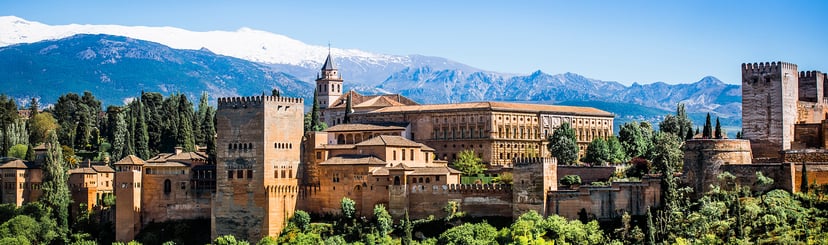



 So if you are looking for the absolute best in Granada & surroundings with authentic local fully-licensed native guides whose English you can actually understand and with an exclusive and amazingly fun itinerary













