Snow Season Between Granada and Sierra Nevada: Access, Equipment Handoffs and an Alhambra-Safe Fallback

Updated
The mountain day starts before anyone sees the mountain
A workable Granada–Sierra Nevada snow day begins at booking, not at the hotel door. First, place the Alhambra commitment on the calendar and treat it as the fixed point. Next, decide whether the mountain is an adjacent-day excursion, part of a split stay, or a flexible extra that can disappear without damaging the trip. Only after that should the family commit to rental timing, vehicle space, lessons, lunches, or a return hour from Pradollano. This order matters because snow is seasonal, but the operational parts of a snow day are much more volatile than the season itself.
Seven to ten days before travel, the useful question is not “Will there be snow?” It is “What must still be true for our particular group to have a worthwhile and controlled day?” A family with experienced skiers, two beginners, a non-skier and a fixed Nasrid Palaces entry has a different viability threshold from a couple willing to spend the day at the resort base. The group should define that threshold in advance: acceptable road conditions, enough lift and slope availability for the intended ability levels, an equipment plan that fits the vehicle, and a return margin that does not place the Alhambra or another named-entry commitment at risk.
Twenty-four hours before departure, recheck four separate systems: the A-395 road, the official resort operation, the local mountain forecast and the Alhambra schedule. The DGT traffic information service says its information is updated automatically around the clock from Guardia Civil and traffic-management-centre data, and it provides both a map and information on roads affected by ice or snow. The official Sierra Nevada snow report identifies the slopes, lifts and activities available for the day and adds a forecast for following days. These are different checks: an open road does not establish a useful ski operation, and visible snow does not establish that the lifts or activities needed by your family will run.
On the morning itself, check again before loading the vehicle. A condition report read the previous evening may no longer describe the departure window. Confirm the Alhambra entry details at the same time, even when the palace visit is on the following day, because the mountain plan should never depend on casually moving that reservation. The official Alhambra FAQ states that tickets are personal and non-transferable, that the purchased date and time cannot be changed, and that missing the ticketed Nasrid Palaces time means losing admission. Same-day ticket-office availability is not a dependable recovery strategy.
Snow presence and operational viability are two different decisions
A photograph of white peaks answers an aesthetic question. It does not answer the family’s transport, access or activity question. Operational viability is a chain: Granada departure, A-395 access, a safe arrival at Pradollano, parking or drop-off execution, equipment collection, suitable terrain or activities, a practical rejoining point, and a return that leaves the rest of the stay intact. If one link fails, the day may still be possible, but it becomes a different day from the one originally purchased or imagined.
Verified fact: Sierra Nevada’s own live report is designed to show daily availability rather than merely seasonal snow. Editorial interpretation: that makes it the correct source for deciding what kind of mountain day is available, not proof that every planned element will function. A broad opening may still be poor value for a group whose beginners need a particular meeting arrangement; a limited opening may be entirely satisfactory for experienced skiers who are comfortable shortening the day. The report must therefore be read against the group plan, not as a binary green or red light.
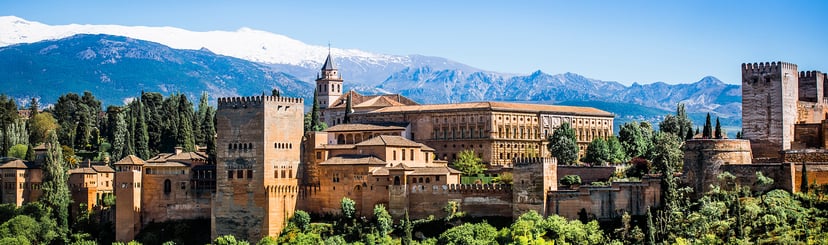
The distinction is especially important in Granada because the mountain can look close and convincing from the city. That visual proximity encourages overconfidence: the family sees snow, the weather in Granada feels benign, and a mountain day appears to be a simple add-on. In practice, the climb to Pradollano changes the operating environment. Road treatment, wind, visibility, lift availability, equipment queues and the pace of a mixed group can all affect the result. None of these should be dramatized, but all of them belong in the decision.
A useful rule is to define three versions of success before travel. The full version might include skiing for several ability levels. The reduced version might mean a shorter mountain session with one shared base-area interval. The fallback version might mean staying in Granada or using a confirmed lower-altitude plan. Because the family has named these versions in advance, a condition change becomes a managed switch rather than a disappointing argument at breakfast.
The Alhambra is the non-negotiable clock
For a private family combining Granada with Sierra Nevada, the Alhambra reservation should govern the sequence even when the mountain is the emotional highlight for some travelers. The reason is not that one experience is inherently more important. It is that the Alhambra has a named, timed admission rule, while the mountain is condition-dependent. The less movable commitment should control the more movable one.
The safest structure places a full mountain day before or after the Alhambra rather than around a same-day Nasrid Palaces entry. A morning palace slot makes an afternoon mountain attempt unattractive: by the time the family has completed the visit, returned for equipment and driven uphill, it has converted a flexible outing into a rushed partial day. An afternoon palace slot is even less compatible with a morning snow excursion because the return is exposed to traffic, weather and group delays. No sensible road estimate can remove the admission consequence of arriving late.
Families deciding between city-first and mountain-first sequencing can use the Granada and Sierra Nevada split-stay guide as the parent decision. Once the sequence is chosen, the snow-season plan adds a stricter rule: never let a conditional mountain operation consume the margin around a personal, non-transferable Alhambra entry.
There is also a quieter risk on the day after the mountain. A long, cold or fragmented outing can leave children and adults with less concentration for the Nasrid Palaces than expected. That is a planning issue rather than a medical claim. The answer is not automatically to abandon skiing; it is to avoid scheduling the family’s most demanding mountain format immediately before an early Alhambra entry. A shorter mountain day, a later city morning, or a full recovery interval may preserve the quality of both experiences.
Group organizers should keep the ticket roster, identification requirements and entry time separate from the mountain paperwork. Rental documents, lesson confirmations and resort bookings should not become the folder that also contains the palace plan. For the specific risks of names and group changes, the Alhambra ticket and roster-change guide is the useful supporting reference.
Read the A-395 as one dependency, not the entire answer
The A-395 is the central access line between Granada and Pradollano, but “the road is open” is not a complete departure decision. The family also needs to know whether restrictions, ice, snow, congestion or official instructions affect the intended vehicle and timing. DGT is the appropriate live source for road incidents and snow- or ice-affected routes. The Junta de Andalucía’s cold-weather guidance advises travelers to check both road conditions and the forecast, carry chains, choose mountain areas appropriate to participants’ preparation, respect warning signs and follow official directions.
That guidance has several operational consequences. First, the transport arrangement must be capable of complying with current road requirements; a comfortable vehicle is irrelevant if it is not properly prepared. Second, the driver’s decision to proceed or turn back should not be negotiated from the back seat after an official warning. Third, a family should not use local appearance in central Granada as a proxy for the conditions higher on the route. The check belongs to the mountain corridor and the intended departure time.
Route judgment: a private transfer is most useful here when it improves coordination, not when it merely replaces a taxi. The material benefits are a known equipment capacity, a driver briefed on the current plan, a clear return or standby arrangement for split abilities, and the ability to protect the city schedule if the mountain plan is reduced. Those benefits have to be agreed before departure. A vague promise to “see how it goes” leaves the family with the same uncertainties, only in a more expensive vehicle.
Do not improvise an alternate mountain approach when the principal route is affected. Follow official information and instructions. A fallback is meant to preserve the stay, not to create a second road problem in search of the original experience.
Equipment handoffs decide whether the morning stays controlled
Equipment logistics are often treated as a minor prelude to skiing, yet they determine the first hour, the vehicle load and the family’s ability to separate and rejoin. The key decision is where each traveler changes from city mode to mountain mode. A clean plan usually has three states: what is worn from the Granada hotel, what travels in a labeled personal bag, and what is collected or fitted at Pradollano.
Leaving Granada already dressed for the cold can reduce changing time, but traveling in full ski boots or carrying every layer in the passenger area can make the transfer awkward. The better approach depends on the group and vehicle. Each traveler should have one clearly identifiable soft bag for shoes, spare layers and personal items. Shared equipment should be grouped separately. The organizer should know before pickup whether skis, boards, helmets, strollers or mobility equipment are part of the load. This is where vehicle capacity becomes an operational fact rather than a comfort preference.
At Pradollano, establish one handoff sequence. One adult confirms the rental booking or collection process; the others keep the group together, distribute labeled bags and manage children or non-skiers. Do not make every person solve the same administrative question independently. Confirm current rental hours, fitting procedures, documentation and return conditions directly with the selected provider, because those details are volatile and are not established by a general resort report.
The resort’s official Pradollano locker page places lockers for clothes, shoes and backpacks on the ground floor of the Al-Andalus gondola, next to Al-Andalus Rental, with automated payment. That is useful evidence for designing a base-area handoff, but it should not be stretched into assumptions about available capacity, dimensions, opening hours or suitability for every item. Recheck the page and any on-site notices before relying on it.
Decide in advance what the vehicle retains. If the vehicle will leave after drop-off, no essential return clothing, medicine, identification or Alhambra material should remain inside. If it will wait or return on call, the family still needs a base plan that functions without repeated access to the boot. The vehicle should support the day, not become a moving locker that forces coordination every time someone changes activity.
The return handoff deserves equal attention. Rental returns, wet outerwear, ordinary shoes and tired children converge at the same time. Set a single regrouping location at Pradollano and a “ready for vehicle” standard: equipment returned or accounted for, dry footwear on, personal bags collected, and no one still committed to a distant activity. The pickup hour should be based on this completed state, not on the moment the last skier intends to stop.
For a multi-day mountain stay, do not assume that a day-use locker, rental provider or hotel will store equipment between sessions. Confirm each storage responsibility separately. A split stay can be elegant when the luggage and equipment path is explicit; it becomes cumbersome when the family moves city luggage, ski gear and palace-day clothing through the same sequence without ownership.
Mixed abilities need shared anchors, not a forced shared day
A private family often contains several mountain days at once. One person wants first lift and sustained skiing. Another needs a lesson. A child may enjoy only a short session. A non-skier may be happy at Pradollano if there is a confirmed activity or comfortable base plan, but not if asked to wait indefinitely. Trying to keep everyone together can reduce the experience for every subgroup and make the return less reliable.
The operational answer is a common departure, separate activity blocks and predetermined rejoining anchors. The anchors should be easy to identify at the resort base and should not require a lift or a particular slope to remain open. They also need time windows rather than a single minute. Mountain movement is variable, and a group should not make the driver, lunch or return plan depend on perfect synchronization.
One workable pattern is a morning split followed by a base-area reunion. Experienced skiers begin their own session. Beginners meet their confirmed instructor or activity provider. The non-skiing subgroup follows only activities shown as operating that day or uses a simple base plan. Everyone rejoins for a defined interval, after which the family decides whether to continue, reduce the day or descend. This is not a technical ski recommendation; it is a coordination structure.
A second pattern uses staggered descent. A child, beginner or non-skier returns to Granada earlier with a prearranged vehicle while the stronger skiers continue. That can be valuable, but only when the later group has an independently confirmed return. The family should not discover at midday that the vehicle can make only one journey, that equipment cannot be left, or that a child’s bag is with the wrong subgroup.
A third pattern keeps everyone in Pradollano but allows different definitions of success. The experienced subgroup may ski, while the rest use a shorter confirmed activity and a long indoor interval. This format reduces transport complexity but can create waiting fatigue. It works best when the base subgroup has a real plan rather than a promise that “there will be something to do.” The official snow report’s activity listing is relevant here, yet availability still needs to be read on the day.
Altitude should be treated as a pacing and rejoining variable. Pradollano is a very different environment from central Granada, and the combination of elevation, cold-weather clothing, unfamiliar equipment and walking in a resort base can widen the difference between the quickest and slowest family members. The Junta’s advice to match the mountain area to participants’ preparation is a useful boundary. The planner’s role is to keep choices within that boundary, not to offer medical or technical instruction.
For multigenerational groups, the most important rejoining question is often not “Where will we meet?” but “Who is authorized to change the plan?” Name one coordinator for the family and one decision time. Otherwise, experienced skiers may extend the session while the base subgroup assumes an early descent, each believing the other has agreed. A simple authority structure prevents the vehicle, equipment and dinner schedule from being renegotiated by text message across the mountain.
Choose a mountain-day format that can shrink without collapsing
The most resilient snow day is not necessarily the shortest. It is the one with a reduced version already built into it. Three formats cover most private-family needs, and each responds differently to uncertain operation.
A dedicated full mountain day
This format belongs on a day with no Alhambra entry, no important onward transfer and no city reservation that depends on a precise return. It gives the group room for equipment fitting, separate ability blocks and a controlled descent. Its weakness is exposure: more bookings, more equipment and more expectations can be affected if the operation narrows. Protect it by making the cancellation or reduction threshold explicit and by keeping the following morning reasonable.
A short Pradollano day with a defined city return
This format can suit a mixed family that values the mountain atmosphere as much as total ski time. The group departs after a fresh condition check, uses a limited activity block and reunites before fatigue or weather dictates the return. It should still avoid a same-day Nasrid Palaces entry. The virtue is not merely brevity; it is that equipment return and descent occur while the family still has margin. It can also be converted into a city afternoon if the mountain operation is too limited to justify departure.
A flexible mountain option held behind the city plan
Here the Granada day is fully worthwhile on its own, and the mountain is activated only when the live checks support it. This is the correct format when the stay is short, the Alhambra slot dominates the itinerary, or the group’s interest in snow is optional. It may feel less committed during planning, but it is often the most honest arrangement. A family that would be disappointed by a reduced mountain operation should not pre-load the day with non-refundable assumptions unless the relevant terms are understood.
These formats should not be confused with the broader question of where to sleep. A resort overnight can reduce the morning transfer but adds luggage, storage and sequencing questions. Granada lodging preserves easier access to the Alhambra and the city fallback but makes each mountain attempt dependent on the road corridor. The split-stay guide linked earlier handles that strategic choice; this article’s narrower point is that every format needs a version that remains satisfactory when one or more mountain components disappear.
Conditions can weaken after departure
A morning check reduces uncertainty; it does not eliminate it. Visibility, wind, lift operation and road instructions can change after the family has left Granada. The plan therefore needs decision points after arrival, not just a pre-departure verdict.
The first decision point is before rental collection. If the operation available on arrival no longer matches the intended group needs, pause before turning uncertainty into a full set of equipment transactions. The second is after the first shared interval. Ask whether each subgroup still has a worthwhile, controlled plan and whether the return margin remains intact. The third is the agreed descent trigger, which may be a time, an official instruction or a material reduction in operations.
When the day is reduced, resist the temptation to compensate by adding unrelated mountain stops. That often delays the descent without replacing the original value. A clean early return to Granada can preserve an afternoon walk, a properly paced meal and the next day’s Alhambra visit. A scattered search for a substitute activity can consume the same hours while leaving the family cold, separated and uncertain.
If official road or emergency guidance changes, follow it. The family’s contingency should not depend on outmaneuvering a closure or warning. The evergreen skill is not predicting the mountain perfectly; it is changing course early enough that the rest of the Granada stay still works.
A lower-mountain fallback must be verified, not romanticized
“We will do something lower down” sounds reassuring, but it is not yet a plan. Lower elevation may reduce some exposure, yet a foothill or village outing can still be affected by weather, road conditions, opening patterns and the group’s clothing. It also may not satisfy travelers who were expecting skiing. The fallback must therefore have its own purpose.
A credible lower-mountain day might focus on scenery, a village meal or a short, confirmed activity in the foothills, with no claim that it recreates a ski day. Monachil and Güéjar Sierra are names that often enter Granada mountain planning, but neither should be treated as an automatic substitute simply because Pradollano is less attractive. Confirm the route, weather and the specific place the family intends to use. If those details are not firm, Granada itself is the more dependable fallback.
Families who want mountain air rather than snow sport may also compare Sierra Nevada with the Alpujarras. the roads, season and energy comparison for the Alpujarras and Sierra Nevada helps with that alternative. It should not be used to justify a last-minute diversion onto unfamiliar roads during poor conditions. It is a separate day-trip choice, made with its own checks.
The lower-mountain fallback earns its place when it has a clear stop, an easy cancellation path and a return that protects the city schedule. It fails when it is merely an attempt to chase a patch of snow after the official resort plan has become unattractive.
The Granada fallback should feel like a chosen day
A city fallback is strongest when it is designed before the weather turns. Granada has enough depth that the family does not need to frame the day as a consolation prize, but the substitute should respect the energy and clothing of people who prepared for the mountain. That means avoiding an improvised sequence of steep hills, long outdoor waits and uncertain admission.
For a full open day, build one substantial city anchor and one optional second layer. The anchor might be a guided historic-center route connecting the Cathedral area, Royal Chapel context, the Madraza and the Alcaicería, or a focused Realejo day that stays below the most demanding Albayzín climbs. The second layer can be added only if the group still has energy: a garden, a museum, artisan research, a hammam or an early evening viewpoint. The point is to replace the mountain’s structure, not its weather.
For a family that already has an Alhambra visit on the following day, the fallback should avoid exhausting the same legs and attention. A long Albayzín and Sacromonte climb may be culturally rewarding, but it can be the wrong substitute after the group has dressed, packed and emotionally prepared for snow. A lower-city route with a good guide gives the day a distinct intellectual theme and leaves the palace visit fresh.
For a morning Alhambra slot on the same day, the mountain should already have been excluded. The fallback can begin after the palace visit with lunch and a lower-city afternoon. For an afternoon slot, keep the morning close to central Granada and avoid any plan whose return depends on the A-395. The official ticket rule makes this more than a preference.
A three-night family stay has more room to absorb change. The group can use the mountain day’s fallback for the lower city, retain the Alhambra, and place a weather-independent experience on the remaining day. the three-day Granada itinerary provides supporting city structure; the snow-season adjustment is to leave one block genuinely movable until the final operational check.
Dining can help a fallback feel intentional, but it should not carry the entire day. A reservation at a serious Granada dining room may give the evening a satisfying endpoint, whether the family chooses a MICHELIN Guide selection, Faralá or Arriaga after checking current menus and opening. The editorial point is not that a meal compensates for lost skiing. It is that a protected evening can restore shape to a day that changed early, provided the return and clothing handoffs are complete.
Do not move the Alhambra to “make room” for the new city day unless the official ticket conditions explicitly allow the proposed change. The default assumption, supported by the official FAQ, is that the purchased date and time cannot simply be altered. The fallback works around the palace commitment rather than treating it as flexible inventory.
Private transport matters when it protects the whole stay
Private transport and group coordination are justified in this plan when they solve a concrete dependency. The family may need a vehicle with known equipment capacity, a driver briefed on A-395 conditions, a clear drop-off and pickup sequence at Pradollano, or the ability to return one subgroup to Granada while another continues. These are operational outcomes. They are not reasons to add chauffeur language to every paragraph.
The service brief should specify the decision hierarchy. The Alhambra entry and any fixed onward travel are protected. Official road instructions govern access. The resort’s live operation governs what mountain version is possible. The family coordinator decides whether the group uses the full, reduced or fallback format. The vehicle plan then follows that decision. Without this hierarchy, even excellent transport can become a passive participant in confusion.
A useful transport brief includes the number and ages of travelers, all bulky equipment, whether rentals are collected at Pradollano, the intended rejoining points, whether an early return subgroup is possible, who holds the driver contact, and what happens if departure is cancelled before pickup. It should also state which bags must return to the Granada hotel and which may remain with a mountain subgroup. This is especially important when the family is changing hotels or continuing elsewhere after Sierra Nevada.
The commercial value appears at the exact moment that mountain conditions interact with named-entry commitments. A driver and coordinator cannot guarantee snow, lift operation or road access. They can prevent a condition change from scattering the family across bookings, equipment and return arrangements, and they can help preserve the Alhambra day that cannot be recreated casually. That is the material reason to consider private Granada planning and touring support for this itinerary.
A practical verification sequence for the final twenty-four hours
The evening before:
- Confirm the exact Alhambra date, named travelers and Nasrid Palaces entry time.
- Read the official Sierra Nevada snow report for lift, slope and activity availability relevant to each subgroup.
- Check DGT for the A-395 and any snow- or ice-related road information.
- Review the local forecast and any official warnings or instructions.
- Confirm rental, lesson or activity arrangements directly with the provider, including current meeting and return procedures.
- Decide whether the full, reduced or fallback format is the working plan.
Before leaving Granada:
- Repeat the road, resort and weather checks; do not rely on the previous evening’s status.
- Confirm that the vehicle is appropriately prepared for current requirements and has the agreed equipment capacity.
- Separate palace documents and identification from mountain paperwork.
- Label personal bags and decide what travels in the vehicle, what goes to a locker and what must stay with each traveler.
- Restate the base-area rejoining location, decision time and descent trigger.
At Pradollano:
- Compare the live operation with the group’s intended activities before completing every equipment handoff.
- Keep one coordinator in charge of rentals and one adult focused on children or non-skiers.
- Use only confirmed storage; do not assume capacity or hours from a general listing.
- Make the first continue-or-reduce decision at the agreed shared interval.
Before descending:
- Complete rental returns and collect ordinary footwear, outerwear and personal bags.
- Account for every subgroup before calling the vehicle into the final pickup sequence.
- Check current road information again when conditions have changed materially.
- Protect the next fixed commitment rather than extending the day to recover “lost” mountain time.
What remains evergreen and what expires quickly
The article’s hierarchy is durable: protect the named Alhambra entry, separate snow from operational viability, use official sources, define equipment ownership, create mixed-ability rejoining anchors and keep a worthwhile Granada fallback. Those principles should survive from one winter to the next.
The live facts do not. Road incidents, restrictions, lift and slope availability, activity operation, locker arrangements, rental procedures, weather and Alhambra policies can change. Verification note: the source review for this guide was completed on August 24, 2026, and the operational pages were treated as high-volatility evidence. The editorial recheck cycle is 365 days, with an earlier review after a substantive page change or source correction. For an actual journey, consult the official pages again rather than repeating a dated condition as though it were permanent.
The fallback also needs a freshness check. A named museum, meal, village stop or provider is useful only when its current opening and access fit the day. Keep the fallback’s structure evergreen, but verify its components close to travel. When mountain conditions interact with a fixed palace reservation, this is the point at which coordinated private transport and one group decision-maker become safeguards for the entire Granada stay. Inquire now to shape the mountain, equipment and city contingencies around the family’s actual Alhambra time. Then, on the evening before and again before departure, verify roads, lifts, weather, storage and palace details one final time.
If you’re interested in any private tours of Granada, please reach out to us.



 So if you are looking for the absolute best in Granada & surroundings with authentic local fully-licensed native guides whose English you can actually understand and with an exclusive and amazingly fun itinerary













