The Lost Libraries of Caliphal Córdoba: Al-Hakam II, Manuscript Culture and the Making of Knowledge

Updated
929: Abd al-Rahman III proclaims the Umayyad caliphate in Córdoba. 936: work begins on Medina Azahara, the palace-city west of the capital through which the new dynasty will stage government, ceremony and cultivated authority. 961: his son al-Hakam II becomes caliph after decades as heir, bringing to the throne a reputation for learning and collecting. 973: the grammarian Abu Bakr Muhammad al-Zubaydi completes and collates an abridged Arabic dictionary commissioned for al-Hakam. 976: the caliph dies, leaving a child successor and a court whose balance of power will rapidly change. 1008: the earliest dated surviving copy of al-Zubaydi’s dictionary is made. 1124: another copy, probably produced in Valencia and now preserved in Fes, records a chain of collation leading back to “the Book of al-Hakam.”
That sequence is more useful than the familiar image of one fabulous hall containing 400,000 books. It shows a political project becoming a textual process: rulers commissioning works, scholars reorganizing inherited knowledge, copyists reproducing it, correctors checking it and later readers carrying it beyond the institution that first sponsored it. The physical library disappeared. Parts of its working method did not.
The central question, then, is not simply how large al-Hakam II’s library was. It is how caliphal Córdoba gathered, authenticated, classified and mobilized knowledge—and how much of that system can be reconstructed when its shelves, catalogue and architectural location have not survived. The most defensible answer comes from joining three kinds of evidence that do not always agree: later historical testimony, manuscripts with transmission notes, and the archaeology of a court city that remains mostly unexcavated.
A library was an institution before it was a room
Modern visitors tend to imagine a library through architecture: a recognizable chamber, fixed shelving and a collection that remains where it was assembled. Al-Hakam’s library is harder to grasp because none of those elements can presently be matched with confidence. No excavated space at Medina Azahara carries an uncontested identification as the caliph’s library, no complete shelf list survives, and no body of codices can be lined up against original inventory numbers.
Yet the absence of a room does not make the institution imaginary. A court library could be distributed across storage, working and residential spaces. It could include books inherited from earlier rulers, al-Hakam’s personal collection, commissioned copies, gifts, texts temporarily borrowed for collation and volumes held by scholars attached to the court. Its essential infrastructure was human as much as architectural: a patron who created demand, officials who authorized expenditure, purchasers and messengers, copyists, binders, correctors, librarians, scholars and readers.
The most useful reconstruction is this: the library of al-Hakam II was a state-supported system of acquisition, textual production and scholarly validation, not a measurable heap of books. Its scale mattered, but its deeper political force lay in making Córdoba a place where authoritative texts could be obtained, revised, organized and issued under caliphal patronage.
The strongest surviving thread begins with a dictionary
The clearest evidence is not a catalogue or a ruined storeroom. It is the transmission history of the Mukhtasar al-Ayn, an abridgement of the foundational Arabic dictionary associated with al-Khalil ibn Ahmad al-Farahidi. Its author, al-Zubaydi, was a Sevillian scholar who became a courtier, philologist and tutor to al-Hakam’s heir. He did not merely copy an eastern classic. At the caliph’s request, he condensed and reworked it for easier study.
Umberto Bongianino’s peer-reviewed study of the Qarawiyyin manuscript identifies an unusually detailed chain. According to colophons preserved in the 1124 codex, al-Zubaydi began the work in December 972, completed an initial transcription and then collated it a second time by July 973. The copying was subsequently entrusted to al-Fath ibn Amr ibn Matar al-Ishbili, described as a servant of the Commander of the Faithful. The later manuscript also reports that the exemplar used by the Valencian scholar Ibn al-Sid al-Batalyawsi had been checked against al-Hakam’s book, which contained corrections in al-Zubaydi’s own hand.
Every step matters. A commission shows patronage. A first transcription shows composition becoming an object. A second collation shows that textual accuracy was treated as work rather than assumed. Entrusting the copy to a named palace servant shows delegation within a hierarchy. The later comparison against an authoritative exemplar shows that the prestige of the caliphal copy remained active long after al-Hakam’s death.
The wording should still be handled carefully. The 1124 colophons are not a contemporary inventory card from 973. They preserve statements copied through intermediate manuscripts, and each transmission stage could introduce error. What they offer is not an untouched object from the royal shelves but a documented memory of textual descent. That distinction is precisely why this manuscript is so valuable: it lets us see what medieval scholars considered necessary to establish authority—names, dates, acts of copying, acts of comparison and a recognized exemplar linked to the caliph.
Classification happened inside books as well as around them
The Mukhtasar al-Ayn also reveals what “organizing knowledge” meant at a level more exact than arranging volumes by subject. Arabic roots were ordered according to the points at which their consonants were articulated in the throat and mouth, following the phonetic-permutative system of al-Khalil. Chapters moved through letters in that specialized order; sections then distinguished roots of two, three, four or five consonants and accounted for possible permutations.
This was not intuitive shelving for an untrained reader. It was a disciplined intellectual map. Al-Zubaydi shortened explanations, suppressed digressions and omitted material he considered redundant so that the work would be easier to memorize and consult. The library’s cultural significance therefore lay partly in transformation: Córdoba did not only import authoritative eastern writing; its scholars re-edited that inheritance for new pedagogical and courtly purposes.
The 1124 manuscript makes that order visible. Large illuminated headings announce major divisions, medium scripts carry entries, miniature marginal writing supplies glosses and collation marks certify checked passages. On one analyzed page, the copyist had to change pens repeatedly to maintain the hierarchy of scripts and signs. The page functions at once as search interface, critical apparatus and statement of prestige. A library capable of commissioning such textual work was not merely preserving knowledge. It was producing legibility.
For a broader view of how language itself became evidence in the city, follow Córdoba’s Arabic, Hebrew and Latin record through inscriptions and collections. The manuscript story differs from an epigraphic route because its evidence travels: a copied text can leave Córdoba while still preserving the authority of a Cordoban exemplar.
The number 400,000 belongs to the evidence—and to the problem
Medieval and later accounts credit al-Hakam with an immense collection, most often rendered as 400,000 volumes. A related tradition describes a catalogue extending across forty-four books or parts. These figures cannot be verified against surviving inventories, and the manuscript study cited above explicitly treats the headline number as likely hyperbole. Dismissing it altogether, however, would also lose information. Exaggeration can preserve a truthful social memory: contemporaries and later writers believed the collection’s scale was exceptional enough to require an exceptional number.
Several uncertainties prevent a modern conversion. A “volume” might mean a physical codex, one part of a multi-volume work, a composite book containing several texts or a counted item whose relationship to a title is unclear. Catalogues can enumerate authors, works, copies or shelf units differently. Duplicates were not necessarily redundant when manuscripts varied, when several readers needed access, or when one copy served as the exemplar against which another was checked. Even an accurate medieval total would not map neatly onto the modern idea of 400,000 distinct books.
The reported catalogue is more revealing as evidence of administration than as a surviving dataset. To catalogue is to impose categories, establish custody and make retrieval possible. At royal scale, it also turns ownership into a performance of command: the court claims not simply to possess texts but to know what it possesses. Yet because the catalogue itself is lost, we cannot reconstruct its subject divisions, its descriptive precision, its treatment of translations or the proportion of religious, literary, legal, medical, astronomical and historical material.
A responsible account therefore holds two propositions together. The exact total is unproved and probably rhetorical. The institution was nevertheless large and organized enough to leave a durable reputation for acquisition, cataloguing, copying and scholarly use. The mistake is not mentioning 400,000; the mistake is presenting the figure as if someone had audited the shelves.
Collection building depended on a Mediterranean book ecology
Popular retellings often compress the library’s growth into a list of agents dispatched to Baghdad, Cairo, Damascus and Constantinople. Later historical traditions do portray al-Hakam as an energetic purchaser with eastern contacts, and such activity fits the political geography of the tenth-century Islamic world. But no complete acquisition ledger survives. It is more secure to describe the mechanisms than to pretend every reported buying mission can be reconstructed.
Books entered elite collections through several channels: inheritance, purchase, gifts, diplomatic exchange, authorial dedication, commission and copying from borrowed exemplars. A rare work did not always need to travel permanently. An authorized copy could be made where the exemplar was available; a scholar could bring a text in memory or in notes; a court could sponsor a local recension of an imported work. The Mukhtasar al-Ayn shows the final mechanism especially well. Al-Hakam’s project depended on eastern lexicography, but the resulting book was a new Cordoban scholarly product.
Material choices also shaped circulation. Among the six dated early copies of al-Zubaydi’s dictionary identified in the manuscript study, most were written on paper; the deluxe 1124 Qarawiyyin codex was made on parchment. Paper supported relatively economical reproduction, while parchment, illumination and carefully differentiated scripts could confer ceremonial or institutional prestige. The contrast warns against treating “a manuscript” as one uniform commodity. A working copy, a presentation codex and a heavily collated scholarly exemplar could transmit the same text while serving different social purposes.
The urban book trade mattered as well. The institutional interpretation of Medina Azahara describes librarians, private collections, public libraries and bookshops across al-Andalus. That picture should be read as a synthesized historical model rather than as an excavated map of individual shops. Still, the basic implication is sound: a royal library could not remain an isolated wonder. It drew on a culture of paper, literacy, teaching, collecting and resale that extended beyond the palace. Court demand rewarded specialists and amplified the value of books throughout the capital.
This is why the library should not be described as a western copy of Baghdad’s intellectual institutions. Córdoba was connected to eastern scholarship, but it was also asserting autonomy from it. To acquire an eastern book was valuable; to commission a reliable Cordoban version, train readers around it and preserve an authoritative local exemplar was politically stronger. The collection helped present the western Umayyad caliphate as a center from which knowledge could be certified, not merely received.
Translation was collaboration, correction and sometimes unresolved work
The story of Greek and Latin learning in Córdoba is frequently told as a smooth translation movement directed by enlightened caliphs. The evidence is more interesting because it is less smooth. Different texts required different languages, specialists and methods. Some projects translated; others glossed technical vocabulary, collated an older Arabic version against a Greek exemplar or adapted a source so thoroughly that “translation” understates the editorial intervention.
The best-known courtly episode began under Abd al-Rahman III, before al-Hakam became caliph. A Byzantine embassy brought works associated with Dioscorides and Orosius. Ibn Juljul’s later account explains that the Greek botanical manuscript of Dioscorides could not simply be used by owning it: difficult plant names required a person who knew Greek and could identify the remedies. Nicholas, a monk sent from Constantinople, worked in Córdoba with local physicians and with Hasdai ibn Shaprut, the Jewish courtier and medical scholar. The task was partly linguistic and partly empirical. A Greek name became useful only when connected to an understood substance in the local medical world.
Orosius presents a different problem. His Latin universal history was eventually reworked into Arabic as the text conventionally called Kitab Hurushiyush. Marco Di Branco’s 2025 study of Orosius in al-Andalus compares testimony from Ibn Juljul and Ibn Khaldun and emphasizes contradictions in chronology and attribution. Ibn Juljul knows of the Latin work and of people in Córdoba capable of translating it, but his account does not settle who produced the surviving Arabic version. Ibn Khaldun, writing much later, associates the work with a Christian ecclesiastical authority in Córdoba collaborating with the Muslim scholar Qasim ibn Asbagh. The traditions overlap without forming a clean project file.
That uncertainty has two consequences. First, the presence of Christian, Muslim and Jewish specialists at or around the Umayyad court should not be flattened into a modern slogan of effortless coexistence. Their participation was conditioned by office, language, patronage and unequal political structures. Collaboration occurred because particular expertise was needed, not because confessional differences disappeared. Second, a translation could remain unfinished, be revised over generations or survive only in a later manuscript far removed from the original commission.
The Arabic Orosius also demonstrates that translating knowledge meant choosing a new readership. Names, chronologies and religious assumptions had to be made intelligible in Arabic. The result was not a transparent pane through which Latin antiquity passed unchanged. It was a new historical object. In library terms, acquisition was only the first threshold. The decisive work came when readers could classify, contest and reuse the imported material.
This helps separate al-Hakam’s library from a generic “Golden Age” narrative. The significant achievement was not that every culture’s wisdom harmoniously accumulated in one building. It was that Córdoba sustained enough patronage and specialist labor for difficult texts to become usable—and that the surviving reports still expose disagreement over how that happened.
Medina Azahara supplies the court context, not the missing shelf plan
Medina Azahara is indispensable to understanding the library because it materializes the political world that made such patronage meaningful. The city was a planned statement of caliphal rule: terraces, reception spaces, residences, service areas, roads, water systems, decoration and controlled approaches transformed landscape into hierarchy. Knowledge belonged to that same theatre of authority. Scholars, secretaries, physicians, poets and technical experts enhanced the court’s reputation just as ceremonial architecture did.
UNESCO’s inscription decision for Medina Azahara describes a complete tenth-century urban complex whose infrastructure, buildings, decoration and setting survive with unusual integrity. It also records the decisive limitation: only about ten percent of the site had been excavated at the time of inscription. The unexcavated majority is not an empty zone waiting to confirm familiar stories. It is a reserve of future evidence that may revise the map of administration, production and residence.
No secure archaeological identification of al-Hakam’s library follows from the existence of a learned court. Manuscripts are portable; shelves and chests are perishable; rooms change use; writing implements can occur in offices, schools, treasuries and domestic spaces. A room with benches is not automatically a scriptorium, and a prestigious hall is not automatically a library. Even a cluster of inkwells would establish writing activity more readily than the subject, ownership or scale of the texts once present.
The safer formulation is that Medina Azahara preserves the institutional environment of the collection. Its upper palace shows how access and visibility were managed. Its water, roads and service fabric show the logistical capacity of a purpose-built capital. Its inscriptions and decorative programs show the court’s command of specialized craft and language. These features make a major library plausible as part of the state apparatus without locating its doors.
Readers building a wider caliphal sequence can place this question inside a Medina Azahara, museum and old-town study of caliphal Córdoba. For a sharper comparison of what palace archaeology can and cannot answer, compare Medina Azahara with the palace evidence at Cercadilla.
Why specialist interpretation changes the visit
The difficulty for an Islamic-history specialist is not a shortage of impressive monuments. It is the temptation to let those monuments stand in for evidence they do not contain. Medina Azahara can demonstrate court scale but not a 400,000-volume count. The Mezquita-Catedral can demonstrate al-Hakam’s architectural patronage but not the location of his catalogues. A later manuscript can preserve a chain back to his exemplar without having occupied his shelves.
This is where private, specialist interpretation has a material purpose. The useful guide is not the person with the most dramatic library story; it is the person who can distinguish a contemporary object from a later testimony, a textual lineage from physical provenance, and a plausible court function from an excavated identification. That discipline allows sparse traces to become a coherent account without manufacturing certainty. For travelers who want that evidence-led reading built around the city’s collections and caliphal sites, explore private Córdoba tours with specialist historical interpretation. Inquire now
New archaeology can refine the city without locating the library
Excavation is not the only way the buried city is being studied. The Junta de Andalucía’s repository record for 2022 geophysical fieldwork, published in 2025, reports that prospecting defined aspects of the urban layout and occupation levels in the central-eastern sector of the medina. Geophysical methods can reveal walls, streets, voids and differences beneath the surface, helping researchers ask more precise questions before opening trenches.
Such work is especially important at a site where the excavated fraction is small. It can show that supposedly peripheral areas were structured, identify routes between sectors and correct assumptions based only on the monumental upper terrace. A more complete urban plan may clarify where administrative, artisanal or residential activity was concentrated.
It cannot, by itself, identify the contents of vanished rooms. A rectangular anomaly does not announce “library.” Function depends on excavation, stratigraphy, finds, inscriptions and comparison with other spaces. Even after excavation, a library may remain archaeologically invisible if its books and fittings were removed before destruction. Geophysics therefore strengthens the institutional reconstruction while keeping the central architectural question open.
This is a useful model for the whole subject. Each source answers at a different resolution. Urban archaeology explains the court’s spatial capacity. A manuscript colophon explains one chain of textual authority. A chronicle explains what later writers remembered or wanted readers to believe. The reconstruction becomes reliable only when one source is not forced to do another’s job.
What survives is often a text, not an object from the royal shelves
Al-Zubaydi’s dictionary makes the distinction unusually clear. Its original Cordoban manuscript is lost, but the text survived in multiple copies. The peer-reviewed study identifies six dated witnesses from the two centuries after the work’s completion: a 1008 copy now at the Sacromonte in Granada; a 1043 copy held by the CSIC in Madrid; the 1124 Qarawiyyin manuscript in Fes; a 1130 witness in Rabat; an 1187 copy in Cairo; and a 1204 manuscript in Marrakesh. The modern location of each codex is not necessarily its place of production, but together they show a work moving through the Islamic West and beyond.
The Qarawiyyin copy is especially instructive because it is both distant from tenth-century Córdoba and unusually close to its scholarly procedures. It was probably made in Valencia in the circle of Ibn al-Sid al-Batalyawsi. The copyist checked it against a manuscript connected through collation to al-Hakam’s exemplar. Marginal glosses cite eastern and Andalusi authorities, while marks equivalent to “it is correct” signal specific acts of verification. The codex embodies a network: Córdoba, Valencia and Fes are joined not by a surviving royal shelfmark but by documented scholarly handling.
This suggests four different meanings of survival:
- Physical survival: the same codex remains. For the original royal copy of the dictionary, this has not been demonstrated.
- Textual survival: the wording continues through descendants, even when the exemplar disappears.
- Procedural survival: practices of collation, annotation and citation carry forward the standards associated with an authoritative copy.
- Reputational survival: the name of al-Hakam’s library continues to confer authority, whether or not later readers can inspect the original object.
The last category demands caution because prestige can encourage invented pedigrees. Yet the detailed colophons, dated witnesses and material analysis give this case more substance than a bare claim of royal ownership. It is one reason the dictionary should sit near the center of any serious account of the lost library.
Other fields leave different traces. Medical knowledge associated with al-Zahrawi survives through later copies of his Kitab al-Tasrif, often far removed in date and place from the physician’s own lifetime. Scientific instruments can survive without the books that explained them. The institutional “Knowledge as Power” interpretation of Medina Azahara connects sundial fragments, astronomy, medicine and court learning; it is most persuasive when read as evidence of an intellectual environment rather than an inventory of al-Hakam’s holdings.
Copyists and librarians should not disappear behind the caliph
Calling the collection “al-Hakam’s library” accurately identifies patronage and ownership, but it can obscure the people who made the institution function. The named al-Fath ibn Amr ibn Matar al-Ishbili is unusually important because a colophon assigns him a concrete task: copying al-Zubaydi’s treatise after the author had composed and collated it. The record does not tell us whether he worked alone, where he sat or how long the job took. It does establish that the caliph’s desire for knowledge became someone else’s disciplined manual labor.
The later Valencian codex reveals further roles even when it withholds names. An anonymous copyist manages several script sizes, illuminated headings, punctuation systems and marginal arrangements. A collator checks words against an exemplar. Earlier scholars leave glosses that later hands preserve. A patron pays for parchment and pigments. A binder assembles the quires. Readers learn how to move through the phonetic structure. “The library” is the collective result of these acts.
Lubna of Córdoba is often presented online as the single chief librarian who managed hundreds of thousands of books and personally led acquisition missions. Medieval biographical tradition does remember a learned palace woman named Lubna, praising her writing, grammar, poetry and mathematics, and associating her with caliphal secretarial culture. The more elaborate modern biography is much less secure. Her case is worth retaining, but in its strongest form: women could be highly educated participants in the palace’s written administration, while the exact boundaries of Lubna’s library responsibilities remain difficult to recover.
This evidentiary restraint does not diminish her. It prevents a documented intellectual from being replaced by a composite legend. It also redirects attention from celebrity to workforce. A collection on al-Hakam’s scale—whatever that scale was—required many competent people whose names were not copied into later histories.
The library’s loss was a sequence, not one cinematic bonfire
After al-Hakam died in 976, his young son Hisham II succeeded him, while real power increasingly passed to the chamberlain Ibn Abi Amir, known as al-Mansur. Later accounts report that books associated with philosophy or the “ancient sciences” were examined and that some were burned or otherwise removed in a political gesture toward religious authorities. The broad outline is plausible and well established in scholarship; the exact scale is not. No list identifies every rejected title, and it is unsafe to imagine that a single purge erased the entire collection.
The court’s political transformation mattered as much as any act of destruction. A library built around one ruler’s priorities can lose coherence when patronage changes, personnel disperse and access narrows. Books may be transferred to another palace, absorbed into private collections, sold, stolen, neglected or recopied before the original disappears. Selective censorship and ordinary redistribution can operate at the same time.
The early eleventh-century civil wars then broke the institutional world that had sustained the collection. Medina Azahara was attacked, plundered and abandoned; architectural elements were quarried and portable valuables scattered. Yet even here, “the palace-city was destroyed, therefore every royal book burned there” exceeds the evidence. We do not know where all parts of the library were stored at that moment, how much had already moved, or which texts survived in copies elsewhere.
The six dated manuscripts of al-Zubaydi’s dictionary make a simple total-loss story impossible. A witness dated 1008 existed before the worst phase of the fitna, and later descendants continued to circulate. What vanished was not necessarily every text. More certainly lost were the integrated collection, its inventory, its controlled relationships among exemplars and copies, and the political institution that could commission revision on a caliphal scale.
That distinction changes the emotional meaning of the subject. The tragedy is not only numerical—the disappearance of a spectacular quantity of codices. It is archival. Without the catalogue and securely proven provenance, historians cannot reconstruct which versions stood beside one another, which notes belonged to al-Hakam, which works were heavily used, or how readers navigated the whole. The missing relationships are as important as the missing objects.
How to read the library in Córdoba today
A specialist visit works best as a sequence of evidentiary questions rather than a search for a vanished room. The city offers no single “library site,” but it does preserve complementary settings in which patronage, writing, classification and loss can be understood.
Begin with Medina Azahara as a system of court power
Use the museum and site to establish scale, hierarchy and the division between what is excavated and what remains underground. Models and plans are more important to this topic than picturesque fragments because they show how reception, residence, administration and service were organized. At the archaeological zone, resist attaching the library to the most impressive surviving hall. Instead ask what kinds of controlled space a manuscript institution required: secure storage, access for trusted personnel, working light, movement between scholars and officials, and proximity to the court without necessarily occupying ceremonial rooms.
The Salón Rico and upper terrace still matter, but as evidence of how the caliphate staged authority. Their refinement helps explain why knowledge could serve a parallel political function. The same court that ordered marble carving, epigraphy and calibrated ceremonial access could invest in corrected texts and prestigious copies. For a material comparison, read the court’s ivory pyxides as portable statements of Umayyad authority. A pyxis survives as an object; the library survives largely as a network of references. The contrast is revealing.
Use the Archaeological Museum to separate tools from texts
Córdoba’s archaeological collections can place sundials, inscriptions, ceramics, architectural fragments and other technical objects beside the manuscript story. The key is to avoid making each scientific object a proxy for a lost book. A sundial demonstrates mathematical and astronomical knowledge embodied in an instrument. It does not identify the treatise used by its maker. An inscription demonstrates trained calligraphy and official language. It does not prove that the same artisan copied library manuscripts.
Those limits are productive. They show that knowledge circulated across media: stone, metal, parchment, paper, speech and trained practice. The royal collection was one node in a larger environment that included workshops, chancery writing, medical observation, teaching and religious study. Displays can change, so the enduring value lies less in any promised object than in the method of comparison.
Read al-Hakam’s mosque extension as fixed text and public authority
Inside the Mezquita-Catedral, al-Hakam II’s architectural patronage survives with a clarity the library does not. The extension associated with his reign, the maqsura, mihrab zone, mosaics and inscriptions demonstrate investment in specialists, costly materials and carefully framed language. Here words are fixed into architecture and attached to a public, dynastic and sacred setting. Manuscripts, by contrast, were portable, revisable and accessible through more restricted social channels.
The comparison prevents a common shortcut. The mosque was a major setting for teaching and learned life, but it should not be described as the visible shell of the palace library. Its value is comparative: it proves what al-Hakam’s patronage could achieve when a project was built to endure. It also shows classification in another form. Qur’anic text, ornament, geometry and spatial sequence guide attention just as headings, sections and marginal signs guide the reader through al-Zubaydi’s dictionary.
Let later intellectual Córdoba complicate the caliphal story
The library should not become a triumphalist preface to every later Cordoban thinker. Ibn Rushd and Maimonides belonged to the twelfth century, after the caliphate’s collapse, under different political regimes and intellectual pressures. Their work cannot be credited directly to al-Hakam’s shelves. Yet their Córdoba inherited habits, institutions and debates shaped by the longer written culture of al-Andalus. Follow Maimonides’ Córdoba through medicine, law and the later intellectual city as a sequel, not as proof that one royal collection caused all subsequent achievement.
This sequencing also protects the distinctiveness of the library topic. The question here is not a multilingual walking route or a chain of famous biographies. It is how an institution created authority around texts—and how textual authority outlasted the state that organized it.
Four objects clarify what the evidence can carry
A useful way to test any claim about the lost library is to compare four kinds of evidence, each with a different strength.
- A manuscript colophon can name an author, copyist, date, act of collation and exemplar. It is strong for a particular transmission chain, though it may repeat an earlier statement.
- A palace wall can establish plan, building sequence and controlled movement. It is strong for spatial organization but weak for identifying vanished book contents.
- A courtly luxury object can show patronage, craft, titulature and gift culture. It is strong for representation but does not reveal routine scholarly use.
- A later chronicle can preserve names, numbers and institutional memory. It is essential for questions archaeology cannot answer, yet vulnerable to rhetorical inflation and hindsight.
The library emerges where these categories intersect. Chronicles preserve the reputation of scale. The dictionary colophons expose actual procedures. Medina Azahara demonstrates the political and material capacity of the court. Scientific and luxury objects show that learned and artisanal specialization were embedded in elite culture. No category independently proves the complete story, but together they support a substantial one.
This method also explains why a small codex can outweigh a spectacular statistic. The number 400,000 tells us that the library was remembered as immense. The named sequence from al-Zubaydi to al-Fath, al-Hakam’s exemplar, al-Batalyawsi’s circle and the Qarawiyyin manuscript shows how one work was made authoritative. For intellectual history, procedure can be more informative than magnitude.
Knowledge made the caliphate visible to itself
Al-Hakam’s collecting was personal, but it was not merely private taste. A royal library assembled a version of the world under dynastic custody. Grammar stabilized elite Arabic. Law and theology shaped legitimacy. History supplied precedents. Medicine and astronomy supported court expertise. Poetry refined social distinction. Translated material enlarged the past that the caliphate could claim to understand.
Commissioning an abridged dictionary is especially revealing. It turns the ruler from collector into director of intellectual form. Al-Zubaydi’s work was designed to make a difficult canonical text more usable. The caliph’s authority entered the book not by replacing scholarship but by setting the conditions under which scholarship was undertaken, copied and preserved. Patronage became part of the transmission history.
Cataloguing performed a related operation at the level of the collection. An inventory transforms abundance into governable order. Even though al-Hakam’s reported catalogue is lost, the memory of it implies that magnitude alone was insufficient; books had to be findable. The political analogy is hard to miss, though it should remain an interpretation rather than a quoted medieval doctrine. A caliphate that classified territories, offices, revenues and ranks could also present knowledge as something arranged under its supervision.
The distinctive insight offered by the lost library is therefore not a larger superlative. It is a different model of power. Córdoba’s collection mattered because it joined distant acquisition to local revision, and royal prestige to the exacting routines of anonymous labor. The institution’s authority was created every time a text was checked, a heading differentiated, a gloss connected to its lemma or a copy traced back to an approved exemplar.
What remains open
The phrase “lost library” encourages a final image: shelves full, flames rising, civilization reduced to ash. The evidence points instead to a slower and more complicated disappearance. Some books were probably rejected for political reasons. Others moved, were sold or entered private hands. Original codices decayed while their texts survived in copies. The palace-city was plundered, yet its buried plan endured. Later scholars preserved the name of al-Hakam’s collection while losing the catalogue that would let us test its scale.
What can reliably be said is already remarkable. In 973, a scholar in Córdoba completed and collated a caliphal commission. A named servant was entrusted with copying it. More than a century later, a deluxe manuscript recorded comparison with a line of exemplars leading back to al-Hakam’s corrected book. Across the Islamic West, readers continued to reproduce and annotate the work. At Medina Azahara, archaeology preserves the court environment but withholds the certainty of a library room. In later testimony, translation projects appear collaborative, politically charged and chronologically contested.
Future excavation may identify new administrative or working spaces; manuscript research may clarify another chain of descent. But even if a plausible library building is found, the larger question will remain: was al-Hakam II’s most consequential collection the set of codices once under royal custody, or the network of scholarly habits—commissioning, abridging, collating, cataloguing and recopying—that allowed Córdoba’s authority to travel after its shelves were gone?
If you’re interested in any private tours of Cordoba, please reach out to us.
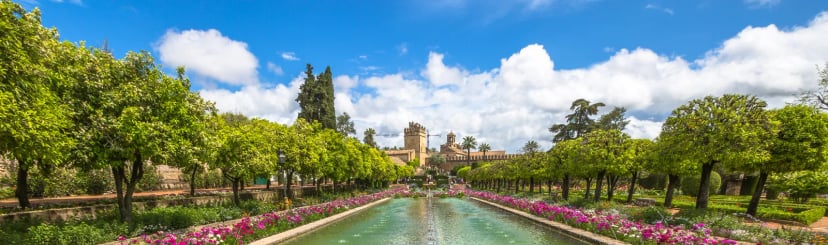



 So if you are looking for the absolute best in Cordoba & surroundings with authentic local fully-licensed native guides whose English you can actually understand and with an exclusive and amazingly fun itinerary