Architecture, Liturgy or Archaeology? Choosing a Focused Mezquita-Catedral Visit in Córdoba

Updated
Choose the question before you choose the route
A repeat visit to Córdoba’s Mezquita-Catedral becomes more rewarding when it stops trying to be comprehensive. Architecture, liturgy and archaeology are not three labels for the same tour. They assign importance to different evidence, move through the building in different orders and ask the visitor to tolerate different kinds of incompleteness. The best choice therefore depends less on which subject sounds grandest than on what you want the monument to prove.
Choose architecture when your main question is how a congregational mosque grew through successive Umayyad enlargements, how builders preserved or altered an inherited structural module, and how later Christian interventions changed scale, light and orientation without erasing the surrounding hypostyle hall. Its anchors are the original mosque of Abd al-Rahman I, the first enlargement under Abd al-Rahman II, the Al-Hakam II extension with its domes, maqsura and mihrab, Almanzor’s eastward enlargement, the Villaviciosa Chapel, and the cathedral crossing and choir.
Choose liturgy when you want to understand why these spaces were made sacred, how architecture organized collective attention, and how a historic Islamic prayer hall now functions as a Catholic cathedral. Its anchors are the courtyard and threshold, the qibla wall, mihrab and maqsura as evidence of the former mosque’s ritual order, followed by the former main chapel at Villaviciosa, the crossing, choir, Main Chapel, tabernacle and devotional chapels that express the building’s continuing Catholic use. This lens is not simply an “Islamic versus Christian” comparison. It asks how different forms of worship create different centers, routes, boundaries and expectations of behavior.
Choose archaeology when you are prepared to work from fragments, excavation records, reused material, plans, conservation research and scholarly hypotheses rather than from a sequence of visually complete masterpieces. Its anchors are the San Vicente archaeological and exhibition area, shafts and capitals reused in the earliest mosque, construction joints and surviving walls associated with the enlargements, the evidence embedded around the maqsura, and documentary records such as historic measured plans. A nearby museum component can broaden the evidence from the monument to the late-antique, Roman and Umayyad city, but it also turns one visit into a two-venue inquiry.
The official numbered plan is useful because it makes the basic conflict visible: the original mosque, the San Vicente area, three major enlargements, mihrab, transept, choir, courtyard and bell tower occupy one fabric but do not form one neutral storyline. See the official visitor map and guide. Its principal phase dates are 786–788, 833–848, 962–966 and 991–994 for the mosque campaigns, with the cathedral transept begun in 1523 and completed in 1607. An architectural route follows additions and spatial consequences. A liturgical route follows centers of prayer and sacred action. An archaeological route pauses where the evidence is least self-explanatory and where certainty must be graded rather than assumed.
Four criteria usually settle the choice. First, decide whether your preferred verb is compare, interpret worship or reconstruct. Second, decide how much discontinuity you enjoy: architecture offers a relatively legible progression, liturgy requires movement between historic and present ritual systems, and archaeology often interrupts the story with absent, buried or disputed evidence. Third, decide what kind of proof persuades you: standing fabric, ongoing use, or material and documentary traces. Fourth, decide whether the visit must remain entirely inside the monument. Archaeology gains most from preparation and follow-up context, while architecture can remain coherent within the building and liturgy may require a separate, respectful encounter with worship rather than commentary during it.
Architecture: the monument as a sequence of design decisions
An architectural visit is the most spatially continuous of the three. It can begin with a single construction problem: how did the first mosque create height and visual continuity with reused columns of unequal dimensions? The answer lies in the superimposed system of horseshoe and semicircular arches, the intermediate supports and the disciplined repetition of bays. That module is not merely decorative. It is the rule against which later builders either worked, enriched or displaced the building.
The first substantial dwell should be in the zone of Abd al-Rahman I’s mosque, not at the first dramatic view of endless columns. The task is to isolate one bay and read it vertically: base or lack of base, shaft, capital, impost zone, lower horseshoe arch, upper semicircular arch and the alternating visual rhythm of the voussoirs. Then read the same bay laterally, as one unit repeated across a field. This prevents the familiar “forest of columns” metaphor from replacing analysis. For a more concentrated treatment of that structural field, read the hypostyle hall through spolia, geometry and power.
From there, move into the Abd al-Rahman II enlargement and ask what continuity costs. The original structural language remains recognizable, yet details such as the treatment of column bases and the production of new capitals reveal that repetition is not sameness. An architectural lens makes political growth tangible: expansion is expressed not through a new façade alone but through the extension of a modular interior whose authority depends on appearing coherent. The visitor should compare at least two adjacent phases at close range before proceeding. Without that pause, the enlargements become dates recited over a visually uniform hall.
The Al-Hakam II extension deserves the longest architectural dwell because it transforms the inherited system rather than simply multiplying it. Its intersecting ribbed domes, screens of polylobed arches, richer materials, controlled light, maqsura and mihrab concentrate attention near the qibla wall. The official conservation project treats this zone as an active research problem involving original structure, roofs, windows, lighting systems, chronology, foundations and walls; that breadth is a reminder that architectural history is built from construction evidence as well as style. See the official maqsura restoration project.
At the mihrab, architectural looking should resist two temptations. The first is to treat the mosaic façade as an isolated artwork. The second is to let iconographic or diplomatic history absorb the whole stop. The façade, horseshoe arch, inscriptions, side portals, octagonal chamber and shell-like vault belong to a composed threshold complex. The question is how these elements focus a vast hall without abandoning its modular grammar. Visitors who want the mosaics themselves to become the primary subject can continue with a closer study of gold, glass and diplomacy in the mihrab mosaics.
Almanzor’s enlargement then changes the problem. The expansion to the east greatly increases the building’s width but cannot extend the mihrab axis southward in the same way. Architectural attention should shift from ornament to asymmetry, replication and the altered experience of center. The visitor is no longer reading only a sequence of ever-richer southern extensions; the building becomes broader, and the privileged axis of Al-Hakam II no longer governs the whole interior in the same way. A short stop here can explain more about urban and political scale than a long inventory of capitals.
The Christian interventions should not be saved as an appendix. Villaviciosa preserves evidence of an early Christian reorganization within the former mosque, while the later cathedral crossing introduces a high, luminous, vertically emphatic volume into the low, horizontally continuous hall. The crossing, Main Chapel and choir create a new center whose spatial force is immediately perceptible. Architecture makes the tension concrete without requiring a verdict that one system is harmonious and the other intrusive. The useful question is what each intervention needed the inherited building to do, and which parts of the earlier fabric were retained, framed, blocked, reopened or made peripheral.
A focused architectural route of roughly 100 to 120 minutes might assign about fifteen minutes to the courtyard and footprint, twenty to the earliest construction module and spolia, fifteen to the Abd al-Rahman II transition, twenty-five to thirty to the Al-Hakam II zone, ten to fifteen to Almanzor’s enlargement, and twenty-five to the Christian spatial insertions. These are editorial planning ranges, not official visit times. The sequence works because each move carries a single comparison forward. Its principal transition cost is visual saturation: after repeated arches, visitors can stop seeing distinctions. A good route therefore alternates close inspection, long sightlines and moments in which a plan is used to re-establish orientation.
Architecture explains expansion, structural invention, controlled repetition, hierarchy, light and the physical negotiation between mosque and cathedral. It tends to obscure two things. First, it can reduce sacred spaces to formal solutions and understate what worshippers did within them. Second, it can make surviving fabric appear more self-evident than it is, especially where restoration, reuse or later removal has shaped what can now be seen. That is why architecture is the best focus for a visitor who wants a coherent building history, but not necessarily for one whose central question concerns ritual life or the evidentiary status of the earliest layers.
Liturgy: the monument as sacred space in use
A liturgical visit begins from a different premise: architecture matters because communities used it to orient bodies, voices, attention and memory. This route must keep two historical facts distinct. The building was created and enlarged as a congregational mosque under Umayyad rule, and since the Christian conquest of Córdoba in 1236 it has functioned as a Catholic cathedral. The former Islamic liturgy is reconstructed through architecture, texts and historical context; the Catholic liturgy is a present institutional practice. Blurring them into a generalized spirituality would make the visit easier but less accurate.
The courtyard is a stronger beginning for liturgy than for architecture. It establishes the passage from city to precinct and from exterior movement to controlled sacred entry. Its present form is the result of later Christian interventions, yet its relationship to the prayer hall preserves the importance of threshold, preparation and procession. The route should then enter the hypostyle hall without immediately heading to the most ornate zone. A few minutes in the dimmer, repetitive field help explain how a large congregation could be gathered within a space whose emphasis was distributed across rows rather than concentrated in a single nave.
The qibla wall, maqsura and mihrab are the principal anchors for the historic Islamic ritual system. The mihrab marks the direction of prayer, while the maqsura defines a privileged area associated with the ruler. Their importance is spatial, political and devotional at once. Yet a liturgical route should not imply that every visitor can recover the complete choreography of tenth-century worship merely by standing there. The surviving architecture makes orientation and hierarchy legible; it does not preserve every movement, sound or social distinction with equal clarity.
The transition to Christian worship should occur through Villaviciosa rather than as a leap straight to the Renaissance crossing. After consecration as a church, Christian liturgical life initially worked within and adapted existing spaces. The former main chapel at Villaviciosa, with its Gothic nave and later history, shows that Christian use did not begin with the monumental sixteenth-century intervention. This intermediate stage is essential because it prevents the route from presenting the building as an intact mosque suddenly interrupted by a complete cathedral. The transformation was long, layered and responsive to changing liturgical needs.
The crossing, choir and Main Chapel then become the center of the present cathedral order. Here, the route should slow down and ask practical liturgical questions: where clergy and choir are placed, where the Eucharist is celebrated, how sightlines converge, how vertical light distinguishes the center, how screens and stalls shape participation, and how movement differs from the broad lateral freedom of the hypostyle hall. A deeper reading of these Christian spaces is available in the crossing, choir and sacred-space study.
The official Cathedral Chapter states that liturgical and pastoral life includes a daily conventual Mass as well as Sunday, feast-day and other solemn celebrations. Its current page also describes Lauds before the Liturgy of the Word from Monday to Saturday and places the Eucharistic liturgy in the Main Chapel and choir. Because worship times and access arrangements are operational information, they should be checked close to the visit on the official liturgical celebrations page. A service is not a guided-tour performance: commentary should stop, photography and movement should follow current rules, and participation or quiet observation should be governed by the religious setting.
Sound matters especially here, but it should be connected to action rather than treated as an atmospheric extra. Chant, spoken prayer, organ, footsteps and silence occupy the building differently. The dense field of columns affects sightlines; the cathedral center concentrates attention; chapels create smaller devotional enclosures. The relationship among sound, architecture and collective focus is developed further in the study of acoustics, liturgy and shared attention.
A focused liturgical route of about 100 to 115 minutes can give fifteen minutes to courtyard and threshold, twenty to the former mosque’s congregational organization, twenty-five to the qibla, maqsura and mihrab, fifteen to Villaviciosa and the early Christian reorientation, thirty to the crossing, choir and Main Chapel, and a final ten to a chapel or tabernacle that shows smaller-scale devotion. This order is thematic rather than purely chronological. Its transition cost is conceptual: the visitor must repeatedly distinguish original function, later adaptation and present use. The guide or reader must signal those shifts explicitly instead of relying on the building to narrate them automatically.
Liturgy explains why orientation, enclosure, procession, voice, altar, choir, mihrab and devotional images matter. It also corrects a common museum habit: the Mezquita-Catedral is not only an art-historical container but a consecrated Catholic cathedral with active worship. What the lens can obscure is the precise construction history. A visitor may understand why the crossing commands attention yet leave without grasping which mosque enlargement surrounds it. Liturgy can also tempt interpreters into confident reconstructions of Islamic practice that exceed the visible evidence. It suits travelers interested in religion, sacred architecture, music, ritual studies or the ethics of visiting a living place of worship more than those seeking a material chronology of every phase.
Archaeology: the monument as evidence, absence and argument
Archaeology offers the least continuous route and, for many repeat visitors, the greatest intellectual change. Its central question is not “what happened here?” but “what kind of evidence supports each claim?” That shift matters at a monument where visible architecture, excavated remains, reused materials, written traditions, institutional interpretation and modern conservation all contribute to the story. The archaeological focus is therefore slower than it looks. It requires the visitor to separate an object from its original context, a wall from its proposed function, and a plausible reconstruction from a settled fact.
The San Vicente area is the obvious anchor. The official visitor guide identifies archaeological evidence beneath the monument with the former Basilica of San Vicente and notes displayed finds including a fragment of a paleo-Christian sarcophagus, a marble plaque bearing a chi-rho and remains of a Visigothic font. Those objects are valuable, but they do not by themselves supply a complete floor plan, chronology or account of the whole pre-mosque complex. An archaeological route should ask where each item was found, what association can be established, and which larger narrative depends on interpretation rather than direct survival.
This is where specialist scholarship changes the tone. José Manuel Bermúdez Cano re-examined documentation from Félix Hernández’s excavations in the courtyard, reconstructed the spatial organization of late-antique structures and proposed that they followed elite residential or aulic models, perhaps functioning as an episcopal audience complex or atrium. The proposal is significant precisely because it is an argument based on excavated documentation and typological comparison, not a label that can be read directly from one standing wall. See the ROMULA study of the late-antique complex.
The route should then turn to spolia in the earliest mosque. Reused columns and capitals provide material continuity with earlier Roman and late-antique Córdoba, but the archaeological question is not satisfied by naming a shaft “Roman” or a capital “Visigothic.” Reuse can reveal availability, prestige, construction speed and the transformation of an existing urban material economy. It also creates uncertainty: a piece’s style or date does not automatically establish where it stood immediately before the mosque builders incorporated it. Archaeology teaches caution where visual connoisseurship often encourages quick attribution.
Construction boundaries between mosque phases are another productive anchor. Changes in masonry, alignment, decorative treatment, column bases, capitals and arch construction can help distinguish campaigns. Yet the visitor should understand that the present surface is the result of many interventions, including maintenance and restoration. The most useful question is not whether every seam can be personally detected, but how scholars combine standing fabric, measured survey, archival documentation and comparative analysis to assign phases.
The maqsura offers a bridge from excavation to conservation science. The official restoration project frames its research around structure, roofing, windows, lighting, chronology, foundations and walls. For an archaeological visitor, that list is more revealing than a purely stylistic description because it shows how hidden and altered systems are investigated. A dome is not only a visual composition; it is also a construction whose loads, materials, openings and repairs preserve a history. Conservation can expose evidence, but it can also change what is visible, making documentation of interventions part of the archaeological record.
Historic plans add a further layer. Cantizani-Oliva, Reinoso-Gordo and Gámiz-Gordo studied an anonymous painted plan dated 1741 through photogrammetry, compared it with measurements obtained by 3D laser scanning and with plans from 1767 and 1868, and concluded that it contains reliable data about the monument and its transformations. The importance of the research is methodological: archaeology of a standing building can depend on old images whose accuracy must be tested rather than assumed. See the study of the 1741 scientific plan.
A strong archaeology sequence begins with a plan briefing before entering the evidence zones. Give twenty to twenty-five minutes to San Vicente and the displayed late-antique material, twenty to the earliest mosque’s reused elements, fifteen to phase boundaries and masonry questions, twenty to the maqsura as a conservation case, and fifteen to historic plans, restoration history and the limits of reconstruction. A museum extension can add another forty-five to sixty minutes of contextual objects and urban history. Again, these are editorial ranges. The chief transition cost is not distance but broken evidentiary continuity: the monument contains one set of traces, the publications another, and the museum a third. Without a clear question, the visitor can accumulate fragments without understanding how they support or challenge one another.
For a wider comparison with the city’s material record, consider when Córdoba’s Archaeology Museum adds more than another monument stop. This pairing is especially useful when the question concerns the transition from late-antique Corduba to Umayyad Qurtuba, the reuse of ancient material, or how a single sacred site fits a changing urban center.
Archaeology explains uncertainty, material reuse, buried sequence, restoration and the difference between evidence and narrative. It can obscure the overwhelming spatial experience that made the monument historically effective. A route that stops at every contested point may never allow the hall, mihrab or crossing to act as architecture. It can also underplay worship by treating sacred features primarily as data. Archaeology is therefore best for travelers who enjoy qualified conclusions, historiography, conservation and the history of research, and who will not be disappointed when the most important result is a better question rather than a spectacular object.
What changes when evidence, route and time are selected in advance
The three lenses differ most sharply in what they treat as a satisfactory explanation. Architecture is strongest when visible relationships can be compared in sequence. Liturgy is strongest when form is connected to sacred action and institutional continuity. Archaeology is strongest when claims are ranked by evidentiary support. A specialist private visit becomes materially different from a highlights tour only when those priorities determine what is omitted as well as what is included.
The specialist-guiding moment arrives when evidence, route and context must be selected rather than merely summarized. Orange Donut Tours’ private Córdoba tour planning for the Mezquita-Catedral turns that choice into a bespoke sequence: the chosen lens determines which objects and spaces are selected, the order of movement through the building, where the longest dwell belongs, and whether source, liturgical or museum context is needed before or after the monument. Inquire now when the aim is to commission one coherent study rather than another all-purpose overview.
The benefit is control over comparison, not a larger quantity of information. An architectural route may minimize devotional chapels; a liturgical route may name construction campaigns only when they change sacred orientation; an archaeological route may pass quickly through a grand sightline because its evidence lies in a display case, wall junction or measured plan.
Which pairings create a coherent hybrid
A hybrid works only when one lens remains primary and the second answers a subordinate question. Equal time for all three sounds balanced but usually produces abrupt transitions: structure becomes ritual, ritual becomes excavation, and the visitor is asked to change standards of proof before the previous argument has matured. A useful hybrid can be described in one sentence. If that sentence needs several unrelated aims joined by “and,” the visit is probably still too broad.
Architecture with liturgy
This is the most intuitive pairing because sacred practice often explains architectural emphasis. The primary question might be: how did successive builders use form, light and enclosure to direct collective attention? The route can move from the distributed hypostyle hall to the concentrated Al-Hakam II maqsura and mihrab, then to Villaviciosa and the cathedral crossing. Architecture remains the spine; liturgy explains why certain thresholds, centers and sightlines matter.
The pairing fails when it tries to give equal theological, historical and structural treatment to both Islam and Christianity in a short slot. The visitor then receives two compressed religious histories and an abbreviated building chronology. Keep one or two liturgical actions attached to each architectural space rather than expanding into a general history of doctrine. This hybrid favors visitors who already know the main dates and want to understand how sacred attention is made spatial.
Architecture with archaeology
This pairing is strongest for construction, reuse and conservation. The primary question might be: how do we know where one campaign ends, another begins, and later restoration changes the record? The route can combine the early structural module, reused shafts and capitals, transitions between enlargements, the maqsura research zone and historic plans. Archaeology supplies the method; architecture supplies the visible object of study.
Its weakness is density. Once masonry, typology, phasing and documentation enter the discussion, the route can become diagram-heavy. The answer is not to add more stops but to choose one representative problem in each major phase. A repeat visitor with training in architecture, engineering, conservation or material culture is likely to find this pairing more satisfying than someone seeking a broad cultural narrative.
Liturgy with archaeology
This is the most demanding pairing because present worship and fragmentary evidence operate on different temporal terms. It can work around one carefully framed question: how has sacred use continued, changed or been materially reconfigured on this site? San Vicente evidence, the mosque’s qibla complex, Villaviciosa and the current cathedral center can then be examined as distinct historical arrangements rather than as stages in a seamless spiritual continuity.
The danger is teleology. Later use must not be presented as the inevitable fulfillment of earlier layers, and archaeological uncertainty must not be resolved by religious tradition alone. This hybrid suits historians of religion and travelers comfortable with discontinuity. It needs explicit verbal markers such as “the surviving evidence shows,” “the institutional tradition holds,” and “scholarship proposes.” Those distinctions are not pedantry; they keep different kinds of knowledge from being mistaken for one another.
All three lenses
A three-lens visit is coherent only when time, preparation and prior knowledge are unusually generous. It is better conceived as a seminar sequence than as one continuous tour: a pre-visit briefing with plans and chronology, a monument visit with one dominant lens, and a later discussion or museum component that introduces the remaining evidence. In a single 90-minute or even two-hour slot, all three lenses generally reduce one another. Architecture loses sustained comparison, liturgy becomes a few definitions, and archaeology becomes a list of buried predecessors.
One defensible all-three question is how successive communities constructed, used, interpreted and conserved a sacred site. Even then, the route needs strict anchors and a deliberately narrow evidence sample.
Four route designs for a repeat or specialist visit
The following designs assume that the visitor already knows the monument’s headline identity and does not need a conventional first-visit circuit. They are editorial structures rather than official itineraries, and access to particular zones can change. Their purpose is to show how selection creates depth.
The construction-history route
Primary question: How did a repeatable structural module absorb expansion, enrichment and a later cathedral center?
- Begin with the footprint in the courtyard and a plan showing the original mosque and three enlargements.
- Read one complete bay in the Abd al-Rahman I zone, then compare reused supports and the double-arch system.
- Cross into the Abd al-Rahman II enlargement and identify continuity with controlled difference.
- Give the longest stop to the Al-Hakam II extension, moving from its entrance dome and screens to the maqsura and mihrab.
- Use Almanzor’s enlargement to discuss lateral growth, replication and the displaced experience of center.
- Finish at Villaviciosa, the crossing and choir, comparing horizontal continuity with vertical concentration.
What to omit: a full chapel inventory, extended excavation historiography and a service-focused explanation of the current cathedral. The route succeeds when the visitor can redraw the building as phases and explain how each phase changed the previous spatial rule.
The sacred-attention route
Primary question: How have Islamic and Catholic forms of worship organized direction, hierarchy, sound and collective focus within the same fabric?
- Begin at the courtyard and threshold, treating entry as a change in behavior rather than merely a picturesque prelude.
- Pause in the distributed hypostyle hall before any privileged focal point is visible.
- Move to the qibla, maqsura and mihrab to discuss direction of prayer, protected space and concentrated visual richness.
- Use Villaviciosa to establish the early Christian adaptation before the great crossing.
- Spend the longest period at the choir and Main Chapel, reading seating, altar, vertical light, enclosure and voice.
- End in a smaller devotional space so the visitor sees that liturgical life is not exhausted by the monumental center.
What to omit: detailed attributions of every capital, speculative reconstruction of every historic ceremony and comparisons that treat worship as theatre. The route succeeds when the visitor can distinguish sacred orientation from architectural chronology and understands why current worship may alter the rhythm and etiquette of a cultural visit.
The evidence-and-uncertainty route
Primary question: What can be known from excavated remains, reused material, building fabric and documentary survey, and where does interpretation begin?
- Start with a plan and a short explanation of evidence categories: in situ fabric, displaced object, excavation record, historic image and modern conservation data.
- Examine the San Vicente area and displayed late-antique objects, separating find, context and institutional label.
- Study selected reused shafts and capitals in the earliest mosque, asking what reuse proves and what it cannot prove.
- Choose two phase boundaries rather than hunting for every construction seam.
- Treat the maqsura as a conservation-research case involving hidden structure, light, openings, foundations and restoration history.
- Conclude with the 1741 plan and the method used to test its dimensional reliability, then add museum context only if the larger urban question justifies the venue change.
What to omit: an exhaustive architectural chronology, devotional interpretation unrelated to evidence and confident statements about disputed late-antique functions. The route succeeds when the visitor leaves able to rank claims by support and to explain why a plausible hypothesis is not the same as a visible fact.
The limited architecture-and-liturgy hybrid
Primary question: How do built centers direct sacred attention?
- Use the early hypostyle hall to establish distributed space and repeated bays.
- Move directly to the Al-Hakam II zone and spend substantial time on the architectural concentration around the maqsura and mihrab.
- Pass through Villaviciosa as the historical hinge in Christian adaptation.
- Compare the mosque’s qibla focus with the cathedral crossing, choir and Main Chapel without claiming they serve equivalent rituals.
- End with sound, sightline and movement as the shared analytical vocabulary.
What to omit: Almanzor’s enlargement unless asymmetry is essential, most chapels, and the full San Vicente debate. The route succeeds when comparison clarifies difference rather than flattening it. About two-thirds of the time should remain architectural, with liturgy explaining the consequences of form.
Conditions that should change your choice
You have less than ninety minutes
Choose one lens and no more than four anchor stops. Architecture is usually easiest to sustain because the evidence remains visible and the route can be linear. Liturgy can work if the visitor already understands the main chronology. Archaeology is possible, but only with a very narrow question, such as the status of the San Vicente evidence or the use of spolia in the earliest mosque. A compressed hybrid tends to become a highlights visit under a more sophisticated name.
You are returning after a standard first visit
Choose the lens that corrects what the earlier tour left vague. Visitors who remember only red-and-white arches and the central cathedral will gain from architectural phasing. Those who remember dates but not the building’s sacred logic will gain from liturgy. Those uneasy with smooth narratives of Roman, Visigothic, Islamic and Christian succession will gain most from archaeology and historiography.
Your group has unequal prior knowledge
Architecture provides the best common visual spine. More advanced participants can engage with construction, patronage and restoration while less specialized visitors retain clear objects of comparison. Liturgy works when the group is willing to discuss religious practice carefully and without assuming shared belief. Archaeology requires the most preparation because its rewards often depend on understanding why a modest fragment or old plan changes a larger claim.
Worship or conservation affects the normal visitor route
Do not force the original sequence. For liturgy, an active service is not an obstacle to be routed around casually; it is evidence that the building remains sacred, but interpretation should occur before or after the celebration. For architecture and archaeology, temporary limits around the choir, maqsura or another study zone may remove a key comparison. In that case, either change the thesis or postpone the focus rather than substituting unrelated stops. Current worship information belongs to the official page cited above; conservation conditions should likewise be checked near the visit.
You want the nearby museum to carry part of the argument
Choose archaeology, or an architecture-and-archaeology hybrid. The museum should answer a question the monument cannot answer alone: the wider material culture of Roman and late-antique Córdoba, the urban context of early Islamic rule, or comparisons that clarify reuse and chronology. Adding it merely because it is scholarly creates a second collection without a connective argument.
Your interest is the mihrab above all
Choose architecture if you want geometry, materials, domes, screens, controlled light and the relation of the mihrab to Al-Hakam II’s enlargement. Choose liturgy if direction of prayer, maqsura, sacred hierarchy and the concentration of attention are primary. Choose archaeology if restoration history, hidden structure, original lighting and the evidence used to reconstruct the complex are the real subject. The same object supports three visits because each asks it to provide a different kind of answer.
What each lens can accidentally distort
Architecture can turn history into style. Dynastic ambition, worship and institutional power may be acknowledged only as reasons for formal change. To correct that distortion, attach every major intervention to the human requirement it served: a larger congregation, a privileged caliphal zone, a Christian main chapel, a choir, a new center of episcopal worship or the preservation of a revered inherited fabric.
Liturgy can turn discontinuity into timeless sacredness. The site’s long religious history does not mean that Islamic and Catholic rites are interchangeable or that later practice transparently preserves earlier meaning. To correct that distortion, name the date and religious system relevant to each action, and distinguish reconstructed historic use from current worship.
Archaeology can turn experience into caution alone. Proper qualification is essential, but a visit made entirely of caveats fails to explain why the building’s spaces were powerful. To correct that distortion, allow selected architectural views and sacred centers to be experienced before dismantling them into evidence categories. Analysis should sharpen perception, not prevent it.
A specialist note on names and certainty
The compound name Mezquita-Catedral is not a ready-made interpretation. It identifies a monument whose major Islamic fabric and current Catholic status must both be addressed, but it does not settle how every layer should be narrated. A careful visit uses specific terms when specificity matters: original mosque of Abd al-Rahman I, enlargement of Abd al-Rahman II, Al-Hakam II maqsura and mihrab, Almanzor’s enlargement, Villaviciosa Chapel, crossing, choir and Main Chapel.
The term “Basilica of San Vicente” is familiar in official interpretation and associated with important displayed late-antique Christian material. An archaeological focus should still distinguish the presence of late-antique and Christian evidence from the reconstruction of the entire complex and its functions. The Bermúdez Cano study demonstrates why excavation archives can support revised proposals. Specialist depth comes from making that difference understandable, not from replacing one absolute story with another.
Likewise, “spolia” should not become shorthand for a harmonious blending of cultures. Reused material is evidence of selection, availability and transformation. Its earlier date does not mean its earlier meaning remained intact. The mosque builders created a new architectural system from heterogeneous supports; later Christian patrons in turn adapted and preserved substantial parts of that system while establishing new liturgical centers. Reuse is active historical choice, not passive survival.
Decision recap
Choose architecture when you want the most coherent internal route and your central interest is how modules, enlargements, axes, light and vertical scale changed from Abd al-Rahman I through the cathedral interventions. Give the longest dwell to the early structural system, the Al-Hakam II zone and the comparison between the hypostyle hall and crossing. Accept that worship and buried evidence will remain secondary.
Choose liturgy when you want to understand the building as a sacred environment rather than as an art-historical container. Follow threshold, direction, enclosure, voice, altar, choir and devotional space. Keep historic Islamic prayer architecture distinct from living Catholic practice, and treat active worship with the conduct it requires. Accept that detailed phasing and archaeological debate will be selective.
Choose archaeology when the question of how we know matters as much as what we know. Center San Vicente evidence, spolia, phase boundaries, conservation research and tested historic documentation. Add museum context only when it answers a defined urban or material question. Accept that the route will be fragmented and that its most honest conclusion may remain provisional.
Choose a limited hybrid when one sentence can state the relationship between a primary and a secondary lens. Architecture with liturgy works around sacred attention. Architecture with archaeology works around construction and conservation. Liturgy with archaeology can work around changing sacred use, but only with careful distinctions between evidence, tradition and hypothesis. Attempt all three only with prior preparation, generous time and a deliberately small sample of spaces.
The decisive act is subtraction. The Mezquita-Catedral contains enough material for many valid studies, but a focused repeat visit should not imitate completeness. It should select the evidence that answers one serious question, order that evidence so each stop changes the meaning of the next, and leave the remaining layers available for another Córdoba visit.
If you’re interested in any private tours of Cordoba, please reach out to us.
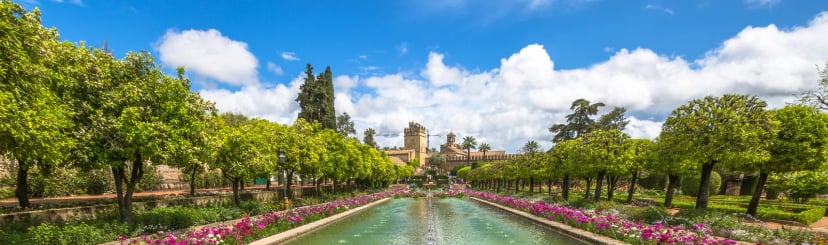



 So if you are looking for the absolute best in Cordoba & surroundings with authentic local fully-licensed native guides whose English you can actually understand and with an exclusive and amazingly fun itinerary