Luxury 3-Day Córdoba Itinerary: Private Guides, Skip-the-Line Sights & Fine Dining
Updated
Overview
For a luxury 3-day Córdoba itinerary, plan roughly 6–8 guided hours per day, prioritising early entries at headline sights, long lunches in the shade, and destination dinners built around Andalusian tasting menus.
This guide is for travellers who want Córdoba’s four UNESCO-listed treasures and high-end food scene without feeling rushed or overheated. Across three days you will move from the Mezquita-Catedral and Alcázar to the caliphal city of Medina Azahara, flower-filled patios, Arab baths, and some of Spain’s most talked-about contemporary kitchens.
Here “fine dining” means everything from Michelin-star tasting menus to quietly ambitious kitchens reworking traditional recipes. At the top end, dinner tasting menus in Córdoba’s flagship restaurants often run to several courses at a premium price point; think of it as your big nightly experience rather than a casual bite and always confirm current pricing when you reserve.
All recommendations here favour depth over box‑ticking: generous time inside key monuments, private guiding where it adds the most value, and meals chosen for sense of place rather than star-count alone.
Itinerary
This 3-day Córdoba itinerary assumes private guiding for at least two half-days, pre-booked entries for the busiest sights, and a balance of roughly 3–4 hours of structured visits with equally generous downtime each day.
Day 1: First Impressions – Mezquita, Alcázar & Roman Bridge
Day 1 is about understanding why Córdoba has more World Heritage inscriptions than any other city in Spain. Stay mostly in the historic centre, keep transfers on foot, and use the cooler early hours for indoor sites.
Morning – Judería walk and the Mezquita-Catedral
Start with a gentle walk through the Judería (Jewish Quarter): whitewashed lanes, patios glimpsed through open doors, and the small but atmospheric synagogue. Aim to enter the Mezquita-Catedral as close to opening time as possible, when the forest of columns still feels contemplative and photo groups are thin on the ground.
Mezquita‑Catedral de Córdoba
The Mezquita is Córdoba’s emotional and visual anchor: an 8th–10th century mosque expanded over centuries, later crowned with a Renaissance cathedral nave. A good private guide can help you read the layers—from Umayyad arches to Christian chapels—so you are not just seeing “columns and stripes” but a thousand years of power, faith, and aesthetics.
Why we chose it: It is the single most important sight in Córdoba and the one place where a focused 90-minute private explanation changes the entire way you see the city.
- Location/Area: Heart of the historic centre, a few minutes’ walk from the Roman Bridge.
- Cost/Price range: General entry in 2025 is around €13 for adults, with several reduced and free categories; always check the official site before you go and confirm when booking timed-entry tickets.
- Time/Duration: Plan 1.5–2 hours inside with a guide, plus 20–30 minutes of quiet time to wander on your own.
- Best time/season: First timed entry of the morning or later evening visits; in high season, avoid the late-morning peak when group tours cluster around the mihrab.
- Accessibility: Step-free access at the main entrance and generally flat interiors; the bell tower is not accessible to visitors with reduced mobility or strollers.
- Cancellation basics: Third-party ticket platforms often allow free cancellation up to roughly 24 hours before; official ticket conditions can differ and are not fully standardised—confirm the exact policy when reserving.
- Alternative if sold out: Pair a quieter visit to the Iglesia de San Lorenzo or San Pablo with an extended walk around the Mezquita exterior and riverfront views.
- Last verified: December 2025.
Afternoon – Alcázar de los Reyes Cristianos
After a slow lunch near the river, walk to the Alcázar of the Christian Monarchs. In the afternoon light the gardens glow, and from the towers you get one of the clearest spatial views of the historic centre.
Alcázar de los Reyes Cristianos
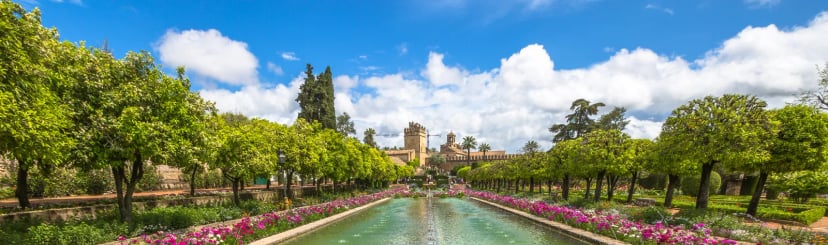
This fortified palace was once a key residence of the Christian monarchs and a power stage for meetings with Christopher Columbus. Today it is best experienced as a sequence of terraces, water features and citrus-lined paths, with archaeological rooms and mosaics inside.
Why we chose it: It pairs perfectly with the Mezquita, gives you elevated views of the city, and its compact layout fits well into a relaxed first afternoon.
- Location/Area: Next to the Royal Stables and San Basilio neighbourhood, about 10 minutes on foot from the Mezquita.
- Cost/Price range: Standard adult tickets are usually in the €5 range, with reduced rates for students and seniors; occasional free or discounted windows exist—always check an up-to-date source before you go.
- Time/Duration: 60–90 minutes is enough for the main towers, halls, and gardens without rushing.
- Best time/season: Late afternoon for softer light in the gardens and less midday heat, especially from May to September.
- Accessibility: The monument includes uneven cobbles, stairs and tower climbs; large parts of the gardens and some ground-floor rooms are manageable, but overall it is not fully wheelchair accessible.
- Cancellation basics: Standalone entry tickets are typically non-refundable once issued; guided-tour packages often allow changes or cancellation up to around 24 hours in advance—check the specific seller’s conditions.
- Alternative if sold out: Consider the Calahorra Tower museum and Roman Bridge ensemble for another angle on Córdoba’s defensive architecture.
- Last verified: December 2025.
Sunset – Roman Bridge & Calahorra Tower
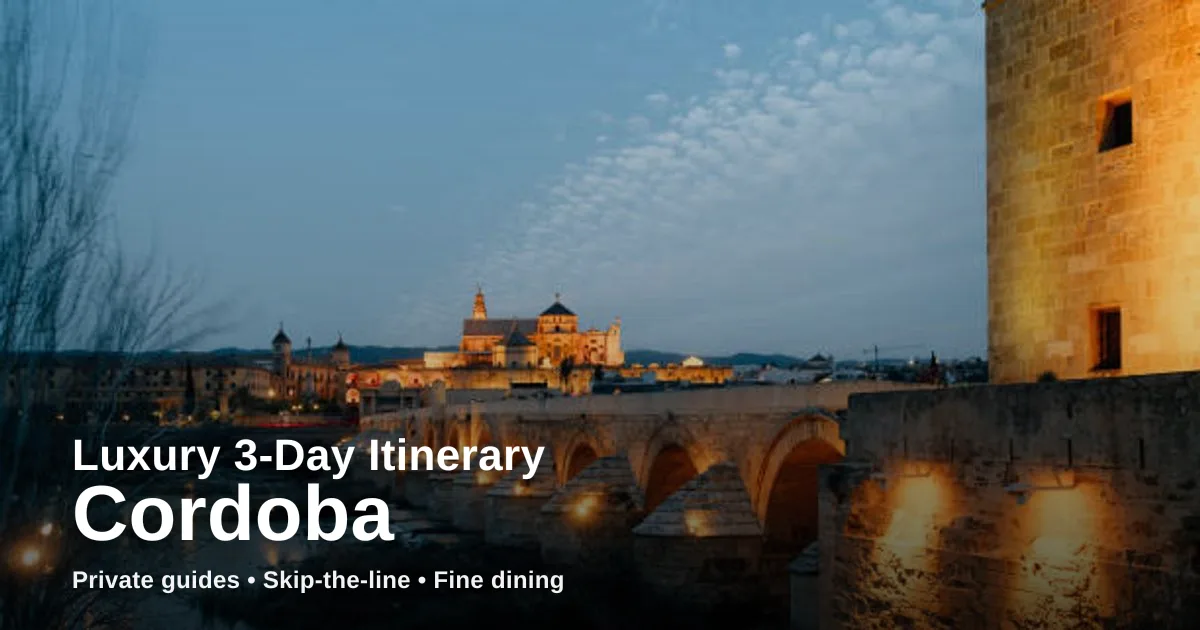
As the heat eases, stroll across the Roman Bridge towards the Calahorra Tower. The bridge in its current form is largely medieval but sits on Roman foundations and runs roughly 247 metres across the Guadalquivir, giving you a cinematic Mezquita-and-river view at dusk.
Roman Bridge & Calahorra Tower
The bridge and tower frame perhaps Córdoba’s most iconic skyline. The tower now houses a small museum dedicated to Al‑Andalus, while the bridge is a stage for evening promenades, buskers, and photographers waiting for the last light on stone.
Why we chose it: It is the simplest way to feel the city’s geography—river, walls, and mosque—click into place, and sunset here feels suitably “arrival day” without more tickets or queues.
- Location/Area: Southern edge of the historic centre; the bridge starts just below the Mezquita and ends at the Calahorra Tower on the far bank.
- Cost/Price range: Walking the bridge is free; tower museum entry is typically a modest single-digit euro amount per adult—verify current pricing on arrival or via the official tourism site.
- Time/Duration: 45–60 minutes to cross, take photos, and explore the tower museum if open.
- Best time/season: Golden hour and early evening, especially in spring and autumn when the light is long but temperatures are comfortable.
- Accessibility: The bridge itself is broad and gently sloped; the tower includes stairs and is not suitable for all visitors with mobility limitations.
- Cancellation basics: No reservations needed for the bridge; tower tickets are inexpensive and usually non-refundable once purchased.
- Alternative if busy: Take a quieter evening walk along the northern riverbank paths for wide views without the crowds on the bridge itself.
- Last verified: December 2025.
Evening – First gastronomic dinner
For your first night, choose a high-end restaurant within a short taxi ride of the historic centre so you are not walking far after a long travel day. Think tasting menus built around seasonal Andalusian produce and local Montilla-Moriles wines; if your dinner is early, you can still take a short post‑meal stroll past the illuminated Mezquita before returning to your hotel.
Day 2: Caliphal City & Michelin-Starred Córdoba
Day 2 moves beyond the walls. Spend the morning at the archaeological site of Medina Azahara, then slide back into town for patios and one of Spain’s most inventive dinners.
Morning – Medina Azahara
Head out after breakfast for the short drive or bus out to Medina Azahara, about 8 km west of the city. A timed transfer bus takes you from the visitor centre up to the hilltop site itself.
Medina Azahara Archaeological Site (Madinat al‑Zahra)
Built in the 10th century as a glittering palatial city for the caliphs of Córdoba, Medina Azahara is now an atmospheric ruin of terraced palaces, reception halls, and gardens. With a guide, the low walls and foundations turn into throne rooms and reception halls in your mind’s eye.
Why we chose it: It makes sense of Córdoba’s golden age, completing the story that starts in the Mezquita and justifying at least half a day outside the centre.
- Location/Area: Hills west of Córdoba, roughly 20 minutes by road from the historic centre.
- Cost/Price range: EU citizens typically enter the site itself free of charge; non‑EU visitors pay a small fee (around €1.50) plus a separate shuttle bus fee of roughly €2–€3 per adult—always confirm current amounts when buying tickets.
- Time/Duration: Allow about 3–3.5 hours door‑to‑door, including the museum, shuttle, and 90 minutes or so on the site.
- Best time/season: Cool seasons (October–April) or early departures in warmer months; there is limited shade on the terraces.
- Accessibility: Visitor centre is modern and largely step‑free; the archaeological terraces have uneven stone paths, slopes and steps that can be challenging for some visitors with reduced mobility.
- Cancellation basics: Seats on organised bus-and-guided packages often include free or low‑fee changes up to roughly 24 hours before departure, while the site’s own basic entry fees are non-refundable.
- Alternative if closed or too hot: Take a focused morning in the Archaeological Museum and the Julio Romero de Torres Museum, both in the centre, followed by a shaded lunch.
- Last verified: December 2025.
Afternoon – Palacio de Viana and patios immersion
Back in the city, spend the afternoon at Palacio de Viana, a Renaissance palace famous for its twelve courtyards. For many visitors this is the most efficient single place to understand Córdoba’s patio culture outside the main May festival.
Palacio de Viana
Behind a relatively discreet facade lies a sequence of patios—each with its own character—plus furnished rooms that show how Córdoba’s nobility once lived. The experience combines architecture, garden design and social history in one compact visit.
Why we chose it: It offers a year‑round, crowd‑controlled way to experience Córdoba’s patios without relying on festival dates, and its location works well between morning and evening plans.
- Location/Area: Northern edge of the historic centre near Plaza de Don Gome, roughly 15–20 minutes’ walk from the Mezquita area.
- Cost/Price range: Recent guides report full palace-and-patios tickets in the low‑to‑mid teens per adult, with cheaper “patios only” tickets; check the official Palacio de Viana site or on‑the‑day signage for current tariffs.
- Time/Duration: Expect 60–90 minutes for a relaxed circuit through the patios and main interiors.
- Best time/season: Late afternoon in spring or autumn for soft light and comfortable temperatures; mornings can also be quiet outside weekends.
- Accessibility: Most routes are technically wheelchair accessible, though some patios have cobblestones or steps; staff can usually suggest the easiest route.
- Cancellation basics: Standard entry bought on-site is not usually refundable; some advance tickets sold through partners allow free cancellation up to 24 hours—verify at booking.
- Alternative if fully booked or closed: Visit the municipal patio interpretation centre (Trueque Cuatro) or join a small-group patio route in San Basilio instead.
- Last verified: December 2025.
Evening – Radical Andalusian flavours at Noor
Tonight is the night to stretch the boat out. Book a late dinner at Noor, the most internationally known restaurant in Córdoba, and allow plenty of time to taxi out and back unhurried.
Noor
Noor takes historical Andalusian recipes from the caliphal period and reimagines them as contemporary fine dining, often structuring menus by historical era. Expect intricate plating, a strong sense of narrative, and a dining room that feels more like a contemporary gallery than a traditional restaurant.
Why we chose it: It is the clearest expression of Córdoba’s past translated into modern gastronomy and a destination in its own right for serious food travellers.
- Location/Area: Residential neighbourhood east of the historic centre; around 10–15 minutes by taxi from most central hotels.
- Cost/Price range: Recent independent coverage suggests multi-course tasting menus typically fall somewhere in the low‑to‑high hundreds of euros per person before drinks; exact prices vary by season and menu—always confirm directly when reserving.
- Time/Duration: Expect a 2.5–3 hour experience from aperitif to final sweet.
- Best time/season: Evenings, especially midweek outside major holidays, for the most relaxed service and better chance of securing your preferred time.
- Accessibility: Street-level access with a contemporary interior; if you have specific mobility needs or require step-free seating, mention this when you book so the team can advise.
- Cancellation basics: Like many high-end restaurants, Noor uses strict cancellation and deposit rules that can involve fees within a set window—policies may change, so review the booking terms carefully.
- Alternative if fully booked: Terra Olea offers creative, produce-driven Andalusian cuisine at a slightly more relaxed price point while still firmly in the fine-dining camp.
- Last verified: December 2025.
Day 3: Patios, Arab Baths & Farewell Dinner
Day 3 is intentionally softer: patios in lived-in neighbourhoods, time to shop and wander, and a long Arab bath session before a final dinner that feels indulgent but unhurried.
Morning – San Basilio patios and Royal Stables
If you are visiting in early May, weave in some of the Fiesta de los Patios competition courtyards in San Basilio and the walls near the Alcázar. Outside festival dates, small-group or private patio routes give access to family homes with beautifully maintained courtyards. You can also time your walk to match a morning equestrian display at the Royal Stables if that appeals.
Midday – Arab baths reset at Hammam Al Ándalus
By day three, most visitors are ready for a pause. The Arab baths just steps from the Mezquita offer hot, warm and cold pools, steam rooms and optional massages in a vaulted, candlelit space.
Hammam Al Ándalus Córdoba
Hammam Al Ándalus recreates the sensory side of Al‑Andalus—arched brick chambers, filtered light, steam, and running water. It’s also practical: a 70–90 minute circuit plus massage fits neatly between a light lunch and your final evening.
Why we chose it: It counterbalances two days of structured sightseeing, and many guests say it is where the whole trip finally “lands” in their body as well as their camera roll.
- Location/Area: Just off the Mezquita, in the heart of the historic centre.
- Cost/Price range: Entry-and-bath packages advertised via partners often start in the mid‑20 euro range per person, with higher tiers including massages and treatments; exact pricing differs by channel and season.
- Time/Duration: Most standard packages last about 75–90 minutes door‑to‑door.
- Best time/season: Late afternoon or early evening for a reset before dinner; book earlier in the day in peak summer to avoid leaving the baths into lingering 40°C heat.
- Accessibility: Online information is mixed—some descriptions mention wheelchair-accessible facilities, others note limitations; if accessibility is important, contact the hammam directly before reserving.
- Cancellation basics: Many resellers allow free cancellation until roughly 24 hours before your slot; the hammam’s own terms can vary, so always confirm the policy at the moment of booking.
- Alternative if fully booked: Consider a slower afternoon at your hotel spa or a shaded café-and-reading break around Plaza de las Tendillas.
- Last attempted verification: December 2025.
Evening – Farewell dinner at Choco or ReComiendo
End with a final dinner that feels celebratory but less ceremonious than Noor. Two strong options in the Córdoba fine-dining landscape are Choco and ReComiendo; both play with Andalusian flavours in their own way.
Choco
Choco is an established tasting-menu restaurant whose cooking often leans into seafood and finely tuned sauces, with thoughtful pairings and a dining room that feels intimate rather than showy.
Why we chose it: It offers a polished, Michelin-level experience in a residential setting that feels more like a local’s secret than a trophy address.
- Location/Area: East of the centre, in a quiet residential district; roughly 20 minutes on foot or a short taxi from the historic core.
- Cost/Price range: Multi-course menus and pairings generally sit in the upper range for Andalusian dining; independent listings suggest set menus somewhere around the high two‑digit to low three‑digit euro range per person, excluding drinks—always verify current prices when you book.
- Time/Duration: Expect 2–2.5 hours for a full tasting menu.
- Best time/season: Evenings; if you are coming from the baths, a slightly later seating (for example, after 20:30) gives breathing room.
- Accessibility: Street-level access with a compact dining room; if you need step-free seating or extra space, note this with your reservation.
- Cancellation basics: Like many small fine-dining rooms, late cancellations or no‑shows may incur fees; policies can change, so read booking terms carefully.
- Alternative if sold out: ReComiendo offers a more playful take on Andalusian classics with a similarly serious approach to flavour.
- Last verified: December 2025.
ReComiendo
ReComiendo tends to feel a little looser and more playful—expect modern Andalusian dishes with bold flavours, a relaxed but professional service style, and a crowd that mixes well-travelled food lovers with in‑the‑know locals.
Why we chose it: It is ideal when you want serious cooking but a less formal mood for your final night in the city.
- Location/Area: North of the historic centre, near the modern business-and-shopping districts.
- Cost/Price range: Menu formats and prices vary, but recent diners report overall spend in the mid‑range of Córdoba’s fine-dining spectrum; consult the latest menu or booking engine for current figures.
- Time/Duration: About 2 hours fits a relaxed multi-course meal.
- Best time/season: Evenings year-round; in cooler months, pairing an early dinner here with a night-time walk past the illuminated Mezquita is particularly appealing.
- Accessibility: Modern urban setting; interior layouts can change, so share any mobility needs when you reserve.
- Cancellation basics: Policies depend on whether you reserve directly or via a platform; in most cases, changes up to a day or two ahead are easier to secure.
- Alternative if fully booked: Terra Olea is another strong fine-dining address, especially if you prioritise hyper-seasonal produce.
- Last verified: December 2025.
Neighborhoods
For a 3-day high-end stay in Córdoba, expect to spend at least 80–90% of your time within a 20-minute walking radius of the Mezquita, with short taxi hops to outlying restaurants and Medina Azahara.
Historic Centre & Judería
This is where most first-time visitors should sleep. The lanes immediately around the Mezquita, Calleja de las Flores, and the Judería concentrate monuments, patios, and characterful small hotels. You can walk from the Mezquita to Viana Palace in roughly 15–20 minutes and to the Roman Bridge in under 5.
Pros: atmospheric, walkable, ideal for early/late visits to the Mezquita and Arab baths. Cons: daytime crowds, especially on cruise and coach days, and occasional night-time noise on the busiest streets.
San Basilio & Alcázar Viejo
Southwest of the Mezquita, just behind the Alcázar, San Basilio is ground zero for the patio culture that erupts in May. Whitewashed houses, flower-laden balconies, and narrow streets give a more residential feel than the streets tight around the mosque.
Pros: authentic patio life, close to the Alcázar and Royal Stables, quieter at night than the Mezquita-adjacent lanes. Cons: fewer high-end hotels; you may be walking 10–15 minutes to most dinner reservations or relying on short taxi rides.
Centro & Vial Norte
North of the old core, around Plaza de las Tendillas and the Vial Norte axis, the city feels more “modern Spanish city” than historic set piece. This area is handy for shops, cafés, and some of the contemporary restaurants mentioned above.
Pros: easy access to train station, broader choice of modern hotels, plenty of everyday tapas bars where locals actually eat. Cons: less atmospheric than the riverside areas; you will likely taxi or walk 20 minutes to the Mezquita for early or late access.
Outskirts & Medina Azahara
Medina Azahara itself is an excursion rather than a neighbourhood, but some travellers choose countryside fincas or rural hotels around this direction for a slower, more secluded base. For a 3-day first stay, it usually makes more sense as a half‑day outing from the centre rather than an overnight base.
When to Visit
Córdoba rewards planning: in a typical year, July daytime highs average around 36°C and can top 40°C, while shoulder months like April, May, October and November hover closer to a comfortable 19–27°C.
Spring (March–May) is prime time for a luxury 3-day Córdoba itinerary. March and April bring long days and comfortable highs in the low-to-mid twenties Celsius, while May adds the Courtyards Festival, May Crosses and the city fair—magical if you enjoy festivals, but requiring much earlier hotel and restaurant bookings.
Summer (June–August) is hot, especially in July and August, when the clear-air heat can feel intense even for seasoned Mediterranean travellers. If summer is your only option, build in long siestas, air-conditioned lunches, and very early or late sightseeing slots; think 07:30 or 20:00 for outdoor walks.
Autumn (September–November) mirrors spring in comfort, with October and early November often providing ideal daytime temperatures and softer light. This is an excellent season for those who want quieter patios and easier bookings while still dining outdoors at night.
Winter (December–February) brings cooler days (highs often around 14–15°C) and chilly evenings, but far fewer visitors. It is a great time for travellers focused on museums, dining and one-on-one time with guides, less ideal if you dream specifically of patios bursting with geraniums.
Essential Tips
To get the most from a 3-day Córdoba itinerary, assume you will walk 8–10 km per day, book key tickets 2–4 weeks out, and treat midday heat management as seriously as your dinner reservations.
- Anchor each day around one major entry time. Build everything else around timed visits to the Mezquita, Medina Azahara, and major dinners so you never find yourself stuck in a midday queue without shade.
- Front-load your energy. Plan the Mezquita, Alcázar or Medina Azahara in the first 36 hours, then place hammam time or a lighter museum afternoon towards the end of the trip.
- Book fine-dining tables well ahead. Noor, Choco and ReComiendo can fill weeks in advance on key weekends; for a 3-day stay, it is worth locking these in before committing to train tickets if gastronomy is central to your trip.
- Think in shade corridors, not just distances. A 15-minute walk can feel very different at 16:00 in October versus 14:00 in August; when the forecast creeps above 30°C, shift more walking to early morning and after 19:00.
- Use taxis tactically. Short rides between the Judería and outlying restaurant districts save precious energy and keep you fresh for the experiences that matter most.
- Share your needs in advance. If accessibility, dietary requirements, or language preferences are important, let guides, restaurants and experiences know when you book so they can prepare appropriately.
- Combine patios and festivals carefully. During the May courtyard festival, assume denser crowds and longer waits; consider booking private or small-group routes outside peak hours, or visiting Viana Palace on a non-festival morning for a quieter experience.
- Let experts do the sequencing. If you prefer not to juggle entries, transfers and restaurant timings yourself, a bespoke private tour can weave everything together into a single, coherent plan—Inquire now.
- Pack for temperature swings. Even in shoulder seasons it is common to see 10–12°C swings between morning and afternoon; layers and a light scarf earn their suitcase space.
- Always double-check policies. Ticket categories, free hours, and cancellation rules can and do change; treat any figures you see here as a starting point, not a substitute for the official site.
Insider Info
To experience Córdoba at its quietest, aim for at least one pre‑9:30 Mezquita visit, one dusk crossing of the Roman Bridge, and at least 30 unrushed minutes on a residential patio during your 3 days.
Use free or quiet hours wisely. The Mezquita offers an early free-visitation window on certain mornings; while guiding is not allowed during that time, simply standing in the near-silence of the hypostyle hall can be one of the most powerful moments of your trip. You can always return later the same day with a guide for the “explanation” part.
Pair Medina Azahara with a historical menu. If you are dining at Noor, ask (when you book) which historical period the current menu explores and, if it fits your schedule, place Medina Azahara the same day. Hearing about caliphs by morning and tasting their culinary echoes by night makes the story far more vivid.
Patios outside May still matter. Even when competition courtyards are closed, some houses and cultural centres welcome visitors on dedicated routes. A well-chosen private patio walk outside the festival can feel more intimate and less rushed than a peak‑May queue.
Follow the locals for pre‑dinner. Rather than heading straight from hotel lobby to tasting menu, consider a 30-minute paseo around Plaza de las Tendillas or the riverside before dinner. It’s where you sense Córdoba as a living city rather than just a heritage backdrop.
FAQ
Most luxury travellers spend 3–4 days in Córdoba, booking key tickets 2–4 weeks ahead and allowing at least 90 minutes each for the Mezquita, Alcázar, Medina Azahara and a flagship dinner.
Is three days enough time for a luxury trip to Córdoba?
Yes—three full days is enough for a luxury Córdoba itinerary that covers the Mezquita, Alcázar, Medina Azahara, patios and two or three fine-dining dinners without rushing. If you want more spa time, countryside excursions or extra festival days in May, extending to four nights gives you additional breathing room.
When is the best month to visit Córdoba for this 3-day itinerary?
For most travellers, April, early May, October and early November offer the best mix of 19–27°C daytime highs, open patios and manageable crowds. July and August can see highs well above 35°C, so if you visit then you should shift more of your sightseeing to early mornings and late evenings and keep midday plans indoors and air-conditioned.
How far in advance should I book Córdoba’s top restaurants and private guides?
For peak weekends in spring and during May’s festivals, booking Michelin-level restaurants and in-demand private guides 4–6 weeks ahead is sensible. Outside those periods, 2–3 weeks is usually enough for most fine-dining tables and at least a week for specialist private guiding at the Mezquita and Medina Azahara, though earlier is always safer for specific dates or large parties.
Are Córdoba’s main sights wheelchair accessible?
The Mezquita and many museums offer step-free entrances and largely level interiors, but the Alcázar, Medina Azahara terraces and some patios have uneven ground, steps and tower climbs that are challenging for some visitors. If accessibility is a key factor, share your needs with your guide and check each monument’s latest accessibility information before locking in tickets so your itinerary can be adapted accordingly.
What should I budget time-wise for Medina Azahara from Córdoba city centre?
Plan roughly 3–3.5 hours door-to-door for Medina Azahara, including transfers, the visitor centre, shuttle bus and about 90 minutes on the hilltop site. Most organised visits and private tours are structured around this timing, which fits neatly into a long morning or late-afternoon block without exhausting the rest of your day.
Do I need to pre-book tickets for the Mezquita and Alcázar of Córdoba?
Pre‑booking Mezquita tickets is strongly recommended, especially from March to November and during major festivals, because timed slots can sell out and queues grow quickly. The Alcázar sometimes accepts more walk-up visitors, but advance booking still helps you avoid busy windows and gives guides more flexibility to plan a route that keeps you mostly in the shade at the hottest times of day.
Is Córdoba suitable for children on a 3-day private itinerary?
Yes, Córdoba can work very well for children when the days are paced realistically and focus on stories, gardens, patios and hands-on food stops rather than only formal monuments. Many families choose shorter guided blocks of 90 minutes at key sites, build in ice-cream stops and pool or rest time, and keep dinner on the earlier side so younger travellers are still fresh when the most memorable things happen.
If you’re interested in any private tours of Cordoba, please reach out to us.



 So if you are looking for the absolute best in Cordoba & surroundings with authentic local fully-licensed native guides whose English you can actually understand and with an exclusive and amazingly fun itinerary













