Córdoba’s Archaeology Museum Choice: Roman Layers, Caliphal Context and When It Beats Another Patio

Updated
Verdict: choose the Archaeology Museum after the Mezquita when your Córdoba day needs context, not another pretty pause. It works because the museum sits a short old-town walk from the Mezquita-Catedral, near Plaza de Jerónimo Páez, so it can turn the building you have just seen into a clearer sequence of Roman city, Umayyad capital and later Christian reuse without forcing a cross-city transfer. The exception is equally clear: if the group is hot, visually saturated, traveling with children who need air, or visiting in a patio-forward season, another patio is a better choice than the museum.
In Córdoba, the Archaeology Museum is not a museum day; it is the corrective lens for a city where the Mezquita-Catedral can make every other layer feel like a footnote. The useful move is not “add a museum” as a virtue signal. The useful move is to ask whether forty to seventy focused minutes indoors will make the morning you just had more intelligible. That is why this article treats the museum as a choice after the Mezquita-Catedral, not as an inventory of objects or a generic cultural stop. Travelers who are building the main monument around a private guide can begin with Mezquita-Catedral private tour planning, then decide whether the Archaeology Museum earns the next slot.
The non-obvious local point is that the museum’s position changes the decision. Plaza de Jerónimo Páez sits inside the old city’s dense lane system, not down at the river edge, so it avoids the mood shift of walking all the way to Puerta del Puente, crossing toward the Roman Bridge, then dragging the group back toward lunch. The counterintuitive correction is this: if your real question is Roman Córdoba, the Roman Bridge is not automatically the more revealing Roman stop. The bridge gives atmosphere and river perspective; the Archaeology Museum gives the city’s buried logic.
Is Córdoba’s Archaeology Museum worth it after the Mezquita-Catedral?
Yes, Córdoba’s Archaeology Museum is worth it after the Mezquita-Catedral when the group wants the city’s layers explained in one compact, indoor stop. It is less useful when the day already has enough historical explanation and the better need is shade, flowers, conversation or a meal. The museum works best as a hinge: it connects the Roman city beneath Córdoba, the caliphal city that made the Mezquita-Catedral legible, and the later Christian city you are walking through between the Judería, the cathedral precinct and the civic center.
The decision should not be framed as “museum versus no museum.” The sharper question is what kind of second note you want after the Mezquita-Catedral. A patio gives emotional relief after an intense monument. The Archaeology Museum gives explanatory relief. Medina Azahara gives the full caliphal leap but demands more time and a transfer outside the compact center. The Roman Bridge gives an open-air ending but does not, by itself, organize the Roman and caliphal sequence for most travelers. A strong Córdoba morning chooses one of those notes instead of trying to make all of them fit.
- 1. Archaeology Museum after the Mezquita: best when the Mezquita-Catedral raises more questions than it answers, especially for history travelers, repeat visitors and guests who prefer one precise indoor context stop to a string of outdoor photo stops.
- 2. Another patio instead of the museum: best when the group has absorbed enough history, when heat is starting to flatten attention, or when the trip needs beauty and sociability more than another interpretive layer.
- 3. Medina Azahara on a longer caliphal day: best when the caliphate is the main intellectual thread and you can spare a half-day rhythm rather than squeezing it between the Mezquita-Catedral and lunch.
- 4. Roman Bridge and riverside context when mood matters more than proof: best when you want air, photographs and a sense of Córdoba’s relationship to the Guadalquivir, not a deeper archaeology argument.
Operational facts should be checked from primary sources because opening patterns can change. For the museum itself, the Junta de Andalucía listing for the Archaeology Museum (https://www.juntadeandalucia.es/organismos/culturaydeporte/servicios/directorio-instituciones/detalle/2609.html) confirms the official address and visitor information. For the morning anchor, use the official Mosque-Cathedral site (https://mezquita-catedraldecordoba.es/en/). For the larger caliphal alternative, the Junta de Andalucía listing for Madinat al-Zahra (https://www.juntadeandalucia.es/organismos/culturaydeporte/servicios/directorio-instituciones/detalle/2577.html) is the better source than a reseller page or a generic attraction roundup.
Why the museum often beats another patio after the Mezquita
The museum beats another patio when the traveler’s regret risk is leaving Córdoba with one magnificent memory but a weak understanding of why that memory exists. The Mezquita-Catedral is overwhelming in the best way: columns, arches, Christian insertion, Islamic geometry, liturgical continuity, political power and architectural reuse all arrive at once. After that, many visitors do not need another monument. They need a smaller room where the city’s chronology can settle.
The strongest case for the Archaeology Museum is not that it contains “important pieces.” That is true but too broad to help planning. The stronger case is that Córdoba is unusually layered in a small area. You can walk from the cathedral precinct into lanes that still feel medieval, pass toward Plaza de Jerónimo Páez, and find the Roman city literally handled as archaeology rather than as a name on a map. That shift matters for sophisticated travelers because it changes the Mezquita-Catedral from an isolated masterpiece into a consequence of a city that had already been urban, wealthy, strategic and symbolic.
This is also where a private guide earns the stop. A guide can connect what you have just seen outside to what is condensed inside: why a Roman civic city matters before an Islamic capital, why caliphal Córdoba was not just a decorative moment, and why later Christian Córdoba is not simply an interruption. The museum’s value is not in covering every display. It is in selecting the handful of threads that make the next lane, chapel, patio or bridge easier to read. For travelers who want a wider historic route, Historical Monuments Private Tour planning can fold the museum into a more coherent day instead of treating it as an afterthought.
The mistake is to add the museum as a duty after already committing to the Judería, the Roman Bridge, a patio, the Alcázar and a serious lunch. In that version, the museum becomes another threshold, another bag check, another set of labels, and the group starts to lose the memory of the Mezquita-Catedral rather than deepen it. The museum wins only when it replaces a weaker stop. It does not win when it is stacked onto an already complete Córdoba morning.
The Roman case: choose the museum when stones outside need a map
The Roman case for the Archaeology Museum is strongest when you do not want Roman Córdoba reduced to the Roman Bridge. The bridge is a satisfying city image, especially from the south bank looking back toward the Mezquita-Catedral and the old walls, but it does not explain the urban order beneath the city. The museum does. The Córdoba tourism page for the museum (https://www.turismodecordoba.org/museo-arqueologico-de-cordoba) notes the Roman theatre remains beneath the modern extension, which is exactly the kind of in-situ clue that turns “Roman Córdoba” from a phrase into a spatial reality: this was a city with spectacle, infrastructure, hierarchy and civic life before the caliphal story began.
For a short stop, that matters more than adding a broad Roman route. If your day is already centered on the Mezquita-Catedral, you do not need to chase every Roman remnant. You need one controlled moment that says: Córdoba’s later religious and political power did not appear on blank ground. The Roman layer gives the city depth, and the museum gives that depth without pulling the group down to the river and back through heat, cobbles or lunch traffic.
This is the main difference between this museum decision and a Roman Córdoba route. A Roman-focused route might combine temple context, bridge perspective and riverside movement; this article is not trying to repeat that. If Roman history is the whole point of the stop, read the more targeted Roman Córdoba beyond the bridge guide and let that logic lead. If the Mezquita-Catedral is still the anchor, the museum is the better Roman compression: fewer open-air transitions, more interpretive payoff.
The Caliphal case: use the museum as a hinge, not a substitute for Medina Azahara
The Caliphal case for the museum is strong when you want Córdoba’s Umayyad story clarified but do not have the rhythm for Medina Azahara. The museum can help connect the Mezquita-Catedral to caliphal urban culture, material refinement and the wider political world of tenth-century Córdoba. It cannot, however, replace the experience of moving west of the city to the caliphal palace-city. That distinction matters for discerning travelers because the wrong expectation can make the museum feel smaller than it is.
Think of the Archaeology Museum as a hinge and Medina Azahara as a commitment. The museum sits inside the old-town day; Medina Azahara changes the shape of the day. One clarifies the thread you are already holding. The other asks you to leave the compact center, accept a transfer, and give the caliphal story its own stage. If you are deciding whether the site outside the city belongs in your stay, use the dedicated Medina Azahara detour guide rather than trying to make the museum carry the whole caliphal argument.
The museum is especially useful for repeat visitors who have already seen the Mezquita-Catedral and now want the city’s earlier and adjacent layers to become less abstract. It also suits travelers who like archaeology but do not want detail fatigue after one of Europe’s most demanding interiors. It is less suited to travelers who want a single emotionally legible second stop. For them, a patio, a garden or a relaxed lunch will probably serve the day better than another historical frame.
When another patio is the better choice
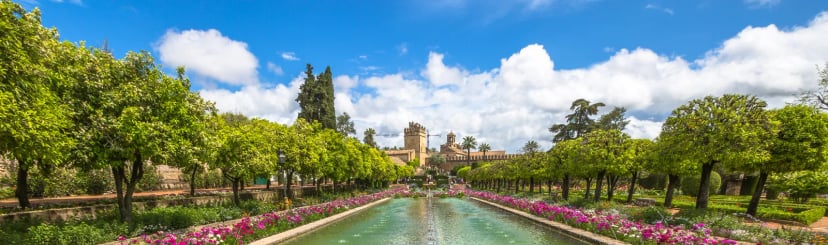
Another patio is the better choice than the museum when the day needs relief more than explanation. This is not a lesser cultural choice. In Córdoba, courtyards are not ornamental filler; they are part of how the city manages light, shade, privacy, domestic life and seasonal beauty. But they answer a different need. A patio lets the group breathe after the Mezquita-Catedral. The Archaeology Museum asks the group to keep thinking.
The patio alternative is strongest for couples on a celebratory day, families with younger travelers, multi-generational groups moving slowly, and anyone visiting when the city’s courtyard culture is central to the trip. It is also the right call when lunch matters. If a serious meal is waiting, a patio can preserve appetite and conversation; a museum can push the group into interpretive saturation just when the day should open out. The practical test is simple: if the group is still asking “how did Córdoba become this?” choose the museum. If the group is asking “can we stop absorbing and enjoy where we are?” choose a patio.
The mistake is treating every patio as interchangeable. San Basilio and Viana do different jobs. A smaller neighborhood patio can feel intimate and human after the Mezquita-Catedral. Viana can become a broader courtyard-and-palace decision, which is rewarding but not always light. If the patio decision is the real question, the more specific San Basilio or Viana patio guide will be more useful than forcing the Archaeology Museum into a mood it cannot provide.
There is also a seasonal and bodily truth here. Córdoba’s compact center is a gift in mild weather and a tax in heat. Pale stone, narrow lanes, hard surfaces and midday sun can make short distances feel longer than they look on a map. The Archaeology Museum gives indoor shade, which can help, but it also keeps the mind working. A patio gives shade with a softer emotional register. On a hot day, that difference is not cosmetic; it changes whether the rest of the afternoon feels composed or merely completed.
How to place the Archaeology Museum around the Mezquita-Catedral
The cleanest placement is Archaeology Museum after the Mezquita, before the day turns toward lunch, a patio or a lighter walk. That order works because the Mezquita-Catedral gives the question and the museum gives the answer while the question is still fresh. Reversing the order can work for specialists, but it asks first-time visitors to absorb context before they have seen the monument that gives the context emotional force.
In a polished private day, the morning should have one anchor, one clarifying move and one release. The anchor is the Mezquita-Catedral. The clarifying move is the Archaeology Museum if history is the priority. The release is lunch, a patio, or a slow lane-to-square walk depending on the group. This three-part rhythm prevents the common Córdoba problem: the day looks compact, so travelers add too much. The old town is compact enough to tempt overplanning, but not so effortless that every addition stays graceful.
The route logic is practical. From the Mezquita-Catedral precinct, you can move toward the museum through the old center rather than dropping immediately toward the Guadalquivir. That keeps the group inside a tighter historical field: cathedral precinct, Judería edges, small squares, Renaissance palace setting, archaeology. It also avoids a premature river crossing. The Roman Bridge belongs beautifully later if the day needs air or an evening view, but it is a poor hinge if the goal is to explain Roman and caliphal Córdoba immediately after the Mezquita-Catedral.
Do not confuse the Patio de los Naranjos with the patio alternative in this decision. It belongs to the Mezquita-Catedral experience and may give a beautiful pause, but it does not do the same work as a dedicated courtyard route in San Basilio or a more deliberate Viana stop. If the group says “we already saw a patio” after leaving the cathedral precinct, listen carefully: they may mean they have had enough thresholds, not that the courtyard question is solved. That distinction helps you choose between a true patio release and a museum clarification.
For day trippers arriving by train, the museum decision should be made before the station transfer, not improvised once everyone is already in the old town. Córdoba’s station is outside the oldest lanes, so there is usually a transfer or walk-and-taxi decision before the monument day begins. If luggage, heat or a same-day return train is involved, the museum should replace another stop rather than extend the route. The broader rail-and-center issue is covered in white-glove Córdoba rail stop planning, but the museum-specific rule is tighter: do not add it after lunch unless the afternoon is intentionally slow.
For overnight travelers, the museum can move later in the day if the morning is dedicated to the Mezquita-Catedral at a preferred time and the afternoon has room for a quieter indoor hour. But even on an overnight, avoid making it the third serious interpretive stop. Mezquita-Catedral, Archaeology Museum and Medina Azahara in one short sweep may look thematically elegant, yet it often makes the caliphal story feel like homework. Give Medina Azahara its own slot or let the museum be the compact substitute.
The cut-first rule when the Córdoba day is overloaded
Cut the stop that repeats a mood or weakens the main question. If the Mezquita-Catedral is the anchor and the museum is chosen for context, cut the second explanatory stop before you cut lunch or a short release. If a patio is chosen for beauty and rest, cut the museum before turning the day into a march of half-understood layers. The best Córdoba days are not the ones with the most named places; they are the ones where each place changes what the traveler understands or feels next.
Do not force the Roman Bridge immediately after the Mezquita-Catedral just because it is famous and nearby. It is excellent for river perspective, sunset mood and the city’s silhouette. It is not the strongest answer to “how do Roman layers connect to caliphal Córdoba?” If time is tight and the question is historical comprehension, choose the Archaeology Museum. If the question is a satisfying outdoor pause, choose the Roman Bridge. Trying to make the bridge do the museum’s job is where many short stops lose precision.
Do not force Medina Azahara into a day that also wants the Archaeology Museum, the Mezquita-Catedral, a patio and a long lunch. Medina Azahara deserves a different tempo. It is the right upgrade when the caliphate is the core interest and the day can be shaped around it. It is not the right upgrade when someone simply wants to add “more Islamic history” after the Mezquita-Catedral. In that case, the museum may give enough caliphal context without the transfer reset.
Do not force a second patio after a patio has already done its work. Córdoba’s courtyards can be addictive, but repeating the same emotional note can flatten the day. One beautiful courtyard after the Mezquita-Catedral may feel like release. Three courtyards after the Mezquita-Catedral can become a blur unless the whole day is designed around courtyard culture. If you are not deliberately making patios the theme, use one and stop.
What a guide can unlock inside a small museum, and what money cannot compress
A guide changes the Archaeology Museum by editing it. Without editing, a small museum can still sprawl because every object competes for attention. With the right guide, the stop becomes a sequence of answers: what the Roman city contributes, what the caliphal city transforms, what survives in the built environment, and what the Mezquita-Catedral makes easier or harder to understand. The private value is not theatrical access or luxury gloss; it is intellectual selection and humane pacing.
That selection matters because the museum is best immediately after a demanding monument. A good guide should not try to prove expertise by explaining everything. The guide should choose what makes the street outside clearer. That might mean one Roman spatial clue, one caliphal material clue, one reminder of how archaeology differs from restored monumentality, and one link back to the old-town walk. The difference is felt after you leave: the lane toward lunch no longer feels like scenery between attractions; it feels like part of the same city argument.
Premium spend does not earn its cost when it is used to add a chauffeured hop between nearby old-town stops that are better understood on foot. In Córdoba’s tight center, money is better spent on a guide who can connect the museum to what you just saw, on transfer handling if you are coming from the station with luggage, or on a day design that prevents the group from carrying too many themes at once. Expert guiding cannot make every historical layer fit into one short stop.
This is the planning handoff Orange Donut Tours can make useful: not “add the museum,” but decide whether the museum should replace a patio, follow the Mezquita-Catedral, or give way to a calmer courtyard-and-lunch arc. For a privately paced historic core that connects a small museum to the streets around it, Historic Center of Cordoba Private Tours can shape the route around your group’s attention span, mobility and appetite for detail. When the museum is the right hinge between the Mezquita-Catedral and the rest of the day, Inquire now.
What Córdoba does to the body and to the mood
Córdoba is compact, but the city still works on the body. The old center asks for cobbled walking, short lane navigation, sun-to-shade transitions, and attention at exactly the moment the Mezquita-Catedral has already taken a lot of concentration. It is not the hill fatigue of Granada, but it can be heat load, foot fatigue and threshold fatigue: another entrance, another interior, another set of explanations. The Archaeology Museum helps when its indoor calm replaces a longer outdoor loop. It hurts when it is simply added after the group has already crossed the river, wandered the Judería and delayed lunch.
The mood consequence is just as important. A museum after the Mezquita-Catedral can make the day feel more intelligent and calmer because it stops the group from chasing the next postcard. It gives the morning a sense of completion. But when the group wants romance, family ease, celebration energy or food-and-wine momentum, the same museum can make the day feel shorter, denser and more dutiful. That is why the patio alternative is not a consolation prize. It can be the more elegant choice when the trip mood is meant to soften after the monument.
There is no universal winner because the second stop has to serve the day’s emotional arc. History travelers often leave the museum pleased because Córdoba suddenly feels less like a single monument and more like a palimpsest. Celebration travelers may leave thinking they respected the city but lost the glow of the morning. Families may split: older children who like ancient cities may engage; younger children may prefer a courtyard or a river view. Small private groups should decide this before the day starts, not at the moment everyone is hungry.
A practical decision frame for different travelers
History travelers should choose the museum when they want Córdoba’s Roman and caliphal layers to become concrete without turning the day into a specialist route. The museum is especially good for people who leave major monuments with questions. It is less good for travelers who enjoy history only when it is embedded in streets, food, gardens or views. Those travelers may remember a patio more vividly and still respect the city’s complexity.
Repeat visitors should strongly consider the museum because it changes the second visit. First visits often belong to the Mezquita-Catedral, Judería edges, a patio and the river. On a second visit, the Archaeology Museum can make the city feel newly legible without requiring a full Medina Azahara day. It is a way of deepening Córdoba from within the center rather than adding another exterior excursion.
Families should use the museum selectively. It can work well with teenagers or curious children if the visit is short and guided through a story rather than a display-by-display crawl. It can fail with younger children after the Mezquita-Catedral because both stops require looking, listening and restraint. In that case, a patio, the Roman Bridge, or a relaxed lunch may preserve the family’s goodwill better than another indoor interpretive stop.
Food-and-wine travelers should be careful. The museum can sharpen the morning before lunch, but only if it is kept focused. If the day is built around a serious Córdoba meal, do not let the museum push lunch late or turn the table into a recovery exercise. A beautiful city day should still leave space for appetite, conversation and Montilla-Moriles curiosity. Culture that ruins lunch has been badly sequenced, no matter how worthy the stop is.
How to make the museum stop feel premium without making it heavier
The museum feels premium when it is treated as a chosen edit, not as a comprehensive duty. That means entering with one question: what does this stop need to clarify after the Mezquita-Catedral? For some groups, the answer is Roman urban depth. For others, it is caliphal context. For others, it is the experience of seeing archaeology beneath a Renaissance palace setting. A visit that tries to answer all possible questions will feel less refined than a shorter visit that answers the right one.
Keep the museum on the same side of the day as the Mezquita-Catedral. The stop should feel like a continuation of the morning, not a disconnected errand. Avoid pairing it with too many “nearby” additions just because the map looks kind. Córdoba’s center rewards restraint. A lane, a plaza, a museum and a meal can be more satisfying than a lane, a plaza, a museum, a bridge, a patio, a tower and a late lunch.
Use the official sources for facts and the itinerary logic for judgment. The museum’s official listing and the official Mosque-Cathedral site can tell you where to confirm visitor details. They cannot tell you whether your family, celebration group or history-focused couple should spend their next hour indoors. That is the editorial decision: choose the Archaeology Museum when it deepens the Mezquita-Catedral; choose another patio when it preserves the day’s ease; choose Medina Azahara only when the caliphal story deserves its own rhythm.
One small expectation-setting choice makes the stop feel more tailored: do not sell it to the group as a full “archaeology museum visit” unless they have asked for that. Call it the short layer check after the Mezquita-Catedral. That gives everyone permission to treat the museum as an interpretive bridge rather than a contract to keep reading labels until the collection is exhausted.
FAQ
Should I visit Córdoba’s Archaeology Museum after the Mezquita-Catedral?
Yes, visit the Archaeology Museum after the Mezquita-Catedral if you want Roman and caliphal context while the monument is still fresh. Skip it if the group needs rest, air, flowers or lunch more than another interpretive stop.
How long should I spend in the Archaeology Museum in Córdoba?
For a private, focused Córdoba day, plan a short, selective visit rather than a complete museum sweep. The best use is to clarify the Roman and caliphal layers that matter to your route, not to inspect every display.
Is the Archaeology Museum better than another patio in Córdoba?
The Archaeology Museum is better than another patio when the goal is historical comprehension after the Mezquita-Catedral. Another patio is better when the group wants shade, beauty, conversation and a lighter emotional note.
Does the museum replace Medina Azahara?
No. The museum can give compact caliphal context inside the old-town day, but Medina Azahara is a separate commitment with a different rhythm outside the compact center. Use the museum as a hinge, not as a substitute for the full site.
Is the Roman Bridge enough for Roman Córdoba?
The Roman Bridge is excellent for atmosphere and river perspective, but it is not enough if you want the Roman city explained. The Archaeology Museum is the stronger compressed stop for understanding Roman layers beneath Córdoba.
Is the Archaeology Museum a good choice with kids?
It can work with curious older children or teenagers if the visit is short and story-led. With younger children after the Mezquita-Catedral, a patio, the riverfront or lunch often keeps the day happier.
Where should the museum fit in a Córdoba day trip?
Place the Archaeology Museum after the Mezquita-Catedral and before lunch or a lighter release. Do not add it late in an already full day unless the afternoon has been intentionally kept slow.
What should I cut first if I add the museum?
Cut the stop that repeats the same purpose. If the museum is chosen for context, cut another explanatory stop. If a patio is chosen for relief, cut the museum rather than forcing both into a short Córdoba visit.
If you’re interested in any private tours of Cordoba, please reach out to us.


 So if you are looking for the absolute best in Cordoba & surroundings with authentic local fully-licensed native guides whose English you can actually understand and with an exclusive and amazingly fun itinerary